Best Open-Ear Headphones in 2026
We may earn a commission from links on this page, at no extra cost to you. Learn more.
Open-ear headphones let you enjoy music and podcasts while staying fully aware of the world around you. They are perfect for runners, cyclists, parents, and anyone who needs to hear their surroundings. We tested the best open-ear headphones of 2026 across workouts, commutes, and long workdays to find the most comfortable and best-sounding options. Here are our top seven picks for every need and budget.
Quick comparison
| Keyboard | Best for | Rating | Price | |
|---|---|---|---|---|
| 1Shokz OpenFit 2Shokz | Best Overall | 4.6 | $$$ | Check Price |
| 2Bose Ultra OpenBose | Best Premium | 4.4 | $$$ | Check Price |
| 3Soundcore AeroFit 2 ProSoundcore | Best for Sport | 4.4 | $$$ | Check Price |
| 4Shokz OpenRun Pro 2Shokz | Best Bone Conduction | 4.5 | $$$ | Check Price |
| 5JLab Flex OpenJLab | Best Value | 4.3 | $$$ | Check Price |
| 6Mojawa Run AirMojawa | Best for Wet Conditions | 4.3 | $$$ | Check Price |
| 7Soundcore C40iSoundcore | Best Comfort Cuff | 4.3 | $$$ | Check Price |
Our top 7 picks, reviewed
Shokz OpenFit 2
The OpenFit 2 is the most complete open-ear headphone we tested. Its true wireless ear-hook design is astonishingly light, resting gently on your ears with no canal pressure. Dedicated drivers deliver fuller sound than bone conduction, and the dual control system is genuinely convenient. For everyday awareness with real comfort, it is our top pick.
- Fit
- Open-ear ear hook
- Water
- IP55
- Battery
- Up to 11 hours
- Awareness
- Open ear
What we liked
- Featherlight all-day comfort
- Fuller sound than bone conduction
- Both touch and button controls
- Secure hooks stay put in workouts
Worth noting
- Premium price for true wireless
- Hooks may clash with glasses
Bose Ultra Open
The Bose Ultra Open clips onto the ridge of your ear like a piece of jewelry and sounds better than anything else in the open-ear space. It keeps your ears fully open while delivering surprising richness and immersion. The cuff design is comfortable and eye-catching. If budget is no object and sound is your priority, this is the one.
- Fit
- Open-ear clip
- Water
- IPX4
- Battery
- Up to 7.5 hours
- Awareness
- Open ear
What we liked
- Best sound in the category
- Stylish cuff-style design
- Comfortable clip-on fit
- Strong call clarity
Worth noting
- Expensive
- Lower IPX4 water rating
Soundcore AeroFit 2 Pro
Built for active users, the AeroFit 2 Pro locks in with flexible ear hooks that survive sprints and plyometrics. It delivers fuller low end than most open-ear sets, so workouts feel energetic. The 14-hour battery and IP55 rating make it a reliable gym and trail companion. It is our pick for fitness-focused listeners.
- Fit
- Open-ear ear hook
- Water
- IP55
- Battery
- Up to 14 hours
- Awareness
- Open ear
What we liked
- Secure fit through intense workouts
- Long 14-hour battery life
- Big sound for an open-ear set
- Sweat and rain resistant
Worth noting
- Bulkier than rivals
- Hooks can feel large on small ears
Shokz OpenRun Pro 2
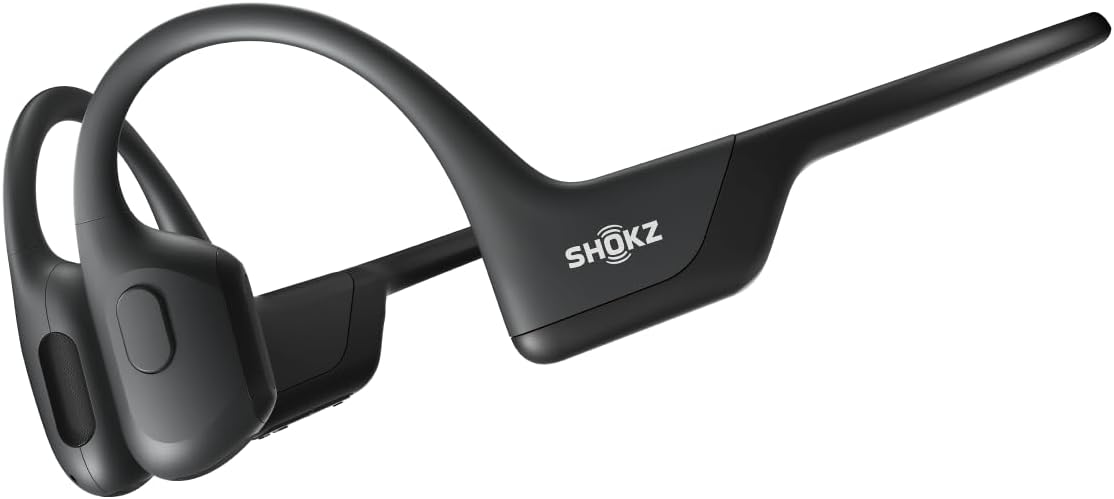
If maximum awareness is your goal, the bone conduction OpenRun Pro 2 keeps your ear canals entirely open by sending vibrations through your cheekbones. The wraparound band never moves, making it ideal for running and cycling. Shokz improved the bass meaningfully over the original. It is the safest pick for busy, hazard-filled environments.
- Fit
- Bone conduction wraparound
- Water
- IP55
- Battery
- Up to 12 hours
- Awareness
- Full open ear
What we liked
- Ears stay completely open
- Rock-solid wraparound fit
- Improved bass over original
- Great for high-awareness needs
Worth noting
- Sound leaks at high volume
- Less rich than driver-based sets
JLab Flex Open
The JLab Flex Open makes open-ear listening accessible on a budget. Its lightweight hooks stay secure and keep your ears aware of surroundings. Battery life is solid and the controls are easy to use on the go. It will not satisfy audiophiles, but for affordable everyday awareness it delivers real value.
- Fit
- Open-ear ear hook
- Water
- IP55
- Battery
- Up to 9 hours
- Awareness
- Open ear
What we liked
- Very affordable entry point
- Lightweight, secure hooks
- Reasonable battery life
- Simple reliable controls
Worth noting
- Sound lacks low-end depth
- Basic plastic build
Mojawa Run Air
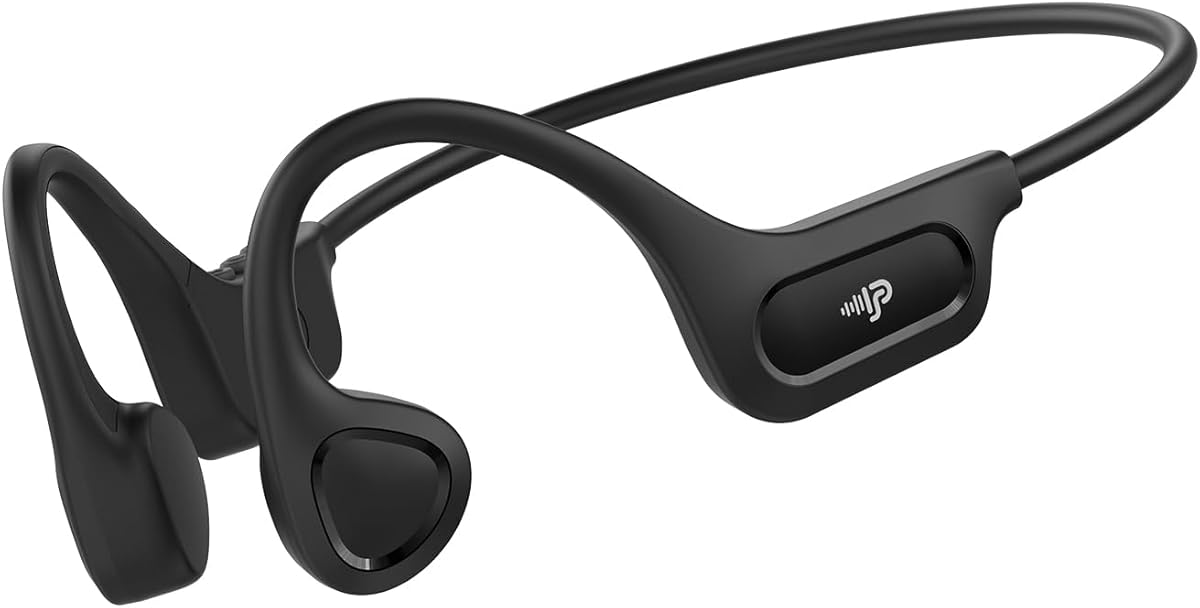
The Mojawa Run Air pairs open-ear awareness with the best water resistance here. Its IPX8 rating means rain and even brief submersion are no concern. Bone conduction keeps your ears open while delivering surprisingly strong bass. For outdoor users in wet climates, it is a standout choice.
- Fit
- Bone conduction wraparound
- Water
- IPX8
- Battery
- Up to 8 hours
- Awareness
- Full open ear
What we liked
- IPX8 survives full submersion
- Punchy bone conduction bass
- Secure all-weather band
- Good ambient awareness
Worth noting
- Sound leaks like most bone sets
- App could be more polished
Soundcore C40i
The Soundcore C40i offers a clip-on cuff design similar to premium rivals at a friendlier price. It rests comfortably on the ear ridge and keeps your ears open for awareness. Sound is respectable for the category and battery life is generous. It is a smart middle-ground pick for clip-style fans.
- Fit
- Open-ear clip
- Water
- IPX4
- Battery
- Up to 10 hours
- Awareness
- Open ear
What we liked
- Comfortable clip-on cuff design
- Lighter on the wallet than Bose
- Decent sound for the style
- Good battery life
Worth noting
- Clip fit less stable in sprints
- IPX4 only for water
Why Choose Open-Ear Headphones
Open-ear headphones have moved from a niche category to a mainstream favorite, and for good reason. They solve a problem that traditional earbuds cannot: they let you enjoy audio without cutting yourself off from the world. When you slip in a pair of sealed earbuds, you lose awareness of your surroundings. That is fine in some contexts, but dangerous or rude in others. Open-ear designs keep your ear canals unobstructed, so you hear traffic, conversations, doorbells, and your children all while listening to music or a podcast.
This makes them ideal for a wide range of people. Runners and cyclists rely on them to hear approaching cars. Parents use them to stay tuned in to their kids while catching up on an audiobook. Office workers wear them to take calls without missing a colleague walking up. Even at home, they let you listen to music while remaining present and aware. The freedom of hearing both your audio and your environment is genuinely liberating once you experience it.
The category has also matured technically. Early open-ear products sounded thin and tinny, but the latest models, like the Shokz OpenFit 2 and Bose Ultra Open, deliver genuinely enjoyable sound. Comfort has improved too, with lightweight designs that you can wear for hours without fatigue. If you have dismissed open-ear headphones in the past, the 2026 generation is worth another look.
The Three Open-Ear Designs
Open-ear headphones come in three main form factors, and understanding them helps you choose the right pair.
Ear-hook earbuds
This is the most popular design, used by the Shokz OpenFit 2, Soundcore AeroFit 2 Pro, and JLab Flex Open. A small speaker module sits just outside your ear canal, held in place by a soft hook that curls over the top of your ear. These offer a great balance of secure fit, comfort, and sound quality. They stay put during exercise and rest comfortably for all-day wear, though the hooks can occasionally interfere with glasses.
Clip-on cuffs
A newer style, popularized by the Bose Ultra Open and Soundcore C40i, clips onto the ridge of your ear like a piece of jewelry. The speaker sits in front of the ear canal. These look stylish and feel comfortable, but the clip fit can be slightly less stable during intense movement compared to a hook.
Bone conduction
Used by the Shokz OpenRun Pro 2 and Mojawa Run Air, bone conduction sends sound as vibrations through your cheekbones directly to your inner ear, leaving the ear canal completely open. This offers the highest level of awareness and the most secure wraparound fit, at the cost of less bass and some sound leakage at high volume.
Awareness and Safety Benefits
The defining feature of open-ear headphones is situational awareness, and it is worth dwelling on why this matters so much. Hearing is one of our primary safety senses. On a road, the sound of an approaching vehicle often reaches us before we see it. When you seal your ears, you remove that early warning. Countless near-misses and accidents involving pedestrians and cyclists trace back to wearers being unable to hear danger approaching.
Open-ear headphones eliminate that risk. Because your ear canals remain open, ambient sound reaches you naturally and unimpeded. The audio you are playing simply layers on top of the real world rather than replacing it. Bone conduction models like the Shokz OpenRun Pro 2 take this furthest, leaving the canal entirely unobstructed for maximum awareness.
Beyond physical safety, awareness brings social benefits. You can hold a conversation without removing your headphones, respond to someone calling your name, and remain present in shared spaces. For parents, caregivers, and anyone who needs to stay responsive to their environment, this is invaluable. The small tradeoff in isolation and bass is well worth the peace of mind and connection that open-ear designs provide.
Comfort for All-Day Wear
Because open-ear headphones do not insert into your ear canal, they tend to be far more comfortable for long sessions than traditional earbuds. There is no pressure inside the ear, no fatigue from a tight seal, and no buildup of warmth. Many people who find regular earbuds uncomfortable after an hour can wear open-ear models all day without issue.
That said, comfort still varies by design. The Shokz OpenFit 2 stood out in our testing as the most comfortable overall, weighing almost nothing and resting so gently that we frequently forgot we were wearing it. The clip-on Bose Ultra Open and Soundcore C40i are also comfortable, though some people are more sensitive to the clip pressure on the ear ridge. Bone conduction models distribute their weight across a wraparound band, which is secure but can cause mild tingling at high volume due to the vibrations.
If you wear glasses, pay attention to how the design interacts with your frames. Ear-hook models can occasionally compete for space behind the ear. Clip-on cuffs and bone conduction bands usually coexist more easily with glasses. When possible, try before you buy, or buy from a retailer with a generous return policy so you can test comfort with your own setup.
Sound Quality Expectations
It is important to set realistic expectations about sound. By their very nature, open-ear headphones cannot match the bass and isolation of sealed earbuds. Without a seal, low frequencies dissipate into the air rather than being driven into your ear canal, so bass is lighter. Background noise also mixes with your audio, which can make quiet passages harder to hear in loud environments.
Within those constraints, the best models perform admirably. The Bose Ultra Open delivers the fullest, most refined sound in the category, with genuinely satisfying richness. The Shokz OpenFit 2 and Soundcore AeroFit 2 Pro both produce more low-end punch than you might expect from an open design. Bone conduction models like the OpenRun Pro 2 have the lightest bass but have improved significantly over earlier generations.
The key is to match your expectations to your use case. For podcasts, audiobooks, and casual music listening while staying aware, every model here sounds great. If you want bass-heavy music to feel powerful, choose one of the driver-based earbuds and keep your listening environment reasonably quiet. Open-ear headphones are about balance and awareness, not chasing the deepest possible low end.
How to Pick the Right Pair
With seven excellent choices, here is how we would match them to different users.
For the best all-around experience
The Shokz OpenFit 2 is our top recommendation. It combines featherlight comfort, fuller sound, secure hooks, and convenient controls better than anything else.
For the best possible sound
The Bose Ultra Open leads the category sonically and looks great doing it, if your budget allows.
For workouts and sport
The Soundcore AeroFit 2 Pro locks in securely, lasts 14 hours, and resists sweat, making it the fitness pick.
For maximum awareness
The Shokz OpenRun Pro 2 keeps your ears completely open with bone conduction and a rock-solid fit, ideal for road running and cycling.
For a tight budget
The JLab Flex Open delivers safe, secure open-ear listening at the lowest price here.
For wet conditions
The Mojawa Run Air with its IPX8 rating handles rain and submersion better than any other pick.
For clip-style comfort at a fair price
The Soundcore C40i offers the cuff design at a friendlier cost than the Bose.
Battery Life, Charging, and Controls
Beyond fit and sound, the practical details of living with open-ear headphones determine how much you actually enjoy them day to day. Battery life, charging convenience, and control design all shape the experience, and they vary meaningfully across the models on this list.
Battery endurance ranges widely in the open-ear category. The Soundcore AeroFit 2 Pro leads with up to 14 hours from the buds themselves, while the Shokz OpenFit 2 manages a strong 11. Clip-on models like the Bose Ultra Open tend to be shorter at around 7 to 8 hours, a consequence of their smaller batteries. For true wireless designs, remember that the charging case provides several additional full charges, so total listening time before you need a wall outlet is much higher. Bone conduction models with built-in batteries, like the Shokz OpenRun Pro 2, offer their full rated time in one stretch since there is no case. Match the battery to your habits. If you listen all day at work, prioritize the longer-lasting models or those with quick-charge support that adds hours from a brief top-up.
Charging convenience matters more than people expect. True wireless models with a case let you top up on the go, dropping the buds in for a few minutes between uses. Bone conduction headphones typically use a proprietary magnetic cable rather than standard USB-C, which is worth noting since losing that cable is inconvenient. Consider buying a spare charging cable for any model that uses a proprietary connector so a misplaced cable never leaves you stranded without audio.
Control design is the final piece. Because open-ear headphones are often worn during activity, controls need to be easy to operate without looking. Touch controls on the buds are common but can misfire during exercise or in cold weather with gloves. Physical buttons are more reliable but require a firmer press that can shift the fit. The Shokz OpenFit 2 stands out by offering both touch and physical controls, letting you choose what works best for each situation. When evaluating any open-ear model, think about how you will actually use the controls. Adjusting volume, skipping tracks, answering calls, and triggering a voice assistant should all be possible quickly and reliably, whether you are at a desk, on a run, or pushing a stroller. The smoothest open-ear experience comes from a headphone whose controls fade into the background, letting you manage your audio without ever breaking your stride or your focus.
Final Thoughts
Open-ear headphones in 2026 deliver on their core promise: audio enjoyment without sacrificing awareness. Whether you choose the comfortable, great-sounding Shokz OpenFit 2, the premium Bose Ultra Open, or the budget-friendly JLab Flex Open, you gain the freedom to stay connected to your surroundings. Decide whether you prioritize comfort, sound quality, sport performance, awareness, or price, and let that guide your pick. Once you grow used to hearing both your music and the world, it is hard to go back to sealing your ears off entirely.
How we picked
We evaluated each model on situational awareness, all-day comfort, fit security, and sound quality relative to the open-ear category. We measured battery life in real use and tested sweat resistance during workouts. Call performance and ease of controls were assessed across multiple sessions.
Frequently asked questions
What are open-ear headphones and how do they work?
Open-ear headphones sit outside or in front of your ear canal rather than sealing it. They use small drivers or bone conduction to play audio while leaving your ears open to hear your surroundings.
Are open-ear headphones safe for running and cycling?
Yes, that is their main strength. By keeping your ears open, they let you hear traffic and other hazards, making them much safer than sealed earbuds for outdoor activity.
Do open-ear headphones sound as good as regular earbuds?
They generally have less bass and isolation than sealed earbuds, but premium models like the Bose Ultra Open close the gap considerably. You trade some sound depth for awareness and comfort.
Will other people hear my music with open-ear headphones?
At low to moderate volume, leakage is minimal. At high volume, especially with bone conduction, people nearby may hear faint sound, so keep volume reasonable in quiet spaces.
What is the difference between bone conduction and open-ear earbuds?
Bone conduction sends vibrations through your cheekbones with ear canals fully open, while open-ear earbuds use tiny speakers just outside the canal for richer sound. Both keep you aware of surroundings.