Best Overall Classic
HyperX Cloud II
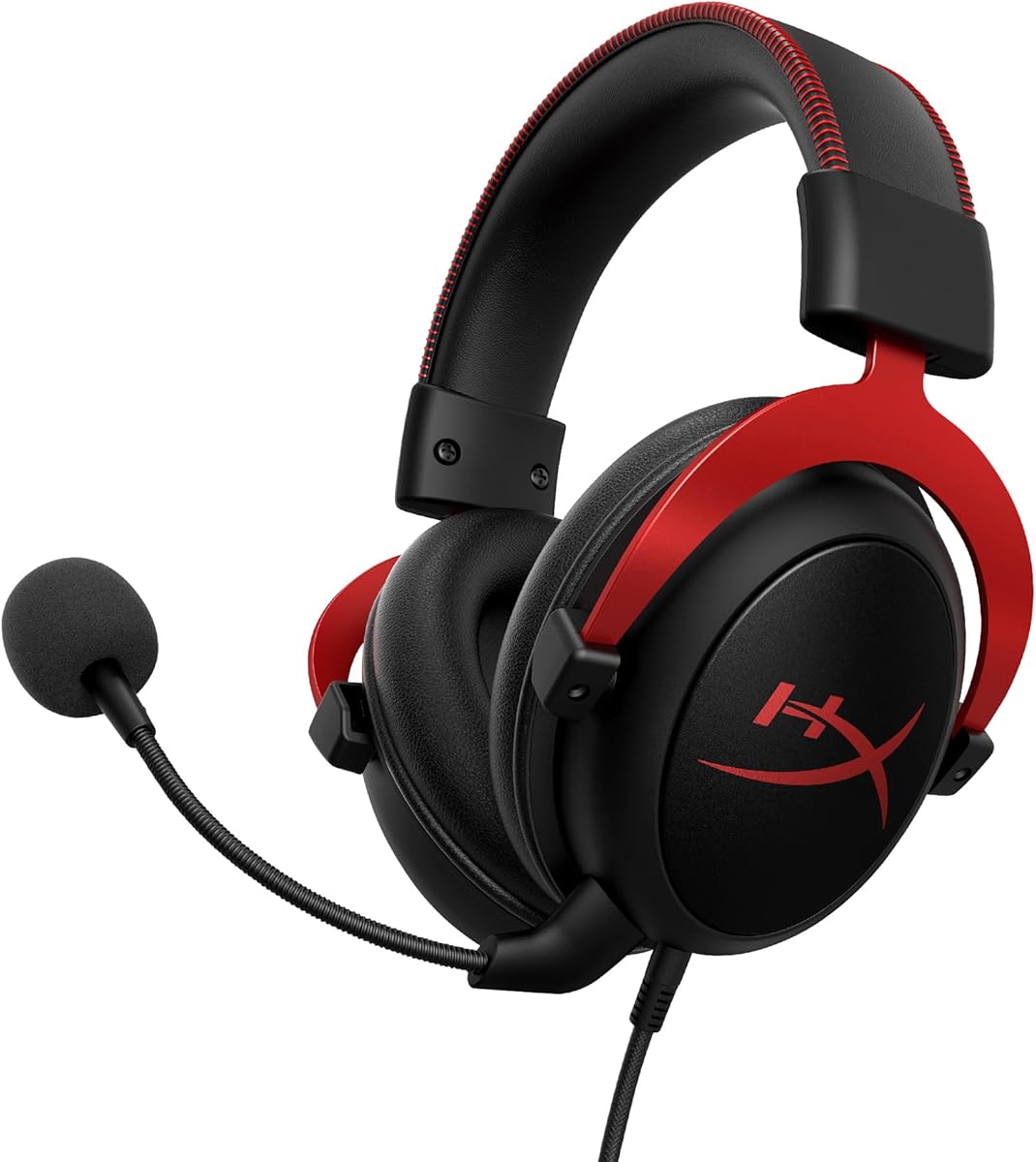
- Hardware USB 7.1 surround on PC with legendary Cloud comfort
- 53mm drivers and Discord/TeamSpeak-certified detachable mic
- Durable aluminum frame for years of desk and travel use
Expert Review & Guide
The best gaming headset in 2026 matches how you actually play—not the loudest RGB brochure. Wireless LIGHTSPEED, HyperSpeed, and console 2.4GHz links made cable-free play mainstream, but battery claims from roughly a day to eighty hours, mic styles from flip-to-mute to broadcast booms, and platform locks (especially Xbox versus everyone else) still punish impulse buys. Wired HyperX classics keep winning on comfort and zero-charge reliability, while flagships like the Astro A50 chase living-room flexibility a single dongle cannot.
This roundup uses only products from our best-gaming-headset pack: premium multi-platform wireless, long-battery console headsets, PC RGB wireless, Cloud-series wired staples, budget BlackShark competitors, and newer Razer V3 wireless esports models. We weigh mic clarity for Discord and party chat, driver tuning for footsteps versus cinematic bass, comfort for three-hour sessions, software ecosystems, and honest compatibility lines—including headsets that explicitly skip Xbox.
Start with the three top picks for a shortlist, then use the comparison table and full reviews for battery math, wired versus wireless tradeoffs, and who each model is really for. There is no universal crown—only the best match for your primary platform, whether you will install a companion app, and how much you care about spatial theater versus clean stereo competition.


As an Amazon Associate we earn from qualifying purchases. We may earn a commission at no additional cost to you.
Scan connection type, battery class, and mic style first—those usually decide desk PC, couch console, or tournament fit. Ratings reflect aggregated buyer feedback; always confirm Xbox wireless compatibility before checkout.
The Logitech G Astro A50 Multi-Platform Wireless is for households that bounce Xbox, PlayStation, and PC without wanting a drawer of dongles. PLAYSYNC Audio connects three systems over USB-C and lets you tap between them from the headset—daily convenience, not a gimmick. In a pack full of single-path wireless sets, that switching is why the A50 still earns a flagship slot in 2026.
PRO-G Graphene 40mm drivers chase separation and timing more than trailer thump. PC LIGHTSPEED can run a fuller 24-bit path; console bit depth is more limited, which the product story states honestly. Competitive players who EQ for footsteps will get more from the Graphene tuning than anyone hunting novelty bass.
The 48 kHz boom mic and 7-core DSP suit streamers and multi-machine chat, with Bluetooth dual-device mixing for Discord or music under game audio. Profiles can travel with the headset as you switch systems—useful when one person owns the ‘good’ headset in the house.
Around 24 hours of playtime plus a magnetic Base Station dock changes ownership: you park it and it charges. Stamina trails the Stealth 600, but docking discipline beats forgetting a cable dongle overnight. Desk footprint is the tax for that ritual.
G HUB and the G App unlock parametric EQ, mic gating, and stream mixing. If you want one-and-done presets, Nova 5 or Stealth 600 feel lighter. Buy the A50 when multi-system switching and dock workflow are the pain you are solving—not when you only game on one PC.
Buyers juggling Xbox, PlayStation, and PC in one week will feel PLAYSYNC immediately. Streamers who need DSP-saved profiles and a strong boom mic path also fit. Single-platform bargain hunters will overpay for unused switching.
Install G HUB or the G App early and create at least two EQ profiles: one competitive (clear mids, controlled bass) and one cinematic. Set mic gate so keyboard noise dies before teammates complain.
We may earn a commission at no additional cost to you.
Turtle Beach Stealth 600 Wireless
Turtle Beach’s Stealth 600 Wireless is this pack’s battery champion and a practical multiplatform pick for Xbox or PlayStation players who still hop to PC or mobile. An 80-hour claim with quick charge shifts habits toward weekly charging. For couch campaigns and weekends away from a tidy dock, endurance is the feature.
Fifty-millimeter Nanoclear drivers support vibrant spatial audio, while glasses-friendly memory foam cushions address a real comfort failure mode. The lay-flat design packs easier than rigid trophy headsets. Flip-to-mute with AI noise reduction is faster under pressure than hunting a tiny unmarked button.
A mappable wheel, mode button, and QuickSwitch between 2.4GHz and Bluetooth 5.4 keep control tactile. Onboard EQ and Superhuman Hearing help casually; Swarm II’s 10-band EQ is there when ranked footsteps need intentional midrange. Confirm your exact console SKU behavior—wireless ecosystems love fine print.
Versus the Astro A50, you trade PLAYSYNC theater for simpler living and far longer stamina. Versus Nova 5, you trade SteelSeries’ preset library for Turtle Beach’s console-first comfort story. Versus wired Clouds, you pay the wireless tax for room-to-room freedom.
We named it Best Battery Life because endurance, glasses-aware cushions, and QuickSwitch match how console gamers actually live—not because it out-flagships the A50 on DSP. Tune Swarm II once so the mic and EQ match your party, then enjoy forgetting the charger.
Xbox and PlayStation households that also dabble on PC or mobile get the most from QuickSwitch and multiplatform wireless. Glasses wearers should prioritize the cushion design in a long evening test.
Spend one evening on the 10-band EQ and save a competitive profile. Superhuman Hearing and onboard modes are fine starting points, but footsteps in modern shooters often need a personal midrange bump.
We may earn a commission at no additional cost to you.

Logitech G522 Lightspeed Wireless
The Logitech G522 Lightspeed Wireless targets PC players who want style without a spaceship silhouette. LIGHTSYNC RGB side lighting is fully customizable—and fully optional when you kill effects to save battery. At roughly 280 grams with a washable suspension band and rounded cups, comfort is part of the design brief, not an afterthought.
PRO-G drivers with 48 kHz / 24-bit LIGHTSPEED aim for low distortion and usable bass across cinematic nights and ranked evenings. Save separate EQ profiles instead of forcing one harsh competitive curve forever. Connectivity is the daily win: LIGHTSPEED, Bluetooth for mobile, or wired USB-C when RF or battery anxiety creeps in.
Up to about 60 hours with lighting off and roughly 30 meters of wireless reach cover LAN weekends and apartment pacing. The detachable Blue VO!CE mic path is a step above flip-mute-only midrange sets for Discord and entry streaming. Open G HUB if you want real voice shaping; leave it closed if plug-and-play is enough.
Compared with the A50, the G522 skips three-console PLAYSYNC choreography for a cleaner PC desk with long untethered sessions. Compared with Razer’s V3 wireless, you choose G HUB and Blue VO!CE versus THX and FPS profile culture—pick the suite you already tolerate.
Buy it for PC wireless freedom, a detachable quality mic, and optional RGB. Skip it if you need Xbox-native wireless first (Stealth 600) or you want zero lights and a cable (Cloud III).
Decide your default: LIGHTSPEED for gaming, Bluetooth for phone multitasking, wired USB when RF congestion or battery anxiety creeps in. Keep the dongle on a short USB extension if your PC is under a desk.
Treat Blue VO!CE as a toolkit: gentle noise reduction and presence first, extreme effects never for ranked voice. Detach the mic for pure media listening if the boom distracts you.
We may earn a commission at no additional cost to you.

HyperX Cloud III Wired continues the Cloud promise: comfort that survives raids and movies without turning your skull into a clamp experiment. Angled 53mm drivers are tuned for game dynamics and entertainment rather than gimmick signatures. If harsh esports cans and muddy bass cannons both failed you, Cloud III often lands in the sane middle.
USB-C, USB-A, and 3.5mm coverage across PC, PS5, and Xbox Series X|S means fewer dongle anxieties and zero battery anxiety. Competitive players who hate a dead headset mid-queue still appreciate a cable. Couch sprawlers should look wireless—know which friction you hate more.
The 10mm noise-cancelling mic with mesh filter and LED mute indicator is chat-practical: teammates hear you, you see mute state. Lifetime DTS Headphone:X activation adds spatial audio without a subscription hangover—use it where supported, and keep a stereo EQ for titles that already mix well.
A flexible aluminum frame matches HyperX’s durability reputation for backpacks and desk mishaps. Memory foam cushions remain the comfort headline; plan on eventual pad replacements like any leatherette headset. Spare-part longevity is part of why Clouds linger in recommendations.
Against Cloud II, Cloud III is refreshed tuning and modern I/O. Against Alpha, you trade Dual Chamber character for angled drivers and DTS packaging. Against wireless flagships, you trade roam for consistency. It is our Best Wired Comfort Upgrade for people who still trust a cable.
No firmware update before a tournament. No dongle left at a friend’s house. No surprise power-off at 12% because the battery meter lied. Those boring virtues still win matches.
Enable DTS Headphone:X where you want immersion; disable or A/B it in tactical shooters if the virtualization softens cue sharpness. Cloud III’s angled drivers already provide a solid stereo foundation.
We may earn a commission at no additional cost to you.

Razer BlackShark V2 X remains the budget-competitive classic: light weight, clear mids, and a cardioid mic without funding a charging dock. Around 240 grams with breathable foam, it disappears in ranked ladders while TriForce Titanium 50mm drivers split highs, mids, and lows for footsteps and ability audio.
Closed cups deliver advanced passive isolation—not electronic ANC, but a real seal against apartment noise. That seal also supports bass authority, so expect a more isolated stage than open audiophile cans. HyperClear cardioid pickup favors your voice over room bleed for callouts.
Software 7.1 surround on Windows is optional; many FPS players should A/B it against stereo. Simple 3.5mm life covers PC, Mac, PlayStation, Switch, and many phones. Xbox One may need a separate stereo adapter—know that before checkout.
In 2026 it still earns Best Budget Competitive because newcomers need a headset that teaches good habits without an ecosystem subscription. If you later move to BlackShark V3 wireless, the tuning philosophy will feel familiar with fewer cables.
Buy V2 X for value clarity and weight. Skip it if you refuse wires or need Xbox wireless without adapters—other picks in this guide cover those jobs cleanly.
Start in stereo. Add Razer's 7.1 only if you personally hear better separations in your main game. Many FPS grinders win more by lowering effects bass than by enabling surround.
Confirm Xbox adapter needs before you buy for an older Xbox One living-room setup. PC and PlayStation users typically have the smoother 3.5mm path.
We may earn a commission at no additional cost to you.
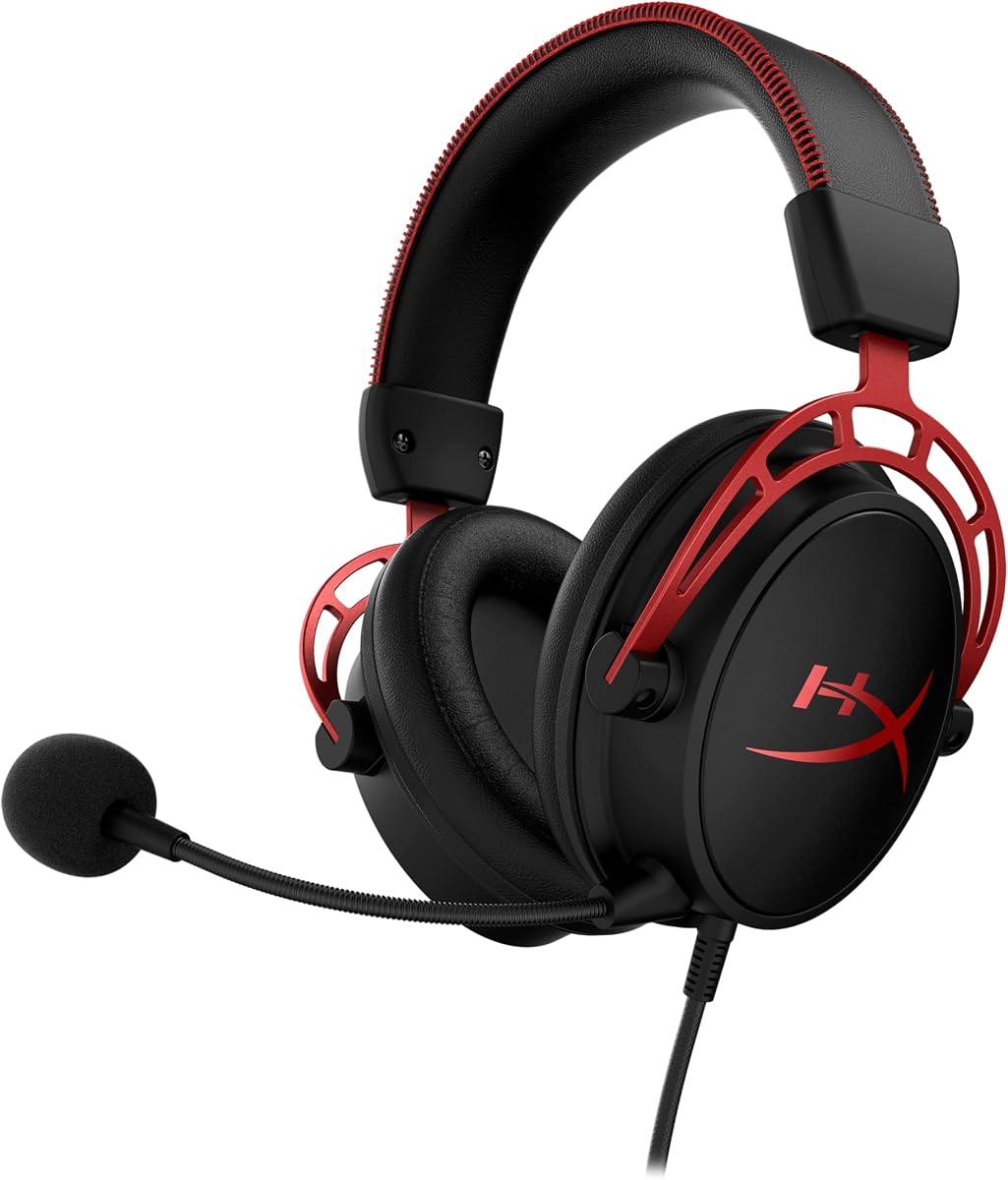
HyperX Cloud Alpha endures because Dual Chamber Drivers still do something audible: they reduce muddy overlap by separating bass energy from the mids and highs that carry footsteps and dialogue. Paper frequency ranges matter less than that cleaner separation in chaotic teamfights.
Signature Cloud comfort, an aluminum frame, and an expanded headband distribute weight for long sessions. Detachable braided cable with inline control and a detachable noise-cancelling mic let you wear it as headphones without a boom in your peripheral vision. Replacement pads and cables are easy to find years later—an underrated ownership perk.
Classic 3.5mm pluralism spans PC, PlayStation, Xbox, Switch, mobile, and many VR jacks. There is no Cloud II-style USB surround box in the Alpha’s core identity; what you hear is largely drivers plus your platform’s spatial options. Many fans prefer that honesty.
Versus Cloud III, Alpha is Dual Chamber character and detachable-everything lifestyle. Versus BlackShark V2 X, Alpha usually feels plusher while V2 X feels lighter and more tournament-skim. Versus wireless in this pack, Alpha never charges and never roams as far.
Pick Alpha for proven wired sound and modular cables. Skip it if wireless presets and apps are non-negotiable—Nova 5 and Stealth 600 live there.
If explosions feel glorious but footsteps hide, trim low-end with platform EQ or an inline mentality—sit slightly lower volume and let mids speak. Dual Chamber reduces mud, but room and game mix still rule.
Choose Alpha for Dual Chamber character and detachable cable life. Choose Cloud II for hardware USB 7.1. Choose Cloud III for modern angled drivers and DTS packaging.
We may earn a commission at no additional cost to you.
HyperX Cloud II still holds the highest rating in this pack for reasons beyond nostalgia. Large 53mm drivers, memory foam cushions, a padded headband, and an aluminum frame created a template rivals still imitate. Hardware-driven virtual 7.1 via the USB control box on PC and Mac remains a practical immersion tool without hunting modern license menus.
Closed-cup passive isolation and a detachable Discord/TeamSpeak-certified mic keep chat clear. On consoles and mobile you typically run stereo through 3.5mm; the 7.1 story is PC/Mac-centric. Understand that split before you expect a surround LED on a living-room PlayStation.
Comfort is why Cloud II became a default: the clamp-and-cushion recipe rarely fights your skull the way fashion hex-shells can. It is not the lightest ultralight esports shell, but ‘forget you are wearing it’ beats noticing every gram because a yoke digs in.
In a wireless-heavy 2026 market, Cloud II argues reliability: no battery anxiety, no dongle behind the couch, no firmware drama before ranked. The control box adds bag clutter—true—but clutter you can replace more easily than a flagship wireless failure mid-season.
We named it Best Overall Classic because buyer love, comfort pedigree, and still-relevant USB 7.1 utility make it the safest wired answer to ‘just get me a good gaming headset.’ Multi-console wireless lives elsewhere on this list; desk PC life still fits Cloud II.
On PC, use the USB control box and verify the surround software/hardware path is active. On consoles, accept stereo and enjoy the drivers—do not chase a missing 7.1 LED on PlayStation.
Highest rating in the pack, comfort reputation, and chat-friendly mic certification create a low-regret gift and a low-regret first headset. Wireless is cooler; Cloud II is calmer.
We may earn a commission at no additional cost to you.

SteelSeries Arctis Nova 5 Wireless
SteelSeries Arctis Nova 5 Wireless is the preset machine: 100+ game profiles for titles like GTA, FIFA, and Call of Duty through the companion app, so you are not guessing EQ from forum folklore. Neodymium drivers deliver detailed highs, present mids, and bass you can tame or celebrate per preset.
A 60-hour battery with USB-C fast charge covers travel and tournament days. Quick-Switch between 2.4GHz and Bluetooth 5.3 takes calls or media with notification beeps so ranked halves are not blind to an incoming call. On-ear mute, volume, power, and Bluetooth controls are where your fingers expect them.
ClearCast Gen 2.X retractable mic supports higher-bandwidth capture and sounds more articulate than older retractable office-like mics. A compact USB-C dongle eases hops across PC, PlayStation, Switch, Quest, and mobile better than brick transmitters. Xbox-first homes should verify expectations—this story is strongest off Xbox.
Versus Stealth 600, Nova 5 wins curated presets and retractable mic elegance; Turtle Beach answers with extreme battery and glasses-friendly cushioning. Versus Astro A50, Nova 5 is lighter on base-station multi-system theater and heavier on ‘open app, pick preset, go.’
Buy Nova 5 if you want wireless convenience and hate manual EQ. Skip it if you refuse companion apps—you would leave half the product unused.
Install the companion app, pick your main three games’ presets, then fine-tune only if something still feels off. Presets are the product—use them.
Fast charge is for emergencies; overnight top-ups keep you out of the 15-minute panic club. Sixty hours means you can charge on a schedule like a phone, not like a drone battery.
We may earn a commission at no additional cost to you.

Razer BlackShark V3 Wireless is the competitive climb for PC-first players: HyperSpeed Gen-2 latency claims as low as roughly 10 ms, TriForce Titanium 50mm Gen-2 drivers, and THX Spatial Audio with overhead-aware presentation when the software stack is active. It is a clutch-timing headset that also does Discord—not a cozy movie peripheral first.
A detachable HyperClear Super Wideband 9.9mm mic captures richer shotcalls than narrow chatbot mics, and detaches for cleaner travel. Roughly 70-hour battery class keeps it in the long-session wireless conversation. Mix 2.4GHz with Bluetooth across two devices, or fall back to USB wired.
Compatibility includes PC, Mac, PlayStation, Switch, and phones—but Razer is explicit that Xbox Series and Xbox One are out. That line should prevent angry returns; Xbox buyers should pivot to Stealth 600 or a HyperX wired path in this same guide.
Pro-tuned FPS profiles and onboard-saved custom EQ are the esports sauce. Synapse-familiar users ramp faster; app-haters still get a headset, but leave advantage parked. A/B THX Spatial against stereo in deathmatch and keep what helps reactions.
Choose V3 Wireless for latency, THX ambition, and a wideband mic on non-Xbox platforms. Choose V3 X HyperSpeed for a lighter cardioid sibling. Choose Astro A50 if multi-console PLAYSYNC is the real boss fight.
Load a pro-tuned FPS profile as baseline, then adjust a few bands for your hearing and main map pool. Save to the headset so LAN PCs do not wipe your advantage.
This headset is not for Xbox consoles. If that is your machine, leave now and look at Turtle Beach Stealth 600 or HyperX wired options in this same guide.
We may earn a commission at no additional cost to you.
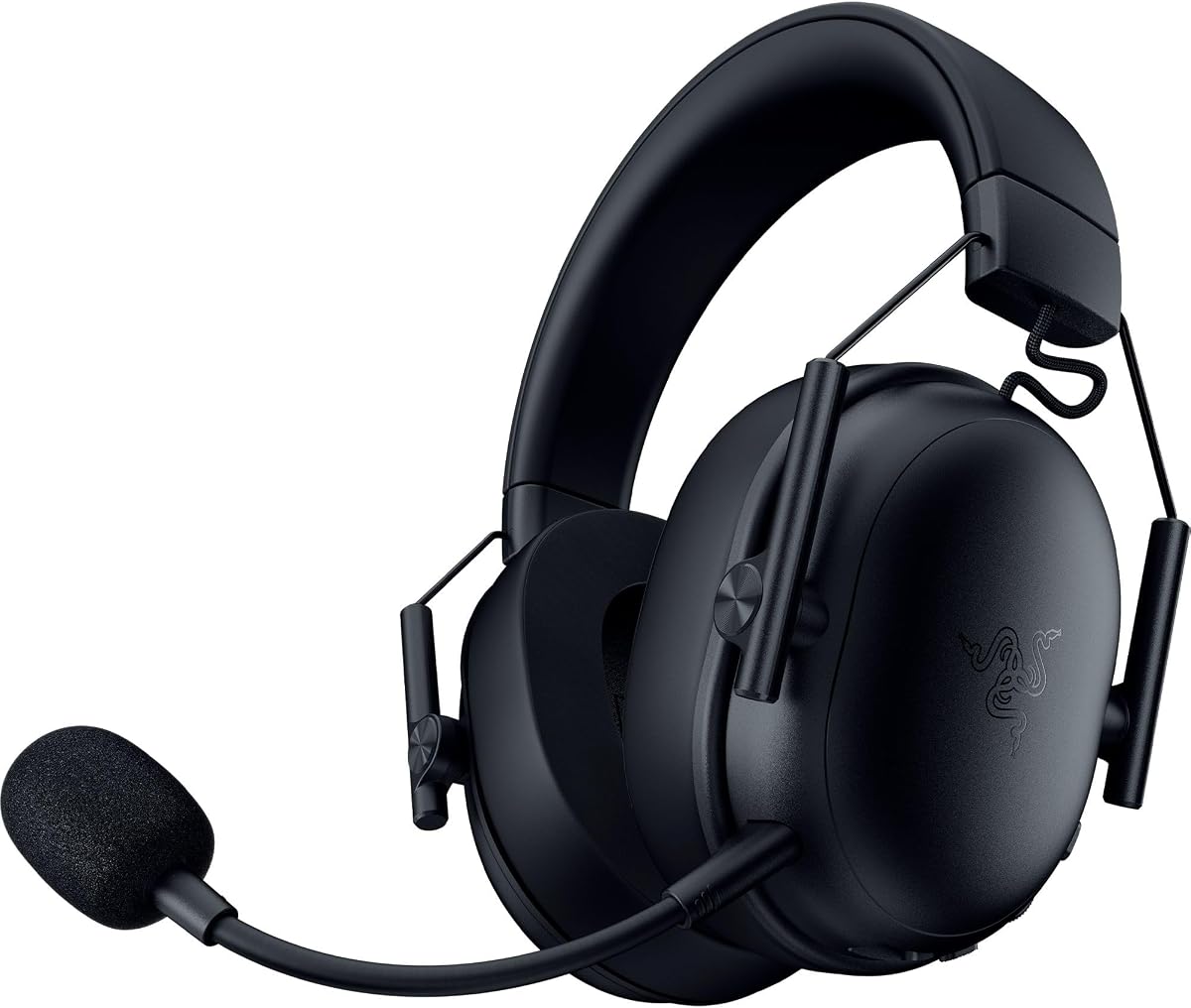
Razer BlackShark V3 X HyperSpeed
Razer BlackShark V3 X HyperSpeed Wireless is the lighter V3 sibling: TriForce 50mm Gen-2 drivers for positional clarity, HyperSpeed 2.4GHz for synced competitive audio, and a detachable HyperClear cardioid 9.9mm mic that favors isolation over wideband richness. At about 270 grams, it is built for scrims where clamp fatigue loses games.
SmartSwitch dual wireless between 2.4GHz and Bluetooth, plus USB wired fallback, matches modern ‘never stuck’ expectations. Software 7.1 can help immersion—many competitors still prefer a sharp stereo EQ. Battery in the ~70-hour class means the headset is rarely why you stop playing.
Platform caution matches V3 Wireless: strong on PC, Mac, PS5, Switch, and phones; not the Xbox wireless answer. If Xbox is primary, buy Stealth 600 or HyperX wired instead of forcing this ecosystem.
Versus V2 X, you gain modern wireless and Gen-2 drivers at the cost of cable simplicity. Versus G522, Razer leans latency and surround branding; Logitech leans Blue VO!CE and RGB. Versus Nova 5, you trade preset catalog size for FPS-tuned Razer philosophy.
Get V3 X HyperSpeed for ultralight wireless competition without Xbox needs. Skip it for base-station flagships or white console showpieces—those are different jobs.
If heavier flagships give you hot spots after two hours, the ~270g V3 X is the corrective path. Pair with a good mousepad posture so you are not compensating for headset discomfort by hunching.
Pick V3 Wireless for Super Wideband mic detail and THX-forward spatial ambition. Pick V3 X HyperSpeed for lighter wear and cardioid focus with the same modern wireless spirit.
We may earn a commission at no additional cost to you.
Wired headsets still win on latency certainty, zero charging, and often stronger dollars-to-driver size. Cloud II, Cloud III, Cloud Alpha, and BlackShark V2 X in this guide prove the cable is not obsolete—especially for PC desks where a wire already exists for your mouse. Wireless wins when you pace, couch-play, or hate yanking a jack when you turn your head. Modern 2.4GHz gaming links are excellent; Bluetooth alone is still the wrong primary pipe for competitive frame-synced audio. Hybrid headsets that offer 2.4GHz plus Bluetooth plus USB wired fallback—G522, Nova 5, BlackShark V3 models—reduce edge-case failure. Flagship dock systems like the Astro A50 trade desk space for always-ready charging and multi-system switching. Pick the friction you refuse to live with: dead batteries, dongles, or cables.
Xbox wireless is its own universe. Turtle Beach Stealth 600 is in this pack specifically because console multiplatform wireless matters; several excellent Razer wireless models here explicitly exclude Xbox Series and Xbox One. PlayStation and PC are generally happier with USB dongles and 3.5mm. Always read the compatibility line for your exact console generation before you fall in love with a driver diameter. Multi-system homes should prioritize PLAYSYNC-style switching (Astro A50) or easy dongle swaps (Nova 5’s compact USB-C transmitter) rather than owning three mediocre headsets. Single-platform PC competitors can optimize for weight and mic, ignoring living-room theater.
Your teammates will forgive imperfect bass before they forgive a mic that sounds like a sandstorm. Cardioid patterns (BlackShark lines) reject side noise; wideband and Blue VO!CE / broadcast-minded booms (V3 Wireless, G522, A50) capture richer voice for streamers and shotcallers. Flip-to-mute and LED mute indicators prevent the classic ‘you’ve been broadcasting your snack’ moment. If you already own a dedicated condenser for streaming, a headset mic only needs to be good enough for ranked. If the headset is your only voice, spend time in the vendor app on gates and EQ—Swarm II, G HUB, SteelSeries, or Razer tools all matter more than the box slogan.
For the broadest low-regret pick in this pack, the HyperX Cloud II remains our Best Overall Classic: high aggregated rating, hardware USB 7.1 on PC, certified detachable mic, and comfort that still defines the category. If your life is wireless consoles, the Turtle Beach Stealth 600 is the more relevant ‘overall’ because battery life and multiplatform wireless match how living-room gamers play. Flagship multi-system households should shortlist the Logitech G Astro A50 instead.
Yes—modern 2.4GHz systems like Logitech LIGHTSPEED, Razer HyperSpeed Gen-2, SteelSeries game wireless, and console-oriented Turtle Beach links are built for low latency far beyond casual Bluetooth. Competitive players should still prefer dedicated gaming wireless over Bluetooth-only connections, keep dongles clear of dense USB3 interference when possible, and A/B stereo versus surround. Wired remains the purest ‘zero variables’ choice for LAN events where you control nothing about RF conditions.
In this pack, prioritize explicitly multiplatform console wireless like the Turtle Beach Stealth 600, or go wired with HyperX Cloud III / Cloud Alpha / Cloud II via the appropriate cable. Be careful with Razer BlackShark V3 Wireless and V3 X HyperSpeed—they are called out as not compatible with Xbox consoles. Always double-check the exact SKU listing for Xbox wireless support before buying any ‘multiplatform’ marketing claim.
Buy wired if you sit at a desk, hate charging, and want maximum reliability (Cloud II, Cloud III, Cloud Alpha, BlackShark V2 X). Buy wireless if you couch-play, stand/pace, or share attention with a phone via Bluetooth dual connections (Stealth 600, Nova 5, G522, A50, BlackShark V3 lines). Hybrids with a wired USB fallback give you an escape hatch when batteries die mid-raid.
Useful for immersion and sometimes for directional awareness, but not magic. Cloud II’s hardware 7.1, Cloud III’s DTS Headphone:X, Razer’s THX or software 7.1, and in-game spatial audio all differ. Many competitive players prefer a tuned stereo image with emphasized footsteps. The right approach is to test both modes in your main game for a week each and keep the one that improves reaction times—not the one that sounds flashiest in a menu.
Turtle Beach Stealth 600 leads this pack with a best-in-class claim around 80 hours plus quick charge. Razer BlackShark V3 Wireless and V3 X HyperSpeed land near the 70-hour class, while Logitech G522 and SteelSeries Arctis Nova 5 advertise around 60 hours (lighting and volume affecting real results). The Astro A50’s roughly 24-hour class is shorter on paper but pairs with a magnetic base station so docking becomes the habit that keeps it ready.
Look for a clear mute affordance (flip-to-mute, LED indicator, or obvious button), a pattern that fits your room (cardioid for noisy spaces), and software tools if the headset mic is your only voice. Detachable mics (G522 Blue VO!CE, BlackShark V3 lines, Cloud Alpha/II) help for media listening. Wideband and broadcast-oriented booms help streamers and serious shotcallers. Remember: a separate dedicated mic will still beat almost any headset boom for serious content creation.
Yes. Cloud II, Cloud Alpha, and Cloud III remain in best-of conversations because comfort, aluminum frames, and chat-friendly mics age better than gimmick wireless that dies with an abandoned app. You trade roaming freedom for reliability. If you want the Cloud comfort ethos with modern I/O and DTS, Cloud III is the refreshed wired path; if you want hardware USB surround heritage, Cloud II; if you want Dual Chamber driver character, Cloud Alpha.
The right gaming headset depends on platform truth more than brand loyalty. HyperX Cloud II remains the classic wired pick for comfort and PC hardware surround; Turtle Beach Stealth 600 is the wireless console endurance choice; Logitech G Astro A50 is the multi-system flagship when PLAYSYNC and a charging dock match your household. The rest of this pack fills sharp niches—G522 for PC RGB and Blue VO!CE, Nova 5 for presets, Cloud III and Alpha for wired refinements, BlackShark V2 X for budget competition, and the V3 wireless pair for lightweight esports latency on non-Xbox setups.
Use the comparison table to shortlist on connection and battery, then read the matching review. Confirm Xbox compatibility in writing, decide whether you will install the vendor app, and be honest about charging habits. Do that, and you will buy once—and hear the footstep that matters.