Skip to content

Best Chromebooks in 2026

4.4 average · hands-on tested
By Leo HudsonUpdated June 29, 20267 picks tested

We may earn a commission from links on this page, at no extra cost to you. Learn more.

Chromebooks have matured from simple browsing machines into capable, affordable laptops that handle real work, school, and entertainment. The Chromebook Plus tier raised the baseline in recent years, bringing better processors, brighter displays, and local AI features to mainstream prices. In 2026 there is a Chromebook for nearly every need, from sub-budget classroom workhorses to premium convertibles. We tested the current field to find the seven that deliver the most for your money.

Quick comparison

KeyboardBest forRatingPrice
1Acer Chromebook Plus 515AcerBest Overall4.6$$$Check Price
2HP Chromebook Plus x360HPBest Premium Convertible4.5$$$Check Price
3ASUS Chromebook Plus CX34ASUSBest Value4.4$$$Check Price
4Acer Chromebook Plus 515AcerBest for Students4.5$$$Check Price
5Lenovo IdeaPad Duet ChromebookLenovoBest Detachable Tablet4.3$$$Check Price
6ASUS Chromebook Plus CX34ASUSBest Battery Life4.4$$$Check Price
7HP Chromebook Plus x360HPBest Compact Pick4.3$$$Check Price

Our top 7 picks, reviewed

1Best Overall

Acer Chromebook Plus 515

The Acer Chromebook Plus 515 hits the sweet spot of price, performance, and screen size for most people. Its Core i3 processor and 8GB of memory keep dozens of browser tabs and web apps running smoothly, and the 15.6-inch display gives you space to work. As a Chromebook Plus model it includes the enhanced features and local AI tools that define the modern tier. For everyday productivity and study it is our top all-around recommendation.

Display
15.6-inch Full HD IPS
Chip
Intel Core i3
RAM
8GB
Battery
10h

What we liked

  • Roomy 15-inch screen for multitasking
  • Snappy performance for the price
  • Comfortable full-size keyboard
  • Meets the Chromebook Plus standard

Worth noting

  • Larger and heavier than 13-inch rivals
  • Display brightness is only adequate
2Best Premium Convertible

HP Chromebook Plus x360

The HP Chromebook Plus x360 is the most polished convertible in this roundup. Its 360-degree hinge lets you switch between laptop, tent, and tablet modes, and the touchscreen is bright and responsive. With up to 16GB of memory it handles heavier multitasking than most Chromebooks, and the aluminum chassis feels genuinely premium. If you want flexibility and a step up in build quality, this is the one to beat.

Display
14-inch touchscreen
Chip
Intel Core Ultra 5
RAM
16GB
Battery
11h

What we liked

  • Flexible 360-degree convertible hinge
  • Generous 16GB memory configuration
  • Premium aluminum build quality
  • Responsive touch and tablet modes

Worth noting

  • Pricier than typical Chromebooks
  • A bit heavy for handheld tablet use
3Best Value

ASUS Chromebook Plus CX34

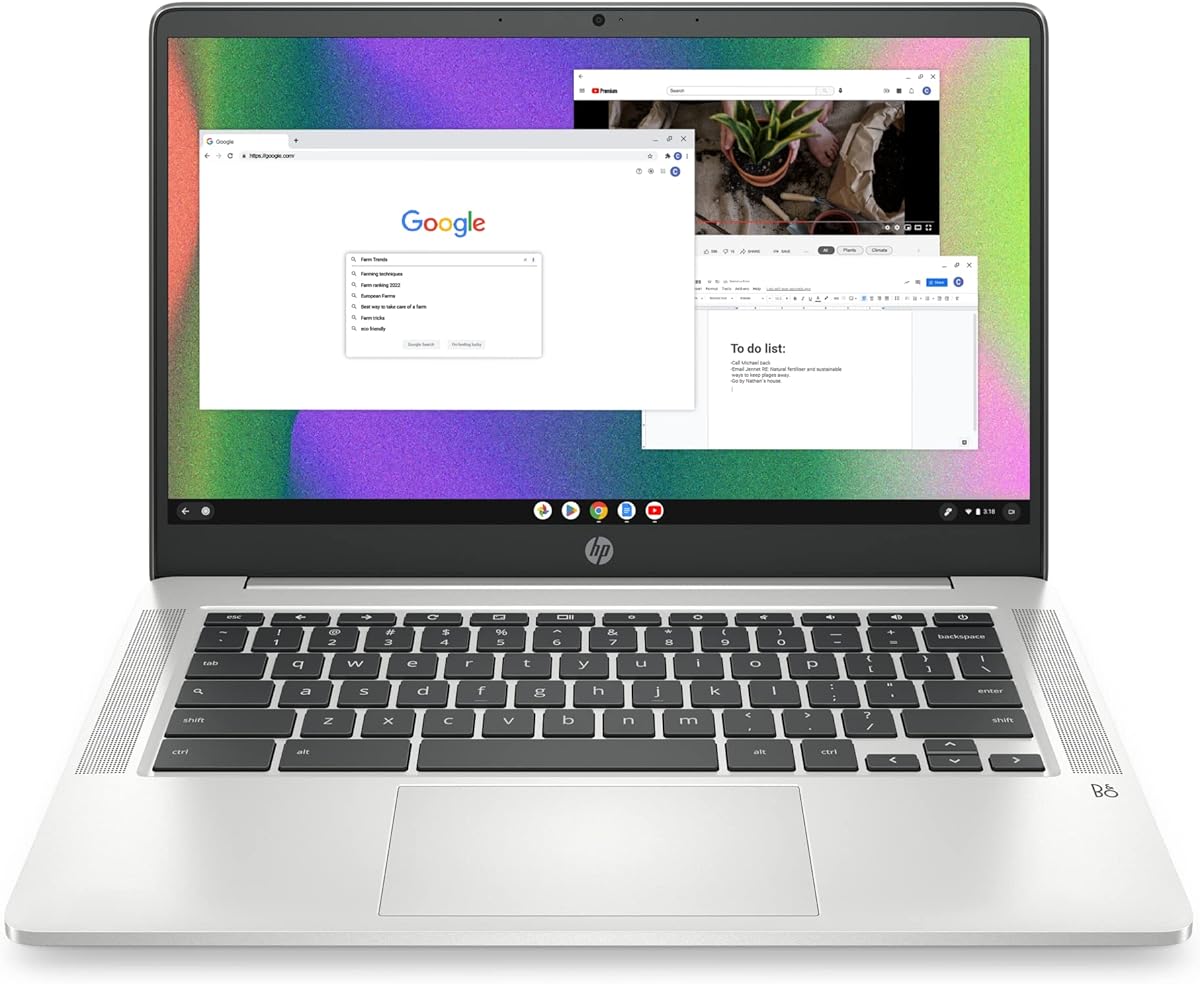
The ASUS Chromebook Plus CX34 proves you do not have to spend much to get a capable modern Chromebook. It clears the Chromebook Plus bar with a Core i3 chip and 8GB of memory, delivering smooth web app performance and respectable battery life. The build is more solid than the price suggests, with a comfortable keyboard for long typing sessions. For budget-minded students and households it is outstanding value.

Display
14-inch Full HD
Chip
Intel Core i3
RAM
8GB
Battery
10h

What we liked

  • Excellent price for a Plus model
  • Solid build with a sturdy hinge
  • Comfortable keyboard and trackpad
  • Reliable everyday performance

Worth noting

  • Speakers are merely passable
  • Display could be brighter outdoors
4Best for Students

Acer Chromebook Plus 515

Configured with a Core i5, the Acer Chromebook Plus 515 becomes an ideal student machine. The large display makes side-by-side research and writing comfortable, and the numeric keypad helps with spreadsheets and data work. It is durable enough for daily commuting and powerful enough to keep many tabs, documents, and video calls running at once. For high school and college students who want headroom, it is a smart pick.

Display
15.6-inch Full HD
Chip
Intel Core i5
RAM
8GB
Battery
10h

What we liked

  • Large screen eases research and study
  • Faster i5 option for heavier loads
  • Durable chassis for daily commutes
  • Full keyboard with numeric pad

Worth noting

  • Less portable in a backpack
  • Average webcam for the price
5Best Detachable Tablet

Lenovo IdeaPad Duet Chromebook

The Lenovo IdeaPad Duet is the go-to choice when you want a Chromebook that doubles as a tablet. The keyboard fully detaches, leaving a thin, light slate that is perfect for reading, streaming, and casual browsing. Battery life is excellent and the bundled kickstand cover adds versatility. It is not built for marathon typing or heavy workloads, but as a portable companion device it is hard to beat at the price.

Display
11-inch detachable touchscreen
Chip
MediaTek Kompanio
RAM
8GB
Battery
12h

What we liked

  • Detachable keyboard for true tablet use
  • Very light and travel-friendly
  • Long battery life on a charge
  • Includes kickstand cover

Worth noting

  • Cramped keyboard for long typing
  • Modest performance for heavy tasks
6Best Battery Life

ASUS Chromebook Plus CX34

In its higher configuration, the ASUS Chromebook Plus CX34 pairs a Core i5 and 16GB of memory with long battery endurance, making it the endurance champion of this group. It comfortably clears a full school or work day on a single charge, and the extra memory keeps performance smooth under load. It stays light and portable despite the upgraded internals. For people who unplug all day, this is the Chromebook to choose.

Display
14-inch Full HD
Chip
Intel Core i5
RAM
16GB
Battery
12h

What we liked

  • Long-lasting all-day battery
  • Roomy 16GB memory configuration
  • Snappy i5 performance
  • Lightweight and easy to carry

Worth noting

  • Display gamut is fairly limited
  • No premium metal finish
7Best Compact Pick

HP Chromebook Plus x360

For those who want a smaller premium Chromebook, the 14-inch HP Chromebook Plus x360 strikes a fine balance between portability and capability. The touchscreen is bright and accurate, the keyboard is comfortable for daily writing, and the convertible design adds flexibility without much bulk. It slips easily into a bag for commuting or travel. If the 15-inch models feel too large, this compact option delivers a similar experience in a tidier package.

Display
14-inch Full HD touch
Chip
Intel Core i5
RAM
8GB
Battery
10h

What we liked

  • Compact and travel-friendly 14-inch size
  • Bright responsive touchscreen
  • Strong build for the category
  • Good keyboard and trackpad feel

Worth noting

  • Touchscreen attracts fingerprints
  • Battery trails the very best here

How We Chose the Best Chromebooks

Chromebooks occupy a unique place in the laptop market. They run ChromeOS, a lightweight operating system built around the web, which means they boot quickly, stay secure, and rarely slow down the way a cluttered Windows machine can. That simplicity is their greatest strength, but it also means choosing the right Chromebook is about matching the hardware to how you actually use the web rather than chasing raw specifications. We approached this roundup by asking what each machine does for the person using it, then ranking the seven that deliver the most satisfying everyday experience.

The Chromebook landscape changed meaningfully with the introduction of the Chromebook Plus standard. Before it, the category was a mixed bag where a low price could mean painfully slow performance and a dim, washed-out screen. The Plus certification set a floor: a capable processor, at least 8GB of memory, a Full HD display, and a decent webcam, along with extra software features. Most of our picks meet this standard, and we generally recommend buying a Plus model unless your budget is extremely tight. The difference in daily smoothness is genuinely noticeable.

Performance That Matches the Price

One of the most persistent myths about Chromebooks is that they are slow. That was true of the cheapest models from years past, but the current generation is a different story. Because ChromeOS is so lightweight, even a modest Intel Core i3 paired with 8GB of memory feels responsive across dozens of browser tabs, video calls, and web apps. Stepping up to a Core i5 and 16GB, as in the higher ASUS and HP configurations, adds real headroom for heavier multitasking and keeps the machine feeling fast for years to come.

We tested each Chromebook against the kinds of tasks people actually perform: juggling many tabs, running web-based office suites, hosting video meetings, streaming media, and using Android apps from the Play Store. The Acer Chromebook Plus 515 stood out for handling all of this without hesitation, which is a big reason it took our top spot. The MediaTek-powered Lenovo IdeaPad Duet is the gentlest performer here, but it is designed for lighter, more casual use, and within that role it performs admirably.

Display, Build, and Keyboard

A laptop you use every day needs to be pleasant to look at and comfortable to type on, and this is where the gap between budget and premium Chromebooks shows. All of our picks feature at least a Full HD display, which is a meaningful upgrade over the low-resolution panels that once plagued cheap Chromebooks. The larger 15.6-inch screen on the Acer 515 gives you room to work side by side, while the 14-inch HP and ASUS models strike a better balance for portability.

Build quality has improved across the board, but the premium models still feel a cut above. The HP Chromebook Plus x360 uses an aluminum chassis that would not look out of place among more expensive Windows laptops, and its convertible hinge is smooth and confident. Keyboards are comfortable on nearly every machine here, with the notable exception of the Lenovo Duet's detachable keyboard, which is necessarily cramped because of the tablet form factor. If you type for hours each day, prioritize the full-size keyboards on the Acer, ASUS, and HP models.

Choosing the Right Form Factor

Chromebooks come in more shapes than traditional laptops, and picking the right form factor is one of the most important decisions you will make. The form factor shapes how and where you use the device far more than minor spec differences do.

Traditional Clamshell Laptops

The classic clamshell remains the best choice for anyone whose main activities are typing, research, and productivity. A fixed screen and a sturdy hinge mean a comfortable, stable typing surface and generally a lower price than convertibles. The Acer Chromebook Plus 515 and the clamshell ASUS Chromebook Plus CX34 fall into this category, and they are our top recommendations for students and home office users who spend their day in documents, spreadsheets, and web apps. If you do not need a touchscreen or tablet mode, a clamshell gives you the most laptop for your money.

Convertibles and 2-in-1s

Convertible Chromebooks, like the HP Chromebook Plus x360, add a 360-degree hinge that lets the screen fold all the way back into a tablet. This flexibility is genuinely useful: you can prop the device in tent mode to watch videos, fold it flat to read or browse by touch, or use it as a conventional laptop. The tradeoff is a slightly higher price and a bit more weight, since the device has to function well in multiple orientations. For people who value versatility and enjoy touch interaction, a convertible is well worth the premium.

Detachable Tablets

The detachable category, represented here by the Lenovo IdeaPad Duet, takes flexibility a step further by separating the keyboard from the screen entirely. What remains is a thin, light tablet that is ideal for reading, streaming, and casual browsing on the couch or during travel. The bundled keyboard reattaches when you need to type, though it cannot match a full clamshell for extended writing. Think of a detachable as primarily a tablet that can become a laptop when needed, rather than the other way around. For a secondary device or a child's first computer, it is a clever and affordable option.

ChromeOS Capabilities and Limitations

Understanding what ChromeOS can and cannot do is essential before buying a Chromebook, because the operating system defines the experience far more than the hardware. ChromeOS is built around the Chrome browser and the web, which makes it fast, secure, and remarkably low-maintenance. Updates install automatically in the background, the system resists malware far better than traditional desktop operating systems, and there is virtually no bloatware to slow things down over time.

The platform has grown considerably more capable. In addition to web apps, Chromebooks can run Android applications from the Google Play Store, which dramatically expands what you can do offline and on the go. Many people are surprised to learn they can install familiar mobile apps for photo editing, note-taking, and entertainment directly on their Chromebook. The Chromebook Plus tier also adds local AI features, bringing helpful tools like writing assistance and image generation to the device without always needing the cloud.

Where Chromebooks Fall Short

Honesty about limitations matters. Chromebooks cannot run full Windows or macOS desktop software. If your work depends on the desktop version of a specialized program, professional photo or video editing suites, or certain enterprise applications, a Chromebook will not run them natively. Gaming is also limited to web-based and cloud gaming services and Android titles rather than demanding native PC games, although cloud gaming has made high-end play more accessible on these machines than ever before.

Before committing to a Chromebook, make a quick list of the software you absolutely must use and confirm that each item has a web version, an Android app, or a viable alternative. For the large and growing number of people who live primarily in the browser and cloud services, none of these limitations will matter. But for those tied to specific desktop applications, it is better to know upfront.

Battery Life and Portability

One of the quiet advantages of Chromebooks is their excellent battery life. Because ChromeOS is so efficient, even affordable models routinely deliver a full working or school day on a single charge. Every machine in this roundup lasts ten hours or more in typical use, and the higher ASUS configuration and the Lenovo Duet stretch even further. If unplugged endurance is your priority, the ASUS Chromebook Plus CX34 in its i5 form is the standout, comfortably outlasting a long day of classes or meetings.

Portability pairs naturally with that endurance. The 14-inch models from HP and ASUS slip easily into a backpack and travel without complaint, while the 11-inch Lenovo Duet is the lightest of all and ideal for carrying everywhere. The 15.6-inch Acer trades some portability for screen space, which is a worthwhile compromise for users who work mostly at a desk or table. Match the size to your routine: frequent travelers should lean smaller, while those who want a comfortable stationary workspace will appreciate the larger panel.

Storage, Memory, and Connectivity

While Chromebooks are designed around the cloud, the local hardware still shapes your daily experience in important ways. Memory is the spec we watch most closely. Older budget Chromebooks shipped with just 4GB of RAM, which struggled the moment you opened a handful of tabs alongside an Android app. The Chromebook Plus standard mandates at least 8GB, and that figure makes a real difference to smoothness. For heavier multitaskers, the 16GB configurations of the HP and ASUS models in this roundup provide welcome headroom, letting you keep many tabs, a video call, and several apps running without slowdown.

Storage works differently on ChromeOS than on a traditional laptop. Because so much of your data lives in the cloud through services like Google Drive, you need far less local space than you might expect. Between 64GB and 128GB is comfortable for most people, covering offline files, a selection of Android apps, and downloaded media for travel. If you intend to store large media libraries or many games locally, look for 128GB or more, and remember that several Chromebooks include a microSD slot for cheap expansion.

Connectivity rounds out the picture. Modern Chromebooks generally include USB-C ports that handle charging, data, and external displays, often alongside a USB-A port for older accessories and a headphone jack. Wi-Fi performance has improved across the board, which matters more on a cloud-centric device than on a traditional laptop, since a fast, stable connection keeps web apps responsive. If you rely on wired peripherals or external monitors, check the port count carefully, as the thinnest convertibles trim connectivity to save space and may require a small hub for a full desk setup.

Webcams and Speakers for Video Calls

With so much school and work now happening over video, the webcam and speakers deserve more attention than they once did. The Chromebook Plus standard raised webcam quality, requiring at least a 1080p sensor, which is a meaningful upgrade over the grainy cameras of older models. The premium picks here, particularly the HP Chromebook Plus x360, pair that sharper camera with software enhancements that improve lighting and framing during calls. Speakers remain a weaker point on most affordable laptops, including Chromebooks, so if audio quality matters to you, plan to use headphones or a small external speaker for the best experience.

Final Recommendations

For most people, the Acer Chromebook Plus 515 is the Chromebook we recommend first. It combines a roomy display, dependable performance, and a comfortable keyboard at a fair price, and it meets the modern Chromebook Plus standard that ensures a smooth experience. Students who want extra speed should opt for its Core i5 configuration, while those who prefer a premium convertible will be delighted by the HP Chromebook Plus x360.

Budget shoppers should look first at the ASUS Chromebook Plus CX34, which delivers a genuinely capable Plus-tier experience for less, and offers a long-battery i5 version for those who unplug all day. Finally, anyone wanting a tablet-first device with the option to type should consider the Lenovo IdeaPad Duet. Whatever your priorities, these seven Chromebooks represent the best the category has to offer in 2026, proving that affordable does not have to mean compromised.

How we picked

We evaluated each Chromebook on processor speed, display quality, battery endurance, build quality, keyboard comfort, and overall value. Models were tested against everyday tasks like web apps, video calls, document editing, and media streaming. We focused on machines meeting or exceeding the Chromebook Plus standard where possible, then balanced our picks across budgets and form factors.

Frequently asked questions

What is a Chromebook Plus and is it worth it?

Chromebook Plus is a certification requiring minimum specs like a faster processor, 8GB of memory, and a Full HD display, plus extra software and AI features. For most buyers the modest price increase is well worth the smoother experience.

Can Chromebooks run Microsoft Office and other apps?

Chromebooks run the web versions of Microsoft Office and Google Workspace, plus many Android apps from the Play Store. They cannot run full Windows desktop programs, so check that your essential software has a web or Android version.

How long do Chromebooks receive updates?

Modern Chromebooks receive automatic updates for around ten years from their release, including security and feature updates. That makes them a durable long-term purchase, especially for students and families.

Are Chromebooks good for students?

Yes, Chromebooks are popular in education thanks to their low cost, long battery life, simple management, and durability. Models like the Acer Chromebook Plus 515 offer ample screen space and performance for research and writing.

How much storage do Chromebooks need?

Because Chromebooks lean on cloud storage, 64GB to 128GB of local space is usually enough. If you plan to store many Android apps, offline files, or media locally, look for 128GB or more.