Best Overall
SHOKZ OpenRun Pro
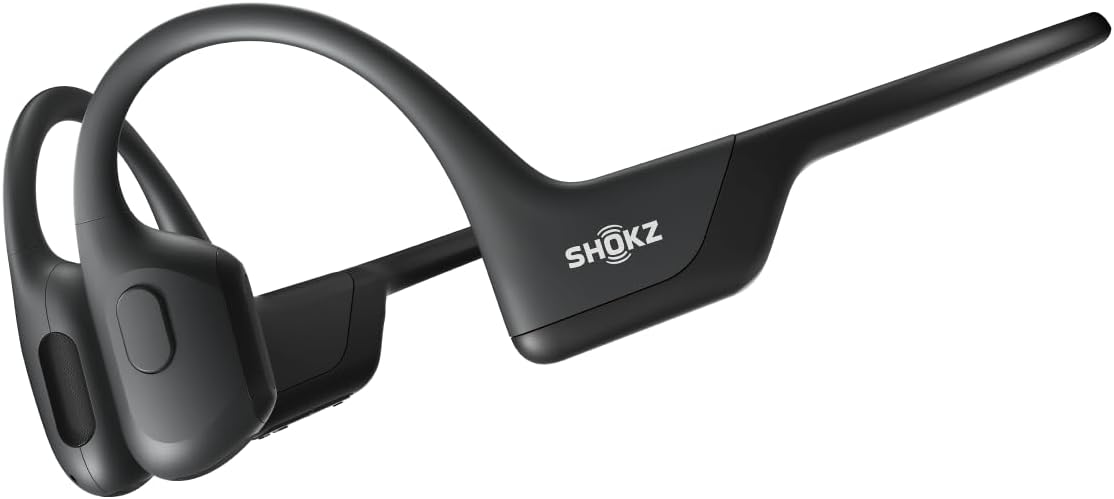
- TurboPitch bone conduction with richer bass
- 10-hour battery plus 5-minute quick charge
- Includes Shokz hair band for stable runs
Expert Review & Guide
Bone conduction headphones solve a problem sealed earbuds create on purpose: they leave your ear canals open so traffic, trail chatter, and coach cues stay audible while music rides along through your cheekbones. In 2026 the category splits cleanly between featherweight Bluetooth runners, hybrid dual-driver land sets with longer batteries, and true IPX8 swim models that switch into onboard MP3 mode underwater. This guide ranks ten pack products across those jobs instead of pretending one frame fits every athlete.
We prioritized secure open-ear fit, honest waterproof ratings, usable playtime, and sound that stays intelligible outdoors—not marketing adjectives alone. SHOKZ OpenRun Pro still sets the overall benchmark with TurboPitch tuning and race-day manners, while PSIER’s dual-driver IPX8 pair leads the pool and a dual-driver LED Bluetooth 6.0 set wins for feature-rich land training. Everywhere else, we call out tradeoffs: Bluetooth will not stream underwater, bass has physical limits, and louder volume always means more leakage.
Use the top picks if you want a fast shortlist, then scan the comparison table and full reviews before you buy. Whether you are replacing aching in-ear tips for marathon training or building a phone-free lap playlist, the right bone conduction headset is the one matched to water exposure, battery rhythm, and how much environmental awareness you actually need.


As an Amazon Associate we earn from qualifying purchases. We may earn a commission at no additional cost to you.
This table lines up every headset in the pack by fit focus, wireless generation, endurance, and water protection so you can shortlist runners, commuters, and swimmers before reading the deeper reviews.
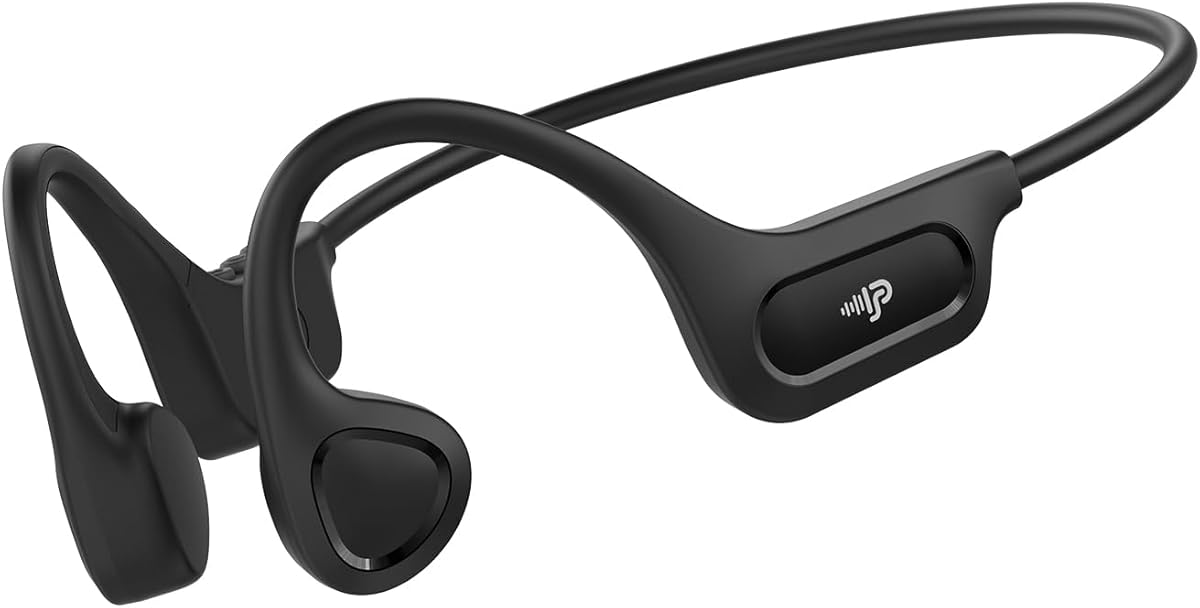
PSIER 2026 Upgrade Bone Conduction
The PSIER 2026 Upgrade Bone Conduction Headphones are the pick we reach for when weight and all-day comfort matter more than brand pedigree. At about 23 grams with a flexible memory-titanium frame, they disappear on the head faster than heavier open-ear sets. That matters on tempo runs, lunch-break walks, and desk stretches where ear-canal buds start to ache after an hour. Bone conduction still sends vibration through the cheekbones, so the first few sessions can feel unusual, but most runners adapt quickly once they stop expecting in-ear isolation.
Bluetooth 6.0 is the practical upgrade here. Pairing from a phone or watch is snappy, the claimed sixty-millisecond latency keeps podcasts and video coaching in sync, and the roughly thirty-three-foot range holds up around a typical gym or home office. Large 13 mm transducers and the sealed-cavity tuning aim for clearer mids and less splashy leakage than older budget bone-conduction frames. You still will not get club-level sub-bass, yet vocals and cadence cues stay intelligible outdoors without sealing your ears shut.
Battery life is rated near ten hours at half volume, with about two hours for a Type-C refill and a long standby window when the headphones sit unused. That covers most training weeks if you charge once or twice. IPX5 protection handles sweat and sudden rain, which is the right bar for road and trail running. Do not treat them as swim gear; for pool laps you need one of the IPX8 MP3 models later in this roundup.
Fit comes from the wraparound titanium band plus an adjustable strap in the box for smaller heads or high-intensity intervals when bounce increases. Keep the transducers pressed gently against the cheekbones just in front of the ears—too loose and volume collapses, too tight and temples fatigue. Glasses and cycling helmets coexist reasonably well because nothing occupies the ear canal, though thick temple arms can crowd the contact pads on some face shapes.
The Boean app is optional but useful if you want Bass Boost, vocal-forward curves, or genre presets instead of living with the default balance. AI song generation is a novelty more than a training tool, yet the EQ controls are genuinely helpful for podcasts versus rock playlists. Call quality with the onboard mic is fine for sidewalk check-ins; wind and traffic still compete the way they do on most open-ear designs.
Choose these if you want a modern Bluetooth 6.0 runner that prioritizes featherweight comfort and situational awareness over premium branding. Skip them if you need underwater music, maximum bass, or the polished support ecosystem of a flagship like the SHOKZ OpenRun Pro. For dry-land mileage, commuting, and gym circuits, they earn their place as our featherweight daily pick.
Road runners, walkers, and hybrid athletes who hate ear-canal pressure will get the most from this model. It also suits office workers who want open-ear podcasts without missing hallway conversations. If your primary sport is swimming or open-water, jump ahead to the IPX8 PSIER options instead.
Pair once, then seat the pads firmly on the cheekbones and test at conversational volume outdoors before a hard workout. Use the strap for interval days. Lower volume near other people to cut leakage, and wipe sweat from the pads after humid sessions so the silicone stays grippy.
Lighter than the CXK and dual-driver LED models, with newer Bluetooth than the Ogogrs Bluetooth 5.3 pair. It lacks the swim MP3 storage of the IPX8 PSIER units and the TurboPitch polish of SHOKZ, but it undercuts those strengths with everyday comfort and a simple Type-C routine.
We may earn a commission at no additional cost to you.

New Bone Conduction Bluetooth 6.0
This New Bone Conduction Headphones Bluetooth 6.0 set stands out when you want simple sound shaping without installing a separate app first. Vocal, Bass, and Balanced modes cover the three situations open-ear listeners actually hit: spoken word, workout playlists that need more thump, and a middle setting for everyday mixed listening. Switching profiles on the fly is more useful than a dozen buried EQ sliders when you are mid-run and your playlist flips from a coaching track to electronic music.
At roughly 25 grams with a flexible neckband, the frame sits in the sweet spot between ultralight PSIER runners and heavier feature-packed dual-driver models. The open-ear structure keeps canals clear, so airflow and awareness remain the point of the category. Anti-leak tuning helps a bit for shared spaces, though no bone-conduction headset is truly private at high volume on a quiet train.
Bluetooth 6.0 brings fast pairing and dual-device connection, which is the underrated convenience feature here. Leave a laptop and phone paired, then hop between a video call and a training playlist without hunting through Bluetooth menus. The microphone covers quick calls; as always with open-ear designs, expect outdoor wind to compete more than a sealed bud mic would.
Ten hours of playtime and Type-C charging keep the routine simple for weekday training blocks. IP65 waterproofing is a step up from basic IPX5 sweat resistance—better against directed spray and messy weather—yet it still is not a swim rating. Leave these in the gym bag, not the pool bag.
Sound character depends heavily on which EQ you leave engaged. Balanced is the default recommendation for mixed libraries. Vocal clarifies coaching apps and audiobooks. Bass Mode adds warmth for electronic and hip-hop, though physics still limits how deep open-ear transducers can go compared with foam-sealed tips. Treat Bass Mode as a helpful nudge, not a subwoofer replacement.
We like this model for multitaskers who bounce between desk work and outdoor sessions and want EQ presets plus dual connect without paying for a heritage sports brand. If you need underwater MP3 playback, SHOKZ-level refinement, or the absolute lightest frame in the pack, other picks fit better. For mixed-use athletes who value practical sound modes, it is an easy recommendation.
Ideal for hybrid commuters, gym-plus-desk days, and cyclists who want stronger splash resistance than entry IPX5 frames. Less ideal for lap swimming or listeners chasing audiophile bass extension.
Start in Balanced for a week so you learn the stock voicing. Move to Vocal for podcasts and coaching. Use Bass Mode outdoors where ambient noise masks low end, then drop back when you return indoors to avoid excess vibration against the cheekbones.
We may earn a commission at no additional cost to you.

Raycon Bone Conduction Open-Ear
Raycon’s Bone Conduction Headphones land in this roundup as the awareness-tuning specialist. The standout hardware trick is simple: slide the pads closer for louder perceived volume or ease them back when you want more of the street in the mix. That physical control matters more than another software EQ when you move from a quiet path to a busy intersection and need to retune situational awareness without unlocking a phone.
Raycon markets balanced bone-conduction sound that avoids sealing the ear canal, which matches how most people actually use this category—podcasts on walks, playlists on easy runs, and calls between errands. Vibration-based audio will never isolate like ANC over-ears, and that is the point. You stay connected to traffic, gym timers, and conversation while still carrying a soundtrack.
The roughly thirteen-hour playtime claim is one of the stronger endurance numbers among non-swim models here, edging past many ten-hour frames if your weeks include stacked commute-plus-workout days. IP68 resistance is also aggressive for a running-focused open-ear set, covering sweat, rain, and messy weather better than lighter IPX5 competitors. Still, IP68 on a bone-conduction runner is not the same product category as an IPX8 headset with onboard MP3 storage for pool use—Bluetooth underwater remains a non-starter across the board.
Ergonomics follow the familiar wraparound lightweight pattern. The frame is meant to stay put for running and gym work without the ear fatigue of tips that swell in humid canals. As with every open-ear design, cheekbone contact quality determines loudness more than the volume number on your phone. Take two minutes on day one to map the sweet spot for your face shape.
Raycon’s brand recognition helps if you care about retail familiarity and a more mainstream unboxing experience than no-name sports listings. The tradeoff is a 4.1 average rating in our pack data, which sits below several five-star Bluetooth 6.0 newcomers. Read recent owner notes for fit quirks on your head size, and remember that bone conduction always divides listeners who expect sealed-bud bass.
Pick Raycon if adjustable pad placement and long dry-land battery life matter more than swim storage or the absolute newest Bluetooth chipset. Choose SHOKZ if you want the category benchmark for turbocharged bass presentation, or a PSIER IPX8 model if the pool is non-negotiable. For storm-season runners who like tactile control over awareness, Raycon remains a thoughtful mainstream option.
Commuters, outdoor walkers, and gym users who want a known brand and the ability to physically retune how much of the world they hear. Swimmers and deep-bass fans should look elsewhere in this guide.
Seat the transducers consistently before each run so volume does not swing mid-workout. After heavy rain or sweat, dry the contacts and charging area thoroughly. Use the slide adjustment deliberately at intersections rather than maxing phone volume, which only increases leakage.
SHOKZ still leads on refined TurboPitch tuning and sport-focused polish, including a hair band in the box. Raycon counters with longer claimed endurance and that distinctive pad-slide awareness control. Preference depends on whether you prioritize brand-honed sound or adjustable open-ear behavior.
We may earn a commission at no additional cost to you.
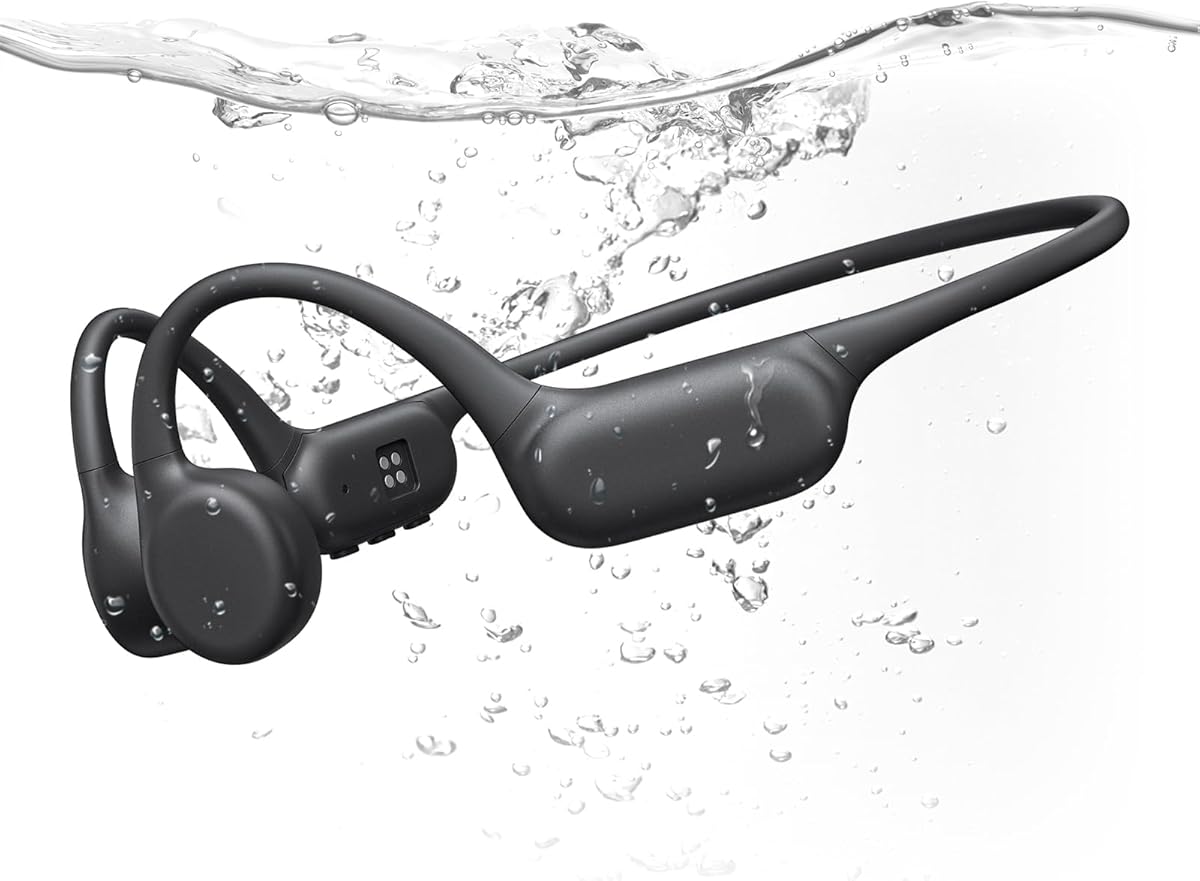
PSIER IPX8 Swimming MP3 Headphones
The PSIER IPX8 Swimming MP3 Headphones are the gateway swim-and-run hybrid in this pack. Where most open-ear sports headphones stop at sweat ratings, this model is certified IPX8 for submersion up to two meters for an hour, paired with a fully sealed coating and a dedicated MP3 pathway. That combination is what makes pool training with music realistic instead of aspirational.
Onboard 32GB storage is the feature that unlocks underwater listening. Bluetooth radio links fail in water, so you double-click into MP3 mode, play files stored on the headphones, and leave the phone in a locker. Manufacturer guidance suggests room for thousands of tracks depending on bitrate—more than enough for season-long swim playlists. Magnetic charging doubles as the bridge to a computer when you need to copy files onto the internal storage.
Out of the water, Bluetooth 6.0 behaves like a modern running headset: low-latency streaming, multi-device switching, and open-ear awareness for deck traffic or outdoor cooldowns. Eight hours of Bluetooth playtime covers most dual-sport days even if it is not the longest number in this roundup. Expect to charge more often during heavy swim weeks because cold water and continuous vibration use can nudge real-world endurance below the headline figure.
Comfort comes from soft silicone cushions and an open-ear frame that plays nicer with goggles and caps than in-ear plugs. The included adjustable strap is not optional theater—use it for flip turns and harder kick sets when buoyancy and motion try to shift the band. Keep transducers aligned on the cheekbones; water and cap pressure can move a loose fit enough to thin out the sound.
Fourteen-millimeter bone-conduction drivers and a mic for dry-land calls round out the package, while the Boean app again offers AI music toys and EQ for Bluetooth sessions. Underwater, you are limited to what you preloaded, so build a dedicated swim playlist instead of relying on streaming. Sound underwater is still vibration-based and will feel different from deck listening—test a short set before race-week practices.
Buy this PSIER if you want a credible first swim-capable bone-conduction headset without jumping straight to the dual-driver sibling. Choose the dual-driver PSIER if bass depth is your priority, or stay with SHOKZ or the featherweight PSIER 2026 model if you never enter a pool. For athletes splitting weeks between lanes and roads, this is the practical entry IPX8 pick.
Charge fully, connect the magnetic cable to a computer, copy a folder of swim tracks, switch to MP3 mode before entering the water, and confirm playback on deck. After swimming, rinse chlorine or salt briefly as appropriate, dry the contacts, and avoid forcing the charge cable onto a wet port.
If you already know bone conduction’s bass limits bother you, the bone-plus-air dual-driver PSIER later in this guide is the better spend. This IPX8 model is ideal when you want proven swim storage and Bluetooth 6.0 at a simpler feature level.
We may earn a commission at no additional cost to you.
PSIER Dual-Driver IPX8 Swim Headphones
PSIER’s Dual-Driver IPX8 Swim Headphones are our top swimming recommendation in this roundup because they attack the category’s classic complaint: thin bass. By combining bone conduction with an air-conduction path, the dual-driver system aims for clearer highs and roughly thirty percent more bass than PSIER’s single-driver swim model. You still will not mistake them for closed studio headphones, but workout playlists sound fuller on deck and more present once you adapt to underwater vibration.
The swim credentials match the simpler PSIER IPX8 sibling: submersion rated to two meters for an hour, sealed coating, and a mandatory jump to MP3 mode in water. Thirty-two gigabytes of storage is generous for offline libraries, and Bluetooth 6.0 handles everything above the surface with low latency. That dual personality—phone-free lanes, phone-connected roads—is exactly what triathlon and masters swimmers need from one wearable.
Eight hours of music and calls is enough for stacked sessions if you charge after heavy days. Magnetic charging reaches full in about two hours, which fits neatly between morning swim practice and an evening brick workout. The liquid silicone exterior is intentional for wet sports: it cooperates with caps, goggles, sunglasses, and helmets better than harder plastic bands that shift when gear compresses the temples.
Open-ear awareness remains valuable on busy pool decks and open-water starts where you need coaches, lap counters, or sighting cues. In the water, awareness becomes less about traffic and more about comfort and seal integrity. Build your playlist at home, verify MP3 mode on deck, and avoid mid-set Bluetooth troubleshooting that cannot succeed underwater anyway.
App support mirrors other PSIER units with AI-driven soundscapes and customizable profiles for Bluetooth listening. Use that flexibility for dry-land sports, then keep a separate, simpler folder structure for swim MP3s so you are not scrolling underwater menus that do not exist. Call performance on land is typical for the class—clear enough in calm spaces, challenged by wind.
If swimming is central to your week, start here rather than forcing a sweat-rated runner into a chlorine environment it was never built for. If you only swim occasionally and care more about refined dry-land sound, SHOKZ OpenRun Pro or the dual-driver LED land model may satisfy you without the MP3 workflow. For dedicated pool athletes who still want open-ear comfort, this PSIER is the best swim-focused package in the pack.
Masters swimmers, triathletes, and anyone logging frequent pool sessions who also jogs or cycles. Casual splash-proof gym users do not need IPX8 complexity and can save attention for lighter Bluetooth 6.0 runners.
Expect richer low-mid energy and clearer vocals than basic bone-only frames, especially in Bass-oriented app profiles. Do not expect noise isolation. Outside noise and water acoustics still shape what you hear, so judge the headphones in your real training environment.
Choose this dual-driver version when sound fullness matters. Choose the other IPX8 PSIER when you want the swim feature set with a simpler single-driver approach and potentially an easier decision if bass is a secondary concern.
We may earn a commission at no additional cost to you.
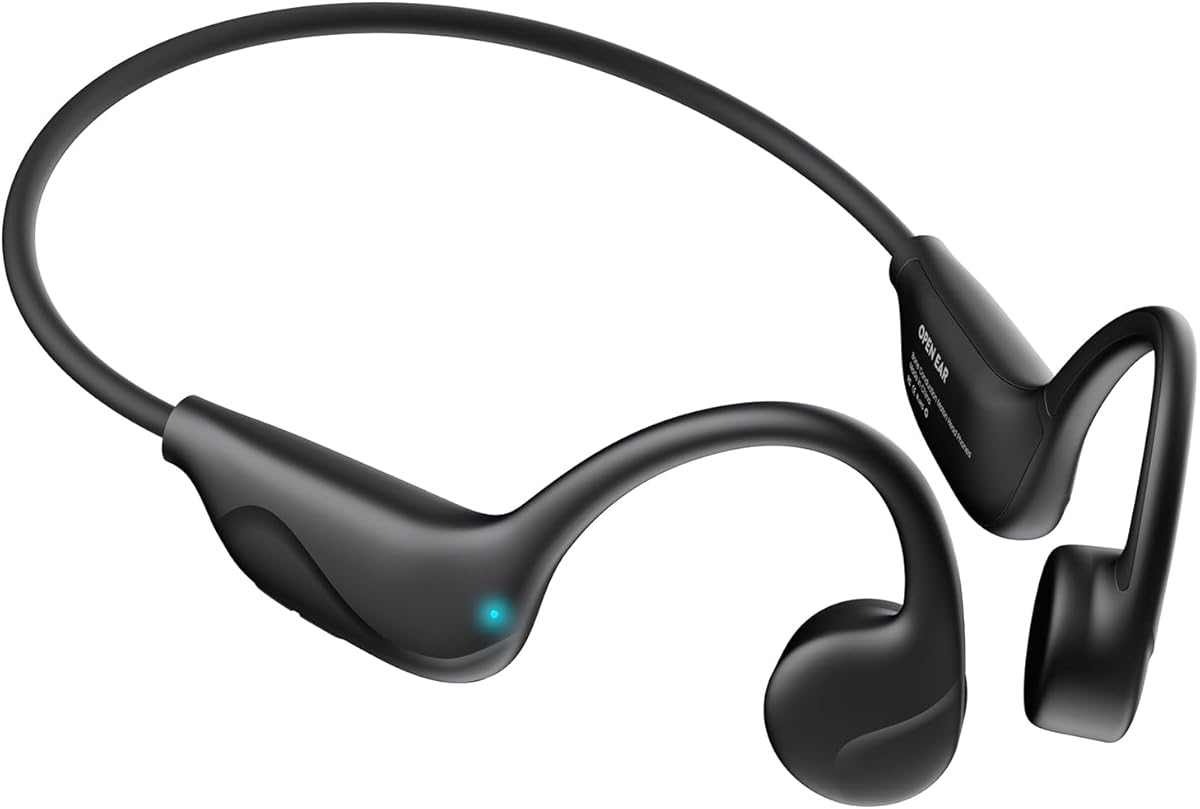
Pitch Black 12-Hour Bone Conduction
The Pitch Black 12-Hour Bone Conduction Headphones are the no-drama endurance pick for athletes who want Bluetooth 6.0, open-ear safety, and a longer battery without paying for swim storage they will never use. Twelve hours of playtime is the headline, and it is the right headline for people who stack commuting, walking meetings, and evening gym work on one charge.
The design language is familiar on purpose: innovative bone conduction through the cheekbones, ears fully open, lightweight flexible frame, and a secure sport fit. That formula exists across this category because it works. Where this model differentiates itself in our pack is the combination of a twelve-hour claim with a simple feature set that does not force an app-first experience before you can train.
IPX5 waterproofing matches standard sweat-and-rain expectations for running and gym use. It is enough for humid workouts and unexpected drizzle, not for pool immersion or high-pressure rinsing. If your weather is routinely severe, Raycon’s IP68 or the IP65 Bluetooth 6.0 EQ model offer stronger environmental ratings in exchange for other tradeoffs.
Sound quality is presented as HD wireless audio suitable for running, cycling, and gym playlists. In practice, judge it like every open-ear set: clear enough mids for coaching cues, moderate bass, and volume that depends on cheek contact. The microphone supports quick calls, which is handy when a coach or coworker pings you between intervals.
Because several products in this space share near-identical marketing phrases, focus on the concrete specs when you order: twelve-hour battery, Bluetooth V6.0, IPX5, and the pitch-black finish tied to this ASIN. That discipline prevents accidental cross-shopping with lookalike titles that change endurance or waterproof numbers.
Recommend this pair to walkers, joggers, and indoor-outdoor gym users who want maximum simple runtime. Look elsewhere for swimming, dual-driver bass emphasis, or premium TurboPitch tuning. As a clean twelve-hour trainer, it fills a useful lane between ultralight ten-hour runners and loaded feature phones-for-your-face designs.
Great for zone-two days, treadmill blocks, and errands where you forget you are wearing headphones. If you wear glasses, verify temple clearance; most open-ear bands coexist well, but thick frames can compete for real estate.
Move to the dual-driver LED model if you want a battery gauge on the headset and game-mode latency tricks. Move to SHOKZ if refined sport sound matters more than raw hour count. Move to PSIER IPX8 if chlorine enters the weekly plan.
We may earn a commission at no additional cost to you.

CXK Bluetooth 6.0 Open-Ear Headphones
CXK’s Bluetooth 6.0 Open-Ear Headphones target people who felt earlier bone-conduction sets were too quiet outdoors. High-performance drivers and a loudness-forward presentation help podcasts and playlists cut through wind and street noise without forcing an unsafe volume spiral as quickly. That makes them a strong commuting and path-running option when awareness still matters but you are tired of vanishing audio.
Bluetooth 6.0 underpins fast pairing and a stable everyday link, while the microphone covers calls on sidewalks and in parking lots. Ten hours of mixed music and talk time aligns with the category norm and pairs with roughly two-hour magnetic recharges. The wraparound titanium-style frame at about 28 grams is heavier than the 23-gram PSIER runner, yet still light enough for all-day desk-to-errand wear.
Water protection is a highlight: the about text specifies IPX7 protection against sweat and rain for workouts and outdoor adventures, even though some title shorthand says IPX6. Either way, the product intent is clearly weather-ready sports use, not underwater MP3 swimming. Do not take them into the pool; do trust them more than fragile IPX4 fashion buds when summer storms roll in.
Boean app integration mirrors other PSIER-adjacent ecosystems in this pack, with AI song generation and EQ profiles for bass, vocals, and genres. If you buy CXK specifically for louder stock sound, still try a vocal EQ for talk-heavy libraries so consonant clarity stays high when traffic rises. Leakage increases as volume climbs—common physics for open-ear audio—so be courteous on transit.
Secure fit during running and cycling depends on consistent cheek contact and the flexible band’s spring. Helmets and glasses are compatible in the usual open-ear way, with the caveat that everything is sharing the same temple neighborhood. After sweaty sessions, dry the magnetic charge points before returning the cable.
Choose CXK when outdoor intelligibility is your main complaint with bone conduction. Choose SHOKZ for a more polished sport-audio reputation, the dual-driver LED set for onboard battery display and game mode, or a PSIER IPX8 model when swimming dominates. As a loud, weather-ready land headset, CXK earns a clear commuting badge.
Use slightly higher volume only in wind, then reduce it indoors. Keep one ear’s environmental channel mentally prioritized at crosswalks—open-ear helps, but distraction is still possible. Store the magnetic cable in a side pocket so gym-bag lint does not foul the connector.
Raycon offers longer claimed playtime and sliding awareness control with IP68 marketing. CXK counters with Bluetooth 6.0, app EQ, and a loudness-oriented driver presentation. Pick based on whether endurance-plus-adjustability or modern connectivity-plus-volume is the higher priority.
We may earn a commission at no additional cost to you.

Ogogrs Open-Ear Sports Headphones
The Ogogrs Open-Ear Sports Headphones are the starter lane in a pack full of Bluetooth 6.0 and swim-ready flagships. That is not an insult—many buyers only need clear vibration audio, a flexible titanium frame, ten-hour battery life, and Type-C charging for running and gym work. If you are testing whether bone conduction fits your face and habits, a simpler Bluetooth 5.3 set can be the lower-friction experiment.
Ogogrs emphasizes strong volume and clear transmission through bone conduction, plus a mic suitable for remote meetings when you are not sprinting into headwinds. Open-ear safety is the core lifestyle promise: hear traffic and coworkers while a playlist rides along. Compared with traditional earplugs or earmuffs, that awareness trade remains the reason this category exists.
Expect Bluetooth 5.3 to feel familiar and generally stable, even if it lacks the newest dual-connect and latency talking points of Bluetooth 6.0 models above. For music and calls on a single phone, the practical difference is often smaller than marketing implies. Power users who juggle laptop and phone all day may still prefer the dual-device Bluetooth 6.0 options.
IP55 waterproofing covers many sports—running, hiking, cycling, and sweaty circuits—but it sits below IP65, IP67, IP68, and IPX8 alternatives in this article. Treat rain as a maybe, not a mission. Ten-hour endurance and Type-C fast charging are enough for typical training weeks if you top up after long weekend efforts.
Comfort depends on the usual titanium wraparound virtues: bendable toughness, low fatigue, and stability during high-intensity work. Giftability is part of the listing angle, which makes sense—open-ear headphones are a common “try this category” present for walkers who bounce sealed buds out of their ears.
Buy Ogogrs when you want a straightforward open-ear trainer and can live without swim mode, dual drivers, or the newest radio. Upgrade to PSIER 2026, CXK, or the dual-driver LED model when you know you will stick with bone conduction and want newer connectivity or louder dual-path sound. As a budget-minded starter, it keeps the barrier to entry honest.
Wear them on an easy walk before a race-pace run. Confirm the pads do not hot-spot behind sunglasses. Test a call in a quiet room, then outside, so you know the mic’s limits. If you love the form factor but want more features, use this week as calibration for your next upgrade.
Swimmers, storm-all-day trail runners, and anyone specifically shopping for Bluetooth 6.0 dual-device convenience should skip ahead. This model is for dry-land basics done simply.
We may earn a commission at no additional cost to you.
SHOKZ OpenRun Pro remains the benchmark against which we judge every other bone-conduction headset in this guide. That is not nostalgia; it is because ninth-generation transducers with TurboPitch still deliver a more complete sense of bass, clarity, and usable volume than most value frames while keeping the open-ear safety story intact. If you want the category to sound as good as it currently can for running, start here.
The bud-free fit is the comfort thesis SHOKZ popularized for mainstream sports: nothing in the canal, titanium wraparound stability, and a secure seat during intervals, trail chatter, and gym lifts. OpenRun Pro includes a Shokz hair band, which is a small accessory that makes a real difference for high-pony runners and anyone whose band shifts when sweat reduces friction. Awareness of traffic and trail users stays central to the design instead of being an afterthought.
Ten continuous hours of music, calls, and podcasts covers most training days, and the five-minute quick charge for about 1.5 hours of use is the feature you appreciate the morning you overslept. Sweat resistance is built for workouts and running rather than underwater libraries—pair OpenRun Pro with a dedicated IPX8 PSIER if you need lanes and roads in one lifestyle, or accept phone-free swim gear as a second device.
Sound is still bone conduction, so physics applies: vibration path, cheek contact, and open ear canals shape the experience. Within those constraints, TurboPitch is why SHOKZ keeps winning “best overall” slots. Vocals are clearer at safer volumes, and bass has more body for rock and pop than thinner single-driver bargains. Podcast people and playlist people both tend to settle in faster than they do on harsh budget tuning.
The built-in mic handles training calls and quick coordination with a running partner. As with all open-ear mics, wind remains the enemy; cupping the mic area or pausing in a sheltered spot helps. Connectivity is mature and predictable for phones and watches even without chasing every Bluetooth 6.0 marketing line the newer generics print.
OpenRun Pro is the default recommendation for runners and hybrid athletes who want the most polished dry-land experience and are willing to pay for refinement. Choose a dual-driver LED or PSIER 2026 model when you want newer radios and lighter price pressure. Choose PSIER IPX8 dual-driver when the pool is the point. For best overall bone conduction in 2026 training, SHOKZ still sets the standard.
Dedicated runners, race-day athletes, and anyone upgrading from disappointing generic open-ear sets. Also strong for walkers who listen for hours and want fewer hot spots than in-ear tips create.
Rinse sweat with a lightly damp cloth, dry thoroughly, and use the five-minute top-up strategically before short workouts. Store the hair band with the headphones so you actually use it on hard sessions.
Dual-driver value models try to close the bass gap with hybrid hardware and sometimes win on paper features like LED meters or game mode. SHOKZ still wins on cohesive tuning, accessory thoughtfulness, and long-earned sport credibility. Feature hunters can go hybrid; sound-first runners should stay with OpenRun Pro.
We may earn a commission at no additional cost to you.
Dual-Driver LED Bone Conduction
The Dual-Driver LED Bone Conduction Headphones are the feature-maximist land pick: hybrid bone-plus-air drivers, Bluetooth 6.0, dual-device connection, a low-latency game mode, IP67 weather toughness, roughly twelve hours of playtime, and an LED battery display so you are not guessing at twenty percent. If you want one open-ear headset that covers training, commuting, casual mobile games, and long days away from a charger, this configuration is hard to ignore.
Dual-driver architecture separates responsibilities across bone and air paths so lows and highs feel less congested than single-transducer budget sets. The result is stronger perceived bass and clearer detail without sealing your ears. It is the same broad strategy as PSIER’s swim dual-driver model, applied to a land-first IP67 product with more endurance and status feedback.
Bluetooth 6.0 keeps pairing fast, while game mode trims latency for better audio-visual sync when you cool down with a mobile game or watch short training clips. Dual-device connection helps phone-and-tablet households. None of that replaces a quiet mic booth, but it does make the headset more than a single-sport accessory.
Comfort is managed through a flexible titanium frame, non-slip silicone, and an ergonomic band at about 29 grams. That weight is still light in absolute terms, yet you will notice it compared with the 23-gram PSIER daily runner. Glasses and helmets remain compatible if you take a minute to nest the band cleanly. The LED meter is the quality-of-life win—glance before a long trail outing instead of learning mid-climb that you are about to die at twelve percent.
IP67 protection is excellent for rain and sweat and still not a license to swim with streaming audio. Leave underwater libraries to the IPX8 MP3 PSIER models. For everyone else training through humid summers and autumn storms, IP67 is a confidence builder that outclasses IP55 starters.
This is our best dual-driver land value recommendation: richer sound potential, modern connectivity, and battery transparency in one package. SHOKZ may still sound more refined out of the box for pure running, and ultralight PSIER wins on disappear-on-your-head comfort. If you want the toolbox approach without swim storage, start here.
Multi-context users who run, commute, take calls, and want hybrid sound plus a battery display. Also appealing to mobile gamers who dislike sealed buds but still care about latency.
Pair both devices you actually use, then test game mode with a short video to hear the latency difference. Keep the LED facing an angle you can see when the headphones are worn, and clean the silicone coating so the band does not slip when the display says you still have hours left.
SHOKZ wins polish, quick-charge maturity, and sport-specific brand trust. This dual-driver set wins on visible battery status, hybrid hardware, game mode, and newer Bluetooth feature talkers. Enthusiasts who prioritize tuning should pick SHOKZ; enthusiasts who prioritize features-per-ounce of gear should pick this.
We may earn a commission at no additional cost to you.
Buy bone conduction when you want music without plugging the canal. That is a safety and comfort choice, not an audiophile isolation choice. If you need to drown a subway or office, look at noise-cancelling over-ears instead. If you run roads, cycle shared paths, supervise kids at the park, or hate ear fatigue, open-ear is the correct tool.
Awareness is not magic autopilot. You can still zone out at high volume. Keep levels moderate in traffic, and practice glancing and listening the same way you would with no headphones at all.
IPX5 and IP55 cover sweat and light rain for gym and road work. IP65 and IP67 improve confidence in storms and messy weather. IP68 on a land runner is strong weather armor, not automatically a swim product. IPX8 with sealed construction plus onboard MP3 mode is what you need for pool and open-water listening.
Never assume Bluetooth will work underwater. Water blocks the radio. Swim-capable models in this guide require preloaded files and an explicit MP3 mode switch before you dive in.
Ten hours is the modern baseline for daily runners. Twelve to thirteen hours helps stacked commute-plus-workout days. Eight hours on swim hybrids is still workable if you charge after heavy double days. Quick charge, as on SHOKZ OpenRun Pro, can rescue early sessions better than a raw hour count suggests.
Magnetic chargers are convenient after wet sports because you are not stabbing a wet USB-C port in a hurry, though you should still dry contacts. Type-C is ubiquitous and easy to cable-share with phones.
Single-driver bone conduction favors mids and clarity. Dual bone-plus-air systems try to restore bass and air around vocals. Neither replaces foam-sealed tips for sub-bass. Judge headphones outside, at the volumes you will actually use, with the sunglasses or helmet you normally wear.
EQ presets and companion apps help more for podcasts versus playlists than they do for inventing missing physics. Use them as fine-tuning, not miracles.
Wraparound titanium bands are the category standard because they spring into cheek contact without ear tips. Glasses usually coexist; thick temple arms may require micro-adjustments. Swim caps and goggles favor softer silicone-coated swim models. Helmets need a band that sits cleanly under or around straps without lifting transducers off the bone.
Hair management matters. A sport hair band—especially the one included with OpenRun Pro—reduces slip when sweat turns everything slick. If a model includes an adjustable strap, use it for intervals instead of leaving it in the box.
Yes—running is the core use case. Open-ear designs keep you aware of cars, bikes, and other athletes while the wraparound frame stays more stable than many stems during sweat. Models like SHOKZ OpenRun Pro, the PSIER 2026 Upgrade, and the dual-driver LED set are all built around that road-and-trail reality. Keep volume moderate in traffic, and prioritize a secure cheekbone seat over max loudness.
Only if the product is explicitly IPX8 (or equivalent swim-rated) and supports onboard MP3 playback. Sweat ratings such as IPX5, IP55, IP65, or even IP67 on land models are not the same as a sealed swim headset. In this guide, the PSIER IPX8 models are the swim-capable options. Switch to MP3 mode before entering the water because Bluetooth streaming will not connect underwater.
They have improved, especially with TurboPitch tuning on SHOKZ and hybrid bone-plus-air drivers on newer PSIER and dual-driver land sets, but they still cannot match sealed in-ear monitors for deep sub-bass. If bass is critical, choose a dual-driver model and use a bass EQ mode outdoors. If bass is everything, bone conduction may leave you unsatisfied regardless of brand.
Possibly, at high volumes in quiet spaces. Open-ear and bone-conduction designs leak more than foam-sealed tips. Anti-leak marketing helps at moderate levels but does not create privacy. Lower the volume indoors, seat the transducers firmly so you need less output, and assume a quiet office can still overhear a loud podcast.
For daily training, ten hours is a comfortable baseline. Twelve or thirteen hours better covers commute-plus-workout stacks. Swim hybrids around eight hours are fine if you charge after heavy days. Quick charge features, like SHOKZ’s five-minute top-up, matter as much as peak endurance when mornings go wrong.
Usually yes. Because nothing sits in the ear canal, glasses and helmets are more compatible than with bulky over-ears. The conflict zone is the temple, where thick glasses arms, helmet straps, and headphone bands meet. Take a minute to nest the band so transducers stay pressed to the cheekbones; lost contact is the main reason volume suddenly drops.
Bluetooth mode streams from your phone or watch and is for dry-land use. MP3 mode plays files stored on the headphones and is required for underwater listening on swim models with onboard memory. You typically load songs over a magnetic or cable connection from a computer, then double-click or otherwise switch modes before swimming.
If you want the most refined running sound and a mature sport accessory kit, yes. Cheaper Bluetooth 6.0 headphones can win on dual-device features, LED battery displays, or swim storage that SHOKZ OpenRun Pro does not emphasize. Many athletes are happier paying for SHOKZ tuning; others should buy a feature-rich dual-driver land set and invest the difference in shoes or a race entry.
They avoid canal pressure and let ambient sound in, which can encourage safer situational awareness, but they can still be played loudly enough to fatigue your hearing. Vibration on the cheekbones should feel secure, not painful. If you feel soreness, reduce volume, check fit, and take breaks. People with specific bone, jaw, or hearing conditions should ask a clinician for personalized advice.
Most dry-land runners should start with SHOKZ OpenRun Pro for overall polish. If swimming is central, choose the PSIER Dual-Driver IPX8 headphones and learn the MP3 workflow. If you want maximum modern features on land without swim storage, pick the dual-driver LED Bluetooth 6.0 set. Everyone else can match weight, EQ needs, and waterproofing from the comparison table.
The best bone conduction headphones in 2026 are the ones matched to water, weight, and how picky you are about bass—not the loudest spec sheet. SHOKZ OpenRun Pro remains our best overall for runners who want TurboPitch sound, quick charge confidence, and race-ready fit. PSIER’s dual-driver IPX8 model is the clear swim leader, while the dual-driver LED Bluetooth 6.0 headset is the smart land value play when you want hybrid sound, twelve-hour endurance, and a battery display.
From there, specialize: the PSIER 2026 Upgrade for featherweight daily miles, the EQ-focused Bluetooth 6.0 set for mixed workouts, Raycon for adjustable awareness and long dry-land days, and simpler frames like Ogogrs when you are still testing the category. Respect waterproof ratings, preload MP3 libraries before you hit the pool, and keep volumes reasonable so open-ear awareness stays an advantage.
Pick the headset that fits the week you actually train, then spend your attention on consistent cheekbone contact and honest volume outdoors. That combination matters more than chasing every new chipset number on the box.