Line out versus phono out: the wiring decision that matters most
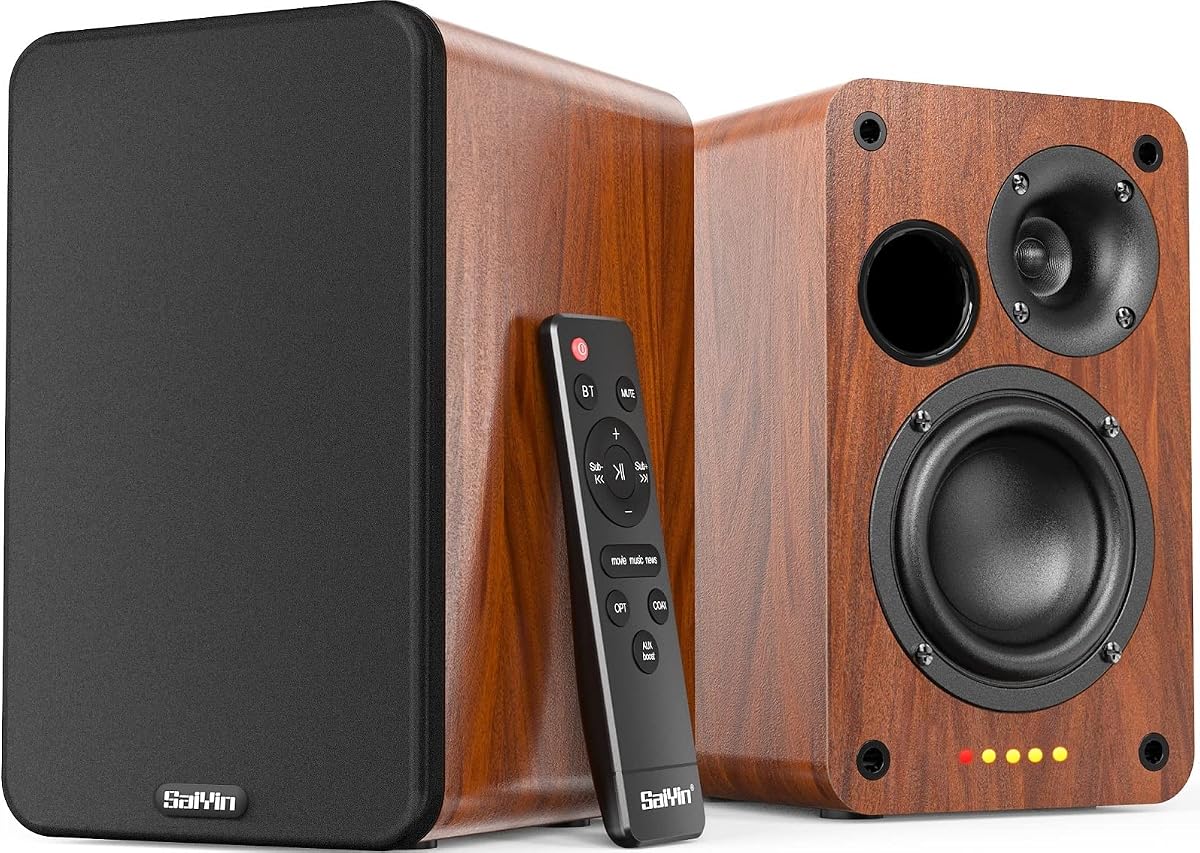
Turntables fall into two camps. Many modern decks—including popular Audio-Technica, Fluance, and Pro-Ject models—include a switchable phono preamp and expose a standard RCA line output. Those plug directly into the RCA or AUX inputs on every powered speaker in this pack. Older or audiophile tables may output a phono-level signal only, which is far quieter and requires RIAA equalization. In that case you need a standalone phono preamp between the cartridge and the speakers. Several Saiyin listings spell this out explicitly: line out connects directly, phono out needs a preamp first.
Before you order, flip your turntable around and read the output labels. If you see PHONO and LINE with a ground post, confirm which position the switch is in. A mismatched connection produces thin, quiet sound or harsh distortion. Grounding matters too: attach the turntable ground wire to the preamp or receiver ground terminal when present. Powered speakers in this guide do not replace that grounding step when your table requires it.
Powered bookshelf speakers versus a traditional receiver stack
A classic hi-fi stack—turntable, phono stage, integrated amp, passive speakers—still wins when you want to upgrade components one at a time over decades. Powered bookshelf pairs trade that modularity for simplicity. Amplification, crossover, and often tone controls live inside the cabinet. For apartment dwellers, desk listeners, and anyone who wants to spin records without learning impedance ratings, active speakers are the faster path to good sound.
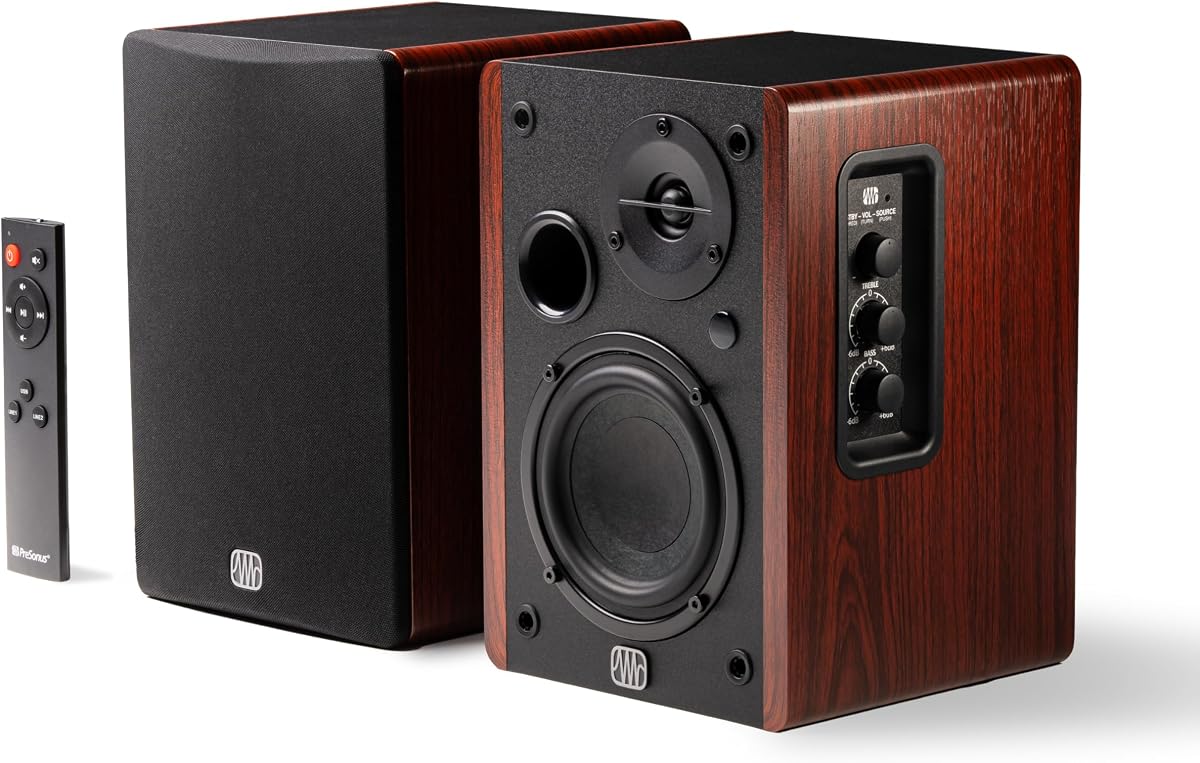
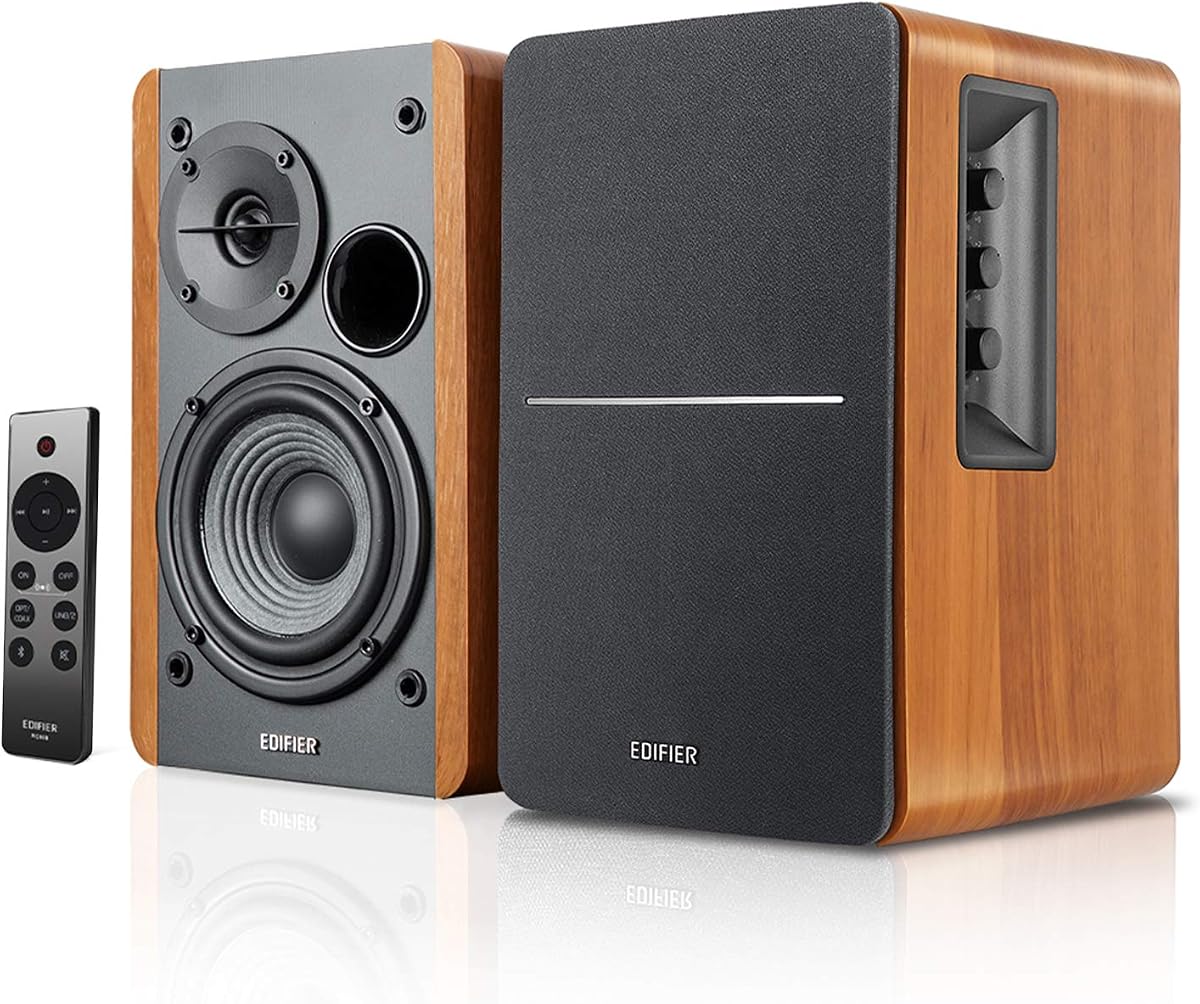
The tradeoff is expansion flexibility. Passive systems let you swap amplifiers and speakers independently. Most powered pairs here offer sub-out jacks—Edifier R1280DBs, Saiyin 40W, and PreSonus Eris Accent among them—so you can add low-end later without rebuilding the whole rig. If you anticipate moving from a bedroom setup to a dedicated listening room within a year, weigh how many inputs and sub outputs you need on day one.
Driver size, placement, and what vinyl actually reveals
Vinyl playback highlights midrange texture, sibilance, and surface noise in ways compressed streaming sometimes masks. A four-inch woofer with a silk-dome tweeter—the layout shared by Edifier R1280 models and several competitors here—delivers enough scale for jazz, folk, and classic rock in a ten-by-twelve-foot room. Smaller three-inch drivers, as on the PreSonus Eris 3.5, stay honest at desk distance but lose authority if you sit across a large living room.
Placement changes everything. Pull speakers forward from the wall by at least a few inches, aim tweeters toward your listening chair, and keep them at roughly ear height when seated. Turntable isolation matters separately: a wobbly shelf feeds rumble into the cartridge. Speaker bass ports on the rear—as on OHAYO and MEVOSTO models—need breathing room behind the cabinet. If boomy low end persists, reduce bass on the side panel rather than pushing the speakers into a corner.
Bluetooth, optical, and living with more than one source
Vinyl purists often prefer a wired RCA run for its simplicity and lack of compression. Hybrid households rarely stop at records alone. Edifier R1280DBs and both Saiyin pairs add optical and coax inputs for TVs, plus Bluetooth for phones. That means one speaker pair can cover Saturday morning albums and weeknight streaming without a switcher box. Bluetooth from a turntable only works if the turntable itself transmits—a rare feature. Do not assume wireless pairing unless your deck explicitly lists Bluetooth output.
When multiple sources stay connected, learn the remote or button sequence for input switching. Accidentally leaving a TV on optical while you expect RCA from the turntable is the most common new-owner confusion. Label cables at the back of the active speaker so troubleshooting takes seconds instead of minutes.
Studio monitors versus lifestyle tuning for record listening
PreSonus Eris 3.5, Edifier MR3, and PreSonus Eris Accent lean toward flatter, more revealing playback. That honesty helps if you also produce music or want to hear pressing defects clearly. Lifestyle pairs like Edifier R1280T and R1280DBs add a milder voicing and simpler controls that many casual listeners prefer for long sessions. Neither approach is wrong; it depends whether you want to analyze pressings or relax into them.
If your collection spans quiet singer-songwriter LPs and loud classic rock, prioritize speakers with accessible bass and treble knobs or app EQ. Vinyl dynamic range can swing wider than Spotify normalization allows. A fixed EQ speaker in a reflective room may sound bright on older recordings and dull on modern remasters. A little tone control fixes that without opening a laptop.