PA speakers versus desktop monitors
The first fork is purpose. Desktop monitors like the Pioneer DM-40D and Hercules DJMonitor 32 are nearfield tools. They sit on a desk or shelf within arm's reach, reveal EQ mistakes and clashing frequencies, and are tuned for accuracy at low-to-moderate volume in a small room. They are not meant to fill a wedding hall. PA speakers—everything from 8-inch budget kits to 12-inch Mackie and ALTO boxes—are designed for audience coverage. They prioritize SPL, vocal intelligibility, and rugged transport over the flat response a producer wants while mastering.
Many working DJs eventually own both: monitors for prep and a PA for gigs. If you only buy one item today, match it to where you spend most hours. Bedroom controller practice favors monitors. Mobile events favor a PA or complete kit. Buying a PA for bedroom use often means fighting neighbor complaints; buying monitors for a 150-guest wedding means everyone hears mud.
Driver size, headroom, and room coverage
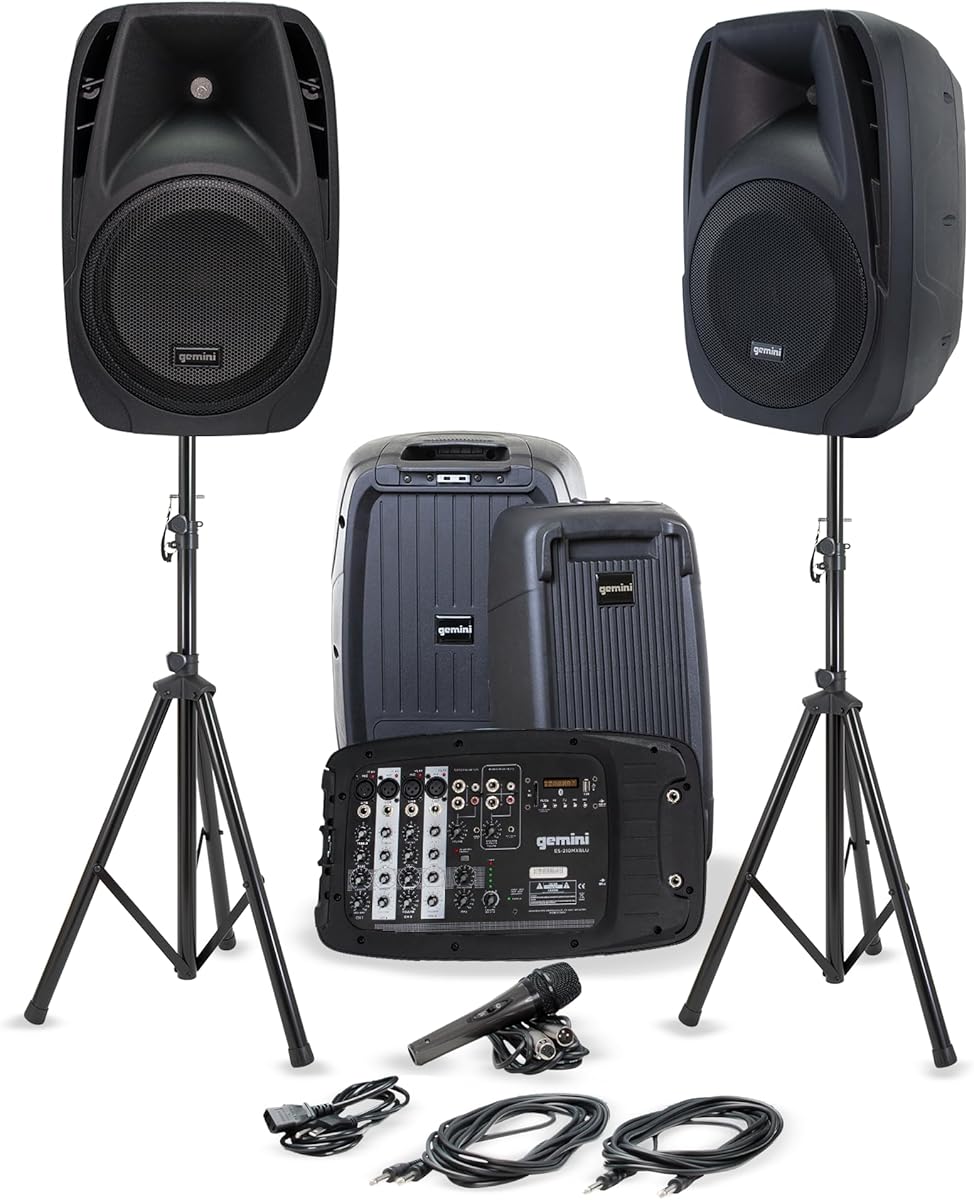
Driver diameter is the honest starting point for coverage. Dual 8-inch kits handle small rooms, backyard parties, and karaoke nights for dozens of people when placed on stands. Ten-inch dual systems like the Gemini ES-210MXBLU stretch toward 150-guest weddings and church services. Single 12-inch active boxes such as the Mackie Thump12v4 and ALTO TS412 are the mobile DJ sweet spot for weddings and club corners where one cabinet per side is enough. The Gemini 15-inch GSP-2200 steps into larger outdoor events where a single box must push bass across open air.
Headroom matters as much as size. DJs run hot peaks—drops, snare hits, vocal doubles. A speaker that sounds fine at rehearsal but clips when the dance floor fills is a gig liability. Pro-tier Thump and ALTO models advertise limiting and DSP protection; budget kits may distort earlier. Listen for clean limiting, not crackling, when you stress-test at home.
Active boxes, passive pairs, and all-in-one kits
Active speakers integrate amplifier and crossover in the cabinet—plug in, mix, play. The Mackie Thump12v4, ALTO TS412, and Gemini GSP-2200 follow this path with onboard mixers. Passive-plus-powered-mixer kits split roles: passive cabinets on stands driven by a separate powered mixer head, like the Gemini dual 10-inch system or Pyle active/passive pairs. All-in-one suitcase rigs such as the Professional Portable PA fold speakers, mixer, stands, and accessories into one transport story.
For mobile DJs, fewer failure points win. A single Thump per side with a small analog mixer is a classic pro pattern. Budget all-in-one kits win on completeness—stands, mic, cables in one box—but may not scale to larger rooms without upgrading.
Inputs, Bluetooth, and gig-day reliability
Count the sources you run simultaneously: controller stereo out, wireless mic for announcements, backup phone, maybe a guest laptop. An 8-channel detachable mixer on the Professional Portable PA or a 6-channel Gemini mixer keeps channels separate. Smaller 3-channel onboard mixers on Thump, ALTO, and GSP-2200 work when you consolidate sources upstream in a DJ mixer.
Bluetooth is convenient for walk-up requests and rehearsal playlists but should not be your only link on a paid gig. Wired RCA or TRS from a controller survives interference and latency better. Treat Bluetooth as a bonus input, not the spine of your set. Wireless speaker linking—Mackie, ALTO, Gemini TWS—helps stereo spread without running a long cable across a venue, but test pairing before doors open.