Best Planar Magnetic Headphones in 2026
We may earn a commission from links on this page, at no extra cost to you. Learn more.
Planar magnetic headphones do something dynamic drivers struggle to match. Their large, ultra-thin diaphragms are driven evenly across their whole surface, which means faster transients, lower distortion and a level of detail that keeps audiophiles coming back. The trade-off is that planars can be power-hungry and heavy, so choosing well means balancing driver quality against how easy a pair is to drive and how comfortable it stays over long sessions. This guide ranks eight of the best planar magnetic headphones you can buy in 2026, from FiiO's remarkably affordable open-backs to flagship sets with gold-coated diaphragms and carbon-fibre shells. Whether you are stepping up from your first good pair or chasing reference-grade detail, there is a planar here worth auditioning.
Top 8 Best Planar Magnetic Headphones
Our top 8 picks, reviewed
Fostex T50RP mk4
The Fostex T50RP mk4 tops the list by combining a completely redesigned planar driver with the versatility that made its predecessors a cult favourite. It supports balanced connections through a 4-pole 3.5mm jack, ships with a high-quality OFC cable, and its thick, low-resilience earpads keep long sessions comfortable. Feed it a proper amp and it rewards you with the fast, detailed planar presentation audiophiles prize, all at a sensible price.
- Driver
- Redesigned RP planar
- Connector
- 4-pole 3.5mm balanced
- Cable
- High-quality OFC
- Pads
- Thick low-resilience
What we liked
- Fully redesigned 4th-gen planar driver
- Balanced connection support built in
- Thick around-ear pads for long comfort
- Legendary platform for tuning and mods
Worth noting
- Wants a capable amp to shine
- Fairly neutral rather than exciting stock
FiiO JT7
The FiiO JT7 is the ideal entry into planar magnetic sound. Its large 95x86mm driver and 3-micron diaphragm deliver a wide soundstage and punchy bass, yet a high 92dB/mW sensitivity means it plays happily from portable gear that would starve most planars. At just 318g it is unusually light and folds for travel, and both the pads and headband are replaceable, making it a genuinely practical first audiophile pair.
- Driver
- 95x86mm planar
- Diaphragm
- 3um ultra-thin
- Weight
- 318g foldable
- Cable
- Detachable 4.4mm/3.5mm
What we liked
- High 92dB/mW sensitivity, easy to drive
- Light 318g foldable design
- Detachable balanced and single-ended cables
- Replaceable earpads and headband
Worth noting
- Firmer clamp needs a short break-in
- Not as resolving as pricier planars
Fosi Audio i5
The Fosi Audio i5 pairs serious engineering with genuine craftsmanship. Its 97mm nano-thin diaphragm and 44 N50 magnets produce fast, low-distortion sound with an expansive open-back stage, while handcrafted walnut chambers and a CNC-milled aluminium frame make it feel like a luxury object. A memory-steel headband and breathable pads keep long sessions comfortable. It is an open design, so it leaks, but for a home listening centrepiece it is hard to resist.
- Driver
- 97mm ultra-large
- Diaphragm
- 2um nano-level
- Magnets
- 44 N50 neodymium
- Build
- CNC metal and walnut
What we liked
- Huge 97mm diaphragm for fine detail
- 44 N50 magnets for fast transients
- Handcrafted walnut and CNC aluminium
- Open-back stage feels expansive
Worth noting
- Open design leaks sound both ways
- Benefits from a dedicated amp
ASUS ROG Kithara
The ROG Kithara is the rare planar built for gamers who also care about music. Its ROG-tuned 100mm HIFIMAN drivers deliver audiophile-grade detail with an open-back soundstage that makes positional cues easy to place, and a detachable MEMS boom mic handles clear voice chat. The bundle is generous too, with 4.4mm, 3.5mm and 6.3mm plugs plus a USB-C adapter, so it works across a PC, console or phone straight away.
- Driver
- 100mm HIFIMAN planar
- Design
- Open-back
- Mic
- MEMS boom
- Plugs
- 4.4mm, 3.5mm, 6.3mm, USB-C
What we liked
- 100mm HIFIMAN-tuned planar drivers
- Open-back stage aids positional audio
- Detachable full-band boom microphone
- Every plug and a USB-C adapter included
Worth noting
- Open-back leaks in shared spaces
- Gaming tuning over pure neutrality
FiiO FT7
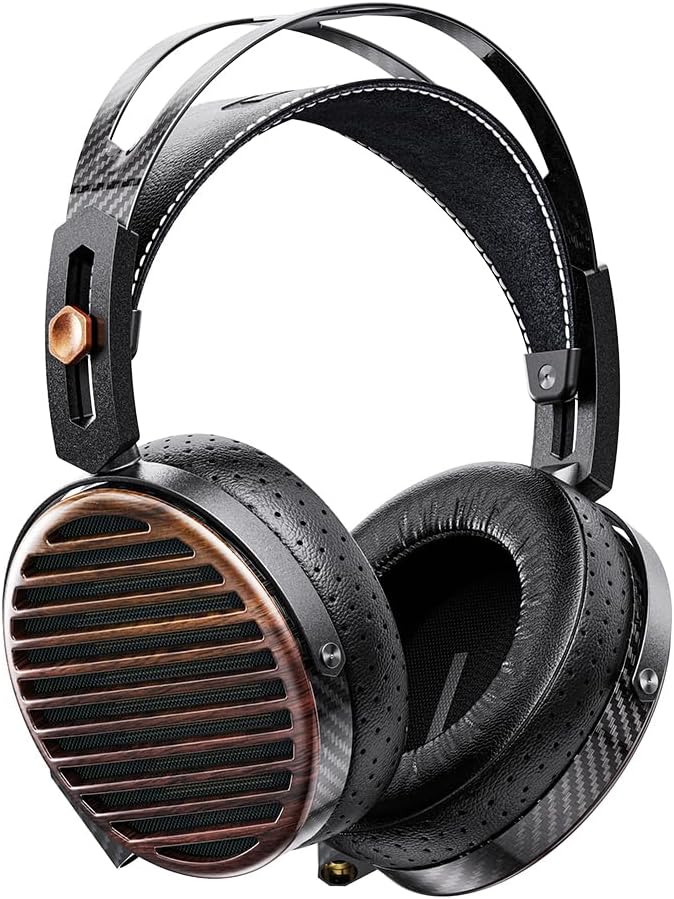
The FiiO FT7 is a statement flagship. Its all-new 106mm driver with a 1-micron diaphragm coated in 24K gold and pure silver delivers exceptional dynamic range and nuance, while a carbon-fibre body and zebrawood grille keep the weight to a comfortable 427g despite the huge driver. Two interchangeable earpads and a cryogenically treated modular cable complete a reference-grade package that rewards a capable desktop amplifier.
- Driver
- 106mm planar
- Diaphragm
- 1um gold-and-silver
- Shell
- Carbon fibre, zebrawood
- Weight
- 427g
What we liked
- Massive 106mm flagship planar driver
- 24K gold and silver coated diaphragm
- Carbon-fibre body keeps weight to 427g
- Cryo-treated copper modular cable
Worth noting
- Priciest pair on the list by far
- Demands a serious desktop amp
Monolith M1060
The Monolith M1060 has long been a value benchmark for planar sound, and it still holds up. Its 106mm driver and open-back design create the spacious, holographic presentation that draws people to planars in the first place, and the large comfy earpads make extended sessions easy. At 50 ohms with a 10-watt power ceiling it likes a proper amp, but for the money it delivers a big-driver experience that punches above its price.
- Driver
- 106mm planar
- Design
- Open-back
- Impedance
- 50 ohm
- Power
- 10W max handling
What we liked
- Large 106mm planar driver
- Holographic open-back soundstage
- Comfortable large earpads for long listens
- Strong build at a fair price
Worth noting
- Open-back offers no isolation
- Wants an amp to reach its potential
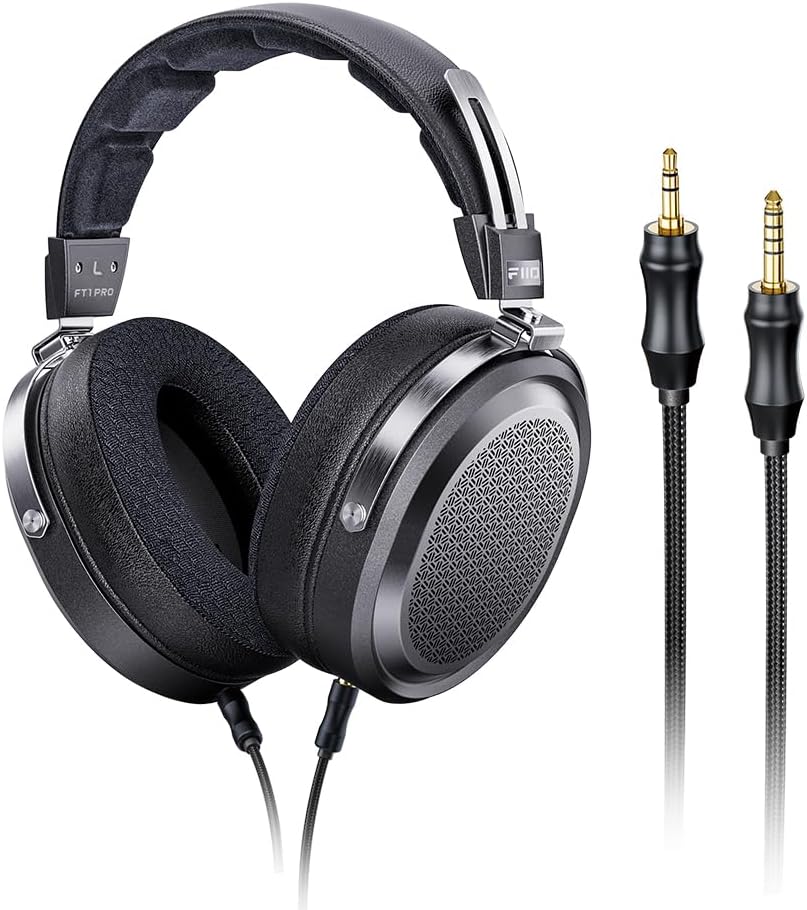
FiiO FT1 Pro (Black)
The FiiO FT1 Pro packs flagship ideas into a mid-price open-back. Its 95x86mm driver uses a 1-micron diaphragm dual-coated with sapphire and aluminium, boosting high-frequency resolution and pushing response to 40kHz for an unusually wide, airy stage. At 374g with high sensitivity it is easy to drive and comfortable, making it a strong choice for detailed studio and home listening where its openness is welcome rather than a liability.
- Driver
- 95x86mm planar
- Diaphragm
- 1um dual-coated
- Design
- Open-back
- Weight
- 374g
What we liked
- 1um sapphire-and-aluminium diaphragm
- Wide lateral soundstage for the class
- Frequency response reaching 40kHz
- High sensitivity, easy to drive
Worth noting
- Open-back leaks in and out
- Only slightly refined over the standard FT1
FiiO FT1 Pro (Blue)
This blue edition of the FiiO FT1 Pro offers the identical open-back planar experience in a more striking finish. You still get the 95x86mm driver, the 1-micron sapphire-and-aluminium diaphragm and the wide soundstage reaching 40kHz, all in a light 374g body that most sources can drive comfortably. If you love the FT1 Pro's sound but want it to stand out visually, this is the pair to pick, with only a small premium over the black.
- Driver
- 95x86mm planar
- Diaphragm
- 1um dual-coated
- Design
- Open-back
- Weight
- 374g
What we liked
- Same detailed FT1 Pro planar driver
- Distinctive blue colourway
- Wide soundstage up to 40kHz
- Lightweight, easy-to-drive design
Worth noting
- Open-back offers no isolation
- Priced a touch above the black version
How We Chose the Best Planar Magnetic Headphones

Planar magnetic headphones are a different animal from the dynamic-driver pairs most people grow up with, so we judged them on their own terms. The heart of any planar is the driver, a large flat diaphragm suspended in a magnetic field and driven evenly across its entire surface. That even drive is what produces the speed, low distortion and detail that define the category, so we started by looking closely at diaphragm size, thickness and magnet design before anything else.
From there we weighed the practical realities that separate a great planar on paper from a great one to live with. Amplification needs came high on the list, because a power-hungry pair that sounds thin from a phone is no fun for a newcomer, which is why we noted where a pair like the FiiO JT7 is easy to drive and where one like the FiiO FT7 demands a serious amp. We considered soundstage and openness, build quality and materials, and comfort over long sessions, since planars can be heavy. Finally we spanned a wide range of prices and both open and closed designs, so the list serves someone auditioning their first planar as well as a collector chasing reference detail.
What Makes Planar Magnetic Sound Special
To understand why audiophiles love planars, it helps to know how they differ mechanically. A conventional dynamic headphone pushes a small cone from a single point at its centre, which can introduce distortion as the cone flexes. A planar magnetic driver instead uses a thin film with a conductive trace, sandwiched between magnets, so force is applied evenly across the whole diaphragm. The result is a faster, more controlled response that resolves fine detail and complex passages with ease.
That engineering shows up clearly in the pairs here. The Fostex T50RP mk4's redesigned RP driver and the FiiO FT1 Pro's 1-micron sapphire-coated diaphragm both chase the same goal: a diaphragm light and stiff enough to react instantly to the signal. The larger the driver, generally, the more effortless the bass and the wider the stage, which is why flagship pairs like the FiiO FT7 and Fosi Audio i5 reach for 97mm and 106mm drivers. The payoff is a sound that feels open, layered and precise, especially on acoustic, orchestral and detailed electronic music where transient speed matters.
Matching a Planar to Your Setup
For Your First Planar
If you are new to the category, the FiiO JT7 is the easiest way in. Its high 92dB/mW sensitivity means it plays properly from a phone or laptop dongle, so you can enjoy planar sound before committing to an amp, and its light 318g weight avoids the fatigue that puts newcomers off. The ASUS ROG Kithara is another approachable option, especially if you game, since it bundles every adapter you need and a USB-C dongle.
For the Dedicated Listening Room
Those building a home setup around a good amp should look at the Fostex T50RP mk4, a superbly detailed and endlessly tweakable pair, or the Monolith M1060 for a big open-back stage at a fair price. If budget is no object, the Fosi Audio i5 and FiiO FT7 deliver flagship detail with the build and materials to match, and both reward the best source you can give them.
For Detail on a Budget
The FiiO FT1 Pro, in either black or blue, brings genuine flagship engineering, a 1-micron dual-coated diaphragm and a 40kHz response, to a mid-price open-back. It is easy to drive and comfortable, making it a standout for listeners who want serious resolution without a flagship outlay or a demanding amplifier.
The Amplification Question
More than any other headphone type, planars raise the question of power, and it is worth understanding before you buy. The large diaphragms that give planars their sound often need more current to reach their full potential, and a pair driven from an underpowered source can sound thin and lifeless despite excellent hardware. The Fostex T50RP mk4 and Monolith M1060 are classic examples of pairs that transform once fed a capable amp, opening up in dynamics and bass control.
That said, the category has grown friendlier to newcomers. FiiO in particular tunes several models for high sensitivity, so the JT7 and FT1 Pro play satisfyingly from phones, dongles and laptops without a dedicated amp. If you already own a desktop amp or plan to buy one, you can chase the more demanding flagships like the FiiO FT7 with confidence. If not, start with an efficient pair and let it prove the category to you first, then upgrade your source later. Either way, matching the headphone to your available power is the single most important step in getting planar sound right.
Build Quality and Materials
Planar headphones tend to wear their engineering on the outside, and the materials say a lot about a pair's ambitions. At the premium end, the Fosi Audio i5's handcrafted walnut chambers and CNC-milled aluminium frame and the FiiO FT7's carbon-fibre body and zebrawood grille are as much about craftsmanship as acoustics, using premium materials both to look the part and to control resonance. These are pairs you keep for years and enjoy handling as much as hearing.
Further down the range, build quality is still a real consideration. The Fostex T50RP mk4 uses a robust platform with thick low-resilience earpads, and the FiiO JT7 keeps weight down while offering replaceable pads and headband, an underrated feature that lets you refresh comfort as the originals compress. When comparing pairs, look for metal in the frame and hinges, detachable cables that turn a snag into a cheap fix, and replaceable earpads that extend a headphone's useful life. A planar is an investment, so the ability to maintain it matters.
Comfort for Long Listening Sessions
Because planar drivers and their magnets add weight, comfort deserves close attention, especially if you listen for hours. Weight distribution is the key: a well-designed headband that spreads the load, like the memory-steel band on the Fosi Audio i5 or the ergonomic four-axis design of the FiiO JT7, makes a heavier pair feel far lighter on the head than the raw grams suggest. The FiiO FT7's use of carbon fibre to hold a 106mm-driver pair to 427g is a good example of engineering serving comfort directly.
Earpads matter just as much. Breathable fabric or mesh pads, as on the JT7 and Fosi i5, reduce the heat build-up that ends long sessions early, while thick, low-resilience pads like the Fostex mk4's cushion the clamp and improve the seal. Clamp force is worth noting too, since a firmer grip can aid bass and sealing but may need a break-in period, as FiiO notes for the JT7. If you know you listen for long stretches, prioritise a lighter pair with breathable, replaceable pads, and factor in a short adjustment period for any planar with a firmer initial fit.
Final Recommendation
For most listeners, the Fostex T50RP mk4 is the best planar magnetic headphone in 2026, blending a redesigned driver, balanced-ready connectivity and comfortable pads into a superbly detailed and versatile package. Newcomers should start with the easy-to-drive, featherweight FiiO JT7, which proves what planars can do without demanding an amp. Gamers are best served by the ASUS ROG Kithara with its 100mm HIFIMAN drivers and boom mic, while the FiiO FT1 Pro delivers flagship-style detail on a mid-range budget. If you have a capable amp and the funds, the Fosi Audio i5 and FiiO FT7 reach for reference-grade sound and build, and the Monolith M1060 remains a value benchmark for big open-back planar sound. Match the pair to your power and your room, and any of these opens a window onto your music.
How we picked
We judged each pair on the things that define planar magnetic sound: driver size and diaphragm design, soundstage and detail retrieval, how much amplification it needs, build quality, and comfort over long listens. We favoured pairs whose engineering translates into real listening gains, weighed cable and earpad replaceability, and spanned open and closed designs across a wide price range so the list works for newcomers and seasoned audiophiles alike.
Frequently asked questions
What is the advantage of planar magnetic headphones over regular ones?
Planar magnetic drivers use a large, ultra-thin diaphragm driven evenly across its whole surface, which produces faster transients, lower distortion and more detail than most dynamic drivers. That is why pairs like the Fostex T50RP mk4 and FiiO FT7 are prized by audiophiles. The trade-off is that planars are often heavier and hungrier for power, so pairing them with a good amp matters.
Do I need an amplifier for planar magnetic headphones?
Many benefit from one, though it varies. The Fostex T50RP mk4, Monolith M1060 and FiiO FT7 open up considerably with a dedicated amp. Others, like the high-sensitivity FiiO JT7 and FT1 Pro, are tuned to play well straight from portable devices. If you are buying your first planar, an easy-to-drive pair such as the JT7 lets you enjoy it before investing in an amp.
Are planar magnetic headphones good for gaming?
They can be excellent. The ASUS ROG Kithara pairs 100mm HIFIMAN planar drivers with an open-back design that makes positional audio easy to place, plus a detachable boom mic for voice chat. Any open-back planar with a wide soundstage, like the Monolith M1060, helps you hear directional cues, though open designs leak sound so they suit solo rather than shared gaming spaces.
Why are some planar headphones so heavy?
The large magnet arrays and sizeable diaphragms that give planars their sound also add weight. Some makers work hard to counter this: the FiiO FT7 uses a carbon-fibre shell to hold weight to 427g despite a 106mm driver, and the FiiO JT7 comes in at just 318g. If comfort is a priority, favour lighter pairs and those with well-padded, replaceable earpads.
Should I choose open-back or closed-back planar headphones?
Open-back pairs like the Fosi Audio i5, ASUS ROG Kithara and FiiO FT1 Pro give a wider, more natural soundstage but leak sound in both directions, so they suit quiet, private listening. Closed designs isolate better for shared spaces. Most audiophile planars here are open-back because the design flatters their detailed sound, so consider your listening environment before buying.