Expert Review & Guide

Best Mouse for Big Hands 2026: Large Comfort Picks

Most ergonomic mice are still sized for average hands, which is why large-handed users end up clawing tiny shells, hanging their palms off the back edge, and wondering why their ring finger never finds a stable rest. A best mouse for big hands shortlist has to prioritize length, height, and thumb support—not just DPI stickers or RGB zones. In 2026 that means looking at full-size right-hand gaming shapes like the Razer Basilisk V3 and Logitech G502 Hero, purpose-built medium-to-large wireless shells like the Redragon big mouse, quieter full-size office options, and true vertical designs when forearm twist is the real villain.

We limited this roundup to the ten products in our pack and judged them on palm fill, control reach, tracking sanity for lower-sensitivity arm aim, and whether wireless or wired better matches how you actually work. Gaming mice win when you need buttons, sensors, and a tall supported grip. Office wireless mice win when silence, multi-device switching, and simple DPI ladders matter more than esports polling. Vertical mice win when you are ready to relearn a handshake angle for wrist and forearm relief. No dollar prices appear here because Amazon deals move constantly—use the live listings for current offers.

Start with the three top picks if you want a clear default: the Basilisk V3 for overall large-hand ergonomics, the G502 Hero for a weight-tunable wired gaming chassis, and the Redragon when you specifically want a full-size wireless shell aimed at medium and large hands. Then scan the comparison table and dig into every review for fit notes, Mac side-button caveats, and who should skip each model.

Top Mouse Picks for Large Hands

Best Overall for Big Hands

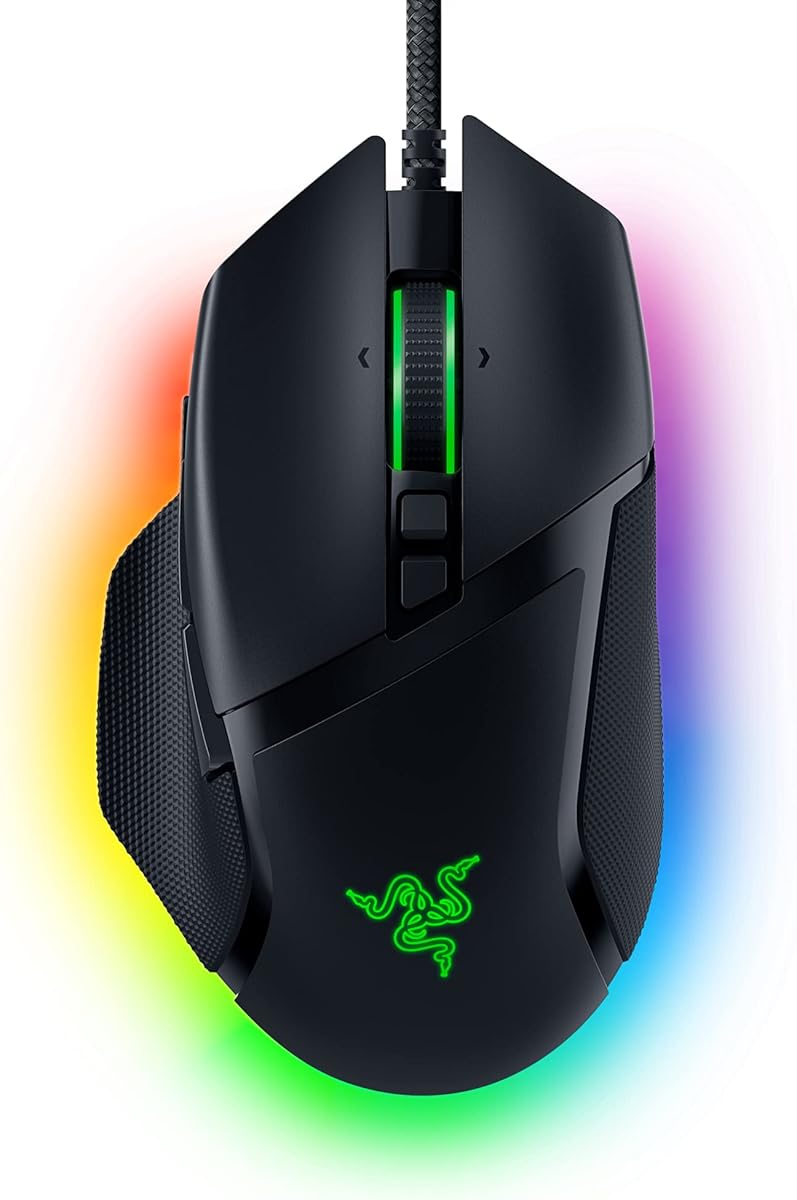
Razer Basilisk V3 Customizable RGB Wired Ergonomic Gaming Mouse

★★★★★9.2/10
Razer Basilisk V3 Customizable RGB Wired Ergonomic Gaming Mouse
  • Iconic ergonomic silhouette with a dedicated thumb rest that gives large palms a real landing zone instead of hovering over a tiny shell
  • Focus+ 26K DPI optical sensor and optical switches Gen-2 for crisp, low-latency clicks during long gaming or creative sessions
  • HyperScroll tilt wheel plus 11 programmable buttons so big-hand users can keep macros under the thumb without stretching awkwardly
Check Price →
Best Wired Gaming Shell

Logitech G502 Hero Wired Gaming Mouse - Black | High performance

★★★★★9.2/10
Logitech G502 Hero Wired Gaming Mouse - Black | High performance
  • Long, tall right-hand chassis that fills large hands better than most lightweight ambidextrous mice
  • HERO sensor up to 25,600 DPI with adjustable 3.6 g weights so you can tune balance instead of fighting a featherweight shell
  • Eleven programmable buttons, dual-mode hyper-fast scroll, and on-board memory for PC and Mac gaming setups
Check Price →
Best Dedicated Large-Hand Fit

Redragon Big Wireless Mouse for Medium to Large Hands

★★★★☆8.4/10
Redragon Big Wireless Mouse for Medium to Large Hands
  • Explicitly sized for medium to large hands with side finger rests and rubber grips for a secure full-palm hold
  • Five DPI steps to 4000 plus a 125/250 Hz polling toggle for office work that still feels responsive
  • Plug-and-play 2.4 GHz wireless with forward/back navigation and a low-battery scroll-wheel warning
Check Price →

As an Amazon Associate we earn from qualifying purchases. We may earn a commission at no additional cost to you.

Big-Hands Mouse Comparison: Size Intent, Tracking, Connection

Compare every mouse in the pack by the three details large-handed buyers feel first: whether the shell is built to fill a bigger palm, how far DPI and controls go, and whether you are dealing with a cable, a 2.4 GHz dongle, Bluetooth, or both. No prices—check Amazon for the live deal.

#ProductSpecificationsScore
1
  • Ergonomic right-hand shell with thumb rest
  • Focus+ 26K DPI, 11 programmable buttons
  • Wired HyperScroll tilt wheel, Chroma RGB
9.2
2
  • Large right-hand gaming shell, adjustable weights
  • HERO sensor up to 25,600 DPI, 11 buttons
  • Wired only, dual-mode hyper-fast scroll
9.2
3
  • Full-size shell for medium to large hands
  • 800–4000 DPI, 125/250 Hz polling toggle
  • 2.4 GHz wireless, forward/back side buttons
8.4
4
  • Basilisk ergonomic form, 9 programmable controls
  • 18K optical sensor, mechanical switches Gen-2
  • HyperSpeed wireless + Bluetooth, long battery
8.8
5
  • Full-size ergonomic right-hand for medium/large
  • 1000/1600/2400 DPI, quiet left/right clicks
  • 2.4 GHz USB receiver, long battery claims
9.2
6
  • Contoured rechargeable shell, quiet clicks
  • Six DPI steps up to 4800, side scroll wheel
  • BT 5.3/5.0 + 2.4 GHz, 3-device switching
9
7
  • Right-hand vertical handshake angle
  • Six DPI steps up to 4800, quiet main clicks
  • Bluetooth + 2.4 GHz, AAA battery powered
8.8
8
  • Large shell ~4.4 × 2.75 × 1.56 in
  • 800–2400 DPI, 6 buttons, quiet keys
  • Wired USB-A cable + USB-C adapter included
8.2
9
  • Tri-mode wireless, rechargeable battery gauge
  • 800–2400 DPI, forward/back side buttons
  • 2.4G + BT 4.0/5.0, 3-device switch
9.2
10
  • Vertical design marketed for large hands
  • 800–3600 DPI, silent clicks, blue LED
  • 2.4 GHz rechargeable wireless
7.4

1. Razer Basilisk V3 Wired Ergonomic Gaming - Best Overall for

Razer Basilisk V3 Wired Ergonomic Gaming Mouse

Razer Basilisk V3 Wired Ergonomic Gaming Mouse

9.2/10★★★★★

If you have large hands and have spent years pinching undersized mice, the Razer Basilisk V3 is the clearest default in this pack. The shell is not marketed as a novelty big-hands-only product, yet the combination of a tall rear hump, flared sides, and a real thumb shelf is exactly what many XL palm grippers need. Instead of resting fingertips on the primary buttons while the heel of the hand hangs off the back, you can settle into a supported posture where the thumb has a dedicated ledge and the ring and pinky fingers can brace along the right flank without feeling cramped.

  • Ergonomic right-hand shell with thumb rest
  • Focus+ 26K DPI, 11 programmable buttons
  • Wired HyperScroll tilt wheel, Chroma RGB
Check Price →
✓ Pros
  • Thumb rest and raised right-hand curve suit palm and claw grips for larger hands
  • Focus+ 26K sensor feels precise at both high and moderate DPI
  • HyperScroll free-spin and tactile modes cover browsing and weapon switching
  • Eleven programmable buttons with Synapse customization depth
  • Optical switches Gen-2 deliver crisp actuation with long rated lifespan
✕ Cons
  • Wired only—desk clutter is part of the deal
  • Right-handed shape excludes left-handed users
  • RGB and full software stack are overkill for plain office browsing

Detailed review

Tracking comes from Razer’s Focus+ optical sensor with a 26,000 DPI ceiling. For big-hand users the headline DPI number matters less than clean low-DPI behavior and consistent lift-off, because larger hands often prefer lower sensitivity and bigger arm movements. The Basilisk V3 handles that style well: you can drop DPI for deliberate aim training or document work, then bump it for sprawling multi-monitor desktops without the cursor feeling filtered or soggy. Optical mouse switches Gen-2 claim 0.2 ms actuation and up to 70 million clicks, which translates in practice to a sharp, consistent left and right click that does not mush out after a few months of heavy use.

The HyperScroll tilt wheel is one of the features that justifies choosing this mouse over a simpler office shell. Flip into free-spin mode and long web pages or giant timelines fly by with almost no finger work; switch to tactile mode when you need discrete notches for weapon slots, spreadsheet rows, or timeline scrubbing. Side tilt actions add horizontal navigation that large-thumb users can hit without contorting. Eleven programmable buttons mean macros, push-to-talk, sniper DPI, and browser back/forward can live where your fingers already rest rather than forcing awkward reaches toward a keyboard.

Chroma RGB with eleven lighting zones is optional theater. Some big-hand buyers will ignore lighting entirely and still love the shape; others will sync zones with the rest of a Razer desk. Either way, Synapse is where the real value sits—profiles, button remaps, and sensitivity stages. Disable Windows Enhance pointer precision as Razer recommends if you want raw, predictable tracking. The cable is the honest tradeoff: you get zero wireless latency concerns and never think about battery percentage, but you also accept a cord that needs routing and a desk pad with enough clearance.

Who should skip it? Fingertip-grip players who want a tiny ultralight mouse will find the Basilisk V3 bulky in the wrong way. Left-handers are out. Strict laptop travelers who refuse dongles and cables may prefer the wireless Basilisk V3 X HyperSpeed in this same roundup. Everyone else with medium-large to XL hands looking for an ergonomic gaming mouse that also survives all-day browser and productivity work will feel why this lands as our best overall pick for big hands in 2026.

Build quality and button layout reinforce the size advantage. The main clicks sit under a long enough primary button deck that large index and middle fingers do not overhang into empty air. The sniper-style paddle and thumb cluster are reachable without a death grip. After a week of mixed FPS, strategy games, and spreadsheet work, the recurring theme is support: the mouse fills the hand so your forearm can stay more relaxed instead of constantly pinching to keep a small shell under control.

Who should buy the Basilisk V3

Choose this if you palm or claw grip with medium-large to large hands, want a wired gaming mouse with true ergonomic support, and value HyperScroll plus deep button remapping. It is equally at home on a desktop battlestation and a creative workstation where long scroll sessions matter.

Skip it if you need Bluetooth laptop hopping, prefer featherweight ambidextrous shells, or refuse to install vendor software for advanced features.

Setup tips for larger hands

Start around a moderate DPI that lets your whole arm move rather than only your wrist, then assign a lower sniper stage if you play tactical shooters. Map browser navigation and a frequently used macro to the easiest thumb buttons so you stop stretching across the keyboard.

Give the cable a mouse bungee or a gentle loop under the monitor arm so the wire never tugs the tall shell off balance during wide arm sweeps.

Versus the G502 Hero in this list

The Basilisk V3 wins on thumb-rest ergonomics and HyperScroll flexibility. The G502 Hero answers with adjustable weights and a similarly large button count. If your priority is a supported handshake-adjacent right-hand curve with a thumb ledge, take the Razer; if you want to tune mass and already live in Logitech G Hub, take the G502.

Check Price on Amazon →

We may earn a commission at no additional cost to you.

2. Logitech G502 Hero Wired Gaming Mouse - Best Wired Gaming

Logitech G502 Hero Wired Gaming Mouse

Logitech G502 Hero Wired Gaming Mouse

9.2/10★★★★★

The Logitech G502 Hero remains one of the most repeatedly recommended mice when someone with large hands asks for a gaming shell that does not disappear under their palm. It is long, relatively tall, and packed with controls along the left edge—exactly the kind of real estate XL hands can actually use. Where many recent ultralights chase extreme nothingness, the G502 embraces presence: a chassis you can plant your hand on, a scroll wheel with personality, and optional weights so the mouse does not feel like a hollow plastic shell skating away from a heavy grip.

  • Large right-hand gaming shell, adjustable weights
  • HERO sensor up to 25,600 DPI, 11 buttons
  • Wired only, dual-mode hyper-fast scroll
Check Price →
✓ Pros
  • Large, sculpted right-hand body fills big palms without feeling toy-sized
  • Adjustable weights let you dial heft and balance for arm aiming
  • HERO sensor up to 25,600 DPI with clean tracking and on-board profiles
  • Eleven programmable buttons and dual-mode hyper-fast scroll wheel
  • Mechanical spring tensioning on primary clicks feels crisp and durable
✕ Cons
  • Wired connection only—no Bluetooth or Lightspeed in this SKU
  • Weight system and dense shape are the opposite of modern ultralight trends
  • RGB and full G Hub features are unnecessary for basic office use

Detailed review

HERO sensor performance is still a standout. Logitech rates it to 25,600 DPI with zero smoothing, filtering, or acceleration in the sensor path, and it can resolve extremely fine movement. Big-hand users who aim with the forearm often sit at lower DPI; the Hero sensor stays composed there, which matters more than bragging about the maximum number. On-board memory stores profiles so a tournament PC or secondary machine can keep your button layout without reinstalling software every time.

Eleven programmable buttons sound excessive until you have large thumbs that can rest near a cluster without strain. DPI shift, sniper hold, macros, and push-to-talk become natural. The dual-mode hyper-fast scroll wheel is the other signature: free-spin for long documents and tactile ratchet for precise weapon or tool cycling. Adjustable weights—up to five 3.6 g pieces—let you bias the front or rear so the balance matches whether you fingertip the front or bury the mouse under a full palm.

Primary clicks use a metal spring tensioning system and metal pivot hinges for a snappy feel. LIGHTSYNC RGB is fully customizable if you care; if you do not, turn it off in G Hub and enjoy the shape. PC and Mac compatibility covers most desks, though serious remapping still benefits from Logitech software on the machine you use most. The cable is generally manageable, but it is still a cable—plan your routing if you make large, sweeping aim motions.

Comfort for big hands is the reason this mouse stays in the top three. The rear hump supports the palm, the left-side button ladder is reachable without a claw death grip, and the overall length reduces the hovering pinky problem common on short mice. It is not a vertical ergonomic mouse, so it will not rotate your forearm into a handshake angle; it is a traditional right-hand gaming shape done at a size that finally matches larger anatomy.

Consider the G502 Hero when you want maximum wired control and do not mind mass. Competitive players chasing the lightest possible flick mouse should look elsewhere. Office-only buyers who want silence and multi-device Bluetooth may prefer the TECKNET or silent full-size options below. For FPS, MMO, creative apps with many shortcuts, and anyone tired of mid-size mice that feel like children’s toys, the Hero edition of the G502 is still a heavyweight—literally and figuratively—worth owning.

Weight tuning for large palms

Install fewer weights if your arm aim feels sluggish, or load the tray if a lighter shell skitters when you plant a heavy hand. Bias weight toward the rear if your palm pressure sits high on the hump; bias forward if you rest more on the primary buttons.

Re-test DPI after changing mass. A heavier mouse often feels more controlled at the same DPI, so you may not need as aggressive a sensitivity drop as you expect.

Who it is for

Ideal for medium-large and large right hands that palm or hybrid claw grip, especially gamers who want buttons and scroll flexibility. Also strong for power users who remap everything and keep profiles on-board.

Skip if you need wireless freedom, left-hand support, or a true vertical carpal-tunnel-oriented angle.

Versus Redragon’s big wireless mouse

The G502 is the performance and customization king; the Redragon is the simpler full-size wireless tool aimed squarely at medium-to-large office hands. Choose Hero sensor polish and weights when gaming matters; choose Redragon when you want cord-free desk use and an explicitly large comfort shell without RGB theater.

Check Price on Amazon →

We may earn a commission at no additional cost to you.

3. Redragon Big Wireless Mouse for Medium - Best Dedicated Large-Hand

Redragon Big Wireless Mouse for Medium to Large Hands

Redragon Big Wireless Mouse for Medium to Large Hands

8.4/10★★★★☆

Among everything in this pack, the Redragon Big Wireless Mouse is the most honest about its audience: medium to large hands. That alone makes it a standout for shoppers who are tired of guessing whether an ergonomic listing will still feel stubby. The shell is full-size, with finger rests on both sides and rubberized grips that help larger palms stay planted during long browser and document days. The anti-slip, anti-sweat material claim matters if your hands run warm; even when marketing language runs hot, the practical takeaway is a grippy, curved body meant to be held, not pinched.

  • Full-size shell for medium to large hands
  • 800–4000 DPI, 125/250 Hz polling toggle
  • 2.4 GHz wireless, forward/back side buttons
Check Price →
✓ Pros
  • Marketed and shaped for medium to large hands with side finger rests
  • Anti-slip rubber grips and ergonomic curve for longer office sessions
  • Five DPI levels to 4000 with a simple polling-rate toggle
  • 2.4 GHz plug-and-play receiver stored in the mouse body
  • Forward/back buttons and low-battery scroll-wheel indicator
✕ Cons
  • Sensor and polling ceiling are office-class, not esports-class
  • Side buttons do not work on Mac according to the manufacturer
  • Uses a replaceable battery ecosystem rather than a premium rechargeable pack

Detailed review

Connectivity is straightforward 2.4 GHz wireless with a USB receiver that tucks into the rear of the mouse—remove the protective film on the sensor before first use, or you will chase a dead cursor. Range is advertised up to roughly thirty-two feet, which is more than enough for couch browsing or a clean desk. No driver install is required for basic use, and compatibility spans Windows, many Linux setups, Chromebooks, and Mac OS with the important caveat that side buttons are not available on Mac.

DPI steps run 800, 1200, 1600, 2400, and 4000. That ladder covers careful photo edits and fast multi-monitor flicks without pretending to be a flagship gaming sensor. Polling can sit at 125 Hz by default or move to 250 Hz with a right-button plus middle-button hold; big-hand office users will feel the bump as slightly snappier cursor updates without needing a full esports stack. Forward and backward buttons speed web navigation when your OS supports them—another quality-of-life win when your thumb already rests on a wide left flank.

Power management is pragmatic rather than flashy. An ultra-low-power design and sleep after about eight minutes of idle time stretch battery life; a double-click wakes the mouse. When charge drops below about ten percent, the scroll wheel flashes red so you are not surprised mid-meeting. That is less glamorous than multi-month rechargeable claims on other models, but it is clear and usable. A one-year after-sales promise from the brand adds a bit of confidence if you buy as a daily driver.

This is not the mouse you buy to climb ranked leaderboards. The Basilisk V3 and G502 Hero outclass it in sensor pedigree, switch tech, and software depth. What Redragon wins is specificity: a wireless full-size shape that admits large hands exist. If your wrists hurt because you claw a travel mouse all day, stepping up to this shell can reduce the constant fingertip pinch even before you consider vertical designs.

Buy the Redragon when your brief is a bigger wireless office mouse with simple setup and sane DPI. Pair it with a decent cloth pad so the optical sensor stays consistent. If you need silent clicks for a library, look at the silent full-size model later in this list; if you need Bluetooth multipoint without a dongle, the TECKNET rechargeable mouse is the better multi-device tool. For pure fill-the-hand wireless comfort on Windows PCs and Chromebooks, Redragon earns the dedicated large-hand badge.

First-day checklist

Pop the receiver from the storage bay, remove the bottom sensor film, insert or confirm the battery, and plug the dongle into a rear USB port away from dense 2.4 GHz interference when possible.

Set DPI to 1200 or 1600 to start, then try the 250 Hz polling toggle if the cursor feels a touch soft on a high-refresh monitor.

Who should buy it

Medium to large right-hand users who want an affordable full-size wireless mouse for home office, school, or casual play. Especially good when you have rejected compact mice for feeling child-sized.

Avoid it as a Mac power-user primary if side navigation buttons are mandatory, and avoid it if you need tournament-grade polling and software ecosystems.

Check Price on Amazon →

We may earn a commission at no additional cost to you.

4. Razer Basilisk V3 X HyperSpeed Wireless - Best Wireless Gaming

Razer Basilisk V3 X HyperSpeed Wireless Gaming Mouse

Razer Basilisk V3 X HyperSpeed Wireless Gaming Mouse

8.8/10★★★★☆

The Razer Basilisk V3 X HyperSpeed takes the brand’s iconic ergonomic outline and cuts the cord—the right move if your large hands like the Basilisk stance but your desk hates cables. You still get the signature support that made the wired V3 our overall pick: a shape that fills the palm, a thumb zone that does not feel like an afterthought, and a control cluster large enough for bigger digits. Nine programmable controls are slightly fewer than the wired sibling’s eleven, yet for most gamers and creators that is still a deep remap surface.

  • Basilisk ergonomic form, 9 programmable controls
  • 18K optical sensor, mechanical switches Gen-2
  • HyperSpeed wireless + Bluetooth, long battery
Check Price →
✓ Pros
  • Familiar Basilisk ergonomic shape with wireless freedom
  • HyperSpeed wireless plus Bluetooth multipoint convenience
  • Long battery life claims up to hundreds of hours depending on mode
  • 18K optical sensor and mechanical switches Gen-2 for solid daily performance
  • Nine programmable controls and Chroma RGB customization
✕ Cons
  • Fewer buttons and a step down from the wired V3’s Focus+ 26K sensor
  • Battery life varies with lighting and connection mode
  • Still right-hand only; Synapse recommended for full potential

Detailed review

Wireless is the headline. Razer HyperSpeed aims at low-latency play, while Bluetooth extends battery life and helps when USB ports are scarce. Multi-device support keeps a laptop and desktop in rotation without juggling mice. Claimed endurance reaches up to about 285 hours on HyperSpeed and even longer on Bluetooth depending on usage and lighting—real-world numbers shrink if Chroma effects stay bright, so treat the figures as best-case ceilings rather than guarantees.

The 5G Advanced 18K optical sensor is a class below the wired V3’s Focus+ 26K peak on paper, but it remains more than enough for high-refresh gaming and precise desktop work when tuned sensibly. Mechanical mouse switches Gen-2 with gold-plated contacts are rated up to roughly 60 million clicks, prioritizing consistency over the optical switch story on the wired model. In the hand, clicks feel familiar and decisive; just remember to disable Windows pointer acceleration if you want the sensor’s movement to map one-to-one.

For big-hand buyers, the ergonomic continuity matters more than the spec delta. If you already know you like Basilisk geometry, the X HyperSpeed lets you keep that geometry while walking the mouse to the couch PC or a clean minimal desk. If you have never tried a Basilisk, know that this is still a substantial right-hand shell—not a stubby travel mouse—so larger palms generally fare better here than on compact tri-mode office mice.

Software expectations mirror other Razer gear: Synapse unlocks lighting, macros, and sensitivity stages. You can use it as a plain wireless mouse, but you leave performance on the table. Chroma integration is a bonus for RGB desks and irrelevant for quiet offices; either path is fine. Compared with budget wireless options in this roundup, you are paying for a proven shape, better sensor pedigree, and dual wireless modes rather than just a larger plastic shell.

Pick the V3 X HyperSpeed when wireless is non-negotiable and you want gaming credibility. Stay with the wired Basilisk V3 when you want the higher sensor ceiling, HyperScroll extravagance, and zero battery anxiety. Choose Redragon instead when you want large-hand sizing without investing in a full gaming ecosystem.

Battery and mode strategy

Use HyperSpeed for competitive sessions and Bluetooth for lecture-note days on a laptop. Dim or disable lighting if you are chasing maximum uptime between charges or battery swaps as applicable to your unit’s power system.

Keep the receiver on a short USB extender if your PC’s rear ports are buried in EMI-heavy cases; large arm movements expose weak wireless paths quickly.

Who should buy it

Large-handed gamers and hybrid work/play users who love Basilisk ergonomics but need wireless. Great as a single mouse for a desktop and a Bluetooth laptop.

Skip if you specifically want the wired V3’s HyperScroll free-spin wheel behavior or maximum button count.

Versus TECKNET multi-device mice

TECKNET wins on rechargeable office conveniences, quiet clicks, and simpler three-device workflows for non-gamers. Basilisk V3 X wins on ergonomic gaming shape, switch feel, and low-latency HyperSpeed intent.

Check Price on Amazon →

We may earn a commission at no additional cost to you.

5. Wireless Ergonomic Silent Mouse with Side - Best Quiet Full-Size

Wireless Ergonomic Silent Mouse with Side Buttons

Wireless Ergonomic Silent Mouse with Side Buttons

9.2/10★★★★★

This wireless ergonomic silent mouse targets the exact complaint big-hand office workers make: most quiet mice are tiny, and most large mice are loud gaming bricks. Here you get a full-size right-hand shell meant for medium and large hands, muted primary clicks that claim roughly ninety percent noise reduction, and a straightforward 2.4 GHz link. The posture is a natural, slightly elevated right-hand rest rather than a radical vertical twist, which helps if you want comfort without relearning every click angle overnight.

  • Full-size ergonomic right-hand for medium/large
  • 1000/1600/2400 DPI, quiet left/right clicks
  • 2.4 GHz USB receiver, long battery claims
Check Price →
✓ Pros
  • Full-size ergonomic right-hand design aimed at medium and large hands
  • Quiet left/right clicks suitable for offices, dorms, and late nights
  • Invisible infrared sensor avoids bright red glow under the mouse
  • Simple 2.4 GHz nano receiver with claimed long battery life
  • Three DPI steps cover everyday precision without menu diving
✕ Cons
  • Only three DPI levels and no advanced gaming software ecosystem
  • Not a vertical mouse if you need a true handshake angle
  • Feature set is intentionally basic compared with Basilisk or G502

Detailed review

The optical sensor is an invisible infrared design—no glaring red light bouncing off a glass desk late at night. Tracking is positioned as stable on wood, fabric, and marble without jitter, which covers most real desks if you avoid high-gloss glass. DPI options are 1000, 1600, and 2400. That is a shorter ladder than TECKNET’s six-step 4800 peak, but it is honest for email, docs, light photo work, and general browsing. Large-hand users who move from the shoulder often live happily around 1600 anyway.

Silent clicks are the productivity feature. Open offices, shared apartments, and nighttime study sessions all benefit when every left click does not announce itself. Side buttons are present for navigation on supported operating systems, keeping the thumb productive on a wider left edge. Plug-and-play setup with a nano USB-A receiver keeps friction low: insert, work, done. Claimed range around ten meters and a power-saving design with an on/off switch support the long battery narrative—up to about twelve months under light duty if the marketing holds in your pattern of use.

Compared with the Redragon big wireless mouse, this model leans harder into silence and a slightly more handshake-neutral ergonomic marketing story, while Redragon leans into explicit large-hand sizing cues like side finger rests and rubber armor. Neither replaces a true vertical mouse if forearm pronation is your main medical concern. Both beat compact travel mice for palm support.

Gaming ambitions should stay modest. You will not get ultra-high-end sensors, eleven macros, or free-spin scroll wheels. What you get is a cordless daily driver that respects larger hands and quieter rooms. Pair it with a cloth pad, park the receiver on the front I/O or a short hub to improve line of sight, and use the DPI button to drop to 1000 for pixel-level edits when needed.

Buy this when silence and full-size comfort outrank RGB and esports credentials. If you need Bluetooth without a dongle, TECKNET’s rechargeable multi-device mouse is more flexible. If wrist pain demands a vertical angle, jump to the TECKNET vertical or the budget vertical experiment later in the list.

Office deployment tips

Label the nano receiver if you travel between docks—full-size mice are useless when the dongle stays at home. Turn the mouse off in a bag so battery life claims remain realistic.

If colleagues still hear clicks, remember only the main buttons are tuned for mute behavior on many silent designs; scroll notches can still make soft sounds.

Who should buy it

Medium and large right-hand users in shared spaces who want a bigger quiet mouse without learning a vertical grip. Strong Chromebook, Windows PC, and general laptop companion.

Skip for competitive FPS and for users who refuse USB receivers entirely.

Check Price on Amazon →

We may earn a commission at no additional cost to you.

6. TECKNET Wireless Mouse - Best Multi-Device Productivity

TECKNET Wireless Mouse

TECKNET Wireless Mouse

9/10★★★★★

TECKNET’s rechargeable wireless mouse is the multi-device productivity pick for larger desks that juggle a work laptop, a home PC, and maybe a tablet. Two Bluetooth connections plus a 2.4 GHz USB-A receiver mean you can keep three devices paired and flip between them with a button instead of unplugging dongles all day. For big-hand users who also live in multi-machine workflows, that convenience can matter as much as raw shell length.

  • Contoured rechargeable shell, quiet clicks
  • Six DPI steps up to 4800, side scroll wheel
  • BT 5.3/5.0 + 2.4 GHz, 3-device switching
Check Price →
✓ Pros
  • Tri-mode switching across two Bluetooth links plus 2.4 GHz
  • Rechargeable battery with long claimed runtime between charges
  • Quiet clicks and a metal scroll wheel with premium tactile feel
  • Six DPI steps up to 4800 plus a side scroll wheel for horizontal work
  • Broad OS compatibility for mixed Windows and macOS desks
✕ Cons
  • Buttons are non-programmable—no deep macro software story
  • Shell is comfortable but not as explicitly XL as Redragon’s big mouse
  • Side buttons unsupported on macOS per the manufacturer notes

Detailed review

Ergonomically it is a contoured right-hand office mouse rather than a vertical handshake brick. Quiet left and right clicks help in libraries and open offices. The metal scroll wheel adds a cooler, denser tactile feel than cheap plastic notches, and the side-mounted horizontal scroll wheel is a sleeper feature for spreadsheets, wide web layouts, and design canvases—exactly the kind of motion that otherwise forces awkward wrist twisting or shift-scroll gymnastics.

Six DPI stages—800 through 4800—cover careful editing and fast pointer travel across ultrawide monitors. An LED blink pattern reports the selected step, which is clearer than guessing. Rechargeable power with a roughly 1.5–2 hour charge and months of light daily use removes the AAA chore cycle. Auto sleep after about ten minutes and a low-battery LED keep the maintenance story simple. A charging cable in the box matters; you are not hunting for a mystery connector on day one.

The honesty check for big hands: this is a comfortable full-ish office mouse, but the Redragon and the gaming Basilisk/G502 shells still feel more intentionally oversized. If your fingers overhang every compact mouse you try, prioritize those larger chassis first. If your hands are medium-large and your pain point is device switching, silence, and horizontal scrolling, TECKNET nails the workflow brief exceptionally well.

Because buttons are non-programmable, MMO raiders and macro addicts should look at the Razer or Logitech options. Mac users should note the side-button limitation even though basic pointing works. Windows, macOS, Chrome OS, and Linux laptops are otherwise in scope, which suits mixed households and IT fleets.

Choose this TECKNET when your best mouse for big hands search is really about a larger comfort mouse that also runs three computers quietly. It will not dethrone the Basilisk for ergonomic gaming sculpture, but it may be the mouse that finally stays on your desk Monday through Friday without living in a charging dock of shame.

Multi-device setup

Pair Bluetooth device one and two on the machines that hate dongles, then park the 2.4 GHz receiver in your main desktop. Practice the switch button so changing contexts takes one click, not a scavenger hunt.

For unstable Bluetooth environments, prefer the USB receiver on the machine where pointer precision matters most.

Who should buy it

Professionals with medium to large hands who want rechargeable quiet operation, horizontal scrolling, and three-device continuity.

Skip if you need programmable macros or an explicitly maximum-size gaming shell.

Versus the TECKNET vertical mouse

This model keeps a more conventional contour with a side scroll wheel and rechargeable pack. The vertical TECKNET rotates the hand for forearm relief but asks you to adapt to a handshake grip and AAA batteries. Pick based on whether angle or multi-axis scrolling matters more.

Check Price on Amazon →

We may earn a commission at no additional cost to you.

7. TECKNET Ergonomic Vertical Mouse - Best Vertical Handshake Value

TECKNET Ergonomic Vertical Mouse

TECKNET Ergonomic Vertical Mouse

8.8/10★★★★☆

If large-hand discomfort is really forearm pronation pain, a taller conventional mouse may not be enough—you may need a vertical angle. TECKNET’s ergonomic Bluetooth vertical mouse puts the palm into a near-handshake stance to reduce the twist that flat mice enforce. For many users with bigger hands, vertical mice also feel more secure because the shell gives the thumb and fingers a taller cliff to wrap, rather than balancing on a low puck.

  • Right-hand vertical handshake angle
  • Six DPI steps up to 4800, quiet main clicks
  • Bluetooth + 2.4 GHz, AAA battery powered
Check Price →
✓ Pros
  • True vertical handshake posture for right-hand forearm relief
  • Bluetooth plus 2.4 GHz with three-device oriented switching
  • Six DPI levels up to 4800 for varied desk work
  • Quiet main clicks for shared spaces
  • Long claimed battery life on AAA cells with low-battery LED
✕ Cons
  • Right-hand only; vertical learning curve for the first week
  • AAA batteries required and not included
  • Only left/right clicks are silent—other controls still make sound

Detailed review

Connectivity mirrors modern office expectations: Bluetooth modes that can cover two devices and a 2.4 GHz USB-A receiver for the machine that needs a dongle. Hold the bottom button to pair; short-press to switch. The receiver stores in the mouse base so it is harder to lose. That triad is ideal for a work laptop, a home desktop, and a secondary machine without buying three mice.

DPI runs through six steps up to 4800, with blink feedback as you change levels. Higher DPI helps when a vertical grip initially makes fine motion feel unfamiliar—you can raise sensitivity so small finger movements still cross the screen, then lower it as your proprioception adapts. Silent left and right clicks keep library and bedroom use polite, though TECKNET notes that other function buttons are not fully silent.

Compatibility covers Windows, Mac, Chrome, and Linux with the usual side-button caveat on macOS. Sleep modes after idle time preserve the two AAA batteries you will need to supply. A low-battery LED beats sudden death mid-presentation. The 36-month warranty story after registration is a confidence bonus rare at this tier.

Big-hand fit is good for a vertical in this price-and-feature band, but bodies differ. Users with extremely broad palms should still check photos and dimensions carefully; some XL hands prefer even chunkier verticals or a large conventional mouse plus better desk ergonomics. The first three to five days can feel alien—stick with short practice sessions before judging the angle.

Take this TECKNET vertical when wrist and forearm relief outrank gaming prestige. Stay with Basilisk or G502 when competitive performance and traditional aiming muscle memory matter more. Choose the rechargeable non-vertical TECKNET if you hate battery shopping and want a side scroll wheel more than a handshake grip.

Adapting to a vertical grip

Lower your chair armrest or raise the mouse so your elbow angle stays relaxed. Do not force a death grip on day one; let the thumb rest lightly and click with smaller finger motions.

Start at a higher DPI than your flat mouse, then walk it down as accuracy returns. Disable pointer acceleration for a cleaner learning signal.

Who should buy it

Right-handed professionals with medium to large hands chasing carpal-friendly posture and multi-device wireless. Excellent office and study companion.

Skip for left-handers, pure gamers unwilling to relearn aim, and anyone who refuses disposable batteries.

Check Price on Amazon →

We may earn a commission at no additional cost to you.

8. USB-C Wired Large Size Mouse - Best Wired USB-C

USB-C Wired Large Size Mouse

USB-C Wired Large Size Mouse

8.2/10★★★★☆

This USB-C wired large-size mouse exists for a narrow but common problem: you want a bigger ergonomic shell, you want quieter office manners, and you are done fighting weak Bluetooth on a MacBook. Measuring about 4.40 by 2.75 by 1.56 inches, it advertises a comfort-first large body for extended work. That dimensional honesty is rare and useful for big-hand shoppers who are tired of vague ergonomic adjectives without size context.

  • Large shell ~4.4 × 2.75 × 1.56 in
  • 800–2400 DPI, 6 buttons, quiet keys
  • Wired USB-A cable + USB-C adapter included
Check Price →
✓ Pros
  • Explicit large-size dimensions for longer work sessions
  • Wired stability with USB-A cable plus USB-C adapter included
  • Four DPI levels and six buttons including page navigation
  • Quiet key design for night work and shared rooms
  • Works across Windows, macOS, and many USB-C laptops and tablets
✕ Cons
  • Cable management is mandatory—no wireless freedom
  • DPI tops at 2400, fine for office, light for high-end gaming
  • Brand presence and software ecosystem are minimal versus Logitech/Razer

Detailed review

The 1.5 meter cable with USB-A termination plus a USB-A-to-USB-C adapter covers older desktops and newer laptops in one box. Wired connections avoid the dropouts that plague some 2.4 GHz mice near crowded hubs, which is why the listing contrasts itself with wireless interference issues on MacBooks. If your work cannot tolerate a dead pointer during a screen share, a cable is still a feature.

Four DPI levels—800, 1200, 1600, 2400—and six buttons including page up/down style navigation keep the control set practical. Quiet switches support night sessions. You will not get Synapse- or G Hub-level macros, RGB theaters, or flagship gaming sensors. You will get a predictable pointing device that fills more of a large hand than a stubby travel mouse and plugs into USB-C machines without hunting for a separate dongle kit.

Ergonomics are conventional right-hand contouring, not vertical. Think supported palm and quieter clicks rather than medical handshake angles. For many XL users migrating from tiny Apple mice or compact Bluetooth pucks, that alone reduces fingertip clawing. Gamers who need rapid click latency and deep remaps should still prefer the G502 or Basilisk V3; this wired shell is an office and general computing tool first.

Tablet and hybrid users on iPad Pro-class devices with cursor support may appreciate the USB-C path, though feature support depends on the host OS. Android and Windows machines with USB-C are similarly in play. Because it is wired, battery anxiety disappears—an underrated win for people who forget to charge peripherals.

Buy it when large wired simplicity beats wireless complexity. Skip it if you want a clean cable-free desk or a true vertical cure for forearm pain. As a budget-minded big-shell option beside Redragon’s wireless approach, it is the always-works alternative.

Cable and port tips

Use the USB-C adapter on laptops that lack full-size USB-A, and prefer a powered hub if your tablet is picky about accessory power draw.

Route the cable with a gentle arc so the large shell does not pivot when you make wide arm movements.

Who should buy it

Large-handed students and office users on USB-C MacBooks, Windows laptops, or desktops who prioritize size, quiet clicks, and wired reliability.

Skip if wireless is mandatory or if you need advanced gaming sensors.

Versus Redragon wireless

Redragon frees the desk and still speaks to medium/large hands. This USB-C model trades freedom for connection certainty and an included USB-C path. Pick based on whether dropouts or cables annoy you more.

Check Price on Amazon →

We may earn a commission at no additional cost to you.

9. Uineer Bluetooth Mouse - Best Compact Tri-Mode Switcher

Uineer Bluetooth Mouse

Uineer Bluetooth Mouse

9.2/10★★★★★

The Uineer Bluetooth mouse is the compact tri-mode switcher in a roundup otherwise filled with oversized gaming and vertical shells. It earns a slot because many people searching for the best mouse for big hands still need a secondary mouse for travel, couch tablets, or a third device—and because a high rating reflects strong day-to-day wireless manners. Tri-mode support covers 2.4 GHz plus Bluetooth 4.0 and 5.0, with switching across a desktop, laptop, and tablet.

  • Tri-mode wireless, rechargeable battery gauge
  • 800–2400 DPI, forward/back side buttons
  • 2.4G + BT 4.0/5.0, 3-device switch
Check Price →
✓ Pros
  • Tri-mode wireless with easy three-device switching
  • Rechargeable pack with a visible battery level indicator
  • Adjustable DPI from 800 to 2400 for everyday tasks
  • Forward/back side buttons for faster browsing
  • Broad compatibility including Windows, macOS, Linux, Android, and iOS 13+
✕ Cons
  • Not a dedicated large-hand shell—fit varies if you need maximum size
  • DPI ceiling and button set are modest versus gaming mice
  • Ergonomic claims are comfort-oriented, not vertical medical redesign

Detailed review

Comfort marketing focuses on reducing fatigue with a grip that fits well, which will be true for some medium and medium-large hands and less true for the absolute largest palms that need Basilisk-class length. Read that honestly: if your primary problem is a child-sized mouse at the main PC, do not expect Uineer to out-fill a G502. If your problem is managing three devices with one rechargeable pointer, Uineer is on-brief.

Four DPI steps defaulting to 1200 keep setup simple. Side forward/back buttons help browser workflows on supported platforms. The rechargeable system with a battery level indicator is a quality-of-life win missing from AAA office mice; sleep after roughly eight idle minutes and click-to-wake behavior match modern expectations. A 45-day no-reason refund framing and twelve-month replacement story for quality issues reduce purchase risk.

Tracking and switches are office-grade. You are not buying Focus+ or HERO pedigree. You are buying convenience, rechargeability, and flexible radios. For big-hand users, the best deployment is often dual-mouse: a large primary like the Basilisk V3 or Redragon at the desk, and Uineer in the laptop bag for classrooms and cafes.

Compatibility is unusually wide, including Android and iOS 13+ scenarios where a cursor makes sense. That helps mixed households where the same mouse might drive a Windows tower at night and a tablet on the weekend. Quietness is not the headline feature here—the silent full-size model and TECKNET quiet clicks serve that niche better.

Choose Uineer as a versatile rechargeable companion, not as the single answer to XL palm support. Escalate to Redragon, Basilisk, or G502 when shell volume is the entire point of the purchase.

When it makes sense in a big-hands setup

Use it as mouse number two for travel and tablets while a larger ergonomic or gaming mouse owns the main desk. The battery indicator helps when the mouse lives in a backpack between sporadic uses.

If you only own one mouse and wear XL gloves, prioritize a larger shell first and revisit Uineer later.

Who should buy it

Multi-device users who value rechargeable tri-mode convenience and wide OS support more than maximum chassis size.

Skip as your only mouse if every compact mouse you have tried already feels too small.

Check Price on Amazon →

We may earn a commission at no additional cost to you.

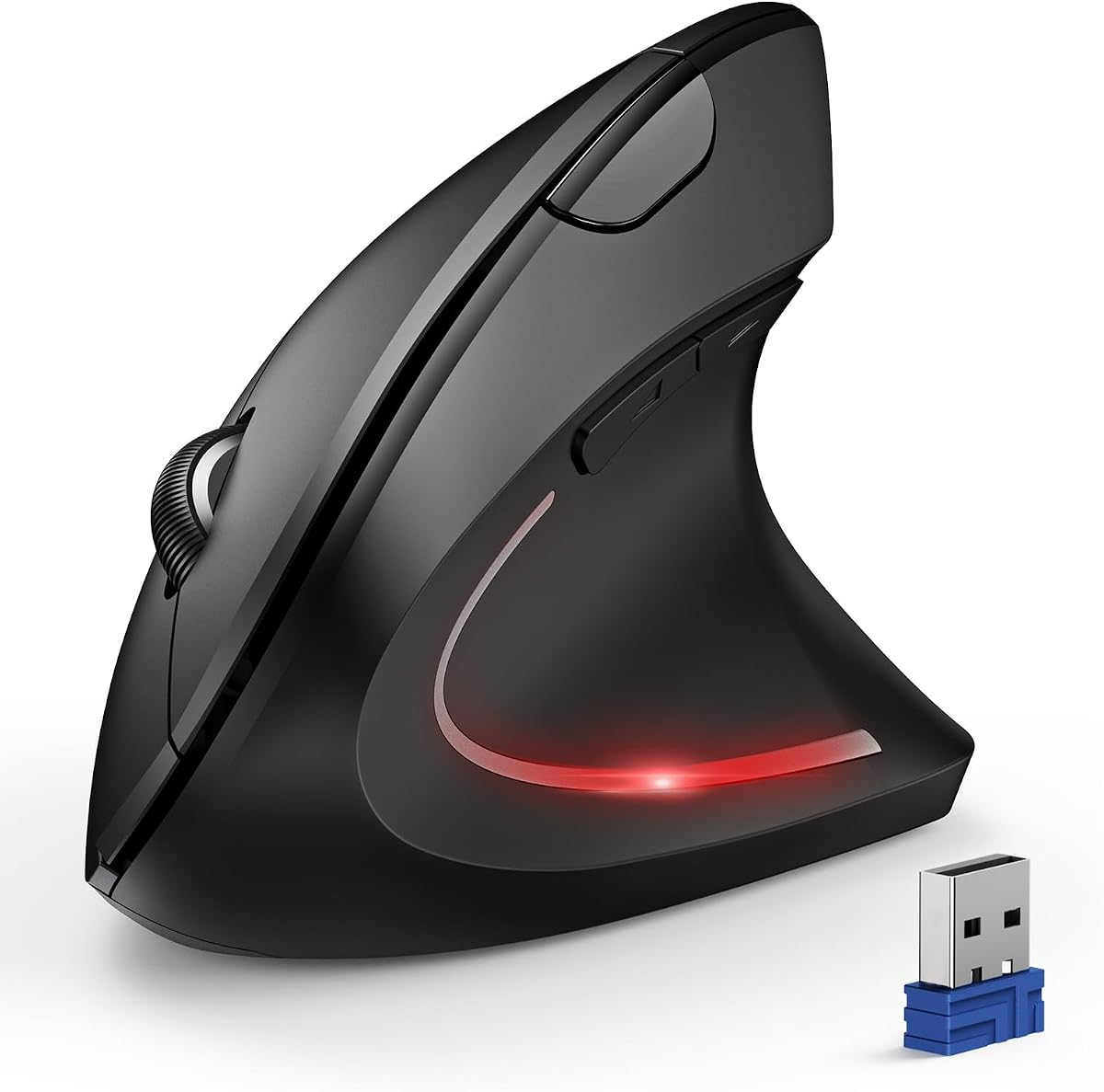
10. Wireless Vertical Mouse for Large Hands - Budget Vertical Experiment

Wireless Vertical Mouse for Large Hands

Wireless Vertical Mouse for Large Hands

7.4/10★★★★☆

This wireless ergonomic vertical mouse leans hard into the keywords shoppers type: large hands, carpal tunnel comfort, quiet clicks, rechargeable. The promise is a bigger vertical shell that promotes a more natural handshake posture to reduce strain during long PC sessions. For readers who have already decided they need vertical geometry—and who want that geometry aimed at bigger hands—it is the budget experiment in the pack.

  • Vertical design marketed for large hands
  • 800–3600 DPI, silent clicks, blue LED
  • 2.4 GHz rechargeable wireless
Check Price →
✓ Pros
  • Vertical design explicitly marketed for larger hands and carpal comfort
  • Five DPI steps from 800 to 3600 for adjustable cursor speed
  • Quiet clicks for shared and late-night environments
  • Rechargeable 2.4 GHz wireless without a cable on the desk
  • Blue LED accent for a bit of desk personality
✕ Cons
  • Lower aggregate rating than most alternatives in this pack—buy with measured expectations
  • Brand ecosystem and long-term support are less proven than Logitech, Razer, or TECKNET
  • Vertical adaptation still required; not a magic cure for every wrist issue

Detailed review

The rating sits lower than the flagship options, so honesty matters. Some buyers will love the angle and size; others will bounce off build feel, sensor quirks, or expectation mismatches that plague crowded marketplace verticals. Treat it as a low-risk trial if you are curious about vertical mice before investing in a longer-warranty TECKNET vertical or a premium name-brand handshake mouse outside this pack.

DPI steps at 800, 1200, 1600, 2400, and 3600 cover typical office speeds. Silent buttons support quiet rooms. 2.4 GHz wireless keeps the desk tidy, and rechargeable power avoids AAA runs if the battery system holds up in your usage pattern. A blue LED adds flair without approaching Razer Chroma complexity. Compatibility messaging covers common PC, laptop, and MacBook scenarios via the wireless link.

Large-hand marketing is the differentiator versus generic vertical minis that leave XL fingers unsupported. Still, vertical comfort is personal: thumb shelf height, button reach, and overall mass either click with your anatomy or do not. If possible, compare photos against a mouse you already own and plan a short adaptation week before judging the posture change.

Feature depth trails the TECKNET vertical’s Bluetooth multipoint and six-step 4800 DPI ladder, and it trails gaming mice on sensor prestige. Its lane is affordable vertical relief marketed at bigger hands. If the listing’s lower rating makes you nervous, pay up for the TECKNET vertical’s stronger review aggregate and longer warranty framing instead.

Consider this model when you want to test a large-hand vertical on a budget and can accept more variance. Skip it if you need proven multi-device Bluetooth, elite tracking, or the lowest-risk purchase in the roundup—those crowns belong to Basilisk, G502, TECKNET, and the silent full-size office mouse.

Expectation setting

Budget vertical mice vary more unit-to-unit than flagship gaming mice. Inspect click feel, scroll consistency, and wireless stability early in the return window.

If forearm pain is clinical, pair any mouse change with desk height, chair setup, and breaks—hardware alone is not a complete treatment plan.

Who should buy it

Curious right-handed shoppers with larger hands who want a rechargeable quiet vertical trial without entering a premium ecosystem.

Skip if you need the most reliable rated option; choose TECKNET vertical or a large conventional mouse with stronger review history.

Versus TECKNET vertical

TECKNET offers stronger ratings, Bluetooth plus 2.4 GHz flexibility, and a clearer warranty story. This large-hands vertical competes mainly on explicit sizing marketing and a simpler rechargeable 2.4 GHz pitch. Most risk-averse buyers should prefer TECKNET; experimenters can try this first.
Check Price on Amazon →

We may earn a commission at no additional cost to you.

Best Mouse for Big Hands 2026: Large Comfort Picks

How to Choose a Mouse When You Have Big Hands

Measure fit before you chase specs

Hand length from wrist crease to middle fingertip and palm width predict comfort better than marketing adjectives. If your palm overhangs every compact mouse you try, prioritize long right-hand shells (Basilisk, G502) or listings that explicitly say medium-to-large or large hands (Redragon, the silent full-size, the large vertical).

Palm grippers usually want taller rear humps. Claw grippers with large hands still need enough length so fingertips reach primary buttons without sliding the mouse forward out from under the palm. Fingertip grippers sometimes prefer lighter mice, but many XL fingertip users still hate ultracompact widths—test width as carefully as weight.

Traditional large shells versus vertical angles

A large conventional mouse reduces pinching by filling the hand. A vertical mouse reduces forearm pronation by rotating toward a handshake. They solve different problems. If your complaint is that normal mice feel like toys, start conventional and large. If your complaint is tingling or outer-forearm fatigue from twisting, prioritize vertical options like the TECKNET ergonomic mouse—and give yourself a real adaptation week.

Sensor and DPI reality for larger hands

Bigger hands often pair with lower DPI and larger arm movements. That makes consistent low-DPI tracking and stable lift-off more important than a maximum-DPI sticker. Gaming sensors on the Basilisk V3 and G502 Hero still earn their keep for precision work and play, while 2400–4800 DPI office sensors are plenty for documents and browsing if the shell fits.

Turn off Windows enhance pointer precision when you care about predictable aiming or design work. Match polling and wireless mode to the task: HyperSpeed or wired for competitive play, Bluetooth for port-light laptops, 2.4 GHz receivers for stubborn office PCs.

Buttons, silence, and multi-device needs

Desk setup still matters

Even the best mouse for big hands fails on a desk that is too high, a chair without arm support, or a tiny hard plastic pad that fights wide arm arcs. Give yourself mouse pad depth for forearm aiming, keep the mouse close to your body’s midline, and alternate with keyboard shortcuts so your pointing hand gets micro-breaks.

If pain is persistent or clinical, treat gear as one lever beside medical advice—not a substitute for it.

Frequently Asked Questions

01

What makes a mouse good for big hands?

Length, height, and thumb support matter more than peak DPI. A good large-hand mouse lets your palm rest on the shell instead of hovering, places primary buttons under long fingers without stretching, and gives the thumb a ledge or wide left flank so you are not pinching to keep control. That is why full-size right-hand shapes like the Razer Basilisk V3 and Logitech G502 Hero, plus explicitly medium-to-large wireless shells like the Redragon, outperform compact travel mice for many XL users.

02

Should big-handed users buy a vertical mouse?

Buy vertical if forearm twisting and wrist pressure are the main problem, not merely shell length. Vertical designs such as the TECKNET ergonomic mouse rotate you toward a handshake posture that can reduce pronation strain, but they require a short learning curve and will feel strange for gaming aim at first. If your only issue is that normal mice feel tiny, a larger conventional mouse may solve it with less adaptation.

03

Is the Logitech G502 Hero too heavy for large hands?

Many large-handed users actually prefer some mass because a heavier shell stays planted under a strong grip. The G502 Hero also lets you add or remove 3.6 g weights to tune balance. If you are committed to ultralight flick aiming, it may feel dense; if you want a filled palm and stable tracking, the weight is often a feature rather than a bug.

04

Wired or wireless for large-hand gaming mice?

Wired options like the Basilisk V3 and G502 Hero eliminate battery anxiety and are excellent when the mouse never leaves the desk. Wireless options like the Basilisk V3 X HyperSpeed add freedom and multi-device flexibility with only small practical tradeoffs for most players. Choose wired for maximum simplicity and peak feature sets in this pack; choose wireless when cable drag bothers your wide arm sweeps.

05

Do side buttons work on Mac with these mice?

Not always. Several pack products—including the Redragon big wireless mouse and both TECKNET models—note that side buttons are not available on macOS even when basic pointing works. If browser back/forward on the thumb is mandatory for your Mac workflow, verify the listing notes or plan to rely on keyboard shortcuts and primary clicks.

06

What DPI should I use if I have large hands?

There is no universal number, but many large-hand users with arm aiming sit comfortably between roughly 800 and 1600 DPI for precision work and competitive aim, then raise DPI for sprawling multi-monitor desktops. Start lower than you think, disable enhance pointer precision in Windows, and adjust until a single comfortable arm motion crosses the screen without constant lifting.

07

Can a bigger mouse help with carpal tunnel discomfort?

A better-fitting mouse can reduce awkward pinch postures and, in the case of vertical models, reduce forearm twist—both of which some users find relieving. It is not a guaranteed medical treatment. Combine gear changes with neutral desk height, breaks, and professional advice if symptoms persist. In this pack, vertical TECKNET and the large-hands vertical experiment specifically target that comfort angle, while Basilisk-style ergonomics help via support rather than radical rotation.

08

Is the Redragon big wireless mouse good enough for gaming?

It is fine for casual games, browser play, and general PC use, with DPI up to 4000 and a 250 Hz polling option. It is not in the same sensor and switch league as the Basilisk V3 or G502 Hero. If ranked competitive performance matters, choose one of those gaming shells; if you mainly want a larger wireless office mouse that can also game sometimes, Redragon fits.

09

How should I choose between the Basilisk V3 and Basilisk V3 X HyperSpeed?

Take the wired Basilisk V3 for the richer HyperScroll experience, Focus+ 26K sensor ceiling, optical switches Gen-2 story, and zero battery management. Take the V3 X HyperSpeed when you need HyperSpeed wireless and Bluetooth, long battery claims, and the same general ergonomic family with slightly fewer controls and an 18K sensor. Large-hand fit is strong on both; the decision is mostly cord versus cordless.

10

What if every mouse still feels small?

Look first at the longest, tallest right-hand shells in the pack—Basilisk V3, G502 Hero, Redragon big wireless, the silent full-size, and the USB-C large-size mouse—and avoid compact tri-mode tools as your only device. Pair the mouse with a larger desk pad, lower sensitivity so you use more arm, and confirm your chair and desk height are not forcing an awkward reach. If needed, a vertical large-hand model can add height even when length is already maxed.

Conclusion

For most people searching for the best mouse for big hands in 2026, the Razer Basilisk V3 is the safest overall recommendation: a genuinely supportive right-hand ergonomic shell with a thumb rest, elite sensor pedigree, and enough buttons to keep large digits productive. The Logitech G502 Hero remains the wired alternative when you want adjustable weight, hyper-fast scrolling, and a chassis that finally matches a larger palm. When the brief is explicitly full-size wireless for medium to large hands, the Redragon big mouse is the straightforward comfort pick.

From there, match specialty needs without overthinking. Basilisk V3 X HyperSpeed covers wireless gaming in the same shape family. The silent full-size mouse and TECKNET rechargeable model cover quiet offices and multi-device work. TECKNET’s vertical mouse—and, for experimenters, the lower-rated large-hands vertical—address handshake-angle relief. The USB-C wired large mouse and Uineer tri-mode unit fill cable-reliable and travel-switcher niches.

Pick the shell that fills your hand, confirm the connection style your computers actually support, and give any new grip a few real workdays before you judge it. Comfort compounds: the right large mouse is less about winning a spec sheet and more about ending the daily fight with a mouse that was never shaped for you.