Best microSD Cards for Dash Cam in 2026
We may earn a commission from links on this page, at no extra cost to you. Learn more.
A dash cam is only as trustworthy as the card inside it, and that is where most drivers get caught out. Ordinary microSD cards are built for occasional photos, not the relentless day-in, day-out writing that loop recording demands, so they wear out fast and quietly fail exactly when you need footage most. High-endurance cards are engineered for that punishment, rated for tens of thousands of hours of continuous recording in heat, cold and vibration. This guide ranks nine of the best microSD cards for dash cams and home security in 2026, from proven SanDisk High Endurance models to affordable value picks, so you can match capacity and durability to how you drive and record.
Top 9 Best microSD Cards for Dash Cam
Our top 9 picks, reviewed
Micro SD Card for Dash Cam & Security 128GB (U3 V30)
This 128GB card is the best all-round dash cam pick, pairing a top owner rating with everything a recorder needs: U3 and V30 speed classes for steady 4K loop capture, a wide temperature range for hot and freezing cabins, and a bundled adapter and 3-in-1 reader for easy offloading. It prevents frame drops during continuous recording, and the low price makes it an easy card to keep spare copies of.
- Capacity
- 128GB
- Read
- 90MB/s
- Class
- U3 V30
- Type
- microSDXC + reader
What we liked
- Rated for continuous 4K loop recording
- Includes SD adapter and 3-in-1 reader
- U3 and V30 for smooth 24/7 capture
- Wide -13F to 185F operating range
Worth noting
- Lesser-known brand than SanDisk
- 90MB/s read is mid-range, not blazing
Micro SD Card for Dash Cam & Security 64GB (U3 V30)
For 1080p dash cams and entry security cameras, this 64GB card is the cheapest sensible way in. It carries U3 and V30 ratings to prevent Full HD video lag, an IPX7 waterproof and shockproof body for harsh cabins, and the same handy adapter and 3-in-1 reader bundle. Capacity is modest, so it is happiest recording standard HD loops rather than large 4K files, but the value is hard to beat.
- Capacity
- 64GB
- Read
- 90MB/s
- Class
- U3 V30 A1
- Type
- microSDXC + reader
What we liked
- Very affordable entry price
- U3 V30 keeps 1080p footage smooth
- IPX7 waterproof and shockproof
- Comes with adapter and 3-in-1 reader
Worth noting
- 64GB fills quickly on 4K loops
- Best suited to 1080p, not 4K, recording
SanDisk Extreme 128GB microSD (245MB/s)
The SanDisk Extreme is the speed champion here, with 245MB/s read and 170MB/s write speeds that shrug off 5.3K and 4K UHD footage and make offloading clips almost instant. It is temperature, water, shock and X-ray proof, so it survives the cabin abuse dash cams dish out. It is tuned more for action cams than endless loop recording, but for high-bitrate 4K dash cams that need headroom, it is superb.
- Capacity
- 128GB
- Read
- 245MB/s
- Class
- U3 V30
- Type
- microSDXC
What we liked
- Blazing 245MB/s read, 170MB/s write
- Handles 5.3K and 4K UHD video
- Extremely durable, multi-proof design
- Trusted SanDisk reliability
Worth noting
- Not a dedicated high-endurance model
- Priced above basic dash cam cards
SanDisk High Endurance 256GB microSDXC
SanDisk's High Endurance line is the gold standard for loop recording, and this 256GB version is our pick for drivers who want room to spare. Designed specifically for dash cams and home monitoring, it is rated for up to 20,000 hours of Full HD recording and tested in temperature, water, shock, humidity and magnetic extremes. The generous capacity means fewer overwrites and longer footage retention before the loop cycles.
- Capacity
- 256GB
- Read
- 4K UHD
- Class
- C10 U3 V30
- Type
- microSDXC + adapter
What we liked
- Purpose-built for high endurance
- Rated up to 20,000 hours of recording
- Roomy 256GB for long 4K loops
- Multi-proof, harsh-condition tested
Worth noting
- Read speed not headlined
- Endurance figure is Full HD, less for 4K
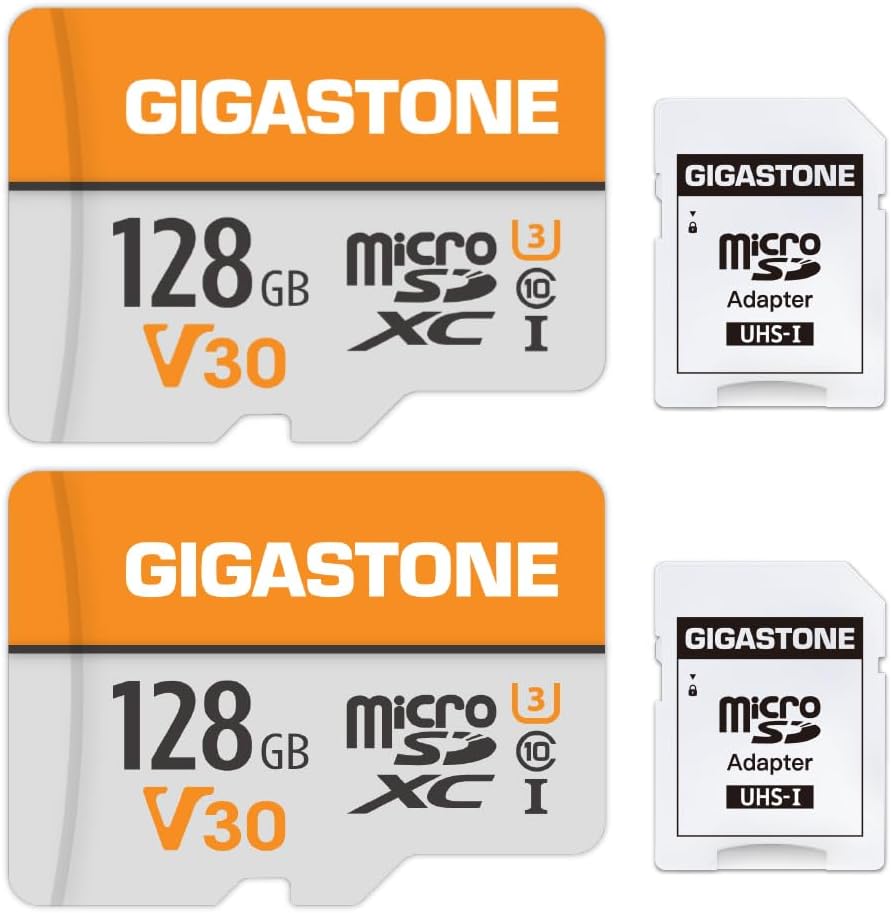
Gigastone 128GB microSD 2-Pack (A1 V30)
Getting two 128GB cards in one box makes this Gigastone pack a smart buy for anyone running multiple cameras or wanting a hot spare. Both cards carry A1 and V30 ratings for 4K recording and come with SD adapters, plus a five-year warranty for peace of mind. They ship formatted to exFAT, so older dash cams may need a quick reformat to FAT32, but the value per gigabyte is excellent.
- Capacity
- 128GB x2
- Read
- 95MB/s
- Class
- A1 V30 U3
- Type
- microSDXC + 2 adapters
What we liked
- Two 128GB cards for redundancy
- A1 and V30 for 4K recording
- Waterproof and X-ray proof
- 5-year limited warranty
Worth noting
- exFAT may need reformatting to FAT32
- Not a dedicated endurance card
Gigastone 256GB High Endurance Pro microSDXC
This Gigastone High Endurance Pro pairs a TLC endurance-focused design with an unusually generous perk: five years of free data recovery, which is reassuring if a crucial clip ever goes missing. It lists compatibility with popular dash cam brands like VIOFO, VANTRUE and REDTIGER, offers up to 100MB/s read, and its 256GB capacity suits long 4K loops. A strong middle-ground pick between budget cards and premium SanDisk endurance.
- Capacity
- 256GB
- Read
- 100MB/s
- Class
- A1 V30 U3
- Type
- microSDXC + adapter
What we liked
- TLC high-endurance design
- Broad dash cam brand compatibility
- 5 years free data recovery service
- Roomy 256GB at a fair price
Worth noting
- Write speed tops out around 60MB/s
- Recovery service needs registration
SanDisk High Endurance 128GB microSDXC
The 128GB SanDisk High Endurance offers the same purpose-built loop-recording durability as its 256GB sibling in a smaller, adequate capacity. It is rated for up to 10,000 hours of Full HD recording and carries the full suite of temperature, water, shock, humidity and magnet protection that makes SanDisk endurance cards so dependable. If your dash cam does not need vast storage, it delivers the reliability that matters most for the price of a mid-range card.
- Capacity
- 128GB
- Read
- 4K UHD
- Class
- C10 U3 V30
- Type
- microSDXC + adapter
What we liked
- Purpose-built high-endurance flash
- Rated up to 10,000 hours recording
- Fully multi-proof and harsh-tested
- Trusted SanDisk name and support
Worth noting
- Pricey per gigabyte at this listing
- Read speed not prominently rated
Amazon Basics 128GB microSDXC (A2 U3)
The Amazon Basics 128GB card is the value pick for buyers who want one card that works in a dash cam and doubles for a phone or tablet. It meets V30 and A2 ratings, hits up to 100MB/s read, and adds IPX6 water resistance and X-ray and magnet protection. It is a general-purpose card rather than a dedicated endurance model, so pair it with regular footage checks, but the price is unbeatable.
- Capacity
- 128GB
- Read
- 100MB/s
- Class
- U3 V30 A2
- Type
- microSDXC + adapter
What we liked
- A2 rating for fast app loading
- Up to 100MB/s read speed
- IPX6 water and X-ray resistant
- Very low price with full-size adapter
Worth noting
- General-purpose, not high-endurance
- A2 speed matters more for phones than cams
SanDisk Ultra 256GB microSDXC (150MB/s)
The SanDisk Ultra 256GB is the roomy everyday option, giving you plenty of space and quick 150MB/s read speeds for pulling footage onto a computer. Its U1 rating suits Full HD recording rather than demanding 4K, and it is a general-purpose card rather than an endurance model, so it is best for lighter-duty dash cams and mixed use across phones, tablets and laptops where its big capacity and speed shine.
- Capacity
- 256GB
- Read
- 150MB/s
- Class
- C10 U1 A1
- Type
- microSDXC + adapter
What we liked
- Fast 150MB/s read for offloading
- Large 256GB for long recordings
- A1-rated for quick app loading
- Trusted SanDisk reliability
Worth noting
- Only U1, best for Full HD not 4K
- Not a high-endurance card
How We Chose the Best microSD Cards for Dash Cams

Choosing a dash cam card is a different exercise from picking one for a phone or camera, because the workload is uniquely brutal. A dash cam writes video continuously, then overwrites the oldest footage in an endless loop, hammering the same memory cells thousands of times a week. A card that looks fine on paper can wear out in months if it was never built for that punishment, and the worst part is that failure is usually silent: the card appears to work until the moment you need footage and find nothing there. So our first filter was endurance, favouring cards explicitly engineered for continuous recording over general-purpose flash.
From there we weighed the specifications that decide whether footage saves cleanly. Sustained write speed matters more than headline read speed, because the card has to keep up with the camera's bitrate frame after frame, which is why we prioritised U3 and V30 ratings that guarantee a steady 30MB/s. Capacity came next, since more storage means longer retention and fewer overwrite cycles. We also looked at temperature tolerance, because cards bake in summer dashboards and freeze in winter, along with water and shock resistance, bundled adapters and readers, and the reassurance of a proven brand and warranty. The result is a list that spans dedicated endurance cards, fast all-rounders and budget value picks.
Why Ordinary microSD Cards Fail in Dash Cams
It helps to understand exactly why a cheap card fails so you can avoid the mistake. Flash memory wears out with each write, and every cell can only be rewritten a finite number of times before it degrades. A photo card might see a few thousand writes over its whole life. A dash cam card doing loop recording can hit that in a matter of weeks, because it is writing video every second the engine runs and constantly recycling the same space. Once cells start failing, the card either stops recording, corrupts clips, or drops frames, and it rarely warns you first.
High-endurance cards solve this in two ways. They use flash chemistry rated for far more write cycles, and they are tuned for sustained sequential writing rather than the bursty pattern of taking photos. The SanDisk High Endurance cards on this list are the clearest example, rated for 10,000 hours at 128GB and 20,000 hours at 256GB of Full HD recording. Those numbers translate to years of reliable dash cam use rather than months. If your footage might ever be needed as evidence after a collision, this is not the place to save a few dollars on a generic card.
High-Endurance vs. High-Speed: Which Matters More
There is a genuine trade-off buyers face between endurance and raw speed, and the right answer depends on your camera. Dedicated endurance cards like the SanDisk High Endurance 256GB and Gigastone High Endurance Pro are optimised to survive constant rewriting, which is exactly what loop recording demands, even if their headline read speeds are modest. High-speed cards like the SanDisk Extreme, with its 245MB/s read and 170MB/s write, prioritise moving huge amounts of data quickly, which suits high-bitrate 4K capture and makes offloading footage almost instant.
For most drivers with a standard 1080p or entry 4K dash cam, endurance wins, and a purpose-built card will simply last longer. But if you run a premium 4K or 5K recorder that produces very high bitrates, the extra sustained write headroom of a fast card like the SanDisk Extreme can be the difference between smooth footage and dropped frames. The U3 V30 cards here, such as the 128GB dash cam card, strike a sensible balance for the majority of setups, meeting the speed a recorder needs while keeping the price low enough to buy spares.
Matching the Card to Your Setup
For a Standard 1080p Dash Cam
If your camera records Full HD, you do not need to overspend. The 64GB U3 V30 card is the cheapest sensible option and prevents 1080p video lag, while the Amazon Basics 128GB gives you more room and doubles nicely for a phone. Both meet the speed a Full HD recorder needs, and the low prices mean you can keep a spare in the glovebox without a second thought.
For a 4K or High-Bitrate Camera
Demanding cameras call for headroom. The 128GB U3 V30 card handles continuous 4K loops well and takes our top spot, while the SanDisk Extreme adds blistering speed for the most bitrate-hungry recorders. If you want maximum longevity for round-the-clock recording, the SanDisk High Endurance 256GB is the safest long-term choice.
For Multiple Cameras or Redundancy
Drivers running front-and-rear systems or wanting a backup should look at the Gigastone 128GB 2-pack, which delivers two cards and two adapters in one purchase. Having a spare card ready means you can swap instantly if one ever misbehaves, and rotating cards periodically spreads the wear.
Specifications That Matter Most
Two specifications shape dash cam reliability more than any others: endurance rating and sustained write speed. Endurance, expressed in recording hours by SanDisk, tells you how long the card will survive continuous overwriting, and it is the single best predictor of whether a card will still be saving footage a year from now. Sustained write speed, guaranteed by the U3 and V30 video speed classes, determines whether the card can keep pace with your camera's bitrate frame after frame. Every top pick here meets U3 and V30, and the dedicated endurance cards add the write longevity that loop recording quietly destroys.
Capacity and durability round out the picture. Bigger cards like the 256GB options not only hold more footage but also reduce how often each cell is rewritten, indirectly extending life. Temperature tolerance is easy to overlook until you remember that a dashboard can exceed 160F in summer sun and drop well below freezing in winter, which is why the -13F to 185F ratings on these cards matter. Water, shock and X-ray resistance add insurance against the real-world abuse of car interiors. Finally, a bundled adapter and reader, included with several picks here, makes pulling footage onto a computer painless.
A Closer Look at the Top Picks
The 128GB U3 V30 dash cam card earns the top spot by getting the essentials right at a remarkably low price. It is rated for continuous 4K loop recording, meets U3 and V30 for smooth capture, tolerates the temperature swings of a real cabin, and ships with both an SD adapter and a 3-in-1 reader. It is the card we would put in most dash cams without overthinking it, and its price makes keeping a spare effortless.
Behind it, the 64GB version is the budget floor for Full HD recorders, while the SanDisk Extreme is the high-speed specialist for demanding 4K cameras. For buyers who prioritise longevity above all, the SanDisk High Endurance 256GB and 128GB are the purpose-built loop-recording champions, and the Gigastone High Endurance Pro offers similar durability with a bonus data-recovery service. The Gigastone 2-pack is the redundancy pick, the Amazon Basics card the versatile value choice, and the SanDisk Ultra the roomy everyday all-rounder.
Tips for Getting the Most From a Dash Cam Card
A little maintenance dramatically extends a card's useful life. Format the card inside the dash cam itself, not a computer, so it uses the recorder's preferred file system, and reformat it every few weeks to clear fragmentation and prevent corruption. Some cards, like the Gigastone 2-pack, arrive formatted as exFAT and may need switching to FAT32 for older cameras, so check your recorder's requirements before assuming a card will just work.
Check your footage occasionally rather than trusting the camera blindly. Pull a recent clip onto a computer now and then to confirm the card is still saving cleanly, and replace any card that starts producing errors or corrupt files rather than hoping it recovers. Keep a spare card in the car, especially if you rely on footage for insurance, so a failure never leaves you unrecorded. With a purpose-built card from this list and these simple habits, your dash cam will capture the moments that matter for years to come.
Final Recommendation
For most drivers, the 128GB U3 V30 dash cam card is the best microSD card for a dash cam in 2026, combining reliable 4K loop recording, a wide temperature range and a bundled reader at a bargain price. If longevity is your priority, the SanDisk High Endurance 256GB is the purpose-built endurance champion, while the SanDisk Extreme is the pick for high-bitrate 4K cameras that need speed. Budget 1080p setups should choose the 64GB card, multi-camera owners the Gigastone 2-pack, and anyone wanting one versatile card the Amazon Basics 128GB. Match endurance and speed to how you record, keep a spare on hand, and your dash cam will never miss the footage you need.
How we picked
We judged each card on write endurance, sustained recording speed, capacity, temperature and shock resistance, video speed class, and overall value for continuous dash cam use. We weighted purpose-built high-endurance designs above general-purpose cards, since loop recording rewrites the same card constantly, and we favoured proven speed ratings such as U3 and V30 that guarantee smooth 4K and Full HD capture without dropped frames or corrupted clips.
Frequently asked questions
Why do dash cams need high-endurance microSD cards?
Dash cams record in a constant loop, overwriting the card thousands of times, which quickly wears out ordinary cards designed for occasional photos. High-endurance cards like the SanDisk High Endurance line use flash rated for tens of thousands of hours of continuous writing, so they keep saving footage reliably long after a standard card would have failed silently.
What capacity microSD card should I get for a dash cam?
It depends on your resolution. For 1080p recording, 64GB like the budget card here is often enough, while 4K dash cams eat storage fast, so 128GB or 256GB such as the SanDisk High Endurance 256GB gives you longer retention before the loop overwrites older clips. More capacity also means fewer overwrite cycles per session.
What speed class do I need for a 4K dash cam?
Look for U3 and V30 at minimum, which guarantee a sustained 30MB/s write rate for smooth 4K capture without dropped frames. The 128GB U3 V30 card and SanDisk Extreme here meet or exceed this. Lower U1 cards like the SanDisk Ultra are fine for Full HD but can struggle to keep up with high-bitrate 4K.
Do these microSD cards work in home security cameras too?
Yes. Most dash cam cards, including the high-endurance SanDisk models and the U3 V30 picks here, are equally suited to home security cameras and smart doorbells, which also record continuously. High-endurance cards are the best choice for 24/7 surveillance for the same reason they suit dash cams: constant rewriting.
Should I reformat a new microSD card before using it in my dash cam?
Yes, it is good practice. Format the card in the dash cam itself so it uses the correct file system, and note that some cards like the Gigastone 2-pack ship as exFAT and may need reformatting to FAT32 for older recorders. Reformatting periodically also helps prevent corruption and keeps loop recording running smoothly.