Best High-Capacity SSDs in 2026
We may earn a commission from links on this page, at no extra cost to you. Learn more.
When a 1TB drive stops being enough, the jump to high-capacity SSDs changes what your computer can do. Whether you are hoarding a growing game library, editing 4K footage, or backing up years of photos, a 2TB to 8TB solid-state drive keeps everything fast and in one place. But the big-capacity market is a genuine minefield of trade-offs, where price per terabyte, sustained write speed and long-term endurance matter far more than headline read numbers. This guide ranks eight of the best high-capacity SSDs you can buy in 2026, spanning blistering internal NVMe drives for gaming rigs and rugged portable USB-C drives for creators on the move, so there is a right pick whether you value raw speed or sheer roomy value.
Top 8 Best High-Capacity SSDs
Our top 8 picks, reviewed
WD_Black SN850X 4TB NVMe SSD (with Heatsink)
The WD_Black SN850X 4TB is the sweet spot of the high-capacity world, pairing top-tier 7,300 MB/s reads with a generous 4TB of TLC 3D NAND and a pre-fitted heatsink that keeps it cool in a PC or PS5. It is fast enough for the most demanding gaming and workstation loads, roomy enough that you stop deleting files, and priced far more sensibly per terabyte than the 8TB tier. For most upgraders, it is the drive to beat.
- Capacity
- 4TB
- ReadSpeed
- Up to 7,300 MB/s
- Type
- Internal NVMe PCIe Gen4 M.2 2280
- Compatibility
- PC & PS5 (with heatsink)
What we liked
- Blazing 7,300 MB/s read and 6,300 MB/s write
- Pre-installed heatsink tames thermals
- Huge 4TB capacity for games and work
- WD_Black Dashboard adds Game Mode 2.0
Worth noting
- Gen4 speeds need a compatible slot
- Runs warm under sustained heavy load
WD_Black SN850X 8TB NVMe SSD (with Heatsink)
If a single slot needs to swallow an entire library, the WD_Black SN850X 8TB is the fastest way to do it. You get the same searing 7,300 MB/s reads and included heatsink as the 4TB model, just doubled to a colossal 8TB. It is expensive, and only worth it if you genuinely fill that much, but for creators juggling huge video projects or gamers who never want to uninstall anything, nothing else at NVMe speed is roomier.
- Capacity
- 8TB
- ReadSpeed
- Up to 7,300 MB/s
- Type
- Internal NVMe PCIe Gen4 M.2 2280
- Compatibility
- PC & PS5 (with heatsink)
What we liked
- Enormous 8TB in a single M.2 slot
- Same 7,300 MB/s read performance
- Heatsink included for stable thermals
- Ideal for massive game and video libraries
Worth noting
- Premium price at over a thousand dollars
- Overkill unless you truly need 8TB
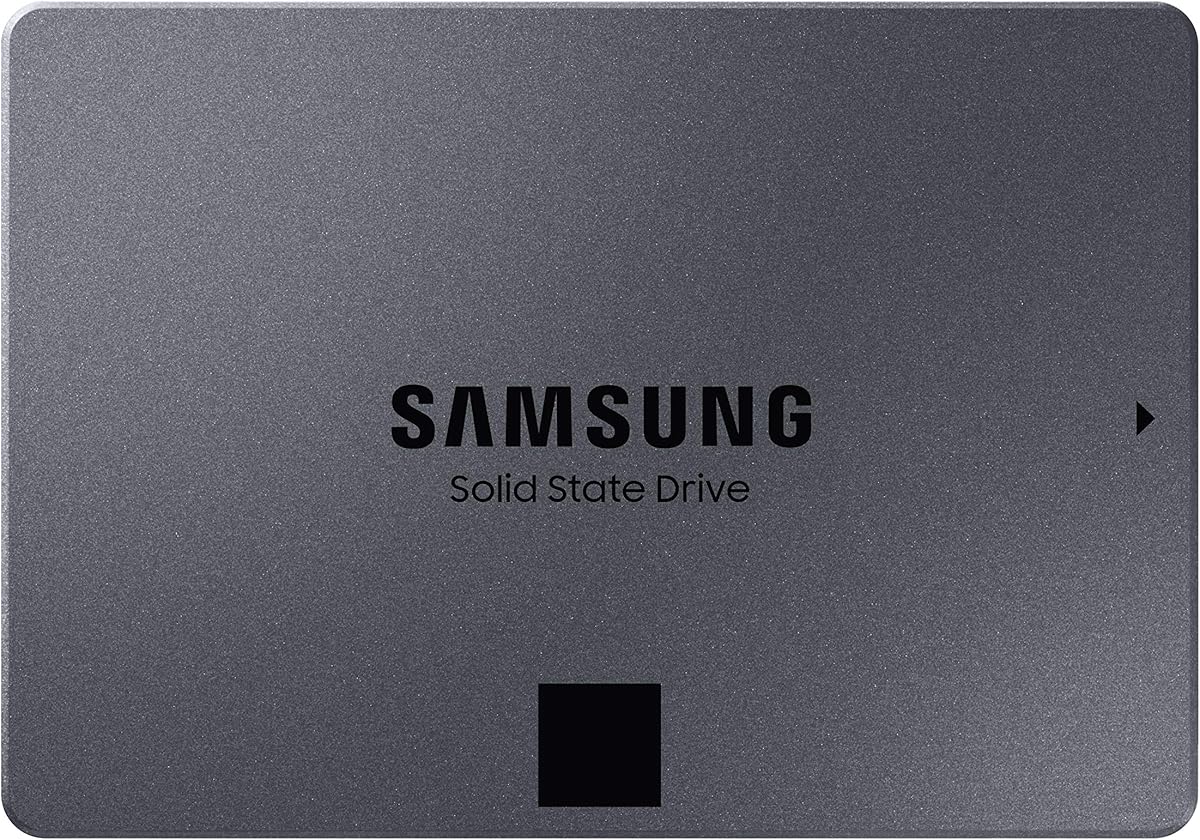
Samsung 870 QVO 8TB SATA SSD
The Samsung 870 QVO 8TB is the drive for filling a machine with data cheaply and reliably, not for chasing benchmarks. As a 2.5-inch SATA SSD it drops into virtually any desktop or laptop, and its 2,880 TBW endurance rating means it will outlast years of heavy use. Speeds top out at SATA's 560 MB/s, but for a bulk media vault, backup target or Steam overflow drive, that is plenty and the capacity is the point.
- Capacity
- 8TB
- ReadSpeed
- Up to 560 MB/s
- Type
- Internal 2.5in SATA III
- Compatibility
- Any SATA desktop or laptop
What we liked
- Massive 8TB in a standard 2.5in bay
- High 2,880 TBW endurance rating
- Works in almost any PC or laptop
- Silent, cool QLC bulk storage
Worth noting
- SATA speeds capped at 560 MB/s
- QLC slows on very large sustained writes
Samsung 990 PRO 2TB NVMe SSD
The Samsung 990 PRO 2TB is the speed champion and the most affordable way onto this list. Its 7,450 MB/s reads edge out everything here, and the massive gains in random performance and efficiency over the 980 PRO make it feel effortless in gaming and heavy computing. At 2TB it is the smallest capacity we included, but as a fast primary boot-and-game drive with real headroom, it is superb value.
- Capacity
- 2TB
- ReadSpeed
- Up to 7,450 MB/s
- Type
- Internal NVMe PCIe Gen4 M.2 2280
- Compatibility
- PC & PS5
What we liked
- Fastest reads here at 7,450 MB/s
- Excellent power efficiency per watt
- 55% better random performance than 980 PRO
- Strong value entry into high capacity
Worth noting
- No heatsink on this variant
- 2TB is the smallest capacity on this list
Samsung 990 PRO 4TB NVMe SSD
The Samsung 990 PRO 4TB brings that class-leading 7,450 MB/s speed to a proper high-capacity 4TB drive. It is the natural pick for anyone who wants Samsung's proven reliability and efficiency alongside enough room for a serious game library or video cache. There is no heatsink in the box, so you will want your motherboard's own M.2 cooler, but the raw performance and endurance make it a first-rate Gen4 workhorse.
- Capacity
- 4TB
- ReadSpeed
- Up to 7,450 MB/s
- Type
- Internal NVMe PCIe Gen4 M.2 2280
- Compatibility
- PC & PS5
What we liked
- 7,450 MB/s reads at 4TB capacity
- Superb power efficiency for a big drive
- Trusted Samsung reliability and software
- Great capacity-to-speed balance
Worth noting
- Bare M.2 with no bundled heatsink
- Priced above the WD_Black 4TB rival
SanDisk Extreme 8TB Portable SSD
The SanDisk Extreme 8TB Portable SSD is the rugged travel companion of this list, cramming a full 8TB into a silicone-armoured shell with IP65 dust and water resistance and 3-metre drop protection. Its 1,050 MB/s over USB-C is slower than an internal NVMe drive but far quicker than any hard drive, and built-in 256-bit AES encryption keeps your work safe on the move. For location shoots and off-site backups, it is hard to beat.
- Capacity
- 8TB
- ReadSpeed
- Up to 1,050 MB/s
- Type
- Portable USB-C (USB 3.2 Gen 2)
- Compatibility
- PC, Mac, USB-C devices
What we liked
- Huge 8TB in a pocketable, rugged shell
- IP65 water and dust resistance
- 256-bit AES hardware encryption
- 5-year limited warranty and 3m drop protection
Worth noting
- Slower than internal NVMe drives
- Premium price for portable 8TB
Crucial X10 8TB Portable SSD
The Crucial X10 8TB is the quickest portable drive here, doubling the SanDisk's throughput with up to 2,100 MB/s over USB-C when paired with a capable host. It matches the ruggedness too, with IP65 protection and 3-metre drop resistance, and works across Windows, Mac, Android, PS4, PS5 and Xbox. For creators who move enormous files between machines and want minimal waiting, its speed-to-capacity blend is excellent.
- Capacity
- 8TB
- ReadSpeed
- Up to 2,100 MB/s
- Type
- Portable USB-C (USB 3.2)
- Compatibility
- Windows, Mac, Android, PS5, Xbox
What we liked
- Very fast 2,100 MB/s over USB-C
- IP65 rating and 3m drop resistance
- Broad console and device compatibility
- Bundled Mylio Photos+ trial
Worth noting
- Needs a fast USB host to hit peak speed
- Premium price for 8TB
MOVE SPEED SP05 1TB Portable SSD
The MOVE SPEED SP05 1TB is the grab-and-go outlier, a keychain-sized drive with a clever push-pull slider offering both USB-C and USB-A so it plugs straight into a phone, laptop or PS5 with no cable. At 560 MB/s and 1TB it is the smallest and slowest here, but the zinc-alloy build is tough and the price is low. It is the pick for shuttling 4K clips off an iPhone rather than archiving a workstation.
- Capacity
- 1TB
- ReadSpeed
- Up to 560 MB/s
- Type
- Dual-port USB-C + USB-A (USB 3.2)
- Compatibility
- iPhone, Android, Mac, PS5
What we liked
- Dual USB-C and USB-A push-pull design
- Rugged zinc alloy body
- Plugs into phones and consoles cable-free
- Lowest price and most portable here
Worth noting
- 1TB is modest against the 8TB rivals
- 560 MB/s trails the bigger portable drives
How We Chose the Best High-Capacity SSDs

Buying a large SSD is different from buying a small one, because at 2TB and above the decision stops being "which drive is fastest" and becomes "which drive gives me the right blend of capacity, speed and price." A benchmark-winning 7,450 MB/s read speed means little if the drive costs twice as much per terabyte as a rival, and a bargain price means little if the drive crawls once its fast cache runs out. So our ranking weighed the specifications that genuinely shape a high-capacity drive's usefulness in daily life.
Capacity and price per terabyte came first, because the whole reason to buy a big drive is room. Sustained write speed came next, since anyone moving huge video files or copying a game library will feel the moment a drive drops from its burst speed to its slower steady state. We then weighed endurance and warranty, durability for the portable models, and real-world compatibility, from PS5 support to whether a drive slots into a standard 2.5-inch bay. Finally, we kept the list deliberately varied, mixing screaming internal NVMe drives with rugged portable USB-C drives, so there is a sensible pick whether you are upgrading a desktop or packing for a shoot.
Internal NVMe vs Portable: Which High-Capacity SSD Do You Need?
The first fork in the road is whether your big drive lives inside a machine or travels in a bag. Internal NVMe SSDs like the WD_Black SN850X and Samsung 990 PRO slot into an M.2 socket on a motherboard or a PS5, and they are the fastest storage you can buy, reaching well over 7,000 MB/s. They are the right answer when the drive stays put and speed is the priority: fast boot times, near-instant game loads and snappy handling of large project files. The trade-off is that installing one means opening your PC or console, and they need a compatible Gen4 slot to hit full speed.
Portable SSDs like the SanDisk Extreme 8TB and Crucial X10 8TB connect over USB-C and go anywhere. They are slower, limited by the USB link rather than the flash inside, but they are rugged, encrypted and endlessly convenient, plugging into laptops, phones and consoles without tools. If your workflow involves moving footage between locations, backing up off-site, or simply adding storage to a laptop that has no free M.2 slot, a portable drive is the obvious choice. Many creators end up owning both: a fast internal NVMe drive as a working scratch disk and a big portable drive for archiving and transport.
The 8TB Question: When Maximum Capacity Is Worth It
Eight terabytes is the ceiling of consumer SSDs today, and it is where the price curve turns steep. The WD_Black SN850X 8TB and Samsung 870 QVO 8TB both offer a colossal single-drive library, but they cost dramatically more per terabyte than the 2TB and 4TB tiers. That premium is worth paying only for specific needs. Professional video editors handling 4K and higher footage burn through storage at a startling rate, and consolidating a project onto one 8TB drive beats juggling several smaller ones. Serious game collectors who never want to uninstall a title, and anyone building a single-drive media server, are the other clear candidates.
For everyone else, two 4TB drives, or a single 4TB drive plus a cheap bulk drive, will usually cost less and offer flexibility that a single 8TB unit cannot. The Samsung 870 QVO 8TB is the interesting exception: as a SATA drive it sacrifices speed but brings 8TB down to a far friendlier price, making it the value route to maximum capacity when raw throughput is not the point. Its 2,880 TBW endurance rating also means it will keep working long after cheaper drives would have worn out.
Speed That Actually Matters: Reads, Writes and Sustained Performance
Marketing loves a big sequential read number, but for high-capacity drives the more revealing figure is sustained write speed. Most SSDs use a fast SLC cache to absorb the first chunk of a large transfer at full speed, then drop to a slower native rate once that cache is exhausted. On a small drive you rarely notice; on a high-capacity drive, where you might copy hundreds of gigabytes at once, you feel the cliff. The Gen4 NVMe drives here, led by the Samsung 990 PRO at 7,450 MB/s reads and the WD_Black SN850X at 6,300 MB/s writes, hold up best under heavy sustained loads thanks to their TLC NAND.
QLC drives like the Samsung 870 QVO trade some of that sustained performance for capacity and price, which is a sensible bargain for a bulk or backup drive that is written to occasionally rather than constantly. Portable drives sit lower still, with the Crucial X10 8TB's 2,100 MB/s comfortably ahead of the SanDisk Extreme 8TB's 1,050 MB/s, both far quicker than any mechanical hard drive. The lesson is to match the drive's real strength to your workload: chase peak NVMe speed for active editing and gaming, accept SATA or portable speeds for storage that mostly sits and waits.
Endurance and Reliability in Big Drives
A common worry about SSDs is that they wear out, and it is worth putting to rest for high-capacity buyers. Endurance is measured in TBW, or terabytes written, and it scales with capacity, so larger drives can absorb far more writing before their warranty expires. The Samsung 870 QVO 8TB is rated at an enormous 2,880 TBW, a figure most home users would take well over a decade to reach even with heavy daily use. The Gen4 NVMe drives here carry high ratings too, and all come with multi-year limited warranties.
In practice, endurance almost never limits a consumer drive's life; the drive outlasts the PC around it. What matters more day to day is thermal reliability, which is why the WD_Black SN850X models ship with a heatsink to prevent throttling, and why the bare Samsung 990 PRO drives should sit under a motherboard M.2 cooler. For portable drives, physical toughness is the reliability story, and both the SanDisk Extreme and Crucial X10 carry IP65 dust-and-water ratings plus 3-metre drop protection, with the SanDisk adding 256-bit AES hardware encryption for data security on the move.
A Closer Look at the Top Picks
The WD_Black SN850X 4TB earns the top spot because it nails the balance every high-capacity buyer is really looking for. Its 7,300 MB/s reads and 6,300 MB/s writes put it among the fastest drives money can buy, the 4TB capacity is enough to stop you deleting files, and the included heatsink means it stays fast under pressure in both a PC and a PS5. Crucially, its price per terabyte is far kinder than the 8TB tier, making it the drive we would recommend to most people upgrading a gaming or creative machine.
Behind it, the WD_Black SN850X 8TB and Samsung 870 QVO 8TB serve the maximum-capacity crowd from opposite ends, one with blistering NVMe speed and one with value-focused SATA bulk. The Samsung 990 PRO 2TB is the pure speed and value pick for a fast primary drive, while the 990 PRO 4TB brings that pace to a roomier capacity. For portability, the SanDisk Extreme 8TB is the rugged, encrypted travel vault, the Crucial X10 8TB the faster alternative for creators who hate waiting, and the pocket-sized MOVE SPEED SP05 1TB the cable-free companion for phones and consoles.
Tips for Getting the Most From a High-Capacity SSD
A big drive rewards a little planning. If you are installing an internal NVMe SSD, confirm your motherboard has a Gen4 M.2 slot to unlock its full speed, and make sure that slot has a heatsink or that the drive brings its own, as the WD_Black SN850X does. When cloning from an old drive, use the manufacturer's migration tool, and leave 10 to 15 percent of the drive free so it always has room to manage its cache and maintain performance. For a PS5, only a Gen4 NVMe drive with a heatsink will work in the console's expansion slot.
For portable drives, back-ups are only as good as their habits, so schedule regular copies rather than relying on manual drags, and take advantage of encryption where offered, as on the SanDisk Extreme, if the drive holds sensitive work. Match the connection too: a portable SSD only hits its rated speed on a suitably fast USB port, so a modern USB-C connection matters for the Crucial X10's 2,100 MB/s. Finally, treat capacity as headroom, not a target to fill, since a drive kept comfortably below full stays faster and healthier for longer.
Final Recommendation
For most buyers, the WD_Black SN850X 4TB is the best high-capacity SSD in 2026, combining elite NVMe speed, a genuinely useful 4TB of space and a cooling heatsink at a price per terabyte that makes sense. If you truly need the maximum, choose the WD_Black SN850X 8TB for NVMe speed or the Samsung 870 QVO 8TB for value-focused bulk. Speed hunters on a budget should take the Samsung 990 PRO 2TB, and those wanting that pace with more room the 990 PRO 4TB. For travel, the rugged SanDisk Extreme 8TB and faster Crucial X10 8TB lead, while the MOVE SPEED SP05 1TB covers pocket-sized, cable-free duty. Match the drive's strengths to how and where you store, and any of these will serve you for years.
How we picked
We judged each SSD on usable capacity, sequential and sustained write speed, real-world endurance and warranty, durability, and the price you pay per terabyte. Because high-capacity drives serve very different jobs, we deliberately mixed internal NVMe SSDs built for speed with rugged portable drives built for travel, prioritising drives that hold their performance when the workload gets heavy rather than winning a short benchmark burst.
Frequently asked questions
How much SSD capacity do I actually need?
For a modern gaming PC, 2TB fills up fast, so 4TB like the WD_Black SN850X or Samsung 990 PRO is the comfortable sweet spot. Choose 8TB only if you edit large 4K video projects, keep an enormous game library, or run a media or backup vault, since drives like the Samsung 870 QVO 8TB cost far more per terabyte than the 2TB and 4TB tiers.
What is the difference between an NVMe and a SATA SSD?
NVMe drives like the Samsung 990 PRO slot into an M.2 socket and reach 7,000-plus MB/s, ideal for boot drives and fast game loads. SATA drives like the Samsung 870 QVO cap at around 560 MB/s but fit any 2.5-inch bay and cost less per terabyte, making them ideal bulk storage. Pick NVMe for speed, SATA for cheap capacity.
Do high-capacity SSDs run hot and need a heatsink?
Fast Gen4 NVMe drives can throttle under sustained load, which is why the WD_Black SN850X models here ship with a heatsink. The bare Samsung 990 PRO drives rely on your motherboard's M.2 cooler instead, so make sure your board has one. SATA and portable drives like the Samsung 870 QVO and SanDisk Extreme run cool and need no extra cooling.
Are portable SSDs as fast as internal ones?
No. Portable drives are limited by their USB connection, so the SanDisk Extreme 8TB tops out near 1,050 MB/s and the faster Crucial X10 8TB near 2,100 MB/s. That is far quicker than any hard drive but still well below an internal NVMe drive's 7,000-plus MB/s. Choose a portable SSD for durability and travel, an internal NVMe for raw speed.
What does endurance or TBW mean for a high-capacity SSD?
TBW, or terabytes written, is the total data you can write before the warranty ends, and bigger drives have higher ratings. The Samsung 870 QVO 8TB is rated at 2,880 TBW, far more than most users will ever reach in a decade. For normal gaming and creative work, any drive here will long outlast the rest of your PC, so endurance rarely limits real-world use.