Best Headphones for Classical Music in 2026
We may earn a commission from links on this page, at no extra cost to you. Learn more.
Classical music asks more of a pair of headphones than almost any other genre. A symphony sprawls across a wide stage, a solo violin lives or dies on the smallest details, and a quiet passage needs air and space to breathe. That means the qualities that matter here are different from bass-forward consumer cans: an open, spacious soundstage, honest tonal balance that respects timbre, and enough resolution to separate a full orchestra without turning it to mush. This guide ranks nine headphones that serve classical listeners well in 2026, from a true open-back audiophile reference to affordable studio monitors, so there is a right pick for every budget and listening room.
Top 8 Best Headphones for Classical Music
Our top 8 picks, reviewed
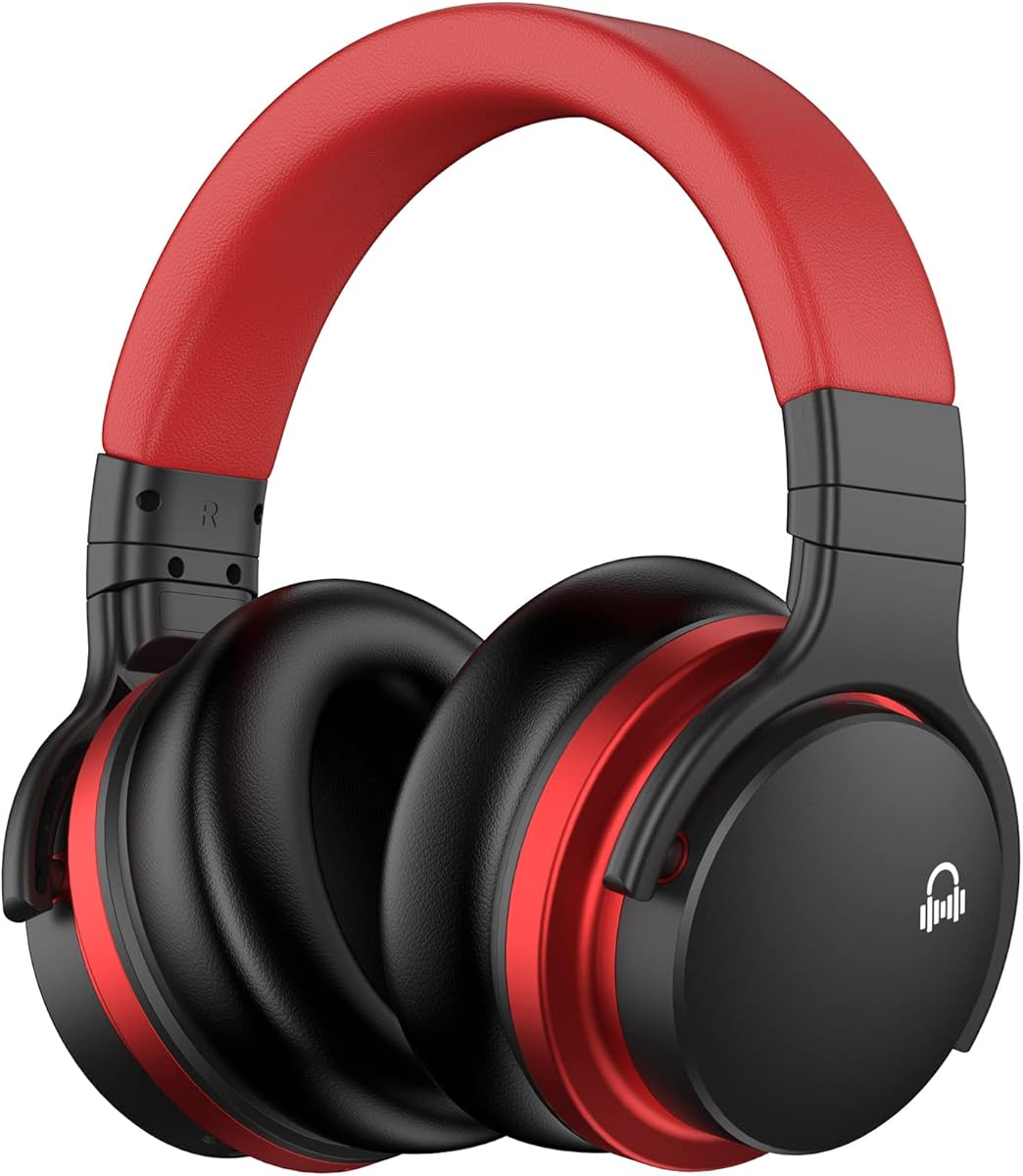
Hybrid ANC Over-Ear Headphones (120H)
This wireless pair tops the list on owner ratings and is the budget-friendly way into comfortable classical listening. Hybrid active noise cancelling hushes a commute so quiet pianissimo passages survive, memory foam cups stay comfortable across a full symphony, and the 120-hour battery is hard to drain. It is closed and bass-leaning rather than a purist open-back, but for the money it is a genuinely easy recommendation.
- Type
- Closed wireless
- Battery
- 120hr playtime
- Feature
- Hybrid ANC
- Comfort
- Memory foam cups
What we liked
- Very highly rated by owners
- Huge 120-hour battery life
- Hybrid ANC for quiet listening
- Memory foam cups for long sessions
Worth noting
- Closed wireless, not audiophile open-back
- Tuning leans toward deep bass
PUPGSIS Wired Studio Monitor Headphones
The PUPGSIS monitor delivers a surprising amount of detail for the price, with 50mm drivers and a broad frequency range that reaches into the airy top end where cymbals and violin harmonics live. The floating headband keeps it comfortable through a long recording, and the bundled quarter-inch adapter suits a home headphone amp. It is closed, so staging is narrower than an open-back, but tonally it stays honest.
- Type
- Closed wired
- Drivers
- 50mm
- Response
- 20Hz-40kHz
- Jack
- 1/4in + 3.5mm
What we liked
- Wide 20Hz-40kHz response
- Large 50mm drivers
- Comfortable floating headband
- Includes 1/4in studio adapter
Worth noting
- Closed design limits soundstage width
- Coiled cable is bulky
Sony MDR7506 Professional Headphone
A studio fixture for decades, the Sony MDR7506 gives you a detailed, revealing sound that lays bare the inner voices of a string quartet. The closed design isolates well, folds into the included case for travel, and the professional tuning is honest rather than flattering. Classical listeners get real resolution here, though the sealed cups trade the expansive stage of an open-back for isolation and portability.
- Type
- Closed wired
- Drivers
- 40mm neodymium
- Response
- 10Hz-20kHz
- Extras
- Folds, soft case
What we liked
- Studio-standard detailed sound
- Excellent external noise reduction
- Folds with a soft carry case
- Trusted professional pedigree
Worth noting
- Non-detachable 9.8ft coiled cable
- Closed back narrows soundstage
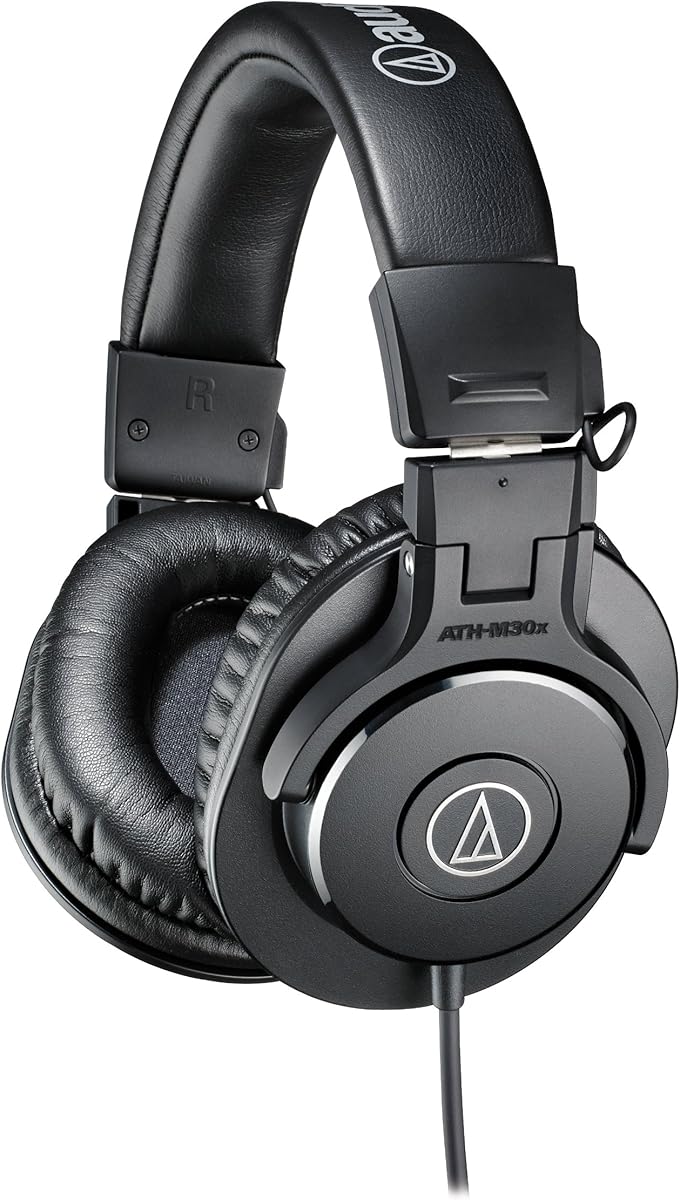
Audio-Technica ATH-M50X Studio Monitor
The ATH-M50X is the step-up closed monitor, with 45mm large-aperture drivers that resolve an orchestra cleanly and a detachable cable that makes it easy to live with. Reviewers praise its clarity and accurate bass, which keeps double basses and timpani defined rather than boomy. As a sealed design it will not stage as wide as an open-back reference, but for detailed, portable classical listening it is a longtime favourite.
- Type
- Closed wired
- Drivers
- 45mm large aperture
- Design
- Circumaural
- Cable
- Detachable
What we liked
- Critically acclaimed clarity
- Large 45mm aperture drivers
- Detachable cable system
- Deep, accurate bass response
Worth noting
- Closed back limits orchestral width
- Clamping force firm at first
Sennheiser HD 600 Open-Back Audiophile
For pure classical listening, the Sennheiser HD 600 is the connoisseur's choice. Its open-back design creates the natural, spacious soundstage that lets a full orchestra spread out in front of you, while its famously accurate tuning respects the timbre of every instrument. The detachable Kevlar-reinforced cable and plush pads suit marathon listening. It needs a quiet room and ideally an amp, but nothing here sounds more like the concert hall.
- Type
- Open-back
- Magnets
- Neodymium ferrous
- Cable
- Detachable Kevlar
- Design
- Circumaural
What we liked
- Natural, spacious open-back soundstage
- Reference-grade tonal accuracy
- Detachable oxygen-free copper cable
- Plush pads for long symphonies
Worth noting
- Open design leaks sound and offers no isolation
- Benefits from a dedicated amp
Audio-Technica ATH-M20x Studio Monitor
The ATH-M20x is the affordable entry into Audio-Technica's monitor line and a sensible closed pick for classical fans in noisy spaces. Its 40mm drivers and circumaural cups isolate well and stay comfortable, giving you a clean, mostly honest presentation with a touch of extra low end. It will not open up the stage like the HD 600, but as a reliable, isolating everyday monitor it punches above its modest price.
- Type
- Closed wired
- Drivers
- 40mm
- Tuning
- Enhanced low end
- Design
- Circumaural
What we liked
- Solid build for the price
- Good passive isolation
- Comfortable circumaural fit
- Single-side cable exit
Worth noting
- Enhanced bass slightly warms the balance
- Fixed cable is not detachable
OneOdio A71 Studio Recording Headphones
The OneOdio A71 is a versatile closed monitor that handles classical capably while doubling for monitoring and DJing. Its 40mm drivers pull out fine detail, and the built-in dual 3.5mm and 6.35mm connectivity plugs straight into a home amp or interface. It folds down for travel and adds a SharePort for a second listener. Staging is modest given the sealed cups, but for an all-rounder at this price it delivers.
- Type
- Closed wired
- Drivers
- 40mm
- Jack
- 3.5 + 6.35mm
- Feature
- SharePort, foldable
What we liked
- Detailed hi-res 40mm drivers
- Dual 3.5/6.35mm connectivity
- Foldable for travel
- SharePort for shared listening
Worth noting
- Coiled cord can feel heavy
- Closed design narrows staging
OneOdio Pro-10 Wired Over-Ear Headphones
The OneOdio Pro-10 is a budget wired workhorse with big 50mm drivers and a handy SharePort that lets two people follow the same recording. Ninety-degree swivel cups and wide compatibility make it flexible around a desk or piano. Its tuning leans warmer than a true reference, which slightly softens orchestral detail, but for casual classical listening and practice alongside another set of ears it is a practical, inexpensive choice.
- Type
- Closed wired
- Drivers
- 50mm
- Jack
- 1/4 + 3.5mm
- Feature
- Swivel cups, SharePort
What we liked
- Large 50mm drivers
- Shared audio port for two listeners
- 90-degree swivel cups
- Broad device compatibility
Worth noting
- Bass-forward tuning muddies texture
- Comfort tightens over long sessions
How We Chose the Best Headphones for Classical Music

Classical music is the genre that separates good headphones from merely loud ones. Where pop and electronic music forgive a bass boost, an orchestra punishes it: too much low-end warmth smears the texture of massed strings, softens the attack of a timpani roll and robs a solo cello of its woody body. So our first principle was tonal honesty. We favoured headphones that reproduce instruments as they actually sound, respecting the timbre of a clarinet or the bite of a trumpet rather than flattering them.
From there we weighed soundstage, the sense of space and placement that makes a symphony believable. Open-back designs like the Sennheiser HD 600 have a natural advantage here, casting a wide, airy stage that lets the sections spread out, so we ranked staging highly while noting that closed monitors trade it for isolation. We then considered detail retrieval, because classical rewards headphones that can pull apart a dense tutti passage into individual lines, and comfort, since a Mahler symphony can run ninety minutes. Finally we looked at practical realities: impedance and whether an amp is needed, cable design, and the value each pair offers at its price. The result is a list that spans a true audiophile reference down to honest budget monitors.
What Makes Headphones Good for Classical Music
The short answer is accuracy, space and resolution, in roughly that order. Accuracy means a flat, uncoloured frequency response that does not inflate the bass or scoop the mids where most orchestral instruments live. When the tuning is honest, a violin sounds like a violin and a French horn keeps its brassy warmth without turning honky or thin. This is why studio monitors, designed to reveal flaws rather than hide them, so often suit classical listeners: the Sony MDR7506 and Audio-Technica ATH-M50X were built to be told the truth to.
Space is the second pillar. Orchestral music is inherently three-dimensional, recorded to capture the width and depth of a real hall, and headphones with a generous soundstage recreate that geometry. Open-back designs excel because their vented cups let sound breathe, which is exactly why the HD 600 remains a reference for the genre. The third pillar is resolution: the ability to separate a dozen instruments playing at once. A resolving pair lets you follow the second violins under the melody or hear a triangle ring at the back of the stage. Bass-heavy consumer headphones fail classical not because they sound bad in isolation, but because their emphasis masks exactly the detail and air the genre depends on.
Open-Back Versus Closed-Back for the Orchestra
This is the central decision for a classical listener, and it comes down to where and how you listen. Open-back headphones, with their perforated or mesh outer cups, allow air to move freely through the driver. The payoff is a wider, more natural soundstage and a less "in your head" presentation, which is why the Sennheiser HD 600 is the standout classical pick on this list. The cost is isolation: open-backs leak sound both ways, so they are unsuitable on a train, in an office or anywhere you might disturb others, and they let ambient noise in that can bury quiet passages.
Closed-back designs seal the cup, isolating you from the outside world and keeping your music private. That makes monitors like the Sony MDR7506, ATH-M20x and ATH-M50X the practical choice for commuting, shared spaces or late-night listening. Modern closed monitors have narrowed the soundstage gap considerably, and their honesty still serves classical well, but they will not conjure quite the same expansive stage as a good open-back. The right answer is simply about your environment: a quiet dedicated listening room favours open-back, while a shared or noisy life favours closed.
The Best Open-Back Pick for Serious Listeners
If your goal is to hear classical music the way its recording engineers intended, the Sennheiser HD 600 is the headphone to beat on this list. Its open-back architecture produces the natural, spacious soundstage that lets a symphony orchestra spread out in front of you, with a real sense of section placement rather than a wall of sound. The tuning is famously accurate and even-handed, respecting the timbre of strings, brass and woodwinds alike, and its plush earpads make it comfortable enough for a full opera.
There are two things to know before buying. First, the HD 600 is open, so it offers no isolation and leaks audibly; it belongs in a quiet room, not on public transport. Second, it genuinely rewards a dedicated headphone amp, which unlocks the dynamic swings, the whisper-to-roar contrast, that classical music lives on. Feed it well and give it a quiet space and it delivers a concert-hall presentation nothing else here matches. It is the specialist's choice, and for classical specifically, it is worth the investment.
The Best Studio Monitors for Detail and Value
Not everyone wants an open-back that needs an amp and a silent room, and this is where studio monitors shine. The Sony MDR7506 has been a professional standard for decades precisely because it tells the truth: it resolves the inner voices of a string quartet, isolates well thanks to its closed design, and folds into the included case for travel. Its non-detachable coiled cable is a minor annoyance, but for detailed, portable classical listening on a budget it is hard to beat.
Stepping up, the Audio-Technica ATH-M50X brings 45mm large-aperture drivers, a detachable cable and the kind of clarity that audio engineers praise, keeping double basses and timpani defined rather than boomy. Its smaller sibling, the ATH-M20x, offers much of the same honest character with a slight bass warmth at a lower price and better isolation for noisy spaces. And the budget PUPGSIS monitor surprises with 50mm drivers and a wide 20Hz-40kHz range that reaches into the airy top end where violin harmonics live. None of these stage as wide as the HD 600, but each gives you a neutral, revealing sound that respects orchestral detail for a fraction of the cost.
Comfort, Cables and Long Listening Sessions
Classical works are long. A single symphony can run an hour, an opera far longer, so comfort is not a luxury here, it is a requirement, and it shaped our rankings. Circumaural, or over-ear, designs that fully enclose the ear distribute pressure better than on-ear pads and stay comfortable through extended sessions; every top pick on this list uses one. Plush, replaceable earpads like those on the Sennheiser HD 600 make a real difference over the long haul, as does a light clamping force that holds without squeezing. The PUPGSIS floating headband and the memory foam cups on the wireless picks are aimed squarely at this.
Cables matter more than you might expect. A detachable cable, found on the ATH-M50X and HD 600, means a frayed lead is a cheap fix rather than a dead headphone, and it lets you swap lengths or upgrade later. Fixed coiled cables, like the Sony MDR7506's 9.8-foot lead, are durable but bulky and can tug during quiet passages. If you plan to plug into a home amp or audio interface, look for a bundled quarter-inch adapter, which several picks here include, or the dual 3.5mm and 6.35mm connectivity on the OneOdio A71. Small ergonomic details like these decide whether a headphone stays on your head for a whole recording or comes off halfway through.
Matching a Pair to Your Budget and Setup
There is a right choice on this list at every level. If you have a quiet room and want the best classical experience money can buy here, the Sennheiser HD 600 is the clear answer, ideally paired with a modest amp. If you need a do-everything monitor that resolves detail and travels well, the Audio-Technica ATH-M50X is the versatile step-up, with its detachable cable and acclaimed clarity. For a proven, affordable reference that professionals trust, the Sony MDR7506 remains a superb value, folding away neatly for portability.
On a tighter budget, the ATH-M20x and PUPGSIS monitor both deliver honest, detailed sound that serves classical far better than any bass-boosted consumer headphone at the same price. If you listen mainly on the move and want isolation with easy wireless convenience, the top-rated hybrid ANC pair keeps quiet passages audible on a noisy commute, even if its bass-forward tuning is not purist. And for shared listening or practice alongside another player, the OneOdio A71 and Pro-10, with their SharePorts, let two people follow the same recording. Match the pair to your room, your source and your spend, and any of these will bring the orchestra convincingly to your ears.
Final Recommendation
For dedicated classical listening in 2026, the Sennheiser HD 600 is the headphone we would choose first: its open-back soundstage and reference-accurate tuning bring the concert hall home in a way nothing else on this list matches, provided you have a quiet room and ideally an amp. If you want a more portable, isolating option that still resolves fine orchestral detail, the Audio-Technica ATH-M50X is the versatile pick, and the Sony MDR7506 offers proven reference quality for less. Budget listeners are well served by the ATH-M20x and PUPGSIS monitors, while the top-rated wireless ANC pair is the easy choice for commuters. Decide first whether you value soundstage or isolation, match the rest to your budget, and the orchestra will sound the way it should.
How we picked
We judged each pair on soundstage width and depth, detail retrieval, tonal accuracy across strings, brass and woodwinds, and long-session comfort, since classical works run long. We weighed open-back designs for their airy staging against closed monitors that isolate, considered impedance and whether an amp is needed, and prioritised honest, uncoloured tuning over consumer bass boosts that muddy orchestral texture.
Frequently asked questions
Are open-back or closed-back headphones better for classical music?
Open-back headphones like the Sennheiser HD 600 are generally better for classical because their airy design creates the wide, natural soundstage that lets an orchestra spread out in front of you. The trade-off is that they leak sound and offer no isolation. If you listen in a noisy space, a closed monitor such as the Sony MDR7506 or ATH-M50X keeps detail while shutting the world out.
Do I need a headphone amp for classical listening?
It depends on the headphones. The Sennheiser HD 600 genuinely benefits from a dedicated amp to reach its full dynamics, which matter for the loud-to-quiet swings in a symphony. The Sony MDR7506 and Audio-Technica monitors are easier to drive and run acceptably from a phone or laptop, though a small amp still tightens the sound.
Why does soundstage matter so much for orchestral music?
A symphony is spread across a wide physical stage, with strings, brass and percussion in different positions. Headphones with a spacious soundstage, like open-back designs, recreate that separation so you can place each section, rather than collapsing everything into your head. It makes large-scale works far more convincing and easier to follow.
Are budget studio monitors good enough for classical?
Yes. Studio monitors such as the Sony MDR7506, ATH-M20x and PUPGSIS pair are tuned to be honest and revealing, which is exactly what classical needs. They will not stage as wide as a pricey open-back, but their neutral balance respects instrument timbre and resolves fine detail far better than bass-boosted consumer headphones.
Do wireless noise-cancelling headphones work for classical music?
They can, especially for travel. A closed wireless pair with hybrid ANC hushes background noise so quiet passages survive on a plane or train. The caveat is that many wireless cans lean bass-heavy, which can muddy orchestral texture, so look for a flatter tuning or an EQ setting if critical accuracy is your priority.