Expert Review & Guide

Best Gaming Monitors for Xbox Series X in 2026

Xbox Series X can push 4K at up to 120Hz with Variable Refresh Rate and Auto Low Latency Mode, but that potential only shows up when the display can accept a clean HDMI signal and keep motion sharp. A living-room TV works fine for couch play; a gaming monitor is the better choice when you sit close, want lower input lag, and care about competitive clarity in Call of Duty, Forza, Halo, or any title that offers a Performance mode. In 2026 the monitor landscape for Series X spans true HDMI 2.1 4K panels, blistering QD-OLED 1440p screens, immersive ultrawides, and value 1080p speed demons—each with a different tradeoff between resolution, refresh rate, and desk footprint.

This guide reviews ten monitors from a fixed product pack: Samsung’s 32-inch Odyssey G55C QHD curve, AOC’s 27-inch QD-OLED 240Hz flagship with HDMI 2.1, Sceptre ultrawide and curved options, KTC Fast IPS and high-Hz FHD panels, Acer’s Nitro 4K IPS with dual HDMI 2.1 ports, and compact Sceptre and KTC screens for smaller setups. Every ASIN, image, rating, and Amazon URL comes from that pack. We do not invent ports or certifications; where HDMI 2.1 matters for Series X 4K120 and VRR, we call it out explicitly, and where HDMI 2.0 still delivers a strong 1440p or 1080p console experience, we say so honestly.

Start with the three top picks if you want a shortlist, then use the comparison table and full reviews to match panel type, size, and connectivity to how you actually play. The buying guide covers Xbox resolution modes, VRR quirks, cable quality, and when to prioritize 4K over raw Hertz. FAQs and a practical checklist close the loop so you can plug in, enable 120Hz in Xbox settings, and stop second-guessing the purchase.

Our Top Xbox Series X Monitor Picks

Best Overall

AOC 27" QD-OLED 240Hz

★★★★★9.2/10
AOC 27" QD-OLED 240Hz
  • 27" QHD QD-OLED with 240Hz and 0.03ms for console and PC motion clarity
  • HDMI 2.1 and G-SYNC Compatible support for Xbox Series X high-refresh play
  • True black HDR, height-adjustable stand, USB 3.2 hub, and VESA mounting
Check Price →
Best 4K for Series X

Acer Nitro 27" 4K UHD IPS

★★★★☆7.6/10
Acer Nitro 27" 4K UHD IPS
  • Native 3840×2160 IPS with up to 160Hz at 4K for Series X detail modes
  • Two HDMI 2.1 ports plus DisplayPort 1.4 for full console connectivity
  • AMD FreeSync Premium, HDR10, and DFR up to 320Hz at Full HD when you want speed
Check Price →
Best Immersive Curve

Samsung 32" Odyssey G55C

★★★★☆8.8/10
Samsung 32" Odyssey G55C
  • 32" QHD 1000R curve that fills your view for single-player Xbox sessions
  • 165Hz refresh with 1ms MPRT and AMD FreeSync for smooth Performance modes
  • HDR10, Eye Saver Mode, and glare-free coating for long evening campaigns
Check Price →

As an Amazon Associate we earn from qualifying purchases. We may earn a commission at no additional cost to you.

Xbox Series X Gaming Monitor Comparison

All ten monitors below come from the same pack and can pair with Xbox Series X over HDMI. Specs highlight size, resolution, refresh behavior, and console-relevant ports—not street prices. Prioritize HDMI 2.1 when you want native 4K120 and the widest VRR headroom; choose high-refresh QHD or FHD when you sit close and value smoothness over pixel count.

#ProductSpecificationsScore
1
  • 32" QHD 165Hz 1000R curve
  • 1ms MPRT, HDR10, FreeSync
  • Eye care + glare-free panel
8.8
2
  • 27" QHD QD-OLED 240Hz
  • HDMI 2.1, 0.03ms, G-SYNC Compatible
  • Height stand + USB 3.2 hub
9.2
3
  • 34" UWQHD 3440×1440 up to 180Hz
  • Dual HDMI + dual DisplayPort
  • Built-in speakers, VESA ready
9
4
  • 27" Fast IPS 2560×1440
  • Up to 220Hz, 1ms, Adaptive Sync
  • HDR400, speakers, HDMI + DP
9.2
5
  • 30" 2560×1080 curved 21:9
  • 200+Hz DisplayPort, FreeSync
  • Built-in speakers + PBP
9.2
6
  • 27" UHD 3840×2160 IPS
  • 160Hz 4K / DFR 320Hz FHD
  • 2× HDMI 2.1 + DP 1.4
7.6
7
  • 32" 1080p 1500R curve 240Hz
  • 1ms, HDR10, Adaptive Sync
  • 2× HDMI 2.0 + DP 1.4
9
8
  • 27" frameless with 100Hz
  • 100% sRGB, FreeSync, 1ms BR
  • HDMI ×2 + DisplayPort
9
9
  • 24" compact up to 165–180Hz
  • 2× HDMI + 2× DisplayPort
  • Adaptive Sync, built-in speakers
9
10
  • 24.5" FHD Fast IPS 180Hz
  • 1ms, 128% sRGB, HDR10
  • 2× HDMI + DP, Xbox-friendly
9.2

1. Samsung 32" Odyssey G55C - Best Immersive Curve

Samsung 32" Odyssey G55C

Samsung 32" Odyssey G55C

8.8/10★★★★☆

Samsung’s Odyssey G55C is the monitor in this pack that most clearly says “console immersion first.” At 32 inches with a tight 1000R curve and QHD resolution, it wraps racing tracks, open-world skylines, and cinematic cutscenes around your field of view in a way a flat 27-inch panel rarely matches. Xbox Series X owners who play mostly single-player or mixed genres—and who sit at a desk rather than across a living room—get a denser, sharper image than 1080p without the GPU-style demands of driving a 4K monitor from a console that is already balancing fidelity and frame rate.

  • 32" QHD 1000R curved VA-style gaming panel
  • 165Hz refresh with 1ms MPRT motion response
  • HDR10, AMD FreeSync, Eye Saver, glare-free finish
Check Price →
✓ Pros
  • Large 32-inch QHD canvas feels cinematic for Xbox story games
  • 1000R curve pulls peripheral vision into Forza and Halo maps
  • 165Hz headroom suits Series X Performance modes that hover near 120fps
  • Eye Saver Mode and flicker reduction help during long campaigns
  • HDR10 lifts highlights without needing a living-room TV footprint
✕ Cons
  • Not a native 4K panel, so Series X cannot show every fidelity-mode pixel
  • Curve and size need desk depth; awkward if you sit very close
  • Stand ergonomics are simpler than fully height-adjustable rivals

Detailed review

The 165Hz refresh rate and 1ms MPRT claim matter more on Series X than the raw number suggests. Many titles cap near 60 or 120fps, but the extra headroom still helps motion look cleaner when VRR is active and frame times vary. AMD FreeSync keeps the panel’s refresh aligned with the console’s output to reduce tearing—especially useful in busy multiplayer maps where the frame rate dips under a hard 120. HDR10 then adds pop to specular highlights and skyboxes; it will not match a high-end OLED’s infinite contrast, yet it is a meaningful step up from a flat SDR office screen for evening sessions.

QHD’s 1.7× pixel density versus Full HD is the quiet hero for text-heavy HUDs, mini-maps, and distant enemies. On a 32-inch screen that density still looks sharp from a typical arm’s-length desk seating position. The glare-free coating and Eye Saver Mode are practical for Xbox nights that stretch past midnight: blue-light reduction and reduced flicker keep eyes more comfortable when you are grinding seasons or finishing a story mission in one sitting. Samsung positions this Odyssey as a sensory wrap—and for Series X narrative games, that pitch holds up.

Connectivity and console reality deserve a clear note. Series X outputs over HDMI; confirm your cable and input path support the resolution and refresh you intend to use in Xbox display settings. The G55C is an excellent immersive QHD choice, not a substitute for a true HDMI 2.1 4K120 specialist. If your library lives in Performance modes and you value size and curve over maximum pixel count, that trade is intentional and usually the right one for a desk setup.

Build and day-to-day use feel like a focused gaming monitor rather than a multipurpose office panel. The curve is aggressive enough that you notice it immediately in first-person titles; give yourself a few sessions to adjust seating distance so the edges stay sharp. For creators who also edit on the side, QHD is workable; for pure Xbox immersion at a desk, this Samsung is one of the strongest large-format picks in the pack.

Who should skip it? Competitive players who want a flat 24–25-inch 1080p target, or anyone insisting on native 4K for every fidelity toggle. Everyone else chasing a wraparound Series X picture will find the G55C hard to ignore once they see how much of the game fills their vision.

Who it is for on Xbox Series X

Pick the Odyssey G55C if you sit at a desk, play a mix of story and multiplayer games, and want a big QHD image that feels closer to a cockpit than a postage stamp. It rewards titles with strong Performance modes and wide vistas more than esports purists who prefer a small flat screen.

Setup tips for Series X

Use a quality HDMI cable, set Xbox to the highest stable refresh your input supports, enable VRR if available, and try HDR with game-by-game calibration. Sit far enough that the 1000R curve frames the image without forcing you to turn your head for HUD corners.

Versus flatter 27-inch options

Compared with the KTC 27-inch 220Hz or AOC QD-OLED, the Samsung trades absolute motion tech and ergonomics for size and immersion. Choose G55C for presence; choose the flatter 27-inch panels for desk space efficiency and competitive aiming comfort.

Check Price on Amazon →

We may earn a commission at no additional cost to you.

2. AOC 27" QD-OLED 240Hz - Best Overall

AOC 27" QD-OLED 240Hz

AOC 27" QD-OLED 240Hz

9.2/10★★★★★

If this roundup had to recommend one monitor for most Xbox Series X desk players in 2026, the AOC 27-inch QD-OLED would be it. QHD resolution at 2560×1440 hits a sweet spot for console Performance modes: sharp enough that text and geometry look refined up close, light enough that 120Hz modes look fluid, and paired here with a panel technology that delivers true blacks and vivid color. The listed 147% sRGB and 110% DCI-P3 coverage, plus True Black HDR behavior, give night scenes in horror and action games a depth LCD competitors in this pack struggle to match.

  • 27" QHD QD-OLED, 240Hz, 0.03ms response
  • HDMI 2.1 + DisplayPort 1.4 for Series X and PC
  • True black HDR, G-SYNC Compatible, ergonomic stand
Check Price →
✓ Pros
  • QD-OLED contrast and color make Xbox HDR games look premium at a desk
  • HDMI 2.1 supports modern console high-refresh and VRR workflows
  • 240Hz and near-instant response keep motion exceptionally clean
  • Height, tilt, swivel, and pivot stand fits long Series X sessions
  • USB 3.2 hub and VESA options keep a dual-use desk tidy
✕ Cons
  • OLED brightness behavior differs from bright IPS in harsh daylight rooms
  • Static HUDs still deserve sensible brightness and pixel-care habits
  • 27-inch QHD is not native 4K if fidelity mode is your only priority

Detailed review

HDMI 2.1 is the Series X headline feature on this AOC. That port generation is what you want when chasing high bandwidth console output, VRR, and fewer handshake headaches versus older HDMI revisions. Combined with G-SYNC Compatible adaptive sync support, the monitor is built for tear-free play whether the Xbox is holding a steady 60 or swinging through a Performance mode’s variable range. The 240Hz ceiling and 0.03ms response time are luxuries relative to console caps, yet they still translate into outstanding motion clarity and future-proof appeal if you also game on PC.

Ergonomics separate this pick from cheaper fixed-stand panels. Height adjustment, tilt, swivel, and pivot mean you can align the screen with your eye line for controller sessions that last hours. The USB 3.2 hub is a small quality-of-life win for charging a controller accessory or plugging a keyboard when you switch to remote play or PC. VESA compatibility covers arm mounts if your desk is already crowded with a Series X, soundbar, and capture gear.

Color and contrast are where QD-OLED earns the “Best Overall” badge. Shadows hold detail without the gray haze common on entry VA and IPS screens, while bright UI elements and muzzle flashes stay punchy. Forza sunsets, Starfield nebulae, and dim corridors in third-person adventures all benefit. Flicker-Free tuning helps comfort, though OLED owners should still use reasonable brightness, vary content, and lean on any pixel-care features the OSD offers during long static menu sessions.

Tradeoffs are honest: this is not a 32-inch living-room substitute, and it is not a native 4K fidelity canvas like the Acer Nitro in this pack. It is the best blend of console-ready connectivity, motion performance, HDR impact, and desk ergonomics among the ten. If you want Series X to look modern at arm’s length without jumping to a TV, start here.

Day-to-day, expect a premium “it just looks expensive” reaction the first time you boot a well-mastered HDR title. Once calibrated, most players stop tinkering and simply play—which is the point of a flagship console monitor.

Ideal Xbox use cases

Best for Performance-mode multiplayer, cinematic single-player with HDR, and hybrid desks that also host a gaming PC. Less ideal if you need a 34-inch ultrawide productivity canvas or sit ten feet away on a couch.

Cable and settings checklist

Use a high-speed HDMI cable rated for your target mode, select the HDMI 2.1 input, enable 120Hz and VRR in Xbox settings when supported, and calibrate HDR with the console’s built-in tool before judging the panel.

OLED care for console HUDs

Hide static party UI when possible, avoid max brightness on frozen pause screens for hours, and run any pixel refresh routines on the schedule the manufacturer recommends. Normal varied gameplay is what these panels are designed for.

Check Price on Amazon →

We may earn a commission at no additional cost to you.

3. Sceptre 34" Prime Ultrawide - Best Ultrawide Sandbox

Sceptre 34" Prime Ultrawide

Sceptre 34" Prime Ultrawide

9/10★★★★★

Sceptre’s 34-inch Prime ultrawide is the pack’s answer for players who want horizontal real estate—racing cockpits, strategy overlays, browsing guides beside gameplay, or simply a cinematic 21:9 feel. UWQHD at 3440×1440 delivers far more width than a standard 16:9 27-inch panel while staying sharp enough for desk viewing. On Xbox Series X the experience depends on whether a given title accepts ultrawide output cleanly; many games will letterbox to 16:9, which still looks large and sharp on this canvas, while supported or PC-adjacent workflows shine brightest.

  • 34" 21:9 UWQHD 3440×1440 ultrawide
  • Up to 180Hz via HDMI and DisplayPort
  • Built-in speakers, Blue-Light Shift, VESA
Check Price →
✓ Pros
  • Expansive 34-inch ultrawide canvas for sims, strategy, and multitasking
  • 3440×1440 resolution keeps the wide image detailed at a desk
  • Up to 180Hz refresh for smooth motion when content supports it
  • Dual HDMI and dual DisplayPort cover console plus PC switching
  • Built-in speakers reduce cable clutter for casual Xbox audio
✕ Cons
  • Not every Xbox title supports ultrawide natively; expect bars or stretched UI quirks
  • Built-in speakers are convenience-grade, not a substitute for a soundbar
  • Large footprint demands a wide desk and careful seating distance

Detailed review

Refresh performance up to 180Hz on both HDMI and DisplayPort paths is generous for the category. Even when Series X content sits at 60 or 120fps, a high-Hz panel with solid response characteristics tends to present motion more cleanly than a basic 60Hz office ultrawide. Custom FPS and RTS game modes in the OSD give you quick presets when switching genres, and Blue-Light Shift is welcome during long evening sessions with guides open on one side of the desk.

Connectivity is a practical strength: two HDMI ports and two DisplayPorts make it easy to leave the Series X and a PC attached, then switch inputs instead of crawling behind the desk. Built-in speakers and an audio out jack cover casual play without dedicating shelf space to speakers—fine for party chat nights, less ideal for scoring-heavy single-player games where a headset still wins. VESA mounting helps if the stock stand eats too much depth on a shallow desk.

The ultrawide form factor changes how you sit. You will want a bit more distance than with a 24-inch esports panel so the far edges stay in comfortable focus. For Forza-style driving, flight-adjacent games, and any Xbox title that benefits from peripheral vision, the extra width is addictive. For competitive shooters that emphasize a centered 16:9 aim train, a smaller flat monitor in this list may feel more natural.

As a 2027-series Sceptre Prime model in the pack listing, it reads as a current-generation value ultrawide rather than a boutique HDR showpiece. Contrast and peak brightness will not rival the AOC QD-OLED, but the productivity-plus-play flexibility is unique in this set. If your Series X desk also hosts spreadsheets, Discord, or capture software, the 34-inch Prime earns its slot.

Bottom line: buy it for width and versatility, not for perfect universal ultrawide Xbox support. Check your favorite games’ display behavior, keep a headset handy, and enjoy the panoramic desk presence.

Ultrawide expectations on console

Assume 16:9 with side bars for many Xbox titles. The image still benefits from the large, sharp panel. True 21:9 gaming is a bonus when available, not a guarantee across the whole library.

Desk and mount planning

Measure width before buying. A 34-inch ultrawide plus Series X chassis and controller dock fills mid-size desks quickly; VESA arms reclaim space and improve eye-level alignment.

Check Price on Amazon →

We may earn a commission at no additional cost to you.

4. KTC 27" 220Hz QHD - Best Value QHD Speed

KTC 27" 220Hz QHD

KTC 27" 220Hz QHD

9.2/10★★★★★

KTC’s 27-inch H27T22C-3-class QHD monitor is the pack’s workhorse recommendation when you want 1440p sharpness and high refresh without stepping into OLED pricing. Fast IPS panels have become the default for mixed gaming: wide viewing angles for couch-to-desk flexibility, punchy color (here rated around 131% sRGB with HDR400 support), and response times that keep multiplayer movement readable. At 2560×1440 on 27 inches, pixel density feels refined for Xbox HUDs and PC desktop use alike.

  • 27" Fast IPS 2560×1440 up to 220Hz
  • 1ms response, Adaptive Sync, HDR400
  • HDMI + DisplayPort, speakers, VESA 100×100
Check Price →
✓ Pros
  • QHD Fast IPS clarity at a competitive value proposition
  • Up to 220Hz keeps motion smooth beyond typical console caps
  • 131% sRGB and HDR400 deliver lively color for the money
  • Adaptive Sync reduces tearing across Xbox and PC sources
  • Three-year warranty messaging adds purchase confidence
✕ Cons
  • HDMI path lists up to 144Hz—confirm Series X mode limits versus DisplayPort
  • Tilt-focused stand lacks full height adjustment of premium rivals
  • Built-in speakers are secondary to a proper headset for competitive play

Detailed review

The headline 220Hz figure—described as evolving from a 200Hz baseline over DisplayPort—gives serious headroom. On Series X you will often live at 60 or 120Hz depending on title and HDMI link capabilities, but the fast panel still helps with clarity, and the same monitor remains excellent if you dual-purpose it with a gaming PC. Adaptive Sync support aimed at reducing tearing and stutter is relevant whenever frame rates fluctuate in Performance modes.

Connectivity lists DP 1.4 for the highest refresh path and HDMI 2.0 up to 144Hz in the product notes. That distinction matters for Xbox owners: the console uses HDMI, so plan around the HDMI ceiling rather than the DisplayPort marketing number. Even capped below the absolute panel maximum, a 144Hz-class HDMI link is still a strong console experience compared with older 60Hz screens. Pair with a known-good cable and verify the Xbox UI shows your intended refresh option.

Comfort features are practical rather than flashy. Flicker-free operation and a blue light filter help during long sessions; tilt adjustment and VESA 100×100 cover basic ergonomics if you later add an arm. Integrated speakers are handy for quick playtests and menus. HDR400 will not dazzle like True Black OLED, yet it adds contrast lift versus pure SDR bargain panels.

KTC’s service messaging—three-year warranty and responsive support—matters in the value tier where unknown brands sometimes feel risky. Combined with a 4.6 pack rating, this monitor reads as a confident pick for players upgrading from a TV or ancient 1080p 60Hz screen who want QHD without overspending.

Choose it when you want balanced Series X visuals and a PC-ready future. Skip it only if you need confirmed HDMI 2.1 4K120 or the infinite contrast of the AOC QD-OLED.

Who should buy this KTC

Ideal for Xbox players who also browse, stream, or game on PC at 1440p and want speed plus color without OLED cost. Great first “real” gaming monitor upgrade.

Xbox HDMI reality check

Treat DisplayPort 220Hz as the PC path. On Series X, validate the highest HDMI mode the monitor accepts, enable it in console settings, and prefer Performance modes that match that ceiling.

Versus Samsung Odyssey G55C

KTC is flatter, denser feeling at 27 inches, and more speed-oriented. Samsung is larger and more immersive. Pick KTC for aim and desk efficiency; G55C for wraparound presence.

Check Price on Amazon →

We may earn a commission at no additional cost to you.

5. Sceptre Prime Curved 30" - Best Budget Ultrawide Curve

Sceptre Prime Curved 30"

Sceptre Prime Curved 30"

9.2/10★★★★★

The Sceptre Prime Curved 30-inch splits the difference between standard widescreen and full 34-inch ultrawide excess. Its 2560×1080 21:9 panel stretches your horizontal view for racing and ambient immersion while keeping the physical footprint slightly more manageable than the 34-inch Prime. For Xbox Series X, that means a distinctive look when games fill the width—and a large 16:9 window with side bars when they do not. Either way, the curve and size change how “console on a desk” feels.

  • 30" curved 21:9 at 2560×1080
  • 200+Hz over DisplayPort, AMD FreeSync
  • Built-in speakers, Blue Light Shift, PBP
Check Price →
✓ Pros
  • 30-inch curved ultrawide feel without a 34-inch desk takeover
  • 200+Hz class refresh for fluid motion on supported paths
  • FreeSync helps keep fast games tear-free
  • Picture-by-Picture supports dual-source workflows
  • Strong 4.6 rating signals broad buyer satisfaction
✕ Cons
  • 2560×1080 is less sharp than QHD or UWQHD alternatives
  • 5ms GTG response is slower on paper than 1ms Fast IPS rivals
  • Ultrawide console support remains title-dependent

Detailed review

DisplayPort is rated for 200+Hz refresh, which is excellent for PC play and high-frame-rate sources. HDMI connectivity covers the Series X; as always, confirm the maximum refresh the HDMI input actually advertises in your Xbox display menu. AMD FreeSync support targets tearing and stutter when frame rates swing, a common situation in open-world Performance modes. FPS and RTS presets give quick OSD tuning when you bounce between shooters and strategy-like games.

Picture-by-Picture is a sleeper feature for creators and stream-adjacent players who want the Series X and a laptop visible at once—guides on one input, gameplay on the other. Built-in speakers keep the desk clean for casual sessions, while Blue Light Shift softens long nights. Response time is listed at 5ms GTG, which is adequate for many console genres but not the absolute sharpest motion cut in this pack compared with 1ms Fast IPS or OLED options.

Sharpness is the honest compromise. 2560×1080 on a 30-inch ultrawide yields larger pixels than 1440p class screens, so sit at a sensible distance and you will be fine for gaming; pixel peepers who edit text all day may prefer the 34-inch UWQHD or a 27-inch QHD panel. HDR is not the star of this listing the way it is on the AOC or Acer 4K, so expect a solid SDR-first gaming tool with FreeSync smoothness.

At a 4.6 pack rating, this Sceptre lands as a crowd-pleasing curved ultrawide for players who want width and Hertz more than maximum pixel density. It pairs especially well with sim-heavy Xbox libraries and hybrid desks that occasionally need PBP. If you demand razor text and maximum detail, spend attention on the QHD and 4K options instead.

In short: a fun, fast, curved ultrawide for Series X immersion on a budget-minded path—just go in with eyes open about 1080p-ultrawide sharpness.

Best genres on this panel

Racing, flying-adjacent, and exploration games benefit most from the wide curve. Tight competitive FPS players may still prefer the KTC 24.5-inch or Sceptre 24-inch flat screens.

PBP productivity angle

Use Picture-by-Picture when you want a walkthrough laptop beside the Xbox feed without buying a second monitor. It is a niche feature that becomes indispensable once you try it.

Check Price on Amazon →

We may earn a commission at no additional cost to you.

6. Acer Nitro 27" 4K IPS - Best 4K for

Acer Nitro 27" 4K IPS

Acer Nitro 27" 4K IPS

7.6/10★★★★☆

Acer’s Nitro VG270K-class 27-inch 4K monitor is the pack’s clearest “Series X fidelity” play. Native 3840×2160 on IPS means when a game offers a quality-heavy mode, you can actually display those pixels instead of upscaling to a 1440p or 1080p panel. At desk distance, 4K on 27 inches is extremely dense—text is crisp, foliage holds detail, and photo modes look excellent. Two HDMI 2.1 ports plus DisplayPort 1.4 make it uniquely console-friendly among these ten products: you can dedicate one HDMI to the Xbox, another to a second device, and still keep a PC on DP.

  • 27" IPS UHD 3840×2160 native 4K
  • Up to 160Hz at 4K; DFR to 320Hz at FHD
  • 2× HDMI 2.1, DP 1.4, FreeSync Premium, HDR10
Check Price →
✓ Pros
  • Native 4K matches Series X fidelity-focused output
  • Dual HDMI 2.1 ports are ideal for console-first desks
  • FreeSync Premium and fast GtG response aid smooth play
  • DFR lets you trade resolution for extreme refresh when desired
  • ZeroFrame design suits dual-monitor or clean single-screen setups
✕ Cons
  • Pack rating of 3.8 is lower than most peers—read recent buyer feedback
  • 27-inch 4K has tiny pixels; sit closer or some UI can feel small
  • Tilt-centric ergonomics may push VESA arm buyers to spend more

Detailed review

Refresh behavior is flexible thanks to DFR. Up to 160Hz at UHD covers high-frame-rate 4K ambitions, while dropping to Full HD unlocks up to 320Hz for pure speed scenarios on PC. Response timing is quoted as fast as 0.5ms GtG in the marketing stack, with FreeSync Premium working to keep frames aligned and tear-free. HDR10 with a claimed DCI-P3 90% color posture improves contrast and saturation versus basic SDR office monitors, though it will not replicate QD-OLED’s per-pixel black levels.

Series X owners should prioritize this Acer when their library and preferences lean toward fidelity modes, creative apps, or media consumption where resolution is the main upgrade from a TV you sit too close to. Enable the console’s 4K and high refresh options, use a cable that can carry HDMI 2.1 bandwidth, and run the HDR calibration tool. Auto Low Latency Mode support on modern HDMI chains further helps keep menus and gameplay responsive.

The 3.8 pack rating is a caution flag worth respecting. It does not automatically mean the panel is bad—ratings aggregate many variables including QC luck, expectations, and stand feel—but you should skim recent reviews for dead pixels, HDR tone-mapping complaints, or firmware quirks before committing. Acer’s ZeroFrame look and included HDMI cable (per listing) are appreciated extras; ergonomic tilt from about -5° to 25° and VESA 100×100 cover the basics.

Compared with the AOC QD-OLED, you gain native 4K and dual HDMI 2.1 while giving up infinite contrast and the buttery “OLED motion” feel. Compared with KTC’s 1440p Fast IPS, you gain resolution and console portage while accepting denser UI scaling needs and a softer community rating signal. For a Series X desk built around maximum detail, this Nitro remains the specialist pick in the set.

If you sit farther than typical monitor distance, consider whether a larger 4K TV would serve better. At true desk range, though, this 27-inch UHD IPS is a precision instrument for Xbox visuals.

When 4K beats 1440p on Series X

Choose 4K when you play fidelity modes, care about media and screenshots, and sit close enough to resolve the extra pixels. Choose 1440p OLED or Fast IPS when Performance-mode smoothness and HDR pop matter more.

Port planning

Assign HDMI 1 to Xbox Series X, HDMI 2 to a streaming stick or second console, and DisplayPort to a PC. Label cables once so midnight input switching stays painless.

Rating context

Treat the 3.8 average as a prompt to verify seller condition and return policy, not an automatic disqualification. Spec-wise it still leads this pack for native 4K Series X connectivity.

Check Price on Amazon →

We may earn a commission at no additional cost to you.

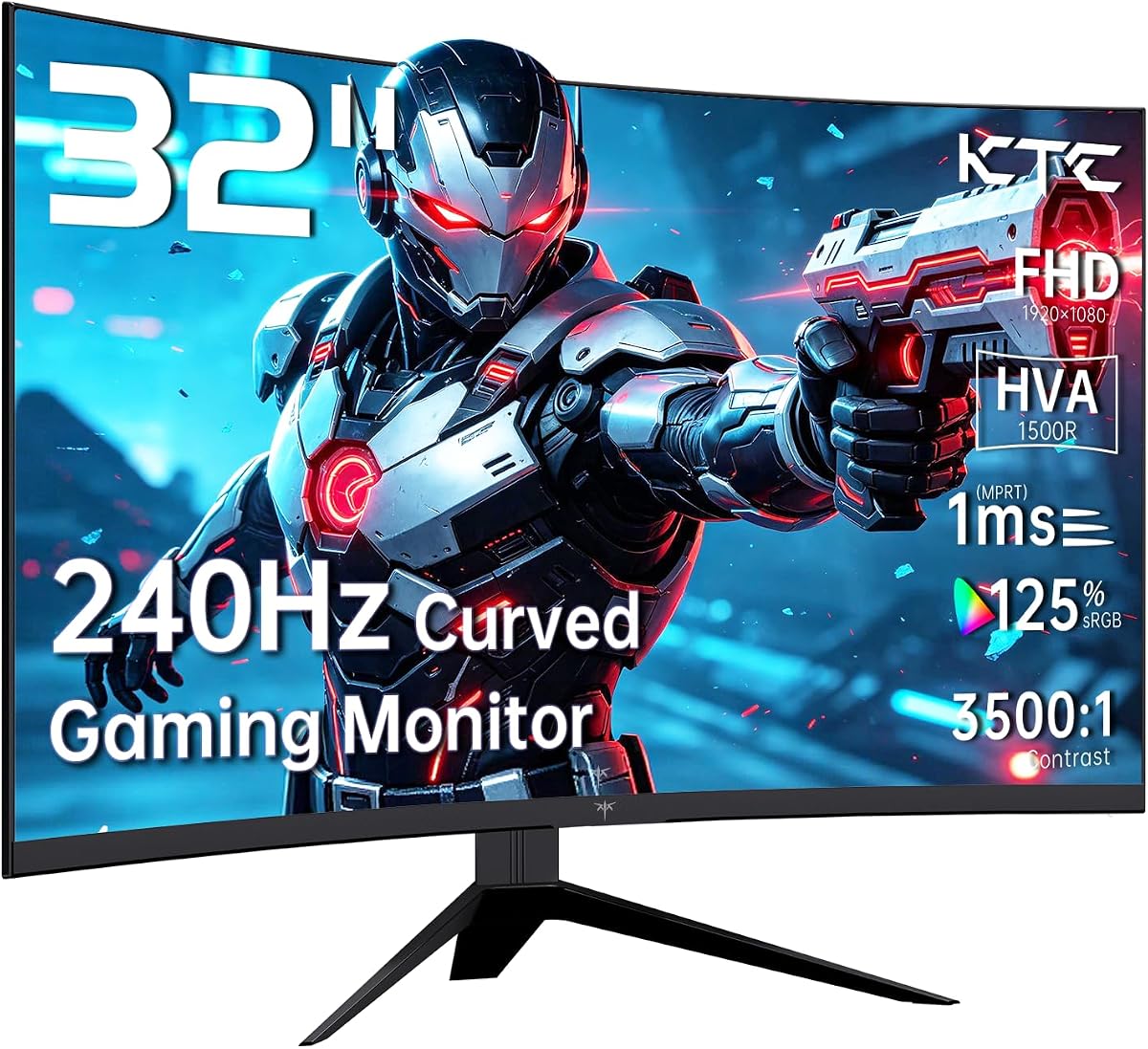
7. KTC 32" 240Hz Curved FHD - Best High-Hz Immersion

KTC 32" 240Hz Curved FHD

KTC 32" 240Hz Curved FHD

9/10★★★★★

KTC’s 32-inch curved 240Hz FHD monitor chases a specific fantasy: big-screen immersion with esports-class refresh. At 1920×1080 stretched across 32 inches and a 1500R curve, pixel density is lower than the Samsung QHD Odyssey beside it in this pack—so seating distance matters. Sit a bit farther back and the image coheres into a wide, aggressive gaming view that feels great for Xbox multiplayer nights. Sit nose-close and you will notice softness that QHD owners never see.

  • 32" 1500R curved Full HD 1920×1080
  • 240Hz refresh with 1ms response
  • HDR10, Adaptive Sync, 2× HDMI 2.0 + DP 1.4
Check Price →
✓ Pros
  • Huge 32-inch curve with 240Hz smoothness for Performance modes
  • 1ms response keeps fast motion readable in multiplayer
  • Explicit console positioning for Xbox, PS5, and Switch
  • High contrast claim and 125% sRGB keep colors lively
  • Dual HDMI ports simplify console plus secondary device setups
✕ Cons
  • 1080p on 32 inches looks softer up close than QHD alternatives
  • HDMI 2.0 paths will not unlock full HDMI 2.1 4K120 feature sets
  • Tilt-only stand may need a VESA arm for ideal height

Detailed review

240Hz and 1ms response are the performance story. Series X will not always feed 240 frames, yet high-Hz panels still present 120fps modes with excellent clarity, and Adaptive Sync helps when frame rates oscillate. HDR10 and a 125% sRGB gamut with a strong contrast ratio claim (3500:1 in the listing) give darker scenes more punch than washed-out office TN screens of years past. Anti-blue-light, anti-glare, and anti-flicker features support longer sessions.

Ports include two HDMI 2.0 inputs and one DisplayPort 1.4, plus a USB 2.0 note in the connectivity list. For Xbox Series X that means straightforward HDMI hookup with the usual HDMI 2.0 bandwidth limits—fine for many 1080p120-class scenarios, not a substitute for the Acer’s HDMI 2.1 4K toolkit. The listing specifically calls out Xbox, PS5, and Switch compatibility, which matches how value gamers actually build multi-console desks.

Ergonomics are basic: tilt from roughly 5° forward to 15° back, with VESA support for upgrades. That is enough for many setups; tall players or ultrawide desk risers may prefer an arm. As a curved FHD speed screen, it competes less with the AOC OLED on image quality and more with “I want a huge smooth playground” buyers who prioritize motion and size.

Choose this KTC when you want maximum Hz and curve on a budget-friendly FHD canvas for Series X Performance play. Choose Samsung’s G55C instead if you want similar size with sharper QHD pixels at a somewhat lower refresh ceiling. Choose the 24.5-inch KTC if competitive aim geometry matters more than spectacle.

It is a loud, fun, high-refresh immersion tool—best enjoyed with realistic expectations about 1080p sharpness at 32 inches.

Seating distance guide

Give yourself more distance than you would with a 24-inch monitor. If you can see individual pixels easily, scoot back or consider the 27-inch QHD KTC instead.

Multi-console desks

Dual HDMI inputs make it easy to leave Series X and another console connected. Switch inputs in the OSD rather than hot-swapping cables mid-party.

Check Price on Amazon →

We may earn a commission at no additional cost to you.

8. Sceptre 27" Prime 100Hz - Best Everyday Value

Sceptre 27" Prime 100Hz

Sceptre 27" Prime 100Hz

9/10★★★★★

Not every Xbox Series X owner needs OLED blacks or 240Hz bragging rights. The Sceptre 27-inch Prime at 100Hz is the sensible everyday monitor for students, secondary setups, and anyone replacing a blurry old 60Hz panel. One hundred Hertz is a visible step up in clarity for console games that can hold elevated frame rates, and FreeSync helps polish the experience when frames dip. 100% sRGB color gives a trustworthy baseline for games and streaming apps without wild oversaturation out of the box.

  • 27" frameless gaming display at 100Hz
  • 100% sRGB, FreeSync, 1ms blur reduction
  • HDMI ×2 + DisplayPort, built-in speakers
Check Price →
✓ Pros
  • Approachable 100Hz upgrade over aging 60Hz TVs and monitors
  • 100% sRGB coverage keeps games and media looking natural
  • Dual HDMI ports fit Xbox plus a second device easily
  • FreeSync and eye-care features support longer sessions
  • Frameless style looks clean in dual-monitor arrangements
✕ Cons
  • 100Hz trails the 165–240Hz options for motion purists
  • Not aimed at HDMI 2.1 4K120 Series X showcase setups
  • Speakers remain convenience-tier for serious audio

Detailed review

Connectivity is friendly: two HDMI ports and one DisplayPort cover a Series X and a laptop or cable box without a separate HDMI switch. Audio in and a headphone jack expand options beyond the built-in speakers, which are fine for news and menus. FPS and RTS game modes offer quick picture presets, and Blue Light Shift takes the edge off late study-and-play nights. VESA mounting remains available when the included stand’s footprint fights a small desk.

Motion performance is listed with 1ms blur reduction and 5ms G-to-G figures—respectable for the tier, if not class-leading versus the KTC Fast IPS models. For Halo campaign, indie games, sports titles, and Netflix between matches, this Sceptre feels like a complete, low-friction Series X companion. Competitive players chasing every millisecond should look higher in this list; everyone else will appreciate how little there is to configure.

Image quality priorities here are balance and color honesty rather than HDR spectacle. If you came from a washed-out TV in Game Mode, the combination of a proper monitor latency profile and 100Hz refresh already feels transformative. Pair a decent headset and you have a complete starter gaming station that still leaves budget for controllers and Game Pass.

The frameless aesthetic also helps if you add a second screen for Discord or guides. As a 2025-series Prime model in the pack, it represents Sceptre’s volume sweet spot: enough gaming features to matter, few exotic claims to disappoint. That honesty is why it earns the everyday value badge.

Buy it for a clean, capable Series X desk on a realistic budget. Skip it if you already know you want 1440p density or HDMI 2.1 4K headroom.

Upgrade path thinking

This is an excellent first gaming monitor. If you later catch the competitive bug, the same desk can host a faster KTC or AOC while this Sceptre becomes a secondary screen.

Simple Xbox setup

HDMI in, set 1080p or the monitor’s native resolution in Xbox settings, enable any available high refresh option, turn on FreeSync in the OSD if exposed, and you are done.

Check Price on Amazon →

We may earn a commission at no additional cost to you.

9. Sceptre 24" Prime 165Hz - Best Compact Speed

Sceptre 24" Prime 165Hz

Sceptre 24" Prime 165Hz

9/10★★★★★

Competitive Xbox players and small-desk owners should look hard at Sceptre’s 24-inch Prime. The diagonal keeps crosshairs and enemy models relatively large in your field of view—an old esports truth that still holds when Series X titles offer high-frame-rate modes. Marketing callouts include up to 165Hz on the rich port set, with additional language around 180Hz-class smoothness and 1ms blur reduction in the feature stack. Adaptive Sync rounds out the motion story for tear-free play.

  • 24" compact gaming monitor up to 165–180Hz
  • 2× HDMI + 2× DisplayPort connectivity
  • Adaptive Sync, 94% sRGB, built-in speakers
Check Price →
✓ Pros
  • Small 24-inch size keeps targets large for competitive aim
  • High refresh via both HDMI and DisplayPort paths
  • Four video inputs simplify multi-device bedrooms and dorms
  • Adaptive Sync targets tear-free play
  • Near-bezel-less design works well in dual-monitor stacks
✕ Cons
  • 24 inches is small for cinematic single-player immersion
  • Color gamut at 94% sRGB trails wider-gamut IPS/OLED peers
  • Not a 4K or HDMI 2.1 showcase panel

Detailed review

Four inputs—two HDMI and two DisplayPort—are unusually generous at this size. A dorm or bedroom setup can leave Series X, a PC, a work laptop, and a streaming device connected simultaneously. Built-in speakers and an audio jack reduce dongle chaos. Blue-Light Shift and a minimal bezel aesthetic keep the monitor friendly for long ranked sessions and side-by-side dual-screen layouts.

Color is described around 94% sRGB: solid for gaming and general use, not a creator reference display. That is acceptable for a compact speed monitor. Custom FPS and RTS modes help you snap the picture toward competitive clarity or strategy readability. VESA mounting remains an option when a riser or arm would improve posture in a bunk-bed-adjacent desk.

Versus the KTC 24.5-inch Fast IPS, this Sceptre leans into port count and brand-familiar Prime tuning, while KTC emphasizes Fast IPS color metrics and a slightly larger competitive sweet-spot size. Either can anchor a Series X ranked setup; pick based on whether you value the extra half-inch and IPS color story (KTC) or the four-input flexibility (Sceptre).

Cinematic players who want mass and HDR theater should look at the Samsung 32-inch or AOC OLED instead. This 24-inch Prime is about focus, speed, and fitting a real gaming monitor where a 32-inch curve simply will not go.

For apartment desks, dorm lofts, and aim-first Series X libraries, it is one of the most practical panels in the pack.

Competitive seating tips

Sit closer than you would with a 32-inch screen. A compact high-Hz monitor rewards near-field focus; just keep neck posture neutral with a proper chair height.

Input labeling trick

With four ports, label each cable at both ends. Future you will thank present you when a roommate unplugs the wrong lead before a tournament night.

Check Price on Amazon →

We may earn a commission at no additional cost to you.

10. KTC 24.5" 180Hz Fast IPS - Best Small Fast

KTC 24.5" 180Hz Fast IPS

KTC 24.5" 180Hz Fast IPS

9.2/10★★★★★

KTC’s 24.5-inch Fast IPS closes the pack with a purpose-built competitive geometry: slightly larger than classic 24-inch esports panels, still small enough that targets stay readable, and tuned with 180Hz-class refresh (with overclock language toward 200Hz) plus 1ms response. For Xbox Series X players grinding ranked shooters or arena modes, that combination often matters more than owning a 32-inch curve. Adaptive Sync support fights tearing, while customizable game modes help you bias the image toward clarity.

  • 24.5" Fast IPS Full HD 180Hz (OC notes to 200Hz)
  • 1ms response, 128% sRGB, HDR10
  • 2× HDMI + DP, Adaptive Sync, HDMI cable included
Check Price →
✓ Pros
  • Fast IPS color and angles in a competitive 24.5-inch size
  • 180Hz class refresh with 1ms response for Series X multiplayer
  • 128% sRGB and HDR10 outclass many drab budget screens
  • Listing highlights Xbox Series setups with an included HDMI cable
  • Strong 4.6 rating and replacement-service messaging
✕ Cons
  • Full HD only—no QHD sharpness upgrade
  • Tilt adjustment without a full ergonomic stand suite
  • Overclock refresh claims may depend on port and GPU/console limits

Detailed review

Color is a pleasant surprise in the small-screen tier. A 128% sRGB claim with DCI-P3 105% language in the listing, HDR10 support, and Fast IPS viewing angles mean the monitor stays usable if a teammate watches from the side. Flicker-free tech and a blue light filter reduce fatigue across long sessions. Brightness around the 350 cd/m² class keeps SDR content readable in normally lit rooms without matching daylight-beating portable screens.

Connectivity includes two HDMI ports and one DisplayPort, with an HDMI cable included—genuinely useful when you unbox beside a Series X and want to play immediately. The listing repeatedly frames the panel for Xbox and PS5 desks, which matches real buyer intent in this niche. VESA 100×100 and tilt from about -5° to 15° cover mounting and basic posture fixes.

Compared with the Sceptre 24-inch Prime, KTC leans harder into Fast IPS color metrics and a 24.5-inch sweet spot; Sceptre counters with four video inputs. Compared with KTC’s own 32-inch 240Hz curve, this 24.5-inch model is dramatically sharper per inch and better for aim trainers, at the cost of spectacle. Neither replaces HDMI 2.1 4K—that remains the Acer’s job—but both excel as high-refresh FHD console tools.

Service notes mentioning a 12-month replacement-style policy add peace of mind in the budget-competitive segment. Combined with the 4.6 rating, this monitor reads as a low-regret Series X companion for players who know they want speed and size discipline over cinematic scale.

If your rankings matter more than your screenshots, put this KTC on the shortlist next to the Sceptre 24-inch and stop overthinking 32-inch curves.

Ranked Xbox checklist

Enable Performance mode in each game, set the Xbox to the highest stable refresh, turn on VRR if offered, and use a wired controller to remove one more variable from input feel.

Who should pick 24.5 over 27

Pick 24.5 inches when you sit close, play aim-heavy games, or have a narrow desk. Pick 27-inch QHD when you also work, stream, or want sharper campaign visuals.

Versus Sceptre 27" 100Hz

This KTC is faster and more competition-focused; the Sceptre 27-inch is larger and calmer for mixed media. Match the monitor to whether your weeknights are ranked or story-driven.

Check Price on Amazon →

We may earn a commission at no additional cost to you.

Best Gaming Monitors for Xbox Series X in 2026

How to Choose a Gaming Monitor for Xbox Series X

Start with HDMI generation and the modes you actually use

Xbox Series X can output 4K at up to 120Hz with VRR and ALLM when the display and cable support the required bandwidth. In this pack, the Acer Nitro’s dual HDMI 2.1 ports and the AOC’s HDMI 2.1 input are the clearest console-forward choices for that feature set. HDMI 2.0 monitors can still be excellent—especially at 1080p or 1440p with high refresh—but you should not expect every 4K120 showcase mode to light up. Decide whether you live in Fidelity 4K, Performance 120Hz, or a mix before you fall in love with a curve or an ultrawide.

Always verify the Xbox display menu after connecting. Marketing refresh rates on DisplayPort do not automatically appear over HDMI. A quality Ultra High Speed HDMI cable is cheap insurance when you are chasing advanced modes.

Resolution versus size: the desk-distance trade

4K on 27 inches (Acer) is extremely sharp up close. QHD on 27–32 inches (AOC, KTC 27, Samsung G55C) is the versatile middle. 1080p on 24–25 inches (Sceptre 24, KTC 24.5) maximizes competitive target size. 1080p on 32 inches (KTC curve) demands more seating distance or you will see softness. Ultrawides (Sceptre 30 and 34) add horizontal immersion with the caveat that many Xbox games remain 16:9.

Panel technology and HDR expectations

QD-OLED (AOC) delivers true blacks and vivid HDR highlights that make premium Series X titles pop. Fast IPS (KTC models, Acer 4K) offers strong colors, wide angles, and high refresh without OLED care considerations. Curved VA-style and value panels (Samsung Odyssey, Sceptre curves) emphasize immersion and contrast for the money. HDR10 or HDR400 labels improve highlight roll-off versus pure SDR, but they are not identical experiences—judge HDR after console calibration, not from the unboxing splash screen.

Refresh rate, VRR, and input lag mindset

More Hertz still helps even when games cap below the panel maximum, because frame pacing and clarity improve. Prioritize VRR support and a proper Game Mode over chasing a number you will never feed. Controllers introduce their own latency; a fast monitor cannot fix Wi-Fi controller hiccups. Wired control plus a high-Hz VRR display is the low-drama path to responsive Series X play.

Ergonomics, speakers, and dual-use desks

Height-adjustable stands (AOC) beat tilt-only bases for long sessions. VESA compatibility across much of this pack means you can fix posture later with an arm. Built-in speakers on Sceptre and KTC models are convenient, not cinematic—budget for a headset if competitive audio matters. If you also work on the same desk, QHD or UWQHD text clarity should weigh as heavily as peak gaming specs.

Frequently Asked Questions

01

Do I need HDMI 2.1 for an Xbox Series X monitor?

You need HDMI 2.1 if you want the full modern console feature set at 4K120 with the fewest bandwidth compromises. In this roundup, the Acer Nitro with dual HDMI 2.1 ports and the AOC QD-OLED with HDMI 2.1 are the clearest fits. HDMI 2.0 monitors can still look fantastic at 1080p or 1440p with high refresh and VRR-style adaptive sync, which covers how many players actually use Performance modes. Match the port to the resolution and refresh you care about rather than treating HDMI 2.1 as mandatory for every desk.

02

Is 1440p or 4K better for Series X on a desk?

4K wins when you sit close, play fidelity-leaning modes, and want maximum detail—exactly the Acer Nitro’s job at 27 inches. 1440p wins when you want sharper-than-1080p clarity with more consistent high-frame-rate presentation, as on the AOC QD-OLED, KTC 27-inch, or Samsung 32-inch Odyssey. Neither is universally better; 1440p is the more flexible everyday choice for mixed libraries, while 4K is the specialist upgrade for detail obsessives.

03

Will ultrawide monitors work with Xbox Series X?

They will display an image, but native ultrawide support varies by game. Many titles output 16:9 with side bars on 21:9 panels like the Sceptre 30-inch and 34-inch models. That can still look excellent because the screen is large and sharp, yet it is not the same as PC ultrawide gaming where more engines offer true 21:9. Buy ultrawide for immersion and multitasking, not for a guarantee of full-bleed console support across Game Pass.

04

Is OLED safe for Xbox HUDs and dashboards?

Modern QD-OLED monitors such as the AOC in this guide are designed for gaming, including consoles, and include care features to mitigate risk. You should still use sensible brightness, avoid leaving static bright HUDs frozen for extreme durations, and run manufacturer pixel-care routines when prompted. Varied gameplay is normal use. If you leave pause screens or shopping dashboards up all day every day, an IPS panel may create less anxiety.

05

What refresh rate should I set in Xbox display options?

Choose the highest refresh rate that remains stable with your monitor and cable. If 120Hz is available and solid, use it for games with Performance modes. If the handshake only offers 60Hz, fix the cable or port before blaming the game. Panel maximums like 240Hz or 220Hz are ceilings; the console will use what the link negotiates. After changing refresh rate, re-check VRR and HDR toggles because some displays renegotiate features together.

06

Can I use these monitors for PS5 or Switch as well?

Yes. Several KTC listings in this pack explicitly mention Xbox, PS5, and Switch compatibility, and any HDMI gaming monitor can serve multiple consoles. Prefer models with two HDMI inputs—Acer Nitro, KTC 32-inch, Sceptre 27-inch, Sceptre 24-inch—so you are not swapping cables. Remember that each console has its own resolution and VRR behavior; optimize settings per device rather than assuming one OSD profile fits all.

07

Are built-in speakers good enough for Series X?

They are good enough for menus, party chatter, and casual indie games. They are not a substitute for a headset when footsteps and directional audio decide fights. Sceptre and KTC models that include speakers simply reduce desk clutter. If cinematic scores matter, add a soundbar or headphones and treat the monitor speakers as a backup.

08

Why is the Acer 4K Nitro’s rating lower than other picks?

Aggregate ratings blend many experiences—panel lottery, HDR expectations, stand limitations, and shipping condition among them. The Acer still leads this pack on native 4K plus dual HDMI 2.1, which is why it remains our Best 4K pick for Series X. We recommend reading recent reviews and buying from a seller with an easy return path. Spec leadership and crowd score are related but not identical signals.

09

What size monitor is best for Xbox Series X?

For desk play, 27 inches is the versatile default—large enough for immersion, small enough for aim and text. Choose 24–24.5 inches for competitive focus, 32 inches for cinematic presence if your desk is deep, and 34-inch ultrawide for horizontal sandbox setups. Couch play at TV distances usually favors a television, not a dense 27-inch 4K monitor. Measure viewing distance before you chase diagonal inches.

10

Do I need FreeSync or G-SYNC Compatible on a console?

Variable refresh support reduces tearing and stutter when frame rates fluctuate—common in Series X Performance modes. AMD FreeSync branding and G-SYNC Compatible validation both point at adaptive sync over the right cable. Xbox VRR support depends on the display handshake; enable it in console settings when offered. It is not as critical as owning a functional high-refresh HDMI path, but it is a meaningful comfort and clarity upgrade once that baseline exists.

Conclusion

The best gaming monitor for Xbox Series X in 2026 depends on whether you optimize for console-ready ports, immersive size, or competitive clarity. For most desk players, the AOC 27-inch QD-OLED 240Hz is the strongest all-around choice thanks to HDMI 2.1, stunning contrast, and ergonomics that support long sessions. If native 4K fidelity is non-negotiable, the Acer Nitro 27-inch with dual HDMI 2.1 ports is the specialist—just go in aware of its softer aggregate rating. Prefer wraparound presence without OLED cost? Samsung’s 32-inch Odyssey G55C remains the immersive curve to beat.

Value and niche picks round out a complete shortlist: KTC’s 27-inch 220Hz QHD for balanced speed, the 24.5-inch and 24-inch options for ranked focus, Sceptre ultrawides for horizontal sandboxes, and the everyday 27-inch 100Hz Sceptre for sensible upgrades from ancient 60Hz screens. Stick to pack products, verify HDMI modes in the Xbox menu, and calibrate HDR before you judge any panel.

Plug in, enable the highest stable refresh, pick Performance or Quality per game, and spend your evening in the campaign—not in the settings menu. That is when a Series X monitor upgrade actually pays off.