Best Overall
SteelSeries Apex 3 RGB Gaming Keyboard

- Whisper-quiet gaming switches rated for millions of low-friction presses
- IP32 water resistance plus a premium magnetic wrist rest
- 10-zone RGB with dedicated multimedia controls for PC and consoles
Expert Review & Guide
A gaming keyboard in this band should feel intentional, not temporary. Under the two-hundred ceiling you can still get magnetic Hall Effect switches with adjustable actuation, quiet full-size boards with real wrist rests, hot-swappable red-switch layouts for tinkering, and wireless keyboard-mouse combos that declutter a desk without giving up RGB. The trick is matching form factor and switch feel to how you actually play—competitive FPS on a compact board is a different purchase from late-night MMOs on a quiet membrane set in a shared apartment.
Every product in this guide comes straight from our curated pack. ASINs, images, ratings, and listing titles are unchanged, so what you read here maps to what you will see when you click through. We ignore sticker prices in the copy and focus on switch type, layout, lighting, build character, and honest tradeoffs—including which boards are louder clicky tools, which are whisper-quiet, and which need software for their best features.
Below you will find three headline picks, a full comparison table of all ten keyboards, deep reviews in the same order, then a buying guide, a practical checklist, FAQs, and a short conclusion. Use it when you are torn between a 60% desk-clearing layout and a full-size board with a number pad, or between a brand-name quiet membrane board and a magnetic switch board built for rapid trigger play.

As an Amazon Associate we earn from qualifying purchases. We may earn a commission at no additional cost to you.
This table stacks every keyboard from the pack side by side. Specs highlight switch character, layout size, and standout extras so you can judge fit for quiet shared rooms, competitive FPS, portable desks, or full-size productivity before reading the full reviews.

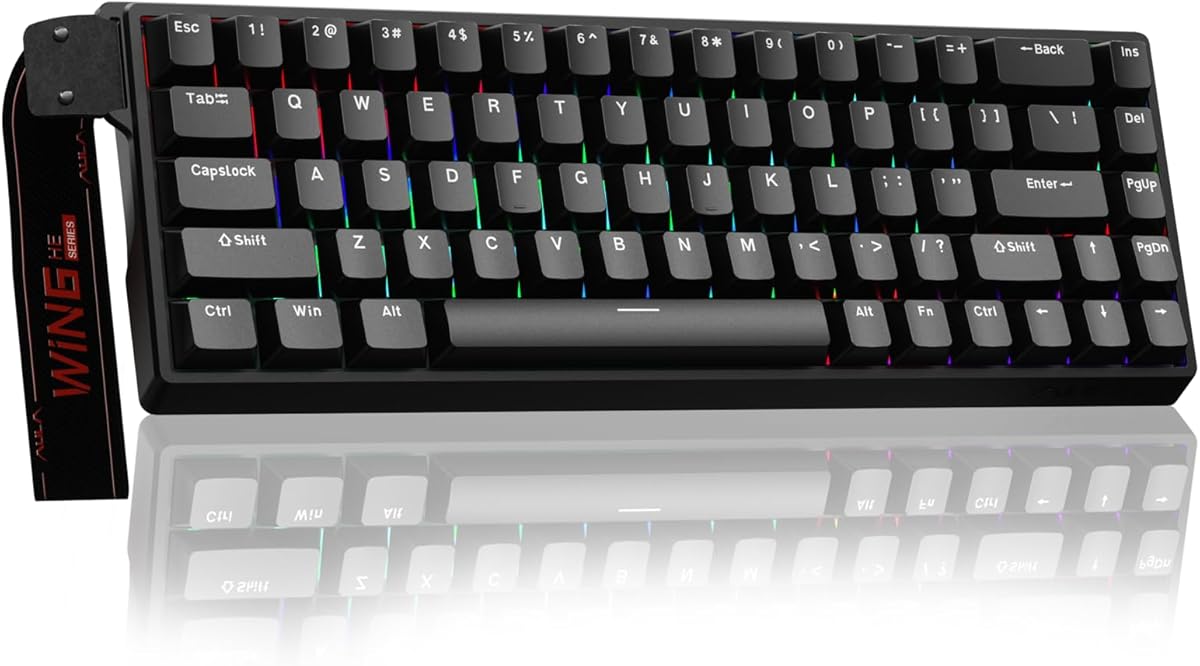
60% Wired Mechanical Gaming Keyboard with Blue Switches
This 61-key board exists for people who treat desk space like inventory. The ultra-compact shell leaves a wide runway for mouse movement, which matters more in tactical shooters and arena titles than another row of rarely used keys. A long detachable Type-C cable exits from the right side, so you can coil it separately when the keyboard goes into a backpack. That travel-friendly detail is more practical than it sounds if you bounce between a dorm desk and a weekend LAN table.
Blue mechanical switches define the personality here. Each press has a crisp tactile bump and an audible click that makes typing and ability spam feel deliberate. Gamers who like auditory confirmation tend to bond with this feel quickly; housemates who are trying to sleep do not. If your room is shared or your desk sits near a partner’s workspace, plan for headphones and honesty about volume before you commit to clicky blues.
Lighting is cheerful rather than cinematic. Eighteen LED rainbow effects, five brightness steps, and speed control give you enough variety for a dark room without requiring a software suite. Double-injection ABS keycaps help the legends stay readable when the backlight is on, and a keycap puller in the box makes cleaning or swapping a few caps less fiddly. Fold-out kickstands and a stair-step keycap profile keep wrists closer to a natural angle during longer sessions.
Full-key anti-ghosting is the right baseline for gaming. Simultaneous WASD, modifiers, and mouse-adjacent keys should register cleanly during chaotic fights. Direction keys via Fn+Space are a practical workaround for a layout that otherwise strips dedicated arrows, though it does add a short learning curve. Office work is still possible—emails, documents, light coding—if you accept that navigation shortcuts live on layers.
Compatibility is refreshingly simple: plug in and play on common Windows versions and Mac OS without hunting drivers. That makes this board a strong spare for friends, a portable secondary for travel, or a first mechanical for someone who wants the classic click without overthinking software ecosystems. It is not the quiet pick and not the customization king, but as a compact, loud-and-proud mechanical starter it earns its place in the pack.
Choose it if you prioritize mouse space, enjoy a loud tactile click, and want a detachable cable for trips. Skip it if you need a quiet shared-room keyboard or refuse to learn Fn layers for arrows and extras.
Map Fn navigation early in a text editor so muscle memory sticks before ranked queues. Pack the cable separately so the connector is not stressed in a bag, and keep the puller with your cleaning kit for periodic keycap dustouts.
We may earn a commission at no additional cost to you.
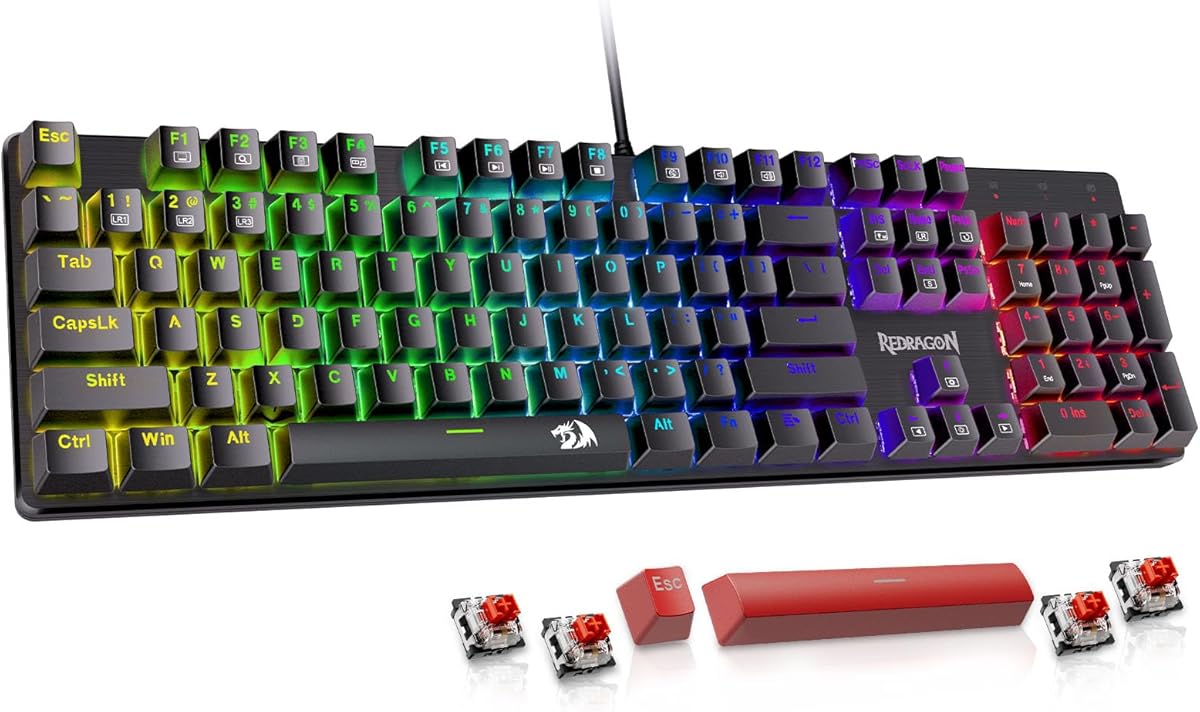
Redragon Mechanical Gaming Keyboard Wired
Redragon’s wired mechanical entry in this pack is aimed at people who want a real upgrade path without jumping into boutique custom keyboards. Hot-swappable red switches mean you can pull a worn or disliked switch and drop in another compatible unit. Four spare switches and two red keycaps in the box are a small but meaningful signal that the brand expects owners to tinker and keep the board alive longer.
Linear red switches prioritize smooth travel and lower force. There is no sharp click and no pronounced tactile bump, which suits rapid ability rotations in MMOs, quieter late sessions compared with blues, and gamers who dislike fighting a heavy spring. The tradeoff is less physical confirmation on each keypress, so typists who rely on a bump for accuracy may prefer a tactile board elsewhere in this list.
Eleven backlight modes with brightness and speed steps cover ambient needs for task work and gaming. Double-injection keycaps keep legends crisp under light. Note the listing’s honest limit: you can adjust lighting effects in software, but you cannot freely recolor the board the way full per-key RGB suites allow. If rainbow personality is mandatory, look at other packs members with richer RGB claims; if you mainly want readable night lighting, this is enough.
Macro editing and remapping are the productivity angle. Being able to collapse multi-step shortcuts onto fewer keys helps in MMO hotbars, editing workflows, and repetitive office clicks. Full anti-ghosting keeps chords clean, and twelve multimedia shortcuts cover volume, media, calculator, and email without diving into OS settings every time. That blend of gaming and day-job utility is where Redragon often lands well.
Build expectations should stay realistic for the segment: this is a practical gaming keyboard with upgradeable switches, not a milled aluminum showpiece. Still, PBT keycaps and hot-swap sockets give it a more future-friendly feel than sealed budget boards. A twenty-four-month warranty mention from Redragon also matters if you are buying your first mechanical and want a safety net while you learn how you like switches to feel.
If you want a wired board that can grow with you—swap a switch, remap a cluster, tune lighting modes—this Redragon is one of the more flexible options in the pack. Pair it with a large mouse pad and treat the included spares as your first step into keyboard hobby territory rather than a gimmick.
Ideal for MMO and RPG players who want smooth linear keys, plus beginners curious about hot-swap without jumping into custom kits. Less ideal if you need vibrant per-key color control or a loud tactile click.
Compared with non-hot-swap red boards like the MageGee compact, you pay in complexity for the ability to replace switches later. If you know you will never open the board, a simpler sealed keyboard may feel cleaner day to day.
We may earn a commission at no additional cost to you.
SteelSeries Apex 3 RGB Gaming Keyboard
The SteelSeries Apex 3 is our best overall pick because it solves the problems most people actually have under this budget: noise, spills, wrist comfort, and console flexibility. Whisper-quiet gaming switches deliver low-friction presses that stay polite when a roommate is studying or a partner is sleeping on the other side of a thin wall. You still get a gaming-oriented feel, but without the clicky soundtrack that makes some mechanical boards social liabilities.
IP32 water resistance is the feature you hope you never need and appreciate the day a drink tips. It will not make the keyboard invincible underwater, but it raises the odds that an accident is annoying instead of fatal. That reliability mindset continues with a magnetic wrist rest that attaches cleanly and supports palms during marathon sessions—useful for both ranked nights and long typing days.
Ten-zone RGB illumination covers the board in polished color schemes and reactive effects without forcing you into obsessive per-key tinkering. Dedicated multimedia controls mean volume and media adjustments stay under your fingers instead of buried in OS menus mid-fight. The overall presentation feels more finished than many bargain boards that slap RGB onto a thin plastic shell and call it a day.
Compatibility is unusually broad for a keyboard conversation: Windows and Mac are expected, and support for Xbox Series S, Xbox Series X, PlayStation 4, and PlayStation 5 expands the Apex 3 beyond a pure PC desk. If your living room setup and your office PC both need a quiet board, that flexibility is a genuine advantage versus niche 60% magnetics that live for Windows software only.
Tradeoffs are clear. Enthusiasts hunting for hot-swap sockets, Hall Effect actuation tuning, or aluminum custom aesthetics will find the Apex 3 conservative. Zone lighting is pretty, not infinitely programmable art. The full-size chassis also claims more desk real estate than the compact boards in this roundup. None of those caveats erase why it wins overall: it is the keyboard you can recommend to the widest mix of gamers without caveats about noise, spills, or console use.
If you want one board that feels like a complete product—quiet enough for real life, protected enough for clumsy desks, comfortable enough for long sessions—the Apex 3 is the safest first click in this guide.
Buy it for shared housing, quiet preference, spill anxiety, wrist comfort, or multi-device households. Look elsewhere if you specifically want magnetic rapid-trigger tuning or a tiny travel layout.
Compared with the SABLUTE membrane combo, the Apex 3 feels more like a dedicated gaming peripheral with brand software ecosystems and console reach. Compared with Cherry’s silent mechanical office board, it leans harder into RGB and gaming presentation.
Keep the magnetic rest attached for long MMO or strategy sessions, and remove it only if you need every inch of mouse space for low-sensitivity FPS aim training.
We may earn a commission at no additional cost to you.
SABLUTE Gaming Keyboard and Mouse
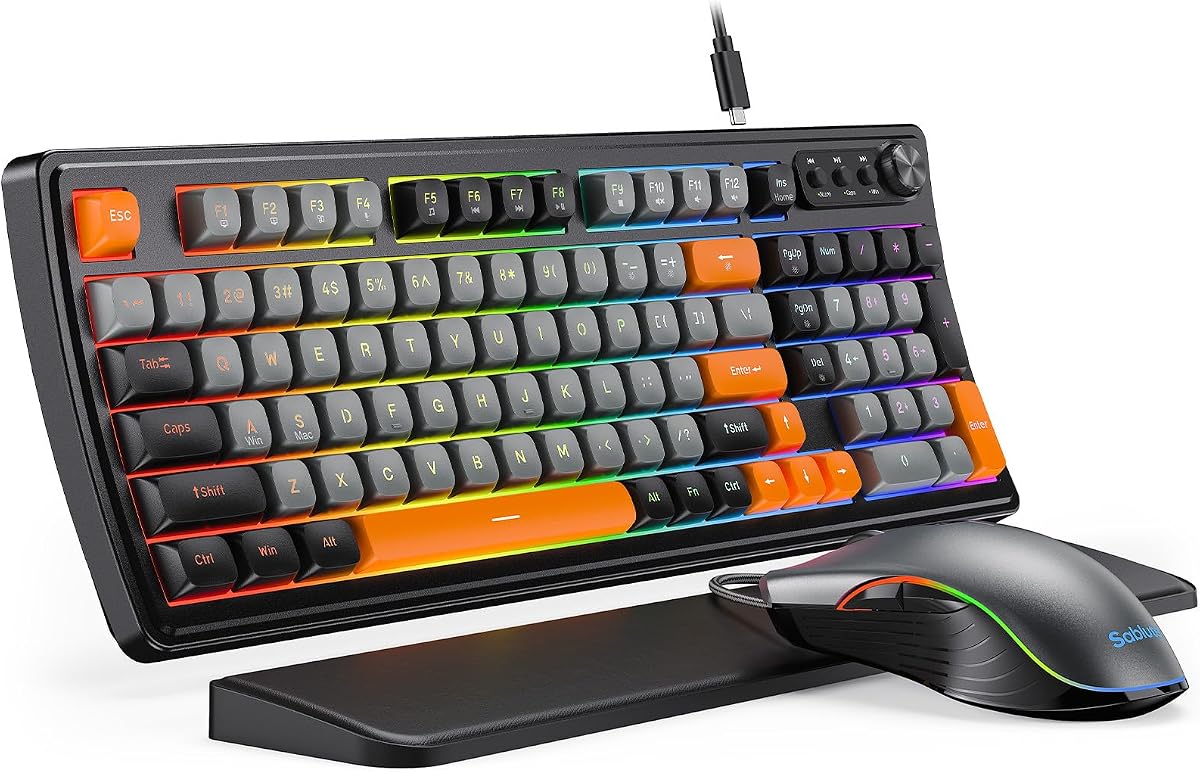
SABLUTE’s set is for buyers who need a complete desk kit that will not announce every keystroke to the hallway. The keyboard uses a quiet membrane design with a mechanical-like rebound claim—fast enough for casual and mid-intensity gaming, soft enough for late homework and chat. Dynamic RGB that reacts to keystrokes adds atmosphere without requiring a separate lighting hobby.
The 98-key compact layout is a smart compromise. You keep a number pad for spreadsheets, inventory management, and coursework while still reclaiming some width versus classic full-size boards. That makes the set unusually good for people who game and also live in Excel, campus portals, or accounting tools. A multimedia knob further supports quick volume changes without alt-tabbing out of a match or lecture recording.
Ergonomics get more attention than many budget combos. A detachable PU leather wrist rest cushions long sessions and can come off when you want a flatter profile. Curved keycaps aim to keep finger travel natural. For students in dorms or creators sharing apartments, that quiet-plus-comfort combination often matters more than switch brand names.
The included mouse offers four DPI levels at 800, 1600, 2400, and 3200, covering document work through faster gameplay. Nineteen-key anti-ghosting on the keyboard covers common WASD-plus-modifier clusters, though competitive players who mash many simultaneous binds may prefer the full anti-ghosting mechanical options elsewhere. Compatibility spans PC, laptop, Xbox, and PS5 use cases for a versatile living-room or bedroom station.
Think of this pick as an ecosystem starter rather than an enthusiast endgame. You get coordinated RGB, a rest, and a usable mouse in one box, which is perfect when you are furnishing a new desk and do not want to research three separate peripherals tonight. When your aim training or typing preferences outgrow the membrane feel, you can keep the mouse temporarily and upgrade the keyboard alone—or reverse that path.
If noise control and value bundling matter more than hot-swap sockets and magnetic actuation charts, SABLUTE is the practical quiet combo in this roundup.
Shared bedrooms, quiet offices, classrooms, and family rooms where clicky blues would create conflict. Also strong for students who need a number pad and do not want a separate mouse purchase immediately.
Move to Redragon, Newmen, Corsair, Cherry, or AULA if you specifically want mechanical or magnetic switch feel, deeper rollover, or competitive rapid-trigger features.
We may earn a commission at no additional cost to you.

Cherry KC 200 MX Silent Red Keyboard
Cherry’s KC 200 MX brings switch-brand credibility into a segment crowded with generic reds. MX2A Silent Red switches are linear, smooth, and deliberately quiet, with a high actuation lifespan that matches Cherry’s reputation for durability. You get a mechanical key feel without the social volume of blues or the thinner sound of some budget housings. For hybrid work-and-play desks, that balance is the entire pitch.
The anodized metal plate changes how the keyboard reads at a glance and under the fingers. It adds stiffness and a modern black/bronze presentation that looks intentional on a professional desk. White status LEDs in Caps, Scroll, and Num Lock are tasteful rather than neon, and dedicated calculator plus volume keys support real office flow. This is not a rainbow showcase—and that is a feature if your keyboard sits on camera during meetings.
Gaming still works. Full NKRO and anti-ghosting mean simultaneous keys register correctly in busy fights and hotkey-heavy genres. Linear silent reds are pleasant for strategy, survival, RPGs, and any title where you type as much as you flick. Pure competitive FPS players hunting adjustable actuation and 8000Hz polling will still prefer the AULA Hall Effect board, but plenty of gamers will be happier with Cherry’s quieter refinement.
Molded keycaps and sturdy fold-out feet help typing posture across long days. Laser-etched, abrasion-resistant legends are a durability win for people who wear through printed caps. The USB-A wired connection is simple and stable; just confirm you have a matching port or adapter if your machine has moved entirely to USB-C. Driver theater is minimal—plug in and work.
Compared with the SteelSeries Apex 3, Cherry leans more office-mechanical and less RGB-gaming. Compared with Corsair’s K70 CORE, it is quieter and less esports-styled, with a different brand of switch heritage. If your primary complaint about gaming keyboards is that they look and sound like toys in a shared workspace, the KC 200 MX is the grown-up answer still capable of after-hours matches.
Buy this when silence, longevity, and a metal-topped mechanical feel matter more than light shows. It is one of the most adult keyboards in the pack, and that maturity is exactly why it belongs here.
Hybrid workers, streamers who type on mic, and anyone upgrading from loud office membranes who still wants true mechanical switches without clicky drama.
On a clean work desk the Cherry looks native. On an RGB battlestation it may look restrained next to Corsair or AULA—pair it intentionally if that contrast bothers you.
We may earn a commission at no additional cost to you.
CORSAIR K70 CORE RGB Mechanical Keyboard
Corsair’s K70 CORE is the pack’s statement full-size mechanical: aluminum top plate, pre-lubed MLX Red linear switches, layered sound dampening, a media dial, and a magnetic soft-touch palm rest. It aims to feel like a finished gaming instrument rather than a bare switch tester. If you want the classic big-keyboard presence with modern softening tricks, this is the clearest expression of that idea under our ceiling.
Pre-lubricated linear reds reduce scratchiness that budget boards sometimes ship with. Two dampening layers help the case sound less tinny, which matters when you are in voice chat and every bottom-out echoes. Double-shot ABS keycaps keep legends from rubbing off even if the plastic will eventually develop shine on WASD—a normal ABS tradeoff versus the PBT on the Redragon hot-swap model.
The media story is unusually good. A multi-function rotary dial plus a programmable media button means volume and playback stay tactile. In iCUE you can push customization further for lighting and controls. SOCD-related competitive features in the listing also nod toward fighting-game and precision input users who care about opposite-direction cleaning—worth confirming in your titles if that is a priority.
Ergonomics benefit from the magnetic palm rest that docks without fiddly clips. Leave it on for MMO nights and strategy campaigns; pull it if you need a flatter profile. The aluminum plate stiffens the deck so the board does not flex like ultra-budget plastic trays. Together these details explain why K70-family boards remain a default recommendation even when flashier niche layouts trend on social feeds.
The 4.0 rating is a reminder to read recent owner feedback for your preferred layout and firmware expectations. Some buyers want lighter customization or different acoustics; others simply prefer compact form factors. Still, as a feature bundle—dampening, aluminum, dial, rest, linear reds—the CORE package remains one of the most complete traditional gaming keyboards in this set.
Pick the K70 CORE when you want a full-size RGB mechanical desk anchor with brand software depth. Pick Apex 3 if silence and spill resistance matter more, or AULA if competitive magnetic tuning is the mission.
PC gamers who keep a full number row and pad, enjoy media dials, and do not mind installing iCUE for the best experience. Great as a primary desk keyboard you will not outgrow quickly.
Expect smoother, dampened linears—not silent office switches like Cherry MX2A Silent Red, and not clicky blues. If you want near silence, Apex 3 or SABLUTE still win on pure quiet.
More gaming-forward than Cherry, more mechanically premium-feeling than SABLUTE’s membrane set, and more traditional than AULA’s 60% Hall Effect approach.
We may earn a commission at no additional cost to you.

Newmen GM326 Mechanical Keyboard
The Newmen GM326 targets the sweet spot many gamers discover after their first full-size board: a 75% layout. You keep a denser cluster of keys—including arrows and important functions—while reclaiming desk width for mouse aim. For small desks, streaming shelves, and portable setups, that geometry often feels more usable day to day than a pure 60% that hides too much behind Fn.
Hot-swappable linear red switches keep the typing feel smooth and relatively mild in sound compared with blues. Three-pin hot-swap support means you can change switches later if you want heavier springs or a different brand of linear. Rainbow LED with multiple colors and a large mode list gives the board a clear gaming identity, adjustable for brightness and effect without needing a boutique firmware flash.
The multi-function knob in the upper right is the quality-of-life highlight. Volume riding during music, movies, or game chat becomes a physical gesture instead of a buried shortcut. Caps Lock, Win lock, and Windows/Mac indicators reduce the guessing that sometimes plagues compact boards when an OS mode flips or a game captures the Windows key at the wrong moment.
Full-key anti-ghosting supports overlapping inputs for gaming and fast typing. Ergonomic stepped keycaps and two-stage tilt legs let you set a typing angle that matches your chair height. Detachable USB-C makes the GM326 easier to throw in a bag for campus or office days, and wide OS compatibility covers modern Windows and recent Mac versions for mixed households.
Where the GM326 sits in the pack is clear: more complete than 60% travel toys, more compact than Corsair or SteelSeries full boards, and more modular than sealed membranes. It will not match AULA’s magnetic rapid-trigger depth, and it will not match Cherry’s silent office polish. It will, however, feel like the layout many people actually keep after the novelty of extreme miniaturization fades.
Choose the GM326 if 75% with a knob is your Goldilocks form factor. It is one of the most sensible daily-driver shapes in this entire roundup.
Arrows, a tighter function cluster, and fewer Fn gymnastics make writing, editing, and general OS navigation less annoying while still freeing mouse space.
Pair the detachable cable with a slim sleeve so the knob and keycaps are protected in a backpack. Confirm Mac/Windows indicator state when you dock at a new machine.
We may earn a commission at no additional cost to you.

Redragon S101M-KS Wireless Keyboard Mouse
Redragon’s S101M-KS is the wireless freedom pick: a tri-mode keyboard and mouse combo that can run on a shared 2.4G receiver, Bluetooth, or a wired USB-C link. Cable clutter disappears from the desk surface, which is a quality-of-life upgrade for small tables and living-room PCs. The dual-device 2.4G receiver approach is especially handy because you are not juggling two dongles for one kit.
RGB arrives on both sides of the combo with multiple keyboard patterns plus speed and brightness control. Turning lighting off stretches battery life dramatically—the listing’s long runtime claim assumes RGB off—so treat lighting as a mood setting rather than a permanent high-drain default. A battery indicator helps you avoid dying mid-raid if you actually monitor it.
The mouse climbs through five DPI levels up to 4800, with software paths for finer DPI and polling adjustments between 125 and 1000Hz. Seven remappable mouse buttons expand MMO and productivity bindings. The keyboard adds ten independent multimedia keys plus combination shortcuts, splash resistance notes, Win lock, and a detachable USB-C cable for charging or wired play.
Programmability through Redragon’s software is where the combo becomes more than a generic wireless set. Remap keys, tune lighting, and shape mouse behavior instead of accepting factory defaults forever. Plug-and-play still works for simple use, which helps when you toss the kit onto a laptop at a cafe or campus lounge without installing anything yet.
Competitive wired purists should still look at AULA or Corsair for absolute response priority. The S101M-KS wins a different contest: clean desks, flexible device switching, and a matched pair that feels intentional. A lengthy warranty window from Redragon also reduces risk for buyers who are nervous about wireless batteries and dongles.
Get this combo when cutting cables is the feature you notice every hour. Keep a charge routine, learn the DPI indicator flashes, and you will have a versatile wireless station that still looks like a gaming setup.
Use 2.4G for the main PC gaming desk, Bluetooth for a secondary laptop, and wired mode when you want zero battery anxiety during long tournaments or movie nights.
SABLUTE emphasizes quiet membrane typing and a wrist rest; Redragon S101M-KS emphasizes wireless flexibility and higher mouse DPI ceiling. Pick based on noise versus cable freedom.
We may earn a commission at no additional cost to you.

MageGee Portable 60% Mechanical Keyboard
MageGee’s MK-Box is the friendly compact mechanical: sixty-eight keys, linear red switches, blue LED lighting, and a detachable cable in a black/grey shell. Unlike stricter 60% boards that delete arrows, this layout keeps separate arrow keys and Fn access to the F-row, which makes everyday computing far less annoying. You still reclaim a lot of mouse space, just without the steepest learning curve in the category.
Red switches here are linear and light, with a softer sound signature than the clicky blue board earlier in the list. That makes the MK-Box easier to live with in semi-shared spaces while remaining clearly mechanical. Gamers who tap rapidly for movement and abilities often prefer this smoother travel, especially in titles where holding and feathering keys matters more than loud confirmation.
Blue LED backlight with a generous mode list sets a classic gaming look. Fn shortcuts control effects, speed, and brightness, so you can dim for movies or boost for late ranked sessions. Suspension-style double-color injection keycaps and adjustable dual kickstands cover basic ergonomics. Full anti-ghosting keeps multi-key actions trustworthy during hectic fights.
Portability is a real use case. The mini footprint and detachable USB cable suit laptop bags, dorm moves, and temporary desks. Compatibility across older and newer Windows versions plus Linux and Mac means it can be the keyboard you loan to friends or keep as a secondary without driver theater. It will not feel as premium as Cherry’s metal plate or Corsair’s dampened case, and it lacks hot-swap sockets, but it delivers the compact mechanical idea with fewer compromises than ultra-minimal 61-key boards.
In the pack hierarchy, MageGee is the uncomplicated compact red-switch pick. Choose the louder blue 60% if you want click theater; choose AULA if you want magnetic competitive features; choose MageGee if you want a small wired board that still respects arrows and keeps life simple.
For students and casual PC gamers furnishing a tight desk, the MK-Box remains one of the most approachable compact keyboards here.
Confirm you want linear reds, are fine with blue-only LED styling, and value dedicated arrows. If you need hot-swap, jump to Newmen 75% or Redragon’s hot-swap model instead.
Keep the detachable cable in a pouch and use the kickstands only on stable surfaces so the mini board does not rock on uneven tables.
We may earn a commission at no additional cost to you.
AULA WIN68 HE Mechanical Gaming Keyboard 60%
The AULA WIN68 HE is the competitive specialist in this roundup and our Best Competitive top pick. Hall Effect magnetic switches change the conversation from “which red feels nicest” to “how shallow do you want actuation, and how fast should a key reset.” Adjustable actuation across a wide range, with fine increments, lets FPS and rhythm-adjacent players tune WASD and keybinds to their hands instead of accepting a fixed mechanical trip point.
An 8000Hz polling rate and very low claimed latency are the headline performance numbers. Real-world gains always depend on the whole PC chain, but the intent is clear: this board is built for people who care about instantaneous command registration. Rapid-trigger oriented tools, SOCD/DKS/MT/TGL style functions, macros, and RGB management live in a web driver that avoids a heavy traditional install—on Windows. Mac users should note the driver limitation before expecting parity.
The 68-key wired compact format keeps arrows and essential functions in a small shell with a detachable USB cable for a stable connection. That stability matters more for competitive play than Bluetooth convenience. South-facing LEDs and a deep RGB color range with preset effects make the board look modern even when you are mostly chasing performance. You can kill the lights entirely when you want a distraction-free practice block.
Who should not buy it is equally important. If you want a quiet office board, Cherry or Apex 3 will make you happier. If you want a full number pad every day, Corsair or SABLUTE fit better. If you never open configuration software, many of the WIN68 HE’s advantages stay locked. This is a tool for players willing to tune.
Against MageGee and the blue-switch 60%, AULA wins on technology and competitive feature depth. Against Corsair, it wins on magnetic adjustability and desk space while losing the full-size media-dial lifestyle. Against SteelSeries, it wins on esports-style customization and loses on whisper-quiet shared-room manners and spill-focused IP rating.
If ranked shooters are why you are shopping, start here. Spend an evening setting actuation and rapid-trigger behavior for movement keys, save a profile, and give yourself a week of aim training before judging the board. The WIN68 HE rewards that investment more than any other keyboard in this pack.
Start with moderate actuation on movement keys, then shorten only after you stop accidental triggers. Keep a secondary profile with deeper actuation for typing-heavy days so chat and browser work do not feel twitchy.
Windows FPS players, aim trainers, and anyone specifically shopping magnetic rapid-trigger features inside this budget band.
Fixed red switches are simpler and still excellent; magnetic switches are for people who want adjustable reset behavior as a competitive lever, not merely a smoother keyfeel.
We may earn a commission at no additional cost to you.
Form factor decides desk feel more than any lighting demo. Full-size boards like the Apex 3 and K70 CORE keep number pads and media clusters for hybrid work. Seventy-five percent boards like the Newmen GM326 trim width while keeping arrows. Sixty to sixty-eight percent boards free the most mouse space for low-sensitivity aim but ask you to learn layers. Pick the smallest layout you will still enjoy for typing on tired weeknights.
Wired USB or USB-C remains the lowest-drama choice for competitive play and forever-charged desks. Tri-mode wireless like the Redragon S101M-KS shines when you move between devices or hate cable clutter. If you go wireless, budget attention for charging habits and know how to fall back to a cable when a dongle goes missing.
Some boards are great plug-and-play. Others unlock their identity only in software—Corsair iCUE, Redragon utilities, or AULA’s web driver for rapid-trigger and actuation profiles. Be honest about whether you enjoy configuring peripherals. If you do not, favor SteelSeries-style simplicity, Cherry’s office clarity, or the straightforward compact wired boards.
Keyboard-and-mouse bundles from SABLUTE and Redragon reduce shopping friction and often match lighting. Standalone keyboards pair better when you already love your mouse. Enthusiasts almost always end up with separate best-in-class pieces; newcomers furnishing a blank desk can save time with a combo and upgrade later.
Yes for most gamers who type a lot or care about keyfeel. In this pack you can get linear reds, silent Cherry MX2A switches, hot-swap boards, and even Hall Effect magnetics without leaving the range. That said, a quiet membrane combo like SABLUTE can still be the smarter buy if noise control and a bundled mouse matter more than switch pedigree. Worth is about fit, not dogma.
The AULA WIN68 HE is the purpose-built answer thanks to Hall Effect adjustable actuation, rapid-trigger oriented tools, high polling, and a compact wired layout that frees mouse space. If you want competitive competence with less tuning and more shared-room manners, the SteelSeries Apex 3 remains an excellent quieter alternative, though it will not offer magnetic actuation charts.
Prioritize the SteelSeries Apex 3 whisper-quiet switches, Cherry KC 200 MX Silent Reds, or the SABLUTE quiet membrane set. Avoid the blue-switch 60% if anyone sleeps nearby. Linear red boards sit in the middle—usually acceptable with a closed door, still louder than true silent designs when you bottom out hard.
Only if you like experimenting or want easier repairs. Redragon’s hot-swap wired board and the Newmen GM326 give you that path. If you already know you love a particular silent or magnetic experience, sealed boards like Cherry, AULA, MageGee, or Apex 3 can be better daily drivers without tempting endless tinkering.
They are easy to love for aim space and harder for heavy spreadsheet or editing days. Models that keep arrows—like MageGee’s 68-key and AULA’s 68-key approach—are gentler than strict 61-key layers. If you constantly reach for a number pad, choose SABLUTE’s 98-key idea or a full-size Corsair or SteelSeries instead.
Buy a combo when you need both peripherals now and value matched RGB plus fewer decisions. SABLUTE emphasizes quiet comfort; Redragon S101M-KS emphasizes tri-mode wireless freedom. If you already own a mouse you trust for aim, spend the decision energy on a standalone keyboard that matches your switch and layout goals.
No. RGB does not raise frame rates or improve reaction time. It can help with key visibility in dark rooms and personal enjoyment. Competitive features like polling rate, reliable anti-ghosting, and for magnetics, actuation tuning matter more. Plenty of strong players use lights-off profiles once the honeymoon glow fades.
Compatibility varies. The SteelSeries Apex 3 listing specifically calls out Xbox Series and PlayStation support alongside PC and Mac, which makes it a standout for mixed households. Always check the exact product listing for your console generation and note that some advanced software features remain PC-only even when basic typing works.
Magnetic Hall Effect switches sense stem position without a traditional contact leaf in the same way, enabling adjustable actuation points and rapid reset behavior. That lets you personalize how early a key fires and how quickly it can re-actuate. It is a competitive tuning toolkit—powerful if you invest setup time, unnecessary if you only browse and chat.
Choose Corsair for a more traditional mechanical RGB full-size experience with aluminum, dampening, a media dial, and a magnetic palm rest. Choose SteelSeries for quieter operation, IP32 spill resistance, and broader console-friendly positioning. If your household is noise-sensitive, Apex 3 usually wins; if you want the classic mechanical gaming aesthetic with iCUE depth, K70 CORE fits better.
The best gaming keyboard under two hundred is the one that matches your room, your genres, and your patience for software. In this pack, the SteelSeries Apex 3 is the broadest recommendation for quiet comfort and everyday resilience, the AULA WIN68 HE is the clearest competitive magnetic weapon, and the Corsair K70 CORE is the full-size mechanical desk centerpiece when you want aluminum, dampening, and a media dial.
Everyone else earns a lane: clicky compact travel energy, hot-swap tinkering, silent Cherry professionalism, practical quiet or wireless combos, and sensible 75% or budget 68-key boards for tight desks. Ignore price tags in the marketing noise and decide on layout, switch sound, and whether you truly need adjustable actuation.
Start with the top pick that matches your primary constraint—noise, competition, or full-size feel—then confirm the layout still works for your non-gaming hours. A keyboard you enjoy for both ranked queues and Tuesday emails will outlast any impulse RGB trophy.