Best FPS Gaming Mouse in 2026
We may earn a commission from links on this page, at no extra cost to you. Learn more.
In a shooter, your mouse is the only thing standing between your reflexes and the game. A great FPS mouse gets out of the way entirely: it is light enough to flick without dragging your wrist, fast enough that its sensor never smears a 180-degree turn, and reliable enough that a clutch click always registers. The modern race has pushed weights below fifty grams, polling rates to 8000Hz and sensors past 30000 DPI, but raw numbers only tell part of the story, because the right shape and switch feel matter just as much. This guide ranks nine of the best FPS gaming mice you can buy in 2026, from featherweight wireless flagships to budget picks that punch far above their price, so there is a right fit whatever your grip and bankroll.
Top 9 Best FPS Gaming Mouse
Our top 9 picks, reviewed
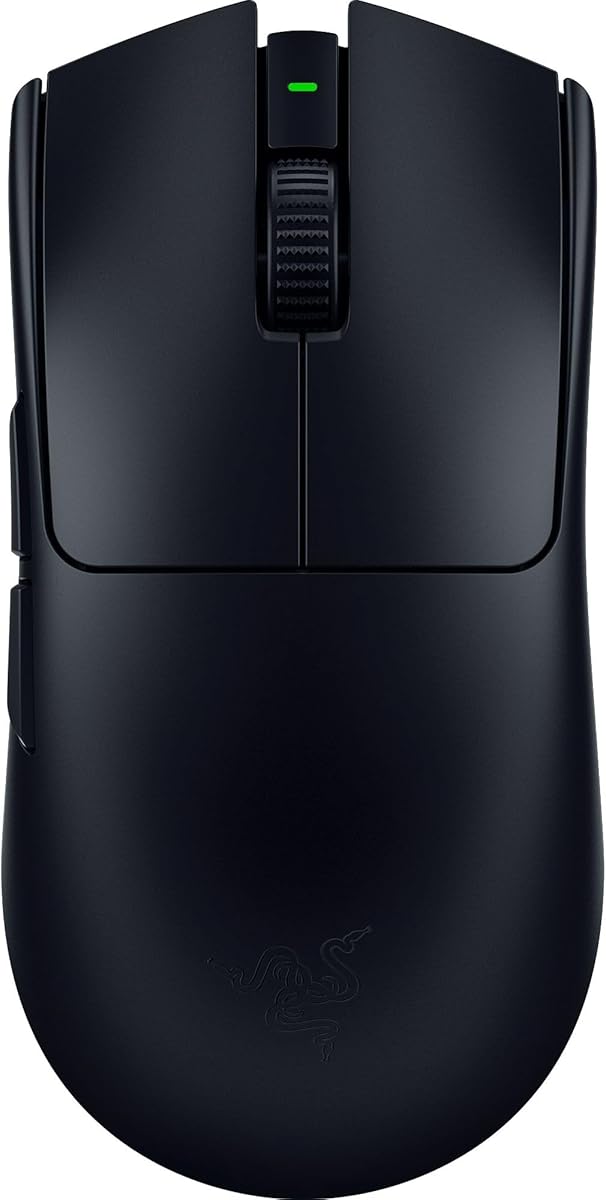
Razer Viper V4 Pro Wireless
The Viper V4 Pro is the current benchmark for competitive FPS. At just 49g it flicks effortlessly, and its Focus Pro 50K sensor with true 8000Hz wireless polling delivers the lowest latency and most consistent tracking Razer has ever shipped. The Gen-4 optical switches and optical scroll wheel resist wear and double-clicks. It is expensive and pared-back on extra buttons, but for pure aim it is as good as it gets.
- Sensor
- Focus Pro 50K Gen-3
- Weight
- 49g
- Connection
- HyperSpeed Gen-2 wireless
- Polling
- 8000Hz
What we liked
- Ultralight 49g esports chassis
- True 8000Hz wireless polling
- 50000 DPI flagship sensor
- Durable optical scroll wheel
Worth noting
- Premium flagship price
- Only six programmable buttons
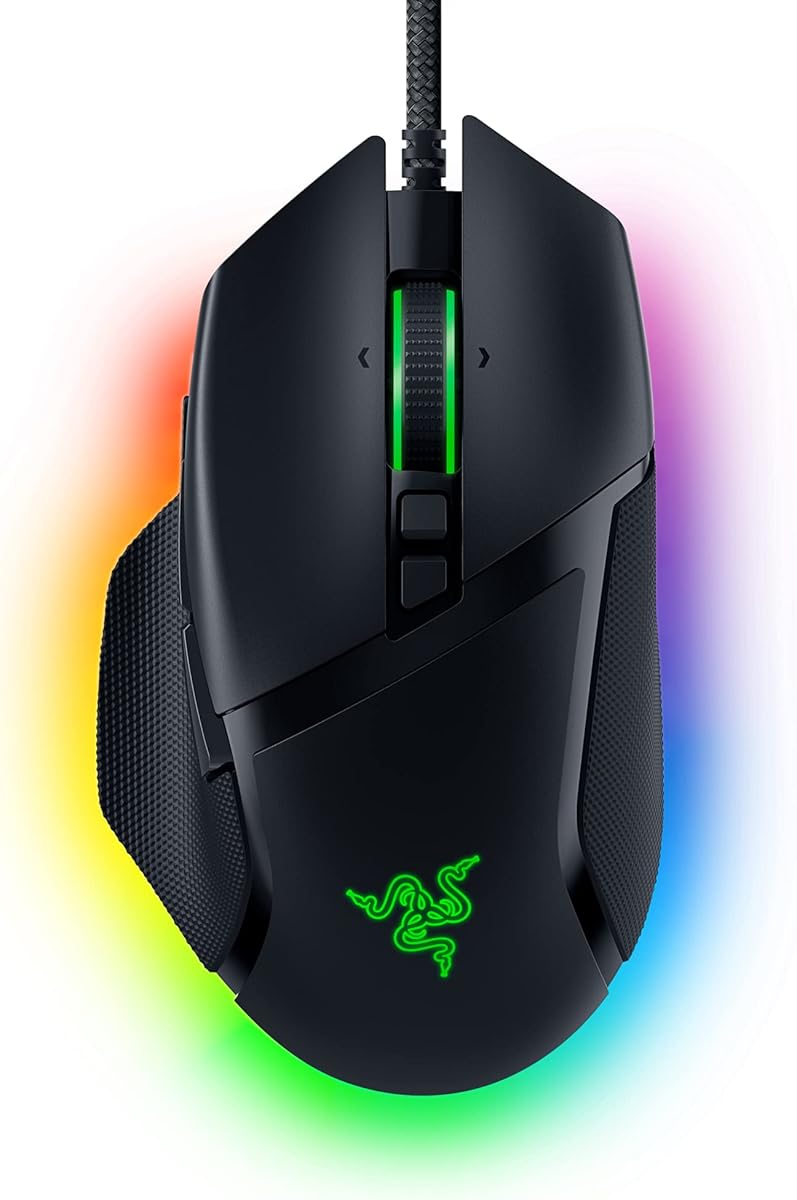
Razer Basilisk V3 Wired
The Basilisk V3 is the smartest way to spend under forty dollars on an FPS mouse. Its 26000 DPI sensor tracks flick shots cleanly, the Gen-2 optical switches fire at a blistering 0.2ms, and the HyperScroll tilt wheel is genuinely useful for weapon cycling. It is a heavier ergonomic mouse rather than an ultralight, but for players who want feature-rich comfort on a budget it is outstanding value.
- Sensor
- 26000 DPI optical
- Buttons
- 11 programmable
- Connection
- Wired
- Polling
- 1000Hz
What we liked
- Excellent value under $40
- 26000 DPI sensor is plenty fast
- HyperScroll free-spin tilt wheel
- Comfortable ergonomic shape
Worth noting
- Heavier ergonomic body
- Wired only
Logitech G PRO X Superlight 2
The G PRO X Superlight 2 remains the mouse a huge share of professional players trust, and this generation adds 8000Hz polling and USB-C charging to the formula. At 60g with the superb HERO 2 sensor and zero-additive PTFE feet, it glides and tracks flawlessly. The clean five-button layout keeps it simple, and POWERPLAY compatibility means it can charge on your mousepad. A safe, elite choice for serious aim.
- Sensor
- HERO 2 44000 DPI
- Weight
- 60g
- Connection
- LIGHTSPEED wireless
- Polling
- 8000Hz
What we liked
- Proven esports-winning shape
- 60g with 8000Hz polling
- 95-hour battery life
- POWERPLAY charging compatible
Worth noting
- Minimal five-button layout
- No RGB lighting
Razer Viper V3 HyperSpeed Wireless
The Viper V3 HyperSpeed brings Razer's competitive shape to a wallet-friendlier tier by running on a single AA battery, which stretches to a remarkable 280 hours. At 82g with a mass-centralised balance, it swipes consistently, and the Focus Pro 30K sensor tracks flawlessly across surfaces. It sticks to 1000Hz polling rather than 8kHz, but for players who want long battery life and a trusted shape, it is a smart pick.
- Sensor
- Focus Pro 30K
- Weight
- 82g
- Connection
- HyperSpeed 2.4GHz
- Polling
- 1000Hz
What we liked
- Up to 280-hour battery on one AA
- Mass-centralised 82g design
- Focus Pro 30K sensor
- 60M-click Gen-2 switches
Worth noting
- Heavier than ultralight rivals
- 1000Hz polling, not 8kHz
Logitech G502 X Plus Wireless
The G502 X Plus reimagines Logitech's most famous shape for players who want more than pure aim. Thirteen programmable buttons and an infinite-scroll wheel make it a fine crossover for shooters that lean tactical, while LIGHTFORCE hybrid switches and the HERO 25K sensor keep the fundamentals sharp. It is heavier than a dedicated esports mouse, but if you value buttons and a proven ergonomic feel, it delivers in spades.
- Sensor
- HERO 25K
- Buttons
- 13 programmable
- Connection
- LIGHTSPEED wireless
- Polling
- 1000Hz
What we liked
- 13 buttons for hybrid genres
- Infinite-scroll toggle wheel
- LIGHTFORCE hybrid switches
- PowerPlay charging support
Worth noting
- Heavier than pure esports mice
- 1000Hz polling only
Corsair Sabre v2 PRO Wireless
The Sabre v2 PRO is a startling value: an ultralight 36g wireless mouse with true 8000Hz polling and Corsair's 33000 DPI Marksman S sensor, all for well under the flagship crowd. That weight makes flicks and 180s effortless, and the custom-tuned mechanical switches are rated to 100 million clicks. Hitting full 8kHz depends on your CPU, but even at lower rates this is an outstanding competitive tool for the money.
- Sensor
- Marksman S 33000 DPI
- Weight
- 36g
- Connection
- Wireless
- Polling
- 8000Hz
What we liked
- Featherweight 36g chassis
- 8000Hz hyper-polling
- 33000 DPI Marksman S sensor
- 100M-click mechanical switches
Worth noting
- 8kHz depends on your CPU
- Sparse button count
Logitech G502 Lightspeed Wireless
The original G502 Lightspeed is the affordable way into Logitech's wireless ecosystem, and it remains a capable shooter mouse. Eleven buttons, a tunable weight system and the reliable HERO 25K sensor give it real flexibility, and PowerPlay support keeps it topped up on the mat. It is a heavier, feature-first design rather than an ultralight, but for players who like a substantial mouse it is a proven, well-priced classic.
- Sensor
- HERO 25K
- Buttons
- 11 programmable
- Connection
- LIGHTSPEED wireless
- Polling
- 1000Hz
What we liked
- Tunable weight system
- 11 customizable buttons
- PowerPlay charging compatible
- Proven HERO 25K sensor
Worth noting
- Heavier legacy design
- 1000Hz polling only
SteelSeries Rival 5 Wired
The Rival 5 is a versatile budget shooter mouse that suits FPS, MOBA and battle royale alike. At 85g it is genuinely light, its nine-button layout adds five quick side keys for utility, and the TrueMove Air sensor tracks with clean 1-to-1 accuracy. Dust and water-resistant IP54 switches add durability. It is wired and stops at 18000 CPI, but for the price it is a well-rounded, dependable pick.
- Sensor
- TrueMove Air 18000 CPI
- Weight
- 85g
- Connection
- Wired
- Polling
- 1000Hz
What we liked
- Light 85g competitive weight
- 9 buttons with 5 side keys
- TrueMove Air 1-to-1 sensor
- IP54-rated Golden Micro switches
Worth noting
- Wired only
- Sensor tops out at 18000 CPI
Redragon M901P-KS Wireless
The Redragon M901P-KS is the crossover option for FPS players who also dip into MOBAs and MMOs. It is really an MMO-style body with a twelve-button side grid, but its 16000 DPI sensor, adjustable polling and cheap wireless connection make it a flexible budget all-rounder. It is heavier and busier than a pure esports mouse, so dedicated shooter fans should look higher up, but for genre-hoppers it is a lot of mouse for little money.
- Sensor
- 16000 DPI
- Buttons
- 16 programmable (12 side)
- Connection
- Wireless + Wired
- Polling
- 1000Hz
What we liked
- Wireless at a budget price
- 12 side buttons for hybrid genres
- 70-hour battery, plays while charging
- Adjustable DPI and polling
Worth noting
- Heavier MMO-style body
- Not a dedicated FPS shape
How We Chose the Best FPS Gaming Mice

Choosing an FPS mouse is a hunt for the fewest compromises between your hand and the game. Unlike an MMO mouse, where the button grid dominates every decision, a shooter mouse succeeds by disappearing: it should be light enough to move without thought, precise enough to trust on a flick, and fast enough that nothing lags behind your reflexes. We began by mapping the two ends of the modern market: featherweight esports flagships stripped to the essentials, and heavier, feature-rich mice that trade a few grams for extra buttons and comfort.
From there we weighed the specifications that decide how a mouse feels in a firefight. Weight and balance came first, because a heavy or nose-weighted mouse drags on rapid swipes. We looked at sensor accuracy and tracking speed, polling rate and latency, switch responsiveness and click durability, and how each shape suited different grips. Value mattered throughout, so we deliberately mixed hundred-dollar flagships with sub-forty-dollar champions, and we kept both wired and wireless designs on the list so there is a genuine pick whatever your budget and playstyle demand.
Weight: The Single Biggest Factor
Nothing shapes the feel of an FPS mouse more than its weight. A lighter mouse lets you flick, track and recover faster with less fatigue, which is why the competitive market has spent years shedding grams. The Corsair Sabre v2 PRO sits at an astonishing 36g, light enough that the mouse almost vanishes under your hand, while the Razer Viper V4 Pro's 49g and the Logitech G PRO X Superlight 2's 60g represent the mainstream esports sweet spot. Below about 65g, most players find aiming noticeably easier, especially on wide, low-sensitivity setups.
Lighter is not automatically better for everyone, though. Some players prefer a little mass for stability on precise micro-adjustments, and heavier mice can feel more planted during controlled tracking. The Logitech G502 line and the Razer Basilisk V3 lean into this, offering substantial, comfortable bodies for players who dislike the sometimes-hollow feel of an ultralight. Just as importantly, weight distribution matters as much as the number on the box: the Viper V3 HyperSpeed's mass-centralised design keeps its 82g balanced, so it swipes more consistently than the raw figure might suggest.
Sensor Speed and Tracking Accuracy
Every mouse on this list carries a sensor capable of tracking far faster than any human hand can move, so the marketing war over DPI numbers is largely theatre. The real question is whether the sensor stays accurate during the fast, sweeping motions a shooter demands, without adding smoothing, acceleration or filtering that subtly warps your aim. Here the flagships shine: Razer's Focus Pro 50K in the Viper V4 Pro and Logitech's HERO 2 in the Superlight 2 track cleanly at extreme speeds with zero interference.
For practical purposes, though, even the mid-range sensors here are more than enough. The Razer Basilisk V3's 26000 DPI optical sensor and the SteelSeries Rival 5's TrueMove Air deliver the clean one-to-one tracking that matters, and most competitive players run their DPI between 400 and 1600 regardless of the ceiling. What separates a great FPS sensor from a merely good one is consistency under pressure: reliable tracking on a fast 180-degree turn, no spin-outs when you lift and reset, and predictable behaviour every single time. On that measure, the whole list performs admirably.
Polling Rate and Latency
The newest frontier in FPS mice is polling rate, the number of times per second the mouse reports its position to your PC. Standard mice run at 1000Hz, but the Razer Viper V4 Pro and Corsair Sabre v2 PRO push to 8000Hz, reducing the tiny delay between your movement and the cursor's response. For sharp-eyed competitive players, the smoother, more immediate feel of 8kHz is a genuine, if subtle, advantage, and it is increasingly the mark of a top-tier esports mouse.
There are caveats worth understanding before you chase the highest number. True 8000Hz polling places real demand on your CPU, and Corsair is explicit that reaching it depends on your system's specifications. On a modest PC, forcing 8kHz can cost you more frames than the input smoothness is worth. For most players, a rock-solid 1000Hz connection like the one on the Razer Viper V3 HyperSpeed or Logitech G502 Lightspeed is completely sufficient and leaves plenty of CPU headroom. Treat 8kHz as a nice bonus on a capable rig rather than a must-have feature.
Shape, Grip and Switches
A mouse can have the perfect weight and sensor and still feel wrong if the shape fights your grip. FPS players tend to fall into three camps: palm grip, where the whole hand rests on the mouse; claw grip, with an arched hand and fingertip control; and fingertip grip, with minimal contact for maximum agility. The ergonomic Basilisk V3 and G502 designs favour palm grippers who want support, while the symmetrical, pared-back Viper V4 Pro and G PRO X Superlight 2 suit claw and fingertip players chasing speed.
Switches are the final piece, and they matter more than their small size suggests. A crisp, responsive click that fires the instant you press it, and never registers an unwanted double-click, is essential when a single tap wins a duel. Razer's Gen-4 optical switches in the Viper V4 Pro and Corsair's 100-million-click mechanical switches in the Sabre v2 PRO are built to stay reliable through years of frantic clicking. SteelSeries even dust-proofs its Golden Micro switches to an IP54 rating on the Rival 5, so grit and moisture do not degrade the feel over time.
A Closer Look at the Top Picks
The Razer Viper V4 Pro earns our top spot by leading on every metric that matters to a shooter. Its 49g weight, Focus Pro 50K sensor and true 8000Hz wireless polling make it the most complete competitive mouse on the market, and the optical scroll wheel and Gen-4 switches address the durability niggles that plagued earlier ultralights. It is expensive and light on extra buttons, but for players whose only goal is better aim, nothing here beats it.
Below the flagship, the field splits by priority. The Razer Basilisk V3 is the value champion for players who want features and comfort cheaply, while the Logitech G PRO X Superlight 2 is the proven pro's choice at 60g. The Corsair Sabre v2 PRO undercuts the flagships on price while matching them on weight and polling, making it the value performance star. Feature-hungry players have the two G502 models, the AA-powered Viper V3 HyperSpeed offers marathon battery life, and the SteelSeries Rival 5 and Redragon M901P-KS round out the budget end for versatile, multi-genre play.
Tips for Getting the Most From an FPS Mouse
Buying a great mouse is only half the battle; dialling it in is the rest. Start by setting a sensitivity you can commit to, ideally on the lower side so you use broad arm movements for aim, then leave it alone long enough to build muscle memory. Chasing a new DPI every week is the surest way to plateau. Pair the mouse with a large cloth pad so your swipes never run out of room, and keep the sensor and PTFE feet clean, since a smooth, consistent glide is worth more than any spec on the box.
Make use of what your mouse offers, but resist over-tuning. If it supports adjustable weight like the G502 Lightspeed, experiment to find a feel you trust, then stop fiddling. If it can hit 8000Hz polling, test whether your PC holds a stable frame rate at that setting before committing, and drop back to 1000Hz if it does not. Finally, remap only the buttons you will genuinely use mid-fight; a cluttered layout you cannot reach under pressure is worse than a simple one you can. The best FPS setup is the one you stop thinking about entirely.
Final Recommendation
For most competitive players, the Razer Viper V4 Pro is the best FPS gaming mouse in 2026, pairing a 49g chassis with a flagship sensor and true 8000Hz polling for aim that no rival quite matches. If you want that performance for less, the Corsair Sabre v2 PRO is the value star at 36g, and the Logitech G PRO X Superlight 2 remains the safe pro's pick. Budget-focused players should grab the excellent Razer Basilisk V3, while those who play multiple genres will appreciate the button counts on the Logitech G502 models and the Redragon M901P-KS. Match the weight, shape and connection to your grip and games, and any of these will sharpen your aim.
How we picked
We judged each FPS mouse on weight and balance, sensor accuracy and tracking speed, polling rate and latency, switch responsiveness and durability, shape and grip suitability, and value against its price. Because competitive players prize different things, from the lightest possible chassis to the fastest report rate, we mixed ultralight esports flagships with heavier feature-rich mice and genuine budget champions so the list reflects the full range of shooter setups.
Frequently asked questions
How light should an FPS mouse be?
For competitive aim, lighter is generally better, and the current sweet spot sits between 45g and 65g. The Corsair Sabre v2 PRO at 36g and Razer Viper V4 Pro at 49g are true ultralights that flick with almost no effort, while the 60g Logitech G PRO X Superlight 2 balances lightness with a substantial feel. Anything under 85g, like the SteelSeries Rival 5, still counts as light by older standards.
Does polling rate really matter for FPS?
It helps at the margins. Jumping from 1000Hz to 8000Hz, as on the Viper V4 Pro and Corsair Sabre v2 PRO, reduces the tiny delay between your movement and the cursor, which competitive players can feel. However, 8kHz demands a capable CPU and the benefit is subtle. A solid 1000Hz mouse like the Viper V3 HyperSpeed is still excellent for the vast majority of players.
Is a wireless mouse fast enough for competitive shooters?
Absolutely. Modern wireless tech like Razer HyperSpeed and Logitech LIGHTSPEED has latency indistinguishable from wired, which is why pros win world championships with the G PRO X Superlight 2 and Viper V4 Pro. Wireless removes cable drag entirely, so if your budget allows it, there is no competitive reason to avoid it anymore.
How much DPI do I need for FPS?
Far less than the headline numbers suggest. Most competitive players use between 400 and 1600 DPI and rely on wide arm movements for aim. Sensors like the 50000 DPI Focus Pro or 44000 DPI HERO 2 are marketing showcases; what actually matters is that the sensor tracks fast motion without smoothing or losing accuracy, which every mouse here does well.
Should I pick a lightweight mouse or one with more buttons?
It depends on your games. Pure shooter players are best served by minimal, ultralight designs like the Viper V4 Pro or G PRO X Superlight 2, where fewer buttons mean less weight. If you also play tactical shooters or other genres and want utility keys, a heavier feature-rich mouse like the Logitech G502 X Plus makes more sense despite the extra grams.