Best Overall
PSIER Dual-Driver Swimming Headphones

- Hybrid bone and air conduction for fuller underwater bass
- IPX8 seal with 32GB MP3 storage for phone-free laps
- Bluetooth 6.0 on deck plus about eight hours of playtime
Expert Review & Guide
Pool lanes and open-water loops are unforgiving places for everyday earbuds. Chlorine, salt, pressure changes, and the simple physics of radio waves underwater mean most Bluetooth buds fail the moment you dive. The best earbuds for swimming solve that with sealed housings, true submersion ratings, and—most importantly—offline MP3 playback so music keeps going when your phone cannot talk to the buds under water.
For this 2026 roundup we focused on gear that is actually sold for aquatic use: IPX8 or IP68 bone-conduction swim headphones with built-in storage, a few hybrid bone-plus-air designs that chase deeper bass, a classic wired underwater set for older MP3 players, and one gym-rated IPX7 pair we include as a clear caution. We also cover reusable swim earplugs, because many swimmers pair open-ear audio with a water seal when ears are prone to infection or swimmer’s ear.
You will not see dollar amounts here—only fit, waterproofing, storage, battery life, and the real tradeoffs between open-ear awareness and in-ear isolation. If you train three or more times a week, pick a model with a strap or hook that survives flip turns, load a lean playlist in a compatible format, and always switch to MP3 mode before you hit the water.


As an Amazon Associate we earn from qualifying purchases. We may earn a commission at no additional cost to you.
Use this table to match waterproof rating, storage, and form factor to how you actually train. Bone-conduction open-ear models dominate true swimming; wired and IPX7 gym buds only make sense for narrow use cases called out in the reviews.
Bone Conduction Headphones for Swimming
These Dnniakm-branded bone conduction headphones are the kind of everyday swim audio tool that serious lap swimmers actually keep in a mesh bag. The pitch is straightforward: an open-ear frame that sits on the cheekbones, an IP68 waterproof build for aquatic sports, and a 32GB MP3 mode that keeps playlists alive when radio waves die a few centimeters under the surface. At roughly thirty-two grams with an adjustable strap, the headset is light enough to forget during warm-ups and stable enough to survive flip turns if you seat the temples correctly under your cap.
Bone conduction is not magic stereo theater, and nobody honest pretends otherwise. What it does well in a pool is deliver tempo, podcasts, and clear midrange cues without jamming foam tips into wet ear canals. You remain more aware of lane traffic and coaches than with sealed buds, which matters in crowded masters practices. The manufacturer also highlights environment-aware noise shaping on land; treat that as a convenience feature for runs and gym days, not as a substitute for true active noise cancelling underwater, which these products do not provide.
Storage is the quiet hero. Thirty-two gigabytes is enough for thousands of tracks if you keep bitrates sane. Sequential and shuffle playback via multi-press power controls means you are not fumbling a touchscreen with wet fingers. Pair that with Bluetooth 5.4 for deck-side coaching videos or dryland warmups, then flip into MP3 before you dive. That workflow is the entire category’s golden rule, and this model documents it clearly.
Fit is where swim headphones succeed or fail. The open-ear geometry plus strap is designed to coexist with silicone caps and typical goggle straps. Spend five minutes on deck adjusting temple pressure so the transducers sit firmly on bone, not floating on soft tissue. Too loose and sound thins out; too tight and you feel hot spots after a long set. Once dialed, most swimmers report that the frame stays put through turns better than dangling true-wireless buds ever could.
Battery life around eight hours covers a busy training day if you are not streaming continuously between sessions. Magnetic charging is convenient after a rinse, but keep the contacts clean—pool chemistry loves to leave residue. Also rinse fresh water after salt or heavily chlorinated sessions and dry thoroughly before charging. Waterproof ratings assume intact seals; abuse the charging interface and you void the promise.
Who should buy these? Triathletes who want one open-ear headset for swim, bike, and run bricks; masters swimmers who want music without canal occlusion; and anyone upgrading from phone-in-a-dry-bag fantasies that never survive a hundred. Skip them if you demand club-level bass underwater or refuse to manage file transfers. For most pool-first buyers, this is a confident, high-rated everyday pick.
Choose this model if your week mixes pool intervals with outdoor runs and you want one open-ear frame that understands both worlds. Cap-friendly geometry and large offline storage make it friendlier than phone-tethered sport buds that drop the moment you submerge.
Format a lean playlist as MP3 or other supported files, copy them over the magnetic cable, confirm MP3 mode on deck, then seat the strap under your cap. Do a short twenty-five to check volume and transducer placement before a main set.
Against hybrid dual-driver PSIER units it trades some claimed bass richness for a simpler everyday package and strong IP68 messaging. Against CXK’s twelve-hour claim it gives up battery headroom but remains a lighter daily driver for standard practices.
We may earn a commission at no additional cost to you.
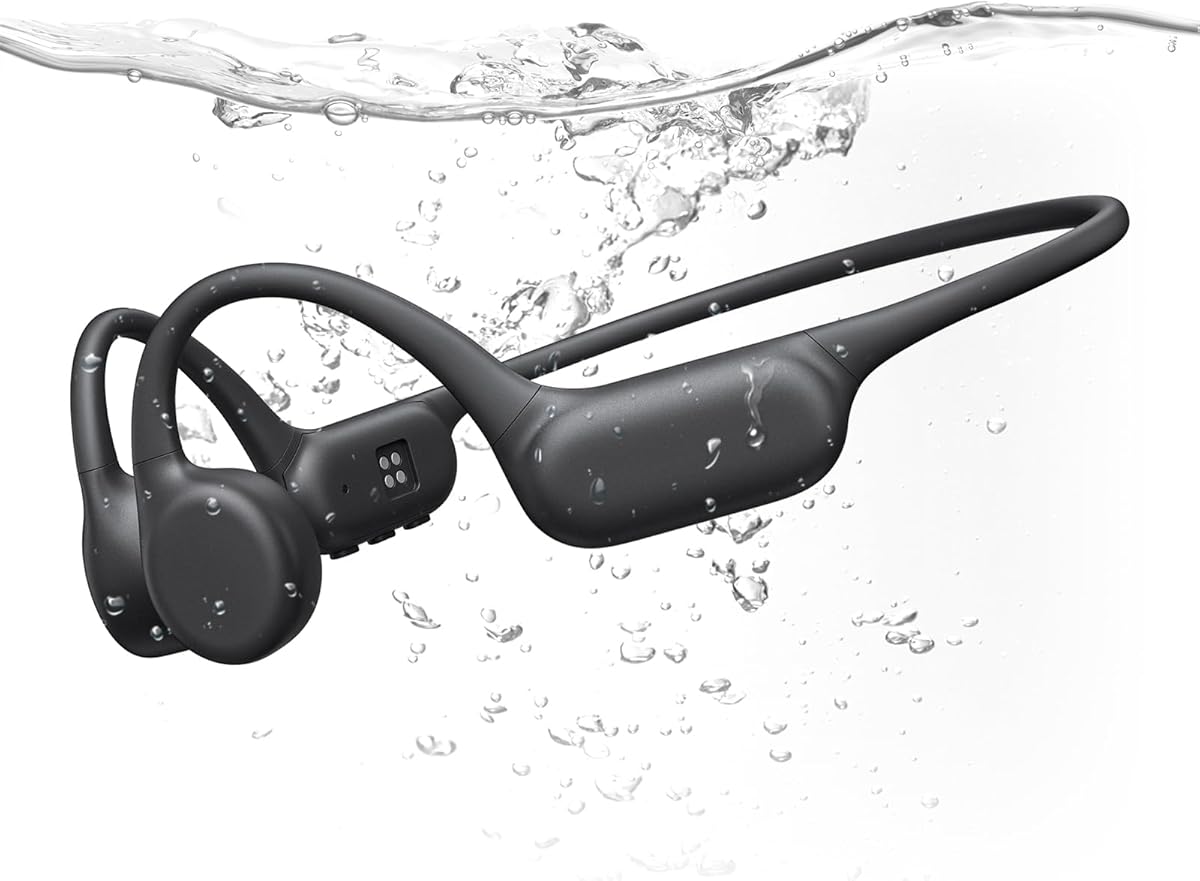
PSIER Bone Conduction Headphones
PSIER’s open-ear swimming headphones sit in the sweet spot between dedicated aquatic gear and modern Bluetooth convenience. On land you get Bluetooth 6.0 with low-latency pairing and the ability to juggle more than one source device. In the water you abandon the radio link, double-click into MP3 mode, and lean on thirty-two gigabytes of internal storage. That split personality is exactly what swimming demands, and PSIER makes the mode switch part of the product story instead of a buried footnote.
The IPX8 rating here is described as up to two meters for about an hour—plenty for pool depths and most recreational open-water dips, though you should still treat any consumer headset as a training tool, not dive equipment. A fully sealed coating is the real differentiator versus sweat-rated gym buds. If your workouts include flip turns, underwater streamline glides, and occasional depth work off the blocks, that seal matters more than any marketing adjective about bass.
Comfort leans on soft silicone cushions ahead of the ears and an adjustable strap in the box. Open-ear airflow helps during long cardio sessions when sealed tips would feel swampy. Situational awareness is a genuine safety feature for runners who share roads with cars, and it remains useful in busy lanes where you want to hear a coach or a swimmer asking to pass. Just remember that awareness cuts both ways: splash noise and pool echo still compete with music.
Sound comes from true bone conduction with fourteen-millimeter drivers. Expect clearer mids and usable rhythm rather than sealed-can thump. The built-in microphone and Bluetooth path make deck-side calls and coaching check-ins practical. Magnetic charging lands a full charge in roughly two hours after an eight-hour listening stretch—enough for most athletes who rinse, charge overnight, and repeat.
The Boean app angle is optional spice. AI music generation and customizable EQ will delight tinkerers and leave traditionalists unmoved. For swimming performance, file hygiene matters more: load compatible tracks, keep the library organized, and verify MP3 mode before every session. App toys cannot rescue a playlist that never made it onto the internal drive.
This PSIER unit is a strong pick if you want a polished Bluetooth 6.0 land experience and a proven IPX8 swim path without jumping straight to hybrid dual-driver marketing. If you prioritize maximum bass claims or the absolute highest pack rating, look at the dual-driver PSIER sibling higher in our ranking. If you need marathon battery, CXK’s twelve-hour pitch may fit better.
Swimmers who also jump between a phone and a tablet for dryland videos will appreciate Bluetooth 6.0 device switching. Keep the aquatic half of the workflow simple: one offline playlist, one mode switch, then swim.
Rinse with fresh water, dry the magnetic contacts, and avoid charging while damp. Sealed coatings survive immersion better when you do not grind grit into ports or stretch the frame aggressively over thick winter caps.
We may earn a commission at no additional cost to you.
PSIER Dual-Driver Swimming Headphones
If you want one headline recommendation from this pack, start with PSIER’s hybrid bone-and-air conduction swimming headphones. The dual-driver system is the differentiator: bone conduction handles the open-ear safety brief while air conduction components chase clearer highs and the deeper bass that pure bone sets often lack. PSIER claims roughly thirty percent more bass than standard single-driver bone headphones—an ambitious number, but the design intent is easy to hear on dry land and still helpful when water muffles everything.
Swimming credentials remain orthodox and correct. You get an IPX8 rating for about two meters and one hour, a sealed coating, and a hard requirement to switch into MP3 mode before submerging. Thirty-two gigabytes of storage supports thousands of songs for phone-free sets. Bluetooth 6.0 covers the locker-room-to-deck chapter of your day with low latency that feels snappier for video and coaching clips than older 5.x chips.
The wearable side is thoughtfully swim-aware. Seamless liquid silicone coating keeps the frame soft against skin and less grabby against silicone caps. Stability with goggles, sunglasses, or bike helmets matters for triathlon transitions; this headset is built to play nicely across those accessories rather than fighting them. Eight hours of playtime will not win a battery bragging contest against twelve-hour rivals, yet it covers most double practices if you are not streaming continuously between sessions.
Personalization through the Boean app is available if you like AI-assisted soundscapes and quick profile tweaks. Treat that as a land-side playground. In the water, success still hinges on transducer placement, volume discipline, and a playlist that does not rely on cloud streaming. Hybrid drivers can make kick sets and tempo tracks more satisfying, but they cannot invent Bluetooth under three feet of water.
We ranked this Best Overall because it combines the strongest feature story in the pack—dual drivers, modern Bluetooth, serious storage, and IPX8—with a perfect early rating. That said, ratings can soften as sample size grows, so read recent feedback when you shop. Also note a closely related PSIER dual-driver listing later in this guide with a much lower rating; packaging and generations can differ, so match the exact product title and images.
Buy this if bass-shy bone conduction has frustrated you before and you still refuse sealed earbuds in the pool. Look elsewhere if you need the absolute longest battery, prefer a wired player you already own, or want the cheapest possible accessory rather than a full headset. For most swimmers upgrading into dedicated aquatic audio in 2026, this hybrid PSIER is the roundup’s center of gravity.
One practical note on sound expectations: even with dual drivers, underwater listening remains narrower than living-room headphones. Raise volume gradually after you push off so you do not start a set too hot, then settle into a level that keeps stroke rhythm without drowning out a coach’s whistle.
Triathletes, masters swimmers, and pool runners who bounce between decks and roads will get the most from dual-driver tuning plus open-ear awareness. If your only complaint with older swim headphones was thin low end, this is the upgrade path inside this pack.
Compared with the single-driver PSIER, you pay complexity for bass and clarity claims. Compared with the lower-rated dual-driver twin later in the list, insist on verifying listing details and recent reviews—same family language does not guarantee the same ownership experience.
Charge fully, sync files, confirm MP3 mode, seat silicone against cheekbones, then tuck temples under the cap edge. A thirty-second streamline test beats discovering a loose frame at the far end of a long set.
We may earn a commission at no additional cost to you.

Not every product in a swimming earbuds guide needs drivers. These reusable silicone swim earplugs earn a place because many athletes combine open-ear bone conduction with a physical water seal when they battle recurrent swimmer’s ear, pressure discomfort, or simply hate the feeling of water sloshing in the canal. Soft silicone contours to the ear rather than jabbing like bargain hard plugs, which is why comfort shows up so often in feedback.
The anti-slip design follows cochlear geometry so plugs stay put through turns and surface dives better than smooth cones that migrate out. That reliability matters if you are also wearing a bone-conduction frame; you do not want to stop mid-set to dig for a floating plug. Three pairs in three colors with matching cases make it easy to keep a dry pair in a gym bag, one in a travel kit, and one in a locker.
These plugs are not noise-cancelling miracles and they are not hearing protection rated for industrial use. They are water barriers for swimming, surfing, snorkeling, showering, and beach days. Used correctly, they reduce water entry while still letting some ambient sound through—helpful when a coach is talking on deck. If you need total silence, you are shopping the wrong accessory.
Hygiene is non-negotiable. Rinse after chlorinated or salt sessions, dry fully, and store in the cases. Do not share plugs casually, and keep them away from toddlers who might mouth them—the listing explicitly warns about children under three. Adults and teens fourteen and up are the intended users.
Pairing strategy with headphones: if you wear open-ear swim headphones, plugs can reduce water in the canal without fighting the transducers on your cheekbones. If you wear in-ear swim buds that already use tips as a seal, adding separate plugs is usually redundant and can be uncomfortable. Listen to your ears; pain is a stop signal, not a toughness test.
Choose these when infection prevention or dryness is the goal and audio is handled by another device in this guide. Skip them if you only wanted music and have no water-in-ear complaints. As a low-complexity accessory with solid ratings, they are the easiest win in the pack for comfort-focused swimmers.
If bone conduction sits outside the canal but water still bothers you, soft plugs add a seal without covering the transducers. Test the combination in a short warm-up before race-pace work.
Insert gently with clean hands until snug, never forcefully. Twist slightly when removing so you do not yank skin. Replace pairs that tear, harden, or no longer seal.
We may earn a commission at no additional cost to you.
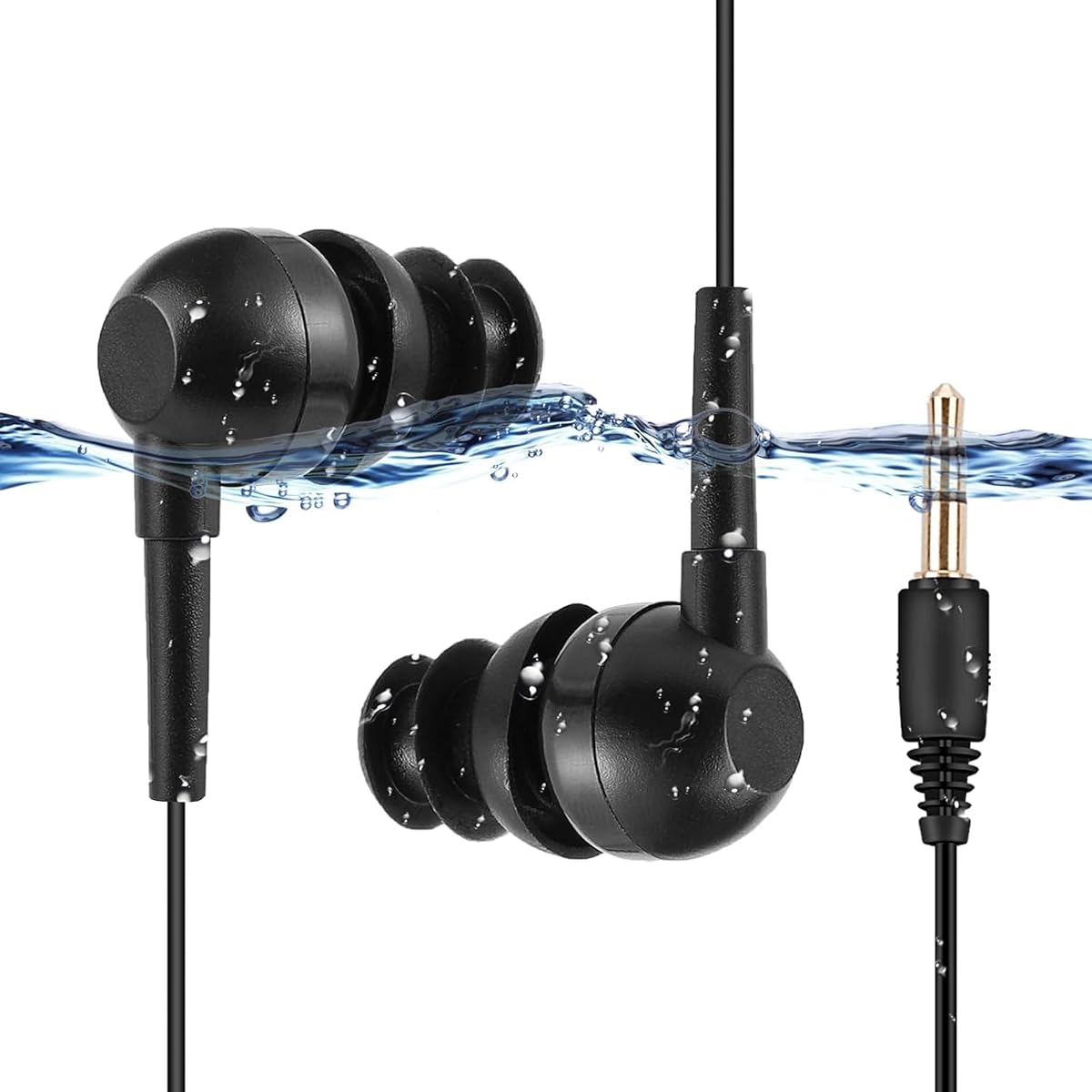
AGPTEK IPX8 Waterproof Earphones
Before bone-conduction swim headphones flooded the market, wired waterproof earphones like the AGPTEK IPX8 set were the practical path: plug into a waterproof MP3 player on your goggles strap or tucked under a cap, then swim. That ecosystem still exists, and this coiled-cable design remains relevant for athletes who already own a clip-on player or prefer a simple analog chain with fewer firmware quirks.
IPX8 here is described with nano-coating and immersion around one and a half meters for about thirty minutes. That is swim-appropriate with caveats—respect the rating, rinse after use, and do not treat the cable junctions as indestructible. The coiled cord is a thoughtful touch; it shortens slack that would otherwise whip around during turns. A one-meter male-to-female extension helps when your player sits farther from the ears than the stock cable likes.
Tip selection makes or breaks the experience. Swim-oriented medium and large tips plus a broader general-use tip set let you chase a seal that keeps water out and midrange clarity in. A poor seal sounds thin and lets water sneak in; a good seal improves both comfort and noise isolation. Expect clearer mids than thunderous bass—these are training earphones, not studio monitors.
Compatibility is classic 3.5 mm. Phones without headphone jacks need adapters, and adapters near water are a liability. The cleaner path is a dedicated waterproof player designed for swimming. If your entire music life lives in a phone app with no offline player, modern bone-conduction MP3 headsets in this guide will frustrate you less than a cable-and-dongle puzzle.
Who still buys wired swim earbuds in 2026? Coaches stocking shared training kits, swimmers who distrust wireless batteries, and anyone standardizing on a player they already trust. The tradeoff is mechanical: cables snag, connectors wear, and you manage more physical parts. The upside is predictability—no mode switching rituals when Bluetooth dies underwater, because you never relied on Bluetooth.
We include AGPTEK as the pack’s wired specialist, not as the default recommendation for newcomers. If you are starting fresh, open-ear MP3 bone conduction is usually simpler. If you are extending an existing wired aquatic setup, these earphones are a coherent, tip-rich, IPX8-minded choice.
Use a purpose-built waterproof player, route the coiled cable under the cap edge, and leave strain relief at the jack. Test a few lengths of freestyle before trusting the routing on a long endurance set.
If you hate managing a separate player and cable, skip wired entirely and choose a bone-conduction headset with internal storage from higher in this list.
We may earn a commission at no additional cost to you.
CXK Bone Conduction Swim Headphones
CXK’s bone conduction swim headphones win our Best Battery Life badge because twelve hours of claimed playback changes how you plan a training week. Instead of nursing a charge between morning masters and evening open-water, you can treat the headset more like durable equipment. Magnetic charging still matters overnight, yet the headroom is meaningful for camps, meet warmups, and athletes who hate midweek charging anxiety.
Waterproofing language is aggressive in a good way: IPX8 with a triple-seal design and immersion guidance up to two meters for two hours. That exceeds some peers’ one-hour framing and better matches swimmers who spend long continuous blocks in the water. As always, switch to MP3 before entry—Bluetooth 6.0 is for land connectivity, not underwater miracles. Double-clicking the power button into MP3 mode is muscle memory worth building on day one.
Storage guidance mentions thousands of songs and explicitly lists compatible formats such as MP3, WMA, FLAC, and WAV. That honesty helps. Rip or export playlists into those formats and you avoid the silent failure mode where files appear on the drive but never play. For maximum compatibility the brand even nudges users toward MP3, which remains the safest lowest-common-denominator choice.
The PulseCraft transducer story and “up to 3x” clarity language are marketing-forward. What you can evaluate more calmly is the open-ear silicone pad comfort, adjustable headband stability, and dual-microphone call performance when you are dry. Runners and cyclists sharing the same headset will care about awareness and call quality as much as swimmers care about seals.
Custom EQ and Boean AI music generation extend the product beyond a dumb MP3 walkman. Useful if you enjoy tinkering; irrelevant if you just want a kick-count playlist. Either way, the aquatic essentials remain seal integrity, mode discipline, and a strap that survives your stroke. Twelve-hour battery simply removes one failure point from that checklist.
Pick CXK when your calendar is dense and you want fewer charge cycles dictating your week. Prefer the hybrid PSIER if bass character is your top complaint with bone conduction. Prefer the lighter everyday Dnniakm-style pick if you want a simpler daily driver without chasing maximum endurance claims.
High-volume swim weeks, triathlon camps, and mixed run-bike-swim days benefit most from the twelve-hour claim. Casual twice-weekly lap swimmers may never drain a smaller battery enough to justify the upgrade.
Stick to MP3 for bulletproof playback, or carefully validate FLAC and WAV files before an important session. A silent main set is not the moment to discover an unsupported encode.
CXK trades some of the hybrid bass narrative for endurance and a tougher immersion time claim. If you swim long and often, battery and seal stamina may matter more than dual-driver marketing.
We may earn a commission at no additional cost to you.

JOYWISE Bluetooth Sport Headphones
JOYWISE’s earhook Bluetooth headphones are in this pack as a boundary marker. They are competent sport buds for gym floors and outdoor runs: IPX7 waterproofing for sweat and rain, Bluetooth 5.3 stability, physical buttons you can find without looking, and up to sixteen hours of playback. The ergonomic hooks and tougher neck lanyard address the classic sport-bud failure mode of launching across the room during burpees.
They are not swimming earbuds in the sense this guide cares about. The listing itself warns they are not recommended for swimming. IPX7 means protection against temporary immersion in controlled test conditions for consumer electronics, but swim training involves repeated pressure, chemical exposure, and the Bluetooth underwater problem. Without a sealed MP3 swim architecture, these headphones will not satisfy the core use case.
Why include them at all? Because shoppers searching “waterproof earbuds” often land on sweat-rated gear and assume the pool is fair game. Putting JOYWISE beside true IPX8/IP68 swim headsets makes the distinction visceral. If your water exposure is treadmill sweat and outdoor drizzle, enjoy the sixteen-hour battery and hook stability. If your water exposure is freestyle, buy something else from this list.
Sound and call quality are pitched as high-fidelity with clear mics—appropriate for podcasts between sets of land training. The Boean app creative features appear here too, which is fine for dry experimentation. None of that changes the aquatic verdict. Do not plan a masters practice around these buds.
Also note the smartwatch pairing limitation called out by the brand. That is a land-side annoyance, not a swim issue, but it matters if your whole training stack assumes watch control. Button controls on the buds themselves partially compensate.
Bottom line: keep JOYWISE in the gym bag, not the mesh pool bag. We rank it for honesty, not for underwater performance. Swimmers should treat the “not recommended for swimming” line as decisive and move to IPX8 bone-conduction MP3 models above.
Think sweat, rain, and accidental splashes—not lane swimming. Repeated pool immersion is outside the product’s intended life. Choosing IPX8 or IP68 swim-specific gear is the safer path for chlorine and salt.
For pool use, jump to the PSIER hybrid, CXK, or Dnniakm-style IP68 open-ear options. For water-in-ear prevention without audio, use the silicone swim plugs instead.
We may earn a commission at no additional cost to you.

Waterproof In-Ear Swim Earbuds
This black in-ear swimming headset splits the difference between classic sealed buds and bone-conduction sport gear. The brand describes bone conduction with earplugs and hooks: tips help isolate noise and reduce leakage while hooks and a one-piece silicone shell chase stability. At about twenty-six grams it is easy to wear for long practices, and the IPX8 story targets full immersion scenarios including swimming and surfing.
Why choose in-ear geometry in a category dominated by open-ear frames? Isolation. Open-ear bone conduction keeps you aware, which is great for traffic and coaches, but splash and HVAC roar can wash out quieter tracks. Tips create a more intimate listen for athletes who want the playlist to lead the set. The honest caveat from the listing matters: in-ear plugs are not a guaranteed water-blocking medical seal for every ear. Some swimmers still get moisture past tips; others stay dry. Fit testing is personal.
Eight gigabytes of storage is the clear compromise versus thirty-two-gig rivals. Fifteen hundred-plus songs is still a lot if you curate, but album hoarders will feel the ceiling. Bluetooth 5.4 dual mode with a double-click MP3 switch follows the same aquatic rulebook as every serious swim headset here. Charge about two hours for roughly eight hours of playback and a long standby claim when idle.
Comfort hinges on silicone smoothness and tip choice. A seamless wrap reduces hot spots, yet any in-ear design can fatigue canals during multi-hour open-water days. If you already know sealed tips irritate you, stick with open-ear models higher in the list. If open-ear always felt too leaky, this design is the corrective experience inside the pack.
Use cases that fit well include focused pool sets where you want stronger perceived bass and isolation, and surf or ocean athletes who like a hooked, tip-stabilized wear. Pair with good ear hygiene and consider the separate silicone plugs only if your clinician recommends an extra barrier—and never force conflicting tips together uncomfortably.
We like this as the isolation specialist, not the universal default. Storage is smaller, canal contact is higher, and awareness is lower than open-ear bone sets. For the right ears, those are features. For everyone else, the hybrid PSIER or CXK open-ear paths remain easier recommendations.
Pick these when music focus beats environmental hearing. Pick open-ear bone conduction when sharing lanes, roads, or surf lineups where missing a shout is a safety issue.
Build a lean training playlist instead of dumping an entire discography. Higher compression MP3s stretch capacity; giant lossless folders will not.
We may earn a commission at no additional cost to you.

IP68 Bone Conduction Swim Headphones
This IP68 bone conduction swimming headset earns attention with a clean feature triangle: serious waterproof rating, Bluetooth 5.4, and a wireless MP3 player mode backed by thirty-two gigabytes of memory. The pack listing is more concise than some competitors, which means you should read the live product page carefully for charging method, exact controls, and accessories. Even so, the core architecture matches what successful swim audio requires.
IP68 versus IPX8 can confuse shoppers. In practical swim shopping, both signal strong water protection, but the letter and digit combinations refer to solid and liquid ingress tests. What matters in the lane is whether the manufacturer intends full swimming use and whether offline playback exists. This model checks those boxes on paper and posts a perfect early rating, which is encouraging if still statistically young.
Expect the same ritual you have seen throughout this guide: load the internal memory, wear the open-ear transducers on bone, secure any strap or temple tips under a cap, and enter the water in MP3 mode. Bluetooth 5.4 remains your friend for office work, treadmill sessions, and commute listening mentioned in the title positioning. That cross-use is valuable—swim headphones that only make sense two hours a week often get abandoned.
Because the pack’s about text is sparse, our confidence intervals are wider. We still include it as a Best High-Rated IP68 Value style pick for shoppers who want the headline specs without paying for every app ecosystem flourish. Compare recent photos, Q&A threads, and return policies before you commit, especially if you need a guaranteed strap, specific codec support, or a particular charging style.
Where it fits in the ranking: alongside the Dnniakm everyday pick for swimmers who prioritize IP68 messaging and large storage, and below the hybrid PSIER if dual-driver bass is your obsession. The perfect rating is a positive signal, not a lifetime warranty of perfection—monitor feedback as the audience grows.
If you buy, start with a short validation week: confirm file transfer works, time a full charge, and complete several practices before trusting it on race morning. That habit protects you regardless of brand.
Confirm waterproof rating, battery claim, included strap, and music-loading steps on the current listing. Sparse marketing is fine when the fundamentals are explicit; it is a red flag when fundamentals are missing.
Swimmers who want a straightforward IP68 bone-conduction MP3 headset for pool and dry exercise without chasing AI music features will find this concept appealing.
We may earn a commission at no additional cost to you.

PSIER Dual Driver Open-Ear Buds
On a feature sheet, this PSIER dual-driver open-ear set looks nearly interchangeable with our Best Overall pick: hybrid bone-plus-air drivers, claims of deeper bass, IPX8 swimming readiness, thirty-two gigabytes of MP3 storage, Bluetooth 6.0, and roughly eight hours of use with fast magnetic charging. The open-ear design still promises situational awareness for outdoor sports, and the Boean app still offers creative tuning.
The rating tells a different story. At 3.1 in the pack data, this listing is the most polarizing product we cover. That gap is exactly why we review by specific ASIN and images rather than brand slogans. Two products can share marketing language and deliver different QC, firmware, accessory, or expectation outcomes. If you are tempted by the dual-driver pitch, prefer the higher-rated PSIER swimming headphones unless new reviews on this page clearly rebound.
Technically, the swim playbook remains valid. Switch to MP3 in the water, trust Bluetooth only when dry, seat the liquid silicone frame so dual drivers couple to bone and air paths correctly, and rinse after chemical exposure. None of that changes if ratings are high or low; execution quality does.
Who might still consider it? Shoppers who find a clearly newer revision, bundle, or colorway with improved feedback, or who need a replacement that matches accessories they already own. Who should skip it for now? Anyone buying their first swim headset and wanting the lowest drama path—our Best Overall and Best Battery badges exist for that reason.
We keep the review thorough because negative or mixed ratings are information, not something to hide. Honest roundups surface tradeoffs and caution flags. If you read recent five-star and one-star themes and they cluster around fit, charging, or mode switching, believe the pattern more than any single paragraph of marketing.
In short: identical-sounding dual-driver promises, divergent community scores. Cross-check the live listing, compare it with the higher-rated PSIER dual-driver swim headphones, and only then decide. Features get you into the category; consistency keeps you training.
A wide gap between sibling listings usually means different revisions, fulfillment batches, or expectation mismatches. Sort reviews by recent and look for repeated failure modes before you buy.
Choose the higher-rated PSIER Bone Conduction Swimming Headphones earlier in this guide for the same hybrid concept with stronger early consensus.
We may earn a commission at no additional cost to you.
Swimming audio fails for two independent reasons: water intrusion and radio blackout. Look for IPX8 or IP68 products explicitly marketed for swimming, then confirm there is an MP3 or built-in memory mode. Bluetooth alone is not a swim strategy. If a listing only promises sweat resistance or IPX7 without underwater storage, treat it as gym gear.
Offline storage size shapes how freely you train. Eight gigabytes is enough for a curated playlist; thirty-two gigabytes is comfortable for larger libraries and audiobooks. Prefer formats the manufacturer lists—MP3 remains the safest common denominator across brands in this guide.
Open-ear bone conduction keeps canals freer, preserves awareness, and usually coexists better with swim caps. In-ear swim designs can isolate better and feel more “in the music,” but they contact skin inside the canal and may still admit water depending on anatomy. Neither style replaces medical advice if you get frequent ear infections—consider silicone swim plugs as a separate tool.
Hybrid bone-plus-air drivers try to restore bass that pure bone conduction lacks. They are worth a look if thin low end made you quit earlier models, but they still obey the underwater MP3 rule.
A perfect laboratory seal means little if the headset shifts on turn one. Adjustable straps, soft silicone coatings, and temple geometry that tucks under a cap edge are practical features, not fashion. Spend time on deck setting transducer pressure on cheekbones. Too loose sounds weak; too tight creates hotspots.
Goggle straps should cross without levering the headphones off bone. If you wear a thick latex or silicone cap, try the stack order that keeps audio stable: headphones seated first, then cap, then goggles, with small personal variations.
Eight hours covers most single days; twelve hours helps high-volume weeks. Magnetic chargers are convenient but must stay clean and dry. Rinse after chlorine or salt, air-dry fully, and never assume a waterproof rating forgives charging while wet.
Battery claims are usually measured at moderate volume on land. Cold open water and high volume can shorten runtime. Build a margin instead of planning to hit zero mid-main-set.
Pool swimmers need chemical rinse habits and secure flip-turn fit. Open-water athletes need secure hooks or straps and realistic IP depth expectations. Surf and ocean users should accept that wipeouts abuse gear. Wired earphones only make sense with a waterproof player you already trust. Gym-only IPX7 buds belong on land.
Finally, ignore dollar signs in marketing battles and compare the failure modes that ruin sessions: mode mistakes, poor fit, dead battery, and water in the ears. The right pick is the one that removes your personal failure mode.
Not in any reliable way for lap swimming. Water absorbs and reflects the radio frequencies Bluetooth uses, so connections drop almost immediately once the buds are submerged. That is why serious swimming headphones include onboard storage and an MP3 mode. Use Bluetooth on deck or for dryland work, then switch to offline playback before you enter the pool or open water.
Look for IPX8 or IP68 products that explicitly mention swimming or underwater use. IPX7 sweat-and-splash ratings are for gym life, not repeated lap immersion. Even with a strong rating, follow the manufacturer’s depth and time guidance, rinse after chemical exposure, and keep charging ports clean. Ratings assume intact seals and normal use, not abuse.
Bone conduction is popular for swimming because it leaves the ear canal more open and transmits vibration through cheekbones, which many athletes find comfortable under caps. Effectiveness depends on snug transducer placement and realistic volume expectations—bass will not match sealed studio headphones. Safety-wise, open-ear designs help you hear coaches and lane traffic, but you still need pool awareness; music should never replace looking and listening for other swimmers.
Eight gigabytes is enough for a tightly curated training playlist. Thirty-two gigabytes is more comfortable if you want larger libraries, audiobooks, or less frequent file management. Storage only helps if you actually load compatible files. Before race week, confirm that your encodes play in MP3 mode rather than assuming a computer copy equals a ready playlist.
Many swimmers do, especially if they are prone to swimmer’s ear or dislike water entering the canal. Soft reusable silicone plugs can add a seal while bone-conduction transducers sit outside on the cheekbones. Avoid painful stacking of conflicting tips. If you already use in-ear swim buds with sealing tips, extra plugs are usually unnecessary. When in doubt about infections or pain, ask a clinician rather than improvising aggressive seals.
Because sweat resistance and pool immersion are different engineering problems. An IPX7 gym headset can survive rain and workouts yet still lack the seals, coatings, and offline playback architecture swimming demands. Listings that warn against swimming are doing you a favor. In this guide, the JOYWISE IPX7 model is the clear example of land-only gear that shoppers sometimes mistake for swim audio.
Seat transducers firmly on bone, use the adjustable strap if included, and experiment with cap layering so the frame is trapped gently rather than floating. Do a short streamline and turn test before main sets. If a model repeatedly migrates despite careful setup, consider a hooked in-ear swim design or a different temple geometry rather than endlessly increasing clamp pressure until it hurts.
Standard bone conduction focuses on vibration through bone and typically sounds lighter in the bass. Hybrid designs add air-conduction elements to reinforce highs and low-end energy while keeping an open-ear posture. They can sound fuller on land and somewhat more satisfying underwater, but they do not restore Bluetooth under water or eliminate the need for a good seal and fit. Choose hybrid if thin bass was your deal-breaker before.
Rinse with fresh water soon after sessions, shake off droplets, and air-dry fully before charging. Wipe magnetic contacts gently so residue does not interfere with charging. Avoid harsh solvents and do not force dry heat that could stress seals or batteries. Store in a dry bag compartment, not in a swampy towel pile. Consistent rinse habits often matter as much as the original waterproof rating.
Yes for a narrower audience: athletes who already use a waterproof clip-on MP3 player, coaches outfitting shared kits, or swimmers who prefer a simple cable over wireless mode switching. Wired sets like the AGPTEK avoid Bluetooth dropouts by never using Bluetooth, but cables can snag and you must manage a separate player. Most newcomers will be happier with open-ear bone-conduction headsets that store music internally.
The best earbuds for swimming in 2026 are defined less by brand hype and more by three non-negotiables: a real submersion rating, offline MP3 storage, and a fit that survives caps, goggles, and turns. Inside this pack, the hybrid PSIER dual-driver swimming headphones are our Best Overall balance of bass ambition, IPX8 sealing, and modern Bluetooth for dryland use. CXK takes Best Battery Life for high-volume weeks, while the Dnniakm-style bone conduction set remains a strong everyday swim pick with IP68 credentials and generous storage.
Be equally clear about what not to buy for the pool. IPX7 gym buds such as the JOYWISE belong on land. Wired AGPTEK earphones still serve legacy waterproof players. Silicone swim plugs solve water-in-ear problems that headphones alone may not. And when two dual-driver listings disagree wildly in ratings, trust recent owner patterns over identical marketing sentences.
Load a lean playlist, switch to MP3 before you dive, rinse after chlorine or salt, and give yourself one short validation week before race morning. Do that, and underwater audio stops being a novelty that fails on turn two—and becomes ordinary training equipment you can rely on.