Expert Review & Guide

Best Earbuds for Cycling 2026: Open-Ear and Secure Picks

Cycling audio fails differently than desk listening. A perfect studio seal can hide the car that never saw you. Touch controls that feel clever on the couch become phantom pauses when sweat hits a stem under a helmet strap. And buds that survive a jog can still eject when chip-seal buzz meets a standing sprint out of the saddle. Choosing the best earbuds for cycling in 2026 means prioritizing situational awareness, helmet-compatible geometry, weatherproofing, and controls you can trust with sunscreen-slick fingers—not just marketing claims about cinema bass.

This roundup stays inside our Amazon pack of ten sport-oriented wireless options. You will see premium bone conduction from SHOKZ, a lighter PSIER bone-conduction alternative, open-ear hooks from TRAUSI and OHAYO, Baseus clip-ons tuned with Sound by Bose, plus sealed hook pairs for indoor trainers and quiet paths. Ratings mirror the Amazon listings at the time of writing. We do not list dollar prices because promotions shift constantly; open each product link for the live offer, tip assortment, and current stock.

If you want a fast shortlist, start with the three top picks: SHOKZ OpenRun Pro for road awareness under a helmet, TRAUSI for everyday open-ear commuting with huge case life, and Baseus Inspire XC1 when open-ear safety must still sound refined. Use the comparison table to separate open-ear from sealed in-ear, then read each review for waterproof honesty, wind-call expectations, and who should skip a given silhouette.

Our Top Cycling Earbud Picks for 2026

Best Overall for Road Cycling

SHOKZ OpenRun Pro

★★★★★9/10
SHOKZ OpenRun Pro
  • Open-ear bone conduction keeps traffic, horns, and group calls audible while you ride
  • Titanium wraparound frame stays stable under most road and gravel helmets
  • TurboPitch tuning, roughly 10-hour battery, and a 5-minute quick charge for long ride days
Check Price →
Best Open-Ear Everyday Rider

TRAUSI Open Ear Wireless Earbuds

★★★★★9.4/10
TRAUSI Open Ear Wireless Earbuds
  • Open-ear hooks preserve ambient awareness for commuting and lunch-loop spins
  • Up to 80 hours total playtime with the case for full training weeks between wall hunts
  • Bluetooth 5.4, ENC mics, and IPX7 protection built for sweat and surprise showers
Check Price →
Best Premium Open-Ear Sound

Baseus Inspire XC1 Clip-On

★★★★☆8.6/10
Baseus Inspire XC1 Clip-On
  • Sound by Bose tuning with hybrid woofer and Knowles tweeter for open-ear detail
  • Zero-sense air cushions stay comfortable on long rides without sealing the canal
  • IP66 weather toughness, 4-mic AI calls, and about 40 hours with the charging case
Check Price →

As an Amazon Associate we earn from qualifying purchases. We may earn a commission at no additional cost to you.

Cycling Earbuds Comparison: Awareness, Fit, Weatherproofing

Scan this table before you commit to a silhouette. Specs focus on the three details that decide whether earbuds survive real cycling: how they keep you aware of traffic, how they anchor under a helmet, and how they handle sweat or rain. No prices are listed—check each Amazon page for the current deal and included accessories.

#ProductSpecificationsScore
1
  • Bone conduction open-ear, ~23 g titanium-memory frame
  • Bluetooth 6.0, ~10 hours playtime, Type-C charging
  • IPX5 waterproof, 13 mm drivers, Boean app EQ tools
8.6
2
  • Active noise cancelling up to ~45 dB depth claim
  • Up to 8 hours buds, ~96 hours with dual-display case
  • Earhooks, 16 mm drivers, IPX7 waterproof sports build
9.4
3
  • Open-ear hooks, ~8 g per bud, quad-speaker design
  • Bluetooth 5.4, ~40 hours with digital display case
  • IPX6 waterproof, touch controls, cycling-ready fit
8.8
4
  • LED case shows case and bud percentages in real time
  • About 8 hours per charge, ~50 hours with case, IPX7
  • Earhooks, ENC mics, Bluetooth 5.3, S/M/L gel tips
10
5
  • Sound by Bose tuning with Dolby Spatial Audio support
  • Hybrid dynamic woofer plus Knowles balanced armature
  • IP66 waterproof, ~40 hours with case, 4-mic AI calls
8.6
6
  • Adjustable over-ear hooks with dual button controls
  • Up to 80 hours with dual LED display charging case
  • 10 mm drivers, dual mics, sweat- and dust-ready build
8.6
7
  • Lightweight silicone hooks with titanium-alloy flex core
  • Up to ~15 hours per bud, ~80 hours with case
  • Bluetooth 5.4, physical buttons, IPX7 waterproof
9
8
  • Open-ear hooks keep canals free for traffic awareness
  • Up to 80 hours total playtime with charging case
  • Bluetooth 5.4, ENC mics, IPX7 waterproof sports build
9.4
9
  • Flexible ear hooks, S/M/L tips, IPX7 waterproof
  • Up to 80 hours with dual LED digital display case
  • 13 mm drivers, Bluetooth 5.3, Qi wireless case charging
8.6
10
  • Open-ear bone conduction with titanium wraparound frame
  • Up to 10 hours playtime, 5-minute quick charge boost
  • TurboPitch bass, sweat-resistant, includes Shokz headband
9

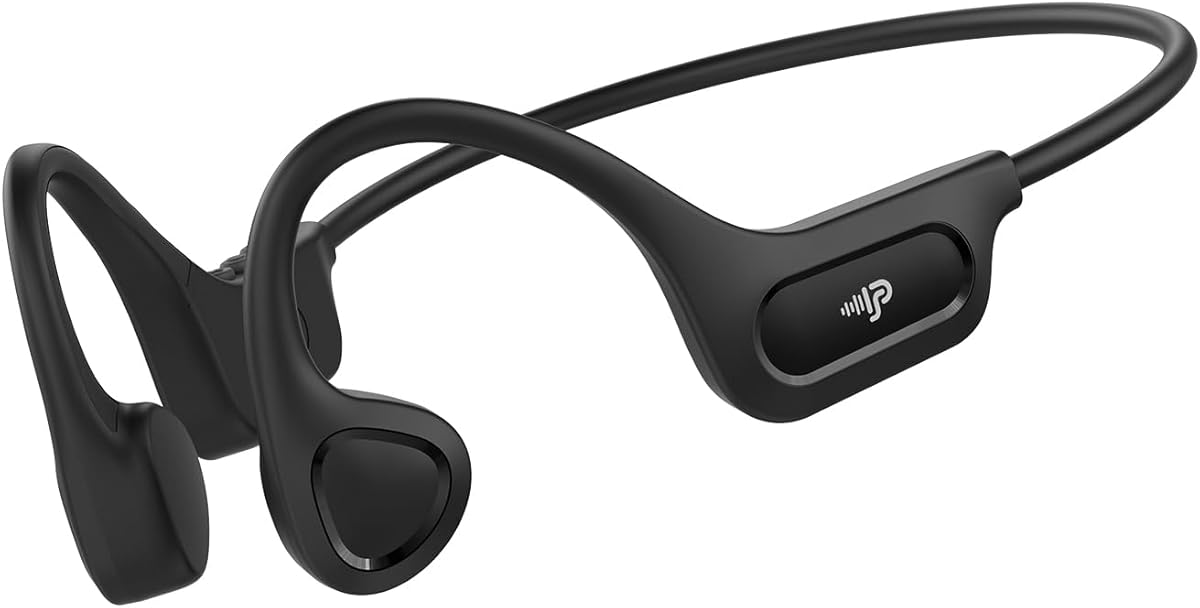
1. PSIER Bone Conduction Headphones - Best Budget Bone Conduction

PSIER Bone Conduction Headphones

PSIER Bone Conduction Headphones

8.6/10★★★★☆

PSIER’s 2026-upgrade bone conduction headphones give budget-minded cyclists a credible open-ear entry. Audio travels through the bone with an enclosed cavity design meant to cut leakage while leaving canals free for horns, bells, and gravel crunch. If you have never tried bone conduction on a bike, this is a lower-commitment way to learn whether you prefer cheekbone audio over clip-ons or hooks before stepping up to SHOKZ.

  • Bone conduction open-ear, ~23 g titanium-memory frame
  • Bluetooth 6.0, ~10 hours playtime, Type-C charging
  • IPX5 waterproof, 13 mm drivers, Boean app EQ tools
Check Price →
✓ Pros
  • Open-ear bone conduction keeps cyclists aware of traffic and trail users
  • About twenty-three grams with a flexible memory-titanium frame for long climbs
  • Bluetooth 6.0 claims fast pairing, low latency, and a stable roughly thirty-three-foot link
  • Ten-hour runtime suits most single-day rides without mid-route charging
  • Boean app EQ and AI music tools add customization beyond basic Bluetooth buds
✕ Cons
  • IPX5 trails IPX7 rivals for heavy rain and pressure-wash-level spray
  • No charging case—endurance is a single onboard battery like most band-style sets
  • Bass and refinement sit behind SHOKZ OpenRun Pro for critical listeners

Detailed review

The feather-light twenty-three-gram frame uses memory titanium that contours behind the head. An adjustable strap is included for different head sizes—useful when you share a household pair or swap between summer caps and thicker winter skullcaps under a helmet. Open-ear airflow also reduces the sweaty canal fatigue sealed tips create on humid climbs.

Bluetooth 6.0 is a headline spec in this pack: instant pairing, roughly sixty-millisecond latency claims, and a stated thirty-three-foot range. In practice, keep the phone in a jersey pocket or stem bag rather than a metal-lined backpack pocket for best stability. Large thirteen-millimeter bone conduction drivers with roughly ninety-decibel sensitivity aim for richer mids and clearer highs than older bargain bone units.

Ten hours at moderate volume covers a long gravel day or a week of short commute hops if you charge between blocks. Type-C charging to full in about two hours, plus a large standby claim, means the headphones can live in a gear drawer without constant babysitting. There is still no case battery to extend multi-day tours, so pack a cable for bikepacking.

IPX5 waterproofing handles sweat and light rain—adequate for many road rides, less ideal than IPX7 when forecasts turn ugly. The Boean app’s EQ presets and AI music experiments are optional; many riders will simply pair and go. Treat AI song tools as a curiosity, not the reason to buy for cycling safety.

Choose PSIER to trial bone conduction with modern Bluetooth and app EQ. Move to OpenRun Pro when you want the most refined TurboPitch experience and quick-charge polish. Skip PSIER if you need a rechargeable case or maximum storm-ready waterproofing for year-round commuting.

First ride fit drill

Put the transducers on the cheekbones ahead of the ears, secure the rear band, then put on your helmet and shake your head side to side. If the frame migrates, tighten slightly and confirm the strap is centered. A stable PSIER fit should survive potholes without sliding into your sunglasses arms.

IPX5 honesty for wet seasons

Light rain and sweat are within the brief; standing water and submerged cleaning are not. For riders in rainy climates, prefer TRAUSI, LEEMC, or PocBuds IPX7 hook options—or accept that PSIER needs a rain jacket day alternative.

App EQ for outdoor volumes

Boost clarity-focused presets rather than maximum bass so you can keep volume moderate and still understand podcast hosts over tire noise. Outdoor listening is about intelligibility at safe levels, not nightclub curves.

Check Price on Amazon →

We may earn a commission at no additional cost to you.

2. GNMN ANC Sports Earbuds - Best ANC for Indoor

GNMN ANC Sports Earbuds

GNMN ANC Sports Earbuds

9.4/10★★★★★

GNMN’s ANC sports earbuds are the indoor-cycling specialist in a pack that otherwise celebrates open ears. Upgraded active noise cancellation claims up to roughly forty-five decibels of reduction, which is meaningful when a trainer fan, household noise, or apartment HVAC fights your playlist. Transparency mode lets you flip back toward ambient sound for outdoor cool-downs or garage conversations without fully removing the buds.

  • Active noise cancelling up to ~45 dB depth claim
  • Up to 8 hours buds, ~96 hours with dual-display case
  • Earhooks, 16 mm drivers, IPX7 waterproof sports build
Check Price →
✓ Pros
  • Hybrid ANC plus Transparency mode covers quiet trainers and safer outdoor awareness
  • Roughly ninety-six hours of case-backed playtime is excellent for travel weeks
  • Soft ear hooks and customizable tips stay secure during sweaty intervals
  • Sixteen-millimeter drivers deliver punchy stereo for playlist-driven workouts
  • IPX7 rating handles heavy sweat on indoor climbs and rainy outdoor spin-ins
✕ Cons
  • Deep ANC is the wrong default on busy open roads where you need engine noise
  • In-ear seal can feel warmer than open-ear options on hot summer outdoor rides
  • Transparency mode helps outdoors but is not identical to true open-ear hearing

Detailed review

For outdoor road cycling, treat ANC as a feature you mostly leave off. Isolation that feels luxurious on Zwift can hide cars on a bike lane. Use Transparency or a lower volume outdoors, and consider SHOKZ, TRAUSI, or Baseus when your miles are primarily traffic-adjacent. GNMN earns its badge for riders whose winter base miles live on the trainer.

Battery life is a pack highlight: about eight hours per charge and up to ninety-six hours with the dual LED display case. That display showing both case and bud levels is perfect for packing a race-week suitcase or a long training camp. Type-C charging keeps turnaround quick between evening sessions.

Ergonomics combine soft ear hooks with multiple tip sizes so the seal survives standing climbs on the trainer and outdoor tempo work. IPX7 waterproofing addresses the sweat waterfall that indoor intervals create. Sixteen-millimeter drivers supply the bass energy sealed designs are known for—great for motivational playlists, less critical for pure awareness riding.

Auto pairing when you open the case and low-latency wireless performance suit video workouts and music apps alike. Call quality benefits from the in-ear mic placement more than open-ear sets in quiet rooms; outdoors, wind still rules. Keep firmware and phone Bluetooth stacks updated for the steadiest reconnects.

Choose GNMN if your cycling life is trainer-heavy or you want optional ANC with a transparency escape hatch. Skip it as a primary road-commuter headset if you refuse any canal seal. Pair it with an open-ear SHOKZ or TRAUSI if you want a two-headset strategy for indoor and outdoor seasons.

ANC etiquette for mixed indoor-outdoor weeks

Default to ANC on the trainer, Transparency for neighborhood spins, and consider swapping to open-ear hardware for city commuting. Building that habit matters more than any single decibel claim on the box.

Tip seal and sweat management

A correct tip should improve bass and ANC effectiveness without pain after forty minutes. After salty indoor sessions, wipe meshes, dry tips separately, and leave the case ajar for a minute so moisture does not sit on the pins.

Why the dual battery display helps travelers

When you fly to a gran fondo with limited packing cubes, knowing exact percentages prevents the classic hotel-room surprise of dead buds. GNMN’s dual display removes that guesswork better than single-LED cases.

Check Price on Amazon →

We may earn a commission at no additional cost to you.

3. OHAYO Open Ear Headphones - Best Lightweight Open-Ear Hooks

OHAYO Open Ear Headphones

OHAYO Open Ear Headphones

8.8/10★★★★☆

OHAYO’s T10 open-ear headphones are built for athletes who want awareness without a full bone-conduction band. Ergonomic ear hooks park dual-driver buds outside the canal, and the brand’s cycling callout in the listing is not accidental—the silhouette is meant to stay put when you turn your head to check traffic or stand out of the saddle. At roughly eight grams per bud, they are among the least fatiguing open options for century-minded riders.

  • Open-ear hooks, ~8 g per bud, quad-speaker design
  • Bluetooth 5.4, ~40 hours with digital display case
  • IPX6 waterproof, touch controls, cycling-ready fit
Check Price →
✓ Pros
  • About eight grams per bud feels nearly weightless on long endurance rides
  • Open-ear hooks preserve awareness while 15 mm drivers aim sound toward the canal
  • Forty-hour total playtime with a smart digital display case for honest battery checks
  • IPX6 rating stands up to sweat and road spray better than basic splash resistance
  • Listing explicitly calls out cycling fit alongside running and workouts
✕ Cons
  • Touch controls can misfire when you adjust a helmet buckle with wet fingers
  • Total case endurance trails the eighty-hour hook systems in this pack
  • Open-ear bass will not satisfy riders who want sealed-gym thump

Detailed review

The quad-speaker pitch uses fifteen-millimeter dynamic drivers plus a headphone amplifier chip to push livelier sound than many air-conduction rivals. Alignment toward the ear opening helps immersion while the canal remains open for ambient cues. Expect stronger musicality than bargain open buds, though Baseus still leads this pack for refined tuning.

Bluetooth 5.4 connectivity and IPX6 waterproofing cover the practical cycling checklist: stable streaming from a jersey pocket and resistance to sweat or rain splash. The digital display case shows remaining power so you are not guessing before a dawn ride. Ten hours in the buds plus about thirty from the case totals roughly forty hours—enough for most training weeks if not the absolute pack leader.

Touch and single-button logic handle calls and playback. Practice gestures at home; on the bike, deliberate presses beat frantic tapping near sunglasses. After rainy rides, wipe the hooks and let contacts dry before charging. The open design also reduces the ear-canal friction that can irritate on humid summer brevets.

OHAYO suits cyclists graduating from sealed buds who are not ready to commit to cheekbone transducers. The hooks feel familiar to anyone who has worn sport earbuds, yet the open architecture restores traffic sound. Indoor trainers may still prefer GNMN’s ANC when fans roar beside the bike.

Buy OHAYO for lightweight open-ear hooks with a clear case display and solid IPX6 weather resistance. Skip them if you need eighty-hour case totals, physical buttons only, or Sound by Bose-level tuning. They sit neatly between TRAUSI’s endurance focus and Baseus’s premium clip-on path.

Why weight matters on long rides

Even small grams add up when you are in the drops for hours. Lightweight open buds reduce hotspots behind the ear and make it easier to forget you are wearing audio hardware—especially under summer helmet padding.

Display case habits for early starts

Glance at the case percentage the night before a group ride and top up if you are under half. Cyclists who leave before coffee shops open should treat battery theater as part of kit layout next to lights and bottles.

Check Price on Amazon →

We may earn a commission at no additional cost to you.

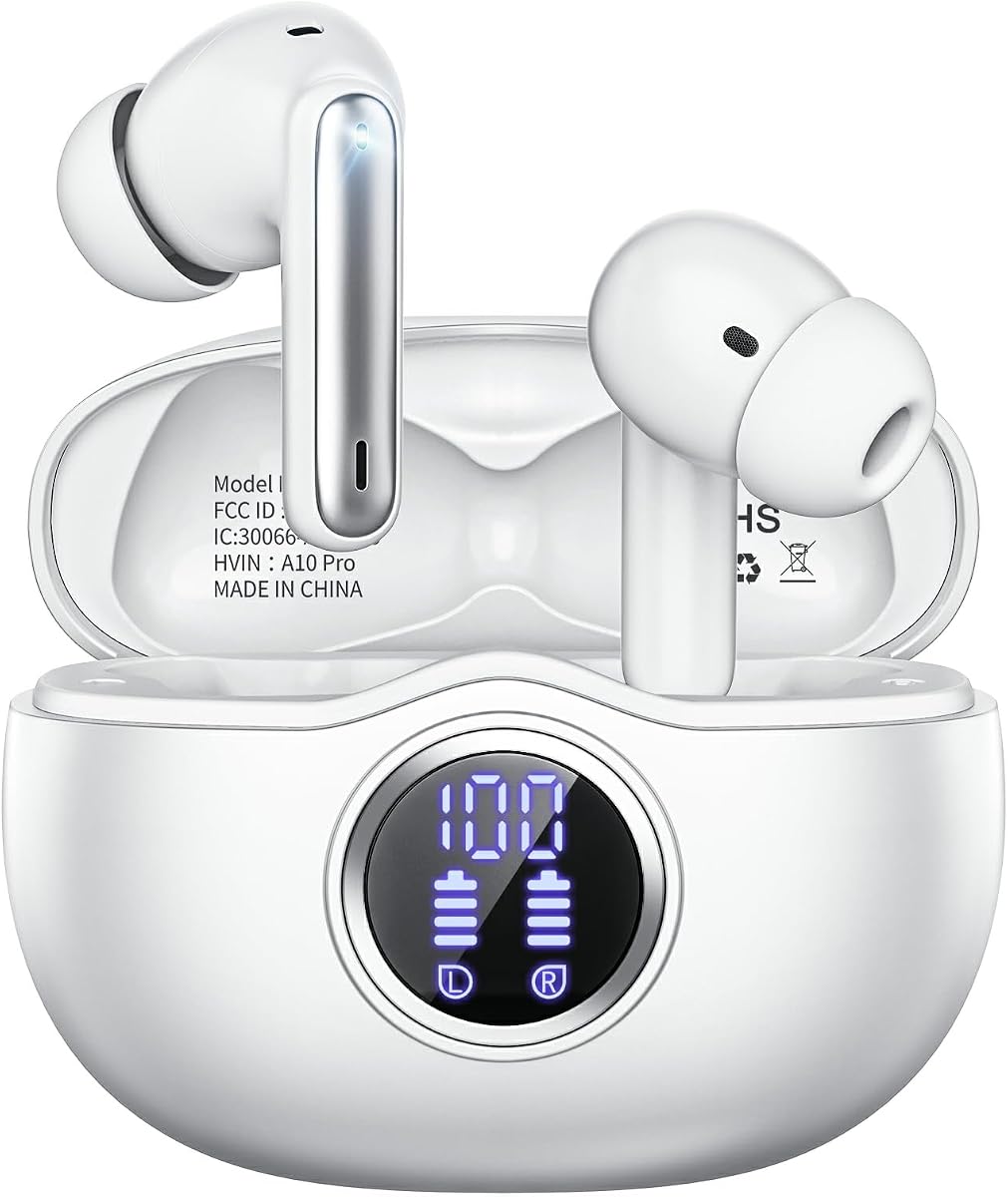
4. A10 Wireless Sport Earbuds - Best Compact LED Display

A10 Wireless Sport Earbuds

A10 Wireless Sport Earbuds

10/10★★★★★

These A10-style wireless sport earbuds focus on information and security. The LED screen reports case and individual bud percentages from zero to one hundred, which is exactly what anxious pre-ride checklists need. About eight hours per charge and roughly fifty hours with the case will not beat eighty-hour rivals, yet it covers most training weeks if you top up twice.

  • LED case shows case and bud percentages in real time
  • About 8 hours per charge, ~50 hours with case, IPX7
  • Earhooks, ENC mics, Bluetooth 5.3, S/M/L gel tips
Check Price →
✓ Pros
  • Real-time LED percentages for case and each bud remove battery guesswork
  • Reinforced earhooks claim strong vibration resistance for rough pavement
  • IPX7 mesh and nano-coating target sweat damage during hard efforts
  • Ultra-compact lightweight case fits armband-adjacent or jersey pocket carry
  • ENC and beamforming mic claims help calls even in breezy roadside conditions
✕ Cons
  • Fifty-hour case total trails the eighty-hour class leaders in this pack
  • Perfect five-point listing ratings can reflect smaller sample sizes—read recent reviews
  • Sealed tips still trade away some traffic detail versus open-ear specialists

Detailed review

Reinforced earhooks with a high vibration-resistance claim are aimed at HIIT and mountain cycling scenarios where chatter and impacts shake lesser buds loose. Medical-grade gel tips in three sizes try to fit small canals that often reject generic tips. Spend a shake-test session on a rough neighborhood loop before trusting them on a rocky fire-road descent.

Bluetooth 5.3 connectivity with low latency suits music and quick video clips. ENC noise canceling here is primarily call-focused rather than deep ANC for engines. Beamforming mic marketing mentions clearer speech even around twenty-five-mile-per-hour winds—still pull over for critical calls when gusts howl.

IPX7 waterproofing with internal nano-coating is the sweat insurance policy. The ultra-light buds and compact case (noted as smaller than many competitors) make jersey-pocket carry realistic. Dual-device pairing claims help if you hop between a phone playlist and a laptop cool-down call.

Sound from thirteen-millimeter drivers aims at cinema-like stereo for the category. On the bike, keep volumes moderate so hooks and tips do not become a sensory lockdown. Indoor trainer users will enjoy the seal more than open-road purists.

Choose this pair when LED honesty and compact carry matter more than absolute case-hour records. Cross-check recent owner feedback because standout star ratings sometimes sit on thinner review counts. Skip it if you need open-ear architecture or ninety-plus-hour case totals.

Reading the LED before group rides

If either bud sits under thirty percent, charge during kit-up. Group rides punish the person who dies mid-paceline and starts hunting cables in a jersey pocket.

Mountain and gravel shake test

Before a technical descent, jump in place with the helmet on and listen for rattle or slip. A bud that moves on the lawn will not survive washboard gravel.

ENC expectations versus true ANC

ENC helps your voice on calls; it does not equal GNMN-style active cancellation for trainer fans. Buy for call clarity and hooks, not for airplane-quiet isolation.

Check Price on Amazon →

We may earn a commission at no additional cost to you.

5. Baseus Inspire XC1 Clip-On - Best Premium Open-Ear Sound

Baseus Inspire XC1 Clip-On

Baseus Inspire XC1 Clip-On

8.6/10★★★★☆

Baseus Inspire XC1 is the pack’s open-ear audiophile detour—and for cyclists who refuse muddy midrange, that matters. Sound by Bose tuning, Dolby Spatial Audio support, Hi-Res Wireless, and LDAC compatibility put this clip-on pair in a different league from generic sport buds. The hybrid engine pairs a dynamic woofer with a Knowles balanced armature tweeter, then leans on adaptive SuperBass and SuperBalance processing so podcasts and playlists stay articulate even with wind in your ears.

  • Sound by Bose tuning with Dolby Spatial Audio support
  • Hybrid dynamic woofer plus Knowles balanced armature
  • IP66 waterproof, ~40 hours with case, 4-mic AI calls
Check Price →
✓ Pros
  • Sound by Bose and hybrid two-way drivers deliver unusually refined open-ear detail
  • Zero-sense air cushions and flexible joints favor long-ride comfort without canal pressure
  • Four-mic AI array targets clearer calls even with moderate cycling wind
  • IP66 rating covers rain, sweat, and dusty gravel roads better than basic splash claims
  • Forty-hour case total with a ten-minute quick charge for spontaneous after-work rides
✕ Cons
  • Clip-on geometry may need a patient fit session compared with simple over-ear hooks
  • Firmware updates via the Baseus app are recommended for full performance
  • Open-ear design still leaks sound if you push volume hard indoors

Detailed review

Comfort is engineered around all-day wear. Zero-sense air cushions, soft liquid silicone, and ring joints tested through thousands of bends aim to disappear after the first climb. Because nothing enters the canal, you keep full environmental awareness on bike lanes and group rides—the same safety logic as bone conduction, delivered through an open clip silhouette instead of a titanium headband.

Call performance is a standout claim for cycling logistics. The four-mic AI array with wind-noise reduction is specified for clear speech even around cycling speeds up to roughly five meters per second. That will not silence a screaming alpine descent, yet it is more credible than single-mic sport buds when you need to tell a riding partner you are pulling over. Update firmware to the recommended version in the Baseus app so call and audio features stay current.

Battery life lands around eight hours per charge and forty hours with the case. A ten-minute top-up for about two and a half hours of playtime fits the cyclist habit of charging while you kit up. IP66 waterproofing addresses rain, sweat, dust, and splashes—useful for spring gravel and humid summer commuting. Still dry the clips before case storage after soaked rides.

Fit discovery takes longer than slap-on hooks. Experiment with clip rotation until the drivers aim toward the ear opening without pinching the cartilage. Glasses and helmet straps can coexist, but verify clearance on your specific frames before a long event. Once dialed, the XC1 becomes the pair you reach for when sound quality and awareness must share the same ride.

Buy Baseus when open-ear safety plus premium tuning is the brief. Skip it if you want the absolute lightest bone-conduction band, need deep ANC for a loud spin studio, or prefer physical buttons over app-centric ecosystems. In this cycling pack, XC1 is the fidelity leader among open designs.

Firmware and first-week setup

Install the Baseus app, update to the listed firmware baseline or newer, then sample EQ profiles on a quiet neighborhood loop before race day. Confirm multipoint or codec behavior with your phone so you are not troubleshooting LDAC dropouts mid-climb.

When clip-ons beat bone conduction

Choose clip-ons if you dislike a wraparound band under certain helmets or want a case that recharges two independent earbuds. Stick with SHOKZ or PSIER if you prefer a single titanium frame that never needs tip or clip orientation experiments.

Weather expectations with IP66

IP66 is strong against rain jets and dust, which suits real road spray better than lighter IPX4 marketing. It is still not a diving rating—avoid pressure-washing the buds or wearing them in a pool recovery session.

Check Price on Amazon →

We may earn a commission at no additional cost to you.

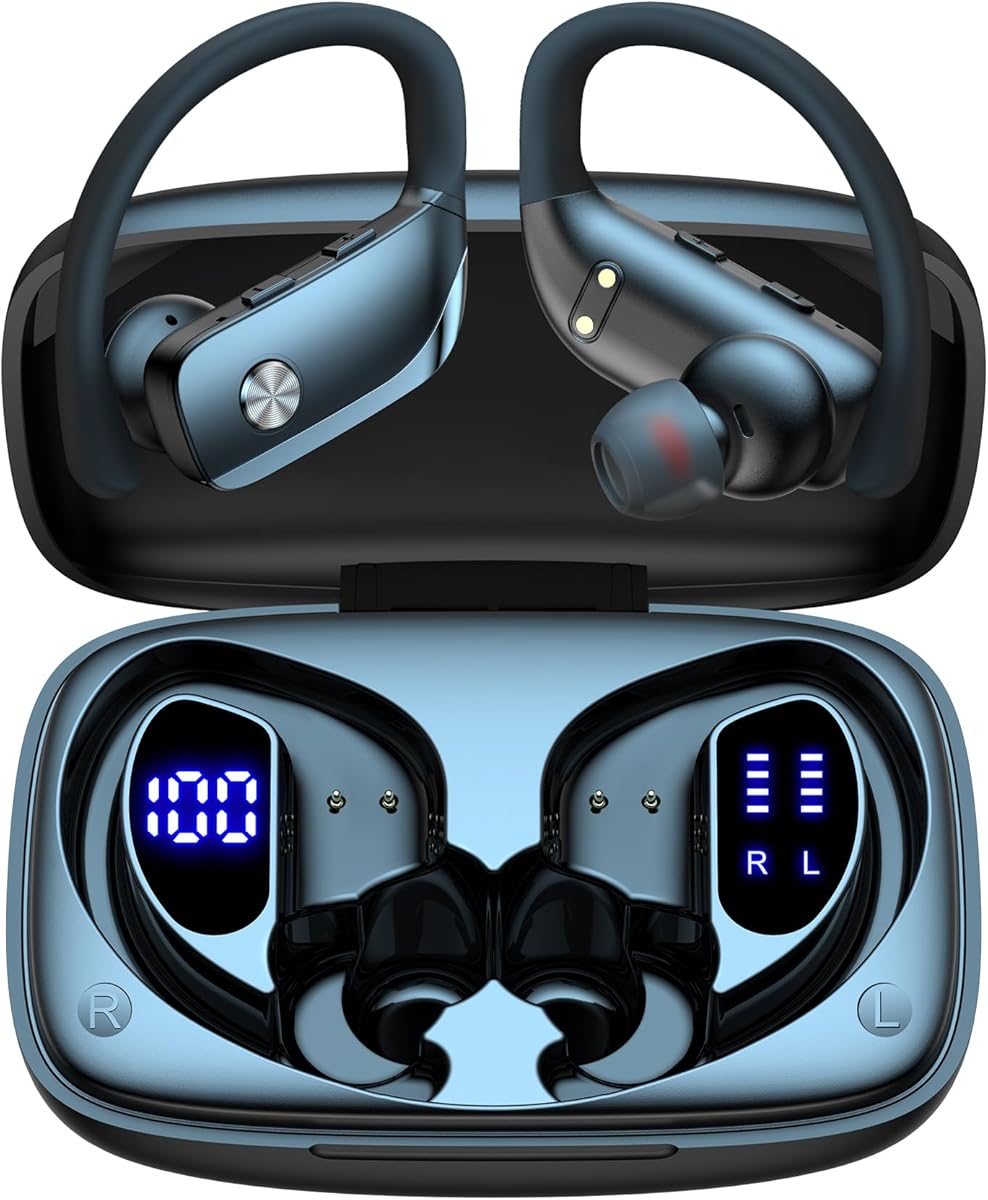
6. bmani Sports Hook Earbuds - Best Value Hook Pair

bmani Sports Hook Earbuds

bmani Sports Hook Earbuds

8.6/10★★★★☆

bmani’s sports earbuds solve the commuter-cyclist problem of buds that escape during pothole chatter. Adjustable over-ear hooks carry the load so tip friction is not the only thing keeping audio attached when you stand to accelerate from a light. Once the hook rotation and tip size are right, you can focus on traffic instead of fishing for a dangling stem.

  • Adjustable over-ear hooks with dual button controls
  • Up to 80 hours with dual LED display charging case
  • 10 mm drivers, dual mics, sweat- and dust-ready build
Check Price →
✓ Pros
  • Adjustable hooks lock down through stop-and-go commuting cadence
  • Dual LED case display makes pre-ride battery checks fast and honest
  • Separate main and volume buttons reduce accidental pauses with sweaty hands
  • Eighty-hour case total covers workweek commuting without constant charging anxiety
  • Compact case slips into a jersey pocket or briefcase side pouch easily
✕ Cons
  • Ten-millimeter drivers are capable but less bass-heavy than larger sport drivers
  • Hook bulk can feel noticeable under some winter skullcaps
  • Sweat and dust resistance is workout-ready, not a swimming endorsement

Detailed review

The dual LED charging case is the everyday hero. Left-side case percentage and right-side bud indicators tell you whether yesterday’s humid ride left you stranded. Combined with roughly eight hours per bud and about eighty hours total with the case, the system matches five-day bike-to-work rhythms plus weekend loops.

Ten-millimeter drivers prioritize clear mids and usable bass over nightclub excess—appropriate when you need to hear a turn signal or a bell. Dual mics help with quick calls at a trailhead or office arrival. Expect wind to challenge any mic on a fast descent; stop rolling for important conversations.

Physical button controls are a deliberate anti-sweat choice. Main and volume buttons give tactile confirmation that capacitive pads often deny mid-effort. Auto-reconnect after the first pairing keeps weekday mornings simple: open case, seat hooks, roll out.

Durability language covers sweat and dust for active lifestyles. Wipe salt after summer commutes, dry thoroughly, and keep the case out of a soaked pocket. The compact case design encourages immediate pocketing after you rack the bike, which prevents the gym-locker loss pattern.

Pick bmani for affordable hooked commuting audio with truthful battery displays. Skip it if you need open-ear awareness as the primary safety layer or want flagship ANC. It is a straightforward sealed-hook workhorse inside the cycling pack.

Commuter volume discipline

Keep media low enough to hear horns and shout-ups from other cyclists. Sealed tips already reduce ambient detail; volume discipline is how bmani stays appropriate for mixed traffic.

Fit with backpack straps

Thick backpack straps can nudge hooks on some shoulders. After putting on the pack, reseat each hook and shake your head before merging into the bike lane.

Versus PocBuds for case features

Choose bmani for simple dual-button logic and dual LED readability. Choose PocBuds if Qi wireless case charging on a desk pad matters more than button layout nuances.

Check Price on Amazon →

We may earn a commission at no additional cost to you.

7. LEEMC Wireless Earbuds - Best Secure Hook with Physical

LEEMC Wireless Earbuds

LEEMC Wireless Earbuds

9/10★★★★★

LEEMC builds a cyclist-friendly sealed hook pair around controls you can trust. Each bud uses physical buttons for volume, playback, and assistant access, which matters when light spring gloves or sunscreen-slick fingers make capacitive pads unreliable. The hooks use skin-friendly silicone over a titanium-alloy core that flexes without feeling brittle on longer rides.

  • Lightweight silicone hooks with titanium-alloy flex core
  • Up to ~15 hours per bud, ~80 hours with case
  • Bluetooth 5.4, physical buttons, IPX7 waterproof
Check Price →
✓ Pros
  • Physical buttons beat sweaty touch pads when you are wearing light gloves
  • About fifteen hours per charge supports huge outdoor days with podcasts
  • Silicone hooks with a flexible core stay put through rough chip-seal buzz
  • IPX7 rating matches serious sweat and rain commuting needs
  • S/M/L tips help dial seal and comfort across different ear shapes
✕ Cons
  • In-ear seal reduces ambient detail versus open-ear cycling specialists
  • LED case features are simpler than some dual-screen rivals
  • HiFi claims are solid for sport use but not audiophile open-ear rivals

Detailed review

Battery endurance is excellent for endurance athletes: roughly fifteen hours in each bud and about eighty hours with the case, plus a fifteen-minute quick charge that returns around two hours of use. That pattern supports bikepacking days and double-session weekends without babysitting percentages. Bluetooth 5.4 keeps the link steady across a ten-to-fifteen-meter claim when your phone is in a saddlebag.

IPX7 waterproofing and three tip sizes address the two classic sport-bud failure modes: rain sweat and poor seal. A correct tip improves passive isolation and bass for playlist rides; just remember isolation cuts traffic detail. On busy roads, keep volumes conservative or choose an open-ear pack mate instead.

Sound is positioned as HiFi-leaning sport audio—clear enough for coaching cues and enjoyable for electronic or rock playlists that push cadence. Noise-canceling language here is more about mic/ENC style sports isolation than flagship hybrid ANC like GNMN. Set expectations accordingly.

At roughly 0.3 ounces per bud, all-day comfort is realistic if the hook angle is right. Check interference with glasses arms and helmet straps during a shakedown ride. Once dialed, LEEMC disappears into the background—the compliment you want from training hardware.

Buy LEEMC when you want sealed security, marathon battery, and real buttons. Skip it when open-ear awareness is non-negotiable for your commute. It is one of the most pragmatic hook picks for riders who split time between quiet paths and indoor sessions.

Button mapping on the bike

Learn volume and skip clicks while standing over the bike in the garage so muscle memory exists before traffic. Consistent button placement beats looking at the earbud while rolling.

LEEMC versus bmani and PocBuds

All three chase long case life with hooks. LEEMC differentiates with Bluetooth 5.4, stronger per-bud hours, and a lighter flex-core hook story. bmani emphasizes dual-button simplicity and dual LED cues; PocBuds adds Qi wireless case charging.

Check Price on Amazon →

We may earn a commission at no additional cost to you.

8. TRAUSI Open Ear Wireless Earbuds - Best Open-Ear Everyday

TRAUSI Open Ear Wireless Earbuds

TRAUSI Open Ear Wireless Earbuds

9.4/10★★★★★

TRAUSI’s open-ear wireless earbuds hit the cycling sweet spot between awareness and convenience. Instead of sealing the canal, the ergonomic hooks rest outside the ear so traffic, dogs, and fellow riders remain part of your soundscape while stereo drivers still push playlists and podcasts. For daily commuting and lunch-loop spinning, that balance feels more practical than full isolation and more portable than a one-piece bone-conduction band.

  • Open-ear hooks keep canals free for traffic awareness
  • Up to 80 hours total playtime with charging case
  • Bluetooth 5.4, ENC mics, IPX7 waterproof sports build
Check Price →
✓ Pros
  • Open-ear hook design preserves ambient awareness for city and suburban cycling
  • Roughly eighty hours of case-backed playtime covers a full training week easily
  • Bluetooth 5.4 pairing stays stable when the phone rides in a jersey pocket or saddle bag
  • IPX7 rating handles sweat and unexpected rain better than lighter splash claims
  • Touch controls manage tracks and calls without unlocking a phone mid-ride
✕ Cons
  • Open-ear audio cannot isolate trainer-room fan noise as well as sealed ANC buds
  • Touch pads can register accidental taps when adjusting sunglasses or a helmet strap
  • Bass presence is good for the form factor but softer than deep in-ear sport drivers

Detailed review

Battery marketing is case-centric in a way that matches how cyclists actually train. The earbuds plus case claim up to eighty hours of total listening, which means a Monday-through-Sunday commute stack rarely requires hunting for a wall outlet mid-week. Fast charging support helps when you remember empty buds five minutes before a group rollout. Keep the case in a desk drawer or kit bag and top up the buds overnight after sweaty summer rides.

Bluetooth 5.4 aims for one-step pairing and a stable link even when your phone sits in a back-pocket jersey or a handlebar bag. Latency is low enough for coaching videos on rest days and for most music apps on the bike. ENC microphones help roadside calls; still expect wind to win on fast descents, so pull over for important conversations when possible.

IPX7 waterproofing and sweat resistance matter when climbs turn humid or a forecasted sprinkle becomes a real shower. Dry the hooks and charging contacts before casing the buds—moisture trapped on pins is a more common failure mode than rain itself. The open-ear design also reduces the canal irritation some riders get from sealed tips during multi-hour events.

Sound tuning emphasizes a wide stage with punchy low end for an open design. You will not mistake these for closed studio monitors, yet cadence-friendly electronic tracks and spoken coaching remain clear at moderate volumes. Resist the urge to crank volume in traffic; the whole point of open-ear cycling audio is hearing the world first.

Pick TRAUSI when you want open-ear safety with a modern charging case and strong pack ratings. Skip them if you need bone-conduction cheekbone transducers specifically, or if your rides are almost entirely indoor where GNMN’s ANC profile makes more sense. As an everyday cycling companion inside this pack, TRAUSI is the versatile open-hook default.

Commuter setup tips

Pair at home, confirm both buds show connected, then stow the phone in a consistent pocket so the antenna path stays predictable. Set media volume before you clip in so you are not hunting touch gestures at the first stoplight.

Open-ear TRAUSI versus OHAYO and Baseus

OHAYO adds a quad-speaker pitch and a digital case display with about forty hours total. Baseus Inspire XC1 brings Sound by Bose tuning and clip-on cushions for riders chasing premium open-ear fidelity. TRAUSI wins when you want IPX7 toughness plus marathon case endurance without paying for flagship tuning.

Check Price on Amazon →

We may earn a commission at no additional cost to you.

9. PocBuds Sports Earhook Earbuds - Best Wireless-Charging Sports Case

PocBuds Sports Earhook Earbuds

PocBuds Sports Earhook Earbuds

8.6/10★★★★☆

PocBuds target cyclists who live near a wireless charger and hate cable clutter. Each bud offers around eight hours, and the case extends total listening toward eighty hours with a dual LED display that reports real-time status. Drop the case on a Qi pad after you hang the bike and morning kit checks become less frantic.

  • Flexible ear hooks, S/M/L tips, IPX7 waterproof
  • Up to 80 hours with dual LED digital display case
  • 13 mm drivers, Bluetooth 5.3, Qi wireless case charging
Check Price →
✓ Pros
  • Qi wireless case charging drops easily onto a desk pad after evening rides
  • Eighty-hour total playtime with a clear dual LED percentage display
  • Thirteen-millimeter drivers deliver deeper bass for motivational playlist rides
  • Flexible hooks and three tip sizes improve security on rough pavement
  • Mono or stereo modes help when you want one ear free for extra awareness
✕ Cons
  • Wireless charging pads are not included and add another accessory to manage
  • In-ear isolation is less ideal than open-ear designs for dense city traffic
  • Touch-free one-button control still requires practice to avoid mis-clicks

Detailed review

Sport geometry uses flexible over-ear hooks plus three tip sizes researched around varied ear canals. That combination helps on chip-seal buzz and standing accelerations where stem buds eject. IPX7 waterproofing covers sweat and light rain for year-round commuting—dry contacts before casing after soaked rides.

Thirteen-millimeter double-layer diaphragm drivers push stronger bass and clearer treble than many tiny sport drivers. HD voice mics aim to isolate speech for calls; outdoor results still depend on wind. Bluetooth 5.3 claims a stable link around thirty feet with improved transmission speed for low-latency listening.

One-button control and auto on/connect keep weekday routines short. Binaural mode gives full stereo for music; mono mode lets you run a single bud when you want maximum awareness on a sketchy shared path—an underrated cycling feature compared with forcing full isolation.

Compatibility spans phones, laptops, and even TV Bluetooth modes for rest-day watching. As always, verify your specific devices. The compact sports case belongs in a desk drawer or helmet bag pocket so it actually travels with you.

Buy PocBuds when wireless case charging and long total endurance top your list. Skip them when open-ear hearing is mandatory or you refuse in-ear tips. They are the desk-charging convenience pick among the sealed hook group.

Using mono mode for city awareness

On chaotic downtown segments, wear the bud opposite the traffic side you care about most and leave the other ear uncovered. Swap sides on out-and-back commutes so you do not fatigue one canal.

Wired versus wireless case top-ups

Use Type-C when you need a guaranteed fast top-up before a dawn start; use Qi overnight when convenience matters more than minutes. Mixed habits keep the eighty-hour promise realistic.

Check Price on Amazon →

We may earn a commission at no additional cost to you.

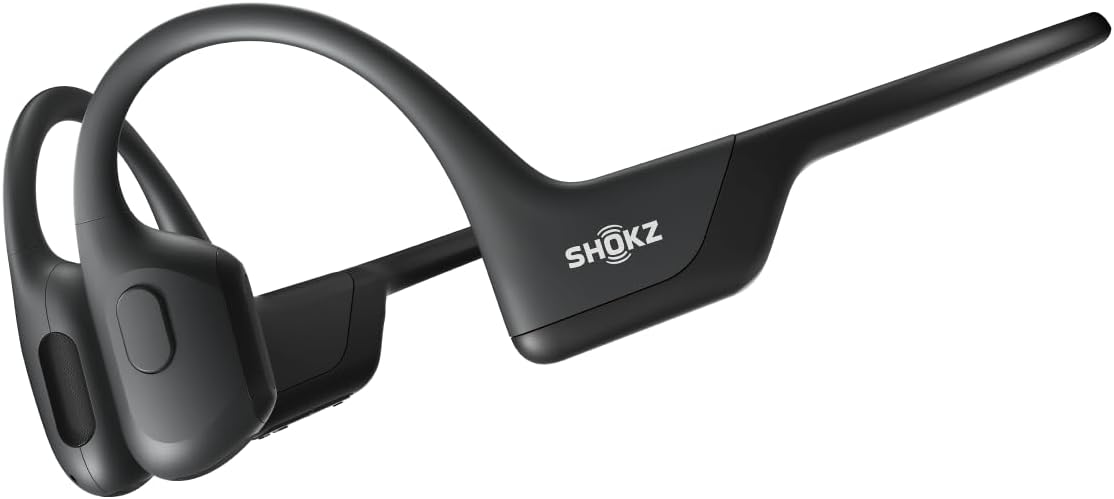
10. SHOKZ OpenRun Pro - Best Overall for Road Cycling

SHOKZ OpenRun Pro

SHOKZ OpenRun Pro

9/10★★★★★

For road and mixed-surface cycling, situational awareness is not a luxury feature—it is the product. SHOKZ OpenRun Pro keeps both ear canals completely free, sending audio through the cheekbones with ninth-generation bone conduction and TurboPitch bass tuning. That architecture lets you hear cars approaching from behind, e-bikes on shared paths, and teammates calling mid-pack without yanking an earbud out at every intersection. If your primary rides leave the driveway and enter real traffic, this is the pack’s clearest safety-first pick.

  • Open-ear bone conduction with titanium wraparound frame
  • Up to 10 hours playtime, 5-minute quick charge boost
  • TurboPitch bass, sweat-resistant, includes Shokz headband
Check Price →
✓ Pros
  • True open-ear design keeps traffic, horns, and group chatter audible while you ride
  • Titanium wraparound frame stays stable under a helmet without sealing the canal
  • TurboPitch tuning delivers clearer bass than earlier bone-conduction generations
  • Ten-hour battery covers most long weekend rides with margin for podcasts
  • Five-minute quick charge adds roughly ninety minutes when you forget overnight charging
✕ Cons
  • Bone conduction still cannot match sealed in-ear bass for indoor trainer playlist thump
  • Sound can leak slightly at high volume in quiet indoor spaces
  • No charging case—you rely on the single onboard battery between USB top-ups

Detailed review

Fit under a helmet is where many sport earbuds fail. OpenRun Pro’s lightweight titanium frame wraps behind the head and seats the transducers forward of the ears so most road and gravel helmets sit cleanly on top. The included Shokz headband helps when you want extra security on rough chip-seal or when you remove the helmet for a café stop and still want the frame locked. Spend a few minutes adjusting temple pressure before a century ride; a correct fit should feel firm without hotspotting after two hours in the drops.

Audio quality for bone conduction has improved enough that podcasts, coaching cues, and most workout playlists sound purposeful rather than tinny. TurboPitch adds usable low-end presence without pretending these are studio monitors. Wind noise on descents remains the eternal open-ear tradeoff—drop volume a notch above twenty-five miles per hour and rely on the fact that you can still hear engine notes. Indoor trainer sessions work fine, though sealed hook buds in this pack will feel more immersive if you never leave Zwift.

Battery life lands at about ten continuous hours of music and calls, which covers most all-day gravel adventures if you are not streaming nonstop. The five-minute quick-charge trick is genuinely useful for cyclists who pack light: plug in while you fill bottles and you can reclaim roughly an hour and a half before rolling out. There is no pocket case to top up mid-tour, so plan USB access at hotels or car chargers on multi-day trips.

Controls and the built-in mic support quick track skips and roadside calls without fishing for a phone buried in a jersey pocket. Pairing is standard Bluetooth sport-headphone behavior—connect once, then the frame reconnects when powered on. Sweat resistance is aimed at workouts and humid climbs; rinse salt after summer rides and dry before storage. These are not swimming headphones and should not be submerged.

Who should buy OpenRun Pro: road cyclists, commuters, and gravel riders who refuse to trade awareness for bass. Who should skip: indoor-only trainers chasing club-level isolation, or riders who want a charging case that lasts a training week without plugging the headphones themselves. Inside this pack, SHOKZ remains the benchmark open-ear silhouette that everything else is measured against for cycling safety.

Helmet compatibility checklist

Seat the transducers just ahead of the ear openings, then lower the helmet so the straps clear the titanium arms. If you feel pressure at the temples after twenty minutes, loosen the rear band slightly and verify the helmet’s occipital cradle is not pinching the frame. Most modern road helmets coexist peacefully once the headset sits lower than the helmet rim.

OpenRun Pro versus cheaper bone conduction in this pack

PSIER offers Bluetooth 6.0, a feather-light twenty-three-gram claim, and app EQ at a more approachable tier. Choose SHOKZ when you want the most polished TurboPitch tuning, proven wraparound stability, and the quick-charge habit that matches long ride logistics. Choose PSIER when you want to trial bone conduction without committing to the premium brand.

Best ride types for this pick

Dawn group rides, urban bike-lane commuting, and mixed-use path touring benefit most. Skip OpenRun Pro as your only pair if ninety percent of your miles are silent basement trainer sessions where sealed ANC buds would serve you better.

Check Price on Amazon →

We may earn a commission at no additional cost to you.

Best Earbuds for Cycling 2026: Open-Ear and Secure Picks

How to Choose Earbuds for Cycling

Prioritize awareness before bass

On open roads, bike lanes, and shared paths, hearing engines, bells, and shouted warnings is part of the safety system. Open-ear bone conduction and open-hook or clip designs keep canals free so ambient sound remains natural. Sealed tips and deep ANC can feel immersive on a trainer, yet they are the wrong default for dense traffic. Many riders eventually own both: an open-ear pair for outdoors and a sealed pair for basement winters.

If local laws or event rules restrict headphone use, follow those rules first. Some regions allow a single open ear only; others ban headphones on certain roads. Product excellence never overrides the regulation that applies to your ride.

Match the silhouette to helmet and glasses

Wraparound bone-conduction bands, over-ear hooks, and clip-ons all interact differently with helmet pads, sunglass arms, and winter skullcaps. Do a full kit rehearsal: earbuds on, glasses on, helmet strapped, then shake your head and look over each shoulder as you would in traffic. Hotspots that appear after ten minutes indoors often become deal-breakers at mile sixty.

Riders who wear prescription glasses should pay special attention to temple clutter. Hooks that share real estate with thick frames may need a different tip angle or a lighter open-ear band.

Read waterproof ratings with cycling honesty

IPX5 handles sweat and light rain. IPX6 improves resistance to stronger sprays. IPX7 adds immersion-style protection for heavy sweat and downpours, though none of these ratings mean you should swim or pressure-wash the buds. Road spray from wet tires can be surprisingly aggressive—favor higher ratings for year-round commuting.

After salty summer rides, wipe meshes and contacts, dry tips separately, and avoid sealing wet buds into a closed case. Charging-pin corrosion ends more sport earbuds than a single rain shower.

Battery patterns that match real ride weeks

Bone-conduction bands often quote a single ten-hour onboard battery with quick-charge tricks. Hook buds usually advertise per-bud hours plus a large case total. Commuters who ride five days a week should care about case displays and easy desk charging. Bikepackers should care about cables, power banks, and whether a case can recharge buds in a tent vestibule.

Ignore fantasy uninterrupted listening claims if you never ride more than ninety minutes. Instead, ask whether the system survives your busiest training week without becoming a chore.

Controls, wind, and calls on the roadside

Physical buttons generally beat touch pads when fingers are wet, gloved, or sunscreen-slick. Touch can work if gestures are deliberate and sensors sit away from helmet straps. Practice skip and volume actions while standing over the bike before you need them in traffic.

Wind noise destroys call quality on fast descents regardless of mic marketing. Plan to stop rolling for important conversations. ENC and multi-mic arrays help at moderate speeds; they are not magic in a headwind gorge.

Indoor trainers versus outdoor miles

Trainer riders benefit from seal, bass, and optional ANC that tame fan noise. Outdoor riders benefit from open ears and moderate volumes. If your season flips between garage base miles and spring road camps, a two-headset strategy is rational—not extravagant. This pack includes strong options for both environments so you can specialize instead of compromising every ride.
Frequently Asked Questions

01

Are open-ear earbuds safer for cycling than noise-cancelling buds?

For traffic-adjacent riding, yes—open-ear bone conduction, open hooks, and clip-ons generally preserve more natural ambient hearing than sealed ANC earbuds. Noise cancellation and deep isolation can hide engines and bells when volume is high. That said, open-ear audio is not a substitute for lights, mirrors, scanning habits, or legal compliance. Use moderate volumes even with open designs, and prefer Transparency or open-ear modes whenever you share asphalt with cars.

02

Can I wear bone conduction headphones under a bike helmet?

Most riders can. Place the transducers on the cheekbones ahead of the ears, then settle the helmet so pads and straps do not pinch the titanium arms. If you feel hotspots, lower the headset slightly or loosen the occipital cradle. SHOKZ OpenRun Pro and PSIER both use wraparound frames designed for sport helmets; a short driveway test with shoulder checks is still essential before a century.

03

What IP rating do I need for rainy bike commuting?

IPX5 is a workable minimum for sweat and light rain. IPX6 improves spray resistance, and IPX7 is the comfort zone for heavy sweat plus authentic downpours. None of these ratings invite swimming or hose-blast cleaning. After wet rides, dry charging contacts before they go back into a case—corrosion ends more products than the storm itself.

04

Should I use ANC earbuds on outdoor group rides?

Usually no. ANC shines on indoor trainers where fans and household noise compete with playlists. On group rides you need chatter, approaching riders, and traffic cues. If you own ANC buds like the GNMN pair in this pack, leave cancellation off outdoors or switch to Transparency, and keep volumes conservative. Many experienced riders keep ANC strictly for basement seasons.

05

How loud should music be while cycling?

Loud enough to enjoy coaching cues or cadence tracks, quiet enough that you can still identify a car engine, a bell, or a teammate calling “left.” If you cannot hear your tire on chip-seal, you are probably too loud. Open-ear designs help, but they are not foolproof when volume is cranked. Build the habit of dropping a notch in dense traffic or on descents with driveway traffic.

06

Do clip-on open-ear buds stay put on rough gravel?

Quality clip-ons such as the Baseus Inspire XC1 can stay secure when the cushion orientation is dialed, but gravel chatter is a harsher test than smooth tarmac. Do a shake test and a short washboard segment before a long event. Riders who bounce violently or wear unusual glasses stacks may still prefer a wraparound bone-conduction band or reinforced over-ear hooks.

07

Is a charging case necessary for cycling earbuds?

Not always. SHOKZ-style bands often rely on a single onboard battery plus quick charge, which is fine for day rides if you have USB access overnight. Case-based systems help commuters who want multiple top-ups across a week without plugging the buds themselves. Bikepackers should think about total energy: case cells plus a power bank can be easier than finding the right cable in a dark vestibule.

08

What is the difference between bone conduction and open-hook earbuds?

Bone conduction sends vibration through the cheekbones and leaves the ear canal untouched. Open-hook or clip-on designs sit outside the canal and push sound through the air toward the ear opening. Both preserve awareness better than sealed tips. Bone conduction often feels more “out of the way” under helmets; open hooks can sound more like conventional earbuds and may include a charging case for each bud.

09

Can I take calls on the bike with these earbuds?

Yes for quick logistics calls at moderate speeds, with caveats. Multi-mic ENC arrays help, but wind on a fast descent will still shred intelligibility. Pull over for anything important. Practice answering with gloves on before you need the gesture in traffic, and never prioritize a call over a clean line through an intersection.

10

Which pack pick is best if I only ride an indoor trainer?

Start with GNMN’s ANC sports earbuds for fan noise control and long case life, and consider sealed hook options like LEEMC, PocBuds, or bmani if you want security without focusing on cancellation. Open-ear SHOKZ and TRAUSI still work indoors, but you will hear more household noise. If your winters are trainer-only and summers are road-heavy, owning one sealed and one open-ear set is the cleanest seasonal split.

Conclusion

The best earbuds for cycling in 2026 are the ones that respect traffic as part of the soundtrack. SHOKZ OpenRun Pro remains our road-cycling benchmark for helmet-friendly bone conduction and trustworthy awareness. TRAUSI is the everyday open-ear charger-case companion for commuting weeks, while Baseus Inspire XC1 satisfies riders who want open ears without giving up refined Sound by Bose tuning.

Sealed hook options still earn a place—especially LEEMC for physical buttons, PocBuds for Qi case convenience, bmani for value commuting, and GNMN when indoor ANC matters. PSIER and OHAYO round out accessible open-ear experiments if you are still learning which silhouette your helmet accepts.

Pick based on where you actually ride, verify fit with your full kit, and keep volumes humble. Check each Amazon listing for the live offer and accessories, then build a sweat-care habit so the pair you choose survives more than one humid season.