Skip to content

Best Budget Monitors in 2026

4.4 average · hands-on tested
By Thomas BrianUpdated June 27, 20268 picks tested

We may earn a commission from links on this page, at no extra cost to you. Learn more.

You don't need to spend a fortune for a good monitor anymore. The budget category in 2026 is genuinely impressive: QHD resolution, fast 144Hz-plus refresh rates, and decent IPS colour have all dropped to affordable prices, so a budget monitor can be sharp, smooth and reliable for both work and play. The trick is knowing which models deliver and which cut the wrong corners. After researching and comparing the top affordable options, these are the eight best budget monitors you can buy right now, across everyday work, productivity and gaming.

Quick comparison

KeyboardBest forRatingPrice
1KOORUI 27 QHD 144HzKOORUIBest Overall4.4$$$Check Price
2Sceptre Prime 27SceptreBest Ultra-Budget4.3$$$Check Price
3Acer Nitro QHD (27")AcerBest IPS QHD Value4.4$$$Check Price
4AOC 27 QHD 240HzAOCBest Budget High-Refresh4.4$$$Check Price
5Gigabyte M27Q2 (27" QHD)GigabyteBest Feature-Rich Value4.5$$$Check Price
6LG UltraFine 27UP650K (27" 4K)LGBest Budget 4K4.4$$$Check Price
7ASUS TUF Gaming VG27AQ3A (27" QHD)ASUSBest Budget Gaming-Capable4.5$$$Check Price
8Sceptre 27 Curved FHD 240HzSceptreBest Budget Curved4.3$$$Check Price

Our top 8 picks, reviewed

1Best Overall

KOORUI 27 QHD 144Hz

The KOORUI 27 QHD 144Hz is the best budget monitor overall, delivering a combination that used to cost far more: a sharp 27-inch QHD resolution and a smooth 144Hz refresh at a genuinely low price. The VA panel brings good contrast for movies and games, and the higher resolution and refresh make it great for both productivity and casual gaming — a true do-everything budget screen. VA viewing angles aren't quite as wide as IPS and the stand is basic, but for the sheer amount of sharpness, smoothness and contrast you get for the money, nothing else at this price is as well-rounded. A standout value pick.

Panel
27" VA
Resolution
QHD 1440p
Refresh
144Hz
Use
Work + play

What we liked

  • QHD sharpness and 144Hz for cheap
  • Good contrast (VA panel)
  • Great all-round value
  • Works for work and gaming

Worth noting

  • VA viewing angles below IPS
  • Basic stand
2Best Ultra-Budget

Sceptre Prime 27

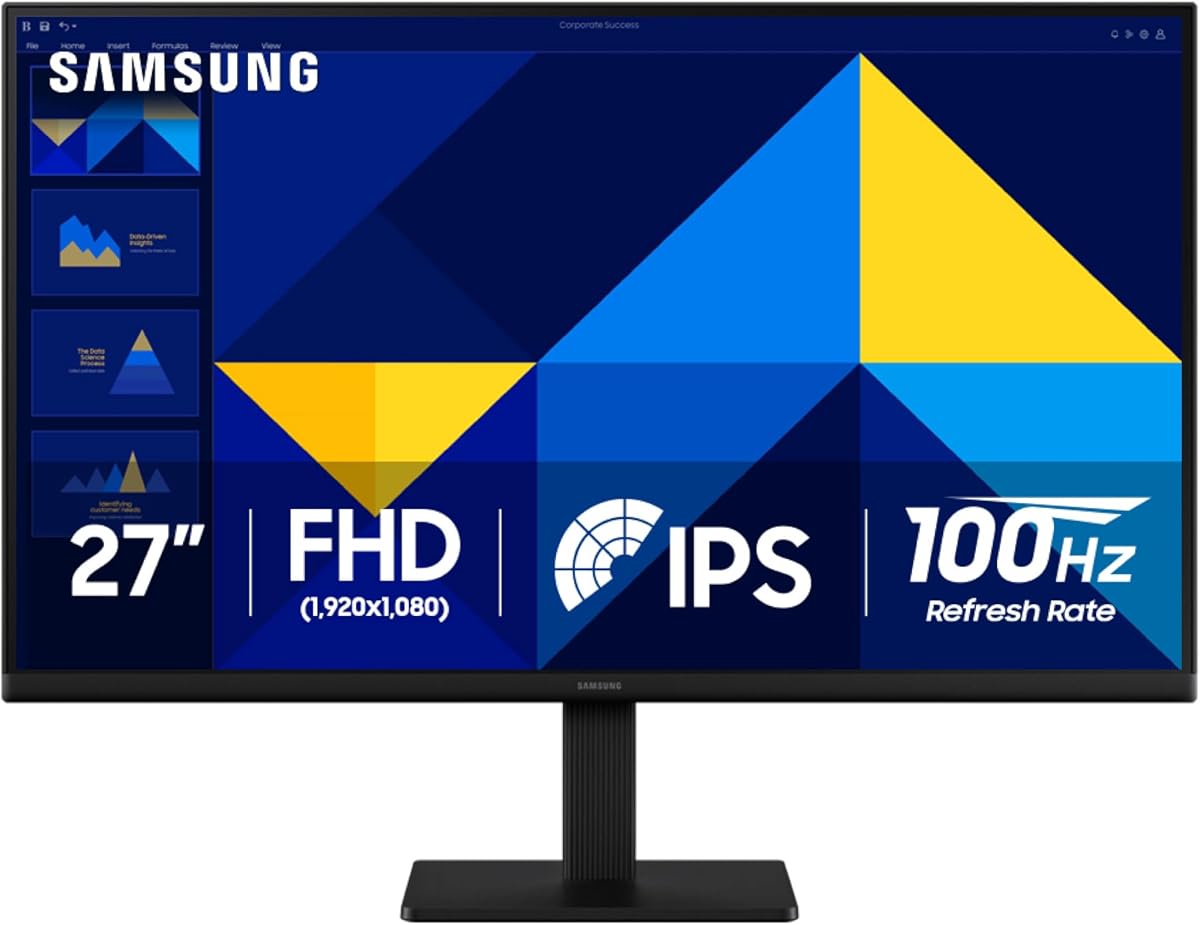
The Sceptre Prime 27 is the best ultra-budget monitor, a comfortable 27-inch IPS screen with a smooth 100Hz refresh for very little money. It covers everyday tasks — work, browsing, streaming, video calls — reliably, the IPS panel gives decent colour and viewing angles, and 100Hz makes scrolling feel nicer than a basic 60Hz screen. At 27 inches the 1080p resolution isn't super sharp (a smaller size or higher resolution would be crisper), and the build is basic, but for the cheapest way to get a large, smooth, IPS monitor — ideal as a first screen or a second display — it's honest, sensible value.

Panel
27" IPS
Resolution
1080p
Refresh
100Hz
Use
Everyday

What we liked

  • Very affordable
  • Smooth 100Hz
  • Decent IPS image and angles
  • Good size for the price

Worth noting

  • 1080p at 27" is less sharp
  • Basic build
3Best IPS QHD Value

Acer Nitro QHD (27")

The Acer Nitro QHD is the best budget IPS monitor, pairing sharp 27-inch QHD resolution with the wide viewing angles and accurate colour of an IPS panel at an affordable price. It's a great all-rounder — crisp for work, smooth and responsive for gaming thanks to a high refresh rate and FreeSync — and the IPS panel looks consistent from any angle, unlike cheaper VA screens. The stand and HDR are basic, as expected at this price, but for buyers who want IPS image quality and QHD sharpness without paying more, the Acer Nitro is a dependable, well-rounded value choice.

Panel
27" IPS
Resolution
QHD 1440p
Refresh
High-refresh
Sync
FreeSync

What we liked

  • Sharp QHD IPS for the price
  • Wide IPS viewing angles
  • Smooth high refresh
  • Good colour

Worth noting

  • Basic stand and HDR
  • Plain design
4Best Budget High-Refresh

AOC 27 QHD 240Hz

The AOC 27 QHD 240Hz is the best budget high-refresh monitor, bringing a blazing 240Hz refresh and sharp QHD resolution to a price that undercuts the big gaming brands. The fast IPS panel delivers crisp motion ideal for competitive gaming, and QHD keeps the image sharp for work too — a lot of gaming performance for the money. You'll need a capable GPU to actually push 240fps in demanding games (it scales down fine for less), and the extras are basic, but for budget-minded gamers who want a genuinely fast, sharp QHD display without paying premium prices, the AOC delivers impressive speed for the cost.

Panel
27" Fast IPS
Resolution
QHD 1440p
Refresh
240Hz
Sync
FreeSync

What we liked

  • 240Hz QHD at a budget price
  • Fast IPS motion
  • Great for competitive gaming
  • Sharp and smooth

Worth noting

  • Needs a strong GPU for 240fps
  • Basic extras
5Best Feature-Rich Value

Gigabyte M27Q2 (27" QHD)

The Gigabyte M27Q2 is the best feature-rich budget monitor, offering more than its price suggests. Beyond a sharp 27-inch QHD IPS panel that games smoothly and works crisply, it includes genuinely useful extras rarely found at this price: a KVM switch to control two computers with one keyboard and mouse, and a USB hub for peripherals. That makes it a brilliant value pick for hybrid work-and-play or multi-computer setups. The stand is basic and there's no USB-C charging, but for the combination of a quality QHD panel and practical productivity features at a budget price, it's hard to beat.

Panel
27" QHD IPS
Refresh
High-refresh
Extras
KVM, USB hub
Use
Work + play

What we liked

  • Sharp QHD that games well
  • KVM switch and USB hub
  • Great value features
  • Reliable all-rounder

Worth noting

  • Basic stand
  • No USB-C charging
6Best Budget 4K

LG UltraFine 27UP650K (27" 4K)

The LG UltraFine 27UP650K is the best budget 4K monitor, an affordable way to step up to crisp 4K resolution for sharp text and detailed work. The 27-inch IPS panel renders fine detail beautifully — excellent for documents, photos and content — with good P3 colour and handy USB-C connectivity, all for far less than premium 4K displays. It's a 60Hz panel, so it's not for fast competitive gaming, and the stand is basic, but for buyers who want the sharpness and screen-space benefits of 4K for productivity and media on a budget, it's a standout value entry into the resolution.

Panel
27" 4K IPS
Colour
P3 wide gamut
Connectivity
USB-C
Use
Sharp work

What we liked

  • Genuine 4K sharpness for less
  • Good P3 colour
  • USB-C connectivity
  • Great for detailed work

Worth noting

  • 60Hz, not for fast gaming
  • Basic stand
7Best Budget Gaming-Capable

ASUS TUF Gaming VG27AQ3A (27" QHD)

The ASUS TUF Gaming VG27AQ3A is the best budget monitor for those who also game seriously, from a trusted gaming brand. Its 27-inch fast IPS panel pairs sharp QHD resolution with a smooth 180Hz refresh and G-Sync compatibility, delivering crisp, responsive gaming and equally sharp productivity. ASUS's reliability and tuning are a step above no-name budget panels. The HDR is basic and it sits slightly above the cheapest options, but for buyers who want a dependable, brand-name QHD display that's genuinely good for both work and gaming without paying premium prices, it's an excellent value all-rounder.

Panel
27" Fast IPS
Resolution
QHD 1440p
Refresh
180Hz
Sync
G-Sync compatible

What we liked

  • Sharp QHD with 180Hz
  • Reliable ASUS gaming brand
  • Good IPS colour
  • Great for work and gaming

Worth noting

  • Basic HDR
  • Slightly above ultra-budget
8Best Budget Curved

Sceptre 27 Curved FHD 240Hz

The Sceptre 27 Curved 240Hz is the best budget curved monitor, delivering a fast, immersive gaming experience for very little. Its 240Hz refresh makes fast-paced and competitive games feel buttery smooth, the gentle curve adds immersion, and the VA panel offers good contrast for dark scenes and movies — all at a rock-bottom price. The 1080p resolution isn't as sharp at 27 inches as QHD, and the VA viewing angles and build are basic, but for budget gamers who want high-refresh smoothness and an immersive curved screen without spending much, it's a fun, affordable way to get fast, fluid gaming.

Panel
27" Curved VA
Resolution
1080p
Refresh
240Hz
Sync
FreeSync

What we liked

  • Fast 240Hz at a low price
  • Immersive curve and VA contrast
  • Smooth gaming
  • Very affordable

Worth noting

  • 1080p at 27"
  • VA angles, basic build

How to choose a budget monitor in 2026

Budget monitors have come a long way, but quality still varies. Here's how to find a cheap monitor that punches above its price.

Decide your priority: resolution, refresh, or price

Budget monitors force trade-offs, so start by deciding what matters most to you. If you want the sharpest image for work and detail, prioritise resolution — a QHD panel (KOORUI, Acer Nitro) or even budget 4K (LG UltraFine) over 1080p. If you mainly game, prioritise a high refresh rate (144Hz, 180Hz or 240Hz) for smooth motion. If the absolute lowest price is the goal, a 1080p 100Hz IPS screen like the Sceptre Prime covers the basics well. You usually can't max out all three on a budget, so identifying your top priority — sharpness, smoothness or cost — makes the choice far clearer and prevents disappointment.

Match resolution to screen size

Resolution and screen size go together, and getting the balance right matters for sharpness. At 27 inches — the most popular budget size — QHD (1440p) looks noticeably crisper than 1080p, so it's worth stretching for if you can. 1080p is perfectly sharp on a smaller 24-inch screen, and acceptable on the cheapest 27-inch displays, but text and detail start to look softer at the larger size. 4K is sharper still but needs a bigger budget and (for gaming) a strong GPU. As a rule of thumb: 24-inch 1080p, 27-inch QHD, or 32-inch 4K are the sweet spots — and on a budget, a 27-inch QHD monitor is often the best balance of size, sharpness and price.

Choose the right panel type

Panel technology shapes the image, and budget monitors mainly use IPS or VA. IPS panels offer the best colour accuracy and wide viewing angles, staying consistent from any angle — ideal for work, creative tasks and all-round use (the Acer Nitro, AOC and ASUS TUF). VA panels deliver superior contrast with deeper blacks, great for movies and atmospheric games, but have narrower viewing angles that can shift colour off-axis (the KOORUI and Sceptre curved). Both beat old TN panels for image quality. For a versatile work-and-play budget monitor, IPS is the safer choice; if you watch a lot of media or want contrast on a tight budget, a good VA panel is a fine pick.

Get a refresh rate that suits your use

Refresh rate determines how smooth motion looks, and even for non-gamers a higher rate is nicer. A 100Hz panel (Sceptre Prime) already makes everyday scrolling and cursor movement feel smoother than basic 60Hz. For gaming, 144Hz (KOORUI, ASUS TUF) is the budget sweet spot, with 240Hz (AOC, Sceptre curved) available affordably for competitive players — though you need a capable GPU to push those frame rates in demanding games. Don't overpay for a very high refresh rate you can't feed or won't benefit from: a 144Hz QHD monitor is plenty for most people, balancing smoothness, sharpness and the GPU power required.

Stick to reputable brands

At the budget end, brand reputation is your best safeguard against poor quality and reliability. The cheap monitor market includes unreliable no-name panels with weak quality control, dim backlights or inaccurate colour. Choosing established brands — KOORUI, Sceptre, AOC, Acer, ASUS, LG, Gigabyte, all represented here — gets you dependable panels, real warranties and consistent quality for not much more. The handful of dollars saved on an unknown brand isn't worth a monitor that arrives with dead pixels or fails early. Read recent reviews for real-world reliability, and favour a trusted name; it's the single best way to ensure your budget monitor is genuinely good rather than a gamble.

Don't forget connectivity, stand and extras

Finally, weigh the practical details. Check the monitor has the ports your computer uses (HDMI and DisplayPort are standard; USB-C is a bonus on some, like the LG UltraFine, for one-cable laptop use). Consider the stand: budget monitors often have basic tilt-only stands, but most support VESA mounting so you can add an inexpensive arm for better ergonomics. Useful extras like a USB hub or a KVM switch (the Gigabyte M27Q2) add real value for multi-device setups. None of these should override resolution, panel and refresh decisions, but they help you choose between similar budget monitors and ensure the one you pick fits your setup and stays comfortable to use.

Think about your whole use case, not just price

The best budget monitor isn't simply the cheapest — it's the one that fits how you'll actually use it, so match the screen to your main activity. If it's primarily for office work and browsing, prioritise resolution and a comfortable IPS panel over high refresh rates you won't use (the Acer Nitro QHD or LG UltraFine 4K). If gaming is a big part of it, weight refresh rate and response time more heavily (the AOC 240Hz or ASUS TUF). If it's a second monitor to sit beside your main one, a simple, affordable IPS screen like the Sceptre Prime does the job without overspending. And if you want one screen to do everything, a versatile QHD 144Hz all-rounder like the KOORUI or Gigabyte M27Q2 balances work and play. Spending a little thought on your real use ensures every dollar of a tight budget goes toward features you'll genuinely benefit from rather than specs that just look good on paper.

The bottom line: the KOORUI 27 QHD 144Hz is the best budget monitor overall, with QHD sharpness and 144Hz smoothness for cheap. Choose the Sceptre Prime 27 for the lowest price, the Acer Nitro QHD for IPS quality, the AOC 27 QHD 240Hz for budget high-refresh gaming, and the LG UltraFine 27UP650K for budget 4K. Use our ranked picks above to get a great monitor without overspending.

How we picked

We compared budget monitors (broadly under $200, most far cheaper) on what matters for the money: resolution and sharpness, refresh rate and motion, panel quality and colour, build and stand, connectivity, and overall value. We stuck to models from reputable brands to avoid unreliable bargain panels, and included options spanning everyday productivity, value QHD, and budget gaming so there's a strong pick whether you want a cheap work screen, a second monitor, or an affordable display that also games.

Frequently asked questions

What is the best budget monitor in 2026?

The KOORUI 27 QHD 144Hz is the best budget monitor overall, offering sharp QHD resolution and a smooth 144Hz refresh for a genuinely low price — great for both work and play. For the cheapest everyday screen, the Sceptre Prime 27; for IPS quality, the Acer Nitro QHD; and for budget 4K, the LG UltraFine 27UP650K. The right pick depends on whether you prioritise resolution, refresh rate, panel quality or the lowest possible price.

How much do you need to spend for a good monitor?

Less than ever. Around $100–130 buys a solid 27-inch 1080p or QHD monitor with a smooth refresh (Sceptre Prime, KOORUI). Around $150–200 gets sharper QHD, faster refresh rates or IPS quality (Acer Nitro, AOC 240Hz, Gigabyte M27Q2), and even entry 4K (LG UltraFine 27UP650K). Most people get an excellent everyday-and-gaming monitor in the $130–200 range; you only need to spend more for premium 4K, OLED, or professional colour accuracy.

Is QHD worth it over 1080p on a budget?

Often yes, especially at 27 inches. QHD (1440p) is noticeably sharper than 1080p on a 27-inch screen, giving crisper text and more detail, and it's no longer much more expensive — the KOORUI and Acer Nitro offer QHD at budget prices. 1080p is fine on smaller screens (24 inches) or the very cheapest 27-inch displays, and it's easier for a weak GPU to drive in games. But if you can stretch slightly, QHD is the better resolution for a 27-inch budget monitor used for work and gaming.

What panel type is best for a budget monitor?

It's a trade-off. IPS panels (Acer Nitro, AOC, ASUS TUF) offer the best colour and wide viewing angles, ideal for work and all-round use. VA panels (KOORUI, Sceptre curved) have better contrast for dark scenes and movies but narrower viewing angles. Both are far better than old TN panels. For a budget work-and-play monitor, IPS is the safer all-round choice; for gaming and movie contrast on a tight budget, a good VA panel is fine. Avoid cheap TN panels unless you specifically want the highest refresh for the lowest price.

Can a budget monitor be good for gaming?

Absolutely. Budget gaming has improved enormously — monitors like the KOORUI (144Hz), AOC (240Hz QHD) and ASUS TUF (180Hz QHD) deliver fast, smooth, sharp gaming for a fraction of premium prices, with FreeSync or G-Sync compatibility for tear-free play. They lack the premium build, advanced HDR and OLED image quality of expensive models, but the core gaming experience — high refresh, low input lag, sharp resolution — is genuinely good. For most gamers, a quality budget monitor delivers the performance that matters without the premium cost.

How do I avoid buying a bad cheap monitor?

Stick to reputable brands and check the key specs. The budget market has unreliable no-name panels, so choose established names like KOORUI, Sceptre, AOC, Acer, ASUS, LG and Gigabyte — all represented here. Verify the resolution (QHD is sharper than 1080p at 27 inches), refresh rate (100Hz+ for smoothness), and panel type (IPS for colour, VA for contrast). Read reviews for real-world reliability and quality control. Avoid suspiciously cheap listings with vague specs and no brand reputation; a trusted brand is your best protection against a disappointing cheap monitor.