Skip to content

Best Bone Conduction Earbuds in 2026

By Ethan BrooksUpdated July 5, 2026

We may earn a commission from links on this page, at no extra cost to you. Learn more.

Bone conduction earbuds sit just in front of your ears and send sound through your cheekbones, leaving your ear canals wide open. That single design choice is the whole appeal: you hear your music and your surroundings at the same time, so traffic, footsteps and voices stay audible on a run or ride. They also skip the plugged-up, sweaty feeling of in-ear tips, which suits long sessions and sensitive ears. The trade-offs are real, from lighter bass to some sound leakage, but the technology has improved fast. This guide ranks nine of the best bone conduction earbuds you can buy in 2026, from featherweight wraparound headsets to newer open-ear clip designs, so there is a right pick for your ears and your workouts.

Top 9 Best Bone Conduction Earbuds

Our top 9 picks, reviewed

1Best Overall

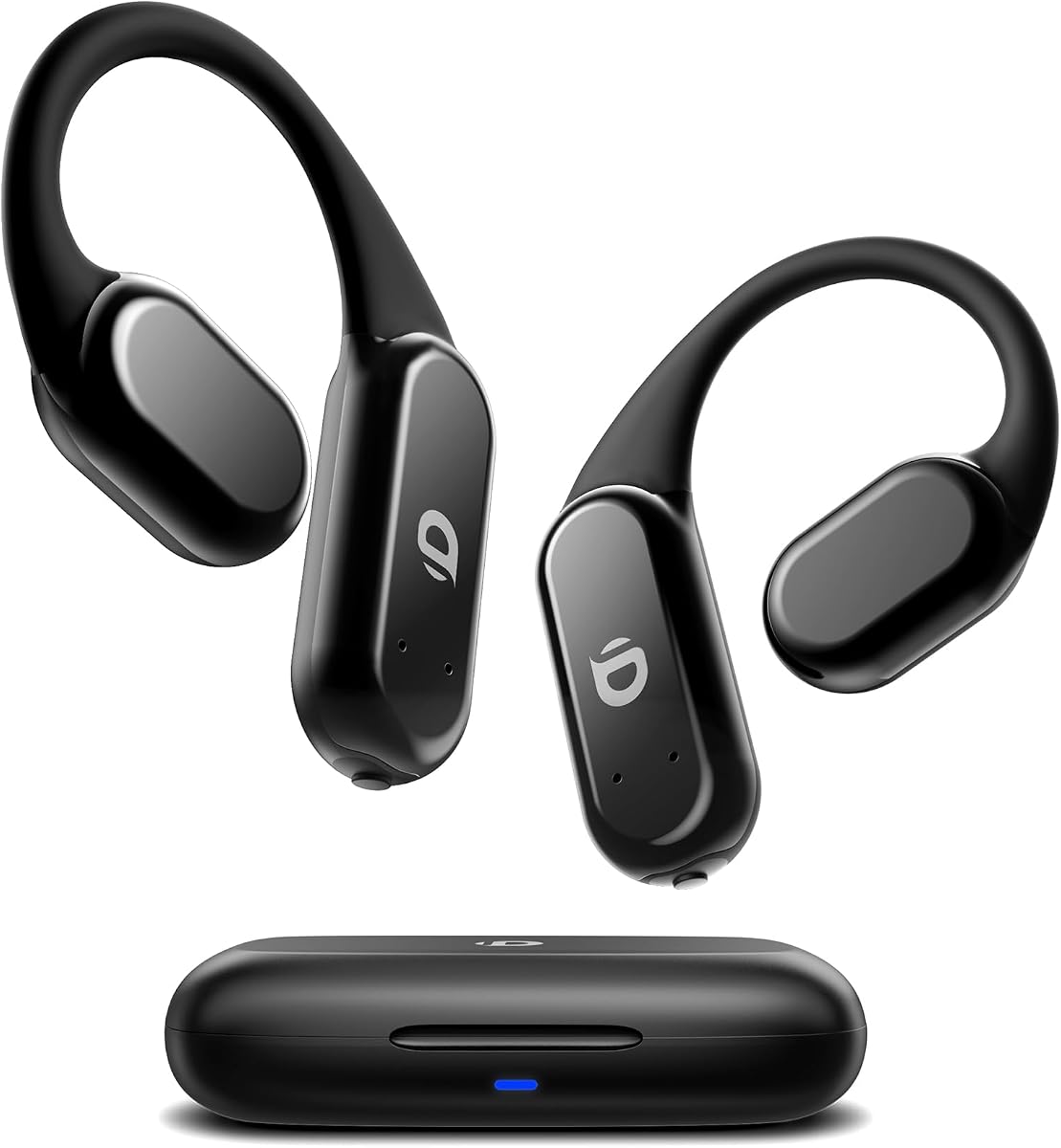
Open Ear Clip Bone Conduction Earbuds (LED Display)

This open-ear clip earns the top spot by pairing a perfect owner rating with genuinely useful features. The ear-hook clips sit off your canal so you stay aware of the road, while the magnetic case pushes total playtime to a class-leading 60 hours. IPX7 sweat and rain resistance, Bluetooth 5.4 with touch controls and an LED charge readout make it the most complete everyday pick here.

Design
Open-ear clip, ear hooks
Battery
12hr + 48hr case
Waterproof
IPX7
Bluetooth
5.4 touch control

What we liked

  • Top-rated by owners
  • Charging case adds 48 hours
  • IPX7 handles heavy sweat and rain
  • LED display shows remaining charge

Worth noting

  • Clip design isn't true cheekbone conduction
  • 16.3mm drivers can leak at volume
2Best Comfort

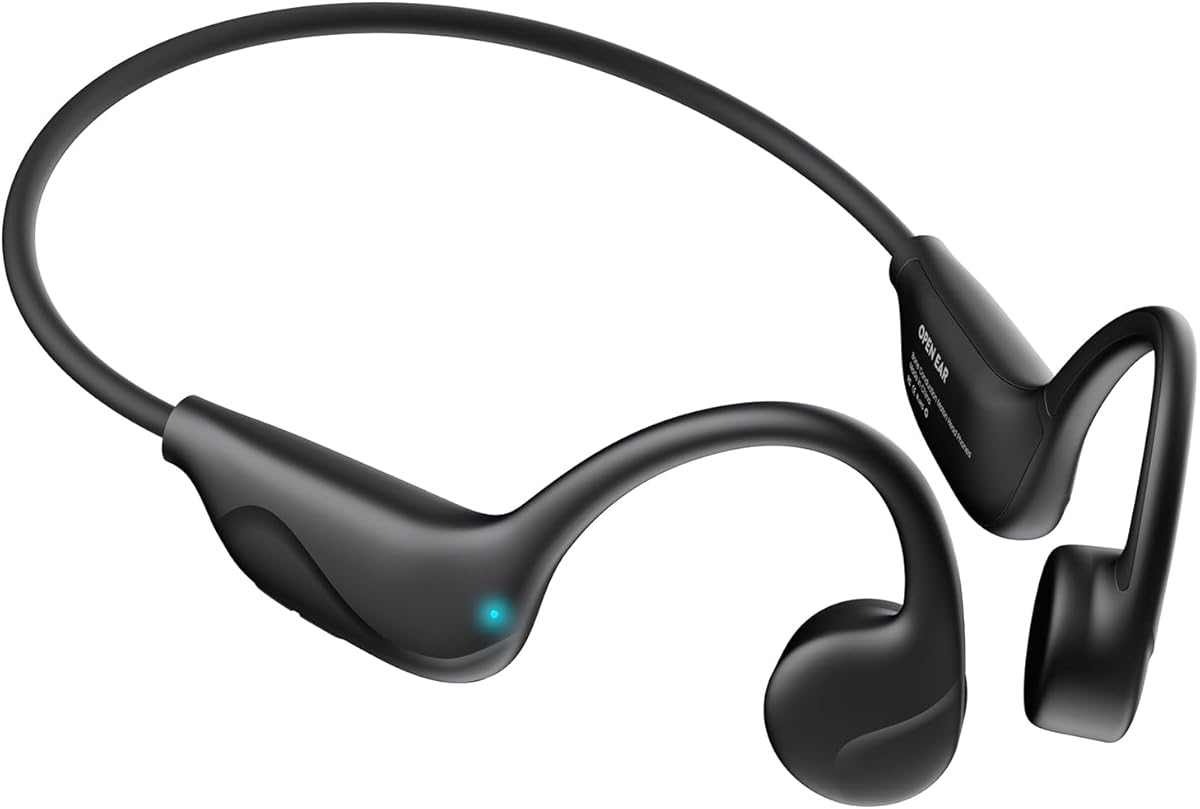
Bone Conduction Earbuds (Bluetooth V6.0, 12Hr)

This true bone conduction headset delivers audio through the cheekbones and leaves your ears completely open, which is exactly what you want for awareness on the road. The flexible titanium frame wraps securely without pressure, so it stays comfortable across long runs, and Bluetooth V6.0 with a built-in mic keeps calls and connection steady. A 12-hour battery covers most weeks of workouts on a single charge.

Frame
Flexible titanium
Battery
12hr playtime
Waterproof
IPX5
Bluetooth
V6.0 with mic

What we liked

  • Perfect owner rating
  • Cheekbone conduction keeps ears fully open
  • Flexible titanium frame stays comfortable
  • 12-hour single-charge battery

Worth noting

  • No charging case for top-ups
  • IPX5 only, not for immersion
3Best Sound Quality

Open Ear Bone Conduction Headphones (Balanced Audio)

If you care most about how open-ear audio actually sounds, this pair stands out with an optimized acoustic structure that improves bass and trims the leakage that plagues cheaper bone conduction sets. The 28g wraparound frame stays light and secure through movement, Bluetooth 6.0 keeps the link stable, and a 12-hour battery handles long outings. It is the audiophile-leaning choice among these open-ear picks.

Weight
28g wraparound
Battery
12hr playtime
Waterproof
IP54
Bluetooth
6.0 with mic

What we liked

  • Near-perfect owner rating
  • Improved low-frequency performance
  • Reduced sound leakage for privacy
  • Lightweight 28g wraparound fit

Worth noting

  • IP54 is splash-only, not sweat-proof rated high
  • No charging case included
4Best Value

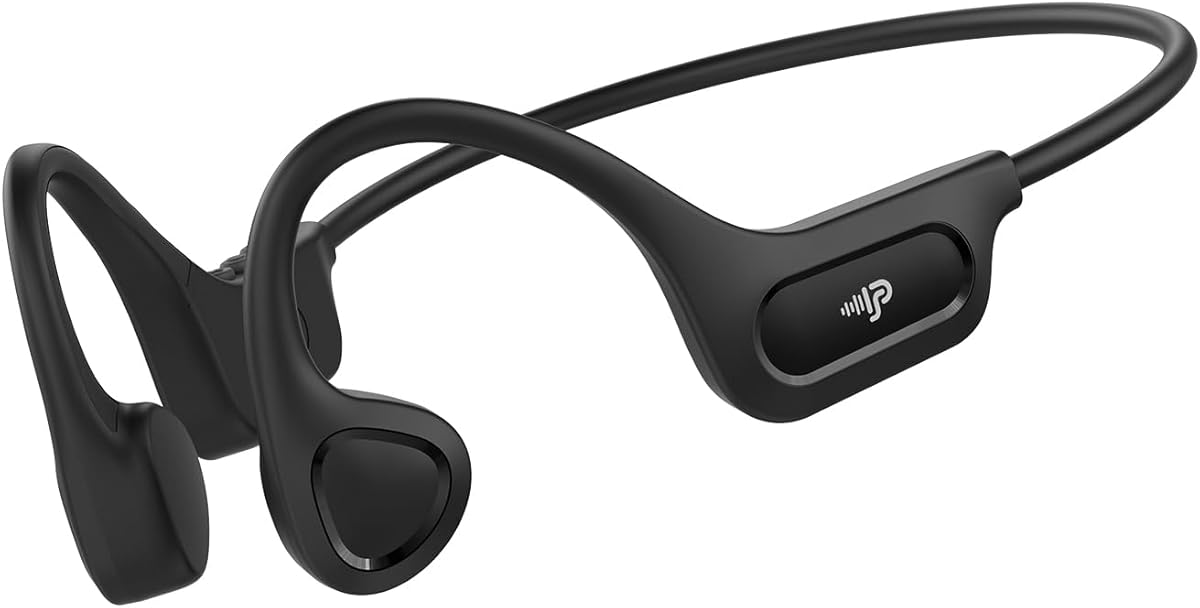
PSIER Bone Conduction Headphones (Bluetooth 6.0)

The PSIER pair is the value pick, delivering the core bone conduction experience at one of the lowest prices here. A 23g memory-titanium frame with an included adjustable strap suits a range of head sizes, and upgraded acoustic sealing cuts leakage by up to half. Bluetooth 6.0 with 13mm drivers and an IPX5 rating covers sweaty runs, making it an easy first bone conduction set.

Weight
23g titanium frame
Battery
10hr playtime
Waterproof
IPX5
Bluetooth
6.0, 13mm drivers

What we liked

  • Very light 23g frame
  • Reduces sound leakage by up to 50%
  • Adjustable strap fits different heads
  • Affordable entry price

Worth noting

  • 10-hour battery trails rivals
  • No charging case
5Best for Long Rides

Gen 2 Open Ear Bone Conduction Earphones (60H Case)

For riders who log big miles, this Gen 2 open-ear pair is built for endurance, offering 60 hours of total playtime with its case and a quick 5-minute charge for an hour of use. IP68 sealing shrugs off rain and sweat entirely, while the upgraded ToneTerra tuning lifts volume by 30 percent and softer liquid silicone eases pressure over long wear. A premium pick for all-day outings.

Battery
60hr total with case
Waterproof
IP68
Bluetooth
6.0 instant link
Feature
ToneTerra tuned EQ

What we liked

  • 60 hours total with charging case
  • IP68 fully sealed against water
  • Upgraded EQ boosts volume 30%
  • Softer silicone reduces wear pressure

Worth noting

  • Priciest option here
  • Clip style rather than cheekbone conduction
6Best Secure Fit

Waterproof Open-Ear Bone Conduction Headset (Ear-Hook)

This ear-hook bone conduction set is aimed squarely at people who hate readjusting their earbuds mid-workout. The wrap-around hook structure stays put through strenuous movement, and the ultra-light body barely registers on your ears. Bluetooth 6.0 holds a stable link even in busy urban areas, and the open-ear design keeps horns and voices audible, which the maker rightly highlights for night running and cycling safety.

Design
Ear-hook structure
Battery
10hr playtime
Waterproof
High-level rated
Bluetooth
6.0 chip

What we liked

  • Ear-hook design resists slipping
  • Bluetooth 6.0 stays stable in crowds
  • Ultra-light body for all-day wear
  • Suits night running and cycling

Worth noting

  • 10-hour battery is average
  • Vague waterproof rating listed
7Best Everyday Clip

Boytond Ultra Open Ear Clip-On Earbuds

The Boytond clip-on pair is a relaxed everyday option that skips the in-ear seal for a lighter, pressure-free feel. The flexible clip wraps gently around each ear, and 50 hours of total battery with the case plus a five-minute quick charge keep you powered through busy days. It leans on Bluetooth 5.3 rather than the newer 6.0, but for commuting, office calls and casual workouts it is a comfortable, low-cost choice.

Design
Clip-on, non-in-ear
Battery
50hr with case
Waterproof
Sweat-resistant
Bluetooth
5.3, 16.3mm drivers

What we liked

  • Comfortable clip-on, no canal pressure
  • 50 hours total with case
  • 5-minute fast charge for an hour
  • Affordable price

Worth noting

  • Bluetooth 5.3 rather than 6.0
  • Clip earbuds can loosen in hard runs
8Best for All-Day Battery

DEMICEA True Wireless Bone Conduction Earphones (OWS)

DEMICEA's OWS earphones combine an earhook fit with a charging case for 60 hours of total playtime, making them a strong endurance pick. IP68 sealing plus a hydrophobic coating handles sweat and rain and cleans up easily, and the memory-flex titanium frame adapts to your ears for extended comfort. AAC support helps streaming sound cleaner, though it runs Bluetooth 5.3 rather than the newest chip.

Design
OWS with earhooks
Battery
60hr with case
Waterproof
IP68
Bluetooth
5.3, AAC/SBC

What we liked

  • 60 hours total playtime with case
  • IP68 with hydrophobic coating
  • Memory-flex titanium frame
  • AAC support for cleaner streaming

Worth noting

  • Bluetooth 5.3, not 6.0
  • Slightly lower owner rating
9Best Known Brand

Raycon Bone Conduction Headphones (Gray)

Raycon is the most familiar name on this list, and its bone conduction pair offers a strong 13-hour single-charge battery and IP68 protection against rain and sweat. A clever adjustable design lets you slide the buds closer for more volume or back for more awareness, tailoring the balance to your route. Owner ratings sit a touch lower than the rest, but the brand recognition and support carry weight for some buyers.

Battery
13hr playtime
Waterproof
IP68
Design
Adjustable buds
Feature
Open-ear, built-in mic

What we liked

  • Recognised Raycon brand
  • 13-hour single-charge battery
  • IP68 handles rain and sweat
  • Adjustable buds tune awareness vs volume

Worth noting

  • Highest price with lowest rating here
  • Bass is modest as with all bone conduction

How We Chose the Best Bone Conduction Earbuds

Best Bone Conduction Earbuds in 2026

Choosing bone conduction earbuds is different from picking regular wireless buds, because the entire point is what they deliberately leave out: the seal. With your ear canals open, you accept less bass and some sound leakage in exchange for staying aware of the world around you. Our job, then, was not to hunt for the deepest low end, which no open-ear design can provide, but to find pairs that make the most of the format while staying secure, comfortable and durable enough for real workouts.

We started with fit, because a bone conduction headset that slides around is useless on a run. We looked for flexible titanium frames, wraparound bands and ear-hook structures that stay planted during movement, favouring lighter builds that reduce fatigue over long sessions. From there we weighed sound leakage control and audio tuning, since the better models here noticeably reduce the tinny leakage of early designs. Waterproofing came next, ranging from splash-resistant IP54 up to fully sealed IP68, followed by battery life, connection stability and the reassurance of owner ratings. We deliberately mixed classic cheekbone-conduction headsets with newer open-ear clip designs so the list reflects both of the popular ways to keep your ears open today.

What Bone Conduction Earbuds Do Best

The single biggest reason to buy bone conduction earbuds is situational awareness. Because nothing plugs your ear canal, you hear approaching cars, cyclists calling out, gym announcements and your training partner's voice without pausing your music or pulling a bud out. For anyone who runs on roads, rides in traffic or simply wants to stay connected to their environment, that safety benefit is hard to overstate, and it is why every pair on this list emphasises open-ear listening.

Comfort is the close second. Without silicone tips wedged in your canal, there is no plugged-up pressure, no sweaty seal and far less ear fatigue over long wear. People with sensitive ears, frequent ear infections or a simple dislike of in-ear buds often find bone conduction the only style they can wear for hours. The flexible titanium frames used by the 12-hour IPX5 headset and the featherweight PSIER pair distribute their light weight so evenly that you can forget they are there. Add strong sweat and rain resistance, and these become genuine all-day companions rather than gym-only accessories.

Understanding the Sound Trade-Off

It is worth being honest about audio, because bone conduction and open-ear designs simply cannot match a sealed in-ear pair for bass and isolation. Vibrating sound through your cheekbones, or playing it just outside an open ear, means low frequencies feel lighter and background noise blends in with your music. In a quiet room at high volume, some of that sound also leaks out to people nearby. If your priority is immersive, thumping audio for the train or the plane, this is not the category for you.

What has changed is how well the best models manage those limits. The balanced-audio Bluetooth 6.0 headset uses an optimised acoustic structure to improve low-frequency response and cut leakage, and the Gen 2 open-ear pair claims a 30 percent volume increase with its upgraded ToneTerra tuning, which makes podcasts and audiobooks especially clear. The clip-style models with larger 16mm-class drivers, like the LED-display pick and the Boytond pair, push more volume than early bone conduction sets managed. You still trade some fidelity for awareness, but the gap has narrowed enough that most active listeners find it an easy compromise.

Matching the Right Pair to Your Activity

For Road Running and Cycling

Safety and fit matter most here, so you want a secure design and reliable water resistance. The ear-hook Bluetooth 6.0 headset resists slipping through hard efforts, while the IPX7 LED-display clip and IP68 Gen 2 pair handle sweat and sudden rain without complaint. All keep your ears open to traffic, which is the whole reason to choose this category for outdoor exercise.

For Long Sessions and Travel

If you want to charge as little as possible, look to the models with charging cases. The Gen 2 open-ear pair and the DEMICEA OWS earphones both reach 60 hours of total playtime, and the LED-display clip adds 48 hours from its case on top of a 12-hour bud life. These are the pairs to grab for all-day wear, multi-day trips or simply never thinking about the charger.

For Comfort and Sensitive Ears

Anyone who finds in-ear tips uncomfortable should start with the true cheekbone-conduction sets. The 12-hour IPX5 headset and the 23g PSIER pair leave your canals fully open with flexible titanium frames that add almost no pressure, making them ideal for people who could never wear traditional buds for long.

For Sound Quality Seekers

If audio quality is your sticking point, the balanced-audio Bluetooth 6.0 pair and the tuned Gen 2 open-ear model do the most to close the gap, with improved bass and higher volume than budget bone conduction sets. They will not out-thump sealed earbuds, but they are the most satisfying listens in this open-ear group.

Specifications That Matter Most

Two things shape the bone conduction experience more than any spec sheet: fit and waterproofing. A secure frame is non-negotiable, because an open-ear headset that shifts around defeats its own purpose and pulls audio quality down with it. Flexible titanium frames and firm ear hooks, as used across nearly every pick here, keep the drivers correctly positioned against your face so the sound stays consistent while you move. Pair that with a waterproof rating suited to your sweat level: IPX5 covers most runs, while IP68 models like the Gen 2 and DEMICEA pairs are effectively sealed against heavy sweat and rain.

Battery and connection round out the essentials. Single-charge life ranges from around 10 hours on the leaner PSIER and ear-hook models to 12 or 13 hours on the comfort-focused headset and Raycon, and the case-equipped clip designs stretch total playtime to 50 or 60 hours. For connection, the newer Bluetooth 6.0 chips found in most picks here pair faster and hold steadier in crowded areas than older 5.3 versions, which matters on a city ride where dropouts are annoying. Finally, weigh leakage control if you often listen around other people, since the better-tuned models here are noticeably more discreet.

A Closer Look at the Top Picks

The LED-display open-ear clip takes our top spot by being the most complete package: a perfect owner rating, an IPX7 build that handles anything short of swimming, Bluetooth 5.4 with touch controls and a case that lifts total playtime to 60 hours, all with a clear charge readout so you are never caught out. Just behind it, the flexible-titanium 12-hour headset is the comfort champion, using true cheekbone conduction to leave your ears completely open, which is exactly what awareness-focused runners and cyclists want.

For listeners who care most about how open-ear audio sounds, the balanced-audio Bluetooth 6.0 pair improves bass and cuts leakage better than anything else here, while the PSIER set is the value entry point that nails the fundamentals cheaply. Endurance seekers should look at the 60-hour Gen 2 and DEMICEA pairs, the ear-hook Bluetooth 6.0 headset is the secure-fit specialist, and the Boytond clip is an easy, affordable everyday option. Rounding out the list, Raycon brings the reassurance of a well-known brand with a solid 13-hour battery and clever awareness-versus-volume adjustment.

Tips for Living With Open-Ear Audio

A few habits make bone conduction earbuds far more enjoyable. Keep the volume moderate: pushing an open-ear design to maximum is where leakage and distortion creep in, and it also drowns out the very surroundings you bought them to hear. At sensible levels the sound stays cleaner, the battery lasts longer, and people beside you won't catch your playlist. On noisy roads, resist the urge to crank the volume and instead let the open design do its job of blending your audio with the world.

Fit is worth dialling in before your first long session. Adjust the strap or clip so the drivers sit flat against your cheekbones or ears, since a poor position thins the sound and encourages slipping. If your pair includes an adjustable band like the PSIER set or a sliding design like the Raycon, spend a minute finding the sweet spot. Finally, rinse or wipe down the contact surfaces after sweaty workouts, especially on the higher IP68 models that are built to be cleaned easily, and you will keep both hygiene and audio quality where they should be.

Final Recommendation

For most people, the LED-display open-ear clip is the best bone conduction pick in 2026, combining a perfect owner rating, IPX7 durability and a 60-hour case into one polished package. If you want true cheekbone conduction and maximum comfort, the flexible-titanium 12-hour headset is the pick, while the balanced-audio Bluetooth 6.0 pair rewards anyone chasing the best open-ear sound. Endurance riders should look to the 60-hour Gen 2 or DEMICEA models, budget buyers to the PSIER set, and brand-conscious shoppers to Raycon. Whichever you choose, remember that you are buying awareness and comfort first and bass second, and within that trade these open-ear pairs deliver impressively for running, cycling and everyday listening.

How we picked

We judged each pair on situational awareness, fit security and comfort during movement, sound quality and leakage control, waterproof rating for sweat and rain, battery life, and connection stability. Because open-ear audio is a compromise by nature, we favoured models that stay put and keep you aware without turning your music to mush, and we mixed classic wraparound headsets with newer clip-on designs so the list covers both wearing styles.

Frequently asked questions

How do bone conduction earbuds actually work?

Instead of sitting inside your ear canal, bone conduction earbuds rest on your cheekbones just in front of your ears and send vibrations through the bone directly to your inner ear. Because your ear canals stay open, you hear music and your surroundings at once. Pairs like the PSIER and the IPX5 12-hour headset use this true cheekbone approach, while some listed clip-on models sit near the ear instead.

Are bone conduction earbuds good for running and cycling?

Yes, they are one of the safest options for outdoor exercise because your ears stay open to traffic, voices and footsteps. Look for a secure fit and a solid waterproof rating for sweat and rain. The ear-hook Bluetooth 6.0 headset and the IPX7 open-ear clip both stay put during movement, and higher IP68 models like the Gen 2 and DEMICEA pairs shrug off heavy sweat completely.

Do bone conduction earbuds leak sound to people nearby?

Some sound leakage is normal because the drivers vibrate against your face rather than sealing your ear. Newer designs have improved a lot here; the balanced-audio Bluetooth 6.0 pair specifically reduces leakage, and the PSIER set claims up to 50 percent less than earlier models. At low and moderate volume most people around you won't notice, but at high volume in a quiet room others may hear a faint hint of your music.

Is the sound quality as good as regular earbuds?

Not quite. Bone conduction and open-ear designs trade some bass depth and isolation for awareness and comfort, so they won't match a sealed in-ear pair for thumping low end. That said, tuned models like the Gen 2 open-ear pair boost volume and balance noticeably. If you mainly want awareness on the move rather than critical listening, the trade is usually well worth it.

Can I wear bone conduction earbuds with glasses?

Usually yes. Most bone conduction and open-ear sets rest on your cheekbones or clip near the ear rather than over the ear like glasses arms, so they tend to coexist better than earhook styles. Lightweight frames such as the 23g PSIER and the flexible-titanium 12-hour headset add less pressure, which helps when you're also wearing sunglasses on a ride.