Skip to content

Best 8TB SSDs in 2026

By Thomas BrianUpdated July 5, 2026

We may earn a commission from links on this page, at no extra cost to you. Learn more.

Eight terabytes is serious storage, the kind that swallows an entire game library, years of 4K footage or a professional photo archive without blinking. At this capacity you are no longer shopping to save a few files; you are investing in a workhorse that must be fast, durable and endure heavy writes for years. That raises the stakes, because 8TB drives are expensive, and the gap between a well-chosen one and the wrong one is measured in hundreds of dollars. This guide ranks eight of the best 8TB SSDs you can buy in 2026, spanning cutting-edge PCIe Gen5 internal drives, mainstream Gen4 workhorses, huge SATA drives and rugged portables, so pros, gamers and archivists can match the capacity to the job.

Top 8 Best 8TB SSDs

Best Overall4.8
Best for AI & Gen54.8
Best SATA High-Capacity4.8
Best Gen4 Value4.8
Best Portable Value4.6
Best Portable Speed4.5
Best Rugged Portable4.5
Best Step-Down Pick4.8

Our top 8 picks, reviewed

1Best Overall

WD_Black SN850X 8TB with Heatsink

The WD_Black SN850X 8TB is our top high-capacity pick, blending 7,300 MB/s Gen4 speeds, durable TLC 3D NAND and an included heatsink that keeps it cool through marathon sessions. It is built for gamers and creators who need a massive, fast internal drive without paying Gen5 prices. WD_Black Dashboard adds Game Mode 2.0 and health monitoring. For most people wanting 8TB that is quick, reliable and sensibly priced, this is the one.

Capacity
8TB
Interface
PCIe Gen4 NVMe
Form Factor
M.2 2280
Speed
Up to 7,300 MB/s

What we liked

  • Fast 7,300 MB/s Gen4 speeds
  • Heatsink included for cool running
  • TLC 3D NAND for endurance
  • Game Mode 2.0 via Dashboard

Worth noting

  • Not a Gen5 drive
  • Heatsink may not fit all boards
2Best for AI & Gen5

Samsung SSD 9100 PRO 8TB

The Samsung 9100 PRO 8TB is the fastest drive on this list, reaching 14,800 MB/s over PCIe 5.0, and it is aimed squarely at professionals handling AI datasets, 8K video and the heaviest workstation loads. Its efficient 5nm controller keeps thermals manageable despite the speed. This is a premium purchase that only pays off on a Gen5 board, so buy it if your system can exploit it and your workflow genuinely needs the bandwidth.

Capacity
8TB
Interface
PCIe 5.0 x4
Form Factor
M.2 2280
Speed
Up to 14,800 MB/s

What we liked

  • Blistering 14,800 MB/s Gen5 reads
  • Ideal for AI and 8K workflows
  • Efficient 5nm controller runs cooler
  • Huge random IOPS performance

Worth noting

  • Very high price for the tier
  • Needs a Gen5 slot to shine
3Best SATA High-Capacity

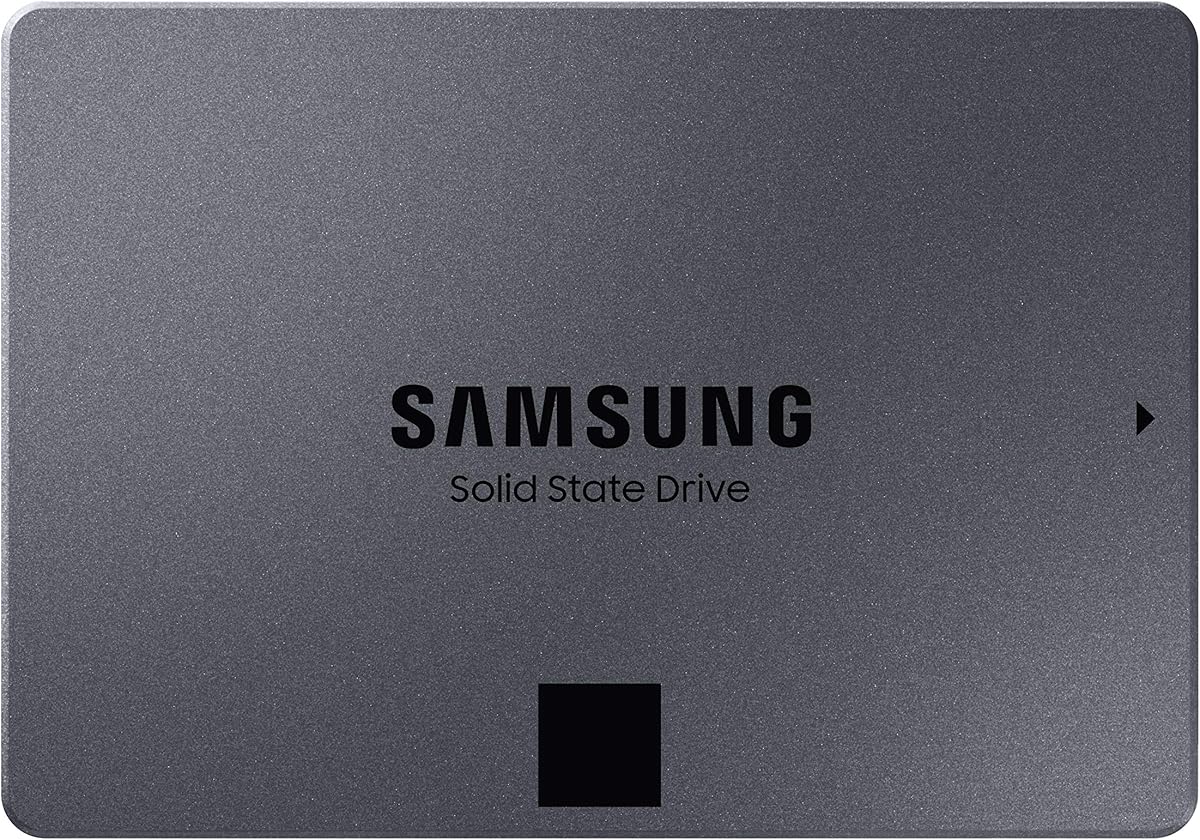
Samsung 870 QVO 8TB SATA SSD

The Samsung 870 QVO 8TB packs enormous capacity into a standard 2.5-inch SATA form factor, making it the pick for adding bulk storage to any machine with a drive bay, no M.2 slot required. Speeds are capped at 560 MB/s, but its 2,880 TBW endurance rating and Samsung's reliability make it a dependable archive and media vault. QLC NAND slows on sustained writes, so it suits storage more than scratch-disk duty, but for sheer capacity it delivers.

Capacity
8TB
Interface
SATA III
Form Factor
2.5in
Speed
Up to 560 MB/s

What we liked

  • Massive 8TB in a 2.5in bay
  • High 2,880 TBW endurance rating
  • Works in any SATA machine
  • Proven Samsung reliability

Worth noting

  • SATA speeds far below NVMe
  • QLC NAND writes slower when full
4Best Gen4 Value

Lexar NM790 8TB NVMe SSD

The Lexar NM790 8TB is a compelling Gen4 workhorse, delivering 7,000 MB/s reads and a high 6,000 TBW endurance rating that reassures heavy writers. Its HMB 3.0 technology keeps transfers smooth without a power-hungry DRAM cache, and it is PS5 compatible for console expansion. There is no bundled heatsink, so plan cooling for a hot case, but as a big, fast and durable internal drive for gamers and creators, it earns its place at a competitive high-capacity price.

Capacity
8TB
Interface
PCIe Gen4 NVMe
Form Factor
M.2 2280
Speed
Up to 7,000 MB/s

What we liked

  • Strong 7,000 MB/s Gen4 speeds
  • High 6,000 TBW endurance
  • HMB 3.0 for smooth transfers
  • PS5 compatible for expansion

Worth noting

  • No included heatsink
  • Premium price at 8TB
5Best Portable Value

SanDisk Extreme Portable SSD 8TB

The SanDisk Extreme Portable 8TB is the value way to carry an enormous archive in your pocket. At 1,050 MB/s it will not match an internal NVMe drive, but IP65 water and dust resistance, up to 3-metre drop protection and a silicone shell make it a tough field companion, backed by a five-year warranty. For photographers, videographers and anyone offloading huge shoots on location, it offers massive rugged capacity for the lowest price on this list.

Capacity
8TB
Interface
USB 3.2 Gen 2
Form Factor
Portable external
Speed
Up to 1,050 MB/s

What we liked

  • Huge 8TB in a pocket drive
  • IP65 water and dust resistance
  • Up to 3-metre drop protection
  • 5-year limited warranty

Worth noting

  • Slower than internal NVMe drives
  • An older model in the range
6Best Portable Speed

Crucial X10 8TB Portable SSD

The Crucial X10 8TB is the fastest portable here, reaching up to 2,100 MB/s, twice the pace of most rugged externals, which makes it a genuine on-location workhorse for editors moving 4K footage. It pairs that speed with IP65 dust and water resistance and 3-metre drop protection, plus broad compatibility across Windows, Mac, consoles and Android. You need a fast port to unlock full speed, but for creators who want capacity and pace in the field, it excels.

Capacity
8TB
Interface
USB 3.2 USB-C
Form Factor
Portable external
Speed
Up to 2,100 MB/s

What we liked

  • Fast 2,100 MB/s external speeds
  • IP65 dust and water resistance
  • Drop resistant up to 3 metres
  • Broad console and OS support

Worth noting

  • Needs a fast port for top speed
  • Lesser warranty details up front
7Best Rugged Portable

Lexar Armor 700 8TB Portable SSD

The Lexar Armor 700 8TB is the toughest portable on this list, carrying an IP66 rating that resists both water and dust plus 3-metre drop protection in a rugged shell built for extreme environments. It moves data at up to 2,000 MB/s over USB 3.2 Gen 2x2 and supports Apple ProRes recording straight from an iPhone 15 Pro, with a thermal design that holds speed under load. It needs a 20Gbps port to shine, but for demanding fieldwork it is hard to beat.

Capacity
8TB
Interface
USB 3.2 Gen 2x2
Form Factor
Portable external
Speed
Up to 2,000 MB/s

What we liked

  • Fast 2,000 MB/s Gen 2x2 speeds
  • IP66 water and dust resistance
  • Rugged 3-metre drop protection
  • Supports iPhone ProRes recording

Worth noting

  • Needs a 20Gbps port for full speed
  • Bulkier rugged body
8Best Step-Down Pick

Samsung SSD 9100 PRO 4TB

If 8TB of Gen5 storage is beyond your budget, the Samsung 9100 PRO 4TB is the smart step-down, offering the same 14,800 MB/s speeds and 5nm efficiency for roughly half the price of its 8TB sibling. It is the answer for creators and AI users who want cutting-edge bandwidth but do not truly need eight terabytes yet. You give up half the capacity, and you still need a Gen5 slot to exploit it, but the value proposition is far kinder.

Capacity
4TB
Interface
PCIe 5.0 x4
Form Factor
M.2 2280
Speed
Up to 14,800 MB/s

What we liked

  • Blistering 14,800 MB/s Gen5 reads
  • Ideal for AI and creative work
  • Efficient 5nm controller runs cooler
  • Costs far less than the 8TB model

Worth noting

  • Half the capacity of an 8TB drive
  • Needs a Gen5 slot to shine

How We Chose the Best 8TB SSDs

Best 8TB SSDs in 2026

At 8TB, every drive is a major purchase, so our ranking gave as much weight to endurance, reliability and value as to raw speed. A creator or gamer buying this much storage is making a multi-year investment, and the last thing they want is a drive that throttles under sustained writes or wears out early. We began by grouping drives by type, since a Gen5 internal drive, a SATA bulk drive and a rugged portable are bought for entirely different reasons, and comparing them head to head would be misleading.

For internal drives we assessed sustained and peak speed, the interface generation, and crucially the endurance rating in terabytes written, favouring TLC NAND for heavy workloads while acknowledging that QLC drives like the Samsung 870 QVO have their place for archival storage. Thermals mattered too, because 8TB drives run hot, so an included heatsink like the WD_Black SN850X's counts in its favour. For portable drives we weighed transfer speed, durability ratings, warranty length and cross-platform support for cameras, consoles and phones. Value threaded through the whole exercise: at these prices, cost per terabyte and the confidence of a long warranty carry real weight, and we included a 4TB Gen5 option as a sensible step-down for buyers who want the speed without the full capacity spend.

Endurance and Cost per Terabyte: Why They Matter Most at 8TB

At smaller capacities, buyers obsess over speed. At 8TB, two other numbers deserve equal attention: endurance and cost per terabyte. Endurance, measured in terabytes written or TBW, tells you how much data a drive can absorb over its life before its cells wear out. It matters far more here because 8TB drives often serve as scratch disks for video editing or repositories for constant backups, workloads that write enormous amounts of data. Drives like the Lexar NM790, rated at 6,000 TBW, and the Samsung 870 QVO, at 2,880 TBW, are built to take that punishment.

The NAND type behind those ratings is the other half of the story. TLC NAND, used in the WD_Black SN850X and Lexar NM790, endures more write cycles and sustains write speeds better than the QLC found in the more affordable Samsung 870 QVO, which slows once its cache fills. That does not make QLC bad, it makes it a storage drive rather than a working drive. Cost per terabyte, meanwhile, is how you judge value across such expensive products: a portable like the SanDisk Extreme 8TB can offer a lower cost per terabyte than a Gen5 internal drive, so decide whether you are paying for speed or for sheer capacity, and buy accordingly.

Matching the Drive to Your Needs

For Gaming and Enthusiast Builds

Gamers with huge libraries want a fast internal drive that stays cool through long sessions, and the WD_Black SN850X 8TB is the standout, pairing 7,300 MB/s speeds with an included heatsink and Game Mode 2.0. The Lexar NM790 is a strong Gen4 value alternative with high endurance and PS5 compatibility for anyone happy to arrange their own cooling.

For Professional Creators and AI Work

Video editors, 8K shooters and AI developers who move colossal files should look to the Samsung 9100 PRO 8TB, the fastest drive here at 14,800 MB/s over PCIe 5.0. If the 8TB price is too steep, the 9100 PRO 4TB delivers the same cutting-edge speed for roughly half the outlay, making it the sensible step-down for pros who do not yet need the full capacity.

For Bulk Archival Storage

If you simply need to store a vast media or backup archive and your machine lacks a spare M.2 slot, the Samsung 870 QVO 8TB is the answer, cramming eight terabytes into a standard 2.5-inch SATA bay with a high endurance rating. Speed is modest, but for a set-and-forget vault of files you rarely rewrite, it is ideal.

For On-Location and Field Work

Photographers and videographers working away from a desk need rugged, capacious portables. The Crucial X10 leads on speed at 2,100 MB/s, the Lexar Armor 700 offers the toughest IP66 build and ProRes recording, and the SanDisk Extreme delivers huge capacity at the best price with a five-year warranty. All three survive drops, dust and water.

Specifications That Matter Most

For an 8TB drive, scrutinise interface, endurance and thermals above headline sequential speed. The interface, whether PCIe Gen5, Gen4, SATA or a USB portable standard, sets both the speed ceiling and the form factor, and it must match your hardware; a Gen5 drive is wasted in a Gen4 slot, and a SATA drive cannot reach NVMe speeds no matter the brand. Endurance, in TBW, tells you how much writing the drive can withstand, which is critical at a capacity often used for heavy, write-intensive work.

Thermals are the specification people most often overlook and most regret ignoring. High-capacity Gen4 and Gen5 drives generate real heat under sustained load, and without adequate cooling they throttle to protect themselves, wiping out the speed you paid for. That is why an included heatsink, as on the WD_Black SN850X, or a portable's dedicated thermal design, as on the Lexar Armor 700, is a genuine benefit rather than marketing. Finally, weigh the warranty: at these prices, the five-year coverage on the SanDisk Extreme and the endurance guarantees behind the Lexar and Samsung drives are meaningful reassurance for what is a substantial, long-term purchase.

A Closer Look at the Top Picks

The WD_Black SN850X 8TB earns the top spot by balancing everything an 8TB buyer wants: fast 7,300 MB/s Gen4 speeds, durable TLC NAND, a bundled heatsink that keeps it cool, and a price that undercuts Gen5 flagships. For gamers and creators who need a big, quick, reliable internal drive without paying the Gen5 premium, it is the most sensible high-capacity choice on the market.

Above it in raw speed sits the Samsung 9100 PRO 8TB, the Gen5 halo drive for AI and 8K professionals, with the 4TB version standing by as its more affordable sibling. The Samsung 870 QVO is the bulk-storage champion for SATA machines, and the Lexar NM790 is the Gen4 value pick with class-leading endurance. On the portable side, the Crucial X10 wins on speed, the Lexar Armor 700 on ruggedness, and the SanDisk Extreme on price and warranty. Together they cover every reason someone might genuinely need eight terabytes, from a gaming rig to a field kit to an archive vault.

Practical Tips for Buying and Living With an 8TB SSD

Before committing to such a large drive, confirm two things: that your machine can physically accept it, and that it can cool it. Check whether you have a free M.2 2280 slot for an NVMe drive like the Lexar NM790, a 2.5-inch bay for a SATA drive like the Samsung 870 QVO, or the right port for a portable. Then check cooling: if your board lacks M.2 heatsinks, favour a drive that includes one, such as the WD_Black SN850X, or add aftermarket cooling, because an unthrottled 8TB drive is the whole point of buying one.

Once installed, treat an 8TB drive as the valuable asset it is. Even large SSDs run best with some free space, so avoid filling the very last terabyte if you want to keep write speeds and endurance healthy. Use the manufacturer's software, WD_Black Dashboard, Samsung Magician or the equivalent, to enable TRIM, apply firmware updates and monitor drive health and remaining endurance over time. Crucially, never treat a single drive as a backup; even a durable 8TB SSD can fail, so keep a second copy of irreplaceable work. For portables, use proper ejection and lean on rugged models like the Lexar Armor 700 for genuine field protection. With sound habits, an 8TB SSD will anchor your storage for years.

Final Recommendation

For most buyers, the WD_Black SN850X 8TB is the best high-capacity SSD in 2026, combining fast Gen4 speed, strong endurance and an included heatsink at a price that undercuts Gen5 rivals. Professionals with a Gen5 board and demanding AI or 8K workloads should stretch to the Samsung 9100 PRO 8TB, or save with its 4TB version if full capacity is not essential. For bulk archival storage in a SATA machine, the Samsung 870 QVO is unmatched, while the Lexar NM790 is the Gen4 value pick with excellent endurance. Field workers are best served by the fast Crucial X10, the rugged Lexar Armor 700 or the affordable SanDisk Extreme. Match capacity, interface and cooling to your workflow, and 8TB of solid-state storage will serve you well for years.

How we picked

We ranked each 8TB SSD on sustained speed, endurance and reliability under heavy writes, interface and form factor, and value at a capacity where every drive is a major purchase. Because 8TB buyers care as much about longevity and cost per terabyte as peak numbers, we weighted endurance and warranty heavily, and we mixed internal NVMe and SATA drives with rugged portable models so the list serves creators, gamers and pros alike.

Frequently asked questions

Are 8TB SSDs worth the high price?

For the right user, yes. Video editors, photographers, AI developers and gamers with vast libraries benefit from having everything on one fast, reliable drive. If your needs are lighter, a 2TB or 4TB drive like the Samsung 9100 PRO 4TB offers better value. Buy 8TB only when you genuinely need the capacity, because the premium is significant.

What is the difference between NVMe and SATA 8TB SSDs?

NVMe drives like the WD_Black SN850X reach 7,000 MB/s or more and use an M.2 slot, while SATA drives like the Samsung 870 QVO cap at around 560 MB/s in a 2.5-inch bay. NVMe suits performance work; SATA suits bulk archival storage in machines without a spare M.2 slot. Choose based on your slots and your speed needs.

How long does an 8TB SSD last under heavy use?

Endurance is quoted in terabytes written, and 8TB drives rate high: the Lexar NM790 is rated for 6,000 TBW and the Samsung 870 QVO for 2,880 TBW. That is far more than most home and prosumer users write in years. For heavy write workloads, favour TLC drives and monitor drive health with the maker's software.

Do I need a heatsink for an 8TB NVMe SSD?

High-capacity Gen4 and Gen5 drives run hot under sustained load, so cooling matters. The WD_Black SN850X includes a heatsink, while drives like the Lexar NM790 do not, so check whether your motherboard provides M.2 cooling. Adequate airflow and a heatsink help these drives hold their speed and protect endurance during long sessions.

Can I use an 8TB portable SSD with a PS5 or camera?

Yes. Portable 8TB drives like the Crucial X10 and Lexar Armor 700 support PlayStation consoles, cameras and phones, with the Armor 700 even handling iPhone ProRes recording. Internal expansion for the PS5 uses M.2 NVMe drives such as the Lexar NM790. Confirm the connection and format requirements for your specific device before buying.