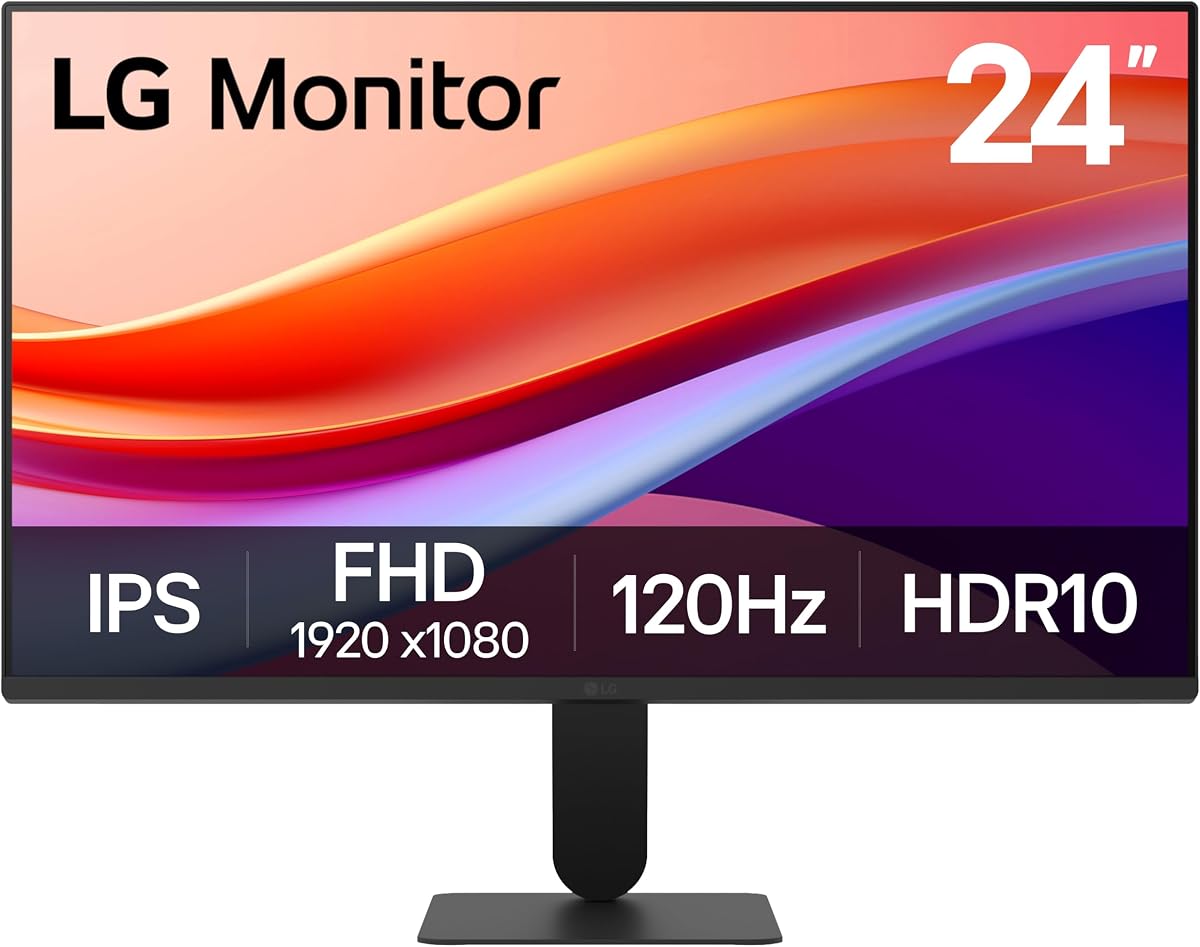
Plenty of desks need a modern 24-inch IPS that does work cleanly and still feels smoother than ancient 60Hz office panels. The LG 24U411A-B brings Full HD IPS, 120Hz refresh, HDR10, Reader Mode, and Flicker Safe features in a virtually borderless slim-stand design.
It overlaps with gaming DNA—1ms MBR, Dynamic Action Sync, Black Stabilizer—without wearing the loudest UltraGear badge language of sibling SKUs. Students, hybrid workers, and casual gamers are the sweet spot.
Below we compare it to purer gaming 24-inch models, cover eye-comfort modes, multitasking via Switch app, and setup habits that unlock 120Hz correctly.
Think of the 24U411A as the sensible roommate of LG’s flashier 24-inch gaming panels. You still get IPS punch, HDR10, and 120Hz fluidity, plus comfort tools like Reader Mode and Flicker Safe that matter when the monitor is primarily a homework and spreadsheet machine. The design language—ultra-slim bezels and floating-feel stand—keeps small desks from looking top-heavy.
120Hz is the headline upgrade from corporate hand-me-down monitors. Window dragging, browser scrolling, and lighter games benefit immediately. Competitive players chasing every millisecond may prefer the 24G411A’s 144Hz overclock path, but for mixed use, 120Hz is a sweet everyday ceiling.
Color via IPS and roughly 99% sRGB coverage keeps photos and streaming pleasant. HDR10 adds pop on supported video. Reader Mode warms and reduces blue light for long reading—enable it for PDFs, disable it when color-critical edits need neutrality.
Motion features such as 1ms MBR and Dynamic Action Sync reveal the shared engineering with LG’s gaming line. Use them for FIFA nights or aim trainers; leave them off if you notice flicker or reduced brightness while writing essays. Black Stabilizer remains optional for darker game maps.
The Switch app’s split layouts (up to six sections in LG’s description) help a single 24-inch panel behave more like a multitasking hub—chat here, notes there, reference PDF beside. On FHD, do not expect ultrawide luxury; do expect smarter window habits than chaotic overlapping stacks.
Tilt from -5° to 20° covers basic comfort. Short desks with laptop stands may still need a monitor riser so your neck stays neutral. Flicker Safe and Reader Mode do not cancel bad posture—combine electronic comfort with physical setup.
Connectivity emphasizes HDMI simplicity for PCs, sticks, and consoles. Verify 120Hz signal path; some devices default to 60Hz until nudged. Keep cables tidy under the slim stand so the floating aesthetic is not undermined by cable nests.
Buy the 24U411A when your monitor must excel at weekday work and still feel modern for weekend play. Choose a harder UltraGear esports SKU when ranked refresh is the only metric that matters. For most students and hybrid workers, this balanced 24-inch IPS is the calmer, smarter default.
Who it's for
Students, remote workers, and casual gamers who want a modern 120Hz IPS 24-inch panel with eye-comfort modes. Excellent as a clean secondary monitor beside a laptop.
Who should skip it
Skip if you need 144Hz+ esports overclocks, QHD sharpness, or height-adjust ergonomics built-in. Heavy multitaskers may prefer 27-inch or ultrawide canvases.
Workday comfort & weekend play
Use Reader Mode for long reading blocks, standard mode for color media, and MBR only in fast games if your eyes like it. The Switch app layouts keep chat and docs visible during study streams.
Setup tips & verdict
Set 1920×1080 @ 120Hz explicitly and adjust tilt before long sessions. Verdict: the LG 24U411A is a polished everyday 24-inch FHD IPS that blends productivity comfort with smoother-than-office motion.
- 120Hz makes scrolling and casual games feel smoother than 60Hz offices
- Reader Mode softens long document and web sessions
- IPS wide angles help when you share the screen in small rooms
- Slim borderless look cleans up dual-monitor student desks
- Gaming assists remain available without forcing an esports identity
- 120Hz tops out below overclocked 144Hz UltraGear twins
- Tilt-only stand may need a riser for ergonomic eye line
- FHD resolution limits workspace versus ultrawide productivity monitors
FAQs
How does the 24U411A differ from the 24G411A UltraGear?
Both are 24-inch FHD IPS family monitors, but the UltraGear sibling emphasizes 144Hz overclock gaming branding while the 24U411A highlights 120Hz everyday use with Reader Mode and Flicker Safe comfort messaging. Feature overlap exists. Pick based on whether esports refresh or workday comfort copy matches your priority.
Is 120Hz noticeable for office work?
Many people notice smoother scrolling and cursor motion compared with 60Hz panels even outside games. It is subtle if you never look for it, obvious once you A/B test. Animations and light creative tools also feel more fluid.
What does Reader Mode do?
Reader Mode reduces blue light and shifts toward warmer tones for more comfortable document reading. It can make colors less accurate, so switch back for photo work. Use it as a task-based profile rather than a permanent setting.
Can this monitor handle casual gaming well?
Yes—120Hz, MBR, Dynamic Action Sync, and Black Stabilizer give it real gaming chops for mainstream titles. Hardcore esports grinders may still want higher refresh UltraGear models. For mixed campuses desks, it is plenty capable.
Does it support HDR?
HDR10 support is included for compatible content. Results depend on the source and how Windows HDR is configured. Some users prefer HDR for movies and SDR for desktop clarity—toggle per activity.
Is the borderless design good for dual monitors?
Three-side virtually borderless styling reduces the visual gap when placing two panels side by side. Matching heights still matters for comfort. Use identical models when possible for color consistency.
How do I reduce eye strain?
Enable Flicker Safe and Reader Mode when reading, match brightness to room light, and follow break habits. Posture and distance matter as much as panel features. Avoid max brightness in a dark room.
What stand adjustments are available?
Tilt ranges from about -5° to 20° on the slim stand. There is no extensive height/swivel story like premium ergonomic stands. A riser or arm (if VESA-compatible on your unit) can fill gaps.