Best Rapid Trigger Magnetic 60%
WIN68 HE Hall Effect

- 0.01mm-class adjustable Hall Effect Rapid Trigger
- Up to 8000Hz polling with DKS and SOCD tools
- Compact 60% with arrows retained for binds
Expert Review & Guide
FPS keyboards earn their keep by freeing mouse space, registering chaotic WASD chords cleanly, and—increasingly—letting Hall Effect magnetic switches adjust actuation and Rapid Trigger reset points so counter-strafes feel snappier than fixed mechanical housings. In 2026 the serious options cluster around compact 60–68% magnetic boards with 8000Hz polling, trusted aluminum 60% classics, and a few left-hand keypads for players who want the mouse pad to own the desk.
This guide covers ten pack products: WIN68 HE and AULA WIN68 HE magnetic rapid-trigger boards, Razer Tartarus V2 keypad, Redragon’s value keyboard-mouse combo, a 35-key one-handed mini, HyperX Alloy Origins 60, Corsair Clipper Pro Mini 60 Hall Effect, Womier SK80 as a creamy 75% alternative, Logitech G413 SE full-size, and SteelSeries Apex 3 quiet full-size. We separate true competitive magnetic tools from comfort and budget paths so you do not buy RGB theater when you needed adjustable actuation.
No dollar prices and no invented ASINs—just which board matches your sensitivity, desk width, and willingness to learn web drivers.


As an Amazon Associate we earn from qualifying purchases. We may earn a commission at no additional cost to you.
Compare Hall Effect rapid-trigger tools, compact aluminum classics, one-hand keypads, and quieter full-size boards before you commit desk space.
WIN68 HE is built for the modern FPS arms race: Hall Effect magnetic switches with adjustable actuation from roughly 0.01mm to 4.0mm, Rapid Trigger that dynamically resets based on key movement, up to 8000Hz polling with high scan-rate claims, plus DKS (Dynamic Keystroke) and SOCD tools for advanced movement tech. The compact 60% shell still keeps dedicated arrows—important for scoreboard binds and menu navigation—while maximizing mouse sweep room.
Rapid Trigger is why people leave traditional mechanicals. Instead of waiting to pass a fixed reset point, the switch can re-arm as soon as you change direction, which helps counter-strafing and twitchy peek timings when your fingers already know the dance. Pair that with per-key actuation tuning so WASD can differ from shift or crouch if you want a hair-trigger move cluster and a more deliberate utility key.
Gasket structure with dampening foam keeps the board from feeling like a tin tray during long sessions, and pre-lubed magnetic linears aim for smooth travel out of the box. PBT shine-through keycaps and fourteen RGB effects cover the aesthetic layer without pretending lighting wins rounds. Hot-swap support is specifically for 3-pin magnetic switches—upgrade within that ecosystem, not every Cherry clone in your drawer.
Versus AULA’s WIN68 HE sibling, this listing emphasizes the finest 0.01mm-class story and a 4.7 rating. Versus Corsair Clipper Pro, WIN68 HE is the value-magnetic aggressor while Corsair brings IP57 and brand software gravity. Versus HyperX Origins 60, you gain adjustable HE tech and lose the simple aluminum Red-switch reliability narrative.
Buy WIN68 HE if you will actually open the web driver and tune RT. Skip it if you wanted a no-settings aluminum board that just works.
Start with moderate Rapid Trigger sensitivity; maxing every slider on night one creates accidental taps that feel like “the keyboard is broken.”
Set WASD light, keep reload/utility deeper, then play a week of deathmatch before another tweak pass.
Understand your game’s movement rules—SOCD helpers are powerful and sometimes restricted in official settings.
Valorant, CS-style, and arena FPS players chasing peek consistency.
We may earn a commission at no additional cost to you.
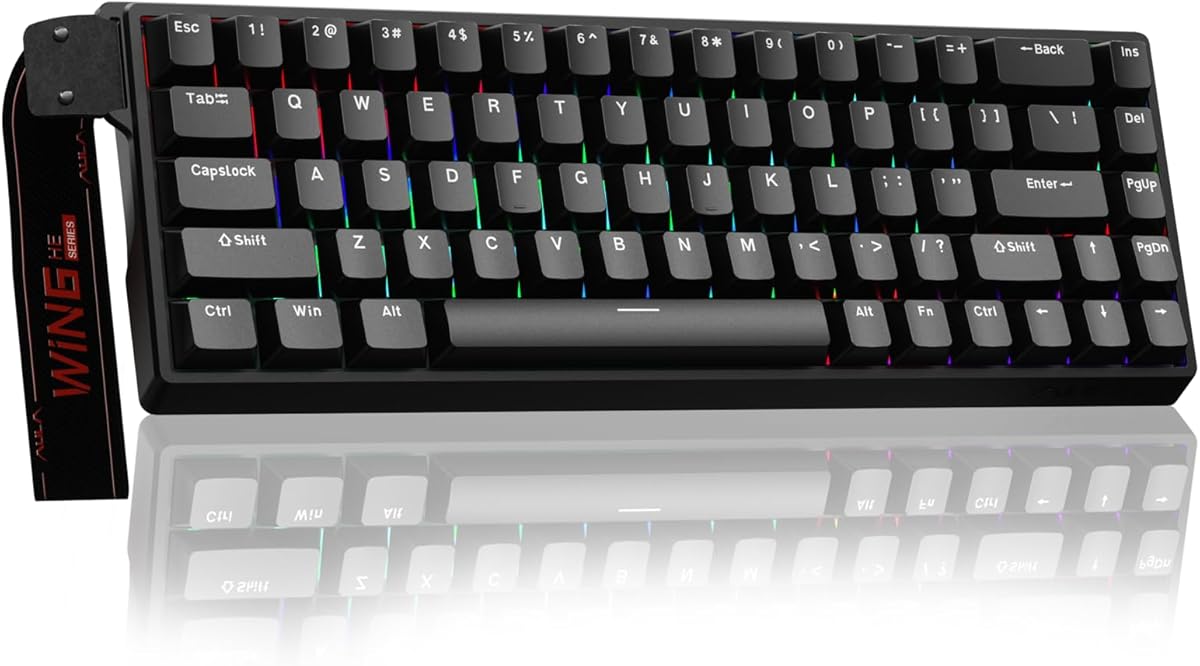
AULA’s WIN68 HE walks the same Hall Effect road: 8000Hz polling, ultra-low latency claims, adjustable magnetic actuation with fine per-key steps, Rapid Trigger modes, and a web driver that exposes RT/SOCD/DKS and friends without a traditional install—on Windows. The 68-key 60% wired design with detachable USB cable keeps the mouse pad wide for low-sens aim routines.
Where this listing is blunt: the driver does not support Mac. If your competitive machine is Windows, that is fine. If you dual-boot or expected Mac configuration parity, recalibrate expectations or prefer boards with clearer cross-OS stories for typing days.
South-facing RGB with fourteen presets keeps the board visible in dark rooms; turn lights off when you want zero distraction. FN combinations cover basics when you are mid-match and refuse to tab out. As a coder moonlighting as a duelist, fast trigger tuning can also make repeated keystrokes in editors feel oddly satisfying—but the product’s soul is FPS.
Versus WIN68 HE (B0H3TWSLYT), choose based on current reviews, exact actuation range marketing, and which web driver you prefer. Versus Corsair, AULA is typically the hungrier value HE option. Versus one-hand pads, AULA still lets you type and chat with a full(ish) alpha set.
Pick AULA WIN68 HE for Windows-centric magnetic competition. Skip it for Mac-primary configuration needs.
Bookmark the driver link the listing provides; hunting for it mid-rank is a self-own.
Do your HE tuning on the game PC OS you actually queue on.
Use the wired cable, close background RGB overload, and keep polling settings intentional.
We may earn a commission at no additional cost to you.

Razer Tartarus V2 is not trying to be a 60% keyboard—it is a left-hand keypad with 32 programmable mecha-membrane keys, an 8-way thumbpad, Hypershift layering, and Chroma lighting. FPS players who run very low sensitivity and huge mousepads sometimes prefer putting movement and abilities under the left hand while the right hand lives entirely on aim.
Mecha-membrane switches give mechanical-like tactility on a cushioned membrane base—familiar to Razer keypad fans who want feedback without a full switch forest. The thumbpad helps players coming from controllers or those who like directional inputs under the thumb rather than pure WASD fingers.
Hypershift means every key can wear multiple costumes. Complex ability sequences in hero shooters or MMO-FPS hybrids become macros, though competitive integrity and personal skill goals should guide how far you automate. Chroma integration is the candy; profiles are the nutrition.
Versus compact HE boards, Tartarus maximizes mouse space further but abandons conventional typing. Versus the generic 35-key one-hand mini later in this list, Tartarus offers deeper software and a more refined thumb module at the cost of ecosystem lock-in.
Buy Tartarus if you are committed to keypad FPS life. Skip it if you still write documents on the same device without a second keyboard.
Practice in aim trainers with the keypad before ranked—cross-device confusion is real for a week.
Place Tartarus close to the pad’s left edge; do not stretch across a full-size ghost keyboard zone.
Cloud-sync profiles after you love them; keypad layouts are painful to rebuild from memory.
We may earn a commission at no additional cost to you.
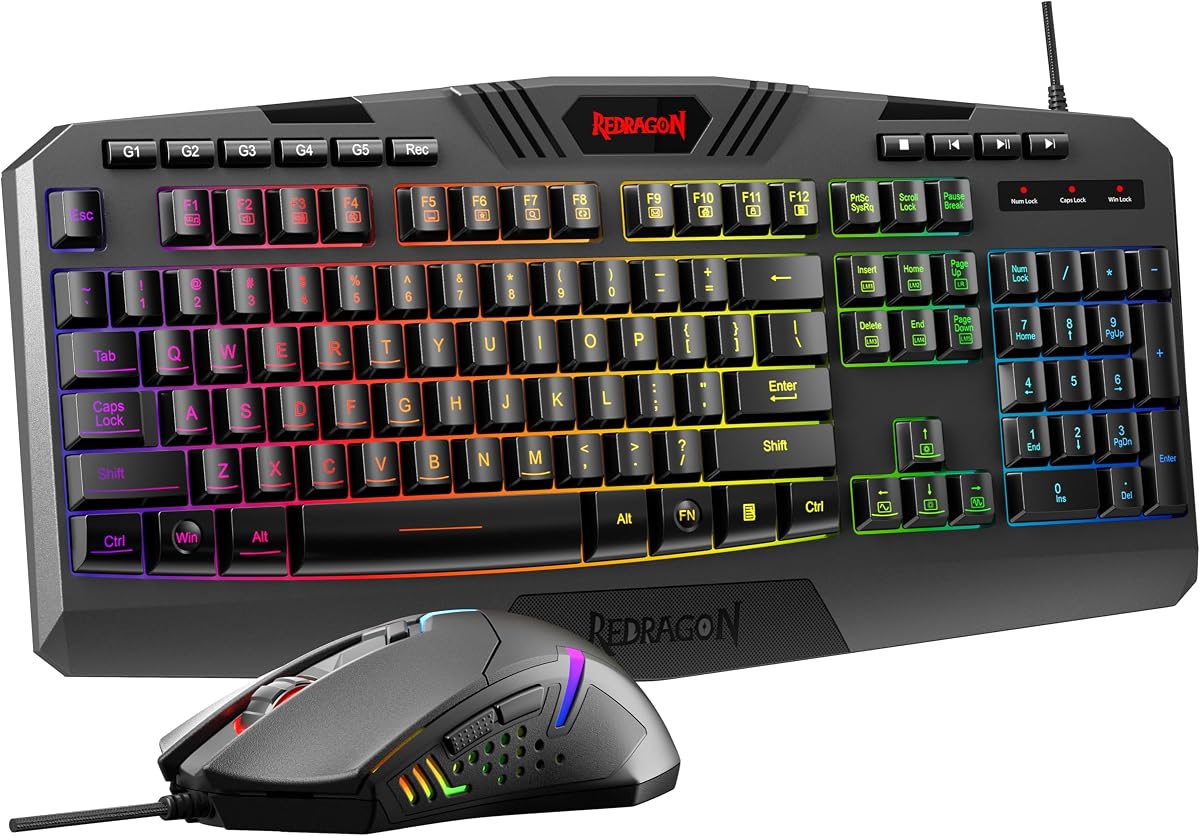
Redragon’s S101-3 PRO combo is the honest on-ramp: a full-size RGB membrane keyboard, a high-DPI-capable gaming mouse, wrist rest, anti-ghosting, quiet soft-touch keys, and software for lighting and macros—including independent macro record keys on the board. For students building a first PC FPS setup, a matched pair beats a fancy HE keyboard with a terrible office mouse.
Quiet membrane typing helps when ranked nights share walls with sleepers. Anti-ghosting keeps WASD+shift+crouch honest enough for casual and mid-level play. The mouse’s onboard DPI steps (through the listed range) matter as much as the keyboard for aim routines.
You will not get 8000Hz magnetic Rapid Trigger. If that is already your checklist, look at WIN68 HE or Corsair. If you need something that works tonight for Fortnite, Apex, or casual CS, the combo’s value proposition is the point of this slot in the pack.
Versus SteelSeries Apex 3, Redragon includes a mouse and leans harder into budget macro RGB. Versus HyperX 60%, you gain completeness and lose compact aluminum competitive focus.
Choose S101 when the whole desk setup is the purchase. Skip it when mouse space and HE actuation are already known requirements.
Detach or ignore flamboyant lighting modes if they distract your peripheral vision during aim training.
Keep the mouse if you like it; graduate the keyboard to a 60% HE later without guilt.
Use it for chatting between rounds; some aim coaches prefer floating wrists during fights—test both.
We may earn a commission at no additional cost to you.

This 35-key one-handed board exists for one job: put movement and a handful of binds under your left hand and surrender the desk to the mouse. Dimensions around 8.3 by 6.3 inches, a wrist rest, crater-style keys, rainbow LED lighting, and multimedia FN shortcuts make it a portable FPS gadget for PC and, per the listing, PlayStation and Xbox scenarios via USB.
Ergonomics are straightforward—recessed wrist support, stepped layout, curved caps. Lighting includes static and breathing modes via FN combinations. You will not get Hall Effect graphs or Hypershift ecosystems; you get space and simplicity.
Versus Tartarus V2, this mini is cheaper in spirit and lighter on software, with broader casual console messaging. Versus 60% HE boards, you cannot comfortably write Discord essays without another keyboard nearby.
Buy it for pad-max aim training or couch sessions. Skip it if you need a daily driver typer or serious magnetic features.
Label binds with tiny stickers during week one; blank memory kills under pressure.
Keep a full keyboard within arm’s reach for chat and browser duty.
Feature support varies by game and platform—test text entry and bind expectations early.
Players who want Tartarus-level macros or HE Rapid Trigger should treat this as a bridge.
We may earn a commission at no additional cost to you.
HyperX Alloy Origins 60 is the classic competitive compact: petite 60% form factor, full aircraft-grade aluminum body, HyperX Red linear switches rated for tens of millions of presses, double-shot PBT keycaps with side printing, exposed-LED RGB, NGENUITY customization, adjustable tilt feet, and a detachable USB-C cable. It is what you buy when you want compactness and reliability more than actuation graphs.
Aluminum keeps the board from skating when you panic-strafe into the case. Linear Reds are predictable for tap-strafing habits you already own from years of mechanical keyboards. PBT caps resist shine through sweaty tournaments and ranked resets. Side-printed secondary functions help when 60% layers bury controls.
NGENUITY handles game mode, macros, and per-key lighting. Included puller and extra keycaps nod to customization without forcing magnetic ecosystems. Multi-platform compatibility—PC, PS5, PS4, Xbox Series, Xbox One—covers living-room FPS nights.
Versus WIN68 HE, Origins 60 is simpler and battle-proven, not RT-tunable. Versus Corsair Clipper, HyperX is traditional mechanical excellence versus Hall Effect feature density. Versus full-size Logitech/SteelSeries, you reclaim enormous mouse space.
Choose Origins 60 for trusted compact mechanical FPS. Skip it only if adjustable magnetic Rapid Trigger is already non-negotiable.
Learn FN layers for arrows before a tournament weekend—not during.
Try the flattest setting for low desks; raise slightly if your wrists extend uncomfortably.
Detach USB-C and toss the board in a sleeve for LANs—the aluminum shell tolerates backpack life.
After your aim plateau is technique, not hardware excuses—then magnetic boards become interesting.
We may earn a commission at no additional cost to you.
Corsair’s Clipper Pro Mini 60 is Hall Effect with a competitive vocabulary: Rapid Trigger with quick reset claims, Multi-Action/Smart Tap/Tap Lock helpers, FlashTap SOCD for sharper counter-strafes, AXON hyper-processing up to 8000Hz, MGX Hyperdrive Core magnetic switches with adjustable 0.2–3.8mm actuation, IP57 water/dust resistance, PBT double-shot keycaps, and dual-layer sound dampening in a wired 60% US QWERTY shell for PC and Mac.
Durability is the adult differentiator versus some value HE boards. IP57 and long keystroke ratings speak to tournament travel and messy desks. Dampening keeps rapid taps from sounding like gravel, which matters when you stream or share rooms.
Versus WIN68/AULA, Corsair brings stronger spill resistance and ecosystem polish. Versus HyperX Origins 60, Clipper adds the magnetic meta HyperX intentionally skips. Mac mention helps dual-OS households even if serious tuning still happens on the game PC.
Buy Clipper Pro Mini when you want HE features with Corsair’s durability story. Skip it if traditional aluminum Reds already peak your ranks and you refuse another settings surface.
After any serious spill, follow the dry-out guidance in the listing—ratings are not invitations to rinse keyboards.
Tune SOCD/RT in custom games first; official competitive modes may limit certain assists.
IP57 helps; wiping liquids immediately still wins championships.
Enable one advanced tool at a time so you know what changed your peeks.
We may earn a commission at no additional cost to you.

Womier SK80 is the hybrid pick for players who game seriously but also live in browsers, Discord, and documents on the same board. A 75% gasket-mounted hot-swap mechanical with a color multimedia display, pre-lubed linears, south-facing RGB, and Mac/Win Type-C connectivity, it reclaims some mouse space versus full-size boards without forcing extreme 60% layer life.
For FPS, the missing numpad still helps pad width, and linear switches support rapid taps. You will not tune 0.01mm actuation curves—this is feel and layout, not magnetic esports firmware. The screen’s caps/RGB/system readouts help when you accidentally lock Win keys or change lighting mid-session.
Versus HyperX 60%, SK80 gives more dedicated keys and creamy gasket vibes while losing aluminum HE-alternative simplicity. Versus Corsair/WIN68 HE, it is the lifestyle board you leave on the desk when competitive season pauses.
Buy SK80 when one keyboard must do ranked and writing. Skip it if your only metric is Rapid Trigger leaderboard culture.
Turn off flashy GIF modes during tournaments; motion in your peripheral vision is free distraction.
Map a simple FN layer for any missing keys before your first ranked night on this board.
Park a wide mousepad still—75% helps, but pad quality matters more than another 2cm.
Content creators, students, and FPS fans who refuse a second keyboard for homework.
We may earn a commission at no additional cost to you.
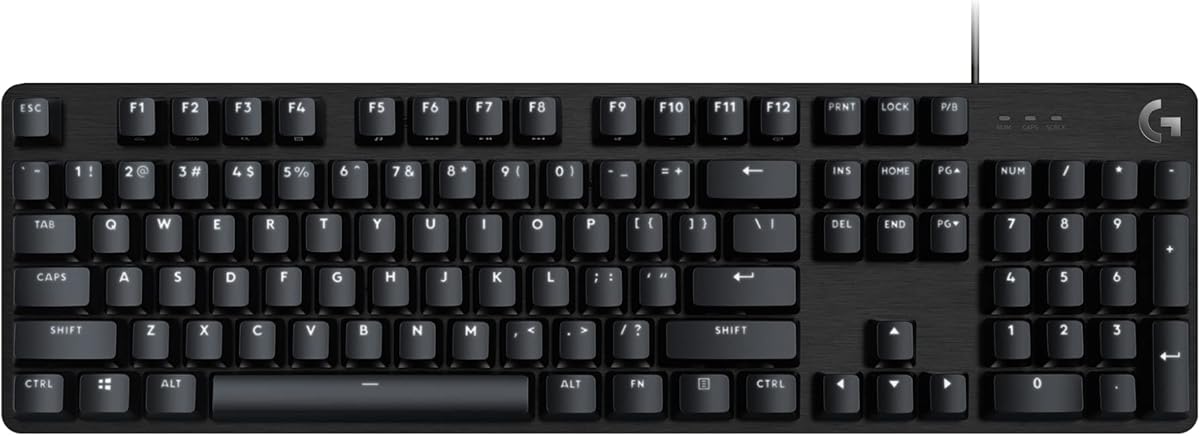
Logitech G413 SE is for FPS players who still want a number pad, tactile feedback, and a stiff aluminum-backed board that does not ask them to relearn arrows. PBT keycaps, white LED lighting, anti-ghosting with 6-key rollover, and FN media controls make it a straightforward gaming-and-homework tank. A TKL sibling exists in Logitech’s lineup if you outgrow the numpad later—the listing itself points that direction.
Tactile switches give a bump that some players prefer for consistent crouch/walk taps compared with deep linear mush. The brushed aluminum-magnesium top case resists flex when you smash movement keys. This will not win a Rapid Trigger marketing war; it will survive years of mixed use.
Versus SteelSeries Apex 3, G413 is mechanical tactile rather than whisper membrane. Versus 60% HE boards, you keep layout comfort and lose pad width and magnetic tuning. Versus Redragon’s combo, you get a stronger single keyboard focus without a bundled mouse.
Choose G413 SE if layout familiarity beats esports firmware. Skip it if your mousepad is already too narrow for a full-size board.
If mouse space is the only complaint, consider Logitech’s TKL SE path mentioned in the listing rather than jumping straight to HE.
Disable Windows key in game mode (via FN) to avoid alt-tab disasters mid-clutch.
Shift the keyboard left and use an extended pad; do not center the board like an office.
If you already love linears for tracking, HyperX 60% or HE boards may suit better than G413’s bump.
We may earn a commission at no additional cost to you.

SteelSeries Apex 3 is the quiet full-size gamer: whisper-quiet switches rated for high durability, IP32 water resistance, 10-zone RGB, a premium magnetic wrist rest, and dedicated multimedia controls. Compatibility across Windows, Mac, Xbox Series, and PlayStation makes it a living-room-friendly FPS board when your “rig” sometimes is a console.
If your ranked grind happens after midnight, noise is a feature. Quiet switches will not replace HE peek tech, but they keep the hobby sustainable in apartments. IP32 and the wrist rest are quality-of-life for marathon sessions and clumsy beverage placement.
Versus G413 SE, Apex 3 is quieter and more spill-minded, less classically mechanical-tactile. Versus 60% HE boards, it is the comfort/console path. Versus Redragon’s combo, Apex 3 is keyboard-focused with stronger durability cues.
Buy Apex 3 for quiet full-size reliability. Skip it when mouse space and Rapid Trigger are the only scores that matter.
Detach the magnetic wrist rest for pure aim blocks if you prefer floating wrists, then snap it back for chat lobbies.
PrismSync effects are fun—dim them if they reflect in a glossy monitor during dark maps.
Quiet switches plus headphones beat any RGB flex when walls are thin.
Confirm per-game keyboard support; Apex 3’s broad compatibility still depends on titles allowing keys.
We may earn a commission at no additional cost to you.
Hall Effect boards (WIN68 HE, AULA, Corsair Clipper) let you tune actuation and Rapid Trigger behavior. Traditional mechanicals (HyperX Origins 60, Logitech G413) offer predictable feel and simpler mental models. If you will not open a web driver, HE features are wasted money energy.
Measure your pad. Low-sens players often need 60% or a left keypad. High-sens players on small pads can succeed on TKL/75% or even full-size if the keyboard sits far left. Do not buy a 60% to fix crosshair placement—that is practice.
Tartarus and 35-key minis maximize aim space but punish typing. 60% HE boards compromise. Full-size quiet boards prioritize household peace. Pick based on whether Discord essays happen on the same machine.
Some tournaments and anti-cheat cultures scrutinize advanced movement helpers. Learn what your game and league allow. Tune in unrated modes first.
They can improve how quickly keys reset and how lightly you can actuate movement keys, which helps players who already have strong fundamentals. They will not replace crosshair placement practice. Think of HE as refining an existing skill ceiling, not purchasing aim.
8000Hz is the modern marketing peak on several boards here; many players are served well by solid 1000Hz implementations too. Benefits shrink if your PC, USB setup, or game engine does not keep up. Stable wired connections still matter more than chasing numbers alone.
No. It is popular because it frees mouse space. If you hate layers or need a numpad, a TKL/75% like Womier SK80 or a full-size board shifted left can work. Your pad and sensitivity decide more than internet dogma.
Only after you understand what they do and whether your game or competition allows them. They can clean opposing direction inputs; used blindly, they create confusion about your own mechanics.
Keypads maximize mouse space and suit controller converts. 60% boards keep typing and chat saner. Most players should start with 60% HE or HyperX-style compact before Tartarus life.
Not inherently. SteelSeries Apex 3 and Redragon-style membranes can be perfectly fine for casual and intermediate play. You give up HE tuning and some mechanical preference, not the ability to shoot.
Prefer wired for these competitive-focused picks. Wireless can be excellent on premium kits outside this pack, but every board highlighted for HE competition here is wired-first for a reason.
Start milder than the marketing maximum. Play several sessions, then adjust. Over-sensitive RT settings produce accidental taps that feel like hardware faults.
It adds weight and rigidity so the board moves less when you bump it—helpful, not magical. HyperX Origins 60 is the aluminum exemplar in this pack.
HyperX, SteelSeries, and the one-hand mini list console compatibility in various ways. Always verify per-game keyboard support on PlayStation or Xbox; hardware compatibility is not the same as a shooter enabling keyboard/mouse.
The best FPS keyboard in 2026 is the one that matches your mousepad and your willingness to tune. WIN68 HE leads when Rapid Trigger and fine Hall Effect control are the mission. HyperX Alloy Origins 60 leads when you want compact aluminum certainty without magnetic homework. Corsair Clipper Pro Mini leads when brand Hall Effect features and IP57 durability share priority.
Keypads from Razer and simpler one-hand minis exist for pad-max specialists, while Redragon, Logitech, and SteelSeries cover budget, full-size tactile, and quiet night-queue realities. Womier SK80 keeps hybrid workers from living on Fn layers alone.
Free the mouse space you truly use, tune only the features you understand, and spend the rest of your time in aim trainers—not in RGB menus.