Best Competitive QHD Speed
AOC Q27G41ZE 27" 240/260Hz
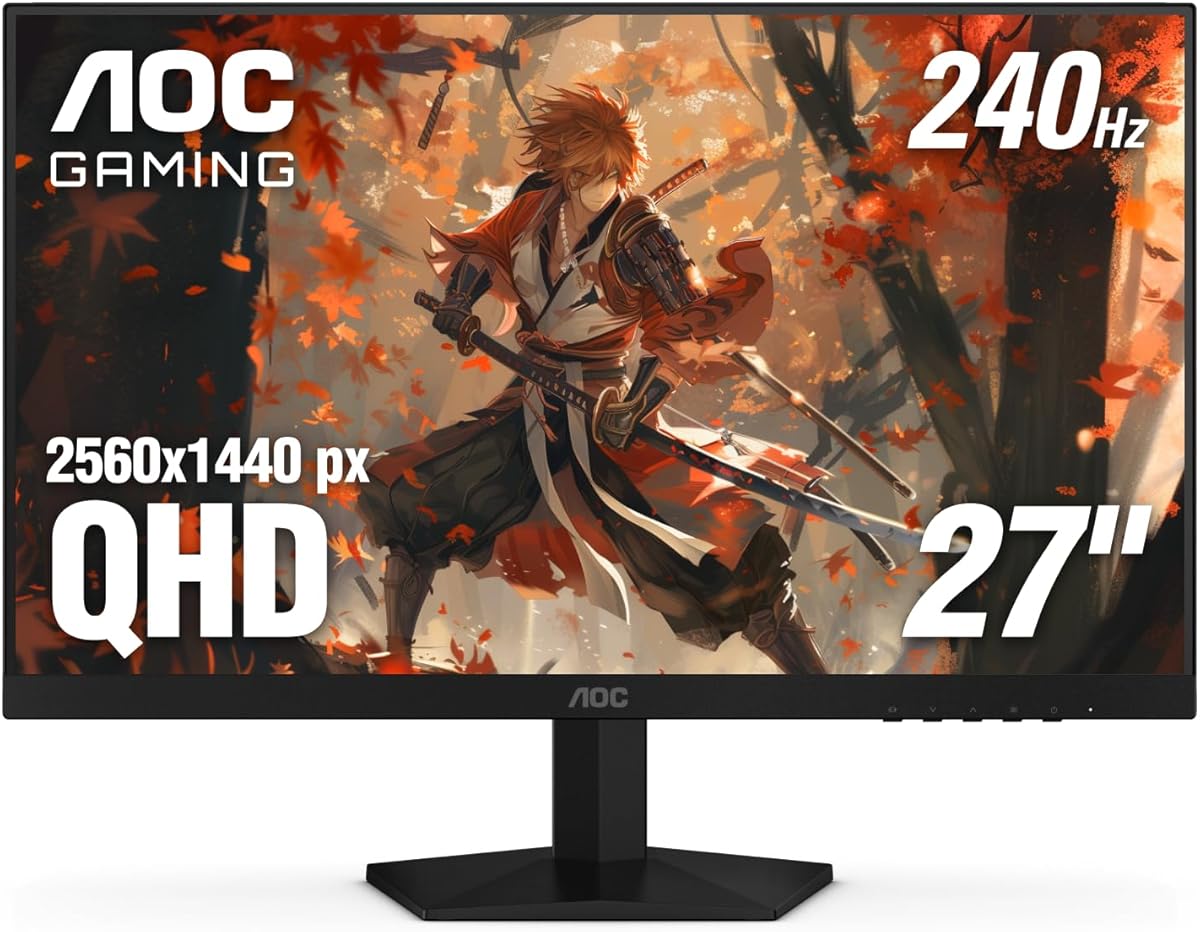
- 27" QHD IPS with 240Hz native / 260Hz overclock path
- 0.3ms MPRT marketing and Adaptive-Sync / G-Sync Compatible
- Shadow Control and gaming OSD tools for ranked visibility
Expert Review & Guide
IPS gaming monitors won the culture war for a reason: wide viewing angles, richer color than old TN esports panels, and—thanks to Fast IPS generations—refresh rates that no longer feel like a compromise. Whether you queue ranked shooters at 240Hz+ or want a 27-inch QHD all-rounder that also looks decent in Discord and Netflix, the category now spans serious competitive tools and hybrid work-play screens.
We reviewed ten pack listings spanning LG UltraGear, Samsung Odyssey G5, Acer Nitro, AOC’s overclocked QHD rocket, Gigabyte SuperSpeed IPS, MSI/Acer 24-inch FHD values, and KTC’s speaker-equipped 220Hz challenger. Specs come from each product pack—refresh claims, adaptive sync badges, HDR notes, and response marketing—so you can match the panel to the GPU frames you can actually produce.
A quick honesty check: response-time acronyms (GtG, MPRT, MBR, VRB) are not identical, and overclocked refresh modes sometimes need DisplayPort. Read each review’s caveats, enable adaptive sync correctly, and remember that a 540Hz fantasy panel does nothing if your PC averages 120 FPS.


As an Amazon Associate we earn from qualifying purchases. We may earn a commission at no additional cost to you.
Match refresh rate to your GPU tier: FHD 144–180Hz loves midrange cards; QHD 180–260Hz wants stronger silicon. Color gamut and HDR notes help when you also create or stream.

Twenty-four-inch FHD remains the geometry many aim trainers quietly prefer: bigger relative heads in Valorant and CS2, easier GPU load, less UI chrome sprawl. LG’s 24G411A-B wraps that classic size in IPS color—HDR10 and up to about 99% sRGB—so you are not stuck with the ashen look of ancient TN panels while chasing ranks.
Motion features center on 120Hz native operation with a 144Hz overclock path and 1ms MBR clarity claims. Pair that with G-Sync Compatible and FreeSync and you get tear-free frames across NVIDIA and AMD cards when you enable the right toggles.
The slim UltraGear chassis is easy to place on a shallow desk or take to a friend’s place. It will not replace a 27-inch QHD movie monitor for couch co-op cinematic games; it will help your flick shots look cleaner than a 60Hz office hand-me-down.
Who should buy: competitive players on midrange GPUs, students in dorms, and anyone building a dual-PC aim/training station. Who should step up: single-player immersion fans who want Samsung’s 32-inch Odyssey canvas.
Set the overclock in the OSD only after a stable DisplayPort connection, then cap FPS near refresh to reduce tearing if adaptive sync misbehaves in a specific title.
FHD 144Hz is friendly to last-gen midrange cards—great when you want max frames instead of max pixels.
Disable unnecessary HDR in competitive titles if it crushes blacks; keep sRGB-ish modes for visibility.
We may earn a commission at no additional cost to you.
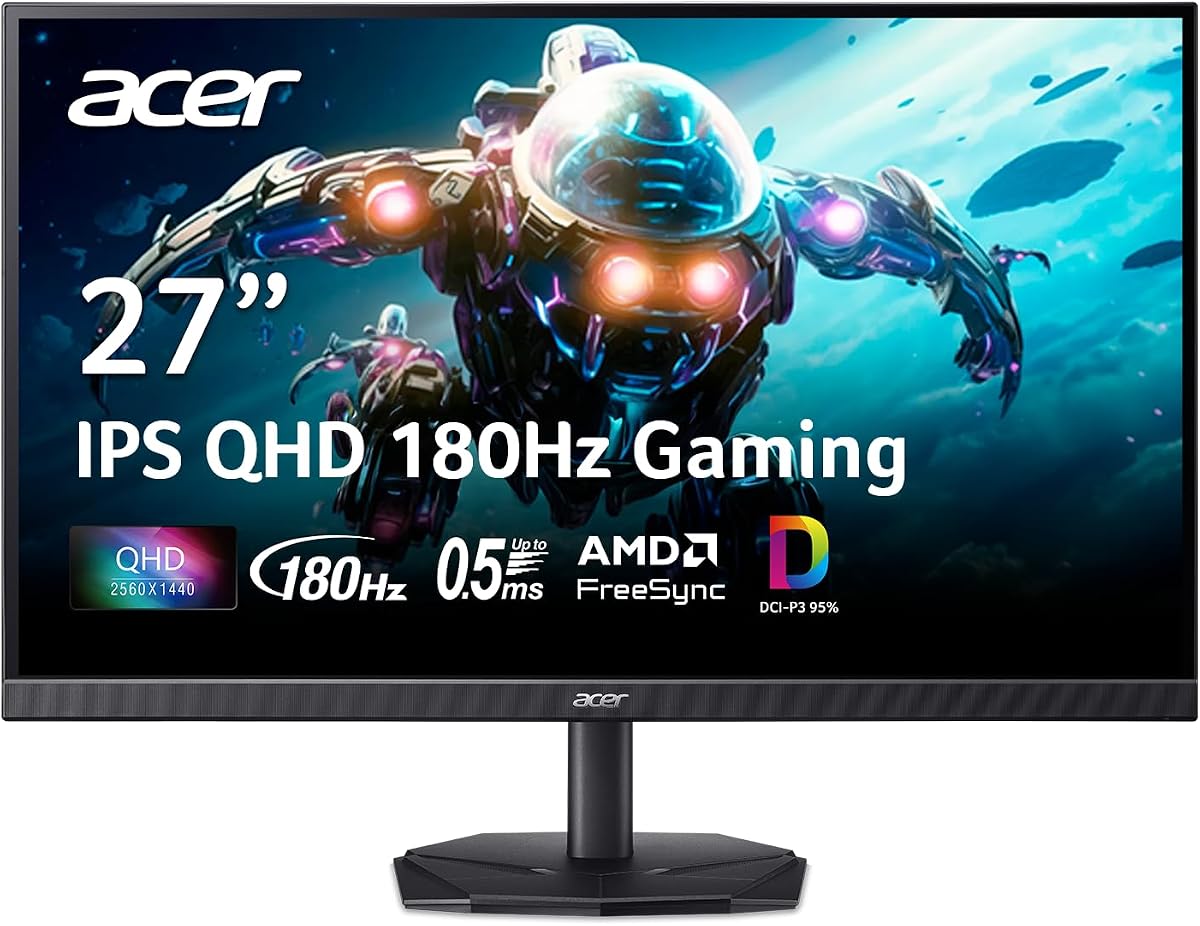
Acer’s Nitro KG271U-class 27-inch QHD IPS is the “one monitor for most PC gamers” archetype: 2560×1440 sharpness, up to 180Hz motion, FreeSync, and a color story that cites about 95% DCI-P3 with HDR10. That mix serves open-world adventures and multiplayer nights without forcing a TN contrast sacrifice.
Zero-frame design reduces the visual fence around the image—nice in dark rooms. Response marketing up to 0.5ms speaks to Fast IPS ambitions; as always, use overdrive carefully to avoid inverse ghosting.
One hundred eighty hertz is a practical ceiling for many mid-high GPUs at QHD in modern titles—high enough to feel transformative versus 60Hz, without requiring a 4090 just to feed the panel. FreeSync ties frame pacing together when FPS fluctuates.
Productivity side benefit: QHD 27-inch is also a fine Windows work canvas the morning after. You do not need a second boring office monitor if desk space is scarce.
Buy Nitro when you want colorful QHD speed without climbing into 240Hz+ pricing. Sit near the sweet spot distance (arm’s length) so UI text stays comfortable.
Start with a less saturated game mode for competitive shooters; keep vivid/HDR for single-player spectacles.
Both live near 180Hz QHD IPS. Prefer Acer for DCI-P3 emphasis; Gigabyte for SuperSpeed IPS branding and straightforward HDMI/DP simplicity.
We may earn a commission at no additional cost to you.
Samsung’s 32-inch Odyssey G5 (G50F) is how IPS gaming goes big without jumping to a curved VA ultrawide. QHD resolution on Fast IPS at 180Hz with a 1ms GtG claim gives you panoramic presence for Starfield-style exploration and still keeps multiplayer motion competent.
G-Sync Compatible and FreeSync branding mean fewer platform worries. HDR10 adds highlight pop; Black Equalizer is the practical competitive tool when maps love shadows. Virtual Aim Point projects a crosshair-style aid for practice—use responsibly where game rules allow.
Wide 178° IPS angles help when a co-op partner spectates from the side. You will want to sit slightly farther back than with a 24-inch esports panel; otherwise UI elements feel huge and necks pay rent.
This is our immersive pick for players who prioritize world presence and still want modern refresh. Pure tournament travelers may prefer 24–27 inch for packing and focus.
Feed it with DisplayPort from a GPU that can hold high QHD frame rates—180Hz emptiness is wasted if you average 70 FPS on ultra presets.
Tape a 32-inch outline. If your keyboard tray collides with the stand, budget a VESA arm early.
Create one bright competitive profile with Black Equalizer tuned carefully, and one cinematic HDR-friendly profile for story games.
Take 32" for immersion; take 27" 200Hz G53F when pixel density and higher refresh matter more than size.
We may earn a commission at no additional cost to you.

LG’s 27G61ZB-B pushes UltraGear into 200Hz QHD territory—the zone where serious multiplayer and pretty single-player coexist. IPS color with up to about 99% sRGB and HDR10 keeps explosions and landscapes intentional rather than muddy, while 1ms response claims aim to keep that speed usable.
FreeSync Premium is the adaptive-sync headline; NVIDIA players should still test G-Sync Compatible behavior title by title as usual. HDMI and DisplayPort coverage supports PCs, consoles, and Nintendo Switch-style dock setups mentioned in gaming ecosystems.
The 27-inch size remains the crowd- Pleaser for mouse sensitivity muscle memory. If you already aim train on 27-inch, upgrades feel natural.
Who it is for: gamers escaping 60–144Hz QHD who want a clear step to 200Hz without extreme overclock hunting. Who should prefer AOC: FPS specialists who want every extra hertz on DisplayPort.
Enable the highest stable refresh in Windows, confirm Game Mode in the OSD, and avoid max overdrive if you see coronas on moving UI.
Match HDMI 2.0/2.1 capabilities to your console’s output; do not assume PC DisplayPort tricks apply on the living room couch.
200Hz IPS QHD looks clean on camera compared with TN; worth considering if your face cam sits beside a colorful game scene.
We may earn a commission at no additional cost to you.
When the brief is “IPS color without surrendering esports speed,” AOC’s Q27G41ZE answers loudly: 2560×1440, 240Hz native, 260Hz overclock over DisplayPort, Adaptive-Sync with G-Sync Compatible messaging, and a 0.3ms MPRT clarity claim. This is the monitor for players who already average high frame rates and hate leaving headroom on the table.
Shadow Control and related gaming OSD tools matter in titles that hide opponents in corners. Wide-view IPS keeps color usable for content creators who stream the same machine they frag on.
Tilt from about -3° to +21° covers basic ergonomics; many competitive users will VESA-mount to nail eye line and desk depth. Do not cheap out on the DisplayPort cable if you chase the overclock.
This is our competitive QHD speed pick because the refresh ceiling outruns the 180–200Hz crowd while staying IPS. If your GPU is happier at 1440p/120–160 FPS, you may not feel the 260Hz tax—buy Acer/Gigabyte 180Hz instead and spend elsewhere.
Benchmark your favorite ranked title at competitive presets before buying; let data, not marketing, choose between 180, 200, and 240+.
Players with headroom above 240 FPS who enjoy chasing every millisecond in aim trainers and esports titles.
MPRT numbers often use backlight tricks; try both clarity modes and pick what your eyes prefer without excessive flicker sensitivity.
AOC for maximum hertz; LG for a slightly calmer 200Hz all-rounder with FreeSync Premium emphasis.
We may earn a commission at no additional cost to you.

MSI’s PRO-labeled MP243L is the adulting gaming monitor: 144Hz IPS for evening matches, TÜV-style eye-care for daytime spreadsheets, FreeSync for tear control, and a footprint that fits real apartments. The 4.7 pack rating suggests it succeeds at that unglamorous brief.
Contrast around 1500:1 and wide IPS angles keep work documents and games readable from slightly off-center—useful on shared desks. HDR Ready branding is modest; treat HDR toggles cautiously.
Ports include HDMI and VGA. Gamers will live on HDMI (or add DP via other MSI SKUs if needed—this listing emphasizes HDMI/VGA). VESA is the upgrade path when the tilt stand feels limiting.
Buy it for dorms, hybrid workers who game after Slack, and secondary aim stations. Skip it when you already committed to a 27-inch QHD primary and need matching resolution.
Pair with headphones; do not expect cinema audio from a thin PRO monitor without built-in speaker glory.
Keep a low blue light profile for daytime, switch to a game profile after hours so you are not fighting washed colors in competitive titles.
144Hz IPS FreeSync is more gaming-capable than millions of 60Hz office panels people still pretend are fine.
We may earn a commission at no additional cost to you.

Gigabyte’s GS27QA is refreshingly focused: 27-inch QHD SuperSpeed IPS, 180Hz, 1ms MPRT, FreeSync, HDMI and DisplayPort. No curved gimmick, no smart TV OS—just a fast color-capable panel for people who want to plug in and queue.
One hundred percent sRGB and 8-bit color depth framing suit gamers who also edit thumbnails or grade casual footage. HDR Ready adds a toggle for supported titles without promising cinematic HDR mastery.
Competitive players get enough hertz for modern shooters if their GPU holds QHD frame rates; single-player fans get sharper textures than FHD without 4K’s FPS tax. It is a balanced “main monitor” shape.
Who buys GS27QA: builders who trust Gigabyte ecosystem gear and want predictable IPS gaming. Who buys AOC instead: frame-rate monsters needing 240Hz+.
Update monitor firmware if Gigabyte publishes any, set FreeSync on, and pick overdrive mid for fewer artifacts.
GS27QA + muted keycaps + headphones often looks more intentional than RGB-heavy VA curves for photo-facing setups.
Gigabyte emphasizes SuperSpeed IPS clarity; Acer leans into DCI-P3 richness. Both are 180Hz QHD classmates.
We may earn a commission at no additional cost to you.
The 27-inch Odyssey G5 (G53F) is the “just right” Samsung in this pack: QHD density, 200Hz speed, FreeSync Premium, and the same Black Equalizer / Virtual Aim Point toolkit as its bigger brother without demanding as much desk real estate. If you want Odyssey energy at a classic competitive size, start here.
Auto Source Switch+ is the lifestyle feature—sit down with a console already humming and the monitor finds it, then jump back to PC without OSD archaeology. Hybrid living-room desks benefit.
One millisecond MPRT and HDR10 round out the motion/visual pitch. Wide IPS angles keep colors consistent when you lean or share the view.
We named it the 200Hz all-rounder because it balances speed, features, and size for the widest gamer population in this list. Extreme esports min-maxers can still climb to AOC 260Hz; immersion seekers can still climb to 32-inch G50F.
Dial Black Equalizer gently—too aggressive washes the art direction. Keep a second picture mode for cinematic games.
PC on DP, console on HDMI, let Auto Source Switch+ earn its plus sign during couch nights.
Coming from 24-inch FHD? Expect to retune mouse cm/360 when the same FOV sits on denser QHD pixels.
Samsung brings Equalizer/Aim Point/Auto Switch personality; LG brings UltraGear FreeSync Premium simplicity. Pick the OSD culture you prefer.
We may earn a commission at no additional cost to you.

The KB242Y is how you stop playing on a blurry hand-me-down without lighting money on fire. Acer’s 23.8-inch FHD IPS with up to 120Hz, Adaptive-Sync, 1ms VRB claims, and about 99% sRGB delivers the first “oh, motion can be clean” moment for a lot of players.
Zero-frame styling and wide IPS angles make it a friendly bedroom monitor. HDMI covers modern connections; VGA is there for that one ancient classroom PC you should not be gaming on anyway.
Competitive players with strong GPUs will outgrow 120Hz and FHD sooner—that is fine. As a first gaming IPS or a household secondary, it punches above its modest ambitions, and the strong pack rating backs that role.
Set Adaptive-Sync on, pick a moderate overdrive, and enjoy indie titles and older multiplayer games that are easy to run at high FPS even on modest hardware.
Upgrade path later: keep this as a vertical Discord/monitor for chat while a 27-inch QHD becomes your primary.
If your GPU already averages 200+ FPS in your main shooter, skip ahead to 144–240Hz options above rather than lingering at 120Hz.
Even budget IPS beats glossy TV glare for desktop distances—sit correctly and enable any blue-light modes for daytime homework.
We may earn a commission at no additional cost to you.

KTC’s H27T22C-class 27-inch monitor chases players who want Fast IPS QHD speed with fewer cable boxes: up to 220Hz, 1ms response claims, Adaptive Sync spanning FreeSync and G-Sync tech language, HDR400, and built-in speakers. That combination is ideal for compact rooms where a soundbar is one accessory too many.
Two hundred twenty hertz is meaningful if your GPU lives in the 180–220 FPS band at 1440p competitive settings—smoother than 180 without requiring AOC’s 260Hz feed. HDR400 adds credible highlight pop for supported titles and movies.
Eye-care filtering helps during RPG grind nights that somehow become 2 a.m. Speakers handle voice chat emergencies and trailer watching; serious tacticians will still wear a headset.
Value brands deserve a careful unboxing: check for panel uniformity early within return windows. A good unit is a bargain speed/color hybrid; a bad unit should go back, same as any panel lottery.
Buy KTC when you want high QHD hertz plus HDR400 and speakers in one box. Buy AOC when absolute maximum refresh and Shadow Control tooling matter more than onboard audio.
Monitor with speakers, compact HDMI/DP cables, and a headset in reserve—KTC covers the “forgot my desktop speakers” failure mode.
Try 200Hz if 220Hz flickers with your cable, then revisit with a higher-rated DisplayPort lead.
We may earn a commission at no additional cost to you.
FHD 144–180Hz maximizes FPS on mid GPUs. QHD 180–200Hz is the mainstream sweet spot. QHD 240Hz+ is for high-end cards and esports specialists. 4K high-refresh exists elsewhere but asks even more of silicon.
Fast IPS closed much of the motion gap versus TN while keeping color and angles. OLED is another universe (deeper blacks, burn-in calculus). This guide stays in IPS pack options.
Black equalizers, crosshair aids, and shadow controls can help visibility. RGB lighting rarely improves K/D. Prioritize panel speed and comfort before cosmetic LEDs.
If the monitor is also your work screen, prefer models with eye-care certifications and sensible sRGB modes. VESA arms fix many cheap stands.
Use DisplayPort for max PC refresh when the listing emphasizes it; keep HDMI for consoles.
Windows Display Settings often defaults to 60Hz—change it manually.
Turn it on in the monitor OSD and in AMD/NVIDIA software.
Start at middle settings; watch for inverse ghosting on dark UI.
One competitive (bright, less HDR), one cinematic (HDR/colorful).
Changing size/resolution changes aim feel—spend a night in an aim trainer.
Yes. Fast IPS panels at 144–260Hz are widely used in competitive scenes that once demanded TN. Motion clarity depends on refresh, response tuning, and your FPS—not the IPS label alone.
They measure or market motion differently. GtG is pixel transition; MPRT/MBR/VRB often involve backlight tricks. Compare within brands carefully and trust your eyes in motion tests.
G-Sync Compatible / FreeSync Premium covers most players. Dedicated G-Sync modules are rarer and pricier; try Compatible first.
Twenty-four-inch FHD keeps targets large and FPS high. Twenty-seven-inch QHD sharpens the image and suits hybrid play. Preference and desk distance decide more than dogma.
180–200Hz is plenty for most QHD gamers. Chase 240Hz+ if your GPU sustains those frames and you notice the difference in aim trainers.
DisplayHDR 400-class features help supported titles; vague “HDR Ready” labels are weaker. Competitive players often disable HDR for consistency.
Absolutely—QHD IPS is excellent for work. Use eye-care modes by day and game profiles by night.
IPS typically wins viewing angles and color consistency; VA often wins contrast. Fast IPS is the pack focus here for colorful, responsive play.
Try it. If you see instability, flicker, or blackouts, return to rated native refresh and check the cable.
Convenient for casual play and setup tests; inadequate for competitive audio cues. Budget a headset either way.
IPS gaming in 2026 is no longer a soft compromise—it is a color-forward default that still hits serious refresh rates. For raw competitive QHD speed, the AOC 240/260Hz panel leads this pack; for big-screen immersion, Samsung’s 32-inch Odyssey G5 shines; for a balanced 27-inch daily driver, the 200Hz Odyssey G53F is the easy recommendation.
Match hertz to your real FPS, enable adaptive sync correctly, and spend as much attention on desk distance and overdrive tuning as on shopping-tab mythology.
Get those basics right and a Fast IPS monitor stops being a spec sheet and starts being the quiet advantage in your peripheral vision—every flick, every shadow, every late-night queue.