Best Bluetooth 2-in-1 OTC Style
TTQ OTC Bluetooth Hearing Aids

- Hearing-aid mode plus Bluetooth headset streaming in one device
- About 38 dB gain with smart noise reduction and three levels
- Rechargeable case ~5.5H use / ~60H total; touch controls
Expert Review & Guide
Shoppers typing “hearing aid compatible earbuds” are rarely hunting another pair of gym buds. They want clearer conversation, TV dialogue they can follow without cranking the set, and—when possible—music or calls that do not fight their hearing devices. In 2026 that search lands on a mixed Amazon shelf: OTC hearing aids with Bluetooth streaming, pocket personal amplifiers with headphone options, neckband amplifiers, and the unglamorous care gear that keeps wax and moisture from killing sound quality.
This pack reflects that reality. You will find rechargeable OTC-style aids from TTQ and similar earbud-form amplifiers, a senior-friendly iRoger-style personal sound amplifier with headphones included, neckband Bluetooth hearing amplifiers, plus PerfectDry LUX, cleaning vacuums, tool kits, and Resound- or Audien-compatible dome replacements. Ratings are from the supplied listings. We do not invent clinical claims or dollar prices—self-fitting OTC products are not a substitute for audiology care when loss is complex.
Read the top picks for a fast path (Bluetooth OTC dual-use, long-battery amplifier, moisture protection), then use the table and reviews to match lifestyle: streaming music, simple volume dials, or maintenance for devices you already own.


As an Amazon Associate we earn from qualifying purchases. We may earn a commission at no additional cost to you.
Compare whether each item amplifies sound, streams Bluetooth, or maintains devices you already wear. Specs are listing-derived; no prices.
iRoger Personal Sound Amplifier
The iRoger-style personal sound amplifier is the pack’s clearest answer for someone who wants louder, clearer conversation without downloading an app or learning multi-button OTC aids. Smart auto-gain aims to lift voices and fine detail while avoiding sudden spikes that startle users. A directional microphone biases toward what is in front of you—restaurants and TV-facing sofas are the classic wins—while a single dial handles power and volume without screens.
Inclusivity of listening hardware matters. Soft foam earbuds and over-the-head headphones ship in the box, so households can try which interface feels less fatiguing. Pocket-friendly size makes it a travel companion for family gatherings where background noise usually wins. Fully charging in about an hour with up to one hundred twenty hours of use per charge is the logistics story that grandparents actually remember.
This is still an amplifier category product, not a prescription hearing aid and not a stereo music earbud with ANC. If the search intent was “stream Spotify through tiny buds while wearing Phonak devices,” this unit will not satisfy that niche—look instead at Bluetooth OTC 2-in-1 models or true telecoil/streamer accessories from your clinician. If the intent was “hear my spouse at dinner without fighting the TV remote,” the directional mic plus simple controls are on target.
Everyday use tips: sit so the mic faces the talker, start volume low after auto-gain settles, and clean foams regularly so wax does not mute output. For TV nights, a slight forward lean toward the screen often helps more than another volume click.
Choose this amplifier when simplicity and battery life beat discreet cosmetics. Move to TTQ or the neckband Bluetooth model when streaming phone audio is part of the daily requirement. Add PerfectDry and a cleaning kit regardless of which listening device you land on—moisture and wax sabotage every category equally.
Family buyers should treat this as a conversation-first tool and keep expectations honest: it can transform a quiet room; it cannot rewrite a crowded wedding reception into perfect clarity for every hearing profile.
Seniors who want one dial, travelers who hate charging nightly, and households testing whether amplification helps before committing to a more complex OTC aid.
Try both included interfaces for thirty minutes each. Over-ear cups can feel more stable for TV; foams feel lighter for short errands.
We may earn a commission at no additional cost to you.
TTQ OTC Bluetooth Hearing Aids
TTQ’s OTC Bluetooth aids are the closest match in this pack to the literal keyword: ear-level devices that amplify speech and also behave like Bluetooth headsets for music, movies, and phone calls. Roughly thirty-eight decibels of gain with smart noise reduction that boosts voice bands while cutting noise is the core hearing pitch. Three noise-reduction levels let you adapt from quiet living rooms to busier gatherings without a clinic visit—within OTC expectations for moderate loss.
Comfort and cosmetics get unusual attention for the category: fashionable styling, three earcap sizes, and a claimed 0.14-ounce weight. That matters because “compatible earbuds” shoppers often abandon devices that feel medical or heavy by lunch. A single side touch zone handles volume, noise modes, and call answers, reducing the tiny-button frustration that sinks many first OTC purchases.
Battery life is practical rather than mythical: about five and a half hours of combined music and hearing use per charge, with the case extending total time toward sixty hours and a full case charge under two hours. That pattern fits daytime wear with nightly docking better than the hundred-twenty-hour pocket amplifier lifestyle.
Be honest about the 3.5 rating. Bluetooth hearing hybrids are hard to please every ear canal and every loss shape. Plan a careful return-window trial: test speech in your actual kitchen, streaming from your actual phone, and all-day comfort with your glasses. Whistling and echo are common OTC complaints; the listing claims reductions, but fit still rules.
Buy TTQ when you specifically want earbud-like devices that both amplify and stream. Prefer the iRoger amplifier when menus and Bluetooth pairing feel like barriers. Prefer clinic-fit aids when loss is severe, asymmetrical, or medically complicated.
Setup tip: master hearing-aid mode in quiet first, then enable Bluetooth streaming for a favorite playlist. Switching under stress at a restaurant is how people conclude “these don’t work.”
A retiree who wants clearer conversation at home and also wants to take calls or stream a ballgame without juggling a second pair of consumer earbuds.
Treat 3.5 as a prompt to verify fit quickly during the return window rather than a reason to avoid dual-mode OTC designs entirely.
We may earn a commission at no additional cost to you.

Zero-Whistle Earbud Hearing Aids
Whistling is the social nightmare that makes people leave hearing devices in a drawer. This earbud-style aid leans its entire story on a separated microphone and speaker layout meant to eliminate feedback squeal during wear and adjustment. For shoppers burned by earlier amplifiers that screeched when a hand brushed the ear, that engineering pitch is the reason to trial this model.
Amplification in the mid-thirty-decibel class aims at clear TV dialogue and family conversation. Five touch volume levels keep adjustments on-ear without tools. Imported AI noise-reduction chips (as marketed) try to prioritize speech in restaurants and outdoor noise—environments where simple gain alone often fails.
Power logistics include a compact case offering multiple full charges, roughly eighty hours of standby class endurance, and a ten-minute quick charge for more than two hours of use. That pattern supports errands and travel days when you forgot an overnight charge. There is no loud Bluetooth music narrative here; if streaming is mandatory, TTQ or the neckband model fit better.
Comfort depends on seal and canal shape like any ear-level device. Start at lower volumes after insertion to let the anti-feedback design do its work before you chase loudness. Clean wax from ports weekly—debris recreates the acoustic conditions that cause whistling even in “zero whistle” designs.
Choose these when feedback trauma is your primary objection to amplification. Choose TTQ when Bluetooth entertainment is equally important. Choose professional care when medical red flags or severe loss are present.
Social tip: practice insertion at home before a holiday dinner. Confidence with touch gestures prevents the mid-meal fumbling that draws unwanted attention.
Hardware separation helps, but a dome that is too small or coated in wax can still cause trouble. Pair this purchase with a cleaning kit from later in the list.
If you need phone-call streaming and playlist duty in the same buds, prioritize Bluetooth dual-mode models instead.
We may earn a commission at no additional cost to you.

Neckband Bluetooth Hearing Amplifiers
Neckband Bluetooth hearing amplifiers solve a different comfort equation than tiny ear-level OTC aids. The processor and battery live on the band while domes sit in the canals, which many seniors find easier to handle than microscopic charging contacts. Bluetooth 5.3 supports iOS and Android switching between hearing-aid amplification and media modes for calls, blogs, and music—the dual-use behavior people mean by “compatible earbuds,” even if the hardware looks like a light headset.
Up to thirty-five decibels of compensation with a sixteen-channel digital chip and noise reduction is the clarity pitch. Five volume steps and two noise-reduction modes give enough control for TV nights versus outdoor walks without drowning users in audiology menus. Five dome sizes are a quiet hero: poor seal is why many amplifiers sound thin or whistle.
A roughly one-and-a-half-hour charge for all-day hearing use matches realistic senior routines—dock after dinner, wear after breakfast. Compared with TTQ’s ear-level fashion aids, the neckband trades stealth for handling ease and often simpler battery anxiety.
Heat and jewelry are the practical caveats. Nighttime neckbands in humid climates can feel warm; tuck under collars thoughtfully. If someone already rejects scarves and pendants, ear-level OTC or a pocket amplifier may feel freer.
Buy the neckband when dual-mode Bluetooth matters and finger dexterity makes tiny aids painful. Prefer iRoger when a single dial without Bluetooth is enough. Prefer clinic devices when precision fitting is medically indicated.
Learning path: day one practice volume and noise modes in a quiet room; day two add a phone call; day three try a favorite podcast. Incremental onboarding beats a failed first outing.
Larger controls and a visible band help users with arthritis who struggle with ITC batteries and ultra-small chargers.
TTQ wins discreet earbud cosmetics; the neckband wins handling ease and an explicit dual-mode Bluetooth narrative for mixed media days.
We may earn a commission at no additional cost to you.
If hearing-aid-compatible listening gear has a secret villain, it is moisture. Sweat, humidity, and forgotten wet earbuds destroy microphones and receivers long before “bad sound” gets blamed on aging ears. PerfectDry LUX attacks that villain with a roughly forty-five-minute cycle: open lid, place devices, close lid, walk away, auto shutoff. That speed beats older dryers that monopolize an evening.
The 360° UV-C lamp wrapping the chamber is the differentiation story—coverage regardless of how you orient a tiny aid. Heat drying without replaceable desiccants lowers long-term hassle and cost of ownership. Temperature regulation limited to about 113°F underpins the claim of broad manufacturer approval across rechargeable aids and popular earbud brands listed in the product copy.
Compatibility language spans Oticon, Phonak, ReSound, Signia, Widex, Starkey, and consumer buds like AirPods-class devices—useful in mixed households where a senior’s aids and a partner’s earbuds share a bathroom counter. FDA-registered Class 1 medical device framing adds seriousness versus novelty UV gadgets.
This dryer will not excavate wax from a clogged receiver. Pair it with the cleaning pen kit or micro vacuum below. Think of LUX as nightly insurance after gym days, humid summers, or rainy commuting with amplifiers in.
Buy PerfectDry when you already own aids or earbuds worth protecting—or when you are investing in any amplifier from this guide. Skip only if you already have a clinician-approved drying workflow you love.
Habit stack: dinner dishes, then devices into LUX. Consistency matters more than owning the fanciest cleaner you never run.
Sweat is hearing electronics’ enemy. If amplifiers or Bluetooth OTC aids come to the gym, drying is not optional maintenance.
Dead batteries, torn domes, or wax-packed nozzles. Dry after you clean, not instead of cleaning.
We may earn a commission at no additional cost to you.

Sometimes the “earbud” problem is literally the tip. Hardened, wax-clogged, or torn domes make excellent hearing aids sound muffled, whistley, or painful. This twenty-pack of open perforated domes targets ReSound LiNX2, LiNX3D, LiNX Quattro, and ENYA behind-the-ear styles (RIC and open-fit tubing) listed by the seller—verify your exact model before ordering.
Open domes ventilate the canal and favor a brighter, more natural own-voice sensation than heavy closed tips. That can be ideal for mild-to-moderate loss and users who hate occlusion. People needing stronger low-frequency gain sometimes prefer closed domes—ask your fitter if unsure. Small/medium/large sizing notes in related listings matter; this SKU centers on the 8mm class—measure what is on your ear today.
Replacement cadence is hygiene, not aesthetics. Many clinicians suggest changing domes on a schedule measured in weeks, not years. A twenty-pack plus case makes that realistic for travel and home. Soft silicone reduces irritation if you clean ears gently and keep nails short during changes.
This accessory will not make incompatible consumer earbuds magically couple to a hearing aid. It restores performance for compatible ReSound wearers whose sound degraded because the interface wore out—an underrated fix before buying entirely new electronics.
Buy these when your ReSound domes are discolored, torn, or years old. If you wear Audien-style devices, use the Audien-specific dome packs later instead.
Change tip: wash hands, remove the old dome carefully from the receiver stem, seat the new one fully until it clicks/seats per your model’s guidance, and never force a cracked stem.
Match model names on your device paperwork to the listing. When unsure, order a mixed-size trial strategy or ask your audiology clinic.
Expect clearer highs and less occlusion with fresh open domes. If feedback appears, reseat or try a different diameter.
We may earn a commission at no additional cost to you.

Hearing Aid Cleaning Vacuum Kit
Brushes move wax; vacuums remove it. This cleaning vacuum kit exists for the moment your hearing aid or earbud sounds dull and the nozzle looks beige under a phone flashlight. Eight interchangeable tips—stainless micro-nozzles and softer PP options—let you match the port instead of jamming one toothbrush-style tool into every opening.
An LED display for suction level is more than a gimmick for nervous first-time maintainers. Start low, stabilize the device on a towel, and short pulses beat continuous gouging. Audiology pros and touring musicians already think this way; home users can borrow the discipline.
Portability matters for snowbirds and travelers who cannot visit a clinic every time treble disappears. Still, the 3.5 rating is a reminder that technique varies and some buyers expect miracles from heavily clogged receivers that need professional service or replacement filters.
Use the vacuum on powered-off devices, never on an ear. Follow with PerfectDry if humidity was involved. The premium pen-and-brush kit below covers surfaces and battery doors the vacuum cannot polish.
Buy the vacuum when wax is a recurring villain. Skip it if you are uncomfortable with any DIY near receivers—clinic cleanings remain valid.
Safety mantra: if a tip does not fit easily, stop. Forcing metal into a plastic nozzle is how warranties end.
Quick brush nightly, vacuum when sound dulls, dry after sweaty days. Small habits beat emergency deep cleans before weddings.
Sanitize tips between users. The same tool can serve a senior’s aids and a teenager’s earbuds if hygiene is respected.
We may earn a commission at no additional cost to you.
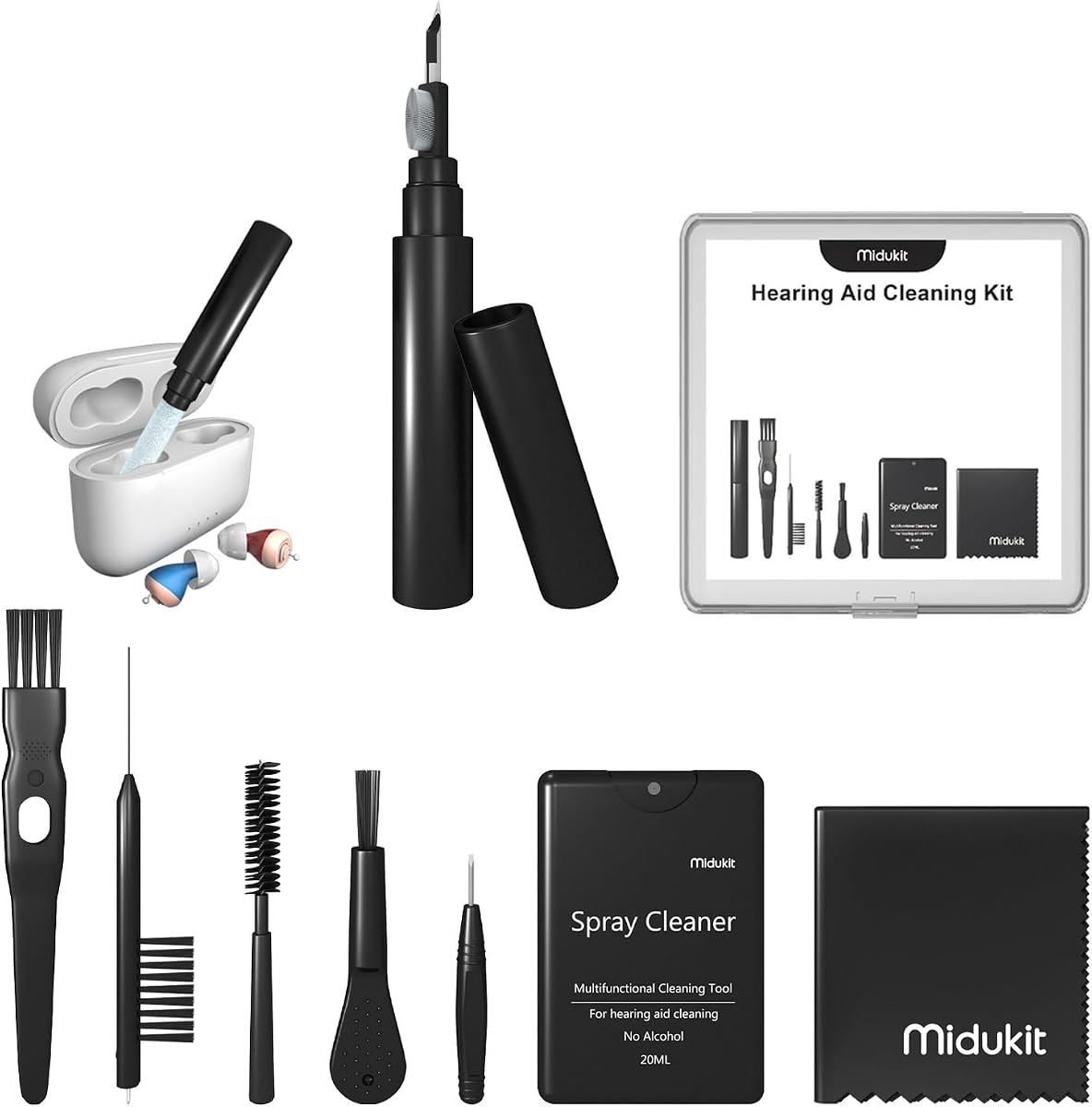
Premium Hearing Aid Cleaning Kit
The premium cleaning kit is the practical daily driver next to flashier electronics in this guide. A precision pen, brush, spray, and cloth tackle the places wax and dust hide on modern rechargeable Bluetooth hearing aids—including around charging contacts and cases—plus traditional Oticon and Phonak-style devices called out in the listing. Soft nylon bristles aim to clean without carving grooves into housings.
Travel readiness is the lifestyle win. People abandon care routines on vacation, then return home wondering why clarity vanished. A lightweight case in a Dopp kit keeps the ritual intact. The magnetic tip for battery handling helps users who still run disposable cells on older devices.
Pair this kit with PerfectDry: mechanical clean first, moisture management second. Pair with fresh domes when tips look tired. Together those three accessories often restore “my hearing aids got quiet” complaints without buying new amplifiers.
Technique matters with sprays—never soak microphone ports. Light application on cloths, not drowning the device, is the rule. When in doubt, dry brush only and book a clinic visit.
Buy this kit for almost anyone using ear-level electronics from this article. It is the highest-confidence maintenance add-on alongside the dryer.
Gift angle: cleaning kits are among the few hearing-related gifts that feel thoughtful rather than presumptuous, especially with a note offering to help set a nightly routine.
Brush mics and ports, wipe skins, inspect domes, dock to charge or dryer. Consistency beats weekend marathons.
This kit is the everyday surface and crevice tool. The vacuum is the escalation step for stubborn port blockage.
We may earn a commission at no additional cost to you.

Audien Cone Domes 9pcs Assorted
Audien owners searching for better “earbuds” often need better domes, not new electronics. This nine-piece cone assortment in 11mm, 11.5mm, and 14mm lets each ear find a seal that stays put through walking and chores. Cone geometry favors stability and sound direction into the canal when the stem is seated correctly.
Soft, anti-sensitive silicone targets users who abandoned aids because stock tips scratched or slipped. Regular replacement maintains hygiene and the acoustic path the amplifier expects—dirty, collapsed domes make even good devices sound cheap.
Gift framing in the listing is sincere: fresh domes are a useful present when you know the recipient’s brand. Still confirm Audien compatibility; forcing wrong tips damages receivers.
Fit method: start mid size, speak aloud, walk stairs, and listen for thin bass (too open/small) or pressure (too large). Swap until conversation clarity peaks without sore canals after an hour.
Buy the assortment when you are still discovering your best Audien diameter. Buy the dedicated 14mm open rounds below when you already know large open tips are your winner.
Replace on a schedule even if tips “look fine.” Invisible film and micro-tears change sound before eyes notice.
Assortments win for first refreshes and asymmetrical ears. Single-size bulk wins once you know your diameter.
Wear candidates through a full TV episode before declaring a winner. Short trials lie.
We may earn a commission at no additional cost to you.

Audien 14mm Open Round Domes 10pcs
Large open-round domes are a specific fix: the user whose medium tips constantly creep out, or whose closed tips make their own voice boom uncomfortably. Fourteen-millimeter open rounds for Audien-compatible stems prioritize ventilation, a brighter path for ambient and amplified sound, and a broader contact patch for stability during daily movement.
Soft hypoallergenic silicone keeps all-day wear realistic for sensitive skin. Ten pieces make monthly hygiene swaps feasible without emergency shipping. Sound-flow design language in the listing matches what users notice after a refresh—less muffling, clearer conversation—assuming the electronics themselves are healthy.
If you have never measured success with 14mm tips, consider the assorted cone pack first to avoid ordering a bulk size that simply will not seat. Open acoustics also mean more environmental sound; that can be desirable for awareness or undesirable if you wanted heavier isolation.
These domes will not turn a basic amplifier into a streaming headset. They optimize the interface for people already committed to Audien-style devices who need large open tips specifically.
Choose 14mm open rounds when that size is proven on your ears. Choose the nine-piece assortment when you are still experimenting. Keep PerfectDry and the cleaning kit in the same drawer so tips are not the only maintenance you remember.
Insertion reminder: seat fully on the stem, then insert with a gentle twist. Half-mounted domes cause the whistle and dropout problems people blame on “bad hearing aids.”
Bigger canals, occlusion-sensitive users, and anyone whose smaller tips walk out during errands.
Fresh domes plus nightly brush-and-dry habits protect the investment better than any single accessory alone.
We may earn a commission at no additional cost to you.
Some shoppers need OTC aids that stream Bluetooth like earbuds. Others need a simple amplifier for TV. Others already own clinic aids and only need domes, dryers, and cleaners. Name your job-to-be-done before comparing decibel claims.
Self-fitting devices can help mild-to-moderate, adult-onset difficulties in quiet-to-moderate environments. Sudden loss, ear pain, drainage, severe or asymmetrical loss, and dizziness are stop signs—see a professional. No Amazon pack replaces audiology.
Choose TTQ-style or neckband Bluetooth models when phone calls and media matter daily. Choose iRoger-style amplifiers when a single dial and directional speech focus are enough. Dual-mode devices demand a short learning week; plan for it.
Wax and moisture sabotage clarity across every brand. Budget attention for domes, a cleaning kit, and ideally a regulated dryer. Many “my aids failed” stories are maintenance stories.
A thirty-five-decibel device with a poor seal loses to a well-fit lower-gain tip every time. Use return windows as structured trials in your real rooms, not as impulse regret.
No. OTC-style aids amplify environmental sound for hearing support and may add Bluetooth streaming. Regular earbuds primarily play media and usually lack medical-style amplification. This pack mixes both worlds plus care accessories—match the product type to your goal.
Sometimes, with caveats. Some people stream to hearing aids directly, use streamer accessories, or wear buds in specific modes their clinician recommends. Forcing consumer buds over aids can cause feedback and poor seals. Ask your audiologist before stacking devices.
Because moisture destroys hearing aids and wireless earbuds alike. A fast, regulated dryer is one of the highest-leverage accessories for keeping whatever you buy—or already own—working clearly.
Open domes feel more natural and less occluded but can leak bass. Closed domes seal more and may help certain loss patterns. If you have a fitter, ask them. If you are self-fitting OTC, use assortment packs and structured listening tests.
Prefer devices you will actually recharge. A one-hundred-twenty-hour amplifier with a simple dock can beat a fancy OTC aid that dies midday if charging feels confusing. Match endurance to lifestyle honesty.
No. Distance, lighting for lip cues, and facing the talker still matter. Noise modes help; they do not rewrite physics or crowded acoustics completely.
Seek care for sudden changes, pain, drainage, severe loss, one-sided problems, tinnitus with other neurological signs, or when OTC trials fail across multiple well-fit attempts. Professional fitting remains the gold standard for complex needs.
Follow your clinician or manufacturer guidance—many users refresh on a weeks-to-a-couple-months cadence depending on wax and wear. Discoloration, tears, and sudden muffling are obvious replace-now signals.
It can be if you use the softest suitable tip, low suction, and short pulses on a stable towel. If you feel resistance or anxiety, stop and use brush kits or professional cleaning instead.
Many list dual compatibility, including the neckband model’s Bluetooth 5.3 claim. Always confirm on the live product page for your phone model and test call audio during the return window.
The best hearing aid compatible earbuds in 2026 are less about a single stereo brand and more about matching the real job: TTQ-style Bluetooth OTC aids when streaming and amplification share a day, iRoger-style amplifiers when simplicity and extreme battery life matter, neckband dual-mode units when dexterity rules, and anti-feedback earbud aids when whistling killed past attempts.
Equally important are the unsexy heroes—PerfectDry LUX, cleaning kits, vacuums, and correct Audien or ReSound domes—that keep sound clear after the honeymoon week. Start with an honest checklist, trial in your actual rooms, maintain nightly, and involve a professional whenever medical red flags or stubborn fitting problems appear.