Best Overall
Lullaband Sleep Headphones

- Ultra-thin speakers engineered for pressure-free side sleeping
- About 12-hour battery for overnight audio and daytime wind-downs
- Breathable, machine-washable headband after removing the control unit
Expert Review & Guide
Ordinary earbuds fail the pillow test. The stem digs into your cheek, a low-battery chime jolts you awake, or a partner hears every chorus. Sleep headphones exist to solve that friction: ultra-thin speakers in soft headbands, contoured Bluetooth eye masks that combine blackout with audio, and miniature in-ear buds with sleep modes that stay quiet when you need silence most. In 2026 the category is mature enough that you can match a design to how you actually sleep instead of forcing commute buds to moonlight as bedtime gear.
This ReviewConsensus roundup ranks ten Amazon options drawn only from our sleeping-headphones pack. You will see highly rated soft headbands like Lullaband, LC-dolida mask hybrids for light-sensitive nights, two-packs for couples and travel redundancy, pattern sports bands with long batteries, and low-profile earbuds—including models with touchscreen cases—for side sleepers who want a tighter seal against snoring or street noise.
Ratings reflect Amazon averages at writing time. We omit dollar prices because sleep-gadget deals swing constantly. Use the comparison table to filter by form factor, battery cues, and washability, then read each review for who the product truly fits—and who should skip it.


As an Amazon Associate we earn from qualifying purchases. We may earn a commission at no additional cost to you.
Scan form factor first—mask, headband, or in-ear—then battery and washability. Specs below skip prices so you can compare sleep traits without deal noise. Open each listing for current bundle details.

LC-dolida’s 3D Bluetooth sleep mask is the classic answer when you want darkness and audio without stacking a separate eye cover over earbuds. The mask carries ultra-thin speakers in the fabric, so you can play rain sounds, guided meditations, or a low-volume podcast while the contoured cups keep light from leaking around the bridge of the nose. For people who wake when a hallway light flicks on or a partner reads in bed, that dual job—blackout plus private audio—is the main reason this design keeps winning sleep-specific searches.
Bluetooth 5.4 keeps pairing quick with phones and tablets, and the listed range of roughly forty-five feet is more than enough for a nightstand or airplane seat. Charge time of about one to two hours for eight to ten hours of playback covers most nights if you start with a topped-up battery. If you fall asleep with a sleep-timer playlist, you will rarely notice the headset dying mid-cycle. Still, treat battery claims as realistic targets rather than guarantees: volume, codec, and how warm the fabric gets overnight all nudge runtime.
Comfort is where the 3D contour matters. Flat masks press on the eyelids and can leave marks or dry-eye irritation; deeper cups give the eyes space. The memory-foam feel and soft outer fabric are aimed at side sleepers who roll onto a cheek, though any fabric mask will warm up against a pillow. The adjustable strap is the fit lever—tighten enough that speakers stay near the ears, loosen enough that temples do not ache by morning.
Audio is deliberately intimate rather than booming. Thin sleep speakers cannot recreate club bass, and that is fine for bedtime: you want gentle stereo that does not announce every drum hit to your partner. Move the speaker pods left or right until they sit over the ear canals; misalignment is the most common reason first-time users think the sound is thin. Once aligned, white noise and spoken audio become surprisingly usable for insomnia routines.
This mask shines for travel naps, migraine-adjacent light sensitivity, and anyone who already trusts eye masks but hates the wire of old sleep headphones. It is less ideal if you sleep hot, wear a thick CPAP strap that conflicts with the mask, or need true in-ear isolation from a snoring partner. In those cases, look at the invisible earbuds later in this guide instead of a fabric mask.
As a gift, the three-in-one pitch—headphones, sleep mask, eye cover—is easy to explain. As a nightly tool, success depends on ritual: charge after breakfast, seat the speakers before lights out, and pick content that fades rather than peaks. Used that way, LC-dolida’s mask remains one of the most practical sleep-audio hybrids in this pack.
One more practical note: because the speakers live in fabric pockets, a quick alignment check after washing or after stuffing the mask into a suitcase prevents the “left side disappeared” feeling that frustrates new owners. Treat speaker placement like adjusting a pillow—small moves, big comfort difference—and the mask becomes a repeatable part of your night instead of a fiddly gadget.
Side sleepers and light-sensitive sleepers who want blackout and audio without juggling two accessories. Ideal for hotel stays, red-eyes, and shared bedrooms where a partner’s lamp would otherwise ruin a wind-down playlist.
Skip it if you already dislike anything on your face at night, or if you need maximum ear isolation from snoring—earbuds with tips seal better than fabric speakers.
After pairing, slide each speaker until it covers the ear opening, then lie on your usual side for a minute to confirm nothing digs into the cheekbone. Use a phone sleep timer so the mask can finish the night quiet if the battery still has charge left.
Wash guidance varies by model generation—treat the fabric gently and keep charging contacts dry. A cool bedroom and a breathable pillowcase reduce the stuffiness some wearers notice with full-coverage masks.
We may earn a commission at no additional cost to you.
Lullaband sits at the top of this roundup because it nails the job most shoppers actually have: listen without a hard plastic shell pressing into the pillow. The headband form factor wraps soft fabric around ultra-thin speakers so side sleepers can roll without the sharp hotspot that classic on-ear cups create. That pressure-free promise is why sleep headphones exist as a category, and Lullaband’s rating suggests the execution lands for a wide audience.
A roughly twelve-hour battery claim is the right order of magnitude for bedtime plus a commute nap. You are not chasing audiophile marathon numbers; you want enough juice that a late charging session still covers white noise until morning. For travel days, the same band can stay on during a lounge stretch or quiet yoga class, which is more useful than a gadget that only makes sense under blankets.
Breathability and washability are practical sleep features, not marketing fluff. Fabric that lives against hair and skin collects oils quickly. Being able to pull the control unit and machine-wash the band keeps the product from becoming a one-month novelty. Cool-to-the-touch cloth also helps if you already run warm at night—something foam masks struggle with.
Sound is tuned for intimacy and voice clarity more than slamming bass. That matches sleep use: podcasts, sleep stories, brown noise, and calm playlists. Because the module sits away from the ear itself, the design avoids the cheekbone bruise that ruins many sport headband clones. Still, take thirty seconds to center the speakers; a centimeter off can make one side quieter.
Where Lullaband is not the answer is total blackout. If streetlights or early sunrise are your primary enemies, pair it with a separate thin eye shade or choose an LC-dolida mask hybrid instead. If you need deep passive isolation from snoring, consider the invisible earbuds. Lullaband wins the middle path: comfortable audio for people who move, share a bed, and want one soft accessory.
Daily rhythm is simple: charge while you shower, wear for wind-down, wash weekly. That low-friction loop is why a highly rated soft headband beats flashier touchscreen cases for many sleepers. If you want one default recommendation from this pack before reading every review, start here.
Compared with two-packs, Lullaband is the refinement play: one excellent band you will actually maintain. Compared with earbuds, it is the zero-canal comfort play. That combination—high rating, washable fabric, side-sleeper geometry—is why it owns the Best Overall badge even when flashier gadgets look busier on a product page.
Side and combination sleepers who prioritize pillow comfort over maximum light blocking. Also strong for travelers who want one band for the plane, hotel, and a short workout without swapping gadgets.
Choose a mask hybrid instead if darkness is non-negotiable, or earbuds if you need a tighter seal against partner noise.
Always remove the electronics before washing, and air-dry the fabric fully before reinserting the module. Avoid stuffing a damp band into a gym bag overnight—moisture is harder on Bluetooth modules than gentle spin cycles.
If stereo balance drifts after many washes, reseat the speakers in their pockets; fabric stretch can migrate thin drivers slightly off the ear line.
Masks win at blackout; Lullaband wins at breathability and multi-scene wear. Many people keep both: mask for weekend catch-up sleep, headband for weeknights when they still want to hear a smoke alarm or partner’s voice faintly.
We may earn a commission at no additional cost to you.
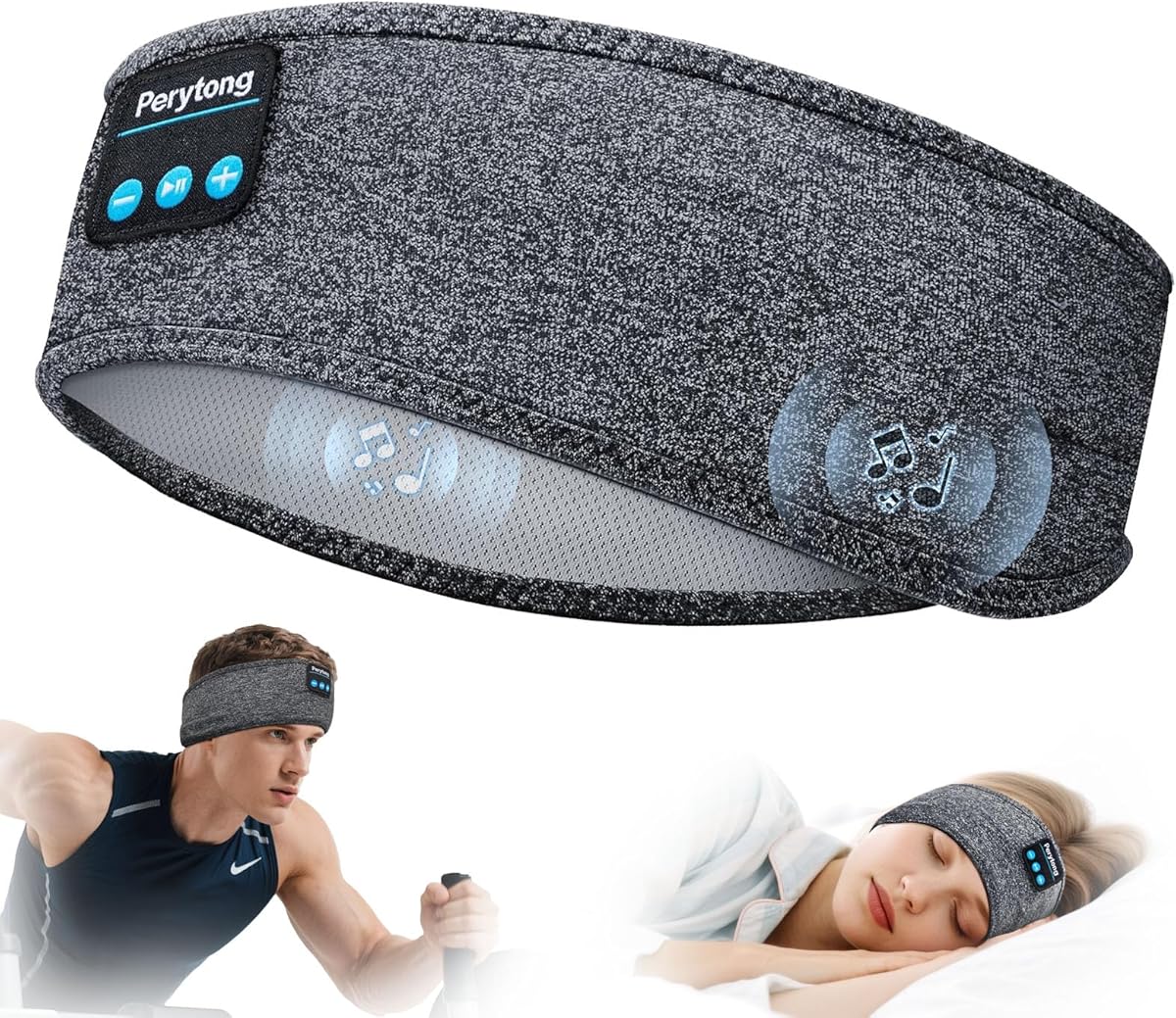
Perytong Sleep Headphones Wireless
Perytong’s wireless sleep headband is the pack’s straightforward sports-and-sleep hybrid: soft grey fabric, ultra-thin speakers, and a control module placed toward the forehead so cheeks and ears stay freer when you roll sideways. If your use case straddles insomnia playlists at night and treadmill podcasts in the morning, this form factor avoids buying two different Bluetooth gadgets.
Bluetooth 5.4 and a twelve-plus-hour battery claim keep the band useful beyond bedtime. A two-to-two-and-a-half-hour charge is typical for this class. For shift workers who sleep during daylight, the headband doubles as a light sweatband that keeps hair off the face while still delivering audio—less fussy than buds that fall out when you sweat.
Material choices matter for skin contact. The breathable mesh lining and stretch braid are meant to feel cool and dry rather than plasticky. Washability after removing the pod is again the longevity feature to use; sleep gear that cannot be cleaned becomes unpleasant quickly. Fit is forgiving across head sizes, though very large or very small heads should test strap tension before committing to side-sleep pressure tests.
Sound is clear enough for speech and mid-focused music. Expect some fabric muffling versus open earbuds—that is the trade for pillow comfort. Align speakers carefully; Perytong’s own guidance stresses ear alignment for side sleepers, and it is the difference between fine and actually soothing.
Limitations are honest: this will not silence a freight-train snorer, and it will not black out a bright hotel room alone. It also will not impress someone shopping for hi-fi headphones. Within sleep-and-sport headbands, though, Perytong is a credible, no-drama pick with a long track record on Amazon listings.
Gift packaging and broad unisex styling make it an easy present for travelers and gym-goers who also struggle to quiet their minds at night. If you want pattern flair, jump to the Butterfly LC-dolida headband; if you want maximum rating confidence, stay with Lullaband. Perytong occupies the practical middle.
Think of Perytong as the reliable grey sweater of sleep audio: not the loudest story on the shelf, but the piece you reach for when you want something that already understands sweat, stretch, and a midnight playlist without demanding a new ritual every season.
Use a consistent wind-down playlist at modest volume, then keep the same band for a morning walk so the habit feels continuous rather than medical. For workouts, confirm the speakers stay seated when you bounce—thin drivers can shift in stretchy fabric.
On planes, the headband is less conspicuous than a full foam mask and easier to remove when a flight attendant speaks to you.
Choose an LC-dolida mask if light is the main problem, invisible earbuds if snoring isolation matters more, or a two-pack if you want a spare for the office drawer.
We may earn a commission at no additional cost to you.

A two-pack changes the sleep-headphone equation from personal gadget to household system. This black-and-grey set gives you a dedicated nightstand band and a spare for the gym bag, guest room, or partner who also wants private audio. For couples dealing with mismatched sleep schedules, two soft headbands beat fighting over one pair of buds.
Side-sleeper design cues are familiar and welcome: thin speakers, control module on the forehead, and instructions to slide drivers until they cover the cochlea area. That adjustability is more important than brand lore—ears sit differently on every skull. Spend the first evening tuning position while lying on your usual pillow; the second night will feel dramatically better.
Battery life over fourteen hours after a short charge supports long audiobooks and multi-night trips without daily top-ups. The polyester-spandex knit stretches across most heads and wicks sweat during workouts, so the same SKU earns daytime use. Remove the Bluetooth module before washing; treat that step as non-negotiable if you want the electronics to last.
Stereo performance is clear enough for spoken word and gentle music. High volumes will leak more than sealed earbuds, which is a courtesy issue in quiet bedrooms and a privacy issue on buses. Keep volume modest; sleep headphones work best when the content is calm and close.
The gift angle is strong: two colors, shared cable, broad appeal for men and women who already wear sport headbands. The tradeoff is that you are buying utility fabric tech, not a fashion statement. If pattern and microphone call handling matter more, the Butterfly LC-dolida headband is the flashier single unit.
Buy this pack when redundancy matters—laundry day, travel plus home, or partners who both stream rain sounds. Skip it if you specifically need an eye-mask blackout layer or the lowest-profile earbuds for side sleeping against a firm pillow.
Operational tip: label or assign colors immediately. Households that skip that step end up with mystery bands that never quite fit anyone’s preferred speaker placement, which is an avoidable annoyance when the hardware itself is otherwise simple and effective.
Couples, roommates, and anyone who wants a clean band ready while the other is in the wash. Also useful for shift workers who keep one unit at work for break-room naps.
Solo shoppers who want maximum fabric comfort and washability without needing a spare can still benefit, but single premium bands like Lullaband may feel more refined.
Assign colors so each person keeps their own oils and ear alignment habit. Wipe the module regularly and never share silicone ear tips from other product types with these fabric speakers—they are different systems.
We may earn a commission at no additional cost to you.

Sleep Earbuds Touch Screen (Raven)
These Raven Black sleep earbuds represent the other major branch of the category: leave the fabric headband behind and put miniature drivers in the ear with a sleep-specific mode. At about three grams per side, the shells are meant to disappear against a pillow better than chunky commute buds. If headbands always slide or feel warm, this is the architecture to try.
Sleep mode is the headline software feature. Ordinary earbuds chirp when batteries run low or when they power off—exactly the kind of alert that yanks you out of stage-one sleep. Disabling those prompts matters more at night than another EQ preset. Pair that with a phone sleep timer and you get a quieter electronic environment.
The full-color touchscreen case is unusual in sleep gear. Instead of remembering multi-tap ear gestures in the dark, you can pause, skip, or flip sleep mode from the case on the nightstand. Five EQ modes (Standard, Classic, Jazz, Rock, Pop) let you soften bass-heavy tracks that otherwise vibrate too hard for bedtime. Bluetooth 5.4 supports stable pairing for the short distance from pillow to phone.
Thirteen-millimeter drivers and a pressure-balancing chamber design aim for clearer mids and less of the hollow plugged-ear feeling. Still, tip fit decides comfort. Side sleepers should experiment with the smallest tips that still seal; an overlarge tip that twists when you roll will hurt by morning no matter how light the shell is.
Total playtime near forty-eight hours with the case is a travel luxury: charge the case periodically and stop fretting about nightly plug-ins. A one-and-a-half-hour USB-C full charge is reasonable. Instant reconnect when you open the case helps when you are half-asleep and impatient.
Choose these when you want isolation and controls; choose a headband when you refuse anything in the canal. Also compare with the Jet Black sibling later in this guide—similar feature story, lower community rating—so read recent reviews for your specific listing before assuming identical experience.
If you travel often, the compact case earns more love than it does on a crowded nightstand. Pocketability matters in hotel rooms with one outlet already claimed by a laptop brick; charge the case while you shower and you are set for multiple quiet nights without hunting another cable.
Insert, twist gently to the deepest comfortable seal, then lie on each side for two minutes before deciding. If you feel a hot spot on the outer ear, try a deeper insert or a different tip size rather than higher volume.
Keep volume low; sealed earbuds need less level than fabric speakers to mask room noise, and lower volume is safer for all-night listening.
Dim case brightness if the screen faces your pillow, and enable sleep mode before lights out so gestures on the buds do not pause your rain sound when you roll. Use the case for deliberate changes; let the phone timer own automatic stop.
We may earn a commission at no additional cost to you.
Invisible Sleep Headphones chase the dream of sleep audio that does not announce itself as a gadget on your head. The mini shells sit deeply and discreetly, which helps side sleepers who bruise against thick stems and office workers who want private sound without obvious over-ears. In a pack full of fabric bands, this is the stealth option.
Comfort work shows up in the silicone tips and caps. The goal is long wear without the sore canal feeling that cheap buds create after an hour. Sleep mode disables physical buttons so a pillow press does not skip tracks or blast volume—an underrated requirement when your ear is the remote. Phone control remains available when you intentionally want to change course.
Bluetooth 5.3 pairing is widely compatible, and the six-to-eight-hour continuous claim covers a night for many people if you start charged. It is less forgiving than fourteen-hour headbands if you also wear the buds for evening TV. Build a charge ritual into dinner cleanup so bedtime is not a scramble.
IPX6 resistance is a bonus for workouts and sweaty sleepers, but sleep earbuds still deserve gentle drying and clean tips. Wax buildup ruins both hygiene and seal. Clean tips regularly; a poor seal makes people crank volume, which is the wrong fix for overnight listening.
Noise blocking here is passive—tips sealing the canal—not airline-grade ANC. Against a snoring partner or street traffic, a good seal plus brown noise often works better than a thin headband speaker. Against someone who needs to hear a baby monitor, fabric headbands or open designs may be safer; total isolation is not always desirable.
Pick these when profile and isolation matter most. Skip them if you cannot tolerate in-ear tips, if you lose tiny objects easily, or if you want a washable fabric accessory instead of silicone maintenance. As a top pick, they balance rating strength with a clearly different use case from Lullaband.
A final habit that preserves the “invisible” promise: always return buds to the case in the same orientation so you are not hunting a fallen tip under the bed at 1 a.m. Tiny sleep earbuds reward boring consistency more than they reward novelty playlists.
Side sleepers, open-office focus listeners, and anyone who finds headbands too warm. Also a smart try for tinnitus masking where a closer seal helps keep therapeutic sound present at low volume.
Parents who must stay alert to room sounds should test awareness carefully; a tight seal can hide more household audio than a loose headband.
Headbands win for zero-canal comfort and easy washing; invisible buds win for discretion and blocking. Many households end up with one of each for different nights.
Enable sleep mode every night before you get comfortable, and keep the phone within Bluetooth range on the nightstand. Accidental touch events are the number-one annoyance that sleep modes exist to solve.
We may earn a commission at no additional cost to you.

Sleep Earbuds Touch Screen (Jet Black)
The Jet Black touchscreen sleep earbuds sit in an awkward but useful slot: they advertise the same modern sleep-bud checklist—tiny shells, sleep mode, touchscreen case, EQ modes—as the higher-rated Raven Black set, yet community feedback is cooler. That does not automatically make them unusable; it does mean you should treat them as a value experiment rather than a default recommendation.
On paper, the ergonomics story is familiar. Three-gram buds, polished contours, and a sleep mode that suppresses nagging power chimes. For side sleepers who already know they prefer in-ear isolation, the design language is right. Tip selection and seal quality will still decide whether morning arrives without ear fatigue.
The touchscreen case remains the convenience hook. Being able to activate sleep mode, tweak EQ, or adjust brightness without memorizing tap dances is genuinely helpful at midnight. If you like tinkering, you may enjoy the control surface. If you want one button and bed, a simpler headband will frustrate you less.
Where this listing lags is trust. A 3.2 average in a pack otherwise clustered around the mid-fours is a signal to scrutinize recent critical reviews for connection drops, comfort complaints, or unit variance. Sleep gear must work on night one and night thirty; inconsistency hurts more here than in daytime earbuds you can reboot at a desk.
Battery and Bluetooth 5.4 claims align with the sibling design narrative—long total playtime with the case, quick USB-C top-ups, five sound profiles. Assume real-world results vary with volume and tip seal. Do not buy expecting flagship ANC; these are compact sleep-oriented buds with passive isolation.
Consider this pair only after you have ruled in the touchscreen-case concept and are shopping alternatives—or if your ears specifically prefer this shell shape based on returns policies you are willing to use. Everyone else should prefer Lullaband, the invisible buds, or the stronger-rated Raven Black touchscreen set first.
Honesty is part of useful buying advice: a lower rating does not make a product evil, but sleep is too expensive to gamble on when higher-confidence options sit in the same pack. Use this listing as a backup candidate, not as your first order unless recent reviews clearly turn around.
Sort Amazon reviews by most recent and look for patterns in fit, Bluetooth stability, and sleep-mode behavior. One-off complaints matter less than clusters about the same failure.
If your sleep is fragile, paying attention to higher-rated pack options is usually the cheaper path than gambling on interrupted nights.
Update any available firmware pathways the seller documents, try every tip size, enable sleep mode nightly, and keep volume conservative. Many bad-bud experiences improve with seal and settings even when hardware is average.
We may earn a commission at no additional cost to you.

2-Pack Bluetooth 5.4 Sleep Headbands
This two-pack of Bluetooth 5.4 headbands overlaps with the other dual set in this guide but leans into a slightly wider front panel that behaves more like a light-dimming eye cover while you listen. That makes the pair especially appealing for travel kits: one band in the carry-on, one at home, both ready for insomnia playlists or airplane white noise.
Ultra-thin speakers and a forehead-mounted module again protect side sleepers from ear-cup pain. Compatibility with phones, tablets, and laptops is standard Bluetooth fare; the useful detail is physical adjustability—slide speakers until they sit correctly, then leave them. A minute of setup prevents a week of these-sound-uneven complaints.
More than twelve hours after a short charge covers overnight listening with margin. The polyester-spandex blend stretches, breathes, and handles sweat for runs or yoga. Remove the module before washing; reinsert only when fabric is dry. That care loop is identical across good sleep headbands and remains the difference between a year of use and a month of regret.
Compared with the other two-pack, prioritize whichever current listing shows fresher reviews and the fabric weight you prefer—some sleepers want maximum stretch, others a denser light-blocking knit. Both packs solve the spare-unit problem better than any single band.
Sound quality supports podcasts, sleep stories, and mid-tempo music. It will not replace dedicated workout earbuds for gym playlists that need punchy bass, but for zone-two walks and bedtime, clarity is enough. Keep volumes neighbor-friendly; fabric speakers leak.
Gift these when you know the recipient already likes headbands or shares a bed with someone who wants matching tools. Choose a mask or invisible buds instead when the recipient has strong opinions about face coverage or ear-canal comfort.
If you already own one grey sports band and keep forgetting it in a gym locker, a dedicated two-pack is oddly liberating: the “home” unit never leaves the bedroom, which is how sleep tools become habits instead of scavenger hunts.
Stagger charging so both bands rarely hit empty the same night. Keep the cable in a visible nightstand dish; lost cables are how two-packs become one-packs.
Use black for home and grey for travel, or the reverse, so you always know which unit is packed.
The wide front helps more than a skinny sport sweatband, but dedicated 3D LC-dolida masks still win for true blackout. Combine this headband with a dark room or eye mask if sunrise is aggressive where you live.
We may earn a commission at no additional cost to you.
LC-dolida Butterfly Sleep Headband
LC-dolida’s Butterfly Bluetooth headband is the style-forward multi-use pick: sleep headphones, light eye cover, and sports band with a microphone for calls. If you want one accessory that can go from a morning jog to a meditation session to an insomnia playlist without looking clinical, the patterned knit is a differentiator in a sea of charcoal clones.
Bluetooth stability and roughly quarter-inch-thin speakers keep the sleep promise intact—enough fidelity for music and podcasts, little enough bulk for side sleeping. Fifteen-plus hours after a one-to-two-hour charge is among the stronger stamina claims in the headband group, useful for long hikes or travel days when outlets are scarce.
USB-C charging is a small quality-of-life win if your household has already abandoned legacy USB-A cables. The microphone matters more than sleepers expect: daytime, you can answer a call without swapping to phone speakers; nighttime, you will mostly ignore it. Still, multi-scene gear should handle both.
Fabric is cool, soft, and quick-drying with enough elasticity for varied head shapes. A strap detail helps with sweat management during workouts. As always, detach electronics before washing. Patterned fabric can show wear differently than solid grey—rotate and wash before salts set in.
Versus Lullaband, you trade the absolute highest rating for longer claimed playtime, call handling, and a more expressive look. Versus mask hybrids, you trade deep blackout for breathability and sport usefulness. That triangle—rating versus battery versus blackout—is how to place this band in your shortlist.
It makes an especially coherent gift for teens and adults who already live in athleisure. For a partner who only wants darkness and rain sounds, the 3D LC-dolida mask may communicate the use case more clearly.
If you work from home and take walking meetings, the mic-plus-long-battery combo turns the Butterfly band into a daytime tool that happens to moonlights as sleep gear—exactly the dual life that keeps accessories from becoming drawer clutter.
Use the mic and longer battery as daytime features, then drop volume and switch to a sleep playlist at night without changing hardware. That continuity helps people who abandon gadgets that only work in bed.
For workouts, confirm the band sits above the ears firmly before high-impact intervals so speakers do not migrate.
Pick Butterfly when aesthetics and calls matter; pick a two-pack when redundancy and matched couples gear matter more than pattern.
We may earn a commission at no additional cost to you.

LC-dolida Soft Sleep Mask Headphones
This LC-dolida sleep mask leans harder into blackout comfort than the sports headbands. Memory foam, ice-silk lining, and a nose-area design that fights light leaks make it a strong pick when sunrise, hotel LEDs, or a partner’s screen are the main sleep thieves. Speakers stay thin so you are not stacking a rigid headset under the foam.
Bluetooth 5.2 with eight-to-ten-hour playback after a short charge is enough for most nights, especially with a sleep timer. It is not the longest claim in the pack, so chronic late chargers may prefer the fifteen-hour Butterfly headband. For dedicated bedtime use, the mask’s comfort materials matter more than another few wireless-spec ticks.
Zero-pressure messaging around the eyes is the comfort thesis. Flat masks smash lashes and can aggravate dryness; contoured foam with slick lining lets eyes blink and move. Migraine and light-sensitive sleepers often prefer this sensation to a sweaty sport braid. Still, any mask changes facial airflow—if you feel claustrophobic, test with short naps first.
Audio remains sleep-class stereo: immersive enough to disappear into, not analytical. Align speakers to the ears, keep volume gentle, and prefer continuous ambient tracks over sudden dynamic music. The microphone is handy before you fully settle—pause a meditation to answer a call—then irrelevant once you are out.
Travel inclusion of a carry pouch is a small but real quality signal. Masks pick up lint and oils; a pouch keeps the lining cleaner in a backpack. At home, hang the mask to air out after humid nights rather than stuffing it into a drawer damp.
Choose this when blackout is half the product. Choose Lullaband when you want cooler fabric and multi-scene wear. Choose invisible buds when snoring isolation beats darkness. Within mask-style options, this soft LC-dolida sits alongside the 3D contoured model as a comfort-first path.
If you already own a plain eye mask you love, this product is the upgrade path that adds audio without abandoning the blackout ritual you already trust. That continuity is often more successful than forcing a brand-new form factor on a fragile sleeper.
Adjust the strap so the nose contour seals without forcing the foam into your eyesockets. If light sneaks from the sides, slightly rotate the mask rather than overtightening—the latter causes morning headaches.
Pair with blackout curtains for daytime sleep; the mask handles residual glow, not floodlight sun alone.
Both pursue the same category. Prefer the 3D model if deeper eye cups are explicitly what you want; prefer this soft ice-silk version if lining feel and travel pouch convenience stand out in the listing photos you like. Check current reviews for foam firmness differences between production batches.
We may earn a commission at no additional cost to you.
Side sleepers should prioritize ultra-thin speakers or low-profile earbuds; thick stems and rigid ear cups create pressure points against the pillow. Back sleepers can tolerate slightly more bulk but still benefit from soft fabrics. Stomach sleepers often do best with the flattest buds or the softest headbands and should be wary of deep eye masks that shift when the face presses into the mattress.
If you change positions all night, test adjustability: movable speaker pods in headbands and multiple ear tip sizes in buds matter more than a single headline battery number. A product that feels fine while you sit upright on the couch can still fail the first lateral roll onto a firm pillow, so judge sleep headphones in bed, not at a desk.
Headbands excel at breathability, washability, and multi-scene wear from yoga to travel. Sleep masks add blackout for light-sensitive insomnia and hotel stays but run warmer. In-ear sleep buds seal better against snoring and street noise, yet some people never acclimate to canal pressure.
There is no universal winner. Match the weakness you feel most: pillow pain points to headbands, light leaks point to masks, partner snoring points to well-sealing buds with a calm noise track. If two weaknesses tie, prioritize comfort architecture first—pain wakes people faster than imperfect darkness.
Optimize for gentle continuity, not bass impact. Brown noise, rain, sleep stories, and spoken meditation tolerate thin sleep speakers well. Sudden dynamic playlists do not. If you share a bed, assume some leakage from headbands and keep levels neighbor-kind; buds leak less but isolate you more from alarms and partners—decide which tradeoff you accept.
EQ modes on touchscreen sleep earbuds can help tame sharp highs, but software cannot fix a painful tip. Comfort first, then tone shaping.
Persistent insomnia, apnea symptoms, or pain deserve clinical guidance beyond retail gadgets. Sleep headphones can support relaxation routines and noise masking; they are not hearing protection rated for industrial noise, and they are not a CPAP substitute. If a device worsens jaw pain or ear infections, stop and reassess fit or form factor.
Also remember environmental basics: cool rooms, consistent schedules, and darker windows often outperform another volume notch on any headset in this guide.
For most healthy adults, soft headbands and properly fitted sleep earbuds used at modest volume are considered reasonable for overnight listening, especially with a sleep timer. Keep volumes low, keep tips clean, and stop if you notice pain, lingering fullness, or skin irritation. People with ear infections, recent ear surgery, or complex jaw issues should ask a clinician before all-night in-ear use. Sleep headphones are comfort and masking tools, not medical devices.
Side sleepers who hate anything in the ear canal usually prefer ultra-thin headband speakers because fabric spreads pressure. Side sleepers who need to mask snoring often prefer low-profile earbuds with a good seal, provided the shells sit flush enough not to dig into the pillow. Try the pressure-free headband path first if you are unsure; move to invisible-style buds if isolation is still insufficient.
Fabric headbands reduce awareness of mild noise when paired with steady brown noise, but they do not seal like earplugs. In-ear sleep buds with a proper tip seal plus masking audio work better against snoring. Nothing in this pack replaces treating the snoring source, and deep isolation can also hide alarms—agree on household safety expectations before maxing seal and volume.
Use the lowest level that makes the room feel calmer, not concert volume. Sealed earbuds need less output than thin headband speakers to achieve similar masking. A sleep timer that stops playback after you typically fall asleep reduces total exposure. If you wake and feel the urge to raise volume nightly, improve seal or switch form factor instead of chasing loudness.
Contoured 3D and nose-shaped LC-dolida-style masks block far more light than skinny sports headbands, especially around the bridge of the nose. Fit still matters: an untensioned strap or a gap at the cheeks lets LED glow through. For daytime sleep, combine a good mask with room-darkening curtains rather than expecting fabric alone to defeat direct sun.
Remove the Bluetooth control module and speakers according to the product instructions, then wash the fabric on a gentle cycle or by hand with mild detergent. Air-dry completely before reinstalling electronics. Never soak the module. Regular washing prevents odor and extends how long you will actually want to wear the band against your face.
Ordinary earbuds emit tones when batteries run low, when they power off, or when touch controls trigger against a pillow. Sleep mode disables those interruptions and often locks onboard buttons so rolling over does not pause your rain sound. It is one of the most practical firmware features in the category and a strong reason to prefer sleep-specific buds over generic commute models.
No—and that is acceptable. Sleep speakers prioritize comfort and non-disturbing audio over soundstage and bass slam. They are excellent for voice, ambient tracks, and gentle music at low volume. If critical listening is the goal, use daytime headphones and keep sleep gear for wind-down content.
Yes if both people want private audio, mismatched bedtimes, or a laundry spare. Two-packs also help when one band lives in a suitcase. Assign colors, stagger charging, and accept that you may still want different form factors if one partner needs blackout and the other needs in-ear isolation.
CPAP straps and eye-mask sleep headphones can compete for the same real estate; many CPAP users prefer slim headbands or low-profile buds instead of full masks. Glasses are less relevant in bed, but if you read with frames on before sleep, headbands usually coexist more easily than thick foam masks. Test your specific strap geometry rather than assuming compatibility from photos alone.
The best headphones for sleeping in 2026 are the ones that disappear into your routine. Lullaband earns Best Overall for pressure-free headband comfort, washability, and a top-tier rating. Invisible Sleep Headphones are the side-sleeper bud pick when isolation matters. LC-dolida’s Butterfly headband covers stylish multi-use days with long battery life and a mic, while the brand’s mask hybrids remain the blackout specialists.
Two-packs make sense for households and travel redundancy; touchscreen sleep earbuds reward people who want in-ear seal plus case controls—just weigh ratings carefully, especially on lower-scoring listings. Match form factor to your real enemy: pillow pressure, light, or noise.
Start with one architecture, give tip or speaker alignment a few nights, and keep volumes gentle. When the hardware stops announcing itself, the category has done its job.