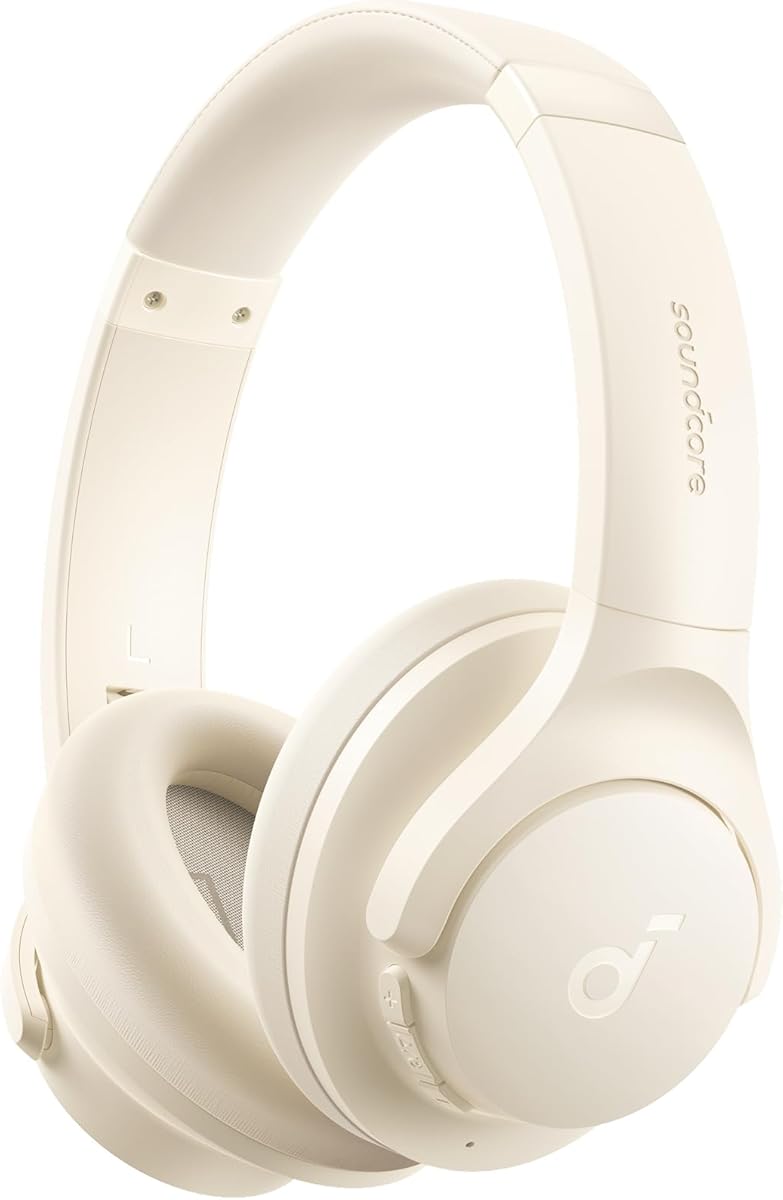
Wireless Headset with Mic for Work
- ENC boom mic with one-touch mute for clear Zoom and Teams calls
- Bluetooth 5.3 plus USB-A dongle for PCs without reliable Bluetooth
- Dual pairing, charging stand, and up to 40-hour talk-time stamina
Expert Review & Guide
Office headphones are not the same shopping problem as travel ANC cans or gaming headsets. You need a mic that colleagues can understand on Zoom and Teams, enough isolation or ANC to dull open-plan chatter without making you miss a tap on the shoulder, and a fit you can wear through back-to-back meetings without hot ears. Hybrid workers also care about multipoint Bluetooth, USB dongles for locked-down PCs, and wired USB options that never drop mid-client call.
This roundup ranks ten Amazon options drawn only from our office headphones pack. We weigh boom-mic clarity and mute habits against music-first ANC over-ears, plug-and-play USB reliability against wireless freedom, all-day cushion comfort against clamp and heat, and whether a listing is built for call centers or for deep-focus listening between meetings. Ratings reflect Amazon averages at writing time; we skip dollar prices because promo tags swing weekly.
Start with the comparison table for mic type, connection, and battery or cable cues, then read each review for who the headset actually serves—desk-bound specialists, noisy home offices, or people who switch between laptop and phone all day. Our top three badges highlight the strongest call-first wireless pick, the best hybrid ANC focus pair, and the most trustworthy wired USB workhorse.
As an Amazon Associate we earn from qualifying purchases. We may earn a commission at no additional cost to you.
Use this table to shortlist by how you actually work—boom mic versus music-first ANC, USB cable versus dongle, marathon battery versus always-plugged reliability. Specs skip prices; check the live listing for the current offer.
Hybrid Active Noise Cancelling Bluetooth Headphones
These hybrid ANC over-ears earn the marathon-focus badge because they prioritize the part of office life that boom-mic headsets often ignore: uninterrupted concentration. If your day is heavy on documentation, coding, design reviews, or asynchronous work, the combination of memory foam cups and hybrid noise cancelling can turn a noisy living room or open bay into a usable cocoon. The listing leans hard into all-day comfort with an adjustable headband and soft cushions that minimize clamp pressure, which matters more than peak silence numbers when you wear the pair from the first standup until late afternoon.
The standout claim is up to 120 hours of playtime. Even if real-world ANC use trims that figure, the practical message is clear: you can treat charging as a weekend chore instead of a lunch-hour scramble. That stamina is especially useful for hybrid schedules where the same headphones commute, sit through coworking cafe noise, and then finish the evening on a laptop. Hi-Res audio and deep-bass marketing also signal that these are not thin conference-only cans; they are built to make music, podcasts, and focus playlists feel full rather than tinny.
For meeting-heavy roles, temper expectations. Without a dedicated boom microphone and flip-to-mute hardware, call clarity depends on integrated mics that are usually fine for casual check-ins but less ideal when you need every consonant crisp against keyboard clatter. Mute habits also matter in offices: fumbling for a touch surface mid-call is slower than flipping a boom or hitting a dedicated mute button on a USB work headset. If half your day is customer-facing audio, look at the ENC boom models later in this list first.
Where these headphones still win for many knowledge workers is the blend of isolation and leisure. Hybrid ANC is better at continuous low-frequency noise—air handlers, traffic outside a street-facing window, distant chatter—than at completely erasing a colleague’s sudden laugh two desks away. Pair that with soft cups and you get a focus tool that also works on train days between office and home. The black over-ear silhouette reads professional enough for camera-on meetings even if you primarily bought them for silence.
Setup is straightforward Bluetooth pairing to a laptop or phone. Multipoint behavior is not the headline feature here the way it is on some UC headsets, so if you constantly hop between a work PC and a personal phone, confirm the listing’s current dual-device notes before you buy. For a single primary machine and long listening sessions, the value proposition is simpler: stay comfortable, stay charged, and keep background noise from stealing attention.
Choose this pair when your office problem is distraction more than microphone performance. Writers, analysts, developers, and students working from shared spaces will appreciate the cushioning and marathon battery narrative. Skip it if your manager measures you by call quality metrics or if IT only supports certified USB headsets on managed machines. In that case, the Jabra Evolve 20 or Acer wired options below are the safer professional bet.
Buy these if your calendar is light on live calls and heavy on concentration. They suit hybrid workers who want one comfortable ANC pair for commuting and desk work, and anyone who already uses a laptop’s built-in mic or a separate desk microphone for meetings.
Skip them if you need a boom mic for call-center or support roles, or if you prefer on-ear wired headsets that never depend on a battery during a client escalation.
Memory foam and an adjustable headband are the comfort story. Give yourself a few days to settle clamp force; over-ears that seal well for ANC can feel snug at first. If you wear glasses, check pressure at the temple after an hour—soft cups help, but seal tradeoffs are personal.
For hot offices, take short ear breaks between long blocks. Protein-leather style cushions improve isolation but can trap heat compared with fabric pads on some UC headsets.
Compared with the Wireless Headset with Mic for Work or the Jabra Evolve 20, these prioritize listening comfort and ANC over spoken clarity tools. Keep them for focus playlists and passive isolation; keep a boom headset if colleagues regularly ask you to repeat yourself.
We may earn a commission at no additional cost to you.
Logitech H390 Wired USB Headset
The Logitech H390 remains a default recommendation for offices that value boring reliability over wireless theater. Plug the USB-A connector into a PC or Chromebook, wait for the OS to recognize a headset, and you are in the meeting. That simplicity is why IT teams still stock this style of headset: fewer pairing failures, fewer dead batteries during a board call, and a physical mute switch you can find without looking at a blinking LED.
Call performance is the H390’s job. The rotating noise-canceling boom sits closer to your mouth than earbud mics, which helps when open-office noise or a dishwasher at home tries to join the call. When you are done talking, rotate the boom out of the way so the headset feels more like everyday stereo headphones. In-line controls for volume and mute reduce the chance you leave yourself unmuted while complaining about a slide deck—an underrated office safety feature.
Comfort is workday adequate rather than luxury. Swivel-mounted leatherette cushions and an adjustable headband cover long conversations, and Logitech calls out cleanability, which matters in shared hot-desk pools. The roughly 6.23-foot USB cable lets you stand, stretch, or step to a whiteboard without yanking the laptop. If your desk is already cable-managed to death, that length is a feature; if you hate being tethered, look at the dual-pairing wireless work headsets instead.
Audio quality is tuned for voices, webinars, and light music—not for critical listening. Fine-tuned digital stereo drivers keep speech intelligible and meetings pleasant, which is the right priority for this product class. If you want hybrid ANC and app EQ for focus playlists between calls, the Soundcore Q20i is a better second headset than asking the H390 to be something it is not.
Compatibility notes matter in 2026 offices. Many thin laptops are USB-C only, so budget for a quality USB-C to USB-A adapter or hub if your machine lacks a full-size port. Chromebook certification is a genuine plus for education and lightweight business fleets. The H390 is not a desk-phone RJ9 headset; it is a computer USB headset for softphones and browser meetings.
Pick the H390 when you want a known brand, predictable mute behavior, and zero charging anxiety. It is ideal for reception desks, student advising hours, customer support on a PC, and anyone whose IT policy is skeptical of random Bluetooth dongles. Pass if you roam the floor during calls or need ANC for concentration—those jobs belong to different badges in this roundup.
Pair it with a desktop PC that still has USB-A, a docking station with spare ports, or a Chromebook cart. Keep the in-line control module where your non-mouse hand rests so mute is a reflex.
In shared offices, wipe leatherette pads on a schedule and avoid stretching the headband to the extreme stop every time—gentle adjustments last longer across users.
Wired USB wins on latency predictability and never-dead batteries. Wireless wins when you pace during coaching calls. If your role is mostly seated softphone work, the H390’s tether is a fair trade for reliability.
We may earn a commission at no additional cost to you.
Wireless Headset with Mic for Work
This wireless work headset is our best overall office pick because it solves the two failure modes hybrid workers hit most often: background noise on the microphone and flaky PC Bluetooth. Environmental noise cancelling on the boom is aimed at the sounds that embarrass you on calls—barking dogs, kids in the next room, cafeteria clatter—so colleagues hear you more than your environment. A dedicated one-touch mute button matches how offices actually run: silence yourself instantly when someone walks in, then unmute without digging through software menus.
Connectivity is unusually practical. Bluetooth 5.3 covers phones and modern laptops, while the included USB-A adapter gives Windows machines a more predictable radio path when onboard Bluetooth is disabled by policy or shared with a mouse that already monopolizes the stack. The listing is clear that the dongle is not for desk phones or landlines, which is the right expectation for softphone and browser-based UC platforms like Zoom, Teams, and Webex.
Dual pairing is the productivity feature that justifies wireless over a cheap USB cable. Stay connected to a laptop and a smartphone so a conference call and a mobile callback do not force a full re-pair ritual. About 33 feet of Bluetooth range is enough to pace a home office, grab a document from a shelf, or step away from a noisy kitchen while staying on the call—within reason and without treating it like a warehouse headset.
Battery life is pitched at up to 40 hours of talk time with a full charge in roughly two hours on the included stand. That stand matters: drop-the-headset charging habits beat hunting for a cable under a monitor arm. You can use the headset while charging in a pinch, though powering off for optimal battery care is still the healthier long-term habit. For Monday-through-Friday meeting loads, this endurance profile is more honest than music-only playtime claims that ignore talk time.
Comfort details track all-day office use: adjustable headband, memory foam earcups, and breathable protein-leather cushions. A flexible boom keeps the mic positioned for clarity, and a multifunction button can reach phone voice assistants—note that those assistant controls are smartphone-oriented, not a replacement for desktop productivity macros. Treat the headset as a communication tool first; it will play audio, but it is not trying to replace a Soundcore Q20i’s app EQ playground.
Buy this when calls define your job and you bounce between a PC and a phone. Support specialists, account managers, recruiters, and remote consultants get the best return. Choose something else if you need strong hybrid ANC for music-led focus, if your only ports are USB-C without an adapter strategy, or if IT forbids third-party dongles. In those cases, the Jabra Evolve 20 wired path or the Acer USB-C ready headset may fit policy better.
ENC plus mute makes this a strong home-office and call-center softphone candidate. Position the boom near the corner of your mouth, not under your nose, and keep the mute reflex trained for interruptions.
Remember the listing note that mute activates during calls—test your specific UC app once so you know whether software mute and hardware mute can disagree.
Remove the USB adapter when you leave a hot desk so the next person is not stuck with your radio. Label the dongle if your office mixes several wireless headsets; identical black sticks cause meeting delays.
If your laptop is USB-C only, plan a powered hub rather than a flimsy unpowered splitter that browns out during long calls.
Zone Vibe 100 is lighter and more music-friendly with brand UC polish, but this work headset’s dongle, stand, and talk-time story are more call-ops focused. Pick Zone Vibe for mixed work-and-play days; pick this for microphone-first shifts.
We may earn a commission at no additional cost to you.
Logitech’s Zone Vibe 100 aims at the hybrid professional who wants one headset that does not look or feel like call-center armor. The graphite over-ear design is intentionally casual-professional: appropriate on camera, light enough for all-day wear, and tuned for both meetings and playlist downtime. If clamp-heavy UC headsets make you ditch audio gear by midafternoon, the featherweight framing and memory foam pads are the reason this model stays in the conversation.
Meeting compatibility is a core selling point. Logitech positions Zone Vibe 100 for Google Meet, Microsoft Teams, and Zoom, which covers the majority of modern office stacks. Beamforming microphones with digital signal processing try to keep your voice forward while reducing ambient clutter. That is a different approach from a long boom with ENC badges, and it looks cleaner when the mic flips away—useful if you hop between focused listening and sudden calendar invites.
Flip-to-mute is the interaction detail that offices notice. Instead of hunting for a tiny button, you tuck the mic for immediate privacy. That physical gesture also signals to nearby colleagues that you are off-mic, which helps etiquette in open plan rooms. Multipoint Bluetooth then lets you stay linked to more than one device so a phone call can interrupt a laptop playlist without a full reconnect circus.
Sound quality is a step up from thin stereo office headsets. Forty-millimeter drivers with an emphasis on rich audio and controlled distortion make music and meeting playback more enjoyable, which matters when headphones are also your after-hours commute gear. What you do not get is the hybrid ANC depth of the Soundcore Q20i; Zone Vibe leans on fit and DSP more than aggressive active hush.
Battery life up to about 18 hours is workable for two busy days if you charge overnight, but it is not the forget-for-a-week story of 40- or 120-hour claims elsewhere. Treat charging as part of your dock routine. Also note the moderate Amazon rating relative to newer call-centric listings: read recent reviews for fit and mic consistency on your OS, because lightweight Bluetooth headsets can vary with firmware and platform quirks.
Choose Zone Vibe 100 when brand familiarity, low weight, and work-play versatility matter more than maximum ANC or maximum talk-time. It suits product managers, marketers, and hybrid employees who live in video meetings but still want decent music. Skip it if you need a USB dongle for locked-down PCs, a longer boom for noisy kitchens, or certified wired reliability for regulated call environments.
People who wear headphones eight hours and refuse neck strain. Also Mac and PC users who already live in Logitech ecosystems and want multipoint without learning a no-name control layout.
If your workspace is extremely loud, add a stronger ANC pair for focus blocks and keep Zone Vibe for meeting days—or look at the ANC-plus-ENC wireless option later in the list.
Practice flip-to-mute until it is muscle memory. Confirm in your UC client whether the hardware mute state is reflected in the UI so you never assume silence when the app still shows a live mic.
We may earn a commission at no additional cost to you.
The Soundcore Q20i is the focus-block specialist in this office roundup. Four built-in mics feed hybrid active noise cancelling that is aimed at the continuous noise floor of packed offices, crowded commutes, and busy streets. That makes it a stronger deep-work tool than most boom headsets that only passively cover your ears. If your productivity collapses every time the espresso machine hisses, start here rather than with a thin USB stereo set.
Transparency mode is the office etiquette feature. Instead of ripping the headphones off when someone approaches your desk, blend ambient sound so you can catch your name or a train announcement. Switching among ANC, Normal, and Transparency in the soundcore app—or on the headset—keeps you socially available without abandoning isolation entirely. Built-in white noise options can also help if your brain focuses better on steady sound than on silence.
Battery life with ANC on is listed around 40 hours, which covers a full work week for many people, and a five-minute top-up claim for several more hours reduces panic when you forgot the charger. Multipoint Bluetooth keeps a laptop and phone connected so a calendar alert on mobile can steal audio focus without a manual reconnect. That workflow matches hybrid office reality better than single-point budget cans.
Sound customization is a Soundcore strength. BassUp wireless tuning and app EQ presets—or a custom curve—let you flatten the signature for speech-heavy webinars or punch it up for lunch-break music. Plug in the included AUX cable when you want Hi-Res certified playback; just remember ANC is not available in AUX-in mode according to the product notes. Wired mode is still useful in RF-noisy offices or when a security policy limits Bluetooth.
As a meeting headset, the Q20i is competent but not specialized. There is no long boom with ENC marketing, and uplink performance will vary with fit and environment. For client-facing call loads, keep a dedicated mic headset on the desk and use the Q20i for everything between meetings. That two-headset strategy sounds excessive until you realize each tool is optimized for a different half of the workday.
Buy the Q20i when noise control and tunable listening define your office pain. Analysts, designers, writers, and remote workers in shared apartments get immediate value. Skip it as your only device if you are measured on call clarity in chaotic rooms—then the Wireless Headset with Mic for Work or the Upgrade ANC & ENC boom model should lead, with Q20i as an optional focus pair.
Use ANC for deep work and open-plan drone. Flip to Transparency for collaborative hours. Park in Normal if you want battery savings and already have a quiet room.
Save a speech-friendly EQ preset for webinars so you are not boosting bass while trying to parse a soft-spoken presenter.
Connect the work laptop first, then the phone. When a mobile call arrives, let audio switch, then return to the laptop meeting app deliberately so you do not leave a conference hearing only hold music.
If multipoint misbehaves on a locked-down PC, temporarily forget the phone pairing during critical all-hands meetings.
The generic hybrid ANC over-ears advertise longer playtime; Q20i answers with app control, Transparency, multipoint polish, and a clearer accessory story via the AUX cable. Prefer Q20i when software tuning matters; prefer the marathon pair when you want maximum claimed stamina at a simpler feature set.
We may earn a commission at no additional cost to you.
Jabra Evolve 20 (2025 Edition)
The Jabra Evolve 20 (2025 Edition) is the wired workhorse badge for offices that still measure headset success in dropped-call avoidance. Crystal-clear call marketing here is backed by a brand that has lived in contact centers and UC deployments for years. Advanced noise-canceling microphones focus on making you intelligible, which is the metric that matters when a client is deciding whether your home setup sounds professional.
Connectivity is unusually future-proof for a corded headset: USB-A and USB-C in the same product story means you can move between a docking station and a modern ultrabook without hunting adapters every Monday. Plug-and-play setup keeps onboarding fast for new hires. In-line controls for calls and volume reduce dependence on OS mixers during screen-share chaos when every second of fumbling is visible.
Comfort is engineered for duration. A lightweight dual-ear frame with foam or leatherette cushions targets all-day meetings without the clamp of heavier ANC tourists. You will not get the plush isolation of memory-foam music headphones, but you will get a headset you can forget you are wearing until the next notification chime. That is the right compromise for call-dense roles.
Platform compatibility is a quiet strength. Works-with-leading-meeting-platforms messaging plus Avaya and Cisco certification notes matter to IT buyers even if you are a single remote employee. Being heard on Zoom is table stakes; being welcome on enterprise softphone stacks is why Evolve-branded gear keeps showing up in office purchasing lists.
Sound from the 28 mm speakers is described as richer than bare-bones mono office headsets, which helps webinars and hold music feel less fatiguing. Still, if your evenings are for critical album listening, keep a separate pair. The Evolve 20’s job is communication reliability from the first dial tone to the last standup.
Choose this headset when policy, USB-C convenience, and brand-trusted mics outweigh wireless freedom. It is excellent for work-from-home professionals on managed laptops, finance and healthcare staff who cannot risk Bluetooth dropouts, and anyone replacing an aging H390 who wants a more modern port story. Skip it if you walk the floor constantly or need hybrid ANC for concentration between sparse meetings.
Wired USB headsets simplify asset tracking and security reviews. Document whether your fleet standardizes on USB-C native ports so Evolve 20 units do not sit unused beside older USB-A-only docks.
Train staff on the in-line mute so software mute and hardware mute do not fight during compliance-recorded calls.
H390 is the classic value USB-A staple; Evolve 20 (2025) adds a clearer USB-C path and Jabra’s UC positioning. Pick H390 for Chromebook carts and pure budget fleets; pick Evolve 20 when mixed ports and call polish justify the upgrade.
Route the cable under the desk lip with a clip so standing stretches do not tug the laptop. A short USB extension on the desk edge can save ports on cramped ultrabooks.
We may earn a commission at no additional cost to you.
Upgrade ANC & ENC Wireless Work Headset
This upgrade-focused wireless work headset tries to erase the usual office compromise between hearing yourself think and being heard clearly. Hybrid ANC with multiple modes targets the noise that reaches your ears, while ENC on the microphone targets the noise that reaches everyone else. If you have ever bought ANC cans for focus and a separate boom headset for calls, this listing is the single-device argument against that clutter.
The Qualcomm USB-A dongle is the PC reliability play. Plug-and-play adapters often beat onboard Bluetooth for latency and stability on Windows machines, especially when corporate images restrict Bluetooth or when a busy 2.4 GHz environment gets messy. Dual connectivity lets the adaptor and Bluetooth cover two devices so you can keep a computer meeting and a phone line in the same workday workflow. As with other dongle headsets here, landlines and classic desk phones are out of scope.
Flip-to-mute is the interaction highlight. A physical boom mute is faster and more trustworthy for many users than capacitive buttons, especially when you are screen-sharing and cannot look down. The 270-degree rotatable microphone helps left- and right-side wearers find a consistent voice angle. Bluetooth 5.4 underpins pairing speed, connection solidity, and efficiency claims that support long shifts.
Battery figures—up to about 35 hours of talk or 50 hours of music after a roughly two-hour charge—fit call-center and consulting calendars that refuse daily charging. Breathable leather cushions and an adjustable headband aim at all-day wear. ANC button modes give you a way to dial isolation up for focus and down when you need situational awareness, which is healthier in offices where surprise shoulder-taps are part of the culture.
Expect a short learning week. ANC modes, mute gestures, dongle versus Bluetooth, and multifunction button behavior (cell-call oriented for some controls) reward a deliberate setup session. Once configured, the headset can replace a surprising amount of desk audio gear. Music quality will still trail a Soundcore Q20i for app-tuned listening, but speech and isolation together are the point.
Buy this when you refuse to choose between boom clarity and ANC hush. It is a strong match for noisy home offices, hybrid call-center softphones, and open-plan roles with mixed deep work and meetings. Choose a simpler wired Jabra or Acer set if you want fewer radios and zero charging, or the higher-rated Wireless Headset with Mic for Work if ENC and dongle matter more than listening-side ANC modes.
Start in a middle ANC mode for open offices, then increase only if HVAC roar still breaks concentration. Over-isolating can make you miss colleagues entirely—use flip-to-mute awareness and occasional Transparency-style breaks if the headset offers lighter modes.
Retest mic levels after enabling ANC; some users unconsciously raise their speaking volume when the world gets quieter.
The Best Overall work headset leans harder into ENC, mute button simplicity, charging stand convenience, and a stronger Amazon rating. This Upgrade model answers with listening-side ANC modes and flip-to-mute boom theatrics. Prefer overall for pure call ops; prefer this when you also need ANC between calls.
We may earn a commission at no additional cost to you.
JIAMQISHI USB Headset with Microphone
The JIAMQISHI USB headset is the dual-connection pragmatist: USB for computers with a built-in sound story, plus a 3.5 mm path for phones, tablets, and legacy jacks. That flexibility matters in home offices where the same headset might serve a Windows laptop in the morning and a phone interview in the afternoon. Combined cable length around five-plus-four feet gives reach, though it also means you should coil excess length or you will snag chair wheels.
The unidirectional boom that rotates about 270 degrees is the call feature. Point it toward your mouth and let the mic favor your voice over keyboard noise beside you. Left- or right-side wear is supported, which helps shared households where multiple people borrow the same unit. In-line controls with mute indicators and a work indicator light add visual confirmation that the headset is alive—handy during online classes when students wonder why nobody hears them.
Comfort targets all-day sessions with an adjustable headband and soft protein memory foam pads using breathable materials. On-ear designs generally run cooler than sealed over-ears but leak more sound and block less office chatter. If your primary enemy is distraction rather than microphone pickup, an ANC over-ear will outperform this headset; if your primary enemy is “can you hear me,” the boom is the right tool.
Forty-millimeter drivers with an integrated USB audio approach keep conversation, light music, and webinars intelligible. This is not a studio monitoring headphone, and that is fine. Online courses, Skype-style chats, call-center softphones, and conference calls are the listed use cases, and the tuning follows that brief. ROHS-oriented material claims and a manufacturer warranty story add a little purchase confidence in a crowded generic aisle.
Compared with the Logitech H390, you trade some brand ubiquity for jack flexibility. Compared with the Acer ENC USB-C headset, you may gain 3.5 mm versatility while giving up that model’s dual USB connector story and lighter 160 g pitch. Match the ports on your actual devices before you fall for any single marketing icon.
Buy this for students, tutors, and budget home offices that bounce between USB computers and headphone-jack phones. Skip it for enterprise UC standardization, for walk-around wireless needs, or when hybrid ANC focus is the real requirement. Keep expectations honest: it is a capable wired communicator, not a luxury silence machine.
Use the indicator light as a quick “am I live” check before each session. Teach students the mute button location on day one; most audio disasters are mute confusion, not broken drivers.
For Chromebooks and iPads, confirm whether you need USB or 3.5 mm for simultaneous mic and headphone use—some tablets still prefer a TRRS jack or a certified USB-C adapter.
Avoid sharp bends at the USB strain relief. If the inline module hangs mid-air, clip it to your shirt or desk edge so tug forces never hit the connector.
We may earn a commission at no additional cost to you.
JIAMQISHI Wireless Headset with Mic for Work
This JIAMQISHI wireless work headset is the budget boom option for people who want ENC microphone help without jumping to the higher-rated all-day wireless pick. Qualcomm cVc 8.0 noise canceling on the mic is the headline: reduce ambient chaos on your uplink so Zoom rooms hear fewer keyboards and street noises. AI environmental cancellation claims should be treated as marketing until you test in your actual kitchen or open bay, but the intent matches office reality.
Connection flexibility is the secondary win. Bluetooth 5.2 handles phones and tablets quickly, a USB dongle covers computer use cases, and a multipurpose 3.5 mm cable with mute indicators remains as a wired escape hatch. That triangulation helps households where one headset serves a PC by day and a phone by night. Pairing notes still apply—wired 3.5 mm paths and Bluetooth paths behave differently depending on the device.
Battery life up to about 14 hours of talk with long standby and a ten-minute charge for roughly two more hours of work is adequate for many single-shift days, yet it is not the set-and-forget stamina of the 40-hour Best Overall headset. Build a charging habit at the end of each day. The adjustable padded headband and soft cushions target mixed adult and younger users; on-ear wireless headsets can pressure glasses arms, so try longer wear sessions before committing as your only tool.
Mute behavior includes a return-to-home boom mute concept that applies in call state—another reminder to rehearse mute on your UC platform. Controls and indicator lights help, but every brand implements mute semantics slightly differently. Spend fifteen minutes on day one placing test calls to a colleague rather than discovering quirks during a performance review.
Audio performance aims at conversation clarity with extra bass for casual media. It will not dethrone Soundcore for music-led focus, and it will not match Jabra’s enterprise certification story. What it offers is a lower-friction wireless boom kit with more connection options than average. The softer rating versus top picks means you should skim recent reviews for dongle reliability on your laptop generation.
Buy it when budget wireless with a real boom matters more than marathon battery or brand UC badges. Tutors, part-time remote workers, and secondary household headsets are the sweet spot. Upgrade to the Best Overall wireless work headset if talk time, charging stand convenience, and stronger community ratings matter more than saving a tier.
If the headset dies at 1:50 for a 2:00 call, a ten-minute top-up can bridge you. Keep the cable at the desk, not in a travel pouch in another room.
For all-day recruiting or support shifts, the longer-endurance wireless models in this roundup are simply better math.
Wired USB+3.5 mm wins on never-charging simplicity. This wireless sibling wins when you pace during calls. Same comfort language, different failure modes—pick based on whether batteries or cables annoy you more.
We may earn a commission at no additional cost to you.
Acer Headset with Microphone for PC
Acer’s PC headset lands as the lightweight USB-C wired pick for 2026 laptops that abandoned full-size USB-A. ENC noise-cancelling microphone design targets the uplink problem in subways, coffee shops, and crowded open workspaces—exactly where hybrid workers take overflow calls. You still will not silence the room for yourself the way hybrid ANC over-ears do, but colleagues are more likely to hear you instead of the blender.
Universal plug-and-play with both USB-C and USB-A is the practical superpower. No driver scavenger hunt on typical Windows and Mac machines, and broader tablet or phone USB audio compatibility depending on the device. The 1.8-meter cable is long enough for desktop towers under the desk without constant tug-of-war, yet short enough to avoid a complete rope nest if you coil the excess once.
At about 160 grams, comfort is the other half of the pitch. Soft breathable on-ear cushions and an adjustable headband aim at eight-hour shifts where heavier ANC cans become a chore. In-line mute and volume controls sit where your hand already lives, which matters when a director asks a sudden question while you are sharing a spreadsheet.
Forty-millimeter drivers give presentations, multimedia training, and music breaks more body than bargain mono headsets. Acer positions the set as an everyday work headset rather than a gaming RGB statement, and that restraint fits office aesthetics. If you need absolute silence for deep work, keep a Q20i nearby; if you need dependable speech on a USB-C MacBook-class machine, this Acer unit is more on-mission.
Compared with Jabra Evolve 20, you get a similar wired professional intent with a stronger lightweight and ENC marketing angle. Compared with Logitech H390, you gain USB-C native convenience and a fresher comfort story while giving up some of H390’s long-running Chromebook certification lore. Match your fleet: Chromebook carts may still love H390; USB-C ultrabook fleets should shortlist Acer and Evolve 20 first.
Buy the Acer headset for hybrid professionals who live on wired reliability, hate battery anxiety, and already work on USB-C machines. It suits consulting, customer success, and office hot-desks where you plug in and go. Skip it if you need wireless pacing range or hybrid ANC focus—those needs are better served by the wireless work and Soundcore picks above.
USB-C laptop users, hybrid cafe workers who still want a boom mic, and anyone replacing a broken headset today without waiting to learn a new Bluetooth stack.
Call-center managers standardizing wired kits should still verify softphone mic levels after deployment; ENC helps, but gain settings remain app-specific.
On-ear pads can press glasses—slide frames slightly forward or take micro-breaks hourly. Wipe cushions regularly; lightweight office headsets get shared more often than personal ANC cans.
If you overheat, loosen the headband one notch rather than clamping for isolation you will not get from on-ears anyway.
Acer wins on zero charging and fewer RF variables. Dongle headsets win when you stand, stretch, and walk documents across a room mid-call. Pick based on how often you leave the chair while talking.
We may earn a commission at no additional cost to you.

Office headphone shopping fails when you optimize for the wrong half of the day. If colleagues constantly ask you to repeat yourself, prioritize a boom microphone with ENC or noise-canceling mic claims, hardware mute, and a stable USB or dongle path. If your calendar is light on live audio and heavy on concentration, hybrid ANC over-ears with comfortable seals will raise output more than a call-center boom you barely use.
Many hybrid professionals eventually own both: a communication headset for meeting blocks and an ANC pair for deep work. If you must pick one, choose based on which failure is more expensive—missed client consonants or lost focus hours.
Wired USB remains the reliability king for managed PCs, all-day softphones, and anyone who has lost a deal to a dead battery. Look for USB-C support on modern laptops and confirm whether your dock already occupies the ports you need.
Bluetooth frees pacing and phone handoff, but corporate images sometimes disable it. A dedicated USB dongle is often the compromise: wireless on the head, predictable radio in the port. Remember that most consumer dongles do not replace RJ9 desk phones.
Boom mics placed near the mouth usually beat earcup mics in noisy homes. Flip-to-mute and dedicated mute buttons beat buried touch panels when something unexpected enters the room. Test mute in your actual Teams or Zoom client; hardware mute and software mute can disagree.
Unidirectional and ENC marketing both aim to reject side noise, but placement still matters. Keep the boom at the corner of your mouth, avoid eating into the mic, and reduce keyboard volume with a mat if you type loudly during calls.
Passive isolation from over-ear seals helps before any ANC engages. Hybrid ANC is most effective on continuous low-frequency noise—fans, traffic, HVAC—not on sudden speech right beside you. Transparency or awareness modes help you remain interruptible without tearing the headset off.
In collaborative cultures, absolute silence can be antisocial. Match your isolation level to the hour: ANC for heads-down sprints, lighter modes for team afternoons.
Weight, clamp, pad material, and glasses compatibility decide whether you still wear the headset at 4 p.m. Lightweight on-ears like the Acer reduce neck load; plush over-ears increase seal and warmth. Leatherette cleans easily in shared offices; fabric can breathe better in summer.
Adjust the headband so pads surround the ear without crushing the pinna. If you feel hot spots within twenty minutes at home, you will hate the headset by week two at work.
Talk-time ratings matter more than music playtime if you live on calls. A 14-hour talk headset needs nightly charging; a 40-hour talk headset can survive a brutal meeting week. Charging stands beat loose cables for habit formation.
Quick-charge claims are emergency tools, not a plan. Build a dock routine anyway so you are not gambling on five-minute top-ups before a board meeting.
For open-plan distraction, hybrid ANC over-ears such as the Soundcore Q20i or the marathon hybrid ANC pair in this roundup help most with continuous noise. For open-plan call clarity, choose a boom-mic headset with ENC and a reliable mute, such as the Wireless Headset with Mic for Work. Many people in loud floors eventually use ANC for focus blocks and a boom headset for meeting blocks rather than expecting one device to excel at both.
Buy wired USB when battery anxiety, IT policy, or all-day softphone stability matters most—Jabra Evolve 20 and Acer’s USB-C/USB-A headset are strong examples. Buy wireless when you pace, switch between phone and laptop, or hate being tethered. A USB dongle headset often splits the difference on PCs with unreliable Bluetooth. There is no universal winner; match the failure mode you actually experience.
You need ANC if low-frequency drone and chatter destroy deep work and you cannot relocate. You may not need ANC if your pain is microphone quality on calls; a good boom mic with mute will help more. Passive isolation from well-sealing over-ears is a useful middle step. Transparency modes are valuable when you still need to hear teammates without removing the headset.
Usually yes in noisy environments, because the capsule sits closer to your mouth and can reject more side noise. Earcup beamforming mics on lightweight sets like the Zone Vibe 100 can be excellent in quieter rooms and look cleaner on camera. If pets, kids, or open offices regularly invade your calls, prioritize ENC boom designs and practice hardware mute.
Most USB and Bluetooth softphone headsets in this roundup are built for computers and mobile devices, not RJ9 handset ports. Several listings explicitly warn that dongles are incompatible with landlines or desk phones. If you need a corded desk-phone headset, buy one designed for that connector family instead of assuming a PC USB unit will adapt cleanly.
Multipoint is highly useful when your day splits between a work laptop and a smartphone. It reduces re-pairing friction when a mobile call interrupts a desktop playlist or when you jump from a Teams meeting to a personal callback. If you only ever join from one PC, multipoint is optional—invest instead in mic quality, mute ergonomics, and comfort.
For call-heavy roles, trust talk-time figures more than music-only playtime. Around 14 hours can cover a shift with nightly charging; 35–40 hours better survives dense meeting weeks. Marathon 100-hour-class claims usually describe listening more than talk and still benefit from a weekly top-up habit. Charging stands and quick-charge bridges help, but they should not replace a routine.
Some models try, especially ANC-plus-ENC wireless headsets and lighter brand multipoint sets like Zone Vibe 100. Pure specialists still win at the extremes: Soundcore-style ANC for focus listening, Jabra or Acer wired booms for bulletproof meetings. If your standards are high on both axes, a two-headset kit is often cheaper than endless returns searching for a mythical perfect hybrid.
Look for softer memory foam, moderate clamp, and lighter weight. On-ear pads can press frames into the temple; over-ears sometimes seal better around glasses arms but can leak ANC. Take breaks, and adjust the headband so the cups are not yanking frames downward. If a headset hurts within thirty minutes at home, it will not magically improve on a nine-to-five schedule.
Prefer headsets that include USB-C natively, such as the Jabra Evolve 20 (2025 Edition) or the Acer USB-C/USB-A headset. Alternatively, use a quality hub with a USB-A dongle headset. Avoid stacking multiple unpowered adapters that can cause intermittent power issues mid-call. Test the full chain—port, hub, headset—before an important client meeting.
The best headphones for office work in 2026 are the ones that match your dominant failure mode. If calls define your reputation, start with the Wireless Headset with Mic for Work for ENC, mute, dongle flexibility, and long talk time. If distraction defines your output, start with the Soundcore Q20i for hybrid ANC, Transparency, and app control. If IT defines your constraints, start with the Jabra Evolve 20 wired USB-A/USB-C path—or Acer’s lightweight ENC headset when USB-C and low weight matter most.
The rest of the pack fills honest niches: Logitech H390 as the classic Chromebook-friendly USB value, Zone Vibe 100 as the lightweight brand multipoint option, the Upgrade ANC & ENC headset when you want both listening hush and a boom, and the JIAMQISHI wired or wireless sets when dual connections and budget boom mics are the priority. The marathon hybrid ANC over-ears remain a strong focus-only tool when microphone performance is secondary.
Skip dollar-price chasing and verify ports, mute behavior, and comfort with your glasses on your real devices. Rankings and badges above reflect pack products and listing strengths at writing time—recheck live Amazon details for firmware notes and accessories before you standardize a whole team.