Best Studio Monitor Staple
Audio-Technica ATH-M20x

- 40mm drivers with rare-earth magnets for tracking/mixing
- Circumaural isolation tuned with enhanced low-frequency focus
- Single-side cable exit built for studio and practice desks
Expert Review & Guide
Silent guitar practice is a roommate treaty, a late-night creative habit, and sometimes the only way an apartment musician keeps progressing. The right headphones—or headphone amp pathway—let you hear string attack, palm mutes, and amp-model nuance without waking the hallway. In 2026 that toolkit includes closed-back studio monitors with 6.35mm adapters, pocket Fender Mustang Micro amps, and even 2.4GHz low-latency wireless cans aimed at instrument jacks.
Our pack mixes true headphones (OneOdio, Philips, NUBWO, Audio-Technica ATH-M20x, New Bee, syndesmos wireless) with headphone amplifiers (LEKATO, Fender Mustang Micro and Micro Plus). That mix is intentional: many players searching “headphones for guitar practice” actually need the amp-plus-cans chain, not cans alone. We review every listing with that workflow in mind and stick to pack facts—no invented ASINs, no dollar prices.
Start with Audio-Technica ATH-M20x or NUBWO HD01 when you already own an amp with a headphone out. Grab a Fender Mustang Micro or Micro Plus when you want amp models and Bluetooth jam-alongs in a plug-in brick. Choose syndesmos if cable drag around a pedalboard is killing your focus. Details, tradeoffs, and setup notes follow.


As an Amazon Associate we earn from qualifying purchases. We may earn a commission at no additional cost to you.
Separate pure headphones from headphone amps before you compare specs. Jack size (3.5mm vs 6.35mm), isolation, and latency matter more than consumer ANC branding for practice.

OneOdio Wired DJ Hi-Res Headphones
OneOdio’s Pro-10-style wired headphones show up in guitar practice searches because they speak both languages musicians need: a 3.5mm plug for phones and interfaces, and a 6.35mm path for many amp headphone outs and mixers. Large 50mm drivers with neodymium magnets push powerful bass, clear vocals, and crisp highs—useful when you are dialing distortion that can otherwise smear into mud on tiny earbuds.
Comfort is a practice session multiplier. Soft padded cushions and an adjustable stretch headband keep the clamp from becoming the reason you quit at minute forty. Closed-back isolation helps you hear subtleties at lower volumes so neighbors hear less bleed. That matters more than flashy RGB ever will in a midnight apartment.
Single-side monitoring via 90° swivel cups is the underrated guitar feature. Flip one cup when you need room ambience or to talk to a teacher, then seal both cups when you dive into alternate picking drills. The self-adjusting flexible band reduces fidgeting mid-riff.
Compatibility spans smartphones, laptops, tablets, desktops, audio interfaces, DJ mixers, and amplifiers with either jack size. The share audio port is genuinely handy for lessons: connect a second pair and both hear the same amp feed without hunting for a Y-cable in a gig bag. Zero-latency wired monitoring remains the gold standard for timing-critical metronome work.
Choose OneOdio when you want an affordable dual-jack closed-back that thrives on amp headphone outs and teaching scenarios. If you need flattest mixing reference, lean Audio-Technica or NUBWO. If you need wireless movement, skip ahead to syndesmos.
Use the share port during teacher check-ins, then disconnect the second set so students rebuild independence on their own cans.
Start amp headphone level low—50mm drivers can get loud fast. Protect your ears so practice years stay possible.
We may earn a commission at no additional cost to you.
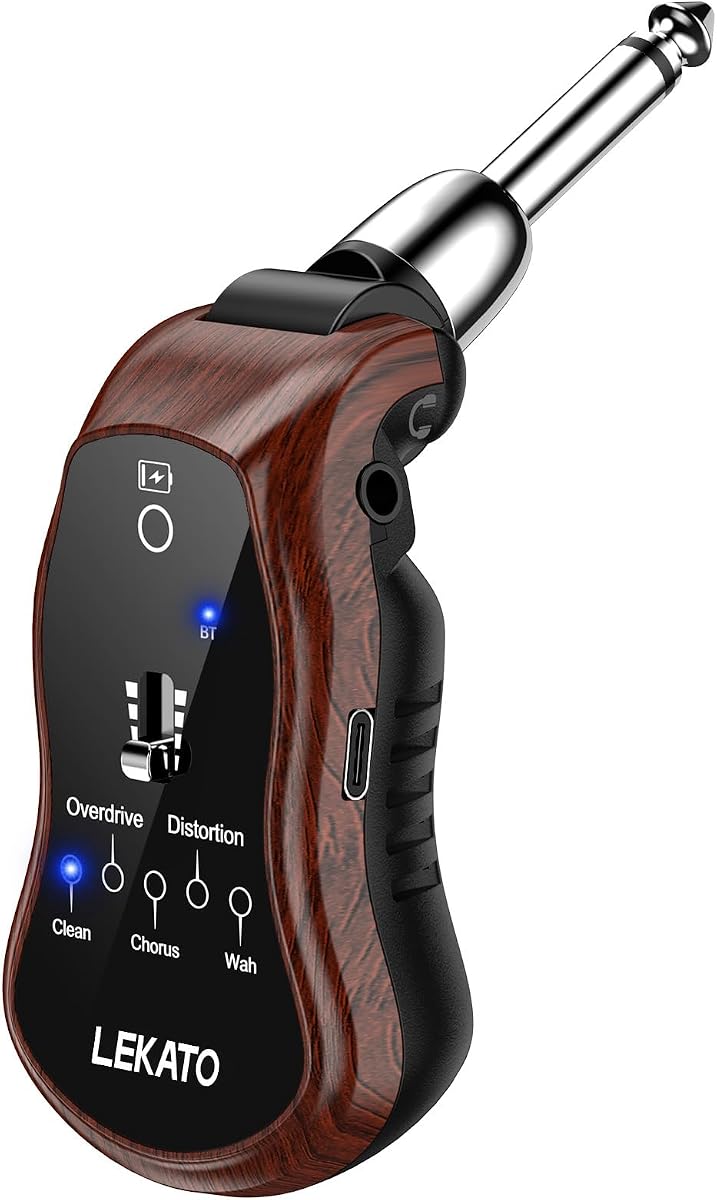
LEKATO’s micro headphone amp is for players who own a guitar but not a practice space loud enough for a combo. Plug the swivel jack into your instrument, connect wired headphones, and adjust VOL for late-night ideas. Clean, overdrive, chorus, distortion, and wah give you tone sketching without dragging a pedalboard onto the couch.
Bluetooth reception is a jam-along feature: pair a phone searching for “B6” and stream backing tracks wirelessly into the amp. Critical caveat from the pack—this Bluetooth path is not for Bluetooth headphones or speakers. Your ears still need a wired headphone connection (or the speaker cable path). Misreading that bullet is the fastest way to a frustrated return.
Portability is the product’s personality. The mini chassis plus 180° swivel plug works across guitars with awkward jack placements. A rechargeable lithium cell claims more than eight hours of continuous work—enough for several weeknight sessions per charge. The included 3.5mm to 6.35mm cable opens a speaker output when silence is no longer required.
Tone expectations should stay honest: this is a practice sketchpad, not a studio modeler rivaling Mustang Micro Plus’s deep preset library. For songwriting sparks and apartment volume control, five effects plus backing tracks are plenty. Bass and electric-acoustic instruments with pickups are welcomed in the compatibility notes.
Buy LEKATO when you want an inexpensive silent gateway and already own wired cans. Pair it with ATH-M20x or New Bee headphones from this guide. Step to Fender Mustang Micro when you want brand amp models, A/V-synced Bluetooth jamming, and USB recording in one brick.
Guitar → LEKATO → wired headphones. Phone → Bluetooth into LEKATO for backing tracks only.
Strong starter gift for new electric players in apartments—just include a note about wired headphones required.
We may earn a commission at no additional cost to you.

Philips Over-Ear Wired Practice Headphones
Philips enters the guitar practice conversation as a comfortable, adapter-ready wired over-ear that does not pretend to be a modeler. Powerful 40mm drivers aim for crisp, clear sound with passive isolation from the over-ear seal—ideal when your amp already has a headphone jack and you simply need honest cans.
The snap-on 6.3mm (1/4-inch) adapter is the guitar-shop detail that prevents adapter-drawer archaeology. Use 3.5mm for phones and laptops, click on 6.3mm for classic amp headphone outs. A two-meter cable lets you stand, stretch, and check posture without yanking a pedals-free practice amp off a stool.
Comfort features soft ear-cup cushions and a cushioned adjustable headband marketed for all-day wear. Lightweight construction plus 90° rotating cups covers one-ear monitoring when you want to hear an acoustic reference in the room or talk through a riff with a bandmate. That flexibility beats sealed-only designs during lesson hybrid moments.
These will not replace Audio-Technica’s studio pedigree or NUBWO’s Hi-Res monitoring claims, and they will not replace a Mustang Micro’s amp library. They shine as the “I need reliable cans tonight” solution with a brand name parents and schools recognize.
Choose Philips when adapter convenience and comfort outrank exotic feature lists. Pair with any practice amp headphone out, including LEKATO or Fender bricks that expect wired earphones.
Treat the snap-on 1/4-inch piece as sacred—tape a backup in your case. Lost adapters strand otherwise perfect headphones.
Philips = brand comfort + snap adapter. OneOdio = larger 50mm drivers + share port. Both stay wired and practice-friendly.
We may earn a commission at no additional cost to you.

Wired 50mm Studio/DJ Practice Headphones
This wired studio/DJ-leaning headset is built around the practice realities of amp and interface users: 50mm dynamic drivers spanning a 20Hz–20kHz framing, detachable coiled cable freedom, and dual 3.5mm plus 6.35mm plugs that remove adapter panic. Punchy bass, balanced mids, and precise treble help you hear pick noise and chord voicing clearly while tracking ideas.
At about 260g with skin-friendly protein leather and plush memory foam, the set targets long sessions without the neck strain of heavier broadcast cans. Passive isolation supports silent-ish apartment work. Swiveling earcups unlock single-ear monitoring when you are balancing a click in one ear and room sound in the other—common in hybrid acoustic-electric practice.
The share/bridge design is a sleeper teaching feature: feed the main headset from your device, then bridge a 6.35mm output into another pair for co-listening without a separate splitter. Bandmates can approve a tone together before anyone touches a DAW.
Because the cord is detachable and coiled, replaceability and movement both improve versus fixed straight cables. Still, coiled cords store potential energy—step back gradually until you learn the stretch limit relative to your amp’s headphone jack height.
Buy these when you want OneOdio-like dual-jack utility with explicit daisy-chain language and coiled freedom. If absolute light weight wins, compare New Bee’s 210g set. If brand monitor heritage wins, ATH-M20x remains the shortlist king.
Practice sitting and standing riffs once to learn tug points before a long session—avoid surprise jack strain.
Great for practice and tracking self-hear; still cross-check final mixes on speakers or flatter references.
We may earn a commission at no additional cost to you.
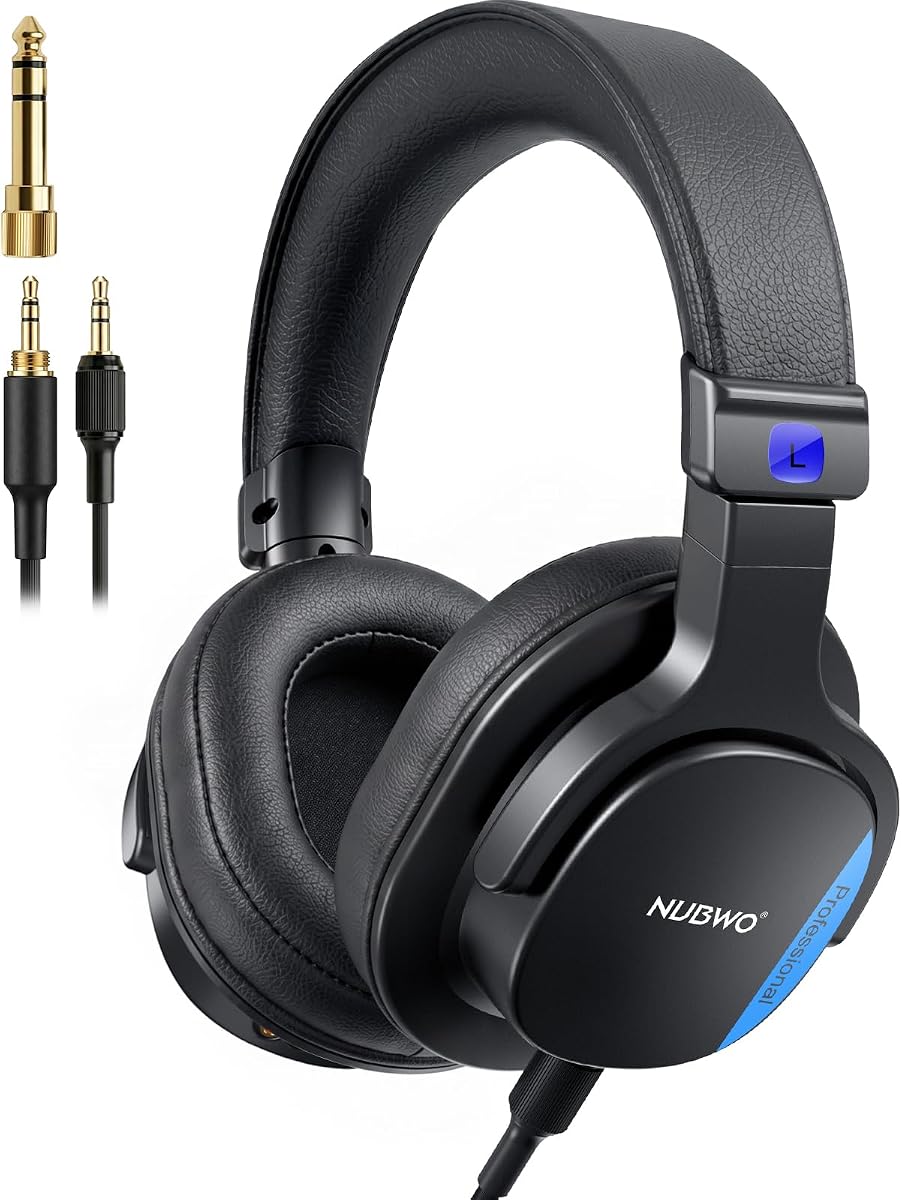
NUBWO HD01 aims at players who are tired of exaggerated bass hiding fret buzz. Hi-Res certification language, 20Hz–40kHz response, and 50Ω impedance support a neutral, balanced presentation—clean lows, smooth highs, faithful to what your amp or interface is actually doing. That honesty shortens the loop between “I thought I muted” and “I really muted.”
Angled 45mm drivers direct sound toward the eardrums for more accurate spatial imaging. Combined with ergonomic angling, you get better passive isolation and less leakage—polite for apartments and useful when you need consistent cue levels. At 241g with memory foam pads and a reinforced headband, marathon practice is realistic.
Dual 3.5mm interfaces use a twist-lock ritual—plug, twist, lock—to fight accidental yank-outs during energetic strumming or DJ-adjacent movements. Audio sharing and mixer compatibility stay adapter-light. A detachable 1/4-inch adapter covers guitar amps and pro gear, while one included cable’s built-in mic covers call/voice note needs on computers.
Earcups rotate 90° and flip 180° for single-ear monitoring—essential when you are matching an acoustic guitar in the room to an electric DI in the cans. Wide compatibility spans mixers, interfaces, guitar amplifiers, pianos, and DJ equipment.
We rank HD01 near the top for practice monitoring because neutrality teaches faster than hype bass. Pair with a quality amp headphone out or a Mustang Micro brick. If you want iconic Audio-Technica branding specifically, M20x still owns that emotional shortlist slot.
If phone volume feels weak, run HD01 from an amp headphone out, interface, or dedicated practice brick instead of a weak dongle.
Players chasing consumer thump for metal bedroom covers may prefer OneOdio’s more energetic voicing.
We may earn a commission at no additional cost to you.

Mustang Micro Plus is what happens when Fender decides silent practice deserves a real amp brain. Twenty-five amp models and twenty-five effect models feed 100 editable preset slots, with global EQ, an onboard tuner, integrated display, and parameter controls for dialing tones beyond three fuzzy knobs. Bedroom players can jump from pristine clean to high-gain without waking a sleeping household.
Bluetooth connectivity with Fender Tone app compatibility means you can stream audio with video sync and jam to songs in real time—an underrated practice accelerator versus metronome-only nights. Bi-directional USB recording captures performances straight to computer or mobile when an idea is worth keeping.
Battery life around four-plus hours matches focused sessions more than all-day festival weekends. The rotating input plug aims at compatibility across guitars and basses with different jack geometries. Importantly, the pack notes that it works with wired earbuds or wireless headphones—flexibility LEKATO explicitly does not offer on the Bluetooth headphone side.
Compared with the original Mustang Micro in this same guide, Plus is the deeper editor’s instrument: more models, more presets, more app-driven refinement. Choose original Micro if you want a simpler, proven brick; choose Plus when preset libraries and recording workflows are central.
Budget quality headphones separately—NUBWO, ATH-M20x, or New Bee—so the Micro Plus brain is not bottlenecked by poor earbuds. Together they form one of the strongest apartment practice stacks available in this pack.
Save a “Practice Clean,” “Practice Crunch,” and “Lead Boost” slot in the first week so you stop noodling menus instead of songs.
Plus wins depth, brand models, and USB recording. LEKATO wins simplicity and a lower-commitment effects sampler.
We may earn a commission at no additional cost to you.
Audio-Technica’s ATH-M20x remains the default honest answer when a guitarist asks for “real headphones” rather than gaming peripherals. Designed for studio tracking and mixing, the M20x uses 40mm drivers with rare-earth magnets and copper-clad aluminum wire voice coils. That engineering story translates to dependable cueing when you are practicing to a backing track through an interface or hearing an amp’s headphone circuit.
Tuning enhances low-frequency performance—helpful for modern rock and metal rhythm clarity—without turning the headphones into bass cannons that hide timing errors. Circumaural cups contour around the ears for isolation in loud environments, which also means you can practice at lower volumes with more detail. Neighbors and ears both benefit.
The convenient single-side cable exit is a small studio detail with big guitar ergonomics: fewer cable clashes across a strap or dreadnought bout when you lean forward to tab a passage. Build quality and engineering reputation are why schools and home studios keep M-series cans in rotation year after year.
M20x will not model amps—that is Mustang Micro’s job—and it will not give you 2.4GHz freedom like syndesmos. It will tell you the truth about your fretting hand when fed a clean DI or a good amp headphone out. That truth is the point of practice headphones.
We crown it a top pick for anyone who already has a sound source and needs monitors first. Pair with Fender Micro bricks or a traditional amp headphone jack. If you need Hi-Res extended-range marketing and twist-lock ports, NUBWO HD01 is the modern alternative in this same list.
Guitar → audio interface → ATH-M20x via headphone out. Add a light amp sim in your DAW for silent high-gain practice.
Isolation can tempt high volumes. Keep practice levels conservative—detail comes from seal and tuning, not pain.
We may earn a commission at no additional cost to you.
The original Mustang Micro is the silent-practice icon many guitarists already recognize: plug into the guitar, put on headphones, and access onboard DSP amp models without a traditional combo. Thirteen amp models and twelve effect combinations with parameter modify control cover a wide clean-to-dirty map for songwriting and skill building at whisper volumes.
Bluetooth audio streaming with audio/video sync is the practice multiplier—play along with lessons and songs in real time instead of fighting laggy phone speakers. USB-C recording gives you a path to capture takes on a computer when inspiration refuses to wait for a studio night. All-in-one personal headphone amplification is the category definition here.
Compared with Micro Plus in this pack, the original Micro is the simpler, still-mighty sibling. You get fewer deep preset slots and less of the Plus’s expanded 25/25 model matrix, but you also get a focused tool that many players never outgrow for couch sessions. Warranty language citing two years of limited coverage adds ownership confidence.
Form factor notes list a compact footprint suitable for home or travel. Toss it in a gig bag beside cable ties and picks. Because it is tiny, use a bright cable marker so it does not vanish into a drawer of wall warts.
Top-pick status comes from ecosystem maturity: Fender tones, Bluetooth jam-alongs, USB recording, and a proven silent-practice ritual. Pair with ATH-M20x or New Bee cans. Choose Plus instead when 100 editable presets and richer model counts are the assignment.
Micro + closed-back headphones + phone for Bluetooth lessons = hotel-room progress without a practice amp brick the size of a lunchbox.
Unlike LEKATO’s limitation, Fender’s Micro family is commonly used with a wide range of headphone types—confirm your preferred cans seal well for bass response.
We may earn a commission at no additional cost to you.
syndesmos 2.4GHz Wireless Guitar Headphones
syndesmos attacks the cable that keeps yanking your attention when you turn toward a pedalboard. Plug the included 2.4GHz ultra-low-latency transmitter into an electric guitar, digital piano, or electronic drum output and the headphones become a wireless monitor path claiming roughly 20ms response—much closer to “wired feel” than classic Bluetooth instrument attempts.
Plug-and-play positioning matters: no menus, no scavenger-hunt pairing for the instrument link. Move around a mixer or amp stack while keeping both hands on the instrument. For guitarists who pace while practicing solos, that freedom is addictive once timing feels trustworthy.
Hybrid connectivity covers modern studios. Use the dongle for latency-critical monitoring, switch to Bluetooth 5.3 for casual phone listening, and fall back to included 3.5mm and 6.35mm cables for legacy interfaces. One headset spanning those jobs reduces the headphone spiderweb on a desk.
Sonically, 50mm neodymium drivers with PET diaphragms aim for transparent, flat-leaning accuracy—clean mids and crystalline highs for judging high-gain mud versus clarity. Endurance claims reach about 40 hours in 2.4GHz mode and 55 hours in Bluetooth mode, with 1–2 hour recharge windows when you finally stop playing.
We top-pick syndesmos for intermediate players ready to cut the cord without surrendering timing. Beginners might start wired (M20x + amp out) and graduate here. Always keep a cable in the case when RF-dense venues misbehave.
Play sixteenth notes against a metronome on first setup. If feel is off, shorten distance, replace batteries/charge, or fall back to cable while troubleshooting.
The instrument magic is the 2.4GHz dongle. Ordinary Bluetooth earbuds still lag too much for serious tracking.
We may earn a commission at no additional cost to you.

New Bee’s studio headphones chase a specific pain: serious drivers without the neck tax of 270g-class monitors. At about 210g with skin-friendly protein leather and soft memory foam, they are built for long-session creators who still want 50mm dynamic range—punchy bass, balanced mids, crystal treble—for mixing thoughts and guitar self-monitoring.
Dual-connector design with both 3.5mm and 6.35mm gold-plated plugs means guitar amp headphone outs and PC interfaces are first-class citizens. No scavenger hunt for a missing adapter when a practice amp only speaks quarter-inch. That alone accelerates weeknight “I’ll just plug in for twenty minutes” habits that become real progress.
Ninety-degree swiveling ear cups cover single-ear monitoring for tracking and live-adjacent checks. The adjustable headband aims for a snug, stable fit so headbanging lightly to a metronome does not shift the seal. Passive isolation helps keep distortion harmonics audible at neighbor-safe volumes.
Against ATH-M20x, New Bee wins weight; Audio-Technica wins long-term studio brand gravity. Against OneOdio, New Bee emphasizes ultra-light comfort while sharing the dual-plug philosophy. None of them replace a Mustang Micro’s amp models—they complete it.
Buy New Bee when your practice blocker is physical fatigue from heavy cans. Pair with any headphone-out amp or Fender Micro brick. Keep a spare cable strategy if your unit uses detachable leads—check the exact package contents on arrival.
Wear them for a full 45-minute practice the first night. If your neck forgets they are there, the 210g bet paid off.
These are closed-back isolators. For acoustic-electric blending with room sound, use single-cup swivel rather than expecting open-back airiness.
We may earn a commission at no additional cost to you.
If your combo or interface already has a headphone jack, buy monitors (M20x, NUBWO, New Bee, OneOdio, Philips). If you only have a guitar and a phone, buy a Mustang Micro/Plus or LEKATO first, then add cans. Searching this keyword often means you need the amp brick—not another pair of consumer ANC buds.
Many guitar amps speak 1/4-inch (6.3/6.35mm). Phones speak 3.5mm or USB-C. Dual-plug headphones and snap-on adapters prevent dead ends. Keep a labeled adapter in the case; lost rings strand otherwise perfect gear.
Wired monitoring is still the timing gold standard. syndesmos-style 2.4GHz links can feel practice-viable near 20ms. Standard Bluetooth earbuds usually do not. LEKATO’s Bluetooth is for backing tracks into the amp, not wireless cans.
Closed-back circumaural cups let you hear detail at lower SPLs—protecting hearing and roommate peace. Enhanced-bass consumer tunings can hide mistakes; neutral-leaning monitors teach faster. Take ear breaks every practice block.
Share ports (OneOdio and the 50mm studio set) help lessons. Fender Micro USB recording captures sparks. Single-ear swivel cups help when an instructor speaks. Match features to whether you practice alone, learn with a teacher, or demo riffs online.
Guitar → amp input → amp headphone jack → closed-back headphones (prefer 6.35mm or adapter). Start quiet; raise until clarity appears, not until skull vibration appears.
Guitar → Micro/Plus input → headphones/earbuds on Micro output → optional phone Bluetooth for jam tracks → optional USB for recording.
Guitar → LEKATO → wired headphones. Pair phone Bluetooth to LEKATO only for backing tracks. Do not expect Bluetooth headphones to receive the guitar signal.
Guitar → audio interface → DAW amp sim → interface headphone out → studio monitors like ATH-M20x or NUBWO. Best for recording-focused practice.
Instrument → syndesmos transmitter → wireless headphones. Keep a wired cable nearby. Test timing with a metronome before trusting it for fast alternate picking.
You can hear sound if an amp or modeler sends Bluetooth audio, but latency often ruins timing feel for lead work. Prefer wired headphones from an amp jack, a Mustang Micro into wired/wireless cans as supported, or a dedicated low-latency 2.4GHz system like syndesmos for instrument monitoring.
Many consumer sets are easy to drive from phones and amp headphone outs. Higher impedance options like NUBWO’s 50Ω can sound quieter on weak sources but cleaner on proper amp/interface outs. Match impedance to your source strength rather than chasing a single magic number.
Closed-back is the apartment default because it contains more sound and isolates your cue mix. Open-back can feel natural but leaks sound and usually bothers housemates sooner. Every headphone product in this pack leans closed-back practice use.
It is a personal headphone amplifier with onboard amp/effect models. You still need headphones or earbuds to hear it. Think of it as the missing middle between guitar and ears.
Because its Bluetooth feature is a receiver for backing tracks from a phone, not a transmitter to wireless headphones. Use wired headphones on the LEKATO headphone out.
Yes for hearing tightness and noise-gate truths, especially through an interface or amp sim. The enhanced low-frequency tuning supports modern rhythm tones without the worst bass-bloom sins of party headphones. Still check final tones on speakers when recording.
A short quality instrument cable, a 3.5mm to 1/4-inch adapter, and whatever charge cable your Micro/LEKATO needs. Dual-plug headphones reduce adapter count but never zero it.
Loud enough to hear pick attack and muting clearly, quiet enough that you could hold a conversation after removing the cups without ears ringing. Isolation can trick you into unsafe levels—use conservative gains.
Yes. Fender notes rotating-plug compatibility for most guitars and basses on Micro Plus, and closed-back 40–50mm headphones reproduce bass fundamentals far better than tiny open buds. Ensure your cans seal well for low-end accuracy.
Usually no. Start wired into an amp headphone out or a simple Micro brick so timing feel stays solid. Graduate to syndesmos-style 2.4GHz when cable drag becomes the main annoyance.
Guitar practice headphones are really a system: source, cable or radio link, and cups that tell the truth. In this 2026 pack, Audio-Technica ATH-M20x remains the dependable studio-flavored monitor, Fender Mustang Micro (and Plus) solve the “no amp headphone out” problem with real model libraries, and syndesmos opens a low-latency wireless door for players ready to leave the cable on the stand.
NUBWO HD01 and New Bee cover modern light/neutral wired monitoring, while OneOdio, Philips, and the dual-plug studio set handle adapter-heavy amp life and lessons. LEKATO is the budget effects gateway—if you respect its wired-headphones rule.
Build the shortest honest chain for your apartment, protect your hearing, and practice long enough for the gear to become invisible. That is when headphones stop being gadgets and start being musicianship tools.