Detailed review
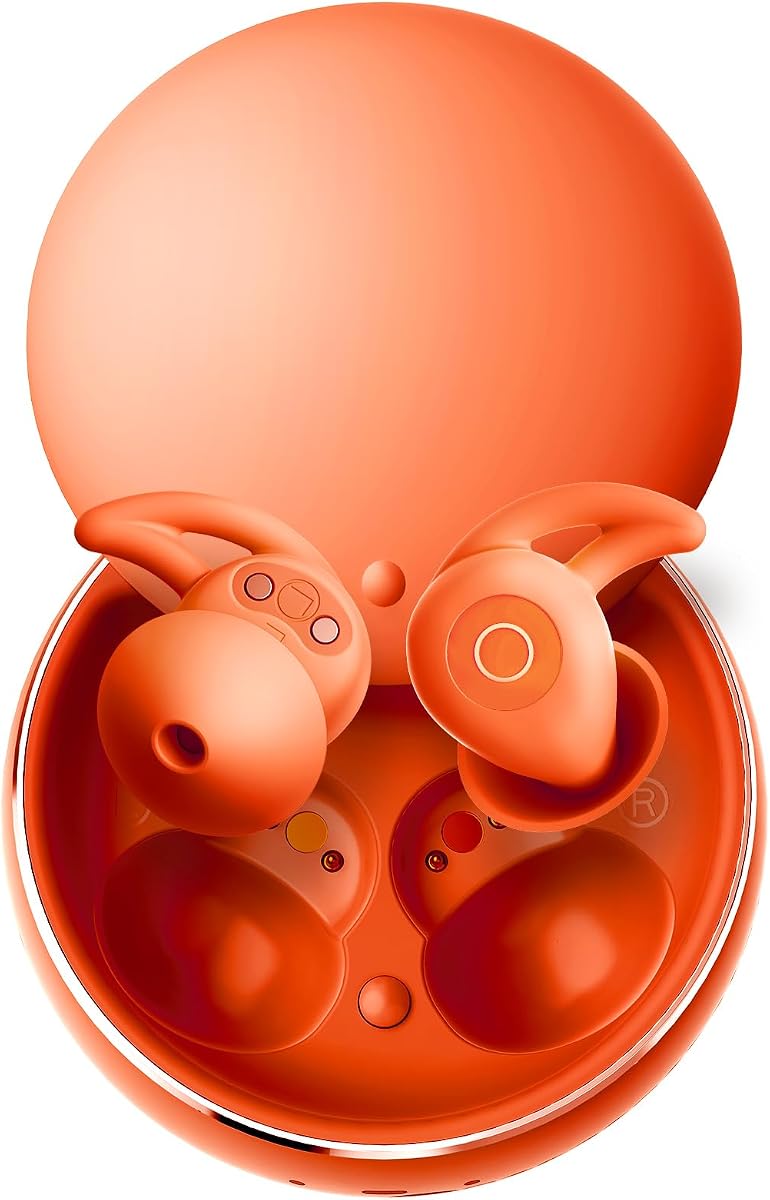
The standout hardware is the full-color LED touchscreen on the charging case. In a dark bedroom, that screen can become the remote you actually use—play and pause, volume, track skips, call answers, sleep-mode toggles, language options, wallpaper and brightness tweaks—without unlocking a bright phone that floods the room with blue light. For couples, that matters: one partner can adjust audio without lighting the whole ceiling. It is also useful for travelers who pack buds in a backpack pocket and want status at a glance.
Acoustically, these are not stripped-down white-noise-only tools. Thirteen-millimeter dynamic drivers and a tuned chamber aim for richer bass and clearer mids than many micro sleep buds, with five EQ presets (Standard, Classic, Jazz, Rock, Pop) for people who also wear them for podcasts, soft playlists, or wind-down playlists before lights-out. Bluetooth 5.4 supports the usual modern pairing story—open the case, connect quickly, keep a stable link for overnight streams. Call clarity is listed as a strength when you need a quiet hallway call the next morning without swapping to another headset.
Battery claims land in the familiar sleep-bud band: up to forty-eight hours of total system playtime with the case, roughly an hour and a half for a full USB-C recharge, and enough single-charge endurance for an unbroken night when the buds start topped up. Instant reconnect when you open the case reduces the pre-bed fiddling that keeps anxious sleepers awake. The pocketable case is small enough for a nightstand drawer or a toiletry kit, which helps if you rotate between home and hotels.
Honest caveats belong up front. The consumer rating on the listing sits lower than several competitors in this roundup, which often signals fit sensitivity—tiny canal geometries reward careful tip selection and a few nights of adaptation. The touchscreen is a genuine convenience for some and unused plastic for others; if you already control everything from a watch or lock-screen widgets, you may not need it. These also emphasize sleep-mode silence and ergonomic flush fit more than hybrid active noise cancelling, so if a partner’s snoring is the primary enemy, compare them against the T33 ANC models later in this guide.
Who should shortlist them? Buyers who want a feature-rich sleep kit with a case that doubles as a bedside controller, who value EQ variety for evening listening, and who prioritize alert-free Sleep Mode over maximum ANC percentage claims. Start with the smallest tips that still seal, enable Sleep Mode before you settle, and keep the case on the nightstand rather than under a pillow so the screen stays reachable without a scavenger hunt.
Who it is for
Side sleepers who dislike bulky stems, travelers who want case-side controls without phone glare, and listeners who use soft music or podcasts as a wind-down ritual—not only static white noise. Also a fit for households where one person needs volume changes without waking the other with a lit smartphone.
Setup tips for quieter nights
Pair once in a quiet room, then practice entering Sleep Mode before bed so muscle memory sticks. Dim the case screen brightness if it glows too brightly on a dark nightstand. Rotate tip sizes until pillow pressure disappears—comfort beats maximum seal if you wake with sore canals.
If you stream from a phone across the room, keep the device on the same side of the bed as your head to reduce Bluetooth dropouts through mattresses and metal frames.
Versus pure micro sleep buds
Compared with ultra-minimalist options like Sleepals Micro, this model trades some invisible tiny-ness for richer drivers, EQ modes, and the touchscreen case. If your only goal is the smallest possible overnight plug with phone audio, a lighter specialist may feel less gadgety; if you want one pair that also works for daytime chores, the extra features earn their keep.