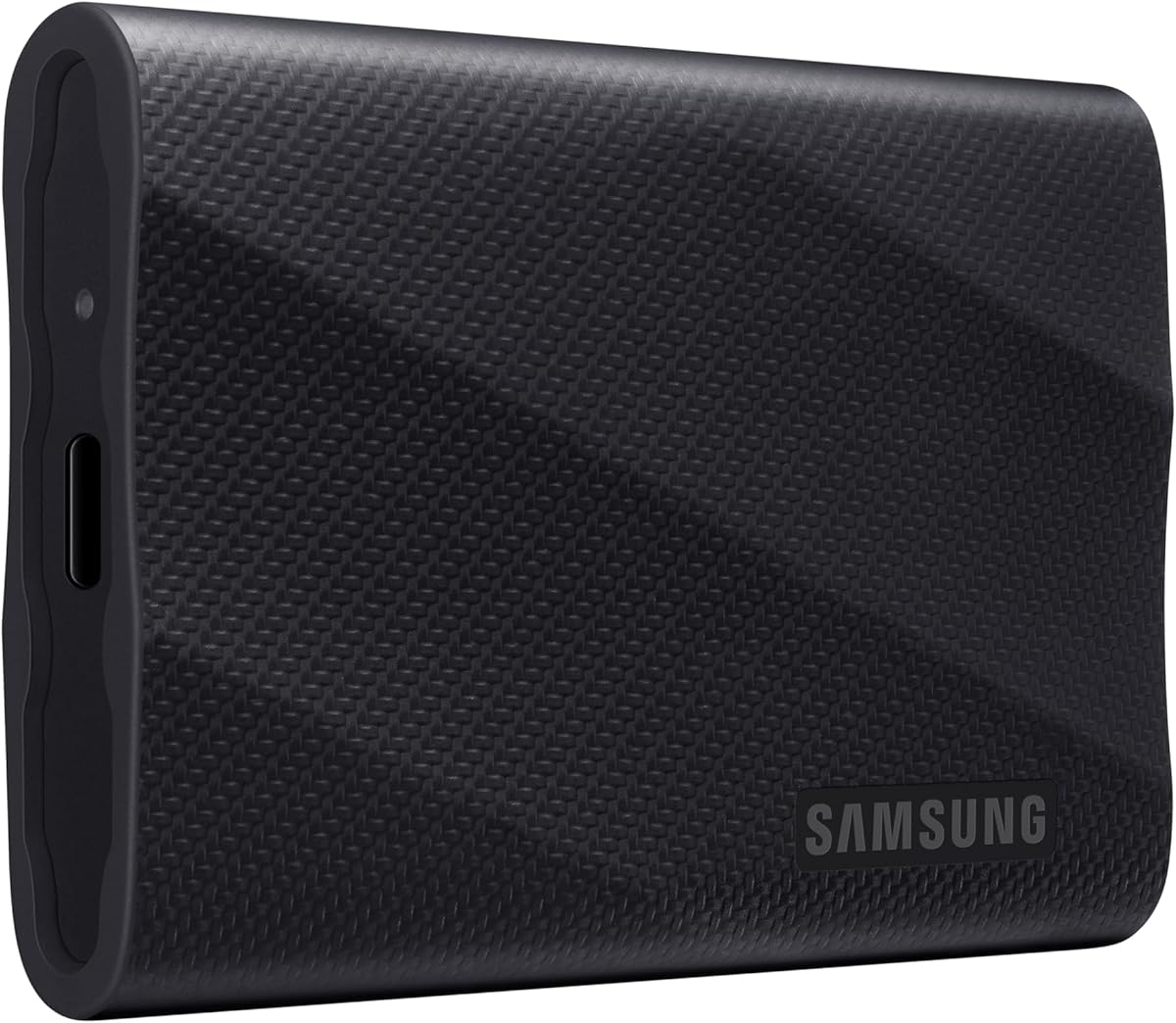
Samsung T9 Portable SSD 2TB
- Sustained reads and writes up to 2,000MB/s on USB 3.2 Gen 2x2
- Dynamic thermal guard for long transfers and Magician software support
- Works across desktops, cameras, consoles; iPhone 15 Pro Res 4K60 called out
Expert Review & Guide
Two terabytes used to mean a spinning drive the size of a paperback. In 2026 it means a palm-sized SSD that can swallow a wedding weekend of RAW, a week of 4K B-roll, or a console library you refuse to delete. Photographers offload between locations, field editors proxy in rental cars, travelers keep trip photos off the phone, and gamers treat externals as expandable shelves.
This guide covers ten 2TB portables: Samsung’s T9 for USB 3.2 Gen 2x2 near 2,000MB/s, rugged T7 Shield for IP65 everyday carry, SanDisk Extreme Old (~1050MB/s) and New (~2000MB/s) Models, Monterey and Sky Blue Old Model colorways, an 800MB/s SanDisk Portable, Amazon Basics’ metal IP65 option, and Crucial’s X10 at up to 2,100MB/s. Expect real USB generations, drop ratings, AES, Magician, Memory Zone, and cable kits—not invented ASINs or dollar prices.
Match USB generation to your host, treat IP65 as weather insurance, and pick Extreme Old versus New deliberately—same family name, different ceilings.
As an Amazon Associate we earn from qualifying purchases. We may earn a commission at no additional cost to you.
Scan peak speed claims, rugged ratings, and software extras before the full reviews. Monterey and Sky Blue share the Extreme Old Model ~1050MB/s class and IP65 envelope—choose them for visibility, not a different engine.
SANDISK Extreme Portable SSD (Old Model)
Call this the SanDisk Extreme Old Model so you never confuse it with the New Model Extreme later here. Over USB-C USB 3.2 Gen 2 it claims up to 1050MB/s read and 1000MB/s write—NVMe-class speed for dumping cards between wedding setups or travel locations. Host and cable still decide real throughput, but the ceiling fits most Gen 2 assignment kits.
Durability is the Extreme reputation: up to three-meter drop protection and IP65 water and dust resistance, requalified from earlier two-meter and IP55 ratings. Splash, sand, and a table bounce are covered—not hose baths. The carabiner keeps 2TB clipped to a pack instead of loose in a cargo pocket.
Password protection with 256-bit AES hardware encryption helps if a café thief grabs client selects. Memory Zone frees space when phones overflow mid-trip. Non-operating guidance from −20°C to 85°C fits gear-trunk life, and updated firmware is worth applying.
Versus T7 Titan Gray, Extreme Old Model trades aluminum polish for sealing and a clip. Versus Extreme New Model, it is the slower sibling—still excellent if you are not chasing 2000MB/s. Two terabytes covers a doc’s dailies or a sports season as the camera-bag vault.
Buy Old Model for Gen 2 hosts, IP65 reliability, and SanDisk field habits. Skip it if Gen 2x2 is already daily and you need that ceiling every afternoon.
Event shooters offloading between ceremonies, travel photographers keeping a laptop-separate copy, and anyone who has dunked aluminum will like IP65, the carabiner, and AES on client media.
Old Model: ~1050/1000 MB/s, Gen 2, IP65, AES, Memory Zone, carabiner. New Model: up to 2000MB/s with IP65, 3m drop, and AES. Confirm the SKU before reordering.
We may earn a commission at no additional cost to you.
Samsung T7 Portable SSD 2TB Titan Gray
Samsung’s T7 Titan Gray is the aluminum daily driver: PCIe NVMe claims of 1,050/1,000 MB/s over USB 3.2 Gen 2, framed as almost twice the older T5. Proxy timelines, photo catalogs, and supported game libraries feel snappier than any spinning USB disk.
The Titan Gray unibody slides into a blazer pocket beside a café laptop. Shock protection up to six feet covers desk drops; it does not replace Shield’s IP65 for rain and sand. Choose it when coffee near the laptop is the risk, not monsoon mist on the drive.
Compatibility spans PCs and phones, with 4K 60fps and iPhone 15 Pro Res 4K60 recording language. Capture-to-SSD workflows need a proper cable—underspec USB-C leads quietly ruin controllers.
Family capacities stretch toward 4TB; 2TB is the versatile middle for students, freelancers, and mid-size game overflow. Stack Titan Gray against Shield for weather and against T9 when Gen 2x2 already sits on your dock.
Thesis haulers and tidy console librarians will feel at home. Outdoor docs should prefer Shield or Extreme; port-rich speed chasers should shortlist T9, X10, or Extreme New Model.
Titan Gray: polished Gen 2, no IP65. Shield: Gen 2 plus IP65, taller drops, Magician LEDs. T9: Gen 2x2 ~2000MB/s with thermal guard. Label finishes so you grab the right vault.
Format for the host, confirm USB mode, and test a short clip before paid work. Pro Res support assumes a suitable cable and sustained writes.
We may earn a commission at no additional cost to you.
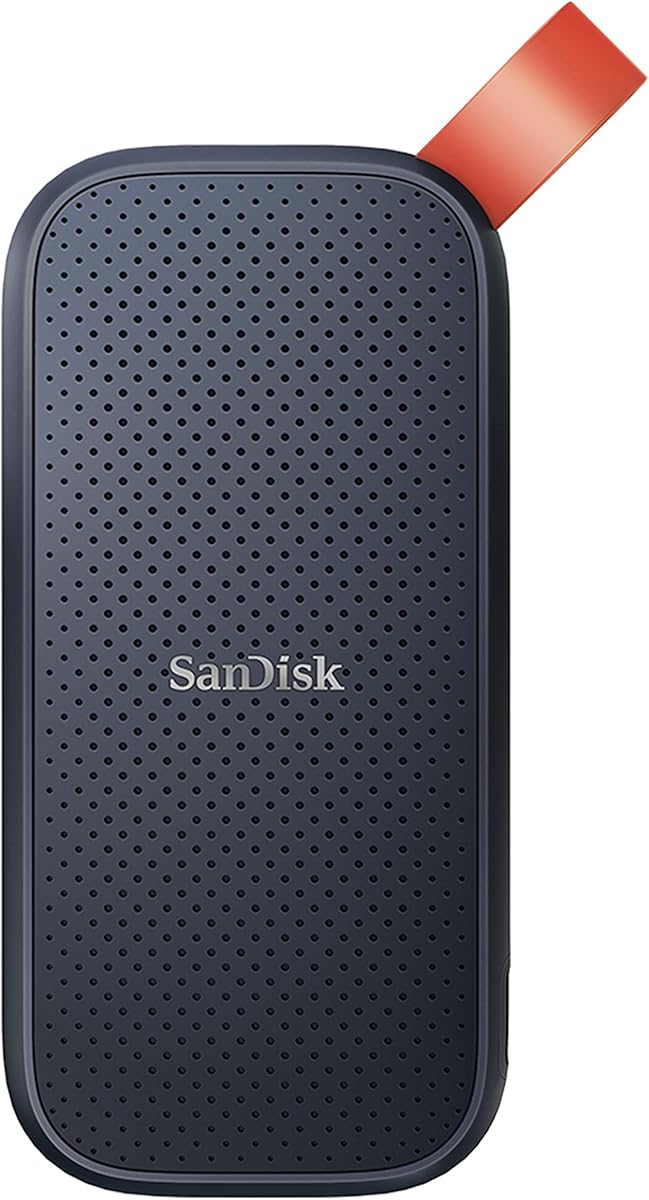
SanDisk’s non-Extreme Portable SSD targets travelers needing 2TB for phone backups, vacation catalogs, and offline movies—not cinema offloads. Up to 800MB/s read over USB-C USB 3.2 Gen 2 trails Extremes and every ~2000MB/s option, yet still embarrasses spinning USB HDDs for everyday files.
Durability is honest: up to two-meter drop protection and a rubber hook for belt or backpack carry. Clip-on habits stop hostel-desk abandonment. This pack entry does not highlight Extreme’s IP65 or AES, so treat it as convenience storage, not a stormproof client courier.
Use it as a secondary JPEG/selects backup while a faster Extreme or T9 handles hot dumps. Updated firmware helps as phones and laptops change USB stacks over the years.
The trap is expecting Extreme performance because the box says SanDisk and 2TB. Read 800MB/s twice. Hundred-gigabyte 6K weeks deserve a sibling; phone-plus-Documents syncs before a flight do not.
Students replacing dying 2.5-inch HDDs and families building travel archives feel the upgrade immediately. Multi-stream editors should look elsewhere.
Phone libraries, office trees, moderate RAW, and modest saves fit. Multi-hundred-gig video shuttles are where patience dies.
Portable here is the 800MB/s SDSSDE30-class hook drive. Extreme Old/New are different ASINs—match the model number.
We may earn a commission at no additional cost to you.
T9 is Samsung’s creator speed pick: sustained reads and writes up to 2,000MB/s on USB 3.2 Gen 2x2, stressed for longer processes—not short peaks. Project clones, high-bitrate ingest, and large game installs are where that claim earns rent.
Dynamic Thermal Guard exists because sprint-then-throttle SSDs ruin afternoons. Expect warmth; prefer managed warmth. Give airflow on a table and keep the bundled cable married to the drive—drawer cables are how 2,000MB/s becomes a shrug.
Magician covers firmware, encryption extras, and health checks freelancers want before flights. Compatibility spans desktops, cameras, and consoles, plus iPhone 15 Pro Res 4K60 language with the included cable recommended.
Versus Extreme New Model, both sit near 2000MB/s; T9 leans Gen 2x2 and Magician, Extreme leans IP65 and AES. Versus X10’s 2,100MB/s read claim, pick ecosystem and host reality over brochure decimals.
Shortlist T9 on Gen 2x2 docks; prefer Shield/Extreme sealing in rain; stay on simpler Gen 2 drives for JPEG travel. That balance earns our Best for Creators Needing ~2000MB/s badge.
Look for USB 3.2 Gen 2x2 / 20Gbps on the daily port. Fallback works; it just erases why you bought a T9.
T9 for hot ingest; Shield or Extreme overnight for rugged redundancy. Two jobs, two chassis.
Table airflow beats cushions or laptop exhaust. Thermal Guard helps; hot cars still bill overtime.
We may earn a commission at no additional cost to you.
SANDISK Extreme Portable SSD (Old Model) Monterey
Monterey is an Extreme Old Model colorway, not a faster SKU. Under the finish: up to 1050/1000 MB/s on USB 3.2 Gen 2, IP65, up-to-3m drops, 256-bit AES passwords, carabiner, and Memory Zone. Trust the default Old Model? Monterey is that engine in a shell meant to stand out.
Paint matters in chaotic kits. At a 4 a.m. pack-out, Monterey is easier to spot among black batteries. Teams color-code roles only if they buy the intentional variant instead of whatever Extreme is cheapest that week.
You will not beat a T9 because the plastic is prettier. You get the same card-dump class plus the requalified IP65/3m story. Keep firmware updated. Versus Sky Blue, pick visibility; versus New Model, pick whether you need 2000MB/s.
Crews already living in Memory Zone, carabiners, and AES can add Monterey without retraining—just assign the color a role.
Skip it if you want New Model speed or Magician. Otherwise it is Old Model Extreme with less grab-the-wrong-black-brick risk.
Clip Monterey as the hot dump; bury a second Extreme or Shield as cold copy. Color beats peeling labels.
Confirm Old Model, Monterey, G25M-style naming, 1050MB/s—not New Model 2000MB/s black.
We may earn a commission at no additional cost to you.
SANDISK Extreme Portable SSD (New Model)
Extreme New Model is for people who loved Extreme rugged habits but outgrew ~1050MB/s. SanDisk claims up to 2000MB/s—nearly 2× the prior generation—with a note about moving 1,000 high-res photos in under a minute under their tests. AI upscales and phone ProRes dumps fill 2TB fast; speed makes reshuffling less painful.
IP65 and up to 3m drop protection continue the field story in a pocketable USB-C body. Host and cable still decide brochure-versus-reality. AES-256 passwords keep the Extreme encryption habit for client folders.
Versus T9, both advertise ~2000MB/s class performance: T9 for Gen 2x2/Magician/thermals, New Model for IP65 continuity and AES. Versus X10 and Basics, you choose Extreme branding over peak-claim decimals or dual-cable kits.
Do not skim—Old Model listings still dominate search, and Monterey/Sky Blue here are Old Model paints. Confirm New Model naming and the 2000MB/s claim.
Field editors upgrading from 1050MB/s Extremes should shortlist this Best Next-Gen Extreme. Phone-backup travelers can stay on the 800MB/s Portable.
Clone once, spot-check folders, demote Old Model to cold spare, and store AES passwords before the swap.
Upscales and multi-version exports chew 2TB. New Model speed makes pruning less dreadful.
We may earn a commission at no additional cost to you.
Amazon Basics Portable External SSD 2TB
Amazon Basics arriving with up to 2000MB/s claims and IP65 surprises cable-brand skeptics. Speeds vary by device and file mix, and USB 3.2 Gen 2 labeling still means verifying your host. On paper it shares the fast shelf with Extreme New Model and T9.
Metal casing plus a scratch-resistant polymer bottom suits rough tables. Thermal language targets under 50°C/122°F in heavy use—useful because sealed drives trap heat. IP65 puts it in Extreme/Shield weather talk, not fair-weather aluminum-only territory.
The kit wins: C-to-C, C-to-A, and a storage case. Ultrabooks and older USB-A towers both work day one. Samsung/SanDisk buyers often buy those cables separately.
Ecosystem is thinner—no Magician LEDs or Memory Zone pitch. Pros standardized on AES Extreme or Magician may stay put. Students and travelers wanting sealed speed with cables included get an unromantic tool that works.
Benchmark before sole ingest on a paid shoot. Otherwise pick Basics for cables/case, Extreme New for AES/rugged narrative, or T9 for Magician and Gen 2x2.
USB-A still owns conference PCs and many consoles. C-to-C plus C-to-A prevents “I can’t plug in.”
Sealed bodies trap heat; the sub-50°C target admits that. Still give airflow on long copies.
We may earn a commission at no additional cost to you.
SANDISK Extreme Portable SSD (Old Model) Sky Blue
Sky Blue is the other Old Model Extreme colorway beside Monterey—same ~1050/1000 MB/s Gen 2 engine, IP65, up-to-3m drops after requalification from IP55/2m, AES-256, carabiner, and Memory Zone. You buy findability, not a faster controller.
Bright shells help on beaches, ski docs, and festival grounds full of black Pelicans. Visibility becomes reliability when someone tired is digging for “the little SSD.” Rental desks also love colors that read on checkout forms.
Pair Sky Blue with Monterey to separate hot and cold copies; elevate a black New Model later if the hot seat needs 2000MB/s. Still label roles—color reduces mistakes, it does not erase them.
Versus Titan Gray T7, Sky Blue offers sealing and a clip. Versus Shield, you trade Magician LEDs for Extreme carabiner habits. Versus New Model, you stay slower on purpose.
Pick Sky Blue for adventure travel and shared kits; skip it if anonymous Titan Gray stealth fits the office better.
All three Old Model Extremes share speed, IP65, AES, carabiner, and Memory Zone. Colors are visibility tools.
Sky Blue reads on checkout forms and is harder to pocket “by accident” than another black brick.
We may earn a commission at no additional cost to you.
Crucial’s matte-blue X10 posts the pack’s boldest read claim: up to 2,100MB/s over USB 3.2 USB-C for creators, students, and PC gamers. Host and cable decide reality, but the intent is fast-lane company with T9, Extreme New Model, and Basics.
IP65 plus drops to 9.8 ft / 3 m keep ruggedness beside Shield and Extreme. Matte blue refuses to vanish into cable nests. Speed plus seal is why it feels like a travel all-rounder.
Compatibility spans Windows, Mac, iPad Pro, Chromebook, Android, Linux, PS4, PS5, and Xbox via USB-C/A paths—then still verify each console’s play-versus-store USB rules.
Register the promotional Mylio Photos Plus and Acronis True Image months if you need a backup jump-start; it is not a lifetime suite. Versus T9, Magician is Samsung’s moat; versus Extreme New Model, Crucial answers with the higher read claim and bundle.
Thesis media, PC game overflow, and one-blue-brick travelers should shortlist X10. Magician or Memory Zone loyalists may feel less at home.
Confirm whether your PS5 or Xbox treats USB SSDs as extended, install-only, or playable storage before reshuffling.
Build a real backup habit during the promo months—idle trials help nobody.
We may earn a commission at no additional cost to you.
Samsung T7 Shield Portable SSD 2TB
T7 Shield fits when aluminum T7 feels optimistic outdoors and T9’s Gen 2x2 requirement feels like overkill. Samsung wraps up to 1,050/1,000 MB/s in IP65 sealing with drops to 9.8 feet—Gen 2 practicality with weather insurance, and our Best Rugged Everyday Carry badge.
Speed matches T7 Titan Gray and Extreme Old Model on ordinary Gen 2 hosts. Cinema-rate Gen 2x2 docks should step to T9; rain, dust, and sidewalk weeks should stay with Shield.
Magician adds health monitoring, encryption tools, firmware updates, and LED colors that announce the drive on a dark stage. Assign LED personalities per client. Respect 0°C–60°C operating guidance after frozen-trunk mornings, and use the included cable for iPhone 15 Pro Res claims.
Versus Extreme Old Model, Shield swaps carabiner/Memory Zone habits for Magician while matching IP65 with a taller drop rating in Samsung’s telling. Versus New Model and X10, Shield is slower on paper but honest for hosts without 20Gbps paths.
Wedding weather, documentary crews, and console libraries you will not baby are Shield’s habitat. Gen 2x2 editors can keep T9 hot and Shield as the rainy courier.
T7: aluminum Gen 2. Shield: Gen 2, IP65, 9.8-ft drops, Magician LEDs. T9: Gen 2x2 ~2000MB/s. Buy for weather, ports, or polish.
Dry cable ends after rain; IP65 is not a diving cert.
Assign Magician LED personalities per role so three black Shields stop being a guessing game.
We may earn a commission at no additional cost to you.

USB-C shape ≠ Gen 2x2 speed. Gen 2 (~10Gbps) is what T7, Shield, Extreme Old Model, and many laptops speak. Gen 2x2 (~20Gbps) unlocks T9’s 2,000MB/s sustained story. Extreme New Model, Amazon Basics, and X10 also need capable hosts for ~2000–2100MB/s claims. Read the exact labeling on the port you use daily before chasing brochure numbers.
IP65 on Extremes, Shield, Basics, and X10 resists water jets and dust in rated conditions—it is not a swimming pass. Drop figures (2m Portable, 3m Extremes/X10, 6ft T7, 9.8ft Shield/X10) are lab scenarios. Carabiners and cases reduce how often you test them. Beach and festival work favor sealed drives; boardroom handoffs still love aluminum T7.
Old Model Extreme—including Monterey and Sky Blue—targets ~1050/1000 MB/s with IP65, AES-256, carabiner, and Memory Zone. New Model jumps to ~2000MB/s while keeping IP65, 3m drop, AES, and pocket carry. Colorways do not change the Old Model engine. Confirm Old vs New before promising a client a transfer window.
Extreme AES passwords protect client confidentiality. Magician on T9/Shield adds firmware, health, encryption options, and LEDs. Memory Zone helps phone overflow. X10’s Mylio/Acronis window jump-starts backups. Basics stays minimal and wins on cables plus case. Pick tools you will actually open after day one.
Creators should prioritize sustained speed—T9, Extreme New Model, X10, or Basics—plus a rugged second copy. Travelers mostly backing up phones can use Extreme Old Model, Shield, or the 800MB/s Portable. Console players must verify platform USB rules, then favor broad compatibility lists. 2TB fills fast with 4K installs and RAW bursts—schedule pruning.
Basics including C-to-C, C-to-A, and a case is not trivia. Underspec cables steal performance. Keep manufacturer cables with their drives and retire frayed leads.
As a traveling working set, often yes: a wedding weekend of RAW plus selects, several days of 4K dailies, or a semester of student film can fit if studio storage takes the cold archive later. It will not hold a multi-year career alone. Treat 2TB as hot or warm storage you rotate. High-frame-rate 6K/8K and endless AI upscales fill it faster—plan pruning or a second drive.
Old Model Extreme (including Monterey and Sky Blue) targets about 1050/1000 MB/s on USB 3.2 Gen 2 with IP65, up to 3m drop protection, 256-bit AES, a carabiner, and Memory Zone. New Model Extreme steps to up to 2000MB/s—nearly 2× per SanDisk—while keeping IP65, 3m drop, pocketable size, and AES passwords. Same family name, different generation. Read the title carefully before ordering spares.
No. Both are Old Model Extreme colorways with the same ~1050/1000 MB/s class, IP65, drop rating, AES, carabiner, and Memory Zone story. Choose them for kit visibility and role color-coding, not speed. Shop Old vs New Model—or Samsung/Crucial alternatives—when you care about performance.
Only if drive, cable, and host port cooperate. T9 needs USB 3.2 Gen 2x2 for its sustained 2,000MB/s story. Extreme New Model, Amazon Basics, and Crucial X10 likewise depend on host conditions. On ordinary Gen 2 USB-C you may land nearer classic ~1000MB/s-class results. Benchmark large files on your machine before redesigning a workflow.
T7 Titan Gray for aluminum Gen 2 life without IP65. T7 Shield when weather, dust, and higher drops matter alongside ~1050MB/s and Magician LEDs. T9 when Gen 2x2 is real and huge media moves need up to 2,000MB/s with thermal management. Many creators keep Shield for field carry and T9 for the edit bay.
If the drive leaves your sight with client selects or personal documents, encryption is basic hygiene. Extreme Old and New Models highlight 256-bit AES hardware passwords; Magician on T9/Shield adds Samsung-side tools. Encryption is not a backup, and forgotten passwords lock you out. Pure game overflow without sensitive files can prioritize speed and durability instead.
Samsung T7, T7 Shield, and T9 listings call out high-resolution recording support, including iPhone 15 Pro Res 4K60 language, and recommend the included cable. Success still depends on device features, USB power, cable quality, and formatting—test a short clip before paid work. Other drives may still be excellent dump targets even if they are not ideal live-record volumes.
No. Drives fail, get lost, get stolen, and get formatted by tired hands. Use a portable SSD as a traveling copy inside a wider plan—laptop working set, courier SSD, and another studio or cloud copy. Dual-card in-camera habits plus dual-SSD offload in the field remain wise. The best 2TB portable in 2026 is still one finite brick.
Samsung T9/T7/Shield framing and Crucial X10’s PS4/PS5/Xbox list speak to console use, but policies differ by generation. Check whether your console allows playable USB storage versus extended or install-only use, then format as required before reorganizing a library.
On paper yes: up to 2000MB/s, IP65, a sub-50°C thermal target, metal/polymer build, plus C-to-C, C-to-A, and a case. It lacks Magician/Memory Zone depth. Mixed-PC households and travelers who want sealed speed with cables included should take it seriously; encrypted Extreme or Magician-standardized kits may still prefer those ecosystems.
The best 2TB portable SSD in 2026 matches your ports, weather, and file diet—not the loudest MB/s claim. T9 is our creator speed pick when Gen 2x2 is real. T7 Shield is the rugged everyday Magician carry. Extreme New Model is the next-gen Extreme upgrade from the Old Model’s 1050MB/s class without abandoning AES and sealing.
Elsewhere, Titan Gray T7 covers polished Gen 2 life; Monterey and Sky Blue solve Old Model kit visibility; the 800MB/s Portable handles simple travel backups; Amazon Basics bundles 2000MB/s-class ambition with dual cables and a case; Crucial X10 pushes a 2,100MB/s read claim with IP65 and broad console/OS support. Confirm Old versus New Extreme labels, marry good cables to drives, and never let one brick be the only home for work you cannot reshoot.
Buy for the week you actually live—rain decks, café edits, console overflow, phone ProRes experiments—and 2TB of solid-state storage becomes a calm pocket in a loud kit.