Detailed review
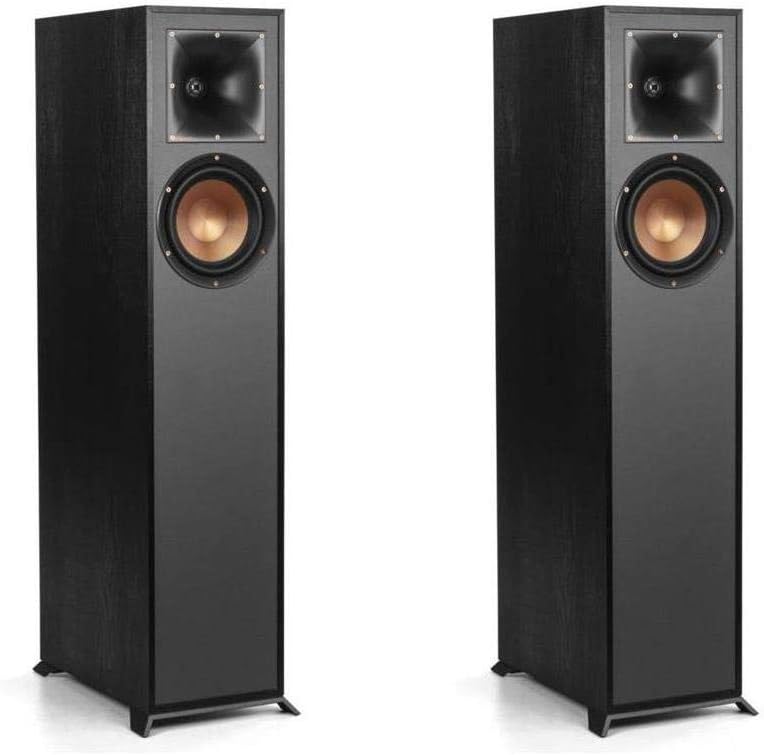
What makes the R-620F feel like Best Overall in this pack is the combination of pair packaging, high sensitivity heritage, and a driver layout that has defined modern Reference towers for years. The Tractrix horn loads the tweeter efficiently so dialogue and cymbals cut through a busy soundtrack without forcing the amplifier into clipping. That efficiency also means modest receivers can sound bigger than their wattage stickers suggest—useful if you are upgrading speakers before you upgrade the receiver.
Bass is the other half of the story. Dual IMG woofers share the midbass workload while the Tractrix-shaped rear ports reduce turbulence compared with a plain tube. Place the towers a couple of feet from the wall when you can; stuffing the ports against drywall muddies the low end and exaggerates boom. In a medium living room with ordinary furniture, the R-620F can deliver kick drums and action-movie rumble that feel substantial for dual six-and-a-half-inch drivers.
Cosmetics are practical rather than flashy: black textured wood-grain vinyl and magnetic grilles. Leave the grilles on for a quieter visual presence or pull them for the copper-woofer look that Klipsch fans expect. Gold-plated binding posts accept banana plugs, spades, or bare wire; keep polarity consistent left to right so the soundstage does not collapse.
Compared with the R-26FA in this same roundup, the R-620F is the cleaner stereo-music choice if you do not need built-in Atmos height drivers. Against the R-610F pair, you gain deeper claimed extension and dual-woofer authority. Against Polk’s Reserve R700, Klipsch trades some bass sophistication and Hi-Res marketing for that famous horn immediacy and a true matched-pair listing. Against Elimavi’s budget towers, the R-620F offers a more established horn architecture and stronger brand ecosystem for matching centers and surrounds later.
Setup rewards small adjustments. Toe the speakers inward until the center image locks for a seated listener, keep them roughly ear-height for the horn axis, and avoid parking a sofa directly against the back wall if you can help it. If treble feels forward on bright streaming masters, a gentle high-frequency trim at the receiver often restores balance without killing the lively character that makes Klipsch fun.
Buy the R-620F pair when you want one Amazon order to cover left and right channels with a proven Reference formula for music nights and weekend movies. It is not the deepest bass specialist in this list and not an Atmos height solution, but as an all-around floorstanding foundation for 2026 living rooms, it earns the top badge.
Who should buy the R-620F pair
Choose this pair if you want matched left and right towers for stereo or as front channels in a 5.1 system, prefer Klipsch’s dynamic horn presentation, and already own—or plan to buy—a conventional AV receiver with speaker-level outputs.
Look elsewhere if you specifically need integrated Atmos up-firing drivers, a single replacement tower, or a warmer silk-dome voicing like Elimavi’s budget pair.
Placement and room tips
Give the rear ports space, start with the towers forming an equilateral triangle with your seat, and add a subwoofer crossed around eighty hertz if you want cinematic LFE slam without pushing the woofers too hard.
Hardwood floors can make bass bloom; carpet and rugs usually tighten the presentation. Spike or isolation pads help depending on floor type and neighbor sensitivity.
How it compares in this pack
It beats compact R-610F models on dual-woofer scale, trails the R-26FA for built-in Atmos convenience, and sits below the Polk R700 for specialized long-throw bass hardware—while remaining the most balanced pair purchase for most shoppers.