Expert Review & Guide

Best External SSDs for Mac 2026: Fast USB-C Drives Ranked

MacBooks ship with blazing internal SSDs and stubbornly small base storage options, which is why a good external SSD has become part of the standard Apple kit in 2026. Whether you are offloading ProRes from an iPhone, expanding a MacBook Air for school, shuttling Final Cut libraries between an M-series laptop and a studio iMac, or running Time Machine without waiting on a spinning disk, USB-C portable NVMe drives are the practical fix. This guide ranks ten pack products—Samsung T7, SanDisk Extreme and Portable lines, Crucial X9 and X10, and SSK—strictly for Mac workflows: formatting choices, port realities, durability for travel kits, and capacity tiers that match creative libraries.

Two Mac-specific traps catch buyers. First, Thunderbolt badges on the laptop do not magically turn every USB SSD into a Thunderbolt RAID; these drives speak USB protocols, so cable quality and dock bandwidth decide whether you see 800, 1050, or 2000-plus MB/s class results. Second, titles that say “old model” on SanDisk Extreme drives are still excellent rugged Mac companions at up to 1050 MB/s—they are simply not the newer Extreme that advertises up to 2000 MB/s. We keep those generations separate so you do not buy the wrong stick for a speed-critical shuttle.

Start with the three top picks if you want a clear Mac default: the Samsung T7 2TB for everyday polish and capacity, the new SanDisk Extreme 1TB for pocket speed with IP65 armor, and the Crucial X10 2TB for rugged ultra-fast dual-cable flexibility. Use the comparison table for a quick scan of speed class, capacity, and toughness, then read each review for setup notes, who should buy, and honest tradeoffs. We never print dollar prices—flash deals move too fast—and we only use products from the pack.

Top External SSD Picks for MacBook Users

Best Overall for Mac

Samsung T7 Portable SSD 2TB Titan Gray

★★★★★9.4/10
Samsung T7 Portable SSD 2TB Titan Gray
  • 2TB USB-C NVMe class storage that fits Final Cut, Lightroom, and Time Machine kits
  • Up to 1050/1000 MB/s with a polished aluminum body made for MacBook sleeves
  • Top-tier 4.7 rating for students, professionals, and daily creative carry
Check Price →
Best Rugged Speed Dual

Crucial X10 2TB Portable SSD

★★★★★9/10
Crucial X10 2TB Portable SSD
  • Up to 2100 MB/s reads with 2TB headroom for serious Mac media libraries
  • IP65 sealing and strong drop resistance for weather-prone travel kits
  • USB-C and USB-A cables for Mac, iPad Pro, Windows, and console handoffs
Check Price →

As an Amazon Associate we earn from qualifying purchases. We may earn a commission at no additional cost to you.

Mac External SSD Comparison: Speed, Capacity, Durability

Every drive below is Mac-relevant USB-C portable storage from the pack. Compare sequential speed class, capacity tier, and weather or drop protection so you can match a MacBook Air overflow stick, a field shuttle, or a desk vault without scrolling ten listings. Check live retail pages for current availability—we omit dollar prices on purpose.

#ProductSpecificationsScore
1
  • Up to 1050/1000 MB/s USB 3.2 Gen 2 NVMe
  • 2TB Titan Gray aluminum unibody
  • Shock resistance up to about 6 feet
9.4
2
  • Up to 2000 MB/s USB Type-C transfers
  • 1TB new-generation Extreme, pocket size
  • IP65 rating and up to 3 m drop protection
9.2
3
  • Up to 2100 MB/s read, USB-C and USB-A
  • 2TB compact portable SSD in matte blue
  • IP65 plus drop resistance up to about 3 m
9
4
  • Up to 1050/1000 MB/s NVMe USB 3.2 Gen 2
  • 1TB Titan Gray for lighter Mac kits
  • PC, phone, and camera-friendly design
9.4
5
  • Up to 2100 MB/s read performance class
  • 8TB compact portable SSD for huge libraries
  • IP65 durability with USB-C and USB-A cables
9
6
  • Up to 1050/1000 MB/s USB 3.2 Gen 2
  • 4TB old-model Extreme portable SSD
  • IP65, 3 m drop, AES hardware encryption
9.2
7
  • Up to 1050/1000 MB/s USB-C NVMe class
  • 2TB Extreme portable SSD (old model)
  • IP65, drop protection, AES encryption
9.2
8
  • Up to 1050 MB/s USB 3.2 USB-C portable SSD
  • 2TB capacity for games, files, and Mac backups
  • IP55 water and dust resistance, ~2 m drop rating
9.2
9
  • Up to 800 MB/s USB-C USB 3.2 Gen 2
  • 1TB portable SSD with rubber hook carry
  • Up to 2-meter drop protection for daily abuse
9.2
10
  • Up to 1050/1000 MB/s USB 3.2 Gen2
  • 1TB with USB-C and USB-A cables included
  • SMART monitoring and TRIM for sustained health
9

1. Samsung T7 2TB - Best Overall for Mac

Samsung T7 Portable SSD 2TB Titan Gray

Samsung T7 Portable SSD 2TB Titan Gray

9.4/10★★★★★

If you want one external SSD that feels native beside a MacBook without chasing the absolute fastest sequential score, the Samsung T7 Portable SSD 2TB Titan Gray is the default we keep recommending for Mac users in 2026. USB 3.2 Gen 2 with advertised reads up to 1050 MB/s and writes up to 1000 MB/s is enough for most Final Cut Pro media caches, Lightroom catalogs parked beside a project folder, Logic session backups, and fast Time Machine destinations when you format cleanly for macOS. The Titan Gray aluminum unibody sits flatter in a sleeve pocket than chunky rugged shells, and the drive stays quiet under long copies—useful when you are on a call or editing in a coffee shop.

  • Up to 1050/1000 MB/s USB 3.2 Gen 2 NVMe
  • 2TB Titan Gray aluminum unibody
  • Shock resistance up to about 6 feet
Check Price →
✓ Pros
  • Excellent MacBook USB-C daily driver with polished aluminum build
  • 2TB holds large Final Cut, Lightroom, and Time Machine working sets
  • Consistently high 4.7 rating reflects reliability for students and pros
  • Supports high-res camera and iPhone Pro Res style direct recording workflows
  • Quiet, pocketable form that lives next to a MacBook Pro or Air
✕ Cons
  • Peak speed sits below newer 2000-plus MB/s Extreme and X10 class drives
  • Aluminum shell looks premium but is not IP65 weather sealed
  • May need exFAT or APFS reformatting depending on how you share with Windows

Detailed review

Mac owners often buy base-storage MacBook Air or Pro configurations and rely on externals for the real library. Two terabytes is the sweet spot for that pattern: a semester of school work, a season of client projects, or a mirrored photo archive without immediately hunting a second drive. Samsung positions the T7 for makers—video editing empires, photograph filing, blog backups—and that language maps cleanly onto Mac creative apps. You still need a quality USB-C cable and a host port that can sustain Gen 2 bandwidth; a tired hub or a USB 2.0 adapter will make any NVMe stick feel ordinary.

Compared with the older SanDisk Extreme models at the same 1050 MB/s class, the T7 trades carabiner-and-IP65 field armor for a thinner metal body and a more desk-friendly aesthetic. Compared with the Crucial X10 and the new SanDisk Extreme at roughly double the peak transfer claim, the T7 is slower on paper yet often more pleasant as an everyday Mac companion because the form factor and brand ecosystem feel familiar. Shock resistance up to about six feet covers backpack bumps better than a spinning hard drive ever could, even if you should still avoid treating any SSD like a hockey puck.

Out of the box, many T7 units arrive with a file system that Windows and Mac can both see, or close to it—verify in Disk Utility before you trust a large copy. For a Mac-only archive, APFS on the T7 is excellent for snapshots and encryption via FileVault-style disk encryption if you prefer system tools over Samsung’s password app. For mixed Mac and Windows handoffs, exFAT remains the practical compromise. Photographers who record high-resolution video directly to the drive from cameras or newer iPhones should confirm the camera’s supported formats and keep spare cables; the listing highlights Ultra High Resolution and iPhone 15 Pro Res style use cases, which matter when your Mac is the edit station and the SSD is the field shuttle.

Thermal behavior on sustained 4K or ProRes dumps is usually fine for this speed class, but do not bury the drive under a laptop or closed bag during multi-hundred-gigabyte copies. Leave it on a desk edge with airflow. If you use Thunderbolt docks, plug the T7 into a USB-C port that advertises USB 3.2 Gen 2 or better rather than a legacy USB-A dongle chain. Performance ceilings are host-limited as much as drive-limited on modern Macs.

Skip the 2TB T7 only if you already know you need IP65 weather sealing for outdoor shoots, or if your workflow is dominated by multi-terabyte media libraries where the Crucial X10 8TB or SanDisk 4TB Extreme make more sense. Otherwise, for MacBook users who want a reliable, highly rated, two-terabyte USB-C SSD that looks and feels like part of a Mac kit, this is the best overall pick in the pack.

Who should buy the T7 2TB for Mac

Choose this drive if your MacBook is storage-constrained and you want a silent 2TB companion for creative projects, school libraries, and offload backups. It is especially strong for editors who bounce between desk and cafe, and for anyone who prefers aluminum polish over rubberized field shells.

Mac setup tips

Open Disk Utility, erase to APFS for Mac-only use or exFAT for cross-platform sharing, then name the volume clearly. Optionally enable encryption if the drive will carry client footage. Keep the original cable as a spare and add a short USB-C cable dedicated to your MacBook so you are never stuck with a charge-only lead.

T7 2TB versus faster Mac options

The new SanDisk Extreme and Crucial X10 advertise substantially higher peak speeds. Buy those when you regularly move multi-hundred-gigabyte media dumps and own a Mac port that can feed them. Keep the T7 when daily polish, capacity, and proven ratings matter more than topping the sequential leaderboard.

Check Price on Amazon →

We may earn a commission at no additional cost to you.

2. SanDisk Extreme 1TB (New) - Fastest Pocket Extreme

SANDISK 1TB Extreme Portable SSD (New Model) - up to 2000MB/s Transfer speeds

SANDISK 1TB Extreme Portable SSD (New Model) - up to 2000MB/s Transfer speeds

9.2/10★★★★★

Mac creators who empty camera cards after every shoot should look hard at the SANDISK 1TB Extreme Portable SSD new model with up to 2000 MB/s transfer speeds. SanDisk’s claim that this generation is nearly twice as fast as the previous Extreme is the headline for Apple Silicon Macs with healthy USB-C bandwidth: move a thousand high-res photos in under a minute when the host and cable cooperate. That turns end-of-day offload from a chore into something you finish before a coffee cools.

  • Up to 2000 MB/s USB Type-C transfers
  • 1TB new-generation Extreme, pocket size
  • IP65 rating and up to 3 m drop protection
Check Price →
✓ Pros
  • Nearly double prior Extreme generation speed for photo and clip dumps on Mac
  • IP65 water and dust resistance with up to 3-meter drop protection
  • True pocket size for MacBook sleeves and camera bags
  • 256-bit AES password protection for private project folders
  • Ideal shuttle for AI-era high-res clips heading into Mac edit apps
✕ Cons
  • 1TB fills faster than 2TB T7 or X10 options for large Mac libraries
  • Peak speeds need a capable USB-C host path—not every dock delivers
  • New model should not be confused with older Extreme listings at 1050 MB/s

Detailed review

The Mac angle is not Thunderbolt—this remains a USB Type-C portable SSD—but on modern MacBook Pro and Air machines, USB 3.2 class ports are still the workhorse for bus-powered sticks. Pair the Extreme with a known-good cable, avoid daisy-chaining through a low-power hub during huge copies, and you will feel the generation jump versus the older Extreme models in this same pack that top out around 1050 MB/s. If your Mac only has Thunderbolt/USB4 ports, those ports still speak USB protocols to this drive; just confirm the dock firmware is not throttling USB devices.

Durability is why Extreme remains a field favorite for Mac shooters. IP65 water and dust resistance plus up to three-meter drop protection matter when the drive rides in a wet camera bag or clips near a belt. The pocket-sized body disappears next to a MacBook charger. Password protection with 256-bit AES hardware encryption helps when the stick carries unreleased campaign assets or personal archives—use it, then also keep an unencrypted recovery plan you understand.

One terabyte is plenty for a weekend wedding, a travel week, or a working set of AI-generated and high-res clips, but heavy Final Cut libraries and multi-camera 4K weeks will push you toward the 2TB or 4TB options elsewhere in this guide. Think of the new Extreme as the fast shuttle: dump, edit from a local SSD or internal storage, archive to a larger drive later. SanDisk also frames the capacity and speed as space for AI content workflows, which maps to Mac users generating and refining large media locally.

Do not buy the new Extreme if you actually clicked an older Extreme listing by accident. The pack includes old-model Extreme drives at 2TB and 4TB with 1050 MB/s class speeds and similar rugged credentials. Those are still excellent Mac companions for capacity; they are not this 2000 MB/s generation. Read the title for “New Model” and the 2000 MB/s claim before you checkout.

For MacBook travelers who want maximum sequential pace in a sealed, pocket Extreme shell and can live with 1TB, this is the speed pick. Format for your sharing needs, enable encryption if the contents are sensitive, and keep the carabiner-friendly habit of securing the drive so it does not vanish into airport security bins.

Best Mac use cases

Photo and video offload shuttles, travel kits, and password-protected client drops benefit most. Students who only need a fast 1TB overflow volume for a MacBook Air will also appreciate the size and toughness.

Cable and port checklist

Use a data-rated USB-C cable, plug into the Mac or a powered dock USB 3.2 Gen 2 port, and test a large folder copy once after formatting. If speeds disappoint, swap the cable before blaming the SSD.

Check Price on Amazon →

We may earn a commission at no additional cost to you.

3. Crucial X10 2TB - Best Rugged Speed Dual

Crucial X10 2TB Portable SSD

Crucial X10 2TB Portable SSD

9/10★★★★★

The Crucial X10 2TB Portable SSD is the Mac user’s rugged alternative when you want Extreme-class sequential ambition and more capacity than the 1TB new Extreme. Advertised reads up to 2100 MB/s put it at the front of this pack for raw transfer claims, aimed at creators, students, and gamers who hate waiting on copies. On a MacBook, that means faster project folder moves, quicker game installs when you dual-boot or use Parallels storage, and less idle time when cloning a working SSD image.

  • Up to 2100 MB/s read, USB-C and USB-A
  • 2TB compact portable SSD in matte blue
  • IP65 plus drop resistance up to about 3 m
Check Price →
✓ Pros
  • Up to 2100 MB/s reads for Mac creators who move large media often
  • 2TB capacity balances speed with real library headroom
  • IP65 dust and water resistance with strong drop ratings for travel
  • USB-C and USB-A cables ease older Mac and mixed-device handoffs
  • Bonus software registration perks for photo and backup tools
✕ Cons
  • Slightly lower review score than Samsung T7 in this pack
  • Matte blue shell is distinctive but may scuff in abrasive bags
  • Ultra-high peaks still depend on host USB path quality

Detailed review

Two terabytes is the practical Mac sweet spot again: enough for a serious Lightroom catalog plus smart previews, several Final Cut libraries, or a semester of design assets. Crucial calls out Windows, Mac, iPad Pro, Chromebook, Android, Linux, and console compatibility via USB-C and USB-A. That dual-cable story helps Mac users who still hand files to Windows PCs, campus labs, or USB-A only docks. Keep both cables labeled in your kit.

IP65 dust and water resistance with drop resistance up to about 3 meters (roughly 9.8 feet) makes the X10 a legitimate field partner for Mac shooters who skip the SanDisk branding but want similar toughness. Unlike the Samsung T7’s aluminum desk aesthetic, the X10 leans travel armor. If your MacBook lives in a weatherproof sling with a camera, this pairing makes more sense than a bare metal stick.

Registering the drive unlocks bonus software mentions such as Mylio Photos and Acronis True Image for a limited period—useful extras, not a reason to buy alone. On macOS, stick to Disk Utility for formatting and Time Machine or your preferred backup app for routines. Acronis and similar tools can help dual-platform users; pure Mac households may ignore them after APFS setup.

Thermals under long sequential writes deserve respect at this speed class. Give the blue shell air during multi-hour archives. Avoid running the X10 inside a closed backpack while dumping a full card stack. If you edit directly from the external volume in Final Cut or Premiere on Mac, keep media optimized and watch for thermal throttling on very long continuous writes.

Pick the X10 2TB when you want near-top sequential speed, serious IP65 protection, and twice the capacity of the new 1TB Extreme. Choose the Samsung T7 instead if you prefer aluminum polish and a higher aggregate rating for calm desk use. Step up to the X10 8TB in this guide when your Mac library has already outgrown two terabytes.

Who it is for on Mac

Traveling creators, students with large media coursework, and Mac users who share files with USB-A Windows machines. Also strong for anyone who wants 2TB without giving up IP65 sealing.

Versus SanDisk Extreme new model

Both chase the 2000-plus MB/s tier with rugged ratings. The X10 wins on 2TB capacity in this comparison; the Extreme wins on classic SanDisk pocket Extreme branding and a slightly different durability marketing story. Either is a speed-forward Mac travel drive.

Setup note

Format once for your primary Mac workflow, test a large copy, then enable password or FileVault disk encryption if the contents are confidential. Store the USB-A cable even if your Mac is USB-C only—you will need it eventually.

Check Price on Amazon →

We may earn a commission at no additional cost to you.

4. Samsung T7 1TB - Best Compact T7

Samsung T7 Portable SSD 1TB Titan Gray

Samsung T7 Portable SSD 1TB Titan Gray

9.4/10★★★★★

The Samsung T7 Portable SSD 1TB Titan Gray is the same highly rated Mac companion as the 2TB sibling with a smaller ceiling. If your MacBook Air ships with modest internal storage and you mainly park documents, photo libraries, and moderate video projects off-device, one terabyte of T7 performance is often enough—and easier to justify as a grab-and-go second drive.

  • Up to 1050/1000 MB/s NVMe USB 3.2 Gen 2
  • 1TB Titan Gray for lighter Mac kits
  • PC, phone, and camera-friendly design
Check Price →
✓ Pros
  • Same T7 polish and 4.7 rating in a lighter 1TB package
  • Ideal overflow for base-storage MacBook Air configurations
  • Aluminum unibody with shock resistance for daily carry
  • Works across Mac, PC, and mobile creative workflows
  • Great second drive for separating active projects from archives
✕ Cons
  • 1TB fills quickly for 4K video-heavy Mac editors
  • Not the fastest sequential option in this Mac roundup
  • Lacks IP65 sealing found on Extreme and X10 rugged models

Detailed review

You still get PCIe NVMe class transfers up to 1050/1000 MB/s over USB 3.2 Gen 2, aluminum unibody construction, and the maker-focused feature set Samsung markets: fast shares, compact capacity options, and support for high-resolution recording workflows with cameras and phones. For Mac users, that means a consistent experience whether you are dumping from an iPhone Pro Res clip or shuttling a Logic project to a studio iMac.

Choose 1TB over 2TB when weight, kit minimalism, or budget discipline matters more than archive headroom. Many photographers keep a 1TB T7 as the “hot” shuttle and a larger Extreme or X10 as the cold archive. Students can keep coursework on the T7 and leave bulk media on university servers or cloud tiers.

Formatting advice mirrors the 2TB review: APFS for Mac-only, exFAT for mixed OS, encrypt when the stick leaves your sight. The T7’s broad compatibility claim across PC and mobile is helpful when your Mac is the edit hub but capture devices vary. Always eject properly in macOS Finder to avoid directory hiccups after large copies.

If you already know your libraries exceed a terabyte of active media, skip straight to the 2TB T7, X9, X10, or 4TB Extreme. The 1TB T7 shines as a refined, highly rated, Mac-friendly stick for people who value polish and proven scores over maximum capacity or maximum sequential marketing numbers.

Pair it with a short USB-C cable in your MacBook sleeve and you have a complete minimalist storage kit that still feels premium on a desk.

Ideal Mac buyer

Base-storage MacBook owners, students, and travelers who want Samsung’s T7 experience without committing to 2TB. Also a smart dedicated drive for a single client or course term.

When to step up

Move to 2TB T7 or X10 when 4K timelines, raw photo years, or multiple Final Cut libraries are the norm. Keep 1TB when the drive is a fast overflow, not the whole archive.

Check Price on Amazon →

We may earn a commission at no additional cost to you.

5. Crucial X10 8TB - Best Mac Library Capacity

Crucial X10 8TB Portable SSD

Crucial X10 8TB Portable SSD

9/10★★★★★

When a Mac creator’s problem is not megabytes per second but running out of places to put years of projects, the Crucial X10 8TB Portable SSD is the pack’s capacity hammer. You keep the X10’s up to 2100 MB/s read class and IP65 travel armor, then multiply the shelf space to eight terabytes—enough for sprawling photo catalogs, multi-year client archives, and Time Machine backups that would choke a 1TB shuttle.

  • Up to 2100 MB/s read performance class
  • 8TB compact portable SSD for huge libraries
  • IP65 durability with USB-C and USB-A cables
Check Price →
✓ Pros
  • Massive 8TB capacity for Mac photo, video, and backup vaults
  • Same X10 speed class up to 2100 MB/s for large transfers
  • IP65 dust and water resistance with strong drop protection
  • Broad Mac, Windows, Android, and console compatibility
  • Bonus software mention for photo organization after purchase
✕ Cons
  • Overkill if you only need a small MacBook overflow stick
  • Larger capacity demands disciplined folder hygiene and backups
  • Heavier investment mindset—protect it like a primary archive

Detailed review

Apple Silicon Macs make it tempting to buy less internal storage and lean on externals. An 8TB X10 can be the desk vault that stays home while a smaller Extreme rides in the bag, or the single travel archive for a documentary edit on the road. USB-C and USB-A compatibility keeps the vault useful when you collaborate with Windows editors or console game libraries.

Treat eight terabytes like a serious volume. Use clear top-level folders, consider APFS with periodic snapshots if Mac-only, and maintain a second backup copy of irreplaceable work—RAID is not a backup, and neither is a single portable SSD no matter how fast. Encryption matters more as capacity grows because loss exposure grows with it.

The listing notes bonus software such as a Mylio Photos+ trial window. Nice for importing and organizing; not a substitute for your Mac Photos library strategy or a proper DAM if you are a professional. Crucial’s durability story—IP65 and drop resistance up to about 3 meters—still applies, but an 8TB failure hurts more, so avoid unnecessary shock tests.

Performance will feel excellent for large sequential archives and still strong for random access versus any spinning drive. If you edit multi-cam 4K directly from the volume, test your specific Mac and NLE combination; some editors prefer fast internal or Thunderbolt RAID for timelines and use the X10 as media ingest and archive.

Buy the 8TB X10 when your Mac library has already outgrown 2TB and 4TB options and you want rugged, fast, bus-powered capacity without a desktop enclosure. Choose smaller drives in this guide when portability of a slim 1TB shuttle matters more than vault size.

Mac archive patterns that fit

Home vault for Time Machine plus project archives, traveling documentary kits, and photographers consolidating multiple years of raw files onto one rugged SSD.

Risk management

Keep a second copy of critical catalogs on another disk or cloud tier. Label the drive clearly, enable encryption, and eject safely in macOS every time.

Versus 4TB Extreme old model

The SanDisk 4TB Extreme old model offers huge capacity with IP65 and 1050 MB/s class speeds. The X10 8TB doubles capacity again and pushes the speed claim higher. Pick based on how much vault space you truly need.

Check Price on Amazon →

We may earn a commission at no additional cost to you.

6. SanDisk Extreme 4TB (Old) - Best High-Capacity Extreme

SANDISK 4TB Extreme Portable SSD (Old Model) - Up to 1050MB/s

SANDISK 4TB Extreme Portable SSD (Old Model) - Up to 1050MB/s

9.2/10★★★★★

The SANDISK 4TB Extreme Portable SSD old model remains one of the most practical Mac archive drives in this pack when you need Extreme toughness and four terabytes without jumping to the 8TB X10. Up to 1050 MB/s read and 1000 MB/s write class performance over USB-C USB 3.2 Gen 2 is still transformative versus spinning disks for Time Machine and media offload on MacBook Pro or Air.

  • Up to 1050/1000 MB/s USB 3.2 Gen 2
  • 4TB old-model Extreme portable SSD
  • IP65, 3 m drop, AES hardware encryption
Check Price →
✓ Pros
  • 4TB capacity suits large Mac photo and video archives
  • Proven Extreme ruggedness with IP65 and drop protection
  • Hardware AES password protection for sensitive folders
  • Carabiner loop friendly for bags and belts on location
  • Updated firmware callout on a familiar Extreme platform
✕ Cons
  • Listed as old model—slower peaks than new 2000 MB/s Extreme
  • Bulkier mission profile than slim aluminum T7 sticks
  • 4TB still smaller than the X10 8TB vault option

Detailed review

Call the old-model label honestly: this is not the new Extreme with up to 2000 MB/s transfers. You are buying capacity, IP65 sealing, up to three-meter drop protection, carabiner convenience, and 256-bit AES hardware encryption on a generation that Mac shooters have trusted for years. For many workflows, the host port and cable limit you before the drive’s sequential ceiling matters.

Four terabytes covers a serious Lightroom history, multiple Final Cut libraries, and room for system clones. SanDisk Memory Zone is mentioned for file management on supported platforms; on macOS, Finder and Disk Utility remain the daily tools. Password protection is valuable when the drive holds client selects—just do not lose the password.

Mac travelers who shoot in rain, dust, or festival mud get more from Extreme sealing than from a bare T7 shell. Clip it into a bag so it cannot slide into a river—IP65 helps against sprays and dust, not against total submersion adventures. Pair with a bright cable so you can find the kit in a dark bag.

If you need the absolute fastest SanDisk shuttle, buy the new 1TB Extreme instead and keep this 4TB unit as the archive. If you need eight terabytes, look at the Crucial X10 8TB. If you want aluminum desk polish at 2TB, the Samsung T7 may fit better. The 4TB Extreme old model wins when rugged capacity is the Mac priority.

Format thoughtfully: APFS for Mac-only vaults, exFAT when Windows collaborators appear. Test a large copy after setup, then settle into a backup routine that includes at least one additional copy of irreplaceable work.

Who should buy

Mac photographers and video shooters who need a tough 4TB field archive and accept 1050 MB/s class speeds instead of the newest Extreme generation.

Old model clarity

The title explicitly says old model. That is about generation and peak speed, not a reason to assume the drive is worn—new retail stock of a previous Extreme generation can still be an excellent Mac purchase.

Check Price on Amazon →

We may earn a commission at no additional cost to you.

7. SanDisk Extreme 2TB (Old) - Best Rugged 2TB Workhorse

SANDISK 2TB Extreme Portable SSD (Old Model) - Up to 1050MB/s

SANDISK 2TB Extreme Portable SSD (Old Model) - Up to 1050MB/s

9.2/10★★★★★

The SANDISK 2TB Extreme Portable SSD old model is the rugged Mac workhorse when you want Extreme sealing at the same capacity tier as the Samsung T7 2TB and Crucial X9 2TB. Sequential performance up to 1050 MB/s read and 1000 MB/s write keeps MacBook offloads snappy, while IP65 water and dust resistance plus up to three-meter drop protection cover outdoor and travel abuse that aluminum sticks shrug off less gracefully.

  • Up to 1050/1000 MB/s USB-C NVMe class
  • 2TB Extreme portable SSD (old model)
  • IP65, drop protection, AES encryption
Check Price →
✓ Pros
  • 2TB sweet spot with Extreme field durability for Mac kits
  • IP65 water and dust resistance with strong drop ratings
  • Hardware encryption and carabiner loop for on-the-go security
  • Familiar SanDisk Extreme ecosystem and Memory Zone support mentions
  • Updated firmware noted on the listing for peace of mind
✕ Cons
  • Old model speed class below new Extreme and X10 peaks
  • Rubberized Extreme look is less desk-minimal than T7 aluminum
  • Windows capacity display quirks still confuse some cross-platform users

Detailed review

Mac creatives often standardize on 2TB because it matches a year of serious side projects without the bulk of 4TB or 8TB vaults. This Extreme fills that niche with hardware AES password protection and a carabiner loop for clipping into backpacks—small details that matter when you move between location, car, and edit suite. Non-operating temperature ranges on the listing underscore that this is built as a travel tool, not a fragile desk ornament.

Versus the T7 2TB, you trade some polish and the higher 4.7 rating for weather sealing and Extreme branding. Versus the new 1TB Extreme, you trade peak 2000 MB/s marketing for double the capacity at the prior speed class. Versus the Crucial X9 2TB, you lean more explicitly into IP65 Extreme credentials versus X9’s IP55 story. Honest tradeoffs help Mac buyers match kit style to weather reality.

Setup on macOS is straightforward: Disk Utility erase, choose APFS or exFAT, optionally enable encryption, then run a trial copy of a large folder. SanDisk’s password tools and Memory Zone app are available depending on platform support—confirm Mac compatibility for any vendor utility you rely on, and remember that macOS FileVault disk encryption is always an option for whole-volume protection.

Sustain long writes with airflow. Do not assume IP65 means you should rinse the USB connector under a tap. Keep ports dry and cables clean. If you dual-boot Windows on Mac hardware via parallels or a separate PC, remember Windows may report roughly 1.8TB-class usable space due to gibibyte math even when macOS shows a friendlier decimal terabyte reading.

Buy this Extreme when your Mac life is mobile, wet, dusty, or clip-onto-a-bag chaotic, and 2TB at proven 1050 MB/s class speed is the brief. Choose the new Extreme for raw shuttle speed at 1TB, or the T7 if you mostly live at a dry desk.

Mac field kit role

Use it as the always-in-the-bag media dump for cameras and iPhones, then archive selects to a larger desk drive weekly.

Encryption reminder

Enable password protection or APFS encryption before storing confidential client media. Practice unlocking on your Mac so a forgotten tool does not strand you on deadline.

Versus X9 2TB

Both target 2TB portable SSD buyers on Mac. Extreme old model emphasizes IP65 and Extreme drop specs; X9 emphasizes broad OS compatibility, IP55, and bundled software trials. Pick based on weather exposure versus software extras.

Check Price on Amazon →

We may earn a commission at no additional cost to you.

8. Crucial X9 2TB - Best Balanced Everyday 2TB

Crucial X9 2TB Portable SSD

Crucial X9 2TB Portable SSD

9.2/10★★★★★

The Crucial X9 2TB Portable SSD is the sensible middle of the Mac pack: up to 1050 MB/s class performance, two terabytes, USB-C convenience, and enough durability for commuting without insisting on Extreme IP65 credentials. Crucial targets casual gamers and everyday users accelerating large file transfers, media editing, and backups—language that fits MacBook students and professionals who want faster-than-HDD life without overbuying the X10.

  • Up to 1050 MB/s USB 3.2 USB-C portable SSD
  • 2TB capacity for games, files, and Mac backups
  • IP55 water and dust resistance, ~2 m drop rating
Check Price →
✓ Pros
  • Solid 1050 MB/s class speed for everyday Mac transfers
  • 2TB capacity with broad Mac, Windows, and Android support
  • IP55 weather resistance and drop resistance for travel
  • USB-C and USB-A connectivity for mixed device households
  • Bonus software trials after registration for photos and imaging
✕ Cons
  • IP55 is a step below IP65 Extreme and X10 sealing
  • Not as fast as X10 or new Extreme peak claims
  • Less iconic Mac-desk aesthetic than Samsung T7 aluminum

Detailed review

Compatibility is a strength. The listing calls out Windows, Mac, iPad Pro, Chromebooks, Android, Linux, PS4, PS5, and Xbox via USB-C and USB-A. Mac households that also include an iPad Pro for sketching or a Windows PC at work can standardize on one stick. That reduces the cable chaos that often surrounds Apple-centric kits.

IP55 water and dust resistance with drop resistance up to about 2 meters (7.5 feet) covers rain on the walk to campus better than an unprotected enclosure. It is not the same sealing story as IP65 Extreme or X10 units, so keep that distinction in mind for beach, festival, or heavy dust environments. For cafe-to-apartment Mac life, IP55 is usually enough.

Software bundles—limited Mylio Photos and Acronis True Image windows after registration—can help newcomers organize photos or clone disks. Seasoned Mac users may stick with Time Machine, Finder, and Photos. Either path works; just format the volume correctly first so you are not converting filesystems mid-project.

As a Time Machine disk, 2TB of X9 is comfortable for many MacBook Air users if you exclude giant media folders or keep those on a separate archive. As a Scratch or media disk, 1050 MB/s class speeds keep scrubbing responsive for moderate timelines. Heavy 8K or multi-cam editors should still validate performance on their Mac before committing the whole workflow.

Pick the X9 2TB when you want Crucial reliability messaging, dual-cable flexibility, and balanced speed-capacity without paying attention only to the fastest SKU. Step to X10 when IP65 and ~2100 MB/s matter; step to T7 when aluminum design and top ratings matter more.

Good Mac matches

Students, remote workers, and mixed Mac/Windows families who need a dependable 2TB USB-C SSD for backups and project folders.

Durability expectations

Treat IP55 as splash and dust resistance for normal travel, not a license for neglect. Dry the connector, avoid sand in the port, and use the drop rating as a safety net rather than a challenge.

Check Price on Amazon →

We may earn a commission at no additional cost to you.

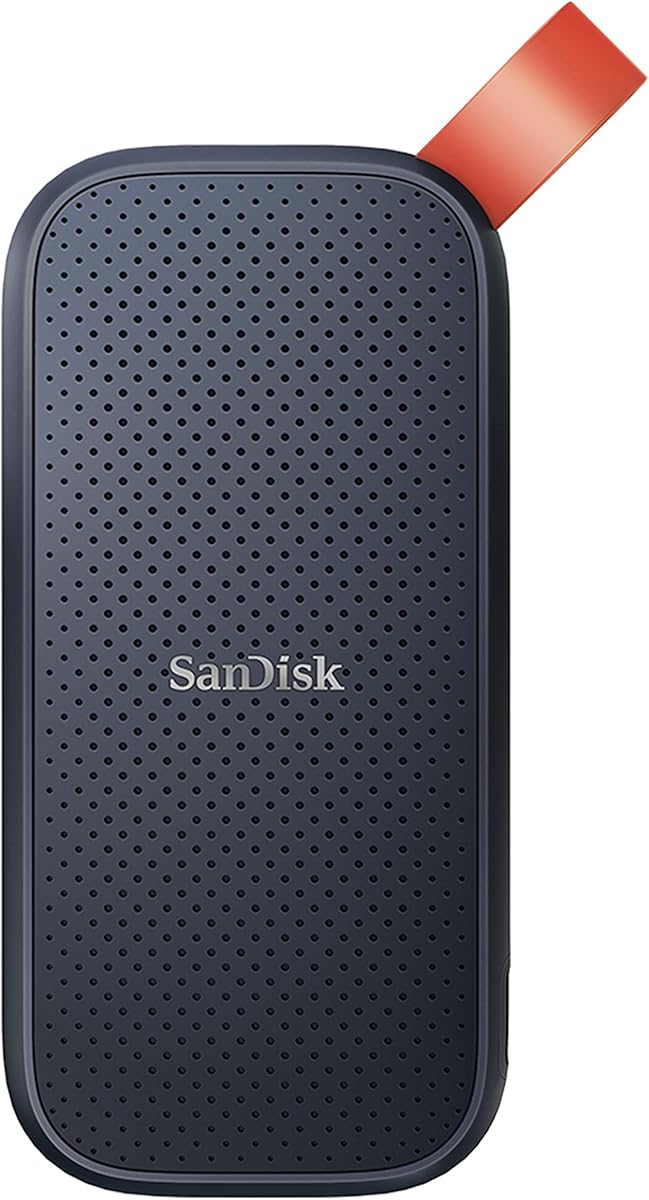
9. SanDisk Portable 1TB - Best Simple Mac Carry

SANDISK 1TB Portable SSD - Up to 800MB/s

SANDISK 1TB Portable SSD - Up to 800MB/s

9.2/10★★★★★

Not every Mac user needs a 2100 MB/s marketing number. The SANDISK 1TB Portable SSD with up to 800 MB/s reads is the simple carry drive for people who want solid-state silence, USB-C convenience, and SanDisk familiarity without Extreme branding complexity. Backups, photo libraries, and document archives on a MacBook feel dramatically better at 800 MB/s than on a 5400 RPM disk, even if this SKU sits below the pack’s speed leaders.

  • Up to 800 MB/s USB-C USB 3.2 Gen 2
  • 1TB portable SSD with rubber hook carry
  • Up to 2-meter drop protection for daily abuse
Check Price →
✓ Pros
  • Approachable 800 MB/s class speed still far above hard drives
  • 1TB fits mobile Mac lifestyles and photo backups cleanly
  • Rubber hook helps secure the drive to bags and belts
  • SanDisk brand trust for photographers on assignment
  • Updated firmware called out on a straightforward portable SSD
✕ Cons
  • Slower peaks than 1050 and 2000-plus MB/s options in this guide
  • Fewer rugged IP seals advertised than Extreme and X10 lines
  • 1TB capacity limits long-form 4K archives

Detailed review

SanDisk frames the drive for mobile lifestyles and adventures with up to two-meter drop protection and a tough rubber hook for belt loops or backpacks. That matches Mac travelers who want a secure clip more than IP65 certification. Photographers who already trust SanDisk cards often prefer keeping storage brand continuity for peace of mind on assignments.

On macOS, expect plug-and-play after formatting. Use APFS for a Mac-only volume or exFAT if you also connect to a Windows edit bay. The 1TB size is perfect as a dedicated Time Machine disk for lighter MacBook Air users or as a photo year drive. Video-heavy shooters should size up.

Cable quality still matters. A poor USB-C lead can make an 800 MB/s drive feel like USB 2.0. Keep a short data cable in the same pouch as the SSD. If you use a CalDigit, Anker, or Apple dock, plug into a high-speed USB-C data port rather than a low-power accessory port when copying large folders.

Skip this Portable SSD if you already know you want Extreme IP65 sealing or Extreme/X10 class sequential peaks. Choose it when your Mac brief is honest: reliable 1TB solid-state storage, SanDisk support reputation, and enough speed to stop dreading backups.

As a gift for a new Mac owner migrating from an old spinning drive, this SKU is an easy win—just help them format correctly and set up Time Machine or a simple folder backup routine on day one.

Who it suits

Mac beginners, travelers who want a hooked 1TB stick, and photographers needing a simple secondary body for selects and JPEGs.

When to upgrade in this pack

Move to Extreme or T7 when you routinely wait on large media copies, or to X9/X10 2TB when capacity becomes the bottleneck.

Check Price on Amazon →

We may earn a commission at no additional cost to you.

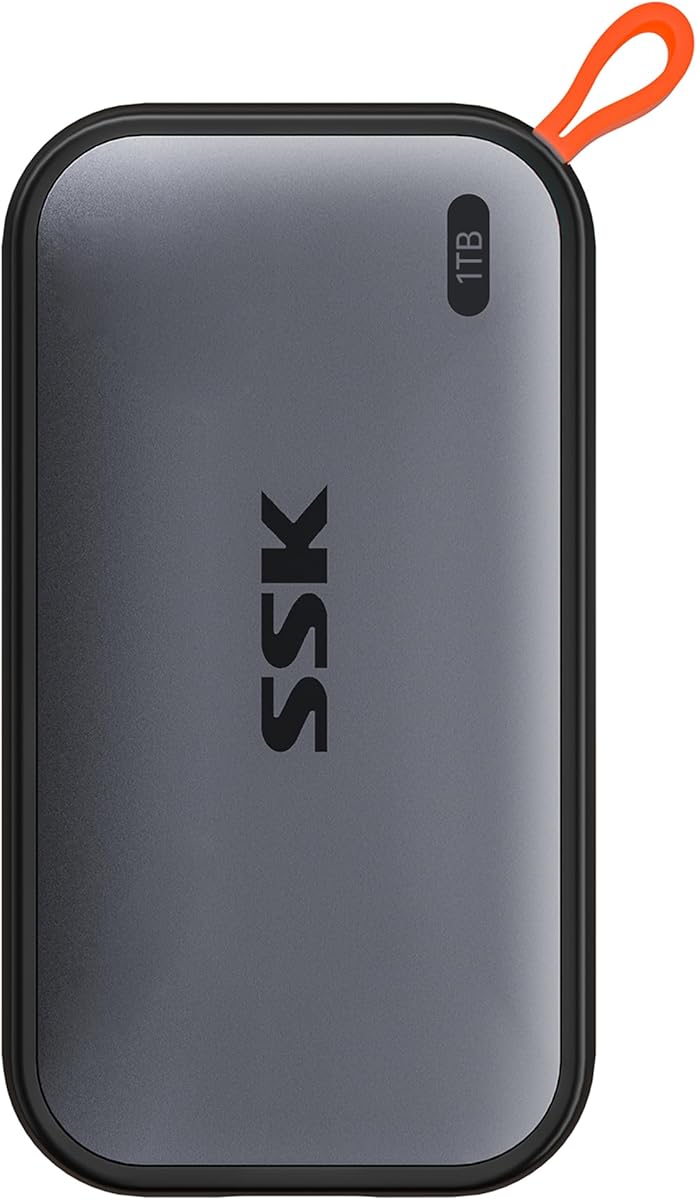
10. SSK Portable SSD 1TB - Best Value USB-C Flex

SSK Portable SSD 1TB External Solid State Drives

SSK Portable SSD 1TB External Solid State Drives

9/10★★★★★

The SSK Portable SSD 1TB is the value flex pick for Mac users who want 1050 MB/s class USB 3.2 Gen2 performance, dual cables, and candid capacity messaging without paying for flagship branding. The listing is unusually clear that Windows may show around 931GB while macOS typically shows a full 1TB-style decimal reading—exactly the confusion that sparks return anxiety. That honesty alone makes SSK easier to recommend to first-time external SSD buyers on Mac.

  • Up to 1050/1000 MB/s USB 3.2 Gen2
  • 1TB with USB-C and USB-A cables included
  • SMART monitoring and TRIM for sustained health
Check Price →
✓ Pros
  • 1050 MB/s class speed competitive with pricier 1TB sticks
  • Includes USB-C and USB-A cables for Mac and mixed devices
  • Listing honestly explains Windows vs macOS capacity display
  • SMART monitoring and TRIM support for longer consistent writes
  • Works across Mac, Windows, Android phones, and newer iPhones
✕ Cons
  • Brand prestige trails Samsung, SanDisk, and Crucial for some buyers
  • 1TB ceiling and value positioning mean fewer luxury durability claims
  • LED activity light is helpful but not a substitute for safe eject

Detailed review

Performance claims land at up to 1050 MB/s read and 1000 MB/s write with an LED activity light. SLC caching notes say transfers under about 250GB can remain steady at 10Gbps class rates with a portion of free capacity reserved as cache. For Mac users dumping card stacks or cloning project folders, that behavior matters more than a single peak screenshot. Keep free space available so cache logic can work.

Cable flexibility is the Mac practicality win. Many Apple users eventually meet a USB-A only TV, older lab PC, or conference room dock. Shipping both USB-C and USB-A cables means fewer emergency Amazon orders mid-trip. The drive also markets compatibility with newer iPhones, Android phones, tablets, Windows, and Mac—useful when your phone is the capture device and your MacBook is the edit bay.

SMART monitoring and TRIM support are the grown-up features that help sustain write performance and watch drive health. On macOS you may use third-party SMART utilities cautiously; do not obsess over every attribute, but do replace a drive that starts throwing repeated I/O errors. Always eject in Finder before unplugging, LED or not.

Durability marketing here is lighter than IP65 Extreme language. Treat SSK as a fast daily stick more than a mud-proof adventure drive. Sleeve it, avoid crushing it under laptop hinges, and you will be fine for campus and office life. Password encryption is not the headline feature versus SanDisk Extreme’s AES story, so use APFS encryption on Mac if confidentiality matters.

Buy SSK when you want competitive 1TB Gen2 speed, dual cables, and transparent capacity notes for the least fuss. Choose Samsung T7 when brand polish and ratings dominate. Choose Extreme or X10 when weather sealing and higher peaks dominate. For many MacBook Air owners, SSK is the pragmatic first external SSD.

Mac capacity display tip

Trust macOS Finder and Disk Utility for the decimal view you expect, and do not panic if a Windows friend reports fewer gibibytes—the listing explains the math difference.

Phone-to-Mac shuttle

Use the SSD to offload iPhone or Android clips in the field, then plug into your MacBook for editing. Confirm your phone supports direct external SSD recording or file access for your iOS or Android version.

Value buyer checklist

Verify both cables in the box, format once, run a large test copy, and keep at least twenty percent free space when possible for cache-friendly sustained writes.

Check Price on Amazon →

We may earn a commission at no additional cost to you.

Best External SSDs for Mac 2026: Fast USB-C Drives Ranked

How to Choose an External SSD for Mac

USB-C reality on Apple Silicon Macs

Modern MacBook Air and Pro machines expose USB-C ports that speak USB and often Thunderbolt/USB4. Portable SSDs in this roundup are USB devices. That means you can plug them into Thunderbolt ports, but performance follows the USB generation the drive and cable support—commonly USB 3.2 Gen 2 around 10Gbps for 1050 MB/s class sticks, with newer Extreme and X10 units advertising higher peaks when the path cooperates.

Docks are the silent bottleneck. A beautiful Thunderbolt dock can still present a USB 2.0 or power-limited hub port to accessories. For big copies, plug the SSD directly into the Mac or into a verified high-speed USB-C data port on the dock. Retest after firmware updates if speeds suddenly collapse.

APFS, exFAT, and Time Machine

For a Mac-only archive or Time Machine volume, APFS is usually the right choice: snapshots, encryption options, and native performance. For shuttling files to Windows editors or campus PCs, exFAT remains the compatible compromise. Avoid keeping a critical client library on a half-converted volume—erase cleanly in Disk Utility once, then stick to that plan.

Time Machine prefers its own volume. Many Mac users keep a dedicated backup SSD and a separate media SSD so backup churn never fights media read performance. Size Time Machine roughly to at least the Mac’s internal storage plus growth headroom; exclude huge render folders if you archive those elsewhere.

Capacity planning for creative Mac kits

One terabyte fits documents, photo years for lighter shooters, and school work. Two terabytes is the everyday creative sweet spot in this pack—T7, Extreme old model, X9, and X10 all offer it. Four and eight terabytes are vault territory for multi-year raw libraries and long Time Machine histories. Buy for the library you have plus twelve months of growth, not for a hypothetical forever archive on one stick.

Speed classes without the hype

Think in tiers. Around 800 MB/s (SanDisk Portable) already transforms life versus hard drives. Around 1050 MB/s (T7, Extreme old model, X9, SSK) is the mainstream Mac creative tier. Around 2000–2100 MB/s (new Extreme, X10) is for people who regularly move enormous media dumps and own cables and ports that can feed those numbers. If your copies are mostly small documents, stepping from 1050 to 2100 feels smaller than the marketing suggests.

Durability: IP55, IP65, and drop ratings

Cafe Mac life rarely needs IP65. Festival, beach, rain-forest, or dusty trail life does. Extreme and X10 emphasize IP65; X9 advertises IP55; T7 leans on aluminum shock resistance without the same IP weather story. Match sealing to your messiest day, not your cleanest desk photo.

Encryption and losing the stick

Portable SSDs vanish in rideshares. SanDisk Extreme models highlight 256-bit AES password protection; macOS can also encrypt APFS volumes. Enable one method you will actually remember. Keep a recovery path for keys. Never assume a lost unencrypted client drive is a minor oops.

Phones, iPads, and cameras in a Mac ecosystem

Several drives in this pack mention iPhone high-res recording, Android phones, iPad Pro, and camera direct-to-SSD workflows. If your Mac is the edit hub, confirm the capture device’s supported formats and power behavior. Some phones need USB-C cables that support data, and some cameras prefer specific filesystem formats—test before a paid shoot.

Frequently Asked Questions

01

Do I need a Thunderbolt SSD for my MacBook?

Not always. Thunderbolt enclosures shine for multi-drive RAID, sustained internal-NVMe class editing, or desk docks. The portable USB SSDs in this guide are bus-powered USB-C sticks that plug into Mac Thunderbolt/USB4 ports and perform at their USB generation limits. For Time Machine, photo offload, and many Final Cut shuttles, a quality USB 3.2 Gen 2 or faster portable SSD is enough. Buy Thunderbolt hardware when your editor proves USB is the bottleneck on long multi-stream timelines.

02

Should I format an external SSD as APFS or exFAT on Mac?

Use APFS when the drive stays in the Apple world—Time Machine, Mac-only archives, and encrypted volumes feel native. Use exFAT when you must plug the same stick into Windows machines without third-party drivers. Avoid constantly reformatting mid-project. If you need Mac permissions features and Windows access, consider separate volumes or separate drives rather than compromising a single critical library.

03

Why is the SanDisk Extreme listed as an old model?

SanDisk’s newer Extreme portable SSD advertises up to 2000 MB/s transfers, while older Extreme models in this pack advertise up to 1050 MB/s with the familiar IP65 and drop protection story. Old model means previous generation peak speed, not that the unit is used or refurbished. For Mac buyers who need 2TB or 4TB with Extreme toughness, the older generation remains a strong choice; just do not expect new-generation sequential peaks.

04

Can I use these drives for Time Machine?

Yes. Format a dedicated volume appropriately and select it in Time Machine settings. Many people prefer a drive used only for backups so media scratch activity does not compete. Size the disk with growth in mind, and keep irreplaceable project archives on a second copy as well—Time Machine is excellent, not magical.

05

Will a 2000 MB/s SSD actually hit that speed on my Mac?

Only if the cable, port, and filesystem path can sustain it, and only on large sequential transfers that showcase peak rates. Small files, busy background apps, daisy-chained hubs, and charge-only cables all reduce real results. After setup, copy a multi-gigabyte folder and watch throughput. If numbers look like USB 2.0, swap the cable and port before returning the drive.

06

Is the Samsung T7 better than SanDisk Extreme for Mac?

They optimize different Mac lifestyles. T7 wins for aluminum desk aesthetics, excellent ratings, and everyday creative carry without heavy weather sealing. Extreme wins when IP65 water and dust resistance, carabiner security, and field abuse resistance matter more. Speed depends on generation: new Extreme can outpace T7 on paper, while old Extreme and T7 share a similar 1050 MB/s class.

07

How much capacity do Mac video editors need?

Editors who shoot 4K or ProRes often outgrow 1TB quickly. Two terabytes is a comfortable working shuttle for many; four to eight terabytes suits archives and longer productions. Keep active media on the fastest convenient disk and cold archives on larger vaults. Also leave free space so caches and scratch files do not choke the volume.

08

Are Crucial X9 and X10 good with macOS?

Yes. Both list Mac compatibility alongside Windows, iPad Pro, Android, and more, with USB-C and USB-A cables for mixed environments. X9 targets balanced everyday 1050 MB/s class use with IP55 toughness; X10 pushes higher read claims with IP65 sealing and larger capacity options including 8TB. Format in Disk Utility and you are on familiar Mac ground.

09

Why does Windows show less than 1TB on some drives?

Storage makers often advertise decimal terabytes while Windows reports gibibytes. SSK’s listing explains that a 1TB SSD may appear near 931GB in Windows while macOS typically shows a friendlier full-terabyte style reading. That gap is math, not a missing slice of NAND. Buy based on the stated capacity tier and your Mac’s Disk Utility view.

10

Should I encrypt a portable SSD I use with my Mac?

If the drive leaves your house with client work, personal photos, or credentials, yes. Use the drive’s password feature when offered, or encrypt an APFS volume with macOS tools. Store the password in a manager you control. Encryption does not replace backups—it reduces the damage if the stick is lost or stolen.

Conclusion

For most MacBook owners in 2026, the Samsung T7 2TB remains the best overall external SSD in this pack: enough capacity for real creative work, USB-C NVMe class speed that feels native next to Apple Silicon machines, and a polished build that lives comfortably in a laptop sleeve. When your days are wetter, dustier, or more about dumping huge card stacks in a hurry, step to the new SanDisk Extreme 1TB for up to 2000 MB/s pocket pace with IP65 armor, or to the Crucial X10 2TB for similar speed ambition with two terabytes and dual cables.

Capacity specialists should look at the SanDisk 4TB Extreme old model and the Crucial X10 8TB as vault options, while value-minded Mac users can start with SSK’s candid 1TB Gen2 stick or SanDisk’s simpler 800 MB/s Portable SSD. Match formatting to your sharing reality, respect cable and dock limits, and keep a second copy of anything you cannot reshoot.

Pick from the pack with your messiest workday in mind—not the cleanest product photo—and your Mac storage kit will stay fast, portable, and boring in the best way: it just works when a deadline arrives.