Detailed review
The cold plate is slightly convex with thermal paste laid down in an optimized pattern. That detail sounds minor until you have wiped paste off an IHS for the third time because a cooler arrived dry. Here you unbox, mount the bracket for LGA 1851, LGA 1700, AM5, or AM4, seat the block, and tighten in a cross pattern. The convex profile aims for even pressure across modern heat spreaders, which helps on chips that concentrate heat under a small hotspot rather than spreading it evenly.
RS120 fans use AirGuide technology and Magnetic Dome bearings. In practice that means they are tuned as radiator fans—higher static pressure than open-mesh case fans—so they keep working when the radiator is thick or the fins are packed. Daisy-chaining them to a single 4-pin PWM header is the quality-of-life win. You free motherboard headers for rear exhaust or bottom intakes, and you avoid a nest of splitters behind the tray. PWM curves still belong to your BIOS or board software, so you can set a quiet floor for browsing and a steeper ramp for all-core compiles.
Noise and thermals always trade. A 360mm radiator gives you headroom to keep fan RPM lower than a 240mm would need for the same CPU power, but only if your case can feed cool air to the radiator face. Top-mounted as exhaust is the common gaming layout; front-mounted as intake can dump warm air into the GPU chamber. Plan that orientation before you buy side panels that leave 27mm of clearance and no room for thick fans.
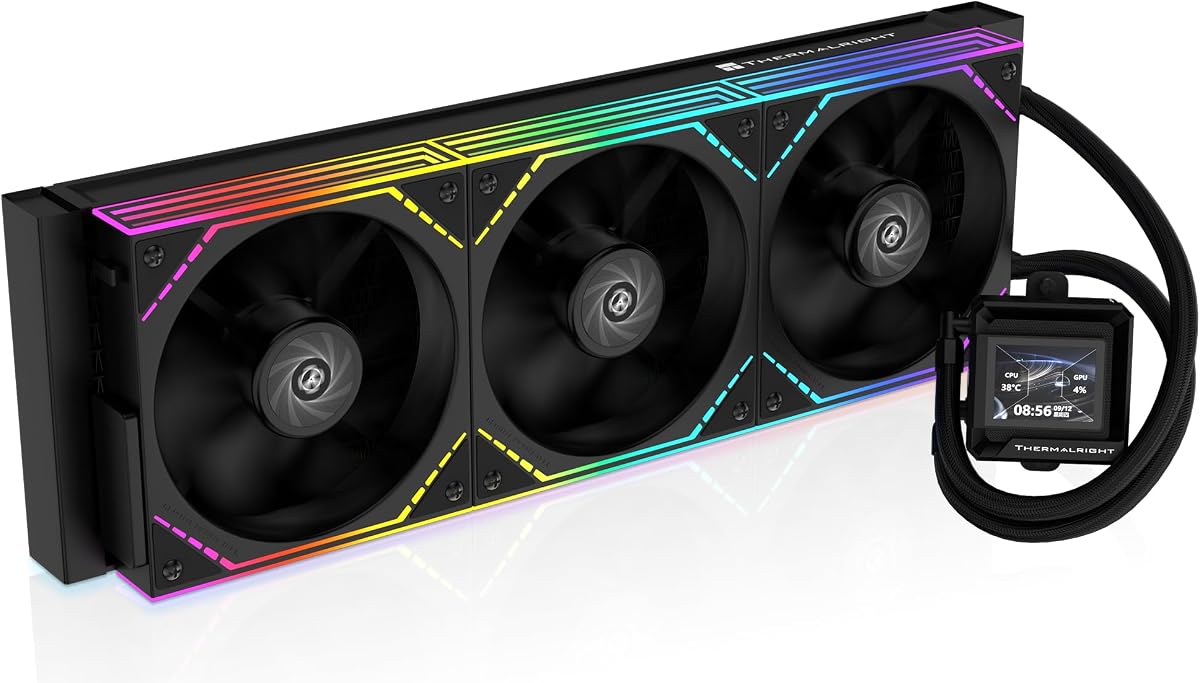
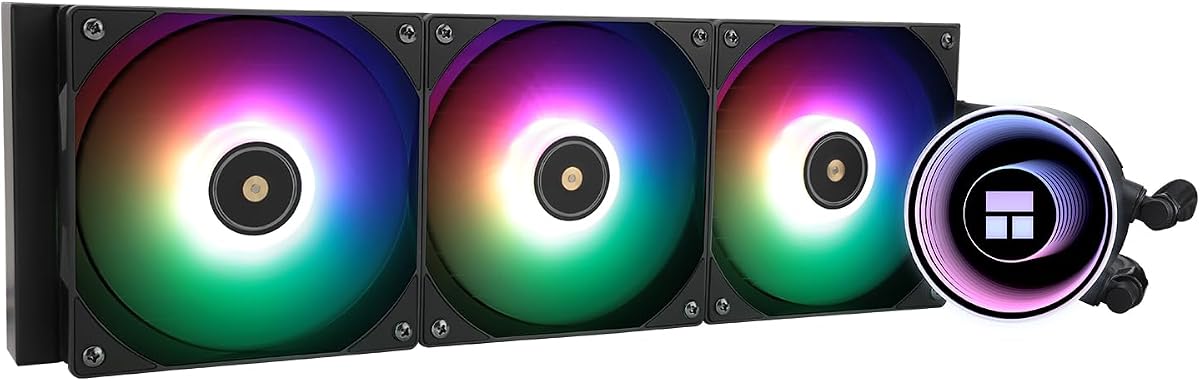
Compared with the ARGB Nautilus siblings in this pack, you give up lighting and keep the same core cooling story. Compared with the Titan LCD, you give up the screen and the iCUE LINK hub for a simpler direct motherboard connection. That simplicity is the point: fewer boxes, fewer apps, fewer things to update before a LAN night. If your case already supports 360mm and you want Corsair reliability without a light show, the Nautilus 360 RS black is the calm default.
Installation still demands the usual AIO habits. Keep the pump below the highest point of the loop when possible so air bubbles migrate to the radiator rather than the pump. Route tubes away from GPU fans. Confirm RAM height if the pump shroud sits near tall heatspreaders. None of those steps are unique to this model, but skipping them turns a quiet cooler into a gurgly one.
Buy this pack entry if you build stealth PCs, stream with a sensitive mic, or simply dislike ARGB sprawl. Skip it only if your case cannot mount 360mm or you specifically want a white aesthetic or a pump-head display—those jobs belong to other coolers below.
Who it is for
Quiet daily drivers, dark-theme cases, and builders who want Corsair fans without committing to iCUE LINK hubs or LCD customization. Excellent for AM5 gaming rigs and LGA 1700/1851 productivity boxes that already have case ARGB elsewhere—or nowhere at all.
Setup notes
Use the included brackets for your socket, leave protective film off the cold plate, and daisy-chain the three RS120 fans to one PWM header. Set a BIOS fan curve that keeps the radiator quiet until CPU package temperature climbs, then verify pump header power is enabled in the board firmware.
Versus the ARGB Nautilus models
Cooling architecture and socket support match the ARGB black and white Nautilus kits. Choose this non-ARGB version when lighting would clash with a matte black theme; choose ARGB when motherboard sync is part of the build’s identity.