Detailed review
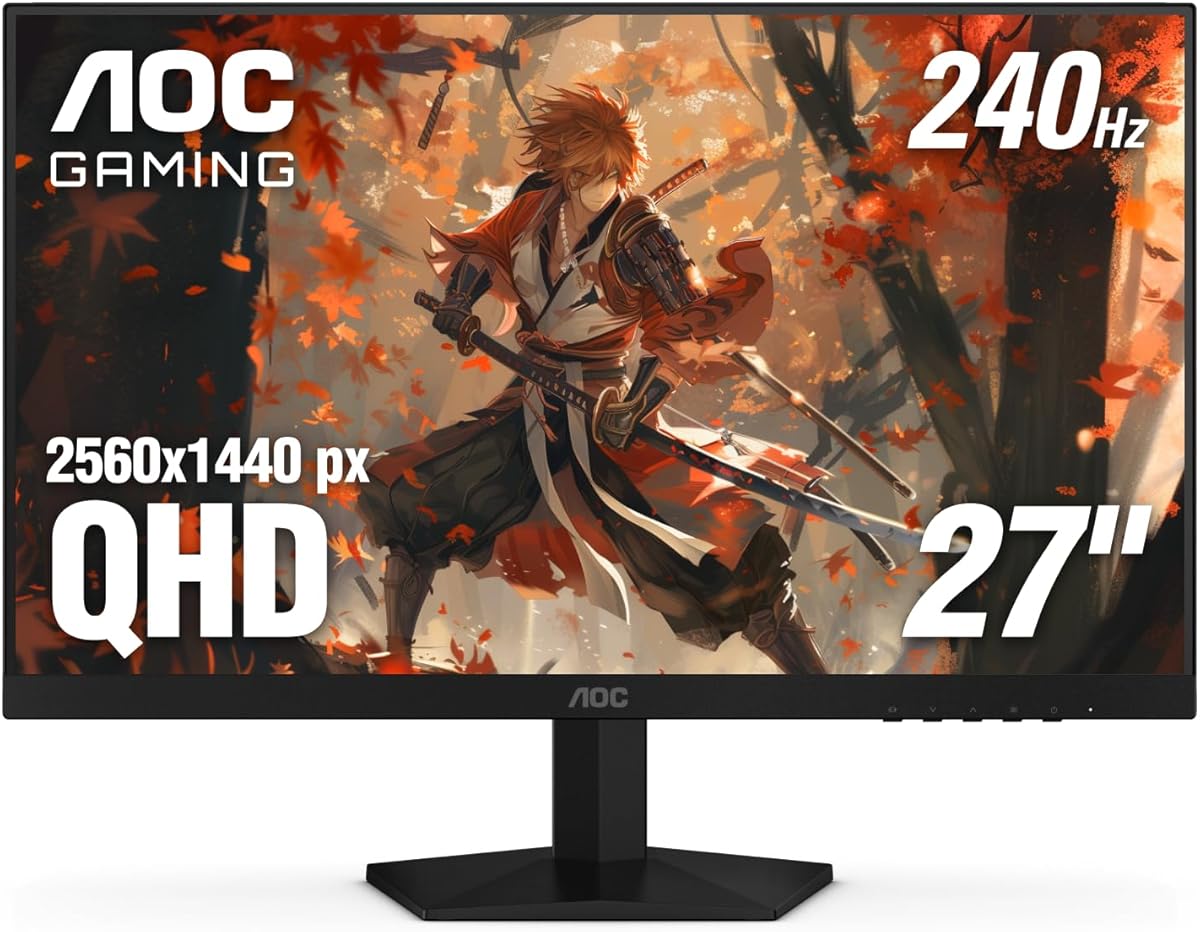
Motion clarity is the reason people chase 240Hz in the first place. On this AOC, the jump from 144Hz is easiest to notice in tracking shots—strafe peeks in tactical shooters, flick corrections in arena titles, and camera pans in racing games. The 0.3ms MPRT figure is a blur-reduction style metric, not a magic erase of all ghosting, but paired with a modern Fast IPS-class panel it keeps trails shorter than older 144Hz IPS screens. Enable Adaptive-Sync in the OSD and match your GPU control panel so frame times and refresh stay aligned; that pairing does more for “smoothness” perception than chasing the last 20Hz of overclock alone.
Image quality sits in the honest IPS midrange. AOC quotes 300 nits and a 1000:1 contrast ratio—fine for daytime rooms and SDR competitive presets, modest for HDR movies. Treat HDR as a bonus tone-mapping mode rather than the selling point. Color is vivid enough for games and Discord, and wide IPS viewing angles help if you share the desk or sit slightly off-center. Shadow Control and Game Mode presets are useful when dark maps crush detail; dial them carefully so you do not wash out midtones and lose camouflage cues.
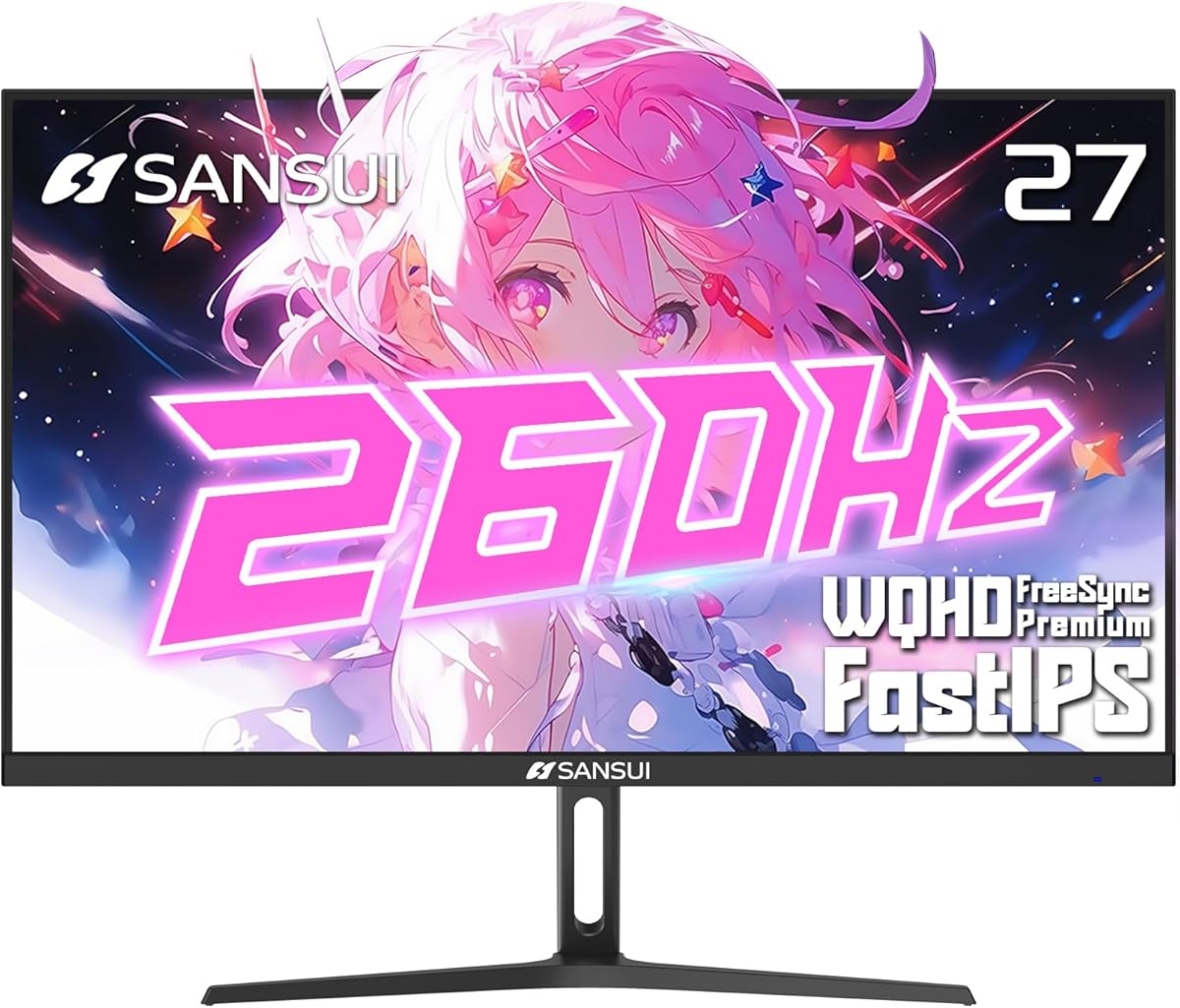
Connectivity is straightforward: one DisplayPort 1.4 for the PC at full refresh, two HDMI 2.0 ports for a console, capture card, or laptop, plus an audio out jack. That is the right port mix for a single-monitor battlestation. Remember that HDMI 2.0 will not always unlock the same high-refresh QHD modes as DisplayPort—use DP for the competitive PC and reserve HDMI for secondary devices. Cable quality matters more than people admit; a weak DP cable is a classic reason “260Hz” never appears in Windows.
Ergonomics are the main compromise. Tilt from roughly −3° to +21° covers basic posture, but there is no height or swivel on the stock stand. If your desk is tall or you swap between sitting and standing, budget a 100×100 VESA arm—the frameless front looks cleaner once the stock foot is gone. Build quality feels appropriate for the class: textured plastics, a stable enough footprint for frantic mouse work, and an OSD that is usable once you learn the joystick logic.
Who should buy it? Anyone who wants 27-inch QHD at a true high refresh without jumping to OLED burn-in considerations or ultra-premium pricing. It is an excellent primary monitor for CS-style shooters, battle royales, and high-FPS multiplayer, and a competent secondary for creative work where color-critical soft proofing is not the job. Pair it with a GPU that can actually feed 1440p above 200 FPS in your main titles; otherwise you are paying for headroom you will not use.
Who it is for
Pick the AOC if you want the best balance of resolution, refresh, and everyday IPS usability in this pack. It suits competitive PC players who already own a capable GPU and prefer a bright, matte-ish gaming look over glossy OLED reflections.
Setup tips for 240Hz and 260Hz
Connect with DisplayPort 1.4, set the Windows refresh rate to 240Hz first, then test the 260Hz overclock in the OSD if available. Update GPU drivers, enable Adaptive-Sync, and verify the monitor EDID mode in your GPU control panel. If the overclock is unstable, drop back to 240Hz—native refresh is already excellent.
Versus OLED picks in this guide
Compared with the LG and Samsung OLED models, the AOC trades infinite contrast and near-instant pixel response for lower risk of image retention, easier bright-room behavior, and a more approachable total cost of ownership. If your room is bright and you play mostly competitive SDR titles, IPS remains the sane default.