Detailed review
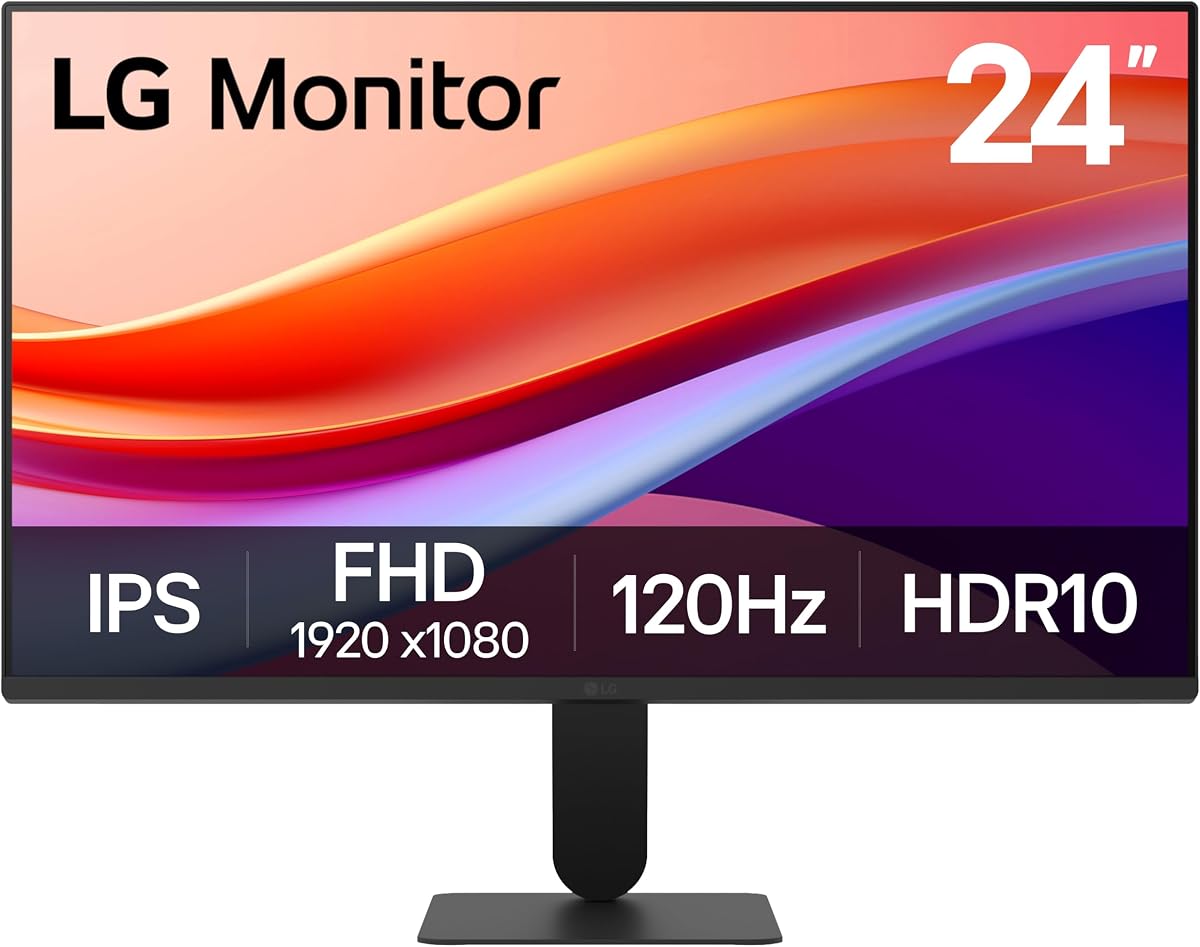
Refresh rate is where this model separates from yesterday’s 60Hz office screens. At 120Hz, cursor movement, scrolling long documents, and window dragging feel fluid in a way many people notice immediately after upgrading. The 1ms Motion Blur Reduction mode further sharpens fast motion for casual games and sports video; treat MBR as optional because some strobe-style clarity modes trade brightness, so leave it off for spreadsheet days and enable it when motion matters. Dynamic Action Sync and Black Stabilizer borrow language from LG’s gaming line, which is useful even if you only play a few evenings a week.
Comfort features make this a stronger all-day pick than barebones panels that ignore eye strain. Reader Mode lowers blue light for long reading sessions, and Flicker Safe aims to reduce the PWM-style flicker that contributes to fatigue on cheaper screens. The ultra-slim, 3-side virtually borderless design is more than cosmetics: dual 24-inch setups look nearly continuous, which is why so many offices standardize on this size. The slim stand’s floating feel keeps the footprint modest, and tilt from roughly −5° to 20° covers most laptop-height desks even without a height column.
Software extras help if you live in split-screen workflows. LG’s Switch app can divide the display into multiple regions so chat, browser, and document panes stay parked without constant manual resizing—handy for remote workers who juggle video calls and tickets. That said, this is still a focused 24-inch FHD monitor, not a color-critical reference display or a height-adjustable ergonomic workstation arm out of the box. If your workplace requires certified color accuracy or frequent portrait pivots, plan on a VESA arm and optional calibration rather than expecting the stand alone to solve every posture problem.
Who should buy it: students, hybrid workers, and dual-desk builders who want one IPS screen that does workdays cleanly and evenings without looking like a neon gaming billboard. Who should skip it: competitive players chasing 144Hz-plus overclocks and DisplayPort-heavy GPU setups—look at the UltraGear sibling below—or anyone who prioritizes deep blacks for dark-room movies over IPS viewing angles. As a pack product with a strong 4.6 rating, it earns the top slot for balanced 2026 24-inch shopping.
Setup tip: remove any protective films, set the OS to 1920×1080 at 120Hz, and pick a color mode that matches your room—brighter for daylight offices, warmer Reader Mode for night writing. If you mount it, confirm VESA compatibility on the listing and leave clearance for cable bends behind a slim stand or arm.
Who this LG fits best
Choose the 24U411A-B if your primary hours are productivity and browsing, with occasional gaming or streaming. The IPS panel rewards side seating and dual-monitor symmetry, and 120Hz is the sweet spot where everyday motion improves without demanding a high-end GPU to feed every frame.
Skip it if you need dual HDMI plus DisplayPort flexibility on one chassis or you want speakers built in—Amazon Basics and ASUS options in this list cover those niches more directly.
Workday and casual play balance
Keep Reader Mode for documents, then switch to a standard or HDR-friendly picture mode for video. For light games, enable Adaptive Sync style features where available and only toggle 1ms MBR when you notice blur on fast pans.
The Switch app is optional but useful: preset a three-pane layout for Slack, browser, and docs so you are not constantly snapping windows by hand during busy mornings.
Versus the UltraGear twin
Think of the 24U411A-B as the calmer sibling of the 24G411A-B UltraGear. You keep IPS FHD DNA and strong motion tools, but the UltraGear leans harder into 144Hz overclock, G-SYNC Compatible branding, and FPS-oriented extras like Crosshair. Buy this one for the desk; buy UltraGear for the ranked ladder.