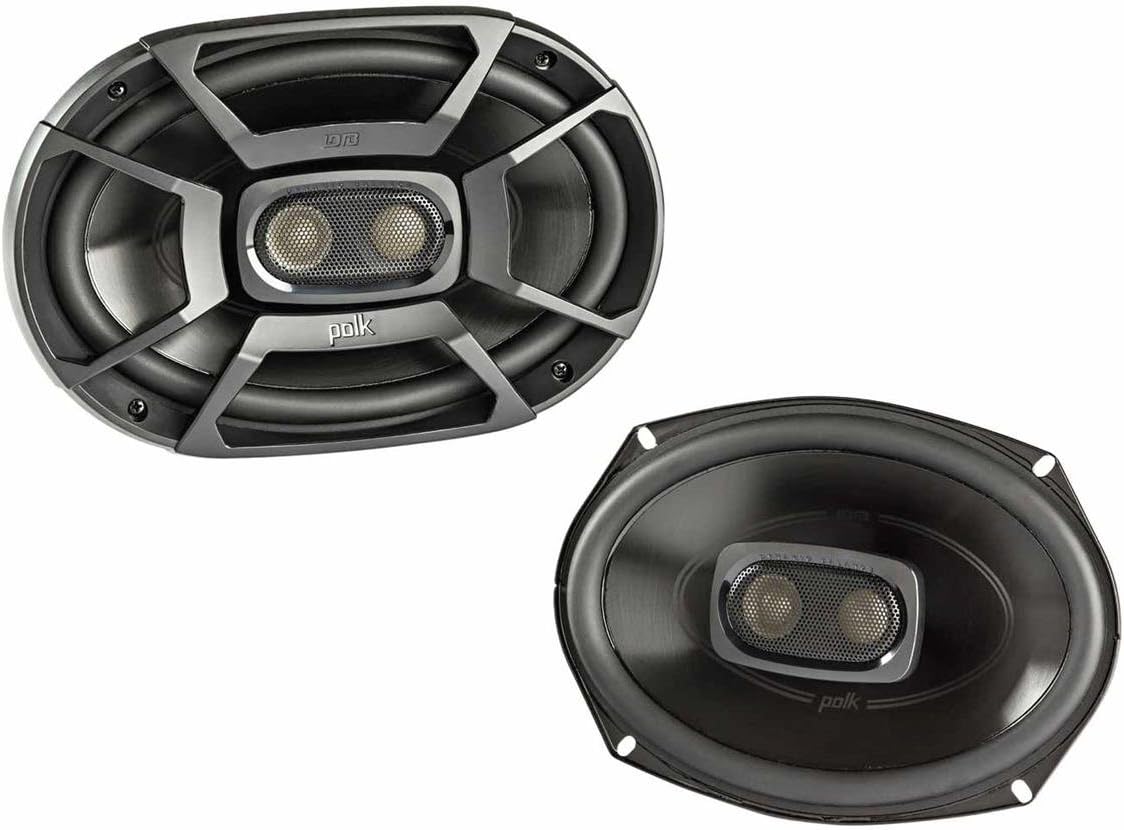
Detailed review
In practice, most shoppers will drop these into rear parcel shelves or larger door openings that already accept an oval speaker. The 4-ohm impedance keeps electrical matching simple with aftermarket stereos and many multi-channel amps. Sensitivity in the low 90s is the sweet spot for factory-powered systems: loud enough to notice the upgrade immediately, yet not so inefficient that the stock head unit runs out of steam. If your factory speakers sound thin and shouty, the DSC6930's three-way arrangement should restore midrange body so vocals and guitars sit closer to the center of the mix.
Power handling deserves a reality check. Peak figures describe short bursts, not continuous cruise volume. Treat the DSC6930 as a capable factory swap first and an amp-friendly upgrade second. If you later add a small four-channel amplifier with clean RMS power, these Kickers usually reward the extra current with tighter kick drums and less compression on choruses. If you stay on OEM power, keep EQ boosts modest in the deep bass so you do not ask the cone to do subwoofer work it was never meant to own alone.
Fitment is usually straightforward for vehicles that already list 6x9 as a factory size, but always verify mounting depth and screw patterns before you order. Rear decks often have shallow cavities and plastic clips that break if you force the basket. Take photos of the wiring harness orientation before disconnecting anything, and consider speaker harness adapters so you do not cut factory plugs. A thin foam gasket around the frame improves the seal and reduces rattles that can masquerade as speaker distortion.
Sonically, expect Kicker's familiar emphasis: energetic midbass, forward presence, and highs that keep pace without turning every cymbal into a dagger. That tuning suits country, rock, hip-hop, and talk radio equally well. Critical listeners who want studio-neutral treble may still prefer equalizing the cabin or pairing with a dedicated component set up front. For rear fill, though, the DSC6930 is exactly the role these speakers play best—adding stage depth and punch behind the seats.
Compared with multi-way Pioneer A-Series models in this guide, the DSC6930 keeps the driver count simpler and leans on brand familiarity. Compared with the shallow Kicker CS Series, it is the more traditional DSC path rather than the ultra-fit CS chassis story. Neither approach is wrong; choose DSC when you want classic Kicker character and a clear 4-ohm, 92-sensitivity data sheet, and choose CS when mounting depth is the primary obstacle.
Bottom line: the DSC6930 remains a trustworthy daily-driver upgrade for doors and decks that already speak 6x9. It will not replace a subwoofer, and it is not a marine speaker, but as a stereo pair for factory audio swaps it hits the practical targets most owners care about—clearer music, stronger midbass, and an install you can finish on a Saturday afternoon.
Who should buy the DSC6930
Choose this Kicker pair if you want a brand-name 4-ohm 6x9 with straightforward three-way design for doors or rear decks. It suits commuters upgrading thin factory sound who may add a small amplifier later. Skip it if you need IP-rated marine durability or the absolute shallowest basket in Kicker's lineup.
Setup tips for cleaner midbass
Seal the mounting surface with a foam gasket, verify polarity on both sides, and avoid heavy low-EQ boosts on a stock head unit. If the rear deck rattles, fix loose panels before blaming the speakers. A modest amp with clean RMS power usually tightens kick drums more than another round of equalizer bass.
How it compares in this guide
Against Pioneer A-Series multi-ways, the DSC6930 is simpler and more traditionally Kicker-tuned. Against the CS Series, it prioritizes classic DSC character over shallow-fit obsession. Against Polk DB692, it remains a dry-cabin car speaker rather than a marine-certified tool.