Detailed review
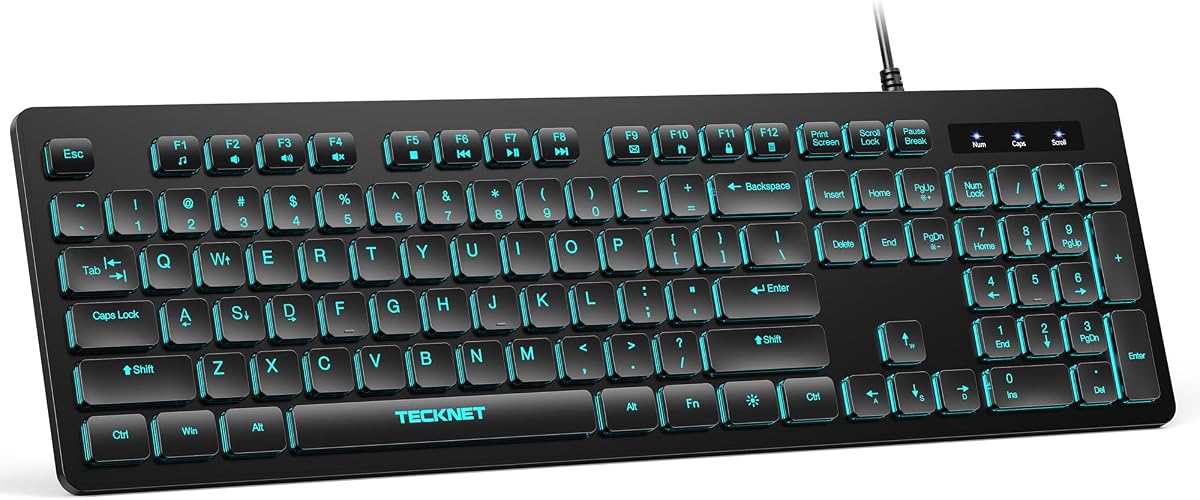
Lighting stays practical: seven colors, static or breathing, and brightness steps including off. That is enough to find function keys at midnight without turning your desk into a stage. FN multimedia shortcuts cover volume, mute, playback, email, homepage, and calculator—small wins that add up when you live in browser tabs and spreadsheets.
Spill-resistant conductive film and an up-to-80-million keystroke durability claim speak to the real use case: coffee mugs, water bottles, and years of commuting between home and a second desk. USB-A plug-and-play means no dongle anxiety and no battery ritual. If you need wireless freedom, look at the AULA tri-mode boards instead; this one wins by being boring in the best way.
Mac users should read the fine print. Basic typing works, but multimedia keys may be limited on Mac OS, so do not buy it solely for macOS media macros. Windows and Raspberry Pi users get the cleaner experience. Compared with the no-backlight TECKNET sibling in this same pack, you are paying the complexity cost of RGB for nighttime visibility—not for a different typing stack.
For students, remote workers, and anyone replacing a loud mechanical experiment, this board is an honest quiet daily driver. It will not impress switch enthusiasts, and it will not win a LAN party aesthetics contest against Corsair or Razer. It will let you type at 11 p.m. without announcing every semicolon to the next room.
Office and library fit
Ideal for open-plan desks, dorm quiet hours, and shared living rooms where RGB can stay on low or off. The anti-slip pads and tilt feet help on glossy tables that usually make light plastic boards creep forward.
Versus the no-backlight TECKNET
Pick this RGB version if you regularly type in dim rooms. Pick the no-backlight TECKNET if you want maximum visual calm, slightly simpler styling, and zero temptation to fiddle with lighting modes during deep work.