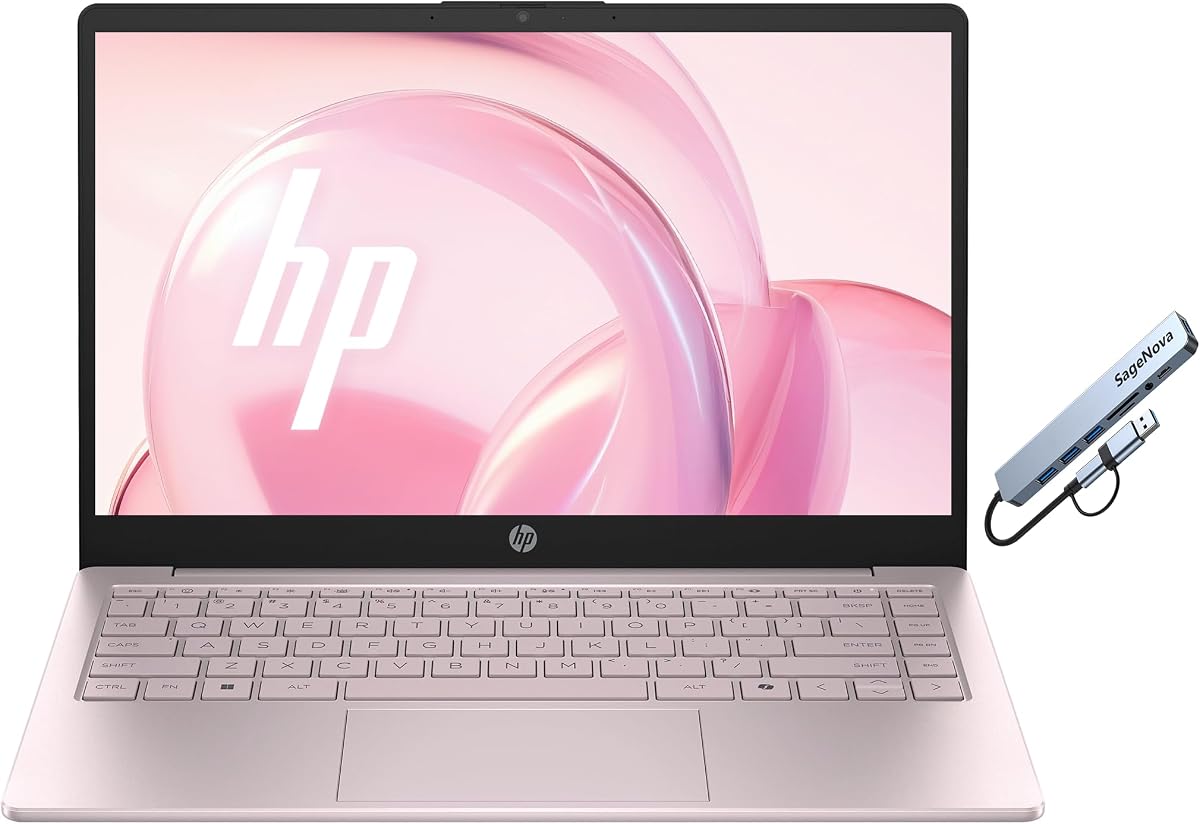
HP Laptop 2026 Copilot AI 32GB/1TB
- 32GB DDR4 keeps EHR sims, Canvas, and Zoom from fighting for memory
- 1TB SSD plus 128GB UFS for lecture recordings and clinical paperwork
- 14-inch anti-glare panel and Office 365 year included for care plans
Expert Review & Guide
Nursing school is a different laptop stress test than a typical college major. You are juggling care-plan templates, pharmacology flashcards, EHR simulation logins, Zoom skills check-offs, and PDFs that somehow always open at the worst brightness in a fluorescent skills lab. The machine has to wake quickly between clinical debriefs, survive a backpack that also holds a stethoscope and water bottle, and stay usable when the only free outlet is across the lounge.
We pulled ten current Amazon student and campus-oriented laptops from the product pack and judged them for nursing reality: readable screens under harsh lighting, enough RAM for browser-heavy charting practice, ports that connect a USB flash drive without hunting for a dongle, and weight you will actually carry to 6 a.m. clinicals. Specs and feature claims come straight from each listing—no invented hardware.
You will notice several HP 14-inch pink configs with the same Intel N150 family but different RAM and storage. That is useful: nursing students often need more memory for simultaneous Canvas tabs and Zoom, not a louder gaming chassis. Acer and ASUS 15.6-inch options appear when you want a larger FHD canvas for reading dense textbooks. Read the reviews for honest limits—especially 4GB models that will struggle once simulation software and Chrome collide.
As an Amazon Associate we earn from qualifying purchases. We may earn a commission at no additional cost to you.
Scan processor class, memory, storage, and screen size before diving into the full reviews. Nursing workflows are browser-heavy and document-heavy; prioritize RAM and a glare-friendly panel over flashy gaming claims. Ratings are the pack scores at research time.
HP 2026 Ultrabook Laptop for Students & Home
If your nursing program means walking from a morning clinical site to an afternoon lecture with everything on your back, this HP ultrabook’s weight story is the headline. At roughly 3.11 pounds with a compact 14-inch footprint, it is one of the easiest pack machines in this list to live with day after day. The Intel N150 quad-core (up to 3.6GHz turbo, 6MB cache) and Intel UHD Graphics are aimed at documents, streaming lectures, and browser coursework—not CAD or gaming—and that matches most ADN and BSN workloads.
The 14-inch HD panel uses a micro-edge design, anti-glare coating, and about 250 nits with a claimed 62.5% sRGB coverage. Nursing students spend long stretches reading care plans and PowerPoints; anti-glare is more valuable here than a glossy “vivid” screen that turns into a light fixture under lab fluorescents. The 84% screen-to-body ratio helps the small chassis feel less boxed-in, though the 1366×768 resolution remains a compromise when you want a textbook PDF beside a notes doc.
Memory and storage are honest student-tier: 8GB DDR4 plus a 256GB SSD paired with 128GB UFS. That combination boots quickly and keeps core apps snappy, but you should plan cloud storage (OneDrive, Google Drive, or your school’s system) for recorded lectures and scanned clinical packets. Windows 11 Home in S Mode is positioned as a security-minded setup that prefers Microsoft Store apps. Before you buy, check whether your school’s EHR trainer, exam lockdown browser, or specialty apps require switching out of S Mode—usually possible, but it is a step you should not discover the night before a skills check-off.
Connectivity is stronger than many pastel student machines: Wi-Fi 6 (2×2), Bluetooth 5.4, USB-C 5Gbps for data, two USB-A 5Gbps ports, HDMI 1.4b, and a headphone jack. That means a USB flash drive for a preceptor, an HDMI classroom projector, and a wired mouse can coexist without a hub every day. The HP True Vision 720p camera with dual mics and a physical privacy shutter is the right combo for Zoom clinical conferences—and for closing the lens when the laptop sits open in a shared apartment.
Battery life is marketed for all-day student and home use with a 45W adapter in the box. Expect solid unplugged time for lectures and lighter browsing; continuous video plus multiple browser workspaces will drain faster, so pack the brick for twelve-hour campus days. Who should buy it: first-year nursing students who prioritize carry weight, privacy, and simple Office/web work. Who should stretch to a 16GB or 32GB sibling: anyone already drowning in simultaneous simulation software and research tabs.
Keep a slim sleeve inside your clinical backpack so the pink lid does not take scratches from bandage scissors and water bottles. Label the charger brick—shared lounges eat identical 45W blocks.
On day one, verify ATI, ExamSoft, Respondus, Shadow Health, or whatever your program uses. If an installer is blocked, switch out of S Mode before the first graded simulation, not during it.
We may earn a commission at no additional cost to you.
HP Laptop 2026 Copilot AI 16GB/256GB
This configuration is the same friendly HP student platform as the 8GB ultrabook, but the jump to 16GB DDR4 changes how nursing multitasking feels. Shadow Health or similar simulations, a Canvas module, a Google Doc care plan, and a Zoom breakout can coexist without the fan-and-swap stutter that 8GB machines show by mid-semester. The Intel N150 still caps how far you can push creative software, yet for the actual nursing curriculum that is rarely the bottleneck—browser RAM is.
Storage pairs a 256GB PCIe NVMe SSD with 128GB of flash. Boots under ten seconds are the listing’s claim, and the practical takeaway is less waiting between classes when you slam the lid and reopen in a different building. Still, recorded lectures and downloaded textbook chapters will pressure 256GB. Use the SD reader for overflow media and keep active semester folders lean.
The 14-inch anti-glare LED at about 250 nits and 62.5% sRGB is tuned for long indoor sessions: pharmacology Anki decks, Patho outlines, and Netflix decompression after clinicals. Intel UHD Graphics handles video playback and simple slides cleanly. It will not replace a color-critical editing display, and nursing students almost never need that.
Ports mirror the stronger student HPs: Wi-Fi 6, Bluetooth 5.4, USB-C, dual USB-A, HDMI, headphone jack, and the multi-format SD reader. One year of Microsoft Office 365 means Word and PowerPoint for concept maps and group projects without hunting for a campus license on night one. Windows 11 in S Mode appears again—same advice as above: confirm exam browsers early.
At roughly 3.24 pounds in Cherry Blossom Pink, this is still a true carry laptop for nursing students who bounce between skills lab and the library. Choose it over the 8GB model if your program is heavy on web simulations. Choose the 32GB/1TB sibling if you keep years of clinical paperwork offline or share the machine with a roommate’s media library.
BSN students in second and third semesters who live in browser tools, Zoom office hours, and Microsoft documents—and who want pink HP aesthetics without jumping to the 1TB config.
Dock to an HDMI classroom display for practice presentations, keep a wired mouse for long care-plan typing, and store clinical PDFs in a dated folder structure so the 256GB drive stays searchable.
We may earn a commission at no additional cost to you.
HP Laptop 2026 Copilot AI 32GB/1TB
If we are recommending one laptop from this pack for a nursing student who wants fewer compromises through graduation, it is this 32GB/1TB HP. The processor stays in the efficient Intel N150 lane, but memory and storage stop being the semester-three crisis. Thirty-two gigabytes of DDR4 is how you keep a simulation environment, multiple reference tabs, Spotify, and a synchronous lecture from turning into a choreography of closing windows.
The 1TB NVMe SSD plus 128GB UFS is equally practical. Nursing programs generate surprising file bulk: scanned consent practice forms, skills videos you record for instructors, downloaded journal PDFs, and group project assets. Being able to keep prior-semester folders offline—without praying an SD card survives the wash cycle—reduces stress during clinical transitions.
Display and chassis match the other Cherry Blossom Pink 14-inch HPs: anti-glare LED around 250 nits, Intel UHD Graphics for class video, and a carry weight near 3.24 pounds. You are not buying a bigger screen; you are buying headroom inside a familiar portable shell. For many nursing students that is the correct trade, because a 17-inch “desk tank” fights the clinical backpack problem.
Connectivity remains complete: Wi-Fi 6, Bluetooth 5.4, USB-C, dual USB-A, HDMI, SD reader, headphone jack. Office 365 for a year covers the Word/Excel/PowerPoint triad used in care plans, dosage calculation practice sheets, and community-health presentations. Copilot-oriented AI features can help outline study guides; they will not replace your pharmacology flashcard discipline.
Honest limits: this is still integrated graphics and an efficiency CPU. If your electives include serious video production or you dual-major into something GPU-heavy, look elsewhere. For standard nursing school through NCLEX prep browsing and document work, the bottleneck is almost always RAM and disk—and this config solves both while staying backpackable. That is why it is our overall coursework pick.
Accelerated BSN students, second-degree nurses returning to school, and anyone who keeps every syllabus PDF forever and refuses to babysit storage warnings mid-rotation.
Pick 32GB/1TB if you leave twenty tabs open during simulation weeks. Pick 16GB/512GB if your budget is tighter and you are disciplined about cloud archives.
Never store real patient identifiers on a student laptop. Use school-approved systems only, enable Windows Hello or a strong password, and treat this machine as a coursework device—not a charting workstation.
We may earn a commission at no additional cost to you.
HP Laptop 2026 Copilot AI 16GB/512GB
Think of this SKU as the “most nursing students should actually buy” compromise inside the HP pink family: 16GB of DDR4 for simultaneous class tools, and a 512GB NVMe SSD that will not fill after one semester of downloaded modules. It is less extravagant than the 32GB/1TB overall pick, yet clearly more comfortable than the 8GB/256GB featherweight when your program leans on web simulations.
Performance characteristics track the rest of the N150 cohort—snappy enough for Word, Canvas, Zoom, and streaming review videos. Intel UHD Graphics keeps lecture capture playback smooth. You will notice heat and fan behavior more during long Zoom days than during quiet note-taking; that is normal for thin student chassis under sustained video encode/decode.
The 14-inch anti-glare panel remains the indoor-study specialist. If you annotate PDFs for patho and sit near windows, anti-glare helps more than raw saturation numbers. Pairing with an external HDMI monitor at home is a smart nursing-student move: small laptop on campus, bigger screen for weekend care-plan marathons.
Software and ports follow the Copilot AI HP pattern: Wi-Fi 6, Bluetooth 5.4, USB-C, dual USB-A, HDMI, SD reader, headphone jack, Windows 11, and a year of Office 365. That SD slot is oddly useful in nursing school—phone photos of medication math boards and skills-lab posters transfer without depleting cloud quotas on cafeteria Wi-Fi.
Buy this when you want balance. Skip it only if you already know you are a 30-tab researcher (get 32GB) or you need the absolute lightest bag (consider the 3.11 lb 8GB model and stay ruthless about cloud files).
Keep the current term on the SSD, archive prior terms to an encrypted external drive, and empty Downloads every Sunday night after clinicals.
If your program requires local virtual machines or large offline media packs, jump to the 1TB model rather than living on SD cards.
We may earn a commission at no additional cost to you.
This 2026 Edition HP is the classroom-connectivity specialist. The laptop itself looks familiar—Intel N150, 8GB DDR4, 256GB SSD plus 128GB UFS, 14-inch HD anti-glare—but the bundled 5-in-1 expansion hub (USB-A, USB-C, USB 3.0, USB 2.0, SD/Micro SD, and RJ-45 Ethernet) changes the day-one experience in older lecture halls and dorms where Wi-Fi collapses at exam time.
The full-size crepe pink backlit keyboard with an AI Copilot hotkey is a quality-of-life upgrade over non-backlit twins when you study after a late clinical. The HD 720p camera with privacy shutter and dual mics that claim AI noise reduction are aimed at the exact scenario nursing students know: joining a Zoom from a hallway while someone microwaves soup nearby.
Wireless is modern—Wi-Fi 6 2×2 and Bluetooth 5.4—and onboard ports include USB-C 3.2 Gen 1 (data), dual USB-A, HDMI 1.4, headphone jack, and AC smart pin. That is already enough for many days; the hub is your insurance policy for wired Ethernet and extra card readers when a professor asks for files on spot media.
Windows 11 Home in S Mode plus Microsoft 365 Personal for a year covers the document stack. Treat S Mode as before: validate lockdown browsers and simulation clients early. Performance for everyday nursing school tasks is fine; just remember 8GB is less forgiving than the 16GB/32GB Copilot configs when Chrome tab counts explode.
Who it is for: students in Wi-Fi-challenged housing, anyone who presents in rooms that still want HDMI plus a wired network drop, and buyers who like having the hub in-box instead of ordering accessories separately. Who should look at higher RAM HPs: heavy simulation users who never close tabs.
The night before a remote proctored exam, test the hub’s RJ-45 path on the same network you will use. Wired beats hoping the dorm mesh holds at 8:59 a.m.
Keep the hub in a zip pocket dedicated to tech, not loose with alcohol swabs. Bent Ethernet clips end careers of otherwise good accessories.
Pay for this Edition when backlight and the hub matter. Choose the lighter 3.11 lb ultrabook when grams and simplicity win.
We may earn a commission at no additional cost to you.
HP 14" Laptop for Home & Office
This HP exists for one honest use case: you need a temporary Windows machine for light Word work and web portals, and the budget is non-negotiable. The Intel N150 is a respectable efficiency chip, and the 14-inch HD anti-glare screen with privacy shutter looks like its siblings. The problem is the 4GB RAM and 128GB UFS combination in 2026 nursing school reality.
Modern browsers alone can consume most of 4GB. Add a video meeting and a learning-management tab, and you will feel hitching. Some students survive by using the laptop as a thin client—Chromebook-style habits, everything in the cloud, almost nothing local. That can work for a prenursing semester. It is a rough daily driver once simulations intensify.
Office 365 for a year softens the software cost, and the port set (USB-C, dual USB-A, HDMI, headphone jack) is serviceable. Wi-Fi and Bluetooth are present for dorm life. Just do not confuse “includes Office” with “has enough memory to run Office beside five other things comfortably.”
If this is truly the only option, be ruthless: one browser profile, extensions disabled, storage cleaned weekly, and external cloud for every PDF. Better advice for most nursing students: stretch to the 8GB or 16GB HPs in this same guide. The incremental comfort is larger than the incremental specification sheet suggests.
We include it because the pack includes it—and because transparent warnings prevent regret purchases. Treat it as a bridge device or household spare, not as the machine you want responsible for your entire BSN journey.
Close Slack/Discord, use one browser, prefer docs in the browser over desktop apps when possible, and reboot before proctored exams.
Money that might go to cases and stickers is better spent moving to 16GB RAM in this roundup.
We may earn a commission at no additional cost to you.
2026 Laptops Computer 15.6" Pentium
This 15.6-inch Windows 11 Pro machine is the opposite personality of the pink 14-inch HPs: bigger, more “traditional laptop,” with a Full HD IPS panel that makes pathophysiology diagrams and multi-column study guides easier to see. If your eyes hate HD-only 14-inch panels after night shifts of studying, the screen alone is a reason to shortlist it.
Hardware centers on an Intel Pentium processor, 8GB of RAM, and a 256GB SSD—adequate for Office, browsing, and streaming, with the usual 8GB caution during simulation pileups. Windows 11 Pro and Office 365 out of the box are oriented toward business/student readiness; Pro features are overkill for many undergrads but can help in environments that expect certain remote tools.
The 180° hinge is a sleeper study-group feature. Laying the display flat lets classmates review a concept map without rotating the whole machine. Webcam, mic, and speakers cover synchronous classes. Battery marketing cites a 5000mAh pack and up to about six hours of mixed use—plan a charger for days that stack clinical documentation time with evening lecture.
Ports include dual USB 3.0, Mini HDMI, headphone/mic jack, and a Micro TF slot. Mini HDMI is the detail that surprises people in classrooms still wired for full-size HDMI; keep an adapter in your pencil pouch. At roughly 3.53 pounds and 0.8 inches thin, it remains portable, just not as wand-light as the 3.11 lb HP.
The listing emphasizes a 2-year warranty and 6-month return policy with phone support—worth saving if you buy without a campus store safety net. Choose this when screen size and the hinge matter more than pink ultraportable vibes. Choose ASUS/Acer Ryzen models when you want a stronger CPU efficiency story at 15.6 inches.
The lay-flat hinge plus IPS angles make this a natural shared screen for pharmacology review circles in the library.
Pack Mini HDMI to HDMI and a USB-C power bank workflow if your days exceed the six-hour comfort zone.
We may earn a commission at no additional cost to you.
This rose gold HP is aimed at visual comfort and quick top-ups more than raw horsepower. The listing highlights an anti-glare 14-inch panel for extended sessions, fast-charge capability to shrink downtime, and a Windows 11 plus Microsoft 365 bundle so Word and PowerPoint are ready. For a prenursing English or intro psych class, that can be enough.
For nursing major coursework, the 4GB RAM allocation is the same red flag we raised on the other 4GB HP. Browser-based learning tools have grown heavier. You can mitigate with extreme tab discipline, but you should not plan a whole program around mitigation. The storage story leans on 128GB internal space plus a 512GB SD card mention in the title—treat removable media as backup, not as your only durable archive.
Battery fast charging is the feature that fits nursing schedules: twenty minutes in a lounge outlet between sites can matter more than a theoretical all-day number if you forgot to charge after a night of studying. Still, fast charging does not fix RAM pressure during a live Zoom OSCE practice.
Given the lower pack rating relative to the rest of this list, read recent owner comments about performance and heat before you commit. We are not dismissing it for light document duty; we are warning nursing students who need a primary academic machine.
Bottom line: acceptable as a household secondary or a stopgap, not our pick for clinical-heavy semesters. Redirect budget toward any 8GB-or-higher option above whenever you can.
Ask whether the buyer can contribute the difference toward a 16GB HP instead—the daily frustration gap is real.
Duplicate critical papers to cloud storage. SD cards in backpacks fail at the worst moment.
We may earn a commission at no additional cost to you.
Acer Aspire Go 15 AI Ready Laptop
Acer’s Aspire Go 15 is the nursing-student pick when your eyes and note layout want a bigger Full HD IPS panel. Pathophysiology figures, ECG strip examples, and two-column study notes simply fit better on 15.6 inches at 1080p than on HD 14-inch panels. Acer BluelightShield is a meaningful comfort feature after a 12-hour clinical when you still have to review for a quiz.
Inside, the AMD Ryzen 3 7320U with 8GB LPDDR5 generally feels lively for campus work: multitasking across browser tools, light creative tasks, and Copilot in Windows via the Copilot key. Radeon 610M graphics handle everyday video. This is not a discrete-GPU laptop, and nursing students rarely need one.
The storage caveat is sharp: 128GB SSD. That is the price of admission on this config. You will lean on OneDrive/Google Drive and a USB-C SSD in your bag. Dual full-function USB-C ports make that lifestyle easier—one cable can handle charge/data scenarios depending on accessory support—while HDMI 2.1 and Wi-Fi 6 cover classroom projection and dorm networks.
AcerSense for battery/storage/app habits, plus Acer TNR and PurifiedVoice for clearer video calls, map cleanly onto nursing school Zoom culture. Use them. Clear video check-offs are graded on communication as much as content.
Choose the Aspire Go when screen quality and Ryzen responsiveness matter more than a pink ultraportable aesthetic. Pair it with cloud discipline from day one, or the 128GB drive will define your semester for the wrong reasons.
Students who study mostly at a desk or library table and want a larger reading surface without moving up to a 17-inch boat.
Exit S Mode if required by exam software, and buy a small USB-C SSD in the same order as the laptop.
Acer wins on BluelightShield emphasis and dual full-function USB-C. ASUS wins on larger SSD (256GB) and the longer battery/durability marketing.
We may earn a commission at no additional cost to you.
ASUS Vivobook Go 15.6” FHD Slim Laptop
Clinical rotations punish weak batteries and fragile plastic. The Vivobook Go’s pitch—Ryzen 3 7320U efficiency, a 42Wh pack marketed up to around eleven hours, and MIL-STD 810H testing for high/low temperature, shock, vibration, and altitude—is unusually aligned with nursing student logistics. You may never take this laptop into a patient room, but you will absolutely use it in cars, shuttle rides, and cafeteria corners between sites.
The 15.6-inch FHD panel at about 250 nits and 45% NTSC is a solid indoor study screen: sharp enough for PDF textbooks, wide enough for side-by-side notes. AMD Radeon graphics cover everyday video. Eight gigabytes of DDR5 and a 256GB SSD strike a better balance than 4GB/128GB bargain machines, though power users may still wish for 16GB when Chrome is a lifestyle.
Typing matters during care-plan marathons. The chiclet keyboard with a numeric keypad is a quiet advantage for dimensional analysis drills and medication math. SonicMaster speakers are fine for lecture playback with headphones ready for shared spaces. The 720p camera with a physical privacy shutter matches the HIPAA-aware habit of covering lenses in mixed company—even when you are only on campus Wi-Fi.
Wireless is Wi-Fi 5 and Bluetooth 5.1—adequate, just not as future-facing as Wi-Fi 6 classmates. If your dorm AP is ancient and crowded, sit closer to the router or use a phone hotspot for exam moments. Ports and charging support fast charging habits that help when outlets are scarce.
We named this the clinical-rotation pick because battery longevity and durability messaging matter more than colorways when your alarm is set for 4:45 a.m. Pair it with a sleeve, keep patient data off local disk, and you have a pragmatic BSN companion that does not pretend to be a gaming rig.
Laptop, charger, privacy-aware webcam habit, offline copies of your own study notes (never patient charts), and a power bank if your sites are outlet deserts.
Take ASUS for battery/durability/256GB. Take Acer for dual full-function USB-C and BluelightShield emphasis on a similar Ryzen 3 foundation.
We may earn a commission at no additional cost to you.

Nursing coursework is a browser operating system: Canvas, email, EHR trainers, Quizlet, YouTube skills videos, and Zoom. Sixteen gigabytes is the comfort tier for that stack. Eight gigabytes works with discipline. Four gigabytes is a semester of frustration for most people. Copilot keys are nice; memory is necessary.
Skills labs and hospitals are bright. Anti-glare coatings on the HP 14-inch machines reduce squinting. If you primarily study at a desk and read dense PDFs, the 15.6-inch FHD IPS options from Acer and ASUS are easier on attention and posture. Avoid choosing based on color alone.
Your bag already holds shoes, lunch, a water bottle, and skills supplies. A 3.1–3.5 pound laptop is easier to sustain than a 17-inch desktop replacement. If you drive door-to-door and study in the car, battery claims matter as much as pounds.
256GB is workable with cloud hygiene. 512GB/1TB is calmer. 128GB requires an external SSD in the same shopping cart. Never store real patient protected health information on a personal laptop—school policy and common sense agree.
Plan for 16GB if you can. Eight gigabytes is the practical minimum for many programs if you close tabs aggressively. Four gigabytes machines in this guide are stopgaps, not ideal four-year companions, because EHR simulations and Zoom stack quickly.
Some programs are Windows-centric for testing software and certain skills platforms. Others are flexible. Ask your cohort Facebook/Discord group and faculty tech sheet before you commit. This roundup focuses on Windows pack options that fit common nursing-school constraints.
Fourteen-inch wins for backpack comfort and quick charting practice on the go. Fifteen-point-six-inch wins for long reading sessions and shared study tables. Neither size belongs in a sterile patient care area—these are academic tools for lounges, libraries, and home.
Helpful, not mandatory. Dosage calculation drills go faster with a numpad (ASUS Vivobook Go includes one). Many students use an external USB keypad with 14-inch HPs at home and travel light on clinical days.
S Mode can block installers outside the Microsoft Store. That becomes a problem if your lockdown browser or simulation client needs a traditional installer. Switching out of S Mode is usually straightforward—do it before the first graded assessment.
Most academic EHR trainers are browser-based or lightweight clients. The Intel N150 and Ryzen 3 machines here are aimed at that world. Always check your school’s listed requirements for RAM, browser, and webcam.
Critical on days that combine clinicals with evening class. ASUS markets up to around eleven hours; other machines may land closer to a half day under video load. Carry the charger anyway—outlets are competitive territory.
If you are hard on backpacks, accidental coverage can be rational. The 15.6-inch listing that advertises a longer warranty is attractive for buyers without family tech support. Keep proof of purchase and note support numbers in your phone.
No. In this pack the pink HPs are configuration variants of the same Intel N150 student platform. Power differences come from RAM and SSD size, not lid color.
A tough sleeve, a compact HDMI adapter, a wired mouse for long papers, noise-reducing earbuds for library focus, and a USB-C SSD if your internal drive is 128–256GB. Skip novelty gadgets until your core kit is solid.
Nursing school rewards boring reliability: enough memory for simulations, a screen you can read when you are tired, and a chassis you will still willingly carry in month eighteen. In this pack, the HP 32GB/1TB Copilot configuration is the coursework comfort pick, the ASUS Vivobook Go is the rotation-day endurance pick, and the Acer Aspire Go 15 is the large-canvas study pick.
If you are buying on a tighter budget, prioritize 16GB RAM over cosmetic upgrades, and treat 4GB models as temporary bridges only. Confirm exam-software compatibility on night one, keep real patient data off personal drives, and build a charging habit as disciplined as your clinical checklist.
Choose the machine that matches your program’s heaviest week—not the brochure’s happiest photo—and it will disappear into your workflow the way good clinical tools should.