Best Overall Xbox Wireless
Turtle Beach Stealth 600 Gen

- Low-latency 2.4GHz plus Bluetooth 5.4 with QuickSwitch
- Up to 80-hour battery, flip-to-mute AI noise-reduction mic
- 50mm Nanoclear drivers, Swarm II EQ, glasses-friendly foam
Expert Review & Guide
Xbox audio is picky in ways phone headphones never are. A Series X|S or Xbox One controller often wants a licensed wireless path or a humble 3.5mm jack, not a random Bluetooth pairing that game chat refuses to acknowledge. Latency matters when footsteps decide a round, flip-to-mute matters when your squad can hear a doorbell, and battery life matters when a weekend raid refuses to end at a polite hour.
This guide ranks ten headsets from our Xbox gaming pack only—Turtle Beach Stealth models, Razer BlackShark wired and HyperSpeed wireless options, SteelSeries Arctis Nova 7X Gen 2, officially licensed RIG 800 PRO HX, Logitech G Astro A50 with PLAYSYNC, and a high-stamina USB-dongle wireless set. We weigh controller dongle fit, simultaneous Bluetooth mixing, mic mute habits, spatial audio support, and glasses-friendly cushions. No invented ASINs and no dollar prices.
If you live on one Xbox and hate dongles, start with a quality 3.5mm Razer BlackShark V2 X. If you hop between Xbox, PC, and phone party chat, prioritize Stealth 600/700, Nova 7X, or Astro A50-style multi-radio designs. Read each review for the gotchas—third-party controllers that block dongles, Dolby app requirements, and Bluetooth modes that silence the mic on some platforms.
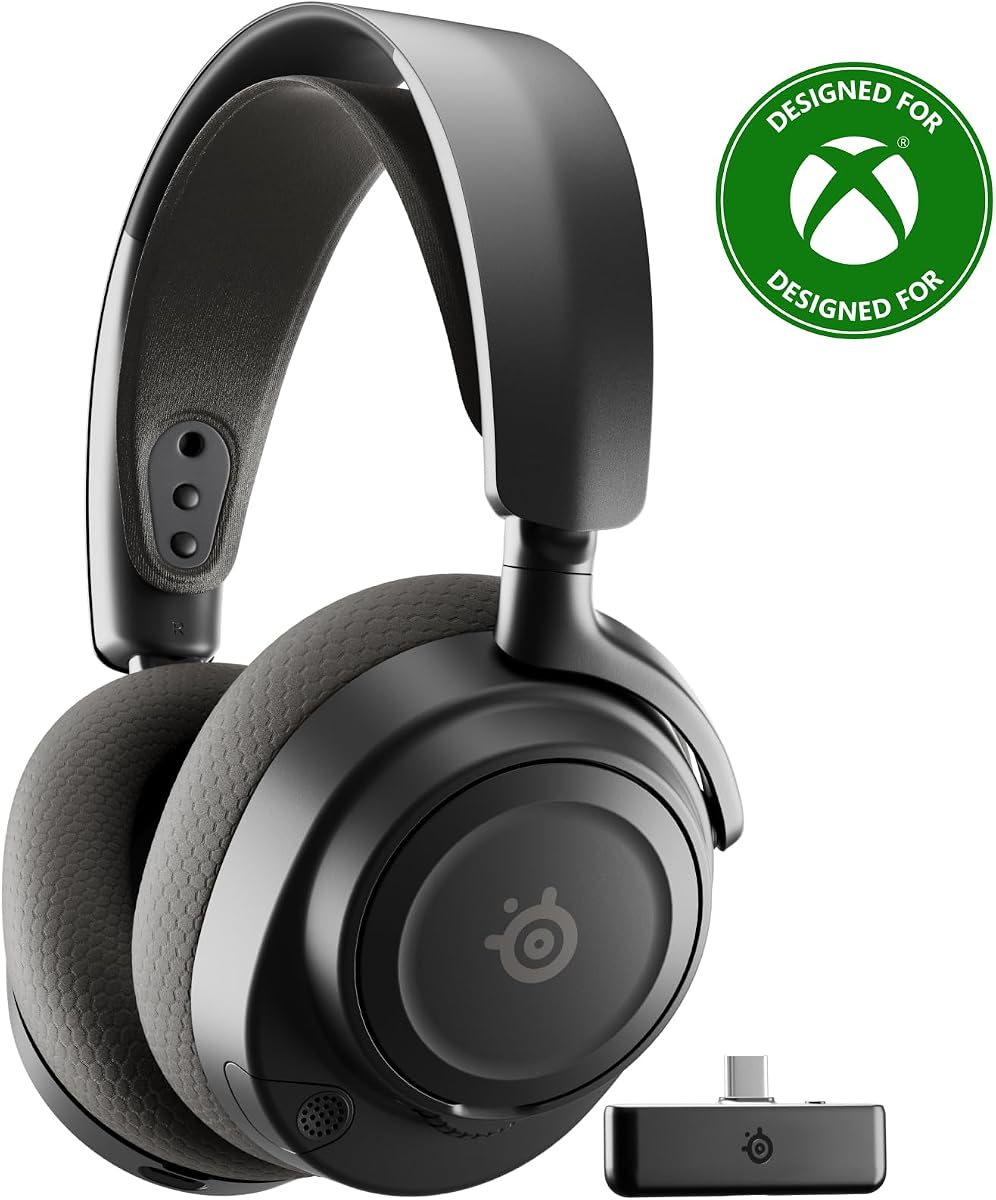

As an Amazon Associate we earn from qualifying purchases. We may earn a commission at no additional cost to you.
Match connection type to your controller and platforms first. Wireless dongles, 3.5mm aux, and multi-base stations solve different living-room setups. Specs skip prices.
Turtle Beach’s Stealth 600 is the Xbox wireless headset we point most players toward when they want low-latency game audio, long battery life, and a mic mute gesture that does not require diving into a dashboard menu mid-fight. Multiplatform 2.4GHz wireless covers Xbox alongside PlayStation and PC paths in the same product family, while Bluetooth 5.4 and a QuickSwitch button let you jump to a phone call or mobile party without tearing down your console pairing.
Fifty-millimeter Nanoclear drivers are tuned for vibrant spatial audio when you enable Xbox’s spatial options and sensible EQ. Built-in EQ modes plus Superhuman Hearing give competitive players a footstep-focused voicing without buying a separate “FPS chip.” The Swarm II desktop and mobile app unlocks a fuller 10-band EQ when you want surgical control after a season of tweaking.
Battery life up to about eighty hours with quick charge support is the lifestyle win. Weekend tournaments and long campaign sessions stop being charging dramas. Flip-to-mute with AI-based noise reduction keeps keyboard clatter and household noise from becoming your squad’s podcast. Memory foam with glasses-friendly technology matters more than RGB ever will for players who wear frames through four-hour sessions.
Mappable wheel and mode button customization let you put game/chat balance or EQ jumps under a thumb without overlay menus. Lay-flat adjustable design helps storage on a shelf between sessions. Compared with the Stealth 500, you gain driver size, battery class, and AI mic smarts. Compared with Stealth 700, you may give up the dual-transmitter CrossPlay story and 60mm Eclipse drivers while keeping a cleaner “does everything well” brief.
Buy Stealth 600 as the default wireless Xbox headset for mixed console-and-mobile lives. Choose the wired BlackShark V2 X if you refuse batteries entirely. Choose Astro A50 if three-system PLAYSYNC switching is how your entertainment center actually works.
Update headset firmware via Swarm II when available, enable spatial audio in Xbox settings, then set a comfortable game/chat balance before ranked play. Test flip-mute once in a private party so you trust the gesture.
Keep the wireless transmitter on a USB port that is not overloaded with noisy hubs if you hear sparkles or dropouts.
Glasses-friendly cushions reduce hotspots where frames meet pads. If you still get pressure, slightly loosen the band rather than angling cups—angled cups wreck imaging.
Stealth 700 adds CrossPlay dual transmitter hardware and larger Eclipse dual drivers for players who hard-swap platforms constantly. Stealth 600 is the sweeter everyday Xbox pick for most living rooms.
We may earn a commission at no additional cost to you.
Not every Xbox headset needs a radio. The BlackShark V2 X Xbox edition plugs into the controller’s 3.5mm jack and just works—no pairing dance, no dead battery in game five of a series, no hunting for a USB transmitter behind the console. For players who want Triforce-tuned competitive audio without wireless complexity, that simplicity is the feature.
Triforce Titanium 50mm drivers split tuning across highs, mids, and lows so footsteps and ability cues stay clearer than a single muddy boom. Pair with Windows Sonic or Xbox spatial audio options to place sounds more confidently. HyperClear cardioid mic pickup tapers off toward the back and sides; bend the boom to the corner of your mouth so teammates hear callouts, not your mechanical keyboard across the room.
At about 240 grams with thicker headband padding and memory foam leatherette cushions, the headset is built for long tournaments rather than fashion photos. Closed earcups provide advanced passive noise cancellation—not hybrid ANC for airplanes, but enough isolation to keep TV chatter from drowning mid-round focus.
Because it is a wired 3.5mm design, the same headset can jump to a PS5 DualSense, a Switch, or a PC dongle cable without Xbox-only licensing drama. That makes it a strong secondary headset even if your primary setup is wireless. Cable routing along the controller remains the tax you pay for zero latency and zero charging.
Buy V2 X when reliability and jack compatibility beat feature lists. Move to BlackShark V3 HyperSpeed or Stealth 600 when you want to leave the couch without a tether. Move to RIG 800 PRO HX when an officially licensed base station and Dolby Atmos path are part of your Xbox living-room plan.
Aim the cardioid sweet spot at your mouth, not your chin. A finger’s width off the corner of the lips usually beats stuffing the foam against your cheek.
Ask a teammate for a thirty-second mic check after any boom bump—wired mics drift when you adjust the headband mid-match.
Apartment players near Wi-Fi congestion, anyone burned by flaky dongles, and competitors who consider batteries an avoidable failure mode.
We may earn a commission at no additional cost to you.
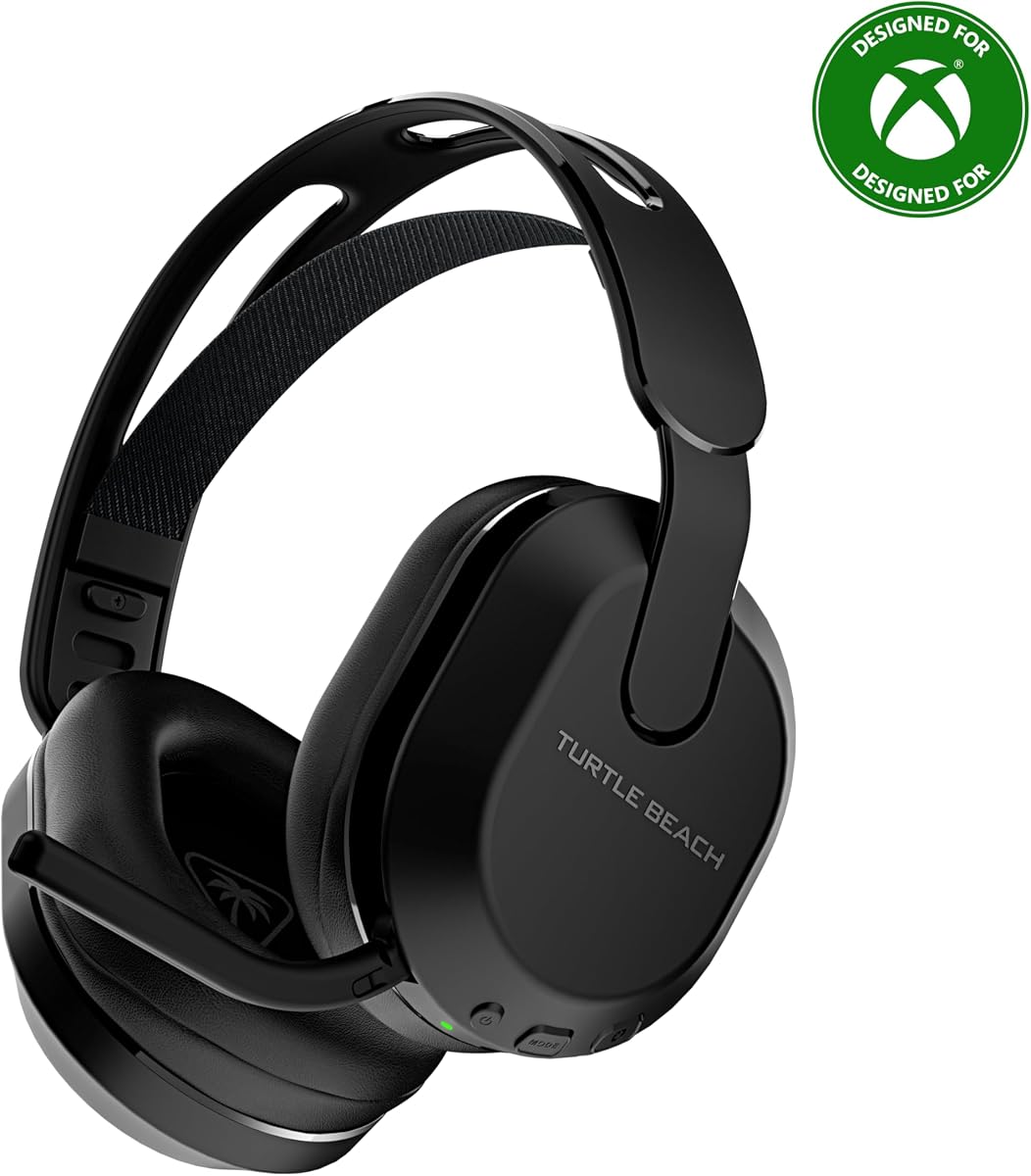
Stealth 500 is the lighter, more approachable rung on Turtle Beach’s Xbox wireless ladder. Low-latency 2.4GHz plus Bluetooth 5.2 with QuickSwitch covers console play and phone audio, while an ultra-lightweight floating headband and memory foam cushions chase all-evening comfort without the denser feature stack of the 600 and 700.
Amplified 40mm drivers still support powerful spatial audio when Xbox settings cooperate. Four Turtle Beach EQ modes and Superhuman Hearing give competitive voicings without mandatory app diving, though Swarm II remains available for 10-band work. Variable mic monitoring (sidetone) helps you stop shouting because you cannot hear yourself—a small feature that improves party manners.
Forty hours of battery with quick charge is enough for most weekly cadences even if it is not the 80-hour headline. Flip-to-mute remains the right mute metaphor for gaming: up is private, down is live. Compared with Stealth 600, you trade driver size, AI mic refinement, and stamina for a floatier wear and typically simpler decision making.
Choose Stealth 500 when comfort and solid wireless Xbox chat matter more than maximum driver diameter. Step up to 600 for AI mic and 80-hour endurance, or to Nova 7X if game-specific preset libraries are your obsession.
Set sidetone just high enough to hear consonants. Too much monitoring makes players whisper; too little makes them yell.
Story campaigns, sports games, and casual multiplayer rarely need 60mm dual-driver theater. Competitive FPS players who chase every cue may still prefer Stealth 700 or Razer’s Gen-2 Triforce wireless sets.
We may earn a commission at no additional cost to you.

Stealth 700 is Turtle Beach’s answer for players whose week is a platform salad: Xbox one night, PlayStation the next, PC on weekends, phone party chat in between. The CrossPlay dual transmitter multiplatform wireless system is the headline—less ritual when the living room’s “main” console keeps changing. Simultaneous low-latency 2.4GHz plus Bluetooth 5.2 keeps mobile audio in the mix while you play.
Sixty-millimeter Eclipse dual drivers chase a bigger, more immersive spatial presentation than the 40mm Stealth 500. AI-based noise reduction on the flip-to-mute mic continues the modern TB chat story. Glasses-friendly memory foam and a steel-reinforced lay-flat design target long sessions and durability when headsets get tossed on a desk between matches.
Eighty-hour battery with quick charge matches the Stealth 600’s stamina class, so the upgrade pitch is really about drivers, dual transmitters, and control flexibility via mappable wheel/mode button plus Swarm II’s 10-band EQ. Advanced Superhuman Hearing remains available for competitive cue hunting.
The 4.1 rating is the caution flag in an otherwise ambitious package—read recent reviews for your console generation and firmware notes. Some buyers simply do not need dual transmitters and are happier with Stealth 600’s cleaner overall score.
Buy Stealth 700 when CrossPlay hardware and larger drivers justify the jump. Buy Stealth 600 for the balanced daily Xbox wireless pick. Buy Astro A50 when three-system PLAYSYNC with a magnetic base is the living-room centerpiece you actually want.
Label transmitters if multiple consoles share a TV stand. Mixing them up creates phantom “broken headset” nights.
Store the unused transmitter in the same drawer as controller wheels so it travels with the console on LAN party weekends.
Nova 7X counters with a huge game-preset library and ClearCast mic rejection. Stealth 700 counters with TB’s dual-transmitter CrossPlay story and Eclipse driver size. Pick based on whether presets or transmitters solve your friction.
We may earn a commission at no additional cost to you.
SteelSeries Arctis Nova 7X Gen 2
Arctis Nova 7X Gen 2 is the headset for players who treat EQ like part of their loadout. Real-time game audio control with more than two hundred game-specific presets is the pitch—less generic “FPS boost,” more title-aware voicings you can swap when your season roster changes. Neodymium drivers and 360° spatial audio support give those presets a credible stage on Xbox and PC.
Simultaneous 2.4GHz and Bluetooth mixing is how modern parties actually work: game audio on the low-latency link, Discord or phone chat on Bluetooth, blended without juggling headsets. The portable USB-C dongle (with USB-A adapter) unlocks cross-platform 2.4GHz play when you move between machines.
Battery life improves past fifty hours versus the previous generation, with optimized USB-C fast charge for short turnarounds. ClearCast Gen 2 microphone noise rejection—up to about −25 dB of background reduction in SteelSeries’ framing—keeps fans and keyboards out of your shotcalls, with Sonar AI enhancement available on PC.
Premium construction balances a rugged steel frame with the signature elastic ski-band style headband and memory foam cushions. That comfort system is why Arctis fans refuse to return to rigid plastic bands after long sessions. Colorway options help the headset feel less like mandatory black military cosplay.
Buy Nova 7X Gen 2 when presets and dual-audio mixing define your stack. Buy Stealth 600 for a more TB-centric AI mic and 80-hour class alternative. Buy wired BlackShark if apps and dongles are exactly what you are escaping.
Start with the official preset for your main FPS, then adjust one band at a time. Stacking five custom boosts usually muddies footsteps.
Save a “story mode” preset with warmer mids so cinematic games do not inherit your ranked EQ.
Keep phone media volume modest so a notification does not drown footsteps. Dual audio is powerful and chaotic if left unmanaged.
We may earn a commission at no additional cost to you.

RIG 800 PRO HX is the officially licensed Xbox wireless kit for players who want a base station that charges the headset and hosts the radio link instead of losing a tiny dongle in the couch. Up to about thirty feet of 2.4GHz range covers most living rooms for Series X|S, Xbox One, and PC. Sixty hours of wireless audio per charge keeps the dock from becoming a nightly chore.
Dolby Atmos for Headphones is the spatial headline when you plug in the wireless adaptor on compatible Xbox or Windows devices—with the important reality that Dolby Access, a Microsoft account, and supported hardware are part of the path. If you already live in Atmos, the headset becomes a fast on-ramp. If you refuse extra apps, you still get solid stereo game audio from the 40mm drivers with low-frequency resonators.
The flexible noise-cancelling boom flips up to mute; RIG is explicit that the “CHAT” marking on the mic tip should point toward your mouth for effective cancellation. On-ear controls for volume, game/chat balance, and mic monitoring let you fix mix problems without a UI deep dive mid-match.
Signature Snap-Fit size adjustments (S/M/L) plus a self-adjusting head strap are unusually thoughtful for shared households and different head sizes. Sound-isolating cups help focus; the flexible frame marketing leans durable for the way gaming headsets actually get handled.
Buy RIG 800 PRO HX when a licensed Xbox dock and Atmos ambitions define the setup. Buy Astro A50 for multi-console PLAYSYNC prestige. Buy Stealth 600 when you want TB ecosystem EQ without a permanent base footprint.
Install and configure Dolby Access before judging spatial performance. A headset cannot invent Atmos metadata your account has not enabled.
On PC, confirm the Dolby output device is selected in Windows sound settings after the adaptor is connected.
Keep the dock in line of sight when possible and away from dense Wi-Fi router stacks. Charge by habit when you end a session so sixty hours stays sixty hours.
We may earn a commission at no additional cost to you.

Astro A50 with PLAYSYNC is built for entertainment centers that refuse to pick a single box. Connect multiple platforms through the USB-C switching story and tap between Xbox, PS5, PC/Mac, or Switch/Switch 2-class devices from on-ear controls instead of replugging transmitters every night. That workflow is the reason A50 exists in an Xbox roundup even though it is philosophically multi-console.
Pro-G Graphene drivers aim for precise separation and timing—helpful when footsteps and utility sounds stack. LIGHTSPEED wireless pursues uncompressed, low-latency game audio. The broadcast-minded 48kHz full-bandwidth boom mic is a chat flex for players who stream or simply hate sounding muffled in party chat.
Bluetooth dual-device mixing pulls mobile Discord or music into the game mix. About twenty-four hours of playtime at a referenced listening level is shorter than Stealth 600 or the 100-hour dongle set, but the magnetic base station makes topping up frictionless if you dock by habit. Seven-core DSP and G HUB/G App control offer 10-band parametric EQ, mic gates, and stream output mixing for power users.
Bit-depth and sample notes differ between console and PC paths on the listing—set expectations accordingly if you are an audio perfectionist. For everyone else, the win is switching speed and mic quality.
Buy A50 when three systems share one headset lifestyle. Buy Nova 7X for preset libraries without Astro’s base ceremony. Buy RIG when Xbox licensing and Atmos are the north star and PlayStation switching is secondary.
Cable the base with intentional USB-C routes labeled by console. The feature fails socially when nobody remembers which input is live.
Dock the headset every end-of-night so the shorter battery never becomes a surprise.
If you stream Xbox via PC capture, the A50’s mic and G HUB mixing tools earn their keep. Pure couch play may not need this much control surface.
We may earn a commission at no additional cost to you.

Razer BlackShark V3 X HyperSpeed
BlackShark V3 X HyperSpeed brings Razer’s competitive tuning into a wireless Xbox-capable package with three connection modes: ultra-fast 2.4GHz HyperSpeed, Bluetooth via SmartSwitch dual wireless, and USB-C wired for nonstop sessions. Gen-2 Triforce 50mm drivers emphasize clearer footsteps and a wider competitive soundstage—the stuff ranked players actually argue about after a loss.
The detachable HyperClear cardioid 9.9mm mic keeps voice focused and disappears for movie nights when a boom looks silly on the couch. Next-gen surround framing for Xbox and PC (including 7.1.4 unlock language on PC) aims at sharper cues when the mode is configured correctly.
Roughly seventy hours of battery and a ~270g ultra-lightweight design attack two common wireless complaints: charging anxiety and clamp fatigue. Plush earcups are part of the long-scrim comfort story. Versus the wired V2 X, you gain radio freedom and lose the pure jack simplicity that never needs a dongle.
Buy V3 X HyperSpeed when you want Razer’s competitive DNA wirelessly without jumping to the fully loaded V3 Wireless titanium/FPS-profile stack. Buy V3 Wireless if ~10ms Gen-2 latency claims and super wideband mic detail are the obsession. Buy Stealth 600 if Turtle Beach’s AI flip-mute and Swarm ecosystem feel more native to your friends list.
Store the mic in a small pouch in the same drawer as the dongle. Detachable convenience becomes rage when the mic vanishes before a tournament night.
Practice the switch between 2.4GHz and Bluetooth before a match. Mid-round experimentation is how people “lose audio” and blame the headset.
We may earn a commission at no additional cost to you.
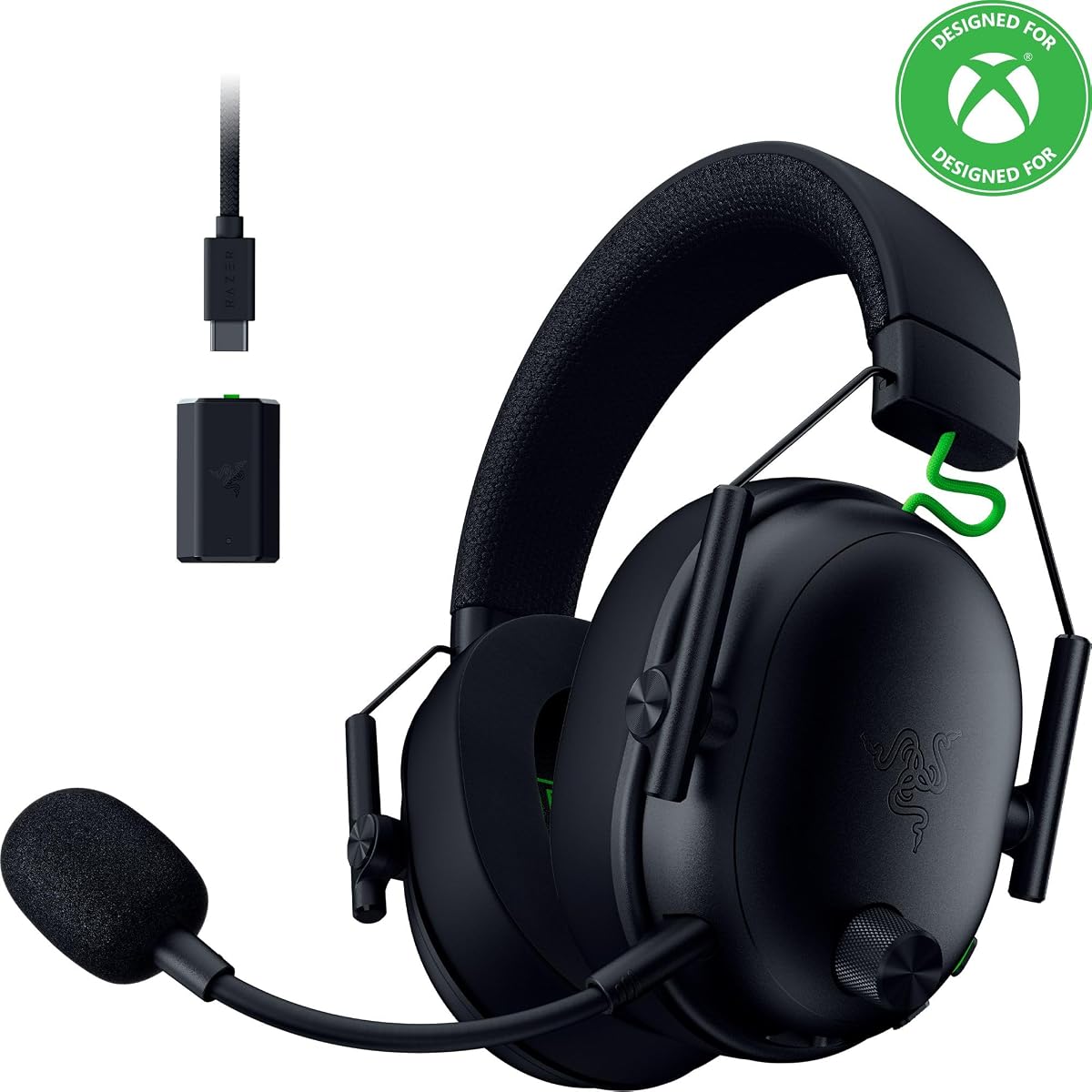
BlackShark V3 Wireless is Razer swinging for competitive latency and mic fidelity. HyperSpeed Wireless Gen-2 markets latency as low as about 10 ms for clutch timing, while Triforce Titanium Gen-2 50mm drivers use a responsive titanium-coated diaphragm to render footsteps and ability audio with more bite. If your Xbox time is mostly ranked shooters, that is the brief.
The detachable HyperClear super wideband 9.9mm mic covers a wider voice frequency range so shotcalls sound more natural than thin headset mics. Three connectivity modes again cover 2.4GHz, Bluetooth mixing, and USB-C wired play. On Xbox and PC, next-gen surround framing and sharper cue language mirror the V3 X story with more titanium and profile horsepower.
Pro-tuned FPS profiles crafted with Razer’s esports roster, plus custom EQs you can save to the headset, mean your tuning can travel between machines. That matters at LAN events when someone else’s PC settings would otherwise wreck your sound. Battery life in the ~70-hour conversation keeps wireless practical.
Casual players who mainly race or play story games may not hear enough difference versus V3 X or Stealth 600 to justify the flagship stacking. Competitive players who already tweak EQ for every title will.
Buy V3 Wireless when latency claims and wideband mic detail are the shopping filters. Buy V3 X HyperSpeed for a lighter feature emphasis. Buy Nova 7X if a gigantic preset store matters more than Razer’s titanium story.
After you find a profile that works, save it onboard so a friend’s PC software cannot ambush you. Verify the profile after firmware updates.
Manufacturer millisecond claims assume clean RF conditions. Move Wi-Fi routers and unused 2.4GHz toys away from the transmitter if audio feels soft-synced.
We may earn a commission at no additional cost to you.

Wireless Gaming Headset (100H)
This wireless gaming headset attacks Xbox simplicity from another angle: plug the USB dongle into an official Xbox controller, skip driver installs, and play with a low-latency claim at or under 20 ms. That controller-dongle constraint is critical—third-party controllers and native Xbox Bluetooth connections are called out as unsupported. If your pad is official, setup can be delightfully dumb. If it is not, look elsewhere immediately.
A 1200mAh cell and up to about one hundred hours of playtime after a ~2.5-hour charge is the stamina headline of the entire pack. Marathon campaigns, travel gaming, and households that lose chargers benefit. Fifty-millimeter drivers and soft imitation protein leather cushions target long-session comfort, including glasses wearers in the marketing language.
Dual connection modes split duties: 2.4GHz for Xbox/PC/PlayStation-class gaming via the appropriate path, Bluetooth 5.4 for phones and tablets. The listing is explicit that Bluetooth mode is not for Xbox or PlayStation game audio and that the microphone is unavailable on Switch connections—read those constraints before you buy for a multi-Nintendo household.
The adjustable high-sensitivity noise-cancelling microphone rotates for positioning and aims to cut background noise in online matches. It will not match every AI or ClearCast marketing claim in premium brands, but it covers the core “squad can understand me” job when placed correctly.
Buy this set when official-controller dongle simplicity and 100-hour battery dominate the checklist. Buy Stealth 600 or Nova 7X when brand apps, AI mics, and richer platform ecosystems matter more. Buy wired BlackShark when even a controller dongle feels like one too many parts.
Confirm your Xbox pads are official Microsoft controllers before purchase. Aftermarket controllers are the number-one footgun for dongle headsets in this style.
Keep the dongle in the controller case when you travel to tournaments so it cannot vanish into a couch crease.
Use Bluetooth for mobile media and calls. Use 2.4GHz for Xbox play. Mixing those mental models prevents “why won’t Xbox see Bluetooth?” nights.
We may earn a commission at no additional cost to you.
Xbox chat audio commonly flows through a 3.5mm controller jack, a licensed/official wireless kit, or a USB transmitter designed for Xbox. Generic Bluetooth headphones often disappoint for game chat. Decide whether you want wired jack simplicity, a controller dongle, a console USB transmitter, or a base station.
Competitive FPS players should prioritize low-latency 2.4GHz and cue-focused EQ (Superhuman Hearing, Sonar presets, Razer FPS profiles). Story and racing fans can prioritize comfort and battery. Spatial audio helps only when enabled and tuned—hardware alone is not magic.
Flip-to-mute is the gold standard for living-room gaming. AI or ClearCast-style noise rejection helps when keyboards, fans, and siblings coexist with ranked play. Boom orientation markings (like RIG’s CHAT tip) are not decoration—follow them.
Twenty-four hours is fine with magnetic docks (A50). Forty to eighty hours fits weekly chargers. One hundred hours fits chaos. A dock you ignore is worse than a mid battery you actually recharge.
Glasses-friendly foam (Stealth 600/700) and ski-band designs (Arctis) reduce hotspots. Lightweight Razers help during tournaments. Try not to chase RGB when your frames already fight every headset you own.
Usually not as a seamless native solution. Xbox game audio and chat are most reliable through a controller 3.5mm jack, Xbox-oriented 2.4GHz transmitters, or officially licensed wireless kits. Bluetooth may work for some media scenarios but is a common source of frustration for party chat. Prefer the connection styles represented in this pack.
For most players, Turtle Beach Stealth 600 balances latency, 80-hour battery, AI flip-mute, and QuickSwitch Bluetooth. SteelSeries Nova 7X Gen 2 is better if you live in game-specific presets. RIG 800 PRO HX is compelling with a licensed base and Atmos path. Astro A50 wins multi-console switching households.
Yes. The Razer BlackShark V2 X proves wired still wins on zero charging anxiety and controller-jack universality. Competitive players who hate RF variables often prefer a good 3.5mm headset. Wireless is convenience; wired is certainty.
No. Atmos can help on supported titles and setups but requires Dolby Access and account configuration on kits like the RIG 800 PRO HX. Windows Sonic and well-tuned stereo EQ already help many players. Try spatial modes, but do not assume Atmos is mandatory for good aim.
Many dongle headsets—including the 100-hour model here—require official Xbox controllers and reject third-party pads. Bluetooth-only connections are also often unsupported for game audio. Verify controller authenticity and use the dongle path described in the listing.
Extremely, in shared homes. A physical mute you can feel prevents embarrassing audio moments better than software toggles buried in overlays. Turtle Beach and RIG emphasize this for good reason.
Forty hours covers most weekly players. Eighty hours suits long sessions and forgetful chargers. Twenty-four hours works with a magnetic dock habit like the A50. One hundred hours is ideal if the headset travels or lives far from cables.
Many in this list are multiplatform—Stealth series, Nova 7X, Razers, A50, and the dual-mode 100H set with caveats. Always check the specific listing for which radio mode works on which box. Xbox-licensed docks may be Xbox/PC focused.
Use cardioid/AI/ClearCast mics, enable noise rejection features, place the boom correctly, and lower sidetone so you do not shout. Soft desk mats and quieter switches help more than another EQ preset.
If you also play on PC or just love preset libraries, Nova 7X’s real-time control can be a real advantage. If you want onboard simplicity and flip-mute AI without a deep app, Stealth 600 may make you happier. Match software patience to the product.
The best gaming headset for Xbox in 2026 is the one that matches your controller, your platforms, and your tolerance for apps and docks. Turtle Beach Stealth 600 is the all-round wireless answer for most players, SteelSeries Arctis Nova 7X Gen 2 is the preset-driven multiplatform brain, and Razer’s BlackShark V2 X remains the wired jack that never needs a charger.
Step up to Stealth 700 or Astro A50 when dual transmitters or PLAYSYNC switching define your living room. Choose RIG 800 PRO HX for a licensed base station and Atmos ambitions, or the 100-hour dongle set when official-controller simplicity and extreme stamina matter most.
Confirm official pads for dongle kits, learn flip-mute on day one, and enable spatial audio only after a clean game/chat balance. Good Xbox sound is half headset, half settings—and entirely worth five minutes of setup before ranked.