Best Open-Ear Trail Awareness
Bone Conduction Bluetooth 6.0 Open Ears

- Open-ear bone conduction keeps traffic and trail talk audible
- 25g lightweight neckband with Bluetooth 6.0 dual connect
- IP65 weather ready with up to 10 hours and three EQ modes
Expert Review & Guide
Hiking audio has one job that gym earbuds can ignore: keep you present on the trail. A switchback with bike traffic, a shared ridge with hikers calling “on your left,” or a sudden weather shift all demand ears that still hear the world. The best earbuds for hiking in 2026 split into two honest camps—open-ear bone conduction that leaves canals free, and sealed sport hooks with transparency or softer isolation when you want richer bass on long climbs.
This Amazon pack mixes adjustable over-ear hooks from bmani, PocBuds, HAOYUYAN, JOYWISE, and hybrid ANC earhook models; two bone-conduction neckband designs built for running and hiking awareness; Raycon’s Everyday ANC in-ears for quieter stretches; and a low-profile sleep-style bud that some packers also use for camp reading. Ratings come from the listings as supplied. We skip dollar amounts because outdoor gear pricing moves constantly—judge by fit, weather rating, and battery claims instead.
Use the three top picks if you want a fast shortlist, then scan the comparison table for IP rating and playtime before reading the full reviews. Match the product to your typical day: multi-pitch awareness, all-day approach trail podcasts, or rainy Pacific Northwest bushwhacks.


As an Amazon Associate we earn from qualifying purchases. We may earn a commission at no additional cost to you.
On trail, compare openness versus seal, waterproof rating, and how you will control playback with gloves or sweaty hands. Specs below come from each listing—no prices.
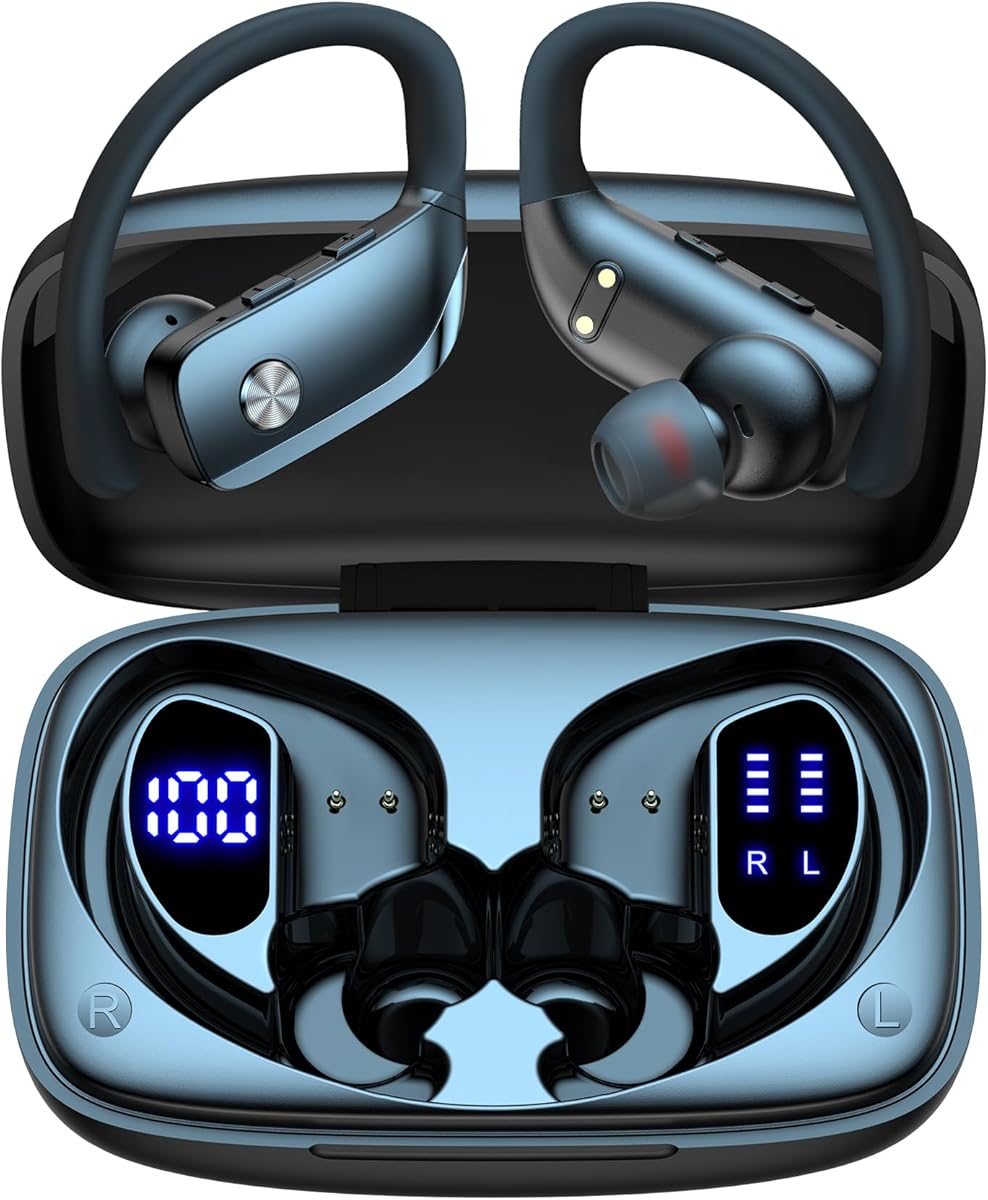
bmani’s adjustable hooks are the pack’s most practical answer when your hiking day starts in a parking lot with cold fingers and ends with dust in every zipper. Separate main and volume buttons matter more outdoors than flashy touch pads: you can skip a podcast chapter on a steep grade without smearing capacitive sensors or yanking a phone out of a hip belt. The dual LED case shows case power on one side and bud charge status on the other, which is exactly the telemetry you want before a long weekend where cabin outlets are scarce.
On trail, the fit story is retention first. Adjustable over-ear arms follow different helix shapes and stay friendlier under sunglasses than many rigid sport hooks. Ten-millimeter drivers push clear treble and usable bass for trail playlists; they will not replace a living-room speaker, but they keep cadence on climbs without needing unsafe volumes. Dual microphones help when you call a ride from a windy trailhead—still cup a hand over the mic if gusts are brutal.
Battery math suits weekend backpackers who charge at the car: roughly eight hours per earbud and about eighty hours when you rotate through the case. That means a five-day hut-to-hut itinerary can live off one full case charge if you are not blasting volume all day. Pairing is conventional Bluetooth with auto reconnect after the case lid opens, so you spend less time fiddling in a windy lot and more time locking the car.
Situational awareness is on you. These are sealed sport buds, not open-ear bone conductors. On shared forest roads and bike-heavy rails-to-trails paths, keep volume moderate and consider mono mode or one bud out when visibility is poor. Dust resistance helps on desert hikes; still wipe the nozzles before docking so grit does not grind the charging pins overnight in a tent vestibule.
Choose bmani when glove-friendly buttons, adjustable retention, and long case life beat brand prestige. If your priority is hearing approaching trail runners without removing anything, jump to the bone-conduction options later in this guide. If you want ANC for noisy shuttle rides to the trailhead with a transparency escape hatch, the BX30 and hybrid ANC hooks are stronger matches.
Packing tip: nest the case in a zip pocket rather than a mesh water-bottle sleeve where condensation collects. Overnight, crack the case lid slightly in humid weather so moisture does not trap against the buds after a sweaty climb.
Approach hikes, dusty mesa trails, and cold-morning starts where physical buttons beat touch controls. Great as a durable daily driver that also survives gym days between weekend summits.
Treat volume like a headlamp beam: brightest on lonely dirt, dimmest near roads, bike traffic, and busy switchbacks. One-bud mono is a valid safety mode, not a compromise.
We may earn a commission at no additional cost to you.
Bone Conduction Bluetooth 6.0 Open Ears
If hiking earbuds have a safety default in 2026, open-ear bone conduction is it—and this Bluetooth 6.0 model is the pack’s clearest expression of that idea. Transducers sit on the cheekbones rather than sealing the canal, so wind in the pines, bike bells, and a partner’s voice stay in the mix while your podcast rides underneath. The listing’s anti-leak tuning aims to keep private listening from becoming a mini speaker for everyone on the switchback, though courtesy volume still matters on quiet alpine mornings.
At roughly twenty-five grams with a flexible neckband, the headset disappears under a sun hoodie better than bulky over-ear sport buds. All-day wear claims are believable for hikers who hate canal pressure after six hours of elevation gain. Bluetooth 6.0 and dual-device connection let you keep navigation prompts on a phone while a secondary device streams music—useful when a partner shares a playlist from another handset at camp.
Ten hours of playtime covers most single-day objectives if you start charged; Type-C top-ups at the car extend multi-day trips. IP65 readiness handles sweat and light rain common on spring mud seasons. Three EQ modes—Vocal, Bass, and Balanced—are more than marketing fluff outdoors: Vocal clarifies guide voice notes and trail podcasts, Bass adds thump for motivational climbs, Balanced sits between for mixed albums.
Audio character will surprise sealed-bud veterans. Bone conduction emphasizes midrange clarity and presence over chest-thumping sub-bass. That is a feature when you need speech intelligibility and environmental cues more than club-level drops. In high wind, expect some competition between nature and music—lower volume and Vocal mode usually win.
Pick this pair when awareness is non-negotiable: roadside approaches, popular shared trails, night hiking with headlamp traffic, or any itinerary where you refuse to remove earbuds every time someone passes. Prefer sealed hooks when you want cinematic soundtrack energy on empty desert miles and are willing to manage volume discipline yourself.
Fit note: seat the transducers firmly on bone, not soft cheek flesh, and keep the band snug without pressure points behind the ear. A loose seat kills bass and invites bounce on rocky descents. The built-in mic supports hands-free calls when you need a pickup window from a trailhead lot.
Urban-to-trail connectors, bike-shared greenways, group hikes with frequent conversation, and anyone rebuilding confidence after nearly missing a bike on a sealed-bud day.
Both chase awareness with bone conduction. This model leads on listing rating and dual-connect marketing; PSIER counters with a 23g titanium frame, adjustable strap, and app EQ for hikers who tinker with sound profiles.
We may earn a commission at no additional cost to you.
BX30 is the sealed-hook specialist for hikers who still want a soundtrack with real low end—and a transparency escape hatch when the trail gets social. Adaptive ANC marketed up to roughly forty-five decibels of reduction shines on the boring parts of outdoor travel: airport trains to trail towns, diesel shuttles, and roadside approaches. A quick transparency toggle keeps conversations and bike traffic in the mix without stuffing buds into a pocket mid-climb.
Fit engineering is unusually explicit for this tier: flexible earhooks informed by thousands of ear scans, three gel tip sizes, and about six grams per side. That combination matters when a daypack sternum strap wants to tug anything loose. IPX7 coverage matches sweaty climbs and sideways rain better than IPX4 lifestyle buds. Bluetooth 6.0 marketing and a claimed fifty-foot-class link help when your phone lives in a hip belt while you scramble.
Battery is the headline for multi-day packing. Roughly eight hours per charge and about ninety hours with the case means you can leave a brick at home for shorter trips. The percentage LED case beats cryptic blink codes when you are packing at 4 a.m. A ten-minute quick charge claim for a couple of extra hours is the kind of trailhead insurance that saves a podcast on a delayed start.
Sound leans sport-energetic: punchy enough for climbing playlists, clear enough for navigation voice prompts. ANC will not erase wind roar the way a quiet studio does, but it takes the edge off highway noise when you walk the shoulder to a trail gate. Use transparency as your default on popular weekends; reserve deep ANC for empty miles or noisy transit.
Buy BX30 when you want sealed bass, long logistics battery, and a real awareness mode in one hook set. Skip it if you refuse any canal seal whatsoever—bone conduction will feel more natural. Compared with Raycon Everyday, BX30 is the more trail-retention-focused chassis with a tougher waterproof story.
Care on wet trips: shake out excess water, wipe the tips, and dry the contacts before overnight charging in a hostel. Salt sweat left in the case is how outdoor earbuds die between seasons.
Transparency for shared trails and road walks; ANC for transit days and empty desert miles. Make the mode switch as automatic as checking your map.
Percentage readouts justify a quick glance during camp chores. Park the case upright in a dry sack pocket away from a leaking soft flask.
We may earn a commission at no additional cost to you.

PocBuds earn their hiking niche through logistics more than novelty: an eighty-hour digital case that accepts both Type-C and Qi wireless charging. That matters when a mountain hut has a crowded outlet strip but someone left a wireless pad on the common table. Drop the case on the pad while you cook, then hike out the next morning without hunting for the right cable in a dark vestibule.
Thirteen-millimeter double-layer drivers give these hooks more low-end authority than the smaller 10mm class in the pack. Deep bass marketing translates outdoors as motivational thump on steep grades—still keep volumes trail-safe. HD voice microphones help for logistics calls; wind will always be the enemy, so duck behind a tree if you need a clear reservation call.
IPX7 waterproofing and soft flexible hooks follow the same sports-research pitch as other retention-first buds: stay put through movement, survive rain, and offer three tip sizes for seal. Bluetooth 5.3 keeps a stable link within about thirty feet—fine when the phone is on your person, less ideal if you leave it in a parked car and wander. Mono mode is a quiet hero for hiking with friends: music in one ear, conversation in the other.
Controls are one-button and auto-connect oriented, which keeps the learning curve short before a dawn start. Latency is marketed as improved for media; trail video tutorials at camp will feel better than older Bluetooth generations. Compatibility spans phones, tablets, laptops, and even TV use if you recover at a rental with streaming.
Choose PocBuds when wireless case charging and bass weight matter on mixed travel-and-trail trips. Choose bone conduction when awareness outranks bass. Choose hybrid ANC hooks when you need a noise-cancelling commute to the mountains.
Trip habit: enable mono before group ridge traverses, then return to stereo for solo miles. Wipe hooks before Qi charging so moisture does not sit against pads overnight.
Shared lodging rarely has spare USB-C bricks. A Qi-capable case turns any pad into a top-up station while you sort food bags.
Similar retention philosophy and eighty-hour class endurance. PocBuds add larger drivers and wireless charging; bmani emphasizes separate volume buttons for glove use.
We may earn a commission at no additional cost to you.

Raycon Everyday sits in this hiking guide as the lifestyle crossover: active noise cancelling in-ears you might already wear to the office, then pack for a mellow forest loop. ANC shines when the adventure includes trains, planes, and chatty lodges more than knife-edge exposure. On quiet singletrack, the same ANC can feel overly isolating—manage volume and consider removing a bud when the trail shares space with bikes.
Fit is classic in-ear rather than hook-locked. Multiple tip sizes are mandatory homework before a rocky descent; without a seal you lose bass and risk bounce. IPX4 covers sweat and light moisture, which is fine for fair-weather day hikes but less reassuring than IPX7 when forecasts turn ugly. If your region delivers sideways rain, prioritize the sport-hook IPX7 options.
Battery claims land around eight hours per charge and thirty-two hours with the case—enough for a long weekend if you top up nights, not enough to ignore charging on a week-long trip the way ninety-hour cases allow. Bluetooth pairing with iOS and Android is straightforward for mixed-device households.
Sound aims at focused, everyday listening rather than hyper-bass gym tuning. That flatter character can be pleasant for acoustic trail playlists and spoken-word navigation notes. Microphone performance is adequate for logistics calls from the car; expect wind noise outdoors like any compact stem bud.
Buy Raycon when you want one ANC pair for commuting and gentle hiking without owning a second sport-specific set. Skip it as your only pair if you hike aggressively, sweat heavily, or demand open-ear awareness by default.
Trail etiquette still applies: ANC is not an excuse to blow past hikers without hearing a greeting. On popular paths, drop volume or park one bud.
Gentle day hikes, travel-heavy outdoor weekends, and hikers who already like stem earbuds and refuse sport hooks for comfort reasons.
IPX4 is splash-minded. Pack a dry bag for the case in monsoon seasons and prefer IPX7 hooks when storms are part of the plan.
We may earn a commission at no additional cost to you.
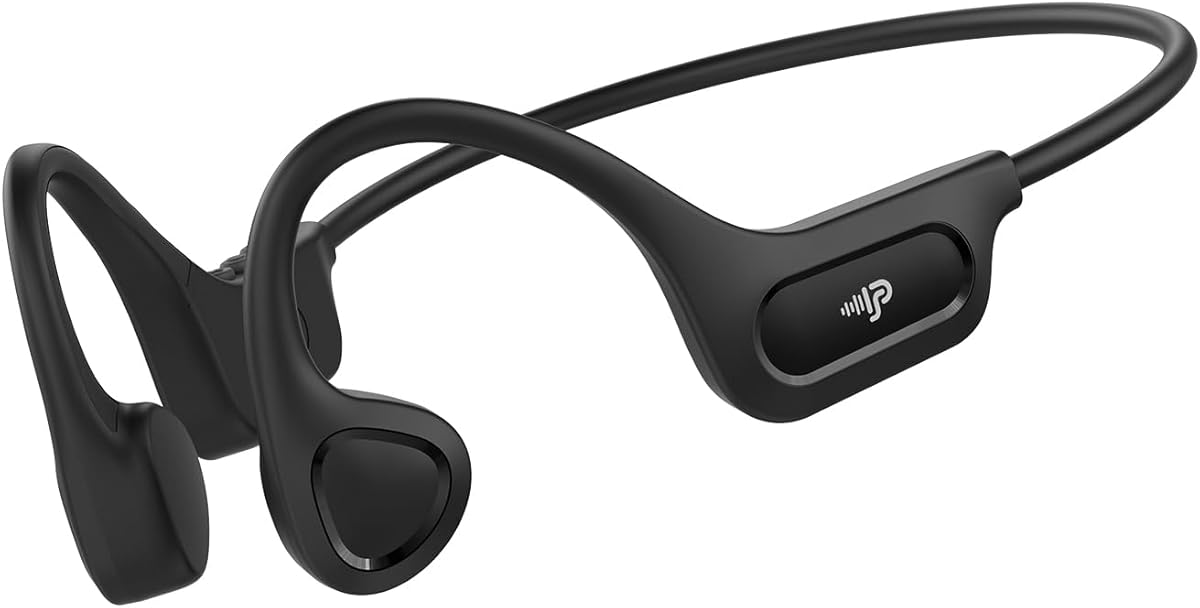
PSIER Bone Conduction Open Ears
PSIER’s 2026-upgraded bone conduction set targets the gram-counting hiker who still wants music without canal fatigue. At about twenty-three grams with a flexible memory-titanium frame, it undercuts many sport neckbands on weight while keeping ear canals open for footsteps and conversation. An included adjustable strap is a practical touch for smaller heads or bouncing scree descents where a loose band would shift transducers off the sweet spot.
Acoustically, large thirteen-millimeter bone drivers and roughly ninety-decibel sensitivity aim for richer open-ear output than older conduction toys. Upgraded cavity sealing claims meaningful leak reduction—helpful when you share a tent vestibule playlist etiquette with partners who want silence. Bluetooth 6.0 marketing includes low-latency figures that help if you watch a quick how-to video at camp.
Ten hours at moderate volume matches a long summit day; Type-C charging in about two hours fits lunch-break top-ups in town. IPX5 handles sweat and light rain, though Pacific Northwest deluges still argue for a rain shell hood and conservative expectations—these are not swim headphones. Standby claims in the hundreds of hours mean the set can live in a hip belt pocket between weekend trips without constant babysitting.
The Boean app angle—AI music tools and EQ presets—is optional flavor. Hikers who want Bass Boost for climbs or clearer vocals for podcasts get a tuning surface sealed buds often bury in generic phone EQ. If you never install apps on trail, the hardware still works as a straightforward open-ear headset.
Choose PSIER when ultralight comfort and awareness dominate and you like the idea of strap-assisted stability. Compare the higher-rated Bluetooth 6.0 open-ear model earlier if listing social proof and IP65 matter more than the titanium frame narrative.
Field tip: after muddy days, wipe the band and transducers before coiling into a stuff sack. Grit against titanium coatings is how finishes wear prematurely.
Hikers with smaller heads, high-bounce downhill miles, or anyone who felt older neckbands creep during technical terrain.
Open-ear wins for safety culture; sealed hooks win for immersive albums on empty miles. PSIER sits firmly in the safety-first column.
We may earn a commission at no additional cost to you.

HAOYUYAN’s BX17 hooks are built for hikers who measure battery in trail hours, not marketing slides. Up to fifteen hours per charge with an eighty-hour dual-LED case means a long alpine start can finish on the same buds you wore at the trailhead—without mid-day case visits that force you to unpack a hip belt on a windy ledge. That single-charge endurance is the differentiator versus many eight-hour class sport buds.
Fourteen-point-three-millimeter drivers push strong bass and clear highs for motivational playlists. Passive isolation from a good tip seal reduces wind hiss somewhat; call microphones aim to keep your voice intelligible when you coordinate pickups. Do not confuse that with airplane-grade ANC—if you need active cancellation plus transparency, BX30 or the hybrid ANC hooks are purpose-built.
IPX7 rating and flexible hooks with three tip sizes follow the outdoor-sport playbook: lock in through movement, shrug off rain, survive accidental dunk claims at the listing level (still treat freshwater rinse as a careful wipe-down, not a hobby). Physical buttons handle volume and calls when fingers are wet from a filter bottle or rain jacket zipper.
Bluetooth 5.3 with roughly thirty-three feet of range keeps phone-in-pack setups workable. Auto pairing when the lid opens is convenient at dawn—just keep the case from popping open inside a overstuffed brain of the pack where it might connect and drain unexpectedly.
Pick BX17 for maximum hours-per-charge among sealed hooks and straightforward sport controls. Pair with open-ear bone conduction as a second set if some days demand total awareness and others demand playlist immersion.
Camp routine: check dual LEDs while melting snow or cooking. If the case is low before a long road walk out, prioritize charging the case over a headlamp for the night if you already have daylight navigation covered.
Fourteen-hour hiking days with podcasts on the approach and music on the climb are where the per-charge claim earns its keep.
Do a loaded pack walk around the block. If a hook rotates when the sternum strap tightens, reseat tips or try another size before the trailhead.
We may earn a commission at no additional cost to you.
These hybrid ANC earhooks sit in the sweet spot between commute-cancelling gear and trail sport hardware. Hybrid active noise cancelling marketed to cut a large share of ambient noise helps on buses to national park gateways, while transparency mode—engaged with a practiced tap sequence—lets trail greetings and bike bells back in. That duality matches modern hiking travel better than pure gym buds that only know loud.
Thirteen-millimeter drivers with Hi-Res-oriented tuning aim for cleaner treble and controlled bass across environments. Bluetooth 5.4 improves transmission efficiency and latency versus older 5.0-era sport buds, which you notice when watching a quick weather radar clip at a trailhead. Soft composite hooks and S/M/L tips chase all-day comfort without the pressure points that turn a ten-mile day into an ear headache.
Battery life lands near ten hours per charge and eighty with the case, plus a one-hour-class Type-C full recharge claim for the system. LED status removes guesswork when packing for a red-eye flight into a climbing town. IPX7 waterproofing covers the classic hike failure mode: sudden rain after a clear morning forecast.
Wide compatibility—phones, tablets, laptops, smart TVs—means the same pair recovers with a movie in a rental after the summit. Button-centric controls reduce accidental pauses when a pack strap rubs a stem, though you should memorize the ANC/transparency gesture before you need it on a windy ridge.
Buy this set when you want hybrid ANC credibility, strong ratings, and sport hooks without jumping to the ninety-hour BX30 extreme. Prefer pure open-ear models if you dislike any seal. Prefer Raycon if you want a non-hook ANC lifestyle shape.
Training tip: practice the transparency toggle at home until it is muscle memory. On trail, that one gesture is the difference between safe shared-path etiquette and dangerous over-isolation.
Ideal when Thursday is airports and Saturday is fourteen miles. ANC for transit, transparency for the footpath.
Hi-Res marketing promises detail; tip seal still decides whether treble stays crisp when you are breathing hard uphill.
We may earn a commission at no additional cost to you.

Sleep Earbuds Mint Side-Sleeper
This mint sleep bud is the pack’s odd card, and that is useful if your “hiking audio” problem is actually camp audio. Side-sleeper geometry and a sleep mode that kills touch controls, low-battery alarms, and flashing lights matter more at 2 a.m. in a shared shelter than another ANC gym claim. Four taps enter a quiet mode so you are not blasted awake by an accidental pause/play against a pillow.
Passive isolation up to roughly twenty-four decibels—explicitly not active ANC—helps with snoring bunkmates and hostel hallways after a trail day. Soft silicone tips in three sizes chase comfort for podcast wind-downs. Bluetooth 5.3 keeps pairing simple with a phone already sticky with sunscreen.
As primary trail earbuds, they are a compromise. There are no sport hooks for violent descents, battery totals sit around thirty hours with the case, and the low-profile design prioritizes sleep pressure over sweaty retention. Some hikers will still pack them specifically for overnight comfort while using open-ear conduction for daytime miles—a two-tool strategy that matches how people actually travel.
Sound quality aims at realistic, calming playback rather than bass-bomb gym tuning. That suits ASMR, rain noise, or quiet albums in a tent. For navigation prompts on a rocky trail, a more secure sport hook remains wiser.
Consider these when camp sleep is the pain point the keyword search accidentally captured. Skip them as your only pair for exposed scrambling or rain-soaked ridge days.
Note the zero rating in the pack data: treat that as an early-listing signal, read recent buyer feedback before trusting them on a once-in-a-year trip, and keep a backup audio plan.
Open-ear or sport hooks for daytime awareness and retention; these sleep buds for hostel and tent nights. Total weight still beats a bulky over-ear headset.
Enable sleep mode before lights-out so a cheek press cannot blare a podcast into a quiet shelter.
We may earn a commission at no additional cost to you.

JOYWISE leans into a fear every hiker knows: watching a bud bounce down scree. Adjustable ear hooks plus an upgraded neck lanyard create a retention system that is part fit, part safety tether. On rainy scramble days when you peel a hood on and off, that tether can be the difference between finishing the podcast and finishing the hike in silence.
Sixteen hours of continuous playback on a charge is the other headline—strong for sealed sport headphones that are not living in a giant charging case all day. IPX7 waterproofing matches waterfall overlooks and Cascade drizzle. Bluetooth 5.3 with button controls keeps skip/volume actions reliable when capacitive surfaces are wet.
Sound aims at high-fidelity workout energy with clear calls. On trail that means lively playlists and usable logistics calls from the car. The listing is candid that smartwatch pairing is not supported—plan on phone-in-pocket audio rather than watch-only controls, which is already how most hikers run offline maps anyway.
Optional Boean app creative features exist for tinkering at home; most hikers will ignore them after the first pairing. Focus instead on seating the hooks so the lanyard does not tug nozzles out of alignment when you look down at footholds.
Choose JOYWISE when loss prevention and long wet-day runtime matter more than ANC sophistication. Choose bone conduction when open-ear awareness is the prime directive. Choose BX30 when you want percentage LED case life measured in weeks.
Rain routine: after a soaked day, dry the lanyard and hooks before coiling into a pack lid. Persistent damp nylon against skin overnight is how irritation starts on multi-day trips.
Scramblers, parents hiking with kids who tug, and anyone who has already donated earbuds to a canyon.
Phone-centric by design. If your whole audio workflow is watch-only, verify compatibility elsewhere or stick with phone playback.
We may earn a commission at no additional cost to you.
Start with trail context, not driver size. Shared paths, roadside approaches, night hikes, and hunting seasons all argue for open-ear bone conduction so canals stay free. Empty desert miles and carefully managed volume make sealed sport hooks enjoyable for richer bass. Many experienced hikers eventually own one of each rather than forcing a single compromise.
IPX4 covers sweat and light splashes. IPX5 improves rain confidence. IPX7 is the sport-hook comfort zone for deluges and accidental dunk language in listings. IP65 on some open-ear models is dust-and-jet oriented—still not a swimming certificate. Match the rating to your wettest realistic month, not your sunniest Instagram hike.
Day hikers can thrive on eight to ten hours per charge. Weekenders should look at case totals in the fifty- to ninety-hour class or plan hut charging. Qi-capable cases help in shared lodging. Always verify live battery claims on the product page before a once-a-year trip, and pack a cable that matches the case even if wireless is available.
Physical buttons beat touch pads with gloves, sunscreen, and rain. Adjustable hooks play nicer with sunglasses temples than rigid one-size arms. Test how a sternum strap and hood interact with neckbands before trusting them on technical terrain.
Active noise cancelling earns its keep on shuttles and flights. On trail, transparency modes and open-ear designs are the responsible default near traffic and bikes. If a sealed ANC set is your only pair, practice the awareness toggle until it is automatic.
Put on the loaded pack, hood, and sunglasses you will actually wear. Shake your head and jog ten steps in the lot. Reseat tips or transducers until nothing rotates.
For sealed buds, enable transparency or plan mono. For open-ear, set Vocal or Balanced EQ so speech and footsteps stay intelligible under music.
Cache podcasts and maps before you lose signal in the canyon. Streaming gaps are when people crank volume and lose situational awareness.
Park the charging case in a zip dry pocket, not an open mesh bottle sleeve. Wipe buds before docking after sweaty climbs.
Check LED percentages or open-ear charge indicators the night before a long day. Top up while you boil water.
Open-ear bone conduction is generally safer because your ear canals remain free to hear bikes, voices, and wildlife. Sealed buds can be used responsibly with low volume, transparency modes, or mono listening, but they demand more discipline. Choose based on trail traffic, not marketing.
Light moisture and sweat are the intended envelope for IPX4. Steady rain, waterfall mist, and storm days are better served by IPX5–IPX7 sport models in this pack. When storms are forecast, pick the higher rating or keep audio in a dry pocket.
They sound different. Expect stronger midrange presence and weaker sub-bass than sealed 13–14mm sport drivers. Many hikers prefer that trade for awareness. If soundtrack immersion is the point of empty miles, sealed hooks will satisfy more.
For two to three days, an eight-to-ten-hour bud plus a fifty-to-ninety-hour case is comfortable if you charge the case when town power appears. Pure ten-hour open-ear sets may need a midday top-up on phone-heavy navigation days. Always confirm current claims on the listing before you go.
ANC is excellent for getting to the trail and sleeping in noisy hostels. It is risky as an always-on trail setting near roads and bikes. Prefer models with easy transparency—or skip ANC entirely for open-ear designs—when foot travel is the main event.
Usually yes if you seat hooks before the hat. Thick beanies can press hooks oddly; do a packed fit check at home. Open-ear neckbands often play nicer under brimmed hats because nothing bulky sits in the concha.
Because many hikers searching this keyword actually hurt most at night in shelters. The mint sleep buds are an accessory for camp comfort, not a primary scrambling headset. Pair them with daytime open-ear or sport hooks if overnight noise is your real enemy.
Some can, some cannot. JOYWISE explicitly notes smartwatch pairing limitations. Verify watch compatibility on the live product page if watch-only audio is mandatory for your navigation style.
Pack the size that passed your loaded-pack bounce test, plus one step smaller. Heat, sweat, and swelling across a long climb can change comfort. A spare tip in a tiny zip bag weighs almost nothing and saves a seal failure.
Not on the dirt path itself—but Qi-capable cases like PocBuds shine in huts and Airbnbs with shared pads. For pure backcountry, USB-C cable discipline matters more than wireless.
The best earbuds for hiking in 2026 are the ones that match your trail traffic and weather, not the loudest driver on the box. Open-ear bone conduction—especially the high-rated Bluetooth 6.0 set and the featherweight PSIER frame—should be the default when awareness is sacred. Sealed sport hooks like BX30, hybrid ANC earhooks, HAOYUYAN, PocBuds, bmani, and JOYWISE earn their place when you want bass, rain confidence, and long case logistics with transparency or mono habits in place.
Shortlist the open-ear Bluetooth 6.0 model for shared trails, BX30 for ANC-plus-hooks travel weeks, and the hybrid ANC 80H set for balanced rain-ready sport use. Treat Raycon as a lifestyle crossover and the sleep buds as camp comfort. Check live ratings and battery language before a big trip, pack offline audio, and keep volume humble enough that the mountain still gets the final word.