Best Complete Atmos Package
Klipsch Reference Cinema 5.1.4

- Four Atmos-enabled satellites for front and rear height effects
- Tractrix horn and aluminum tweeters for detailed highs
- Digital powered subwoofer included for true-to-source bass
Expert Review & Guide
Dolby Atmos speakers earn their name when sound can move above you—not merely wider left and right. In 2026 that still means two honest paths: add-on height modules or full Atmos-enabled speaker packages that reflect sound off the ceiling, and soundbars that bake up-firing drivers, virtual height, and often a wireless sub into one living-room-friendly system. The best choice depends on whether you already own a multi-channel AVR or want a single-SKU upgrade under the TV.
This Amazon pack mixes both worlds. Klipsch Reference Cinema 5.1.4, R-41SA sets, and RP-500SA height/surround modules sit beside Polk Monitor XT90 Atmos topper speakers. Soundbar-led options include Sony BRAVIA Theater System 6, Samsung HW-S60D, TCL S55H and S45H, and LG’s S70TY 3.1.1. Ratings come from supplied listings. We skip dollar prices because kits and bars move constantly on the marketplace.
Use the top picks to decide module path versus bar path quickly, then read each review for room fit, channel count honesty, and whether you need a 7-channel-capable receiver for true height channels.


As an Amazon Associate we earn from qualifying purchases. We may earn a commission at no additional cost to you.
Separate add-on height speakers from complete bars before comparing watt labels. Specs reflect listings—no prices.
Klipsch Reference Cinema 5.1.4
If you want Dolby Atmos to mean discrete height channels rather than a clever upmix from a slim bar, Klipsch’s Reference Cinema 5.1.4 package is the pack’s clearest whole-system answer. Four satellites outfitted for Atmos duty deliver height effects from the front and back, aiming at a 360-degree hemisphere that stays engaging across movies, games, and immersive music—not only a demo disc’s helicopter flyover.
Exclusive Tractrix 90° × 90° horn technology with aluminum tweeters is classic Klipsch: dynamic, detailed, and efficient enough to wake a room without always living at reference volumes. The built-in all-digital subwoofer amplifier focuses on clean power and source accuracy rather than one-note boom, which matters when Atmos mixes park rumbles in the LFE channel while keeping score information in the satellites.
Living with a 5.1.4 kit means cable planning, speaker stands or wall mounts, and an AV receiver that can drive the height channels. That is more work than HDMI-ARC into a soundbar—and more payoff when a plane truly travels overhead instead of vaguely “wider.” Rooms with very tall or heavily absorptive ceilings may need placement experiments; bounce modules still appreciate a reflective surface.
Compared with buying RP-500SA toppers alone, the Cinema package is for people starting closer to zero and wanting matched pieces. Compared with Sony’s 5.1 theater bar system, Klipsch is the separates path for enthusiasts who already think in channel maps.
Choose Reference Cinema 5.1.4 when you are ready for a real surround rack. Choose Polk XT90 or R-41SA pairs when you already own matching mains and only need height. Choose a TCL/Samsung/LG/Sony bar when furniture and marriage-friendly simplicity win.
Calibration tip: run your AVR’s room correction after every placement change. Atmos height perception is fragile to level mismatches.
Dedicated media rooms, basement theaters, and enthusiasts replacing aging 5.1 kits who want height without guessing brands.
Flat, moderately reflective ceilings help up-firing modules. Cathedral acoustics may argue for in-ceiling speakers instead—outside this pack but worth knowing.
We may earn a commission at no additional cost to you.
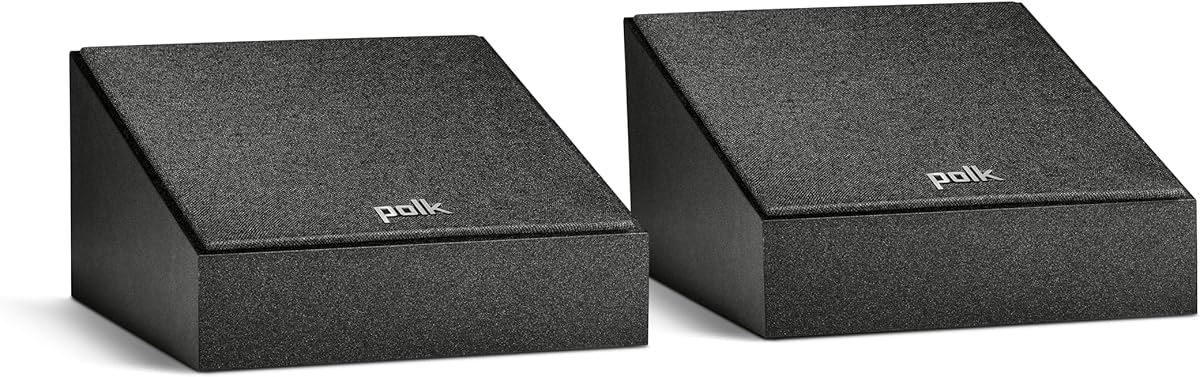
Polk Monitor XT90 modules are the “I already like my towers—now add sky” product. Sold as a pair, they add immersive height elevation for movies, music, and games when parked on Monitor MXT20 bookshelves or MXT60/MXT70 floorstanders—or when keyhole-mounted on the wall as elevation speakers. A four-inch dynamically balanced woofer focuses on special-effects energy that sells multidimensional mixes.
Receiver requirements are non-negotiable: you need an AVR with enough channels and Atmos/DTS:X processing to feed height outputs. Pairing XT90 with random mismatched mains can still work electrically, but Polk’s timbre-matching pitch is why staying inside Monitor XT (towers, bookshelves, MXT30 center, MXT12 sub as suggested) sounds cohesive instead of pieced-together.
Setup is refreshingly physical: place, aim upward per Atmos guidance, connect speaker wire, run room correction. No app gymnastics. For renters who cannot install in-ceilings, toppers remain the least invasive discrete-height path.
Choose XT90 when your Polk bed layer is already solid. Choose Klipsch R-41SA/RP-500SA when your mains are Klipsch or you prefer horn-loaded elevation. Choose a soundbar when you do not own—and do not want—an AVR.
Matching tip: if your current speakers are a mismatched thrift collage, consider whether timbre clash will bother you more than missing Atmos. Sometimes a full matched bar system is the calmer upgrade.
Content tip: enable Atmos on the streaming app and TV/AVR chain. Buying height speakers without a bitstreaming path wastes the investment.
5.1.2 needs height feeds beyond a basic 5-channel receiver. Count amplified channels before you unbox toppers.
Ensure the tower top is level and wide enough. Foam pads can reduce buzz between cabinets on loud LFE scenes.
We may earn a commission at no additional cost to you.

This four-speaker R-41SA set exists for the enthusiast who already decided on a 5.1.4 (or similar) layout and does not want to hunt matching pairs months apart. Two pairs of horn-loaded elevation/surround modules arrive together with magnetic grilles and keyhole mounts, ready to sit atop compatible towers/bookshelves or hang as surrounds/elevation speakers.
One-inch Linear Travel Suspension aluminum tweeters and four-inch spun-copper IMG woofers chase the Reference series efficiency and detail Klipsch fans expect. Black textured wood-grain vinyl keeps cosmetics consistent with many Klipsch floorstanding lines. In the box language highlights the magnetic grilles—small, but finishes matter when modules sit at eye level on towers.
Electrically and acoustically you still need a capable AVR, speaker wire plan, and preferably matched Klipsch bed-layer speakers for cohesive timbre. The bundle is not a soundbar alternative; it is a height-layer shopping shortcut.
Compared with the single-pair R-41SA listing later in this guide, the four-pack is for full front-and-rear height ambitions. Compared with RP-500SA, you trade Premiere-tier drivers for Reference accessibility and quantity.
Choose the four-pack when 5.1.4 is the blueprint. Choose a single pair when you are starting with 5.1.2. Choose Cinema 5.1.4 when you need satellites and a sub included.
Wiring tip: label front-height and rear-height cables at both ends before they disappear behind baseboards.
Two height speakers create a front overhead arc. Four fill front and rear hemispheres—worth it in deeper rooms.
Topper mode for Atmos bounce; wall elevation/surround mode when the switchable/use-case fits your AVR configuration.
We may earn a commission at no additional cost to you.
Sony’s BRAVIA Theater System 6 (HT-S60 class) is the living-room treaty between Atmos marketing and marriage-friendly hardware: a soundbar with three front-firing drivers including a dedicated center, a wireless subwoofer, and rear speakers that put surrounds behind you instead of only bouncing them off side walls. Dolby Atmos and DTS:X support bring streaming cinema formats home without an AVR PhD.
Clear dialogue is the everyday win. Dedicated center energy keeps whispered plots audible when bass-heavy action would otherwise bury speech. Multi Stereo mode can flood the room with the same signal from all speakers when you want party coverage rather than precise cinematic imaging—an honest dual-use feature.
BRAVIA Connect app control and Voice Zoom 3 benefits with compatible BRAVIA TVs reward brand-matched living rooms. Bluetooth streaming covers music nights without switching inputs endlessly. You still should place rears at ear-relevant heights and give the sub boundary space; “wireless” is not “physics optional.”
This system will not duplicate Klipsch 5.1.4 discrete height modules. It will outperform a lonely TV speaker and many 2.0 bars that only virtually invent surrounds.
Choose Theater System 6 when you want rears and a sub without building a rack. Choose Samsung S60D when all-in-one without rears fits better. Choose LG S70TY when an up-firing .1 height channel and LG TV orchestra features matter.
Streaming tip: set the TV/soundbar chain to pass Atmos bitstreams, not collapse everything to stereo PCM, if you want the formats you paid for.
Place rears slightly above ear height and angled in. Hiding them behind curtains kills the Atmos/surround illusion.
Non-Sony TVs still benefit, but menu integration and Voice Zoom perks shine brightest on BRAVIA sets.
We may earn a commission at no additional cost to you.
RP-500SA is the elevation module enthusiasts point to when they want Reference Premiere DNA on top of their towers. Titanium LTS vented tweeters with hybrid Tractrix horns and 5.25-inch cerametallic woofers move more air and detail than smaller Reference R-41SA boxes, which you hear on rain beds, score clusters, and object pans that travel through the height layer.
The switchable crossover is the sleeper feature: configure for Dolby Atmos topper duty or repurpose as surrounds when your system layout changes. Keyhole mounting supports on-wall elevation/surround plans for rooms where tower-top placement is unstable or visually busy. Rated around seventy-five watts output handling in the listing context, they expect a real amplifier behind them.
A 4.8 rating reflects how often these satisfy once the AVR and content pipeline are correct. They will not invent Atmos if your TV downmixes everything to stereo. They will reward 4K streaming and discs that actually carry height objects.
Choose RP-500SA when your bed layer already deserves Premiere toppers. Choose R-41SA when budget or four-module quantity matters more. Choose Polk XT90 for Monitor XT families.
Finish note: ebony Premiere cosmetics are meant to be seen—dust them; fingerprints on dark vinyl photograph worse than you expect on movie night with the lights down.
Level matching: after enabling Atmos mode, re-run calibration so height trims align with LCR. Hot heights fatigue ears faster than hot surrounds.
Use Atmos mode on tower tops aimed at the ceiling; consider surround mode when wall-mounted as side/rear channels per your AVR map.
Timbre continuity is best with Reference Premiere floorstanders, though many mixed Klipsch systems still succeed.
We may earn a commission at no additional cost to you.

TCL’s S55H is the pragmatic Atmos soundbar for people who want cinematic bass and spatial processing without running speaker wire around a couch. A wireless subwoofer handles the rumble while the bar focuses on dialogue and detail; combined marketing power up to about 220 watts positions it above anemic 2.0 lifestyle bars for apartments and medium rooms.
Dolby Atmos and DTS Virtual:X create height and surround impressions from the bar’s drivers and processing rather than from four Klipsch toppers. AI Sonic auto room calibration through the TCL app is the modern equalizer: one-time setup that listens to your space instead of leaving bass nodes untouched. HDMI eARC/ARC is the preferred TV link; optical, Bluetooth, and AUX cover older sets and music.
Physical design stays slim (about 32 inches wide) so it nests under many TVs without blocking IR or cameras. Including an HDMI cable and wall-mount kit reduces the “I still need another trip to the store” failure mode.
Expect honest virtualization: helicopters can feel elevated, but you will not get the discrete rear/height precision of System 6’s rears or Klipsch 5.1.4. For many living rooms, that trade is acceptable.
Choose S55H when a wireless sub is mandatory in a simple Atmos bar. Choose S45H when you lack space for a sub cabinet. Choose Sony System 6 when physical rears are the missing piece.
Neighbor diplomacy: start sub gain low, enable night modes when available, and avoid calibrating at midnight.
Try the sub along the front wall near the bar first, then walk the room during a bass sweep. Corners load louder—sometimes too loud.
Use the eARC HDMI port, enable CEC, and select Atmos-capable output formats in the TV audio menu.
We may earn a commission at no additional cost to you.

S45H is the S55H’s slimmer sibling for rooms that cannot absorb a subwoofer visually or acoustically. Up to about 100 watts of 2.0 output with Dolby Atmos and DTS Virtual:X processing still expands the soundstage beyond TV internals, while AI Sonic calibration through the TCL app keeps dialogue from disappearing into couch cushions.
Connectivity mirrors the richer model—HDMI eARC/ARC first, then optical, Bluetooth, AUX—so older TVs are not stranded. The same ~31.9 × 2.4 × 3.9 inch class footprint keeps the stand tidy. Wall-mount hardware ships in the box for the clean floating-TV look.
Without a dedicated sub, bass relies on the bar’s drivers and room gain. Action fans who crave explosions may yearn for S55H later; dialogue-first streamers and news watchers may never miss the cabinet. Night listening in apartments often favors this restraint.
Choose S45H for compact Atmos-flavored clarity. Choose S55H when bass is half the cinematic thrill. Choose Samsung S60D when you want all-in-one 5.0 processing with smarter TV ecosystem tricks and no separate sub either.
Expectation setting: “Dolby Atmos” on a 2.0 bar is spatial processing plus compatible content—not four ceiling speakers in disguise. Enjoy the upgrade over TV speakers without demanding discrete 5.1.4 behavior.
App tip: run AI Sonic after furniture rearrangements. Moving a couch changes the calibration target more than people think.
Ideal when lease rules or roommates make subwoofer politics complicated.
If you love the bar but miss bass in six months, stepping to S55H or a rear-equipped Sony system is cleaner than stacking random Bluetooth subs.
We may earn a commission at no additional cost to you.

The two-speaker R-41SA listing is the modular twin of the four-pack: same Tractrix horn, LTS aluminum tweeter with Kapton suspension, and spun-copper IMG woofer recipe, sold as a pair for shoppers starting with front heights or needing wall surrounds. Place them on compatible monitors/towers for reflected Atmos height or keyhole-mount them as elevation/surround speakers when that layout fits better.
Fifty watts continuous / one hundred watts peak handling guidance keeps amplifier expectations realistic. Reinforced MDF cabinets and exposed-fastener contemporary styling match modern Reference aesthetics. They take movies and music into a richer vertical space when the processor and content cooperate.
Because they are only a pair, deep theaters chasing front and rear height should consider the four-speaker bundle—or buy two of these pairs deliberately. Timbre matching with other Klipsch Reference pieces remains the happy path.
Choose this pair for 5.1.2 beginnings. Choose the four-module set for a one-cart 5.1.4 height layer. Choose RP-500SA when Premiere performance is the goal.
Injection-molded graphite woofer lightness helps transient punch on effects. Keep grilles on if kids and pets treat tower tops as climbing gyms.
Surround mode thinking: if you wall-mount as surrounds instead of toppers, update your AVR speaker configuration so levels and distances make sense—do not leave the processor thinking they are still ceiling channels.
Front-height pair today, rear-height pair next year is a budgetable path if your AVR already has the channels.
Both are toppers. Klipsch brings horn efficiency; Polk brings Monitor XT family matching. Pick the brand your mains already speak.
We may earn a commission at no additional cost to you.

Samsung’s HW-S60D argues that Atmos convenience should not require a subwoofer box beside the couch. A compact 5.0-channel bar with built-in woofers and wireless Dolby Atmos support aims for surround immersion with minimal furniture negotiation. SpaceFit Sound Pro analyzes the room to optimize response; Adaptive Sound and Active Voice Analyzer (AVA) chase intelligible dialogue even when the dishwasher and HVAC compete.
Q-Symphony is the Samsung-household trick: compatible Samsung TVs and the soundbar play cooperatively so more drivers join the mix. Game Mode Pro syncs with the TV for up-firing and beam-driven gaming immersion. Built-in Alexa and support notes for Chromecast and AirPlay 2 widen music and voice control beyond the movie app.
Wireless Dolby Atmos language promises elevated audio with less cable clutter—still follow Samsung’s connection guidance for your TV generation. All-in-one bass is impressive for the chassis size yet will not equal TCL S55H’s dedicated wireless sub for earthquake demos.
Choose S60D when you want smart features and zero sub cabinets. Choose Sony System 6 when physical rears matter more than Samsung ecosystem tricks. Choose Klipsch modules when discrete height accuracy is the religion.
Voice tip: leave AVA available for news and sports; some cinematic mixes already ride dialogue hard and need less intervention.
Renter win: one bar, one power cord, one HDMI—unpacking to Atmos-flavored TV sound can happen in a single evening.
Q-Symphony and coordinated game modes make this the path of least resistance inside the brand.
Excellent for apartments; dedicated-sub hunters should look at S55H or Sony’s theater system instead.
We may earn a commission at no additional cost to you.
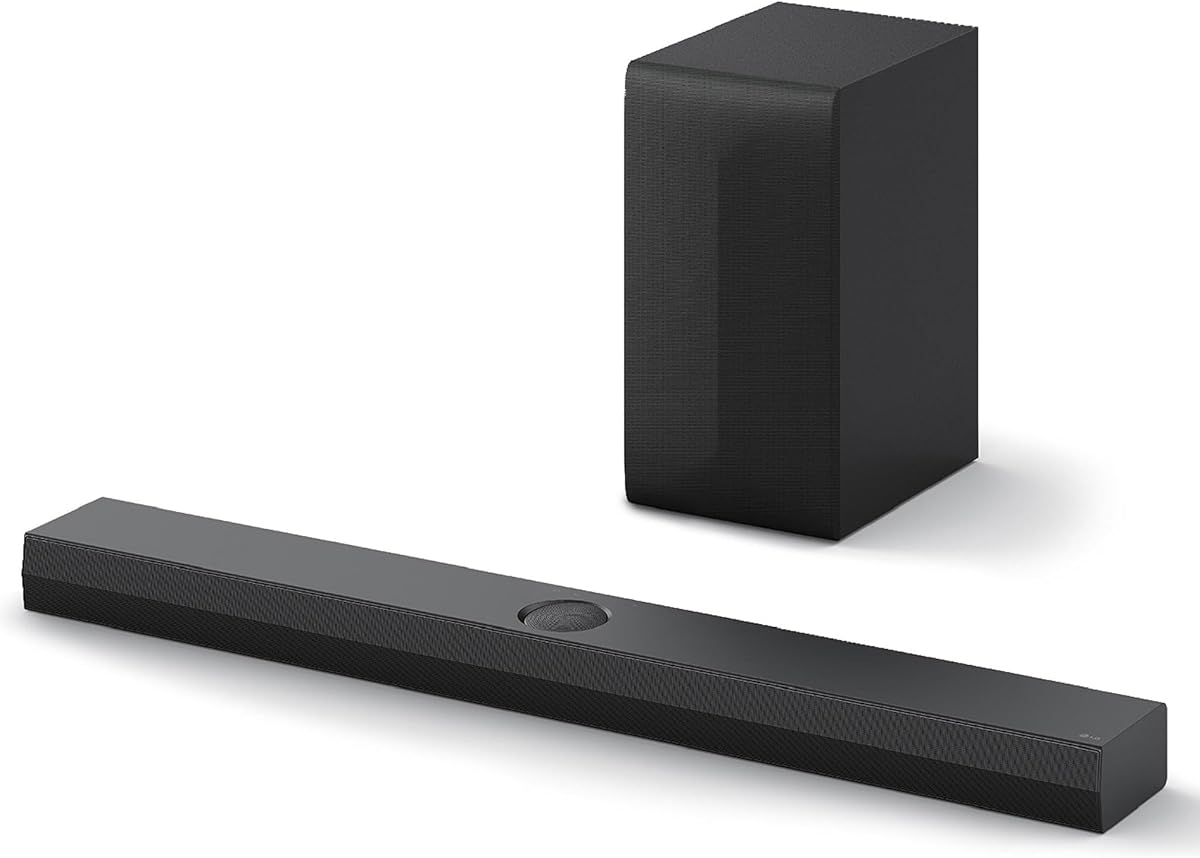
LG’s S70TY leans into a clever Atmos idea: a 3.1.1 layout with an industry-notable up-firing center channel that keeps voices locked while height effects still bloom. A wireless subwoofer supplies the .1 bass, and the bar’s crest design plus metal grille aim to look intentional under LG QNED sets—smaller width/depth nesting is part of the pitch for stand installs, with wall mounting supported too.
WOW Orchestra blends LG TV speakers with the soundbar for a wider stage; WOW Interface lets the TV remote drive soundbar settings on-screen. Those features are delightful in an LG household and merely nice-to-have elsewhere. Surround expansion via wireless 2.0 rear speakers (when added) grows immersion without leaping to a full AVR.
Dolby Atmos support, Immersive 3D Spatial Sound processing, and upmixing of stereo content help mixed libraries. Gamers get passthrough refresh rates up to 120 Hz so the bar does not become the weak link in a console chain.
Compared with Samsung S60D, LG includes a wireless sub and a true .1 height channel count in the name. Compared with Sony System 6, rears are optional expansion rather than standard. Compared with Klipsch packages, installation stays living-room simple.
Choose S70TY when dialogue-first Atmos and LG synergy matter. Add rears when you are ready. Choose discrete Klipsch/Polk modules when you already live in AVR land.
Aesthetic tip: if your TV is not QNED, still measure width—matching cosmetics are a bonus, not a requirement for good sound.
Centers carry most dialogue. Aiming that channel with height-aware design can keep voices clear while Atmos effects still use vertical space.
Live with 3.1.1 until you know you want rear envelopes, then add LG’s wireless surrounds instead of replacing the whole bar.
We may earn a commission at no additional cost to you.
Height modules (Klipsch, Polk) need an Atmos AVR and bed-layer speakers but deliver discrete overhead channels. Soundbars (Sony, Samsung, TCL, LG) trade some discreteness for simple HDMI upgrades. Pick based on whether you enjoy configuring receivers.
5.1.4 means four height channels. 3.1.1 means one height-related channel plus a sub. 2.1 and 2.0 Atmos bars rely heavily on virtualization. Matching your expectations to the digits prevents buyer’s remorse.
Up-firing toppers like reflective, not sky-high cathedral, ceilings. Soundbars forgive more room types but still need correct HDMI eARC settings. Soft, heavily draped rooms swallow height cues.
Sony BRAVIA, Samsung Q-Symphony, LG WOW Orchestra, and TCL AI Sonic each reward staying in-brand. Mixed TV/sound brands still work—just prioritize HDMI eARC fundamentals over logo matching.
Atmos speakers cannot decode what a TV downmixes away. Confirm app/device Atmos output, eARC capability, and AVR format assignment before judging hardware.
Yes for discrete height modules. You need an AV receiver (or processor/amp stack) that supports Dolby Atmos and has amplified height channels. A soundbar path does not use these modules.
It can decode and present Atmos bitstreams using up-firing drivers and processing. It is real enough for many living rooms, but it is not identical to a calibrated 5.1.4 speaker layout with four height channels.
The final number counts height speakers. A 5.1.4 system uses four height channels in addition to five bed channels and one subwoofer channel.
Often physically yes if the top is large and level enough, but timbre matching is better within a family (Polk XT with XT90, Klipsch with Klipsch). Unstable or slanted tops are poor platforms.
Streaming levels, night modes, and missing center-channel emphasis can bury speech. Prefer bars with dedicated centers (Sony System 6) or up-firing center designs (LG S70TY), enable voice modes, and verify the TV is not ducking the bar.
eARC is the most reliable consumer path for Atmos bitstreams from modern smart TVs. Optical connections often cannot carry full Atmos object audio. Upgrade the cable and TV settings before upgrading speakers again.
Yes when you play Atmos music mixes on supported services and devices. Many albums remain stereo; upmixers can expand them with varying tastefulness.
Very. AI Sonic, SpaceFit, and AVR room correction align levels and tame bass. Skipping calibration is a common reason people think Atmos “does nothing.”
Gamers benefit from low-latency HDMI passthrough (LG’s 120Hz note), game modes (Samsung Game Mode Pro), and positional accuracy. Modules on a good AVR remain the precision path; bars win convenience.
Generally no in a clean way—bars are closed systems. Height modules belong with AVR-based speaker arrays. Pick one architecture rather than Frankenstein-wiring both.
The best Dolby Atmos speakers in 2026 are the ones that match your architecture. Klipsch Reference Cinema 5.1.4, RP-500SA, R-41SA pairs/bundles, and Polk XT90 serve discrete height ambitions on real AVRs. Sony BRAVIA Theater System 6, Samsung HW-S60D, TCL’s S55H/S45H, and LG S70TY serve the HDMI-and-done majority with varying mixes of rears, subs, and smart TV ecosystems.
Decide module versus bar first, confirm eARC and content bitstreams second, then calibrate. Do that, and whether your overhead moment comes from a Tractrix topper or an up-firing soundbar channel, Atmos will finally sound like more than a logo on a streaming thumbnail.