Detailed review
Connectivity is where this model pulls ahead of older nano-only mice. You get Bluetooth pairing for tablets and port-light machines, plus a dual-ended 2.4 GHz receiver that plugs into USB-A or USB-C. That combination matters in 2026 because many thin laptops only expose USB-C, and carrying a separate adapter just for a mouse is the kind of friction that makes people stick with a trackpad. Three-device switching keeps a work laptop, a personal Mac or PC, and a tablet in rotation without unplugging anything mid-meeting.
The dual-scroll layout is aimed squarely at productivity. The main wheel handles vertical pages; the side thumb wheel moves horizontally through wide Excel sheets, timeline editors, and design canvases. Forward and back buttons plus a middle click can be remapped through Philips software if you want macros, but even out of the box the horizontal wheel saves wrist travel on multi-monitor desks. Five DPI steps from 800 to 4000 cover precise photo work and fast cursor throws across ultrawide screens.
Battery life is framed around real office hours: a 500mAh cell with auto-sleep is claimed to cover roughly a month of heavy eight-hour days, and a five-minute emergency charge is said to restore about an hour of tracking. That is more honest marketing than vague “months of use” without a duty cycle. The included charging cable is charge-only, so plan to keep the mouse wireless during critical calls rather than treating USB-C as a temporary wired mode.
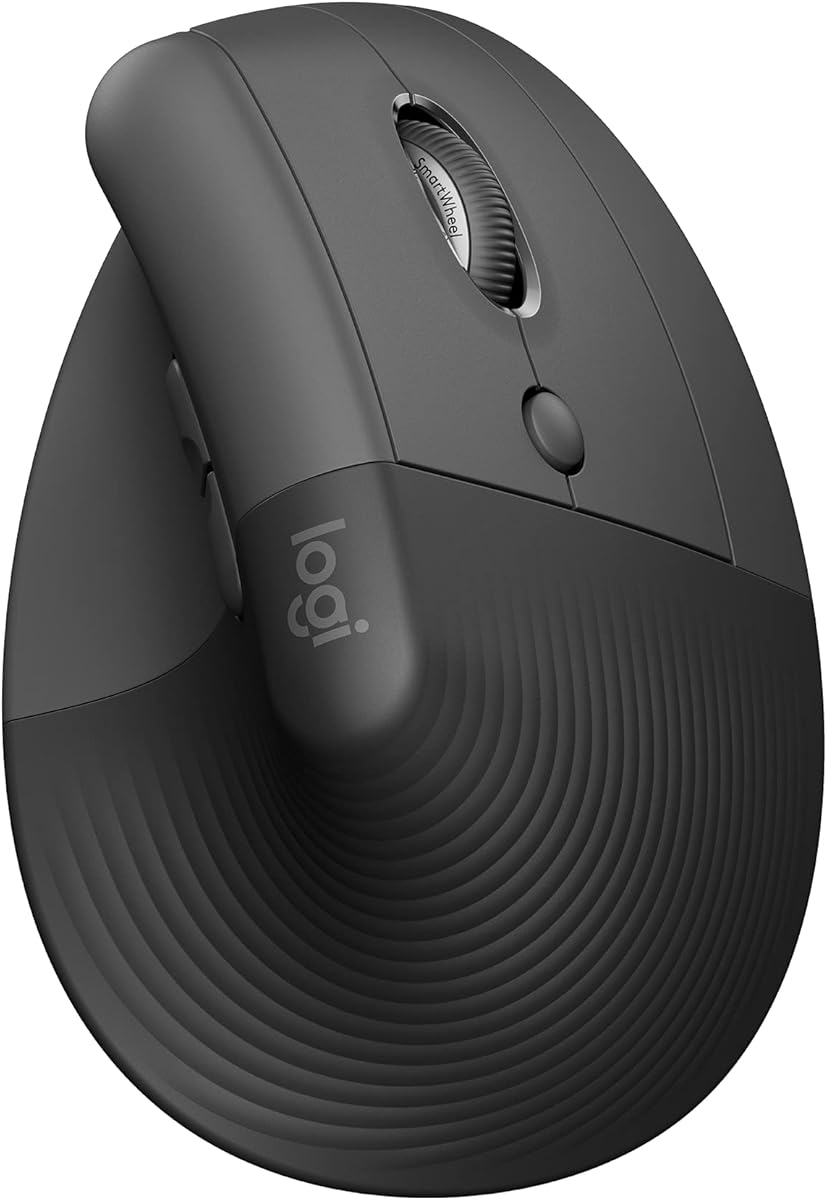
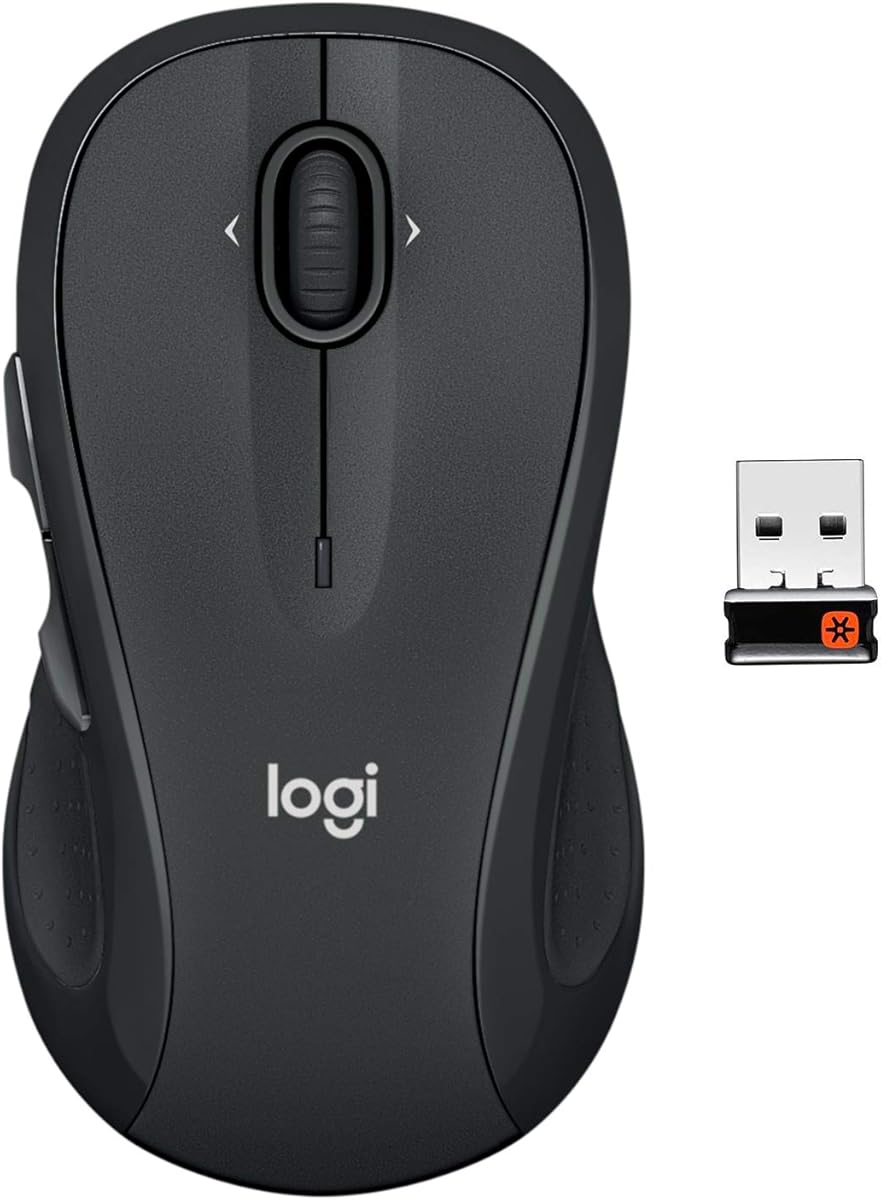
Tracking uses an optical sensor tuned for desk and café tables rather than glass tournament pads. On wood, laminate, and cloth mats it feels stable; if your desk is glossy glass, use a pad. Compared with the Logitech M510, you trade legendary AA longevity for recharge convenience and modern ports. Compared with the Lift, you keep a more conventional palm angle while still getting ergonomic contouring and silence.
Buy this if your shortlist is defined by hybrid work: multiple machines, quiet clicks, and spreadsheet navigation. Skip it if you need a left-hand shell, a vertical posture for wrist rehab, or a sub-80-gram gaming shape. For most professionals in this roundup, it is the easiest recommendation to live with every day.
Who should buy the PHILIPS Ergonomic Mouse
Remote workers and analysts who bounce between a Windows laptop, a Mac, and an iPad will get the most from the three-device setup and dual-ended receiver. Anyone in a quiet office or shared apartment should prioritize the silent switches. If your day is mostly Excel columns, timelines, or wide web apps, the side scroll wheel is the feature you will notice within the first hour.
Setup notes for multi-device switching
Pair Bluetooth hosts first, then seat the USB-A/C receiver in the machine that lacks reliable Bluetooth or needs the lowest-latency dongle link. Practice the device-switch control once so you are not hunting for it during a screenshare. Disable Windows enhance pointer precision if cursor acceleration feels mushy after you set DPI.
Versus the TECKNET tri-mode model
Both mice chase multi-device productivity with side scrolling and silence. The Philips leans harder into a fuller right-handed ergonomic shell and a dual-ended receiver that solves USB-C laptops cleanly. The TECKNET tri-mode option is a strong value alternative when you want three connections and a metal wheel feel without paying for brand packaging.