Expert Review & Guide

Best Wireless Mouse Without Battery 2026: Rechargeable Picks

Searching for the best wireless mouse without battery usually means one of two things: you want a rechargeable mouse with a built-in cell so you never buy AA or AAA packs again, or you want a cordless pointer that lasts so long between power events that batteries stop feeling like a chore. Both goals matter in 2026. Desk setups now jump between USB-C laptops, tablet docks, and home desktops, and nobody wants a dead mouse mid-meeting because a coin-cell surprise hit at the wrong time.

This ReviewConsensus roundup ranks ten wireless mice from our product pack with that power story front and center. We prioritize built-in rechargeable batteries and clear charge feedback, then weigh dual-mode Bluetooth plus 2.4 GHz switching, silent clicks for shared spaces, DPI flexibility for mixed work, and shapes that survive all-day palm or claw grips. Classic Logitech and TECKNET AA models still appear because some buyers truly want swap-in cells with multi-year claims—and those can feel more “set and forget” than a poorly designed rechargeable that dies every few days.

Every product below comes only from the pack. Ratings reflect Amazon listing averages at writing time. We skip dollar prices because promotions move constantly. Use the comparison table to filter connection type and power style, then read the full reviews for hand size notes, Mac side-button caveats, and who should pass.

Our Top Wireless Mice Without Battery Hassle for 2026

As an Amazon Associate we earn from qualifying purchases. We may earn a commission at no additional cost to you.

Wireless Mouse Comparison: Power Style, Connection, and Silent Cues

Scan this table for whether each mouse is rechargeable or long-life disposable-powered, how it connects, and the trait that defines it. Specs intentionally skip prices—open the live listing for the current deal and pack contents.

#ProductSpecificationsScore
1
  • Rechargeable; BT + USB-A dual-device
  • 6 DPI levels up to 4800, silent clicks
  • Best suited to small–medium hands
9.2
2
  • AA long-life power with sleep mode
  • Bluetooth 5.0, quiet clicks, sculpted grip
  • 800 / 1200 / 1600 DPI, six buttons
9.2
3
  • 500mAh rechargeable; BT 5.2 + 2.4G
  • Compact travel shell with silent clicks
  • Colorful LED breathing light accents
8.6
4
  • 2.4 GHz nano USB, ambidextrous shape
  • Up to ~12 months on included AA cell
  • Simple plug-and-play for PC and Mac
9
5
  • Bluetooth 5.0, no USB receiver needed
  • Silent clicks; 1000 / 1200 / 1600 DPI
  • Portable grey shell for Windows and Mac
9
6
  • 2.4 GHz USB-A; up to 24-month battery claim
  • 5 DPI steps to 2600 with side grips
  • Compact purple travel-friendly shell
9
7
  • Plug-and-play 2.4 GHz nano receiver
  • 5 DPI levels up to 4000; six buttons
  • Up to 24-month AA life with low-batt LED
9.2
8
  • Bluetooth multi-device switch for three PCs
  • 6 DPI levels to 4800; silent operation
  • Sized for medium/large hands; 2 AA cells
8.6
9
  • Rechargeable with visual battery display
  • 2.4 GHz USB-A plug-and-play connection
  • 4 DPI levels: 800 / 1200 / 1600 / 2400
9.2
10
  • 400mAh rechargeable; visible battery bar
  • Wider thumb rest; silent main clicks
  • 6 buttons; DPI up to 2400; right-hand focus
8.6

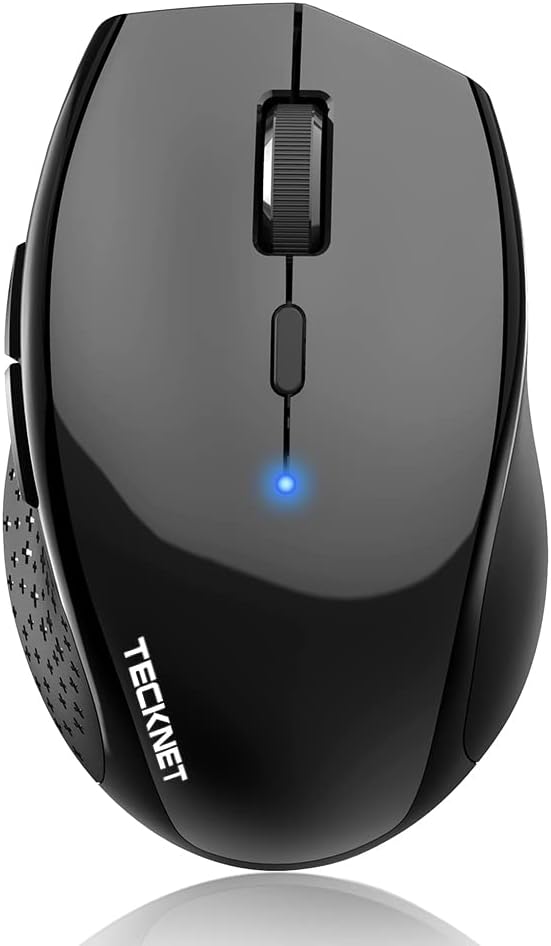
1. TECKNET Rechargeable Dual-Mode - Best Overall Rechargeable Dual-Mode

TECKNET Wireless Mouse Rechargeable Dual-Mode

TECKNET Wireless Mouse Rechargeable Dual-Mode

9.2/10★★★★★

If your search for a wireless mouse without battery really means “stop buying disposable cells,” the TECKNET rechargeable dual-mode model is the pack’s clearest everyday answer. It pairs a built-in rechargeable pack with Bluetooth 5.0/3.0 and a USB-A receiver path, then lets you slide between two paired devices instead of unplugging dongles every time you jump from a work laptop to a home desktop. For hybrid workers, that switching habit matters as much as the charge cable in the box.

  • Rechargeable; Bluetooth + USB-A dual-device
  • Silent clicks; 6 DPI steps to 4800
  • Sized mainly for small to medium hands
Check Price →
✓ Pros
  • Built-in rechargeable battery removes the recurring AA shopping loop for most users
  • True dual-device switching between Bluetooth and USB-A receiver workflows
  • Silent buttons suit open offices, libraries, and late-night apartments
  • Six DPI levels cover careful spreadsheet work through faster browsing
  • Strong listing rating with a long registered support window from the brand
✕ Cons
  • Officially better for small to medium hands; large palms may feel cramped
  • Connection can feel unstable when charge is critically low as a recharge reminder
  • Side buttons are not compatible with macOS according to the listing

Detailed review

TECKNET claims a short 1.5 to 2 hour full charge and roughly three months of use at about two hours of daily operation. Real life will vary with DPI, sleep habits, and how often you leave the mouse awake on a busy desk, but the important editorial point is the power model: you top up from a laptop USB port instead of keeping a drawer of AAs. The listing also notes that the link can get unstable when the battery is nearly empty, which is annoying in the moment yet functions as a blunt “please recharge” signal rather than a silent death mid-presentation.

Tracking flexibility is better than many bargain office mice. Six DPI stages—800, 1200, 1600, 2400, 3200, and 4800—let you slow the cursor for pixel work or speed it up for ultrawide monitors. Silent left and right clicks keep the soundtrack of your desk from becoming a click track for everyone nearby. Compatibility covers Windows, macOS, Chrome OS, and Linux, though macOS users should expect the side buttons to sit unused.

Hand fit is the main honesty check. TECKNET positions the shell for small to medium hands and admits larger hands may still enjoy it if they prefer a compact mouse. If you palm-grip a full-size ergonomic brick today, try the larger TECKNET Bluetooth three-device model later in this list instead of forcing a compact rechargeable into a stretch grip. Travelers and students with smaller bags will appreciate the opposite: less bulk, less battery clutter.

Setup is approachable. Pair Bluetooth on machines that hate dongles, stash the USB-A receiver for older docks, and use the device switch when both are live. No exotic software story is required for basic pointing, which helps on locked-down work PCs. Keep the included charging cable in the same pouch as the mouse so the “rechargeable advantage” does not become “I left the cable at home.”

Compared with Uineer and INPHIC, this TECKNET wins on dual-device versatility and DPI ceiling more than on battery-gauge theater. Compared with AA long-life options like the Logitech M185 or wegear, it wins when you refuse to buy cells at all. It is not a gaming sensor showcase, and it is not ambidextrous in the Logitech M185 sense, but as a rechargeable silent office companion with real multi-device manners, it earns the top badge in this niche.

Buy it when your week involves two computers, quiet spaces, and a desire to charge instead of restock. Pass if you need a left-hand shell, macOS side-button remaps, or a visibly larger palm rest—those needs map cleaner to other pack options below.

Who it fits best

Hybrid workers with a Bluetooth laptop and a USB-A desktop, students in quiet dorms, and anyone replacing a dead disposable-cell mouse who wants the cable-in-the-box lifestyle instead of a battery aisle.

Setup tip for dual-device days

Pair Bluetooth first on the machine you travel with, then reserve the nano receiver for the desk that always stays home. Label the receiver with a tiny piece of tape so it does not vanish inside a backpack pocket.

Versus other rechargeable picks

Choose Uineer if you want a clearer on-device battery display and a simpler single 2.4 GHz story. Choose INPHIC if a wider thumb rest and silent clicks matter more than dual-device switching. Stay here for the best blend of rechargeable power and two-device agility.

Check Price on Amazon →

We may earn a commission at no additional cost to you.

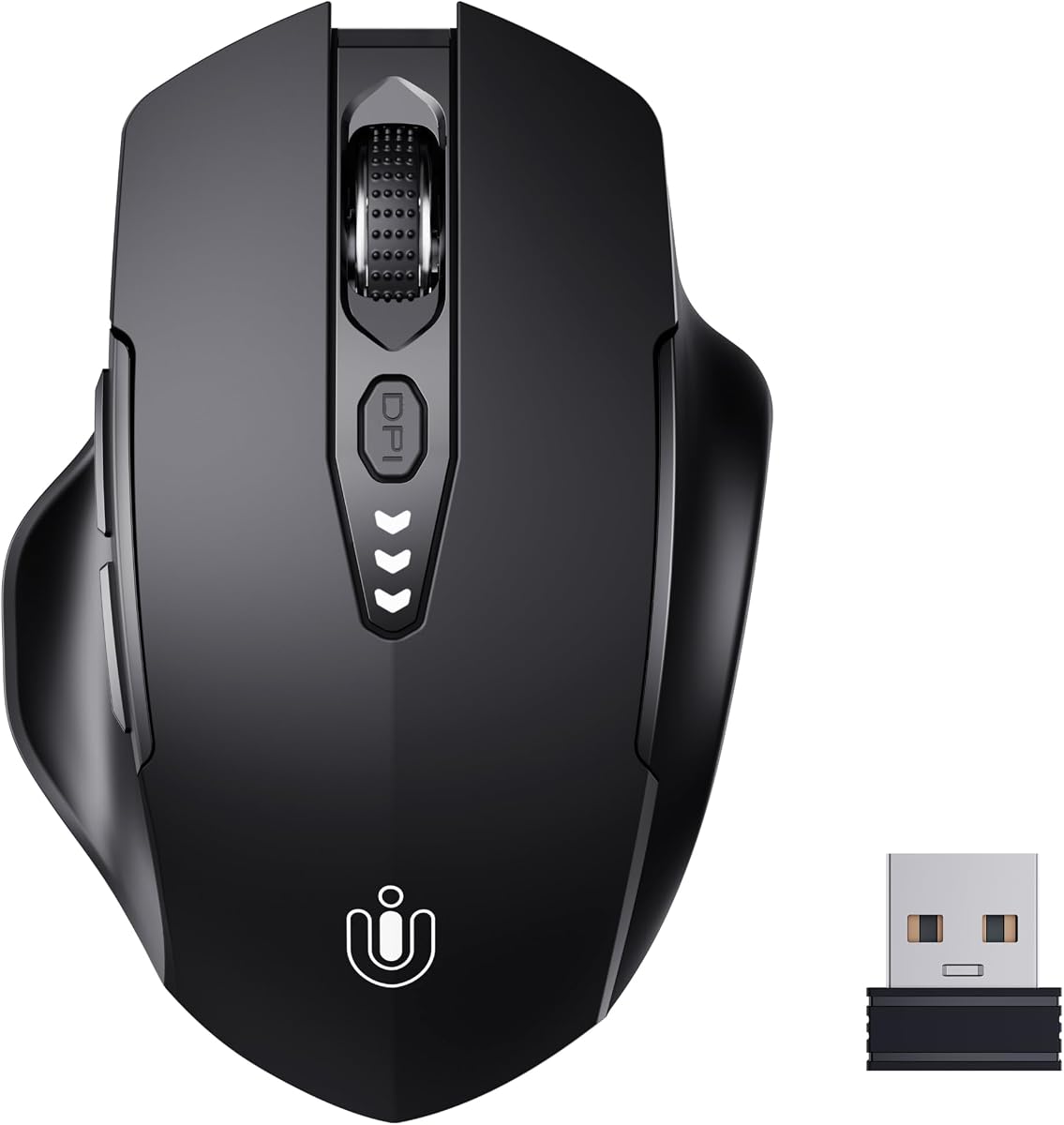
2. Uineer Rechargeable Wireless Mouse - Best Battery Status Display

Uineer Rechargeable Wireless Mouse

Uineer Rechargeable Wireless Mouse

9.2/10★★★★★

The Uineer rechargeable wireless mouse exists for people who have been burned by cordless mice that die without warning. Its headline feature is not a flashy sensor chart—it is a visual battery display that lets you glance at remaining power before a call, class, or rendering wait. Paired with a built-in rechargeable cell, that display turns “wireless mouse without battery drama” into a readable status instead of a guessing game.

  • Rechargeable cell with visual battery display
  • 2.4 GHz USB-A plug-and-play receiver
  • Four DPI steps from 800 to 2400
Check Price →
✓ Pros
  • Battery display reduces the anxiety of sudden wireless shutdowns
  • Rechargeable design matches the without-disposable-battery shopping intent
  • Simple 2.4 GHz plug-and-play avoids Bluetooth pairing friction on older PCs
  • Ergonomic contour aims at longer work sessions without hand fidgeting
  • Four practical DPI levels cover most office and casual browsing needs
✕ Cons
  • Single 2.4 GHz path needs a USB-A port or adapter on modern ultrabooks
  • Fewer DPI steps and device-switching tricks than the top TECKNET dual-mode
  • Not the pick if you specifically need silent-click marketing for shared quiet rooms

Detailed review

Connection is classic 2.4 GHz through a USB-A receiver: plug it in, skip drivers, and work within a typical desktop wireless range. That simplicity is a feature on Windows desktops, older docks, and household PCs where Bluetooth menus feel like busywork. On USB-C-only MacBooks you will want a reliable adapter or hub; plan for that before you assume the dongle will vanish into a port that does not exist.

DPI steps land at 800, 1200, 1600, and 2400. That is enough for documents, browsers, light photo review, and classroom machines. You will not get the 4000–4800 headroom of wegear or the TECKNET dual-mode units, but most people shopping this keyword are solving power and reliability, not esports flicks. The ergonomic shell is marketed for a natural hand fit during work and entertainment, which is the right priority for an office-first rechargeable.

Where Uineer beats fancier dual-mode shells is honesty of power feedback. Many rechargeable mice only blink when empty. A dedicated display encourages topping up during lunch instead of discovering a flat mouse at the worst minute of the day. Where it trails the TECKNET rechargeable is multi-device life: if you constantly hop between a tablet, a work laptop, and a desktop, Bluetooth dual-device switching will feel more elegant than carrying one USB receiver between machines.

Compatibility covers common Windows, Mac, and Linux setups according to the listing, with after-sales language that includes a short refund window and a free replacement period. Treat those policies as listing claims to verify at purchase time, but the presence of a service story is still welcome at this tier. Keep the receiver in the mouse’s storage spot when traveling so the whole kit stays one object.

Editorially, Uineer is the pack’s best answer when battery visibility is the feature you will actually use every week. It is less of a Swiss Army knife than TECKNET’s dual-mode rechargeable and less of a thumb-rest comfort project than INPHIC, yet it nails the core fear behind this search: not knowing when the mouse will quit. If your desk is mostly one PC with USB-A handy, that focus is enough.

Choose Uineer for a rechargeable daily driver with a status display and boring-good 2.4 GHz manners. Look elsewhere if silent clicks, three-device Bluetooth switching, or ambidextrous shape sit higher on your list than a battery gauge.

Best desk scenario

A single primary computer with a free USB-A port, mixed work and streaming, and a user who hates surprise shutdowns more than they need Bluetooth pairing menus.

Power habit that makes it shine

Check the display once in the morning. If it is low, charge during the first meeting or class block. That tiny ritual is the whole point of buying a gauge-equipped rechargeable.

When to pick TECKNET instead

If you regularly use two machines and want Bluetooth plus a receiver without unplugging, the TECKNET dual-mode rechargeable is the better systems thinker even without Uineer’s display emphasis.

Check Price on Amazon →

We may earn a commission at no additional cost to you.

3. INPHIC Rechargeable Silent Mouse - Best Ergonomic Rechargeable Thumb

INPHIC Rechargeable Silent Wireless Mouse

INPHIC Rechargeable Silent Wireless Mouse

8.6/10★★★★☆

INPHIC’s rechargeable silent mouse attacks the same problem as Uineer—visible battery status—then adds a comfort thesis: a wider thumb rest meant to support more of the hand during long days. If disposable batteries annoy you and cheap compact mice make your thumb hover in space, this is the pack’s most intentional ergonomic rechargeable.

  • 400mAh rechargeable with visible battery indicator
  • Wider thumb rest; silent main button clicks
  • Six buttons; four DPI levels up to 2400
Check Price →
✓ Pros
  • Visible battery indicator matches the no-surprise-power shopping goal
  • Broader thumb rest targets comfort during long right-hand office sessions
  • Silent clicks help in libraries, dorms, and open offices
  • Six buttons speed browser and document navigation when the OS supports them
  • Sleep mode after idle time helps the 400mAh cell last through normal weeks
✕ Cons
  • Right-hand oriented design is a poor fit for left-handed users
  • Listing rating sits a notch below the top dual-mode and Uineer picks
  • Bluetooth notes in the listing are more limited on older Windows versions than 2.4 GHz mode

Detailed review

The built-in 400mAh cell is designed to be topped up whenever convenient. INPHIC recommends charging a new unit for about an hour before first use, then relying on idle sleep after roughly five minutes to stretch runtime. A top indicator shows remaining power at a glance, which is the right kind of feedback for anyone who has rage-googled wireless mouse without battery after a sudden dropout.

Silent left and right buttons are the social feature. They keep late-night studying and open-office clicking from becoming a percussion section. Six total buttons, including forward and backward side keys, help on Windows browser workflows; as with many mice in this pack, do not assume Mac will map those side keys cleanly. Four DPI levels—800, 1200, 1600, and 2400—cover standard productivity ranges without overwhelming the DPI button.

Connectivity language on the listing spans 2.4 GHz USB receiver use and Bluetooth 5.0 on supported systems, with caveats that Bluetooth is not aimed at older Windows 7 or XP machines. Practically, treat 2.4 GHz as the compatibility safety net and Bluetooth as a bonus on modern Windows, Android, and Mac setups. Confirm the mode switch behavior on your exact devices after unboxing rather than assuming simultaneous dual-device magic.

Comfort is why INPHIC ranks in the top three despite a slightly lower rating than TECKNET and Uineer. A broader thumb shelf can reduce the pinched feeling some people get from skinny travel mice. That said, it is still a right-hand shell. Left-handed buyers should look at the ambidextrous Logitech M185 instead of hoping a right-hand thumb rest will somehow reverse.

Against Afaartcci’s compact rechargeable, INPHIC feels more like an office tool and less like a novelty travel gadget with breathing LEDs. Against TECKNET dual-mode, it trades some multi-device elegance for thumb support and a visible gauge. Against long-life AA mice, it wins pure “no battery aisle” convenience if you will actually plug it in when the indicator dips.

Buy INPHIC when rechargeable power, a battery bar, silent clicks, and right-hand comfort share the top of your list. Skip it if you need a proven ambidextrous shape, the absolute highest listing rating in the pack, or a dual-device TECKNET-style switcher as your primary workflow.

Comfort checklist

Right-handed palm or relaxed claw users who dislike floating thumbs on slim mice will feel the design intent fastest. If your current mouse already fills the palm perfectly, the wider rest may feel less transformative.

Quiet-space note

Silent main clicks help, but scroll wheels and desk surfaces still make noise. Pair with a soft pad if you are in a truly silent library carrel.

First-charge reminder

Give the mouse its initial charge before judging runtime. Many rechargeable regrets start with unboxing, pairing, and then wondering why a factory-partial cell feels weak on day one.

Check Price on Amazon →

We may earn a commission at no additional cost to you.

4. wegear USB Wireless Mouse - Best Long-Life Plug-and-Play

wegear USB 2.4GHz Wireless Mouse

wegear USB 2.4GHz Wireless Mouse

9.2/10★★★★★

Not every shopper who types wireless mouse without battery wants a lithium pack. Some want a cordless mouse that effectively removes batteries from weekly thinking because one AA lasts toward two years. The wegear 2.4 GHz mouse is that interpretation: plug in the nano receiver, install a quality AA cell, and stop worrying about charge cables.

  • 2.4 GHz nano USB; up to 24-month AA claim
  • Five DPI levels up to 4000; six buttons
  • Sleep mode with low-battery red LED alert
Check Price →
✓ Pros
  • Strong rating with instant USB receiver setup and no driver ritual
  • Up to 4000 DPI gives more speed headroom than many office mice
  • Six buttons including forward/backward for Windows productivity
  • Long AA life claim plus a low-battery LED beats silent death
  • Contoured shell aimed at all-day comfort with high click durability testing
✕ Cons
  • Still uses a disposable AA cell, so it is not a true built-in rechargeable
  • Forward/backward buttons are not recognized on Mac
  • iPad use may require a USB-C adapter for the receiver

Detailed review

Five DPI levels—800, 1200, 1600, 2400, and 4000—make it one of the more flexible non-rechargeable options in the pack. That top end helps on large monitors when you do not want to fling your arm across the desk for every window change. Six buttons add browser navigation on Windows, while Mac users should expect the side keys to stay ornamental.

Power management is thoughtful for an AA design. Sleep after about eight minutes of inactivity, wake on a click, and watch for a red LED when the cell finally fades. That LED is a quieter cousin of Uineer’s battery display: less data, still better than mystery failure. Battery not included means you should budget a good alkaline or lithium AA on day one.

Ergonomics target right-hand contouring for long sessions, and the brand cites multi-million click durability testing. It will not feel like a featherweight gaming shell, and it should not have to. This is an office and general PC mouse with enough DPI and buttons to avoid immediate upgrades for most students and remote workers.

Compatibility spans a long Windows history plus macOS 10.x era machines and typical laptops. The receiver stores under the mouse, which is the correct travel detail. If your only computer is a USB-C iPad ecosystem, confirm adapters before you buy; this is fundamentally a USB-A receiver mouse.

Ranked fourth because it slightly misses the strict rechargeable reading of the keyword, yet it still belongs near the top for people who hate charging rituals more than they hate occasional cell swaps. Versus Logitech M185, wegear offers more DPI and buttons. Versus TECKNET rechargeable, it offers less multi-device polish and no built-in cell.

Pick wegear when you want plug-and-play 2.4 GHz, higher DPI flexibility, and a long AA interval with a low-battery warning. Choose a rechargeable pack mate if your goal is literally never buying another AA.

Who should prefer AA over rechargeable

Travelers who always have spare AAs, households that already buy bulk cells, and users who dislike remembering a mouse-specific charge cable.

Mac caveat

Pointing and scrolling are fine; do not buy wegear specifically for Mac side-button shortcuts. Use keyboard gestures or stick with simpler three-button ambitions on macOS.

Check Price on Amazon →

We may earn a commission at no additional cost to you.

5. WL300 Silent Bluetooth Mouse - Best Silent Bluetooth with

WL300 Silent Bluetooth Wireless Mouse

WL300 Silent Bluetooth Wireless Mouse

9.2/10★★★★★

The WL300 is the pack’s quiet Bluetooth specialist for people who want cordless freedom without a dongle dangling from a MacBook or Chromebook. Bluetooth 5.0 and Microsoft Swift Pair language make the setup story modern, while silent primary clicks and a quiet scroll keep the acoustic footprint low. If your office culture flinches at loud mice, this matters more than another unused DPI tier.

  • Bluetooth 5.0 with quiet click design
  • Sculpted grip; 800 / 1200 / 1600 DPI
  • Long AA runtime with 30-second sleep
Check Price →
✓ Pros
  • Bluetooth pairing avoids occupying a USB port on slim laptops
  • Silent left, right, and scroll interactions help shared quiet spaces
  • Sculpted grip aims at all-day comfort for work and travel
  • Strong rating with six buttons for Windows browsing efficiency
  • Aggressive sleep timing helps stretch a single AA cell
✕ Cons
  • AA battery is not included, so day-one power still means a store run
  • Only three DPI steps versus five or six on several pack rivals
  • Forward/backward buttons are not recognized on Mac

Detailed review

Power is still an AA cell with a long claimed lifespan—listing copy mentions figures in the 18 to 24 month neighborhood depending on the bullet—and a sleep mode after roughly 30 seconds of inactivity. That is a different philosophy from rechargeable top picks: you accept a disposable cell in exchange for months or years between interventions and zero charging cable to lose. For some travelers, that is the more practical reading of without battery hassle.

Ergonomics get real attention with a sculpted grip meant to follow hand contours. It is a full-size oriented tool rather than a tiny travel pebble, which helps during long spreadsheet or ticket-queue days. Three DPI levels—800, 1200, and 1600—are conservative but honest for office work. You will not match wegear’s 4000 DPI ceiling, and you may not need to.

Surface marketing claims tracking on wood, leather, fabric, paper, and resin. As always, glossy glass remains the enemy of most optical sensors; bring a thin pad if your desk is a conference-table mirror. Durability language cites millions of clicks for the main buttons and hundreds of thousands of scroll cycles, which is the right kind of boring reliability talk for work mice.

Compatibility covers modern Windows, macOS, Chrome OS, and Android versions listed on the product page. Side buttons help Windows browser history; Mac users should treat them as non-features. Because there is no USB receiver requirement, this is one of the cleaner options for port-starved ultrabooks—just remember Bluetooth can be finicky on a few enterprise-managed machines.

We rank WL300 just outside the rechargeable podium because the keyword’s strictest buyers want built-in cells. Still, as a silent Bluetooth daily driver with a comfort-first shell and a strong rating, it is an easy shortlist member when you refuse dongles and refuse loud clicks. Pair it against Lenovo WL310 if you want another quiet Bluetooth grey mouse with a different brand ecosystem feel.

Buy WL300 for quiet Bluetooth work on laptops that should stay port-free. Choose TECKNET or INPHIC rechargeable models if eliminating disposable batteries is non-negotiable.

Travel angle

No receiver to lose is a genuine travel win. Pack one spare AA in the laptop sleeve and you have a redundancy story rechargeable mice cannot match without a cable.

Versus Lenovo WL310

Both chase silent Bluetooth productivity. WL300 emphasizes sculpted grip and six-button productivity; Lenovo emphasizes portable brand-simple design with similar DPI steps. Pick based on which shell photos match your hand.

Check Price on Amazon →

We may earn a commission at no additional cost to you.

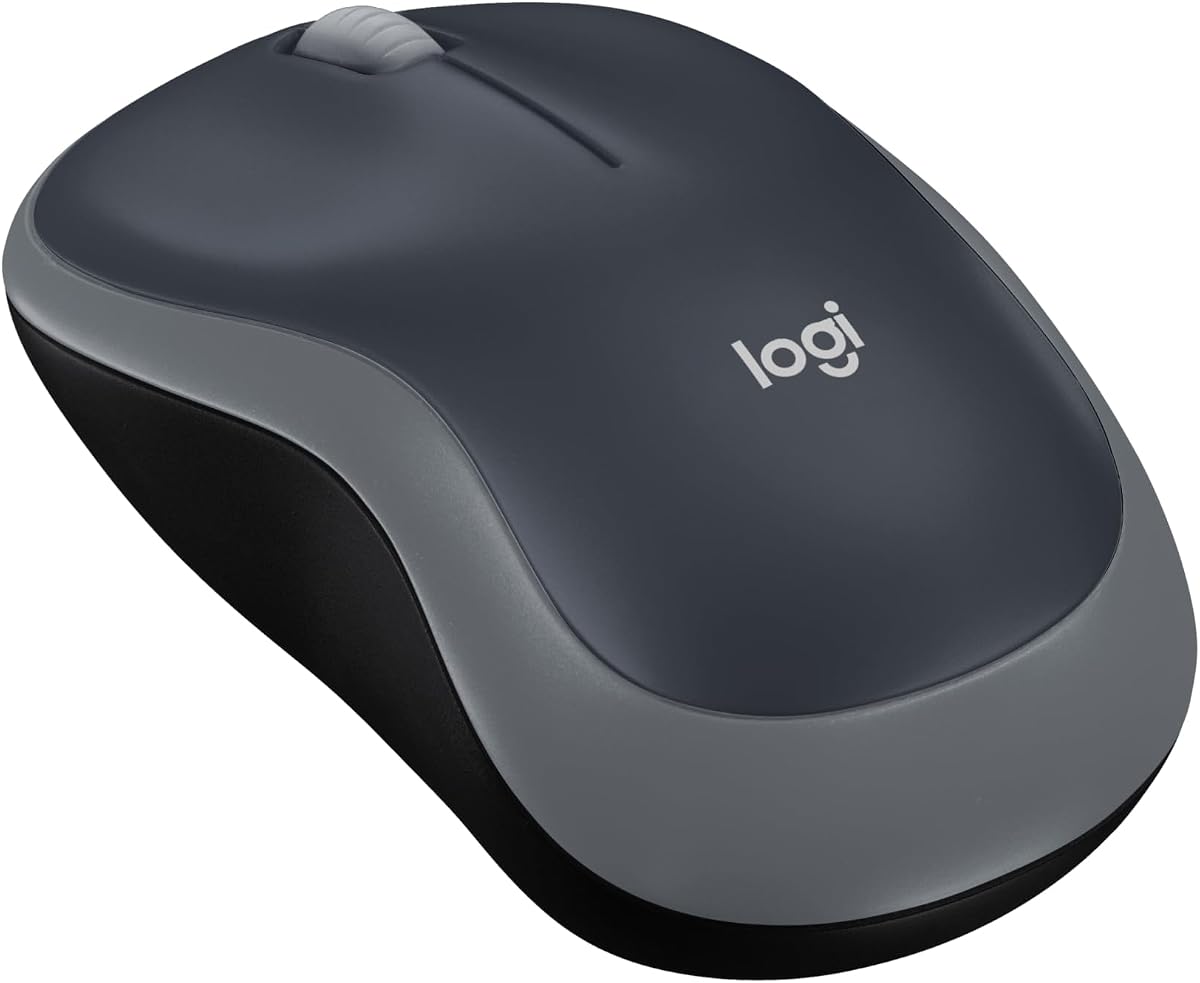
6. Logitech M185 Compact Wireless - Best Classic Ambidextrous Reliable

Logitech M185 Compact Wireless Mouse

Logitech M185 Compact Wireless Mouse

9/10★★★★★

The Logitech M185 is the control-group classic in a rechargeable-heavy roundup. It will not satisfy someone who literally wants zero disposable batteries, yet it remains one of the smartest cordless mice on earth when the real goal is year-long boredom. Logitech includes an AA cell, ships a nano receiver that can live in a USB-A port, and delivers an ambidextrous compact shell that works for either hand.

  • Ambidextrous compact 2.4 GHz nano USB
  • About 12 months of battery life; AA included
  • Plug-and-play for Windows and Mac laptops
Check Price →
✓ Pros
  • True ambidextrous shape helps left-handed and shared-desk users
  • Logitech reliability story with a long-proven office design
  • AA battery included so it works out of the box
  • Tiny nano receiver can stay in a laptop without bulk
  • Simple three-button layout avoids accidental side-button chaos
✕ Cons
  • Not rechargeable; still depends on disposable AA power
  • No silent-click marketing and no high DPI ladder
  • Fewer productivity buttons than six-button rivals in this pack

Detailed review

That ambidextrous point is not marketing fluff in this pack. Most of the rechargeable and silent options lean right-hand. If you are left-handed, share a household PC, or buy equipment for a classroom, M185 suddenly jumps up the shortlist even against flashier dual-mode shells. Comfort is contoured without pretending to be a vertical ergonomic experiment.

Battery life around a year with smart sleep is the traditional Logitech office promise. It is shorter than some 24-month claims elsewhere, but the included cell and mature power tuning make the experience predictable. When the cell finally dies, any drugstore AA brings it back—no proprietary charge cable required. For some IT closets, that is still the winning maintenance model.

Tracking and features stay intentionally modest: optical tracking, line-by-line scroll, and a reliable 2.4 GHz link at typical desktop distances. Logitech cites productivity gains versus trackpads in its materials; editorially, the more grounded claim is that almost anyone adapts in seconds. There is no 4800 DPI theater, and you do not need it for email, LMS portals, and documents.

Sustainability notes on recycled plastic content and a published product carbon footprint figure will matter to some buyers and bore others. More universally useful is the three-year limited hardware warranty language Logitech attaches to the reliability story. In a sea of lesser-known Amazon brands, that support backdrop still carries weight for cautious purchasers.

Ranked mid-pack for this specific keyword because rechargeable models better match the without battery phrasing, yet M185 remains the left-hand and simplicity champion. Compared with TECKNET dual-mode, it is less flexible across device types. Compared with wegear, it is simpler and more ambidextrous. Compared with WL300, it uses a dongle instead of Bluetooth.

Buy the M185 when you want a known-good compact wireless mouse for either hand with minimal features and an included cell. Pass if silent clicks, dual-device Bluetooth, or a built-in rechargeable pack are mandatory.

Ideal buyers

Left-handed users, parents buying a first wireless mouse, offices standardizing on something anyone can use, and anyone replacing a failing laptop trackpad without learning new button layouts.

Receiver discipline

If you unplug the nano receiver, store it in the mouse compartment or a labeled pouch. More M185 “failures” are lost dongles than dead sensors.

Check Price on Amazon →

We may earn a commission at no additional cost to you.

7. Lenovo WL310 Bluetooth Silent - Best Brand-Simple Silent Bluetooth

Lenovo WL310 Bluetooth Silent Mouse

Lenovo WL310 Bluetooth Silent Mouse

9/10★★★★★

The Lenovo WL310 is a quiet, portable Bluetooth mouse for people who want a recognizable brand name and fewer moving parts in the story. Bluetooth 5.0 means no nano receiver to lose, silent clicks mean fewer awkward moments in a library, and a compact grey shell means it disappears into a sleeve pocket. It is not trying to win a DPI arms race.

  • Bluetooth 5.0 with no USB receiver required
  • Silent clicks; 1000 / 1200 / 1600 DPI
  • Portable ergonomic grey shell for travel kits
Check Price →
✓ Pros
  • Lenovo branding reassures buyers already in that laptop ecosystem
  • Silent clicks suit shared offices and late study sessions
  • Bluetooth 5.0 keeps USB ports free on thin laptops
  • Three DPI steps cover everyday precision needs cleanly
  • Compact portable design packs easily beside a Chromebook or MacBook
✕ Cons
  • Less multi-device switching theater than TECKNET’s three-device Bluetooth mouse
  • Not a built-in rechargeable, so it does not fully erase battery purchases
  • Feature set is intentionally simple versus six-button high-DPI rivals

Detailed review

Ergonomic language focuses on reducing wrist strain during extended laptop or desktop use. That is the right ambition for students and professionals who currently overuse trackpads. DPI options at 1000, 1200, and 1600 keep the control predictable for documents, slides, and light design review. If you need 4000 DPI flicks, wegear or TECKNET models fit better.

As a Bluetooth-only style tool, WL310 shines on MacBooks, Chromebooks, and Windows ultrabooks where ports are scarce. Pairing is the whole install. The tradeoff versus 2.4 GHz mice is occasional Bluetooth stack weirdness on locked-down corporate images—test on your exact machine if IT policies are strict.

In the without battery conversation, WL310 is a comfort-and-quiet pick rather than a rechargeable manifesto. Check the listing for the exact power source details on the unit you receive and plan spares accordingly. The editorial value is less about eliminating cells forever and more about eliminating dongles and click noise while you work.

Compared with WL300, Lenovo offers a cleaner brand-simple silhouette and similar silent Bluetooth priorities. Compared with TECKNET’s three-device Bluetooth mouse, it is less of a multi-computer switchboard. Compared with Logitech M185, it frees the USB port and adds silent-click emphasis at the cost of ambidextrous fame.

We place it seventh not because it fails, but because this keyword’s strongest matches are rechargeable units and a couple of longer-feature AA tools. If your cart is already full of Lenovo laptops and you want a matching quiet Bluetooth companion, WL310 can still be the most sensible emotional and practical buy in the pack.

Choose WL310 for portable silent Bluetooth pointing with a familiar brand. Choose TECKNET rechargeable dual-mode if built-in charging and two-device switching matter more than brand matching.

Great companion devices

Windows laptops, MacBooks, Chromebooks, and Lenovo machines where you want the mouse to feel like an accessory, not a second hobby.

Noise-sensitive workplaces

Silent clicks help in consulting bullpens, nurse stations, and exam study rooms. Still use headphones courtesy for keyboard noise—the mouse can only quiet its own part of the desk.

Check Price on Amazon →

We may earn a commission at no additional cost to you.

8. TECKNET 2.4G Compact Purple - Best Compact Colorful Travel

TECKNET 2.4G Ergonomic Compact Mouse

TECKNET 2.4G Ergonomic Compact Mouse

9/10★★★★★

This purple TECKNET compact mouse is the travel-tint alternative to the brand’s rechargeable dual-mode flagship. It runs on 2.4 GHz with a mini USB-A receiver, uses a small shell roughly four inches long, and adds rubberized side grips so a petite mouse does not feel like wet soap under the thumb. If you want color and portability more than a charge cable, start here.

  • Compact 2.4 GHz USB-A with side grips
  • Five DPI levels up to 2600
  • Up to 24-month battery claim; AAA not included
Check Price →
✓ Pros
  • Truly compact footprint for bags and tight dorm desks
  • Rubber side grips improve control on a small shell
  • Five DPI steps to 2600 cover more than basic office speed
  • Long battery-life claim with an on/off switch to protect idle weeks
  • Plug-and-play USB-A receiver stored in the mouse body
✕ Cons
  • AAA batteries are not included
  • USB-A only—no Bluetooth path for portless tablets
  • Side button not compatible with Mac systems

Detailed review

DPI stages at 800, 1200, 1600, 2000, and 2600 give finer steps than many three-level office mice. Glass surfaces are called out as unsupported, which is standard optical honesty—pack a thin pad if your favorite cafe table is a reflective slab. The on/off switch and power-saving design support the up-to-24-months battery narrative when you remember to kill power in a backpack.

Ergonomics are compact-contoured rather than full-size sculpted. Medium hands can make it work; very large palms should look at the TECKNET Bluetooth M/L model instead. The side button helps Windows navigation and, as usual in this pack, is not a Mac feature. Receiver storage in the mouse is mandatory travel hygiene.

In keyword terms, this is another long-life disposable-powered interpretation of without battery anxiety: change cells rarely, carry no charge cable, accept that AAA shopping still exists. It will lose to the rechargeable TECKNET for buyers who want to exit disposable batteries entirely, and it will win for buyers who lose charge cables constantly.

Wide OS compatibility includes Windows, Mac, Chrome OS, and Linux over the USB-A receiver link at extended wireless range claims. That makes it a straightforward secondary mouse for a household desktop or a campus computer cart—so long as USB-A ports or adapters exist.

We rank it below the dual-mode rechargeable TECKNET because the rechargeable unit better matches modern without battery intent, but this compact purple model remains a charming, practical travel 2.4 GHz tool with better DPI granularity than the simplest office sticks.

Buy it for compact bags, USB-A laptops, and a bit of color. Skip it if you need Bluetooth-only pairing or a built-in rechargeable cell.

Bag tip

Store the receiver in the mouse and flip the power switch off before the bag goes into overhead bins. Most “dead mouse” travel tickets are power-left-on stories.

Versus Afaartcci rechargeable travel mouse

Afaartcci wins if you want built-in charging and Bluetooth plus 2.4 GHz in one compact body. This TECKNET wins if you prefer AAA simplicity and side grips without LED theatrics.

Check Price on Amazon →

We may earn a commission at no additional cost to you.

9. TECKNET Bluetooth 3-Device - Best Multi-Device Bluetooth Switcher

TECKNET Bluetooth 3-Device Silent Mouse

TECKNET Bluetooth 3-Device Silent Mouse

8.6/10★★★★☆

TECKNET’s Bluetooth three-device mouse is the workflow tool for people whose problem is not only power—it is constant context switching. Pair up to three devices, then use the switch button to jump among them without repeating the full pairing ritual every time. For a freelancer with a work Windows laptop, a personal Mac, and an Android tablet, that is the feature that changes daily friction.

  • Bluetooth switching across up to three devices
  • Silent clicks; six DPI levels to 4800
  • Medium/large hand focus; dual AA power
Check Price →
✓ Pros
  • Three-device Bluetooth switching is ideal for laptop-plus-tablet-plus-desktop lives
  • Silent operation fits quiet shared environments
  • High DPI ceiling to 4800 for large displays
  • Shell guidance for medium and large hands fills a gap left by compact mice
  • Long AA life claim reduces how often power becomes a project
✕ Cons
  • Uses two AA batteries that are not included
  • Listing rating trails the top rechargeable dual-mode TECKNET
  • Smaller hands may find the M/L orientation less ideal than compact siblings

Detailed review

Silent clicks keep the multi-device productivity from announcing itself to the whole room. Six DPI levels from 800 to 4800 mirror the flexibility of the rechargeable dual-mode sibling, which helps when one of those three devices drives an ultrawide monitor and another is a small laptop panel. Peel the protective film from the feet before first use for the smoothest glide, as the listing reminds buyers.

Power comes from two AA cells with an up-to-two-years typical-use claim. That is excellent longevity, yet it is also the reason this model ranks below rechargeable picks for a without battery search: you still buy cells, you just buy them rarely. If your priority is never visiting the battery aisle, the rechargeable TECKNET remains the better headline match.

Hand size guidance matters. This shell targets medium and large hands, with a note that smaller hands can manage it using a full palm grip. That is the inverse of the compact rechargeable TECKNET’s small-to-medium focus. Measure your comfort honestly; a multi-device dream mouse still fails if it stretches your fingers all day.

Compatibility spans Windows, macOS, Linux, Chrome OS, and Android. Contoured support aims at extended use at home and work. The 36-month registered support window matches other TECKNET entries and is worth registering if you rely on the mouse across billable devices.

Editorially this is a specialist: less universal than the dual-mode rechargeable, more powerful as a Bluetooth switchboard than Lenovo WL310 or WL300. Choose it when three devices and a larger hand are the real constraints. Choose Uineer or INPHIC when a single PC and a rechargeable gauge matter more.

Buy the three-device TECKNET for silent Bluetooth rotation across a multi-machine desk. Pass if you need built-in rechargeable power or a compact ambidextrous shell.

Pairing rhythm that works

Pair device one, switch channels, pair device two, switch again, pair device three. After that, channel hopping should be a one-press habit instead of a settings-menu expedition.

Who should size up to this shell

Palm grippers with medium or large hands who felt cramped on travel mice. If you already love compact shells, stay with the smaller TECKNET rechargeable instead.

Check Price on Amazon →

We may earn a commission at no additional cost to you.

10. Afaartcci Rechargeable Dual-Mode - Best Compact Rechargeable with LED

Afaartcci Rechargeable Dual-Mode Mouse

Afaartcci Rechargeable Dual-Mode Mouse

8.6/10★★★★☆

Afaartcci’s compact rechargeable mouse closes the roundup as a travel-first built-in battery option with dual-mode wireless and silent clicks. The 500mAh cell charges in about two hours for multi-day active use and longer standby, and the shell’s roughly 4.4 by 2.3 by 1.1 inch footprint is easy to lose—in a good way—inside a laptop sleeve. If your without battery search is really a without AA search for commuting, this shape makes sense.

  • 500mAh rechargeable; BT 5.2 + 2.4G receiver
  • Compact portable shell; silent click design
  • Colorful LED breathing light accents
Check Price →
✓ Pros
  • Built-in 500mAh rechargeable cell matches true no-disposable-battery intent
  • Bluetooth 5.2 and 2.4 GHz dual-mode cover mixed device ecosystems
  • Compact size suits travel kits and smaller hands
  • Silent clicks help in quiet shared spaces
  • LED lighting adds personality for users who want a less boring office tool
✕ Cons
  • Cannot use Bluetooth and 2.4 GHz modes simultaneously
  • Runtime claims are shorter-feel than multi-month TECKNET marketing
  • LED lights are a pro for some buyers and a distraction for others

Detailed review

Dual-mode means Bluetooth 5.2/3.0 on one side and a 2.4 GHz USB receiver on the other, with an important limitation: you cannot run both modes at once. That is still useful—pair Bluetooth to a tablet or MacBook, then flip to the receiver for a Windows desktop—but it is not the same elegant two-device simultaneous switching story as the top TECKNET. The receiver stores in the mouse, which you should verify every time you pack.

Silent click technology keeps the compact body office-friendly, while seven colorful LED breathing modes exist for users who want a bit of desk personality. If you work in a distraction-sensitive environment or photograph a minimalist setup, those lights may be a con; if you like a playful secondary mouse, they are free joy. Either way, they are not why you should buy it—the rechargeable dual-mode core is.

Compatibility claims cover laptops, PCs, tablets, and phones across Android, Windows, and Mac. That broad accessory ambition fits Apple-heavy households that still keep a Windows machine in the corner. Range around thirty-three feet is standard 2.4 GHz marketing; walls and interference still win in the real world, so treat it as a room-scale tool.

Why tenth instead of top three? The listing rating sits lower, simultaneous dual-device behavior is more limited, and runtime messaging feels less month-spanning than TECKNET’s rechargeable flagship. The LED focus can also make serious office buyers bounce even when the fundamentals are fine. Still, as a compact rechargeable with silent clicks, it earns a fair place for students and travelers who want built-in power in a tiny chassis.

Compared with INPHIC, Afaartcci is smaller and flashier, with less emphasis on a wide thumb rest. Compared with Uineer, it adds Bluetooth flexibility but less battery-display clarity. Compared with the TECKNET dual-mode rechargeable, it is the more portable, more playful, slightly less polished alternative.

Buy Afaartcci when compact rechargeable dual-mode travel gear matters and you either like LEDs or can ignore them. Choose the top TECKNET if dual-device switching quality and longer-feel rechargeable endurance matter more than pocket size.

Mode switching reality

Pick Bluetooth or 2.4 GHz for the session you are in. Do not expect both channels to stay hot for instant two-PC hopping the way some higher-ranked switchers advertise.

When the LED is worth it

Streaming desks, teen setups, and dark rooms where a little motion light helps you find the mouse. For clinical or executive spaces, prefer Uineer or TECKNET’s quieter aesthetic.

Check Price on Amazon →

We may earn a commission at no additional cost to you.

Best Wireless Mouse Without Battery 2026: Rechargeable Picks

How to Choose a Wireless Mouse Without Battery Hassle in 2026

Decide what “without battery” means for you

Shoppers use the same phrase for two different jobs. The strict job is a rechargeable mouse with a built-in cell—TECKNET dual-mode, Uineer, INPHIC, and Afaartcci in this pack. The practical job is a mouse that removes battery anxiety through multi-month or multi-year AA/AAA life—wegear, WL300, Logitech M185, TECKNET compact, and the three-device TECKNET. Neither reading is wrong, but mixing them up creates regret.

If you hate owning charge cables, long-life AA can feel freer than a rechargeable you forget to plug in. If you hate buying cells and generating waste, rechargeable is the cleaner match. Write down which annoyance is worse before you fall for DPI numbers.

Bluetooth, 2.4 GHz, or dual-mode

Bluetooth keeps ports free and shines on MacBooks, Chromebooks, and tablets—see WL300, Lenovo WL310, and TECKNET’s three-device switcher. Classic 2.4 GHz nano USB is still the most foolproof path on Windows desktops—Logitech M185, wegear, Uineer, and the purple TECKNET live here. Dual-mode designs try to give you both, with varying rules about simultaneous connections.

If you hop between two machines daily, prioritize explicit dual-device or three-device switching. If you live on one PC, a single solid 2.4 GHz link with a battery display may make you happier than a complicated switcher you never use.

Silent clicks, hand size, and button expectations

Silent mice matter in libraries, open offices, and shared bedrooms. Several pack options advertise quiet primary clicks; scroll wheels still make some sound. Hand size notes in TECKNET listings are unusually honest—compact rechargeable for smaller hands, three-device Bluetooth for medium and large. Logitech M185 remains the ambidextrous escape hatch.

Side buttons are productivity candy on Windows and often useless on macOS in this pack. Do not pay mental energy for forward/backward keys if you live in Apple’s gesture world. Six-button layouts help browser-heavy Windows work; simple three-button layouts reduce accidental presses for kids and shared PCs.

DPI: enough versus bragging rights

Most office and school work is comfortable between 800 and 1600 DPI. Higher ceilings to 2400, 2600, 4000, or 4800 help on large monitors or for users who like faster cursor response without huge arm motions. They do not magically improve accuracy if your pad, posture, or pointer settings are messy.

Turn off Windows enhance pointer precision for consistent movement, match DPI to monitor size, and stop chasing the biggest number once the cursor feels controllable. Sensor consistency on your actual desk surface beats a marketing maximum you never enable.

Charge feedback and maintenance habits

Rechargeable mice become trustworthy when they tell you about power. Uineer and INPHIC lead with visible indicators; TECKNET’s low-battery instability note is a harsher feedback style. AA mice with low-battery LEDs, like wegear, deserve credit for the same honesty.

Store nano receivers in the mouse, keep one charge cable or spare AA in the laptop bag, and clean the sensor window when tracking stutters. Those tiny habits determine whether any cordless mouse feels “without battery drama” six months later.

What a good pick should still include

Frequently Asked Questions

01

What does “wireless mouse without battery” usually mean when shopping?

In practice it usually means a rechargeable wireless mouse with a built-in cell so you are not buying AA or AAA packs. Some shoppers also use the phrase for cordless mice with such long battery life that power stops feeling like a weekly chore. This roundup covers both interpretations: true rechargeable models like TECKNET, Uineer, INPHIC, and Afaartcci, plus long-life AA or AAA options like wegear, WL300, Logitech M185, and the non-rechargeable TECKNET models. Decide which annoyance you want to eliminate—cell shopping or charging—before you buy.

02

Which mouse is the best overall in this roundup?

The TECKNET rechargeable dual-mode mouse is the best overall match for most people who want to escape disposable batteries without giving up multi-device life. It combines a built-in rechargeable pack, Bluetooth plus USB-A workflows, silent clicks, and a wide DPI range. If your single biggest fear is not knowing when power will die, Uineer’s battery display is the sharper specialist. If comfort and a wider thumb rest matter most, INPHIC is the better ergonomic rechargeable bet.

03

Are rechargeable wireless mice better than AA mice?

They are better when you hate buying cells, want less waste, and will actually recharge when indicators drop. AA mice can be better when you already keep spare alkaline cells, travel without wanting a proprietary cable, or need multi-year intervals between interventions. A neglected rechargeable that dies every week feels worse than a boring Logitech M185 that you forget about for months. Match the maintenance style to your habits, not to the trendiest marketing bullet.

04

Do I need Bluetooth if my laptop still has USB-A?

Not necessarily. A quality 2.4 GHz nano receiver is often more stable on Windows desktops and simpler for guests to understand. Bluetooth becomes valuable when ports are scarce, when you use tablets, or when you refuse to risk losing a dongle. Dual-mode mice are ideal when your life includes both kinds of machines. If you only own one USB-A desktop, Uineer or wegear can be enough without Bluetooth complexity.

05

Why do so many mice say side buttons fail on Mac?

Many budget and mid-tier mice send Windows-oriented back/forward commands that macOS does not map the same way without extra tools. Listings in this pack repeatedly warn that side buttons are not recognized on Mac. You can still use the mice for pointing and scrolling on Apple machines; just do not choose a six-button model solely for browser shortcuts if you live in macOS. Gestures, keyboard shortcuts, or better-supported Apple-friendly peripherals are cleaner paths for that specific itch.

06

How important is a battery display on a rechargeable mouse?

More important than most spec sheets admit. The classic failure mode of cordless mice is not mediocre DPI—it is dying during a meeting. Uineer and INPHIC put remaining power where you can see it, which encourages topping up on your schedule. Models without gauges can still work if you recharge on a routine, but humans are bad at invisible maintenance. If you are power-anxious, prioritize visible status even over a slightly higher DPI ceiling.

07

What DPI should I use for office work?

Start around 800 to 1600 DPI on a typical 1080p or 1440p laptop setup and adjust until small targets feel easy without overshooting. Jump higher if you use a large monitor and dislike big arm movements. The 4000 and 4800 options in this pack are headroom, not requirements. Disable enhance pointer precision in Windows, keep your pad consistent, and fine-tune in-app sensitivity only after the mouse DPI feels stable.

08

Which option is best for left-handed users?

The Logitech M185 is the clearest ambidextrous pick in the pack. Most of the sculpted rechargeable and silent models assume a right-hand thumb rest and left-side buttons. Symmetrical marketing language is not the same as true ambidextrous comfort, so left-handed buyers should treat right-hand ergonomic shells as risky. If M185 feels too simple, look carefully at button photos on any alternative before committing.

09

Can these mice replace a laptop trackpad for travel?

Yes, and that is one of the best reasons to own any mouse in this list. Compact rechargeable options like Afaartcci and the TECKNET dual-mode unit pack easily, while Bluetooth models avoid occupying your only USB-C hub port. Turn the mouse off or let sleep modes work in your bag, and keep the receiver or cable in the same pouch. For airplane tray tables, smaller shells win; for hotel desks, comfort shells like WL300 or INPHIC feel better for longer sessions.

10

Should I buy a silent mouse for a home office?

If you share walls with sleepers, students, or video-call colleagues who sit nearby, yes—silent primary clicks reduce household friction. If you work alone and like crisp tactile feedback, standard clicks are fine. Remember that keyboards and headset bumps often make more noise than mice. A silent mouse is a courtesy tool, not a complete acoustic remodel. Pair it with reasonable typing habits and you will get the social benefit buyers expect.

Conclusion

The best wireless mouse without battery hassle in 2026 depends on whether you want to stop buying cells or stop thinking about power altogether. For most rechargeable shoppers, the TECKNET dual-mode silent mouse is the strongest all-rounder: charge instead of restock, switch between two devices, and keep clicks quiet. Uineer is the clearest pick when a battery display is the feature that will change your week, and INPHIC is the comfort-minded rechargeable when a wider thumb rest matters.

If you prefer long-life disposable cells over charging rituals, wegear’s high-DPI plug-and-play mouse and the silent Bluetooth WL300 are the practical heroes, while Logitech’s M185 remains the ambidextrous classic with an included AA. Larger hands and three-computer households should look hard at TECKNET’s Bluetooth multi-device model before settling for a compact travel shell.

Filter with the comparison table, then read the two reviews that match your power philosophy and hand size. Ignore price noise and DPI bragging until connection type and maintenance style make sense. When those fundamentals line up, a cordless mouse stops being a battery problem and becomes the boring, reliable tool your desk has been missing.