Understand What Noise Cancelling Means at This Price
Below thirty dollars, most listings use noise language loosely. ENC (environmental noise cancellation) cleans the microphone signal so callers hear you more clearly—it does not silence the train around you. Passive isolation comes from silicone tips sealing your ear canal. True active ANC, like on the GNMN V7 in this pack, uses microphones and inverse sound waves to reduce external noise actively. Sony WF-C510 offers ambient sound awareness, not ANC. If commute quiet matters, prioritize GNMN. If you mostly need clear Zoom calls, hybrid ENC on S66 or beamforming mics on A10 plus a good seal is enough.
Transparent or ambient modes appear on GNMN and Sony here. Treat vague phrases like noise cancelling mic as call processing unless the listing also mentions ANC modes you can toggle with decibel reduction figures.
Battery Claims: Case Math and LED Honesty
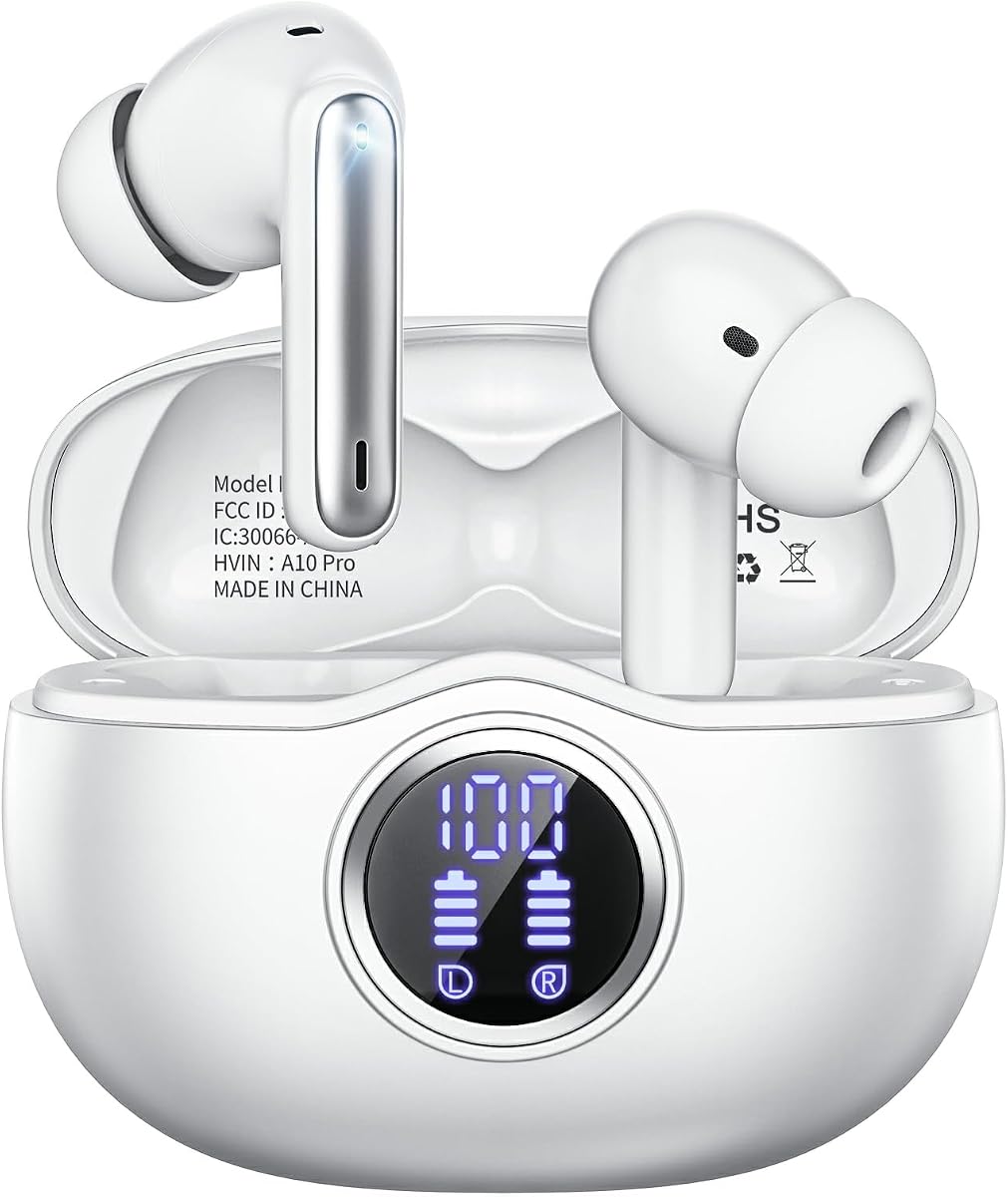
Manufacturers add earbud hours to case recharges and print a big total. A pair advertising ninety-six hours means eight hours per charge multiplied across many case top-ups—not ninety-six hours continuous on one charge. LED displays showing percentage for each bud and the case, like A10, S66, i17, Nequga, GNMN, and LEEMC, help you plan gym sessions without surprise dropouts.
Sony caps at twenty-two hours intentionally for compact case design—honest but shortest here. KTGEE at forty hours and A90 at thirty-six hours still cover workweeks if you charge twice weekly. Fast-charge promises matter when you forget overnight plugging.
Fit, Waterproof Ratings, and Workout Security
IPX4 on Sony handles sweat and splashes. IPX7 and IP7 ratings in this pack mean short submersion survival marketing—not swimming laps. Earhooks on A10, GNMN, and LEEMC reduce drop risk during burpees; stemless buds like Lanteso and KTGEE feel lighter for desk work. Try all included tip sizes: bass and isolation change dramatically with seal quality.
Semi-in-ear designs on KTGEE and Nequga reduce canal pressure but leak more ambient noise. Physical buttons on LEEMC and Sony avoid touch misfires; learn tap patterns on i17 and S66 before running.
Sound Quality Realism Under Thirty
Driver size hints at bass potential—GNMN at sixteen millimeters, Nequga at fourteen point five, A90 at fourteen point two, S66 graphene at thirteen point four, A10 at thirteen—but tuning matters more. Sony DSEE uplifts compressed streams with brand polish. Generic HiFi labels describe balanced consumer tuning, not studio reference.
Codec support tops out at AAC and SBC for every product here—fine for Spotify and YouTube, not for lossless audiophile libraries. Latency claims on KTGEE and A10 suggest acceptable lip sync for casual mobile gaming, not competitive esports.