Expert Review & Guide

Best UHD Monitors in 2026: 4K IPS Panels for Work,

UHD monitors—3840×2160 resolution, often called 4K in marketing—sit at the sweet spot where text stays crisp, HDR content actually has pixels to work with, and modern GPUs can drive 60Hz without melting your power supply. Unlike the early 4K wave when panels cost a fortune and HDMI could barely carry the signal, today's UHD lineup spans premium LG UltraFine IPS screens with 95% DCI-P3 coverage, Samsung ViewFinity productivity panels with TÜV eye comfort, and value entries from Sceptre and Philips that prove you do not need a flagship GPU to justify eight million pixels on your desk.

This guide covers every product in our best-uhd-monitors pack: ten current models from LG, Samsung, Sceptre, and Philips, ranging from 27-inch precision panels to 32-inch living-room-adjacent canvases and one smart monitor that doubles as a streaming hub. We rank them on real-world UHD strengths—IPS color consistency, HDR10 and DisplayHDR 400 behavior, USB-C power delivery for laptop docks, ergonomic stands, and the honest limits of 60Hz refresh when you also game. LG dominates the list with UltraFine variants that share DCI-P3 tuning and gaming helpers like Dynamic Action Sync; Samsung brings ViewFinity productivity polish and the M8 smart hybrid; Sceptre and Philips fill budget and warranty niches.

Every recommendation uses verified pack ASINs and listing data—no invented models—and we omit dollar figures because Amazon pricing shifts weekly. Affiliate URLs retain our standard tag. Start with the three top picks for a fast shortlist, scan the comparison table for size and connectivity, then read the full reviews to match panel size, cable strategy, and HDR expectations to how your desk actually runs.

Top UHD Monitor Picks for 2026

Best Overall UHD Monitor

Samsung 32" ViewFinity S7 (S70H)

★★★★★9.4/10
Samsung 32" ViewFinity S7 (S70H)
  • 32-inch 4K UHD with HDR10 and 178° wide viewing angles for consistent brightness
  • Samsung Display Manager for split screen, KVM, PIP/PBP, and calibration tools
  • TÜV-certified Eye Saver Mode reduces blue light and flicker during long sessions
Check Price →
Best 27-Inch Color & HDR

LG 27UP650K-W 27-inch UltraFine 4K

★★★★★9.2/10
LG 27UP650K-W 27-inch UltraFine 4K
  • 27-inch IPS 4K with up to 95% DCI-P3 and VESA DisplayHDR 400 certification
  • Height, tilt, and pivot ergonomic stand plus LG Switch app multitasking layouts
  • Dynamic Action Sync and Black Stabilizer for responsive casual gaming
Check Price →
Best One-Cable USB-C Desk

LG 27UP850K-W 27-inch UltraFine 4K

★★★★★9/10
LG 27UP850K-W 27-inch UltraFine 4K
  • USB Type-C with 90W power delivery, dual HDMI, DisplayPort, and dual USB 3.0
  • 95% DCI-P3 IPS panel with DisplayHDR 400 and built-in MaxxAudio speakers
  • Full ergonomic stand with Switch app screen splitting up to six sections
Check Price →

As an Amazon Associate we earn from qualifying purchases. We may earn a commission at no additional cost to you.

UHD Monitor Comparison: Size, HDR, and Connectivity

All ten pack monitors share 3840×2160 UHD resolution but diverge on size, color gamut, USB-C power delivery, and smart features. Use this table to filter by the trait that matters most before diving into individual reviews—specs focus on panel behavior and ports, not fluctuating street pricing.

#ProductSpecificationsScore
1
  • 27" 3840×2160 IPS, 95% DCI-P3, DisplayHDR 400
  • 60Hz, 5ms, HDMI + DisplayPort
  • Height/tilt/pivot stand, Switch app, Reader Mode
9.2
2
  • 27" 3840×2160 IPS, 90% DCI-P3, HDR10
  • 1000:1 contrast, borderless design
  • Tilt stand, OnScreen Control, HDMI + DisplayPort
8.8
3
  • 32" 3840×2160, 90% DCI-P3, HDR10
  • Built-in MaxxAudio stereo speakers
  • Dual HDMI + DisplayPort, tilt stand
9
4
  • 32" 3840×2160, 90% DCI-P3, HDR10, 60Hz
  • Height/tilt/pivot ergonomic stand
  • Dynamic Action Sync, Black Stabilizer, Switch app
9
5
  • 27" 3840×2160 IPS, 95% DCI-P3, DisplayHDR 400
  • USB-C 90W PD, dual HDMI, DP, dual USB 3.0
  • Built-in speakers, full ergonomic stand
9
6
  • 32" 3840×2160, HDR10, 178° viewing angle
  • Samsung Display Manager: split screen, KVM, PIP/PBP
  • HDMI + DisplayPort, TÜV Eye Saver Mode
9.4
7
  • 32" 3840×2160 smart monitor with TV apps
  • Samsung Vision AI, Gaming Hub, Knox security
  • USB-C, HDMI, USB-A connectivity
8.6
8
  • 27" 3840×2160 IPS, 100% sRGB
  • Up to 70+Hz via DisplayPort
  • HDMI + DisplayPort, built-in speakers
8.4
9
  • 27" 3840×2160 IPS, HDR10
  • Adaptive-Sync, LowBlue, flicker-free
  • HDMI 2.0 + DisplayPort 1.4, VESA mount
8.6
10
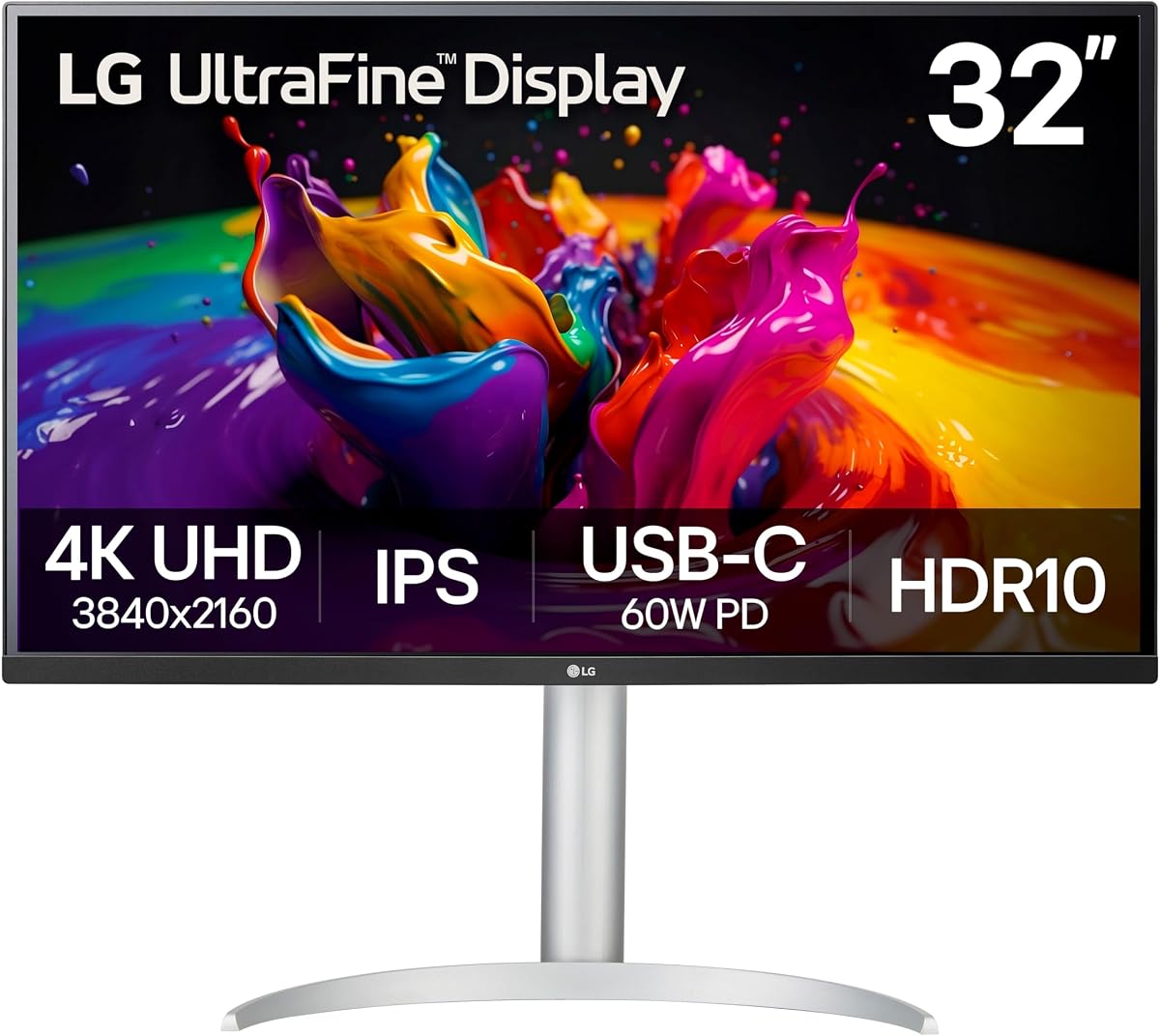
  • 32" 3840×2160 IPS, 95% DCI-P3, HDR10
  • USB-C 60W PD, built-in speakers
  • Height/tilt/pivot stand, gaming features
8.8

1. LG 27UP650K-W 27-inch UltraFine 4K - Best 27-Inch Color

LG 27UP650K-W 27-inch UltraFine 4K

LG 27UP650K-W 27-inch UltraFine 4K

9.2/10★★★★★

The LG 27UP650K-W is the 27-inch UltraFine that nails color accuracy and HDR without forcing you into USB-C docking territory. Its IPS panel covers up to 95% of the DCI-P3 gamut—the color space Hollywood grades in—which means YouTube HDR demos, Lightroom exports, and even saturated game worlds look more lifelike than on panels stuck at 100% sRGB. VESA DisplayHDR 400 certification is not cinema-grade HDR, but it guarantees enough peak brightness and tone mapping behavior that HDR10 content looks clearly better than SDR on the same monitor, especially in highlights like sun glints and lamp bloom.

  • 27" 3840×2160 IPS, 95% DCI-P3, DisplayHDR 400
  • 60Hz, 5ms, HDMI + DisplayPort
  • Height/tilt/pivot stand, Switch app
Check Price →
✓ Pros
  • 95% DCI-P3 coverage delivers noticeably richer reds and greens than generic sRGB 4K panels
  • DisplayHDR 400 certification provides meaningful brightness headroom for HDR10 content
  • Full ergonomic stand with height, tilt, and pivot beats fixed-neck budget 27-inch rivals
  • LG Switch app splits the screen into up to six sections for multitasking without third-party tools
  • Dynamic Action Sync and Black Stabilizer add genuine responsiveness for casual gaming sessions
✕ Cons
  • No USB-C power delivery—laptop users need a separate dock or second cable for charging
  • 60Hz refresh is fine for productivity but competitive gamers will want higher refresh elsewhere
  • White chassis shows dust and cable clutter more than black office panels

Detailed review

At 27 inches and 3840×2160, pixel density lands around 163 PPI—sharp enough that macOS at default scaling and Windows at 150% produce clean text without the fuzzy fractional scaling that plagued early 4K adoption. The 60Hz refresh and 5ms response spec target productivity, streaming, and console gaming at 4K rather than 240Hz esports. For spreadsheet work, IDE coding, and 4K Netflix, 60Hz feels smooth; for Valorant at native 4K, you will want a lower resolution or a high-refresh secondary panel.

LG's ergonomic stand is a meaningful upgrade over the tilt-only 27US500-W sibling in this pack. Height adjustment lets you align the top bezel with your eye line, pivot supports portrait reading of long PDFs and code files, and tilt handles glare from desk lamps. Reader Mode and Flicker Safe reduce blue-heavy output and PWM flicker during evening sessions—small features that compound over eight-hour workdays.

The Switch app transforms the panel into a software tiling hub. Split into up to six custom zones, save layouts for coding versus streaming versus video calls, and jump between PC input and LG's webOS streaming layer without reaching for physical buttons. It is not as deep as Samsung Display Manager's KVM, but for single-machine desks it removes the need for FancyZones or Rectangle on Windows and Mac.

Gaming features Dynamic Action Sync and Black Stabilizer—LG staples that reduce perceived input lag and lift shadow detail in dark scenes. These are not replacements for a dedicated gaming monitor, but they make the 27UP650K-W a credible single-panel desk when you edit by day and play story-driven titles at night. HDMI and DisplayPort cover desktop GPUs and laptops; just remember there is no USB-C PD, so MacBook users still need a charger in the loop.

Compared with the 27UP850K-W later in this list, you trade USB-C docking and built-in speakers for a slightly lower tier in the lineup—though color performance is essentially matched. Compared with the Samsung ViewFinity S7, you sacrifice two inches of screen real estate and Samsung's Display Manager KVM in exchange for higher DCI-P3 coverage and DisplayHDR 400 versus HDR10-only certification.

Buy the 27UP650K-W when you want the best 27-inch color in this pack without paying for USB-C you will not use. Skip it when one-cable laptop charging is non-negotiable—choose the 27UP850K-W instead—or when 32 inches of UHD canvas matters more for timeline editing.

Who the 27UP650K-W fits best

Photo hobbyists, designers, and remote workers who prioritize color volume and HDR10 playback on a compact 27-inch footprint.

Desktops with dedicated GPUs or laptops already on a USB-C dock—the missing PD port is irrelevant if your hub handles charging.

Calibration and HDR setup tips

Enable HDR in Windows or macOS only when viewing HDR content; leave SDR desktop work in standard mode to avoid washed-out UI elements.

Use LG OnScreen Control or Switch app presets for sRGB versus DCI-P3 depending on whether you are delivering web graphics or video edits.

Check Price on Amazon →

We may earn a commission at no additional cost to you.

2. LG 27US500-W UltraFine 27-Inch 4K - Best Value 27-Inch

LG 27US500-W UltraFine 27-Inch 4K

LG 27US500-W UltraFine 27-Inch 4K

8.8/10★★★★☆

LG positions the 27US500-W as the entry UltraFine 4K option: same 3840×2160 IPS clarity as the UP650K, but trimmed ergonomics and slightly narrower color gamut to hit a friendlier tier. For many buyers that trade is correct—you still get eight million pixels, HDR10 tone mapping, and LG's reliability without paying for a height-adjust stand you will mount on a VESA arm anyway.

  • 27" 3840×2160 IPS, 90% DCI-P3, HDR10
  • 1000:1 contrast, borderless bezel
  • Tilt-only stand, OnScreen Control
Check Price →
✓ Pros
  • Borderless design looks clean in dual-monitor setups with minimal gap between panels
  • 90% DCI-P3 still beats typical office sRGB monitors for streaming and light creative work
  • OnScreen Control simplifies split-screen layouts without diving into OS settings
  • Reader Mode and Flicker Safe address eye strain during long document sessions
  • Includes HDMI cable in the box for faster out-of-box setup
✕ Cons
  • Tilt-only stand lacks height and pivot adjustment found on UP-series siblings
  • 90% DCI-P3 and HDR10 without DisplayHDR 400 certification means dimmer HDR peaks
  • No built-in speakers or USB-C—plan for external audio and separate laptop charging

Detailed review

The borderless design matters when you plan a dual 27-inch UHD wall. Thin bezels reduce the visual seam between panels, so spreadsheets and timelines can span two screens with less distraction. Wide IPS viewing angles keep color consistent when a colleague leans in to review a mockup—important for hybrid desks where the monitor is not always viewed head-on.

Contrast ratio is rated at 1000:1, typical for IPS. Dark-theme IDE backgrounds will look slightly lifted compared with VA panels, but text remains readable and photos do not wash out. HDR10 support elevates compatible streaming content above SDR, though without DisplayHDR 400 you should expect modest peak brightness—not the punch of local dimming TVs.

OnScreen Control is LG's desktop utility for splitting the display and tweaking basic OSD settings with mouse clicks instead of fiddly joystick buttons. Pair it with Windows Snap or macOS tiling for a three-column research layout: documentation, editor, and browser preview. The Switch app from higher-tier models is absent here, but OnScreen Control covers the essentials.

Connectivity is straightforward: HDMI and DisplayPort inputs cover modern GPUs and laptops with adapters. There is no USB hub, no headphone jack emphasis in the listing, and no power delivery—this is a display-first product. Budget for a monitor arm if the tilt-only stand cannot reach your ergonomic eye height; VESA mounting is the expected upgrade path.

Versus the 27UP650K-W, you lose five percentage points of DCI-P3, DisplayHDR 400, height/pivot adjustment, and gaming features. Versus the Sceptre Prime 4K, you gain LG panel quality, HDR10, and brand support at a higher tier. Versus Philips 27E1N1800A, LG offers DCI-P3 tuning where Philips emphasizes Adaptive-Sync and a four-year warranty.

Choose the 27US500-W when you want LG 4K IPS quality on a budget and already own a monitor arm. Skip when ergonomic height adjustment out of the box matters, or when 95% DCI-P3 and DisplayHDR 400 justify stepping up to the UP650K.

Ideal desk setups

Single 27-inch UHD panel on a VESA arm for compact apartments and dorm desks where space is tight but resolution cannot be.

Secondary monitor beside a gaming display—borderless bezels minimize the gap when the LG handles productivity and a high-refresh panel handles FPS titles.

27US500-W versus 27UP650K-W

If you will mount on an arm anyway, the US500 saves money with minimal image quality loss for non-color-critical work.

If the monitor sits on its included stand daily, the UP650K's height and pivot adjustment is worth the upgrade for neck comfort alone.

Check Price on Amazon →

We may earn a commission at no additional cost to you.

3. LG 32UR500K-B UltraFine 32-inch 4K - Best 32-Inch with

LG 32UR500K-B UltraFine 32-inch 4K

LG 32UR500K-B UltraFine 32-inch 4K

9/10★★★★★

Stepping up to 32 inches at 3840×2160 changes how you use UHD. Spreadsheets show more columns, Premiere timelines breathe, and browser plus IDE side-by-side no longer feels cramped. The LG 32UR500K-B targets buyers who want that scale with LG's UltraFine color tuning—90% DCI-P3 and HDR10—without jumping to USB-C flagship pricing.

  • 32" 3840×2160, 90% DCI-P3, HDR10
  • MaxxAudio built-in stereo speakers
  • Dual HDMI + DisplayPort, tilt stand
Check Price →
✓ Pros
  • 32-inch UHD canvas fits three-window workflows without ultrawide curve compromises
  • Waves MaxxAudio speakers are louder and clearer than typical monitor tin cans
  • Dual HDMI ports simplify PC plus console or streaming stick switching
  • Dynamic Action Sync and Black Stabilizer support living-room-adjacent gaming
  • Borderless design and OnScreen Control suit dual-monitor buyers
✕ Cons
  • Tilt-only stand on a large 32-inch panel may sit too low for tall users without VESA mount
  • 138 PPI at 32-inch 4K is softer than 27-inch 4K—sit slightly farther back for comfortable text
  • Built-in speakers cannot replace dedicated desktop audio for music production

Detailed review

Pixel density at 32-inch 4K is about 138 PPI versus 163 PPI on 27-inch panels. Text is still sharp at macOS default or Windows 150% scaling, but developers comparing against a 27-inch 4K secondary will notice marginally softer glyphs unless they increase scaling one step. The tradeoff is worth it when horizontal real estate matters more than maximum crispness—video editors and analysts often prefer the larger canvas.

Built-in stereo speakers with Waves MaxxAudio are a genuine differentiator in this pack. Monitor speakers are usually afterthoughts; MaxxAudio processing adds body to dialogue and game effects sufficient for casual use, Zoom calls, and late-night streaming when you do not want headphones. Audiophiles will still add desktop speakers, but the 32UR500K-B removes an immediate extra purchase for dorm and guest-room setups.

Dual HDMI inputs plus DisplayPort cover a desktop, a laptop dock, and a console or Apple TV without constant unplugging. Dynamic Action Sync reduces input lag perception for console gaming at 4K60, and Black Stabilizer lifts shadow detail in horror and competitive titles. These are quality-of-life features, not esports-grade performance, but they align with how many 32-inch UHD buyers actually play.

OnScreen Control handles split layouts; Reader Mode and Flicker Safe protect eyes during document marathons. The borderless black chassis blends into dual-monitor setups better than the white UltraFine variants if your desk aesthetic runs dark. Ergonomics are the main limitation: tilt-only adjustment on a heavy 32-inch panel often leaves the top bezel above eye line unless you mount it.

Compare with the 32UR550K-B: same size and color, but the 550K adds height/pivot stand and Switch app multitasking. Compare with Samsung ViewFinity S7: Samsung wins Display Manager and TÜV eye certification; LG wins MaxxAudio speakers and dual HDMI out of the box. Compare with 32UP83AK-W: the 83AK adds USB-C 60W PD and 95% DCI-P3 for creators who dock laptops.

Buy the 32UR500K-B for a large 4K desk with acceptable built-in audio and dual HDMI flexibility. Pass if you need height adjustment without buying an arm, or if USB-C one-cable docking is central to your workflow.

Console and PC dual-use tips

Assign one HDMI to your PC and one to PlayStation or Xbox; use OnScreen Control input switching instead of reaching behind the panel.

Enable Black Stabilizer for HDR-off console titles where crushed shadows hide detail in night scenes.

When 32-inch UHD makes sense

Desks at least 28 inches deep so you can sit far enough back for comfortable viewing angle and text scaling.

Users who prioritize timeline width in DaVinci Resolve or Excel over maximum pixel density per inch.

Check Price on Amazon →

We may earn a commission at no additional cost to you.

4. LG 32UR550K-B 32-inch UltraFine 4K - Best Ergonomic 32-Inch

LG 32UR550K-B 32-inch UltraFine 4K

LG 32UR550K-B 32-inch UltraFine 4K

9/10★★★★★

The LG 32UR550K-B solves the ergonomic problem that plagues many 32-inch budget UHD panels: a huge screen stuck at the wrong height. LG's height, tilt, and pivot stand lets you drop the panel so the top third aligns with your natural gaze—critical when a 32-inch display otherwise dominates your field of view and encourages neck creep forward.

  • 32" 3840×2160, 90% DCI-P3, HDR10, 60Hz
  • Height/tilt/pivot ergonomic stand
  • Switch app, Dynamic Action Sync
Check Price →
✓ Pros
  • Full ergonomic stand tames a large 32-inch panel without requiring a VESA arm purchase
  • Switch app six-zone splitting rivals dedicated tiling utilities for complex workflows
  • HDR10 with 90% DCI-P3 handles streaming and light color work on a big canvas
  • Black Stabilizer and Dynamic Action Sync keep casual gaming responsive
  • Black chassis hides cable clutter better than white UltraFine models
✕ Cons
  • Listing mentions VA in subtitle but UltraFine IPS family context—verify panel type if viewing angles are critical
  • No USB-C power delivery or built-in speakers compared with 32UR500K-B and 32UP83AK-W
  • 60Hz limits high-frame-rate gaming at native 4K resolution

Detailed review

Picture quality follows the UltraFine formula: 3840×2160 resolution, up to 90% DCI-P3 color expression, and HDR10 for compatible content. Streaming, photo editing, and general productivity benefit from the wider gamut versus sRGB-only value monitors. HDR peaks remain modest—this is not a mini-LED cinema display—but highlight detail in HDR10 shows and games looks clearly elevated over SDR on the same panel.

The Switch app is the software differentiator over the 32UR500K-B. Configure up to six screen regions, save layouts for work versus entertainment, and hotkey into video-call windows without third-party tiling tools. For analysts running dashboard, spreadsheet, and chat simultaneously, the extra zones beat simple 50/50 splits.

Gaming features mirror other LG UltraFine entries: Dynamic Action Sync targets reduced input lag feel, and Black Stabilizer lifts dark scene visibility. Pair with a midrange GPU at 4K60 for story games, or drop to 1440p scaled if you need higher frame rates. HDMI and DisplayPort cover standard connections; plan separate audio since this model omits built-in speakers unlike the 32UR500K-B.

Amazon's listing subtitle references VA technology in places while the UltraFine line typically uses IPS—buyers sensitive to off-angle color shift should confirm panel type on delivery. IPS remains the safer assumption for wide viewing angles during collaborative desk reviews. If VA is confirmed, expect deeper blacks at the cost of slight color shift when viewed from the side.

Against the Samsung ViewFinity S7, the 32UR550K-B offers LG Switch multitasking and gaming helpers but lacks Samsung Display Manager KVM and TÜV Eye Saver certification. Against the 32UP83AK-W, you save complexity and cost by skipping USB-C PD unless laptop one-cable is essential. Against the 27UP650K-W, you gain five inches diagonal and lose five points of DCI-P3 coverage.

Choose the 32UR550K-B when you want a large ergonomic 4K desk without USB-C flagship pricing. Skip when built-in speakers matter—you want the 32UR500K-B—or when 95% DCI-P3 and 60W USB-C justify the 32UP83AK-W.

Ergonomic setup for 32-inch panels

Set height so your eyes land on the upper third of the screen when looking straight ahead—large panels tempt users to look down at center mass.

Pivot to portrait for long legal PDFs, log files, and mobile app previews where vertical pixels beat horizontal width.

32UR550K-B versus 32UR500K-B

Pick the 550K when the included height stand saves you from buying a monitor arm.

Pick the 500K when MaxxAudio speakers and dual HDMI matter more than pivot adjustment.

Check Price on Amazon →

We may earn a commission at no additional cost to you.

5. LG 27UP850K-W 27-inch UltraFine 4K - Best One-Cable USB-C

LG 27UP850K-W 27-inch UltraFine 4K

LG 27UP850K-W 27-inch UltraFine 4K

9/10★★★★★

The LG 27UP850K-W is the dock-and-display combo that laptop-first desks have wanted since USB-C matured. One USB-C cable carries 4K60 video, data, and up to 90 watts of power—enough for MacBook Pro 14-inch and most Windows ultrabooks—while dual USB 3.0 ports downstream accept keyboard receivers and portable SSDs without a separate hub dangling off your laptop.

  • 27" 3840×2160 IPS, 95% DCI-P3, DisplayHDR 400
  • USB-C 90W PD, dual HDMI, DP, dual USB 3.0
  • MaxxAudio speakers, full ergonomic stand
Check Price →
✓ Pros
  • 90W USB-C power delivery charges MacBook Pro and high-end Windows ultrabooks on one cable
  • Dual USB 3.0 downstream ports reduce dongle clutter for keyboards and external drives
  • 95% DCI-P3 and DisplayHDR 400 match the 27UP650K-W color performance
  • Built-in MaxxAudio speakers handle calls and casual media without desktop speakers
  • Switch app plus webOS streaming layer adds smart-TV convenience on a PC-first panel
✕ Cons
  • Premium tier within the pack—paying for USB-C and hub ports you may not need on desktop towers
  • 90W PD may not satisfy power-hungry gaming laptops under full GPU load
  • White finish and built-in speakers add visual bulk compared with minimalist black office monitors

Detailed review

Image quality matches the color-strong 27UP650K-W: 27-inch IPS at 3840×2160, up to 95% DCI-P3, and VESA DisplayHDR 400. Creators editing Rec.709 deliverables still benefit from wide gamut headroom; HDR10 streaming looks punchy within IPS brightness limits. The full ergonomic stand—height, tilt, pivot—pairs well with laptop users who alternate between seated typing and standing desk heights.

Port selection is unusually generous for a 27-inch monitor: USB-C PD, DisplayPort, two HDMI inputs, two USB-A 3.0, and a headphone jack. Desktop users can run DisplayPort from a GPU while reserving USB-C for a work laptop that docks when you arrive home. Forget the adapter drawer—this panel is the hub.

MaxxAudio stereo speakers with Waves processing handle Teams calls, YouTube, and background music at acceptable quality. They will not replace studio monitors, but they remove one more desk item for minimal setups. Switch app splits screens into six zones and, on supported configurations, bridges PC work with LG's webOS streaming shortcuts—handy for quick Netflix without waking a sleeping laptop.

Gaming features Dynamic Action Sync and Black Stabilizer carry over from other UltraFine models. Casual 4K60 gaming is fine; competitive players should use a secondary high-refresh monitor or drop resolution. The 60Hz ceiling is the honest limit—not a flaw for UHD productivity, but worth stating for hybrid gamers.

Versus the 32UP83AK-W, the 27UP850K-W offers higher 90W PD and denser 163 PPI text on a smaller footprint. Versus Samsung M8 smart monitor, LG stays PC-first with better color metrics and fewer smart-TV compromises. Versus the 27UP650K-W, you pay for USB-C and speakers—the image panel is essentially siblings.

Buy the 27UP850K-W when your MacBook or ultrabook is the primary machine and cable minimization matters. Skip when you run a desktop tower with no USB-C need—the 27UP650K-W delivers the same picture for less complexity.

One-cable laptop desk checklist

Confirm your laptop supports DisplayPort Alt Mode over USB-C—most modern Macs and premium Windows laptops do.

Use the monitor's USB-A ports for keyboard and mouse dongles so unplugging one USB-C cable truly clears the desk.

90W PD expectations

MacBook Pro 14 and 16 charge at full speed; some gaming laptops may still need their barrel charger during heavy renders.

If you run an external GPU enclosure, pass video through DisplayPort from the GPU rather than USB-C from the laptop for stability.

Check Price on Amazon →

We may earn a commission at no additional cost to you.

6. Samsung 32" ViewFinity S7 (S70H) - Best Overall UHD

Samsung 32" ViewFinity S7 (S70H)

Samsung 32" ViewFinity S7 (S70H)

9.4/10★★★★★

Samsung's 32-inch ViewFinity S7 earns the top overall badge in this guide because it balances size, software, and eye comfort better than any single pack rival—not because it wins every spec sheet line. At 3840×2160 on 32 inches, you get the productivity canvas most UHD buyers actually want, with HDR10 contrast tuning and a 178-degree viewing angle that keeps presentations readable when colleagues stand beside your desk.

  • 32" 3840×2160, HDR10, 178° viewing angle
  • Samsung Display Manager: KVM, PIP/PBP, split screen
  • TÜV Eye Saver Mode, HDMI + DisplayPort
Check Price →
✓ Pros
  • Highest pack rating at 4.7 reflects strong buyer satisfaction for productivity UHD
  • Samsung Display Manager adds KVM, picture-by-picture, and calibration tools rare at this tier
  • TÜV-certified Eye Saver Mode targets blue light and flicker for certified comfort
  • 178° viewing angle keeps brightness consistent for collaborative desk reviews
  • 32-inch 4K canvas suits spreadsheets, timelines, and triple-window layouts
✕ Cons
  • No USB-C power delivery—laptop docks remain a separate purchase
  • HDR10 without wide DCI-P3 marketing may trail LG UltraFine color volume for creators
  • Display Manager is Windows-centric; Mac users get fewer KVM and split-screen features

Detailed review

Samsung Display Manager is the hidden productivity engine. Split the screen with preset layouts, run picture-by-picture to show a laptop and desktop simultaneously, switch inputs with a keyboard-driven KVM, and access calibration helpers without hunting through cryptic OSD menus. For financial analysts, developers with homelab servers, and anyone running two machines on one panel, KVM plus PBP beats LG's Switch app for hardware-level input switching.

TÜV Rheinland Eye Saver Mode certification is more than marketing fluff on a category plagued by late-night eye strain. Samsung targets reduced blue light emission and flicker-free backlight behavior—pair with sensible room lighting and the 32-inch UHD experience stays comfortable through ten-hour workdays. Productivity monitors often ignore comfort; ViewFinity does not.

HDR10 support optimizes contrast for streaming and compatible games within the brightness headroom of a productivity-tuned IPS panel. Do not expect OLED punch; do expect better highlight roll-off than SDR and darker perceived blacks in HDR10 titles. For mixed work-and-watch desks, that is the realistic HDR bar at 32-inch UHD.

Connectivity covers HDMI and DisplayPort—standard for desktop and docked laptop setups. Missing USB-C PD is the main gap versus LG 27UP850K-W and 32UP83AK-W. If your workflow is a tower PC or a laptop already on a Thunderbolt dock, the missing PD port is irrelevant. If you wanted true one-cable minimalism, jump to those LG entries.

Versus LG 32UR550K-B, Samsung wins Display Manager and eye certification; LG wins Switch app gaming features and optional built-in speakers on other models. Versus Samsung M8 smart monitor, the S7 stays focused on PC productivity without smart-TV latency and Knox overhead. Versus Sceptre value 4K, Samsung's software suite and TÜV comfort justify the tier step-up.

Buy the ViewFinity S7 when you want the best all-around 32-inch UHD productivity monitor in this pack. Skip when DCI-P3 color volume for photo work or USB-C 90W docking is your primary filter—LG UltraFine models lead those niches.

Display Manager workflows worth setting up

Configure PBP with a work laptop on USB-C dock HDMI and a desktop on DisplayPort—one keyboard via KVM switches both.

Use split-screen presets for 50/30/20 layouts: IDE, browser docs, and Slack without manual window dragging.

Mac versus Windows experience

Windows users get the full Display Manager feature set including KVM—plan around that if you are PC-primary.

Mac users still benefit from HDR10, size, and eye comfort; rely on macOS tiling or Rectangle for splits instead of Samsung's KVM.

Check Price on Amazon →

We may earn a commission at no additional cost to you.

7. Samsung 32" M8 (M80F) Series 4K - Best Smart Streaming

Samsung 32" M8 (M80F) Series 4K Smart Monitor

Samsung 32" M8 (M80F) Series 4K Smart Monitor

8.6/10★★★★☆

The Samsung M8 M80F asks a different question than the ViewFinity S7: what if your monitor is also your TV? At 32 inches and 3840×2160, it delivers UHD clarity for spreadsheet work over USB-C or HDMI, then switches to Samsung's smart platform for Netflix, Samsung TV Plus live channels, and Gaming Hub cloud titles without booting a PC. Dorm rooms, studio apartments, and guest offices benefit most.

  • 32" 3840×2160 smart monitor with TV apps
  • Samsung Vision AI picture optimization
  • USB-C, HDMI, USB-A, Gaming Hub
Check Price →
✓ Pros
  • Stream Netflix, Samsung TV Plus, and apps without waking a connected PC
  • AI Picture Optimizer adapts tone for documents versus cinematic content automatically
  • Gaming Hub plays cloud titles without a console attached to the desk
  • USB-C connects laptops for video and data alongside smart-TV mode
  • Samsung Knox security layer addresses privacy concerns on connected smart displays
✕ Cons
  • Lowest Samsung rating in the pack at 4.3—smart features add complexity some buyers dislike
  • Smart TV input lag and UI lag frustrate pure productivity users who never stream on-panel
  • White design and smart-TV aesthetic may clash with minimalist black desk setups

Detailed review

Samsung Vision AI Picture Optimizer adjusts gamma and contrast based on content type—documents look flat and readable, movies get deeper blacks and richer highlights. Active Voice Amplifier boosts dialogue against background noise, useful in open-plan spaces. Click to Search identifies on-screen actors and shows—a party trick that occasionally saves a Google search.

Gaming Hub aggregates cloud gaming partners so you can play without a console on the desk—latency depends on your network, not the panel's 60Hz spec. For travelers and minimalists, that is compelling; for competitive gamers, it is a novelty beside a real GPU. Knox security marketing addresses smart-monitor privacy—a legitimate concern when your display runs apps and connects IoT devices.

USB-C, HDMI, and USB-A cover laptop docking and peripheral attachment, though power delivery wattage is not marketed as aggressively as LG's 90W UltraFine line. Treat USB-C as convenience for ultrabooks, not guaranteed full-speed charging for every laptop model. Smart mode and PC mode coexist; the friction is learning when to switch inputs versus apps.

Honest tradeoffs: smart monitors inherit smart-TV quirks—occasional firmware updates, app catalog gaps versus Apple TV, and input lag when the Tizen layer sits between you and HDMI. Pure office buyers often prefer the ViewFinity S7's Display Manager over smart-TV features they will never launch. Rating at 4.3 reflects that split audience—enthusiasts love the hybrid; purists return it.

Versus LG UltraFine panels, M8 sacrifices DCI-P3 color marketing and creator tuning for entertainment flexibility. Versus a TV plus monitor combo, M8 saves space and one power cable. Versus the Sceptre budget 4K, M8 costs more but replaces a streaming stick and adds AI tuning.

Buy the M8 when your desk doubles as your entertainment center and you value one device for work and streaming. Skip when you already have a dedicated TV, or when color-accurate creative work on LG UltraFine panels is the priority.

Who the M8 smart monitor suits

Studio apartments and dorm desks where one 32-inch screen must handle work, streaming, and casual gaming.

Consultants who travel between client sites and want familiar Samsung TV apps on a portable-feeling setup.

Smart mode versus PC mode

Use PC mode for color-sensitive work and low-latency mouse response; switch to smart apps only for passive viewing.

Disable aggressive AI enhancement when editing photos on the HDMI input—flat neutral tone beats over-sharpened streaming presets.

Check Price on Amazon →

We may earn a commission at no additional cost to you.

8. Sceptre Prime 4K IPS 27" UHD - Best Budget Entry

Sceptre Prime 4K IPS 27" UHD Monitor

Sceptre Prime 4K IPS 27" UHD Monitor

8.4/10★★★★☆

Sceptre's Prime 4K U275W-UPT series proves UHD IPS is no longer exclusive to LG and Samsung flagship tiers. At 27 inches and 3840×2160, you get four times the pixels of 1080p—the baseline upgrade that makes text, PDFs, and browser zoom actually pleasant—with 100% sRGB coverage suitable for web graphics, office documents, and streaming that does not demand DCI-P3 cinema gamut.

  • 27" 3840×2160 IPS, 100% sRGB
  • Up to 70+Hz via DisplayPort
  • HDMI + DisplayPort, built-in speakers
Check Price →
✓ Pros
  • Lowest pack rating still delivers true 3840×2160 IPS at an accessible tier
  • 70+Hz DisplayPort refresh beats locked 60Hz on several LG UltraFine models
  • 100% sRGB coverage suffices for web design and general office color needs
  • Built-in speakers and VESA mount support reduce initial accessory spend
  • Machine black finish hides bezels in gaming and office setups alike
✕ Cons
  • No HDR10 or DisplayHDR certification—HDR content falls back to SDR tone mapping
  • Sceptre brand support and panel lottery feel less premium than LG and Samsung
  • No USB-C, ergonomic height stand, or software split utilities in the listing

Detailed review

The standout spec for gamers on a budget is DisplayPort refresh up to 70+Hz—modest versus 144Hz QHD panels, but smoother than the locked 60Hz on most UltraFine entries here. Connect via DisplayPort for the higher refresh; HDMI may sit at 60Hz depending on GPU and cable. Adaptive behavior is not marketed as prominently as Philips Adaptive-Sync, but the extra headroom helps casual titles and desktop scrolling alike.

IPS panel technology maintains color and brightness at off-angles—important for shared desks and couch-adjacent setups where viewers do not sit dead center. Built-in speakers handle system sounds and video calls at basic quality; plan headphones or desktop speakers for music. VESA mount compatibility lets you pair the panel with an inexpensive arm when the included stand feels too low.

Honest limitations: no HDR10 means YouTube HDR and games with HDR toggles will not shine the way they do on LG DisplayHDR 400 models. Color volume stops at sRGB—photo editors delivering wide-gamut print work should step up to LG 95% DCI-P3 panels. Build quality and uniformity vary more than tier-one brands; inspect for backlight bleed on arrival while return windows are open.

Connectivity is utilitarian: HDMI, DisplayPort, and audio out. No USB hub, no power delivery, no KVM. This is a panel for desktop towers and budget laptops where the GPU drives video and everything else stays on the motherboard I/O. That simplicity is a feature when you do not want to debug dock compatibility.

Versus Philips 27E1N1800A, Sceptre pushes higher refresh over Philips' HDR10 and four-year warranty. Versus LG 27US500-W, Sceptre saves money but loses DCI-P3, HDR10, and LG software. Versus staying on 1080p, Sceptre is the clearest pixel-density upgrade in the pack for minimal spend.

Buy Sceptre when you need entry 4K IPS and higher-than-60Hz matters more than HDR and wide gamut. Skip when color-critical creative work, USB-C docking, or Samsung-LG software ecosystems justify stepping up one tier.

Budget 4K setup advice

Use DisplayPort from a discrete GPU for 70+Hz; verify cable is DisplayPort 1.2 or newer for 4K bandwidth.

Set Windows scaling to 150% immediately—native 100% at 27-inch 4K is unreadable for most users.

When to spend more

If HDR streaming is daily habit, LG HDR10 models deliver visibly better highlight behavior.

If the monitor must charge a laptop, any LG USB-C UltraFine beats Sceptre regardless of refresh rate.

Check Price on Amazon →

We may earn a commission at no additional cost to you.

9. Philips 27" 4K UHD IPS 27E1N1800A - Best Warranty &

Philips 27" 4K UHD IPS Monitor 27E1N1800A

Philips 27" 4K UHD IPS Monitor 27E1N1800A

8.6/10★★★★☆

Philips positions the 27E1N1800A as the sensible office 4K: IPS at 3840×2160, HDR10 for streaming breaks, Adaptive-Sync for smoother motion when your GPU frame rate wobbles, and a four-year advance replacement warranty that matters when monitors are daily-critical infrastructure. For IT departments and remote workers who fear dead pixels after month thirteen, that warranty line is the headline feature.

  • 27" 3840×2160 IPS, HDR10
  • Adaptive-Sync, LowBlue, flicker-free
  • HDMI 2.0 + DP 1.4, 4-year warranty
Check Price →
✓ Pros
  • Four-year advance replacement warranty beats standard one-year monitor coverage
  • Adaptive-Sync smooths frame pacing from integrated and discrete GPUs
  • LowBlue Mode and flicker-free backlight target marathon office sessions
  • HDR10 adds highlight headroom for compatible streaming content
  • VESA mount and built-in speakers suit flexible desk layouts
✕ Cons
  • No marketed DCI-P3 percentage—wide-gamut creators should prefer LG UltraFine specs
  • Tilt-only ergonomics likely—plan a monitor arm for height adjustment
  • Brand software suite lacks LG Switch and Samsung Display Manager depth

Detailed review

Adaptive-Sync—Philips' implementation of variable refresh—reduces tearing and stutter when frame rates dip below 60 in lightweight games and when scrolling heavy web apps on integrated graphics. It is not marketed as esports-grade G-Sync Ultimate, but office laptops with Intel Iris Xe benefit noticeably compared with fixed 60Hz panels without sync.

Eye comfort features stack: flicker-free backlight technology reduces PWM-related headaches for sensitive users, and LowBlue Mode filters short-wavelength light during document-heavy afternoons. Combined with sensible ambient lighting, these features address the actual pain point of UHD adoption—not pixel count, but hours spent staring at fine text.

HDR10 support elevates compatible content above SDR within IPS brightness limits. Do not expect LG DisplayHDR 400 peaks; do expect better highlight detail in HDR10 demos and streaming when enabled in OS settings. Built-in speakers cover conference calls; VESA mounting frees desk space when the stock stand feels too low—common on value-oriented 27-inch panels.

Connectivity via HDMI 2.0 and DisplayPort 1.4 matches modern GPUs and docks. No USB-C power delivery keeps the Philips in traditional desktop territory. Color accuracy marketing focuses on IPS richness rather than DCI-P3 percentages—fine for general office and web work, insufficient for print-proof photo editing without calibration.

Versus Sceptre Prime 4K, Philips adds HDR10, Adaptive-Sync, and superior warranty at a higher tier. Versus LG 27US500-W, Philips wins Adaptive-Sync and warranty; LG wins DCI-P3 gamut and OnScreen Control. Versus Samsung ViewFinity, Philips is smaller and simpler—pick Samsung for 32-inch KVM workflows.

Buy Philips when warranty peace of mind and eye-comfort certifications drive your decision. Skip when 95% DCI-P3 color, USB-C 90W, or 32-inch scale are hard requirements elsewhere in this pack.

Warranty advantage explained

Advance replacement means Philips ships a replacement before you return the faulty unit—critical when your only monitor dies mid-project.

Register the product promptly; four-year coverage only matters if paperwork is complete.

Office laptop pairing

Adaptive-Sync helps most with integrated graphics laptops that cannot hold steady 60fps at native 4K in light 3D views.

Use LowBlue during spreadsheet marathons; disable it when color-accurate photo review requires full spectrum.

Check Price on Amazon →

We may earn a commission at no additional cost to you.

10. LG 32UP83AK-W 32-inch UltraFine 4K - Best 32-Inch USB-C

LG 32UP83AK-W 32-inch UltraFine 4K

LG 32UP83AK-W 32-inch UltraFine 4K

8.8/10★★★★☆

The LG 32UP83AK-W merges the two requests we hear most from creator desks: bigger 4K canvas and one-cable USB-C docking. At 31.5 inches diagonal and 3840×2160, timelines and multi-track editors breathe, while up to 95% DCI-P3 coverage keeps saturation accurate for video grades and photo selects—not quite reference monitor territory, but clearly ahead of sRGB-only budget 4K panels in this pack.

  • 32" 3840×2160 IPS, 95% DCI-P3, HDR10
  • USB-C 60W PD, built-in speakers
  • Height/tilt/pivot stand, gaming features
Check Price →
✓ Pros
  • Combines 32-inch scale with 95% DCI-P3—the widest gamut at this size in the pack
  • USB-C 60W PD handles most ultrabooks on one cable alongside 4K video
  • Full ergonomic stand tames a large creator canvas without aftermarket arms
  • Built-in speakers plus MaxxAudio processing for edit-suite preview audio
  • Dynamic Action Sync and Black Stabilizer for console gaming at 4K60
✕ Cons
  • 60W PD may not charge 16-inch MacBook Pro at full speed during heavy workloads
  • 138 PPI at 32-inch 4K is softer than 27-inch UltraFine siblings for fine text
  • White chassis and premium tier cost more than 32UR500K/550K without USB-C

Detailed review

USB Type-C delivers 4K display signal, data, and up to 60 watts of power over a single cable. Most 13 and 14-inch ultrabooks charge at full speed; larger laptops may slowly drain under GPU-heavy exports unless you add the barrel charger. For MacBook Air and typical Windows ultrabook workflows, 60W is the sweet spot that avoids the cost jump to 90W on the 27UP850K-W while gaining five diagonal inches.

HDR10 with wide DCI-P3 expression handles HDR mastering previews at a consumer brightness tier—fine for YouTube HDR deliverables and Netflix reference checks, not for grading HDR10+ for theatrical release. Built-in speakers with LG audio tuning let you sanity-check edits without booting headphones; serious sound mixers will still use studio monitors.

Ergonomic height, tilt, and pivot adjustment is essential on a 32-inch panel that otherwise dominates your sightline. Reader Mode and Flicker Safe extend evening edit sessions. Gaming features Dynamic Action Sync and Black Stabilizer align with console and casual PC gaming when the same desk serves After Effects by day and Elden Ring by night.

HDMI and DisplayPort remain for desktop GPUs and secondary machines when USB-C is occupied. Compared with the 27UP850K-W, you trade 90W PD and denser PPI for screen area. Compared with Samsung ViewFinity S7, you gain DCI-P3 and USB-C but lose Display Manager KVM. Compared with 32UR550K-B, you pay for color and USB-C—the 550K is the value ergonomic pick without docking.

Pixel density honesty: 32-inch 4K means slightly softer text than 27-inch 4K at the same OS scaling. Creators who stare at small timeline markers should test 175% Windows scaling or macOS scaled modes during the return window. Sit farther back than you would with a 27-inch panel—the ergonomic stand helps by letting you lower the screen so you are not cranking neck upward.

Buy the 32UP83AK-W when you edit on a laptop, need 32-inch UHD, and want LG color plus USB-C in one chassis. Skip when 90W charging or Samsung KVM workflows matter more than DCI-P3 width—or when budget 32UR models suffice without USB-C.

Creator desk configuration

Run USB-C from the laptop for daily work; reserve DisplayPort from a desktop GPU for render nodes without unplugging cables.

Use 95% DCI-P3 mode for video selects; switch to sRGB emulation when delivering web-bound graphics if LG utilities offer simulation.

32UP83AK-W versus 27UP850K-W

Choose 32UP83AK-W when timeline horizontal space beats text pixel density.

Choose 27UP850K-W when 90W PD, dual USB 3.0 downstream ports, and 163 PPI text sharpness are the priority on a smaller desk.

Check Price on Amazon →

We may earn a commission at no additional cost to you.

Best UHD Monitors in 2026: 4K IPS Panels for Work,

How to Choose the Best UHD Monitor in 2026

27-inch versus 32-inch UHD: pixel density versus canvas

Both sizes share 3840×2160 resolution, but pixel density differs: 27-inch panels hit roughly 163 PPI, producing noticeably sharper text at default macOS and Windows scaling. 32-inch UHD drops to about 138 PPI—still sharp at 150% scaling, but softer if you sit close. Choose 27-inch when text clarity and desk depth are limited; choose 32-inch when timelines, spreadsheets, and side-by-side windows need horizontal pixels more than maximum crispness.

Viewing distance scales with size. A 32-inch UHD monitor should sit farther back or higher on a stand to keep neck angle neutral. Every LG and Samsung large panel in this pack benefits from height adjustment or a VESA arm—treat tilt-only stands as temporary until you mount.

HDR10, DisplayHDR 400, and realistic expectations

HDR marketing on monitors outpaces physical backlight capability. DisplayHDR 400—found on LG 27UP650K-W and 27UP850K-W—certifies minimum brightness and tone-mapping behavior; HDR10 on Samsung and other models signals compatible metadata processing without guaranteed peak luminance. None of these panels replace a living-room TV with local dimming for cinematic HDR.

Enable OS-level HDR only when viewing HDR content; SDR desktop work often looks washed out with HDR forced on. For mixed desks, LG and Samsung utilities plus Windows auto-HDR toggles help, but manual switching remains the reliable approach for color-accurate editing.

DCI-P3 versus sRGB for your workload

LG UltraFine models advertising up to 95% DCI-P3 cover a wider color space than Sceptre's 100% sRGB or generic office panels. Video editors and photo hobbyists notice richer reds and greens; spreadsheet workers may never use the extra gamut. Philips and Samsung focus on comfort and software rather than gamut percentages—fine for office, less ideal for wide-gamut delivery without calibration.

If you deliver strictly web-bound sRGB graphics, a wide-gamut panel still works—just emulate sRGB in your OS or monitor OSD when judging final colors. Uncalibrated wide gamut can make exports look oversaturated on sRGB phones.

USB-C power delivery and one-cable desks

LG 27UP850K-W leads with 90W USB-C PD plus dual USB 3.0 downstream ports—true dock replacement for many laptops. LG 32UP83AK-W offers 60W PD with 32-inch scale—enough for ultrabooks, marginal for 16-inch pros under load. Samsung ViewFinity S7 and most budget entries omit USB-C PD entirely; plan a separate dock or charger.

Verify your laptop supports DisplayPort Alt Mode over USB-C before buying for one-cable use. Thunderbolt 4 laptops generally do; budget USB-C-only ports may be charge-only.

Refresh rate at 4K: 60Hz default, 70Hz exceptions

Most UHD monitors in this pack lock to 60Hz—a sensible match for HDMI 2.0 bandwidth, integrated graphics, and console 4K60 output. Sceptre's 70+Hz DisplayPort mode offers a slight smoothness edge for casual gaming and scrolling. Competitive esports players should not buy UHD for frame rate; buy QHD 144Hz+ instead and keep UHD for productivity.

Adaptive-Sync on Philips 27E1N1800A helps when GPUs cannot hold 60fps steady—worth prioritizing for laptop-first desks without discrete GPUs.

Software ecosystems: Switch, Display Manager, smart TV

LG Switch app and OnScreen Control split screens and save layouts—strong for single-PC multitasking. Samsung Display Manager adds KVM and picture-by-picture for dual-machine desks—a different workflow win. Samsung M8 smart layer replaces streaming sticks but adds UI complexity productivity purists may hate.

Pick software that matches your machine count: one laptop favors LG USB-C; laptop plus desktop favors Samsung KVM; dorm entertainment favors M8 smart apps.

Frequently Asked Questions

01

Is UHD the same as 4K on monitors?

Consumer monitors labeled 4K UHD use 3840×2160 resolution—slightly fewer horizontal pixels than cinema 4K (4096×2160). In practice, shopping listings use 4K and UHD interchangeably for desktop monitors. Every product in this pack is 3840×2160. True cinema 4K matters for theater mastering, not for Excel and Netflix on your desk.

02

Do I need a powerful GPU for UHD monitors?

Modern integrated graphics on Intel Core Ultra and AMD Ryzen laptops drive 4K60 desktop UI fine. Gaming at native 4K demands midrange to high-end discrete GPUs for smooth frame rates. Many users run UHD for productivity and drop in-game resolution to 1440p or 1080p for performance—a valid strategy with the 60Hz panels in this guide.

03

Which UHD monitor in this pack is best for MacBook users?

LG 27UP850K-W is the strongest MacBook match: 90W USB-C PD, 95% DCI-P3, DisplayHDR 400, and dense 27-inch PPI for Retina-like scaling. LG 32UP83AK-W suits creators who need 32 inches and can accept 60W PD. Samsung ViewFinity S7 works over HDMI or dock but lacks native USB-C charging.

04

Can I use these monitors for PS5 and Xbox Series X?

Yes—all pack monitors accept HDMI from consoles. PS5 and Series X target 4K60 for most titles, matching the 60Hz spec on LG UltraFine and Samsung ViewFinity models. Sceptre's HDMI input may cap at 60Hz while DisplayPort hits 70+Hz on PC. Enable game mode and Black Stabilizer on LG models for darker titles.

05

Is DisplayHDR 400 worth it over basic HDR10?

DisplayHDR 400 certifies minimum brightness and tone-mapping behavior—LG 27UP650K-W and 27UP850K-W show clearer HDR highlight punch than uncertified HDR10 badges alone. It is still entry-level HDR—not comparable to DisplayHDR 600 or OLED. For occasional HDR streaming, HDR10 Samsung and LG 32-inch models still beat SDR-only Sceptre.

06

Why do some LG listings mention VA and others IPS?

LG UltraFine UHD models in this pack are IPS for wide viewing angles—ideal for desk work and collaborative reviews. Amazon listing subtitles occasionally copy generic text mentioning VA. If viewing angle and color consistency matter, verify IPS on delivery; VA panels trade wider contrast for off-angle shift.

07

Are built-in monitor speakers good enough?

LG MaxxAudio speakers on 32UR500K-B, 27UP850K-W, and 32UP83AK-W handle calls, casual YouTube, and game dialogue at acceptable quality. Samsung ViewFinity S7 and Sceptre include speakers at basic tiers. None replace studio monitors or dedicated desktop speakers for music production—budget external audio if sound is primary.

08

What scaling should I use at 27-inch and 32-inch UHD?

On 27-inch UHD, macOS default scaling or Windows 150% produces comfortable text for most users. On 32-inch UHD, try Windows 150% to 175% or macOS scaled modes one step up from default—138 PPI requires slightly larger UI elements unless you sit farther back. Avoid odd fractional scales that soften font rendering on Windows.

09

Samsung ViewFinity S7 or LG 32UR550K-B for a dual-machine desk?

Samsung ViewFinity S7 wins if you run laptop plus desktop and want Display Manager KVM and picture-by-picture on one keyboard. LG 32UR550K-B wins if you want Switch app six-zone tiling, gaming helpers, and a full ergonomic stand on a single primary PC with occasional HDMI console input. Neither offers USB-C PD—dock separately.

10

Is the Samsung M8 smart monitor worth it over a normal UHD panel?

Worth it when one 32-inch screen must handle work, Samsung TV apps, and cloud gaming without a separate TV or streaming stick—studio apartments and dorm setups benefit most. Skip it when you already have a television, when LG DCI-P3 color matters for creative exports, or when smart-TV input lag annoys you during pure PC work.

Conclusion

UHD monitors in 2026 are no longer luxury items—they are the sensible default when you spend hours daily in browsers, IDEs, and video calls. This pack's ten panels span Samsung's productivity-leading ViewFinity S7, LG UltraFine color and USB-C standouts, Philips warranty comfort, and Sceptre entry 4K, giving honest tradeoffs instead of pretending one monitor fits every desk.

Start with our three top picks if you want shortcuts: Samsung 32-inch ViewFinity S7 for the best overall 32-inch UHD productivity experience, LG 27UP650K-W for 27-inch color and DisplayHDR 400, and LG 27UP850K-W for one-cable 90W USB-C laptop desks. Then match size, HDR expectations, and docking needs from the comparison table before committing.

Measure your desk depth, list your primary machine and cable strategy, and buy during a return-friendly window so you can verify backlight uniformity and scaling comfort. The right UHD panel disappears into your workflow—you stop counting pixels and start using the extra space.