Expert Review & Guide

Best Touchscreen Laptops 2026 for Tap, Flip, and Stylus Work

Buying a touchscreen laptop only pays off when the glass changes how you move through work—not when it sits unused under a trackpad habit. In 2026 that means judging each machine by tap accuracy, how the lid and hinge behave when you want tablet or tent posture, and whether a stylus can join the workflow for marking PDFs or quick sketches. Some models in this guide are classic clamshells with a capacitive layer for pinch-zoom and swipe; one is a true 360-degree Chromebook Flip that turns reading and demos into different physical modes.

I ranked every laptop from our touchscreen pack with those jobs in mind. You will see budget HD Windows machines that make casual navigation feel natural, taller 16:10 Dell canvases that keep documents readable while you annotate with a finger, a Lenovo business IdeaPad with an FHD IPS touch panel that stays usable under office lights, and two ChromeOS options that trade desktop software for light weight and cloud simplicity. Where a listing does not advertise active pen support, I treat stylus use as optional and finger-first—because that is how most buyers will actually live with these devices.

Start with the three top picks if you want a short shortlist, then use the comparison table for panel size, memory, and OS personality. The full reviews dig into hinge usefulness, gesture comfort, battery temperament under bright touch sessions, and who should skip each model. No invented products, no dollar prices—just pack ASINs and practical tradeoffs so you can decide whether you need a flip hinge or simply a responsive touch layer on a dependable keyboard deck.

Top Touchscreen Picks Worth Buying First

Best Overall Touch Workflow

Dell 16 Touchscreen Laptop

★★★★★10/10
Dell 16 Touchscreen Laptop
  • 16-inch FHD+ 16:10 touch canvas with 300-nit ComfortView for long document sessions
  • 32GB DDR5 and 1TB SSD keep finger-driven multitasking and research stacks smooth
  • Core 7 150U, Wi-Fi 6E, and Windows 11 Pro for professionals who mix keyboard and glass
Check Price →
Best 360° Hinge Convertible

ASUS Chromebook Flip CX1 Convertible Laptop

★★★★☆8.8/10
ASUS Chromebook Flip CX1 Convertible Laptop
  • 14-inch FHD NanoEdge panel with a true 360-degree hinge for laptop, tent, stand, and tablet
  • MIL-STD 810H durability at 3.59 lbs with long ChromeOS battery for campus carry
  • USB-C display and power delivery ports make tent-mode streaming and classroom docks simple
Check Price →
Best Sharp Everyday Touch Panel

Lenovo IdeaPad Business Laptop

★★★★☆8.8/10
Lenovo IdeaPad Business Laptop
  • 15.6-inch FHD IPS anti-glare touch at 300 nits for accurate taps under bright lights
  • Core i5-1335U with 16GB RAM and 1TB SSD for Office-heavy days with gesture shortcuts
  • Windows 11 Pro, Microsoft Office included, and a light 3.57 lb chassis for bag carry
Check Price →

As an Amazon Associate we earn from qualifying purchases. We may earn a commission at no additional cost to you.

Touchscreen Specs Compared Side by Side

Use this table to compare the traits that change touch usefulness most: panel size and resolution, memory headroom for swipe-heavy multitasking, and storage or OS choices that decide whether offline files and desktop apps stay practical. Ratings come from the pack listings; specs skip prices on purpose.

#ProductSpecificationsScore
1
  • 15.6" HD micro-edge touchscreen
  • Ryzen 3 7320U, 8GB LPDDR5, 256GB SSD
  • AMD Radeon Graphics, Windows 11 Home
9
2
  • 17.3" HD+ anti-glare touch, 250 nits
  • Intel N100, 8GB RAM, 128GB SSD
  • Fingerprint, backlit KB, Microsoft 365
8.8
3
  • 15.6" HD touch, student-focused design
  • Core i3-1315U, 16GB DDR4, 256GB SSD
  • 3.52 lbs portable, Windows 11 Home
9
4
  • 16" FHD+ 16:10 300-nit touch
  • Core 7 150U, 32GB DDR5, 1TB SSD
  • Fingerprint, Wi-Fi 6E, Windows 11 Pro
10
5
  • 15.6" FHD IPS anti-glare touch, 300 nits
  • Core i5-1335U, 16GB RAM, 1TB SSD
  • Windows 11 Pro + Microsoft Office
8.8
6
  • 16" 2K 16:10 touch with ComfortView Plus
  • Core 7 150U, 16GB DDR5, 1TB SSD
  • Windows 11 Home, adaptive thermals
9.2
7
  • 15.6" HD micro-edge touchscreen
  • Ryzen 5 7520U, 8GB LPDDR5, 512GB SSD
  • AMD Radeon Graphics, Windows 11 Home
8.6
8
  • 14" FHD 360° NanoEdge touchscreen
  • Celeron N4500, 8GB RAM, 128GB eMMC
  • ChromeOS, Wi-Fi 6, dual USB-C PD
8.8
9
  • 17.3" HD+ BrightView touch, 250 nits
  • Core i7-1355U, 16GB RAM, 1TB SSD
  • Backlit keyboard, fingerprint, Wi-Fi 6
10
10
  • 14" FHD IPS touchscreen
  • MediaTek Kompanio 520, 4GB RAM
  • 64GB eMMC, 2.86 lbs, ChromeOS
8.4

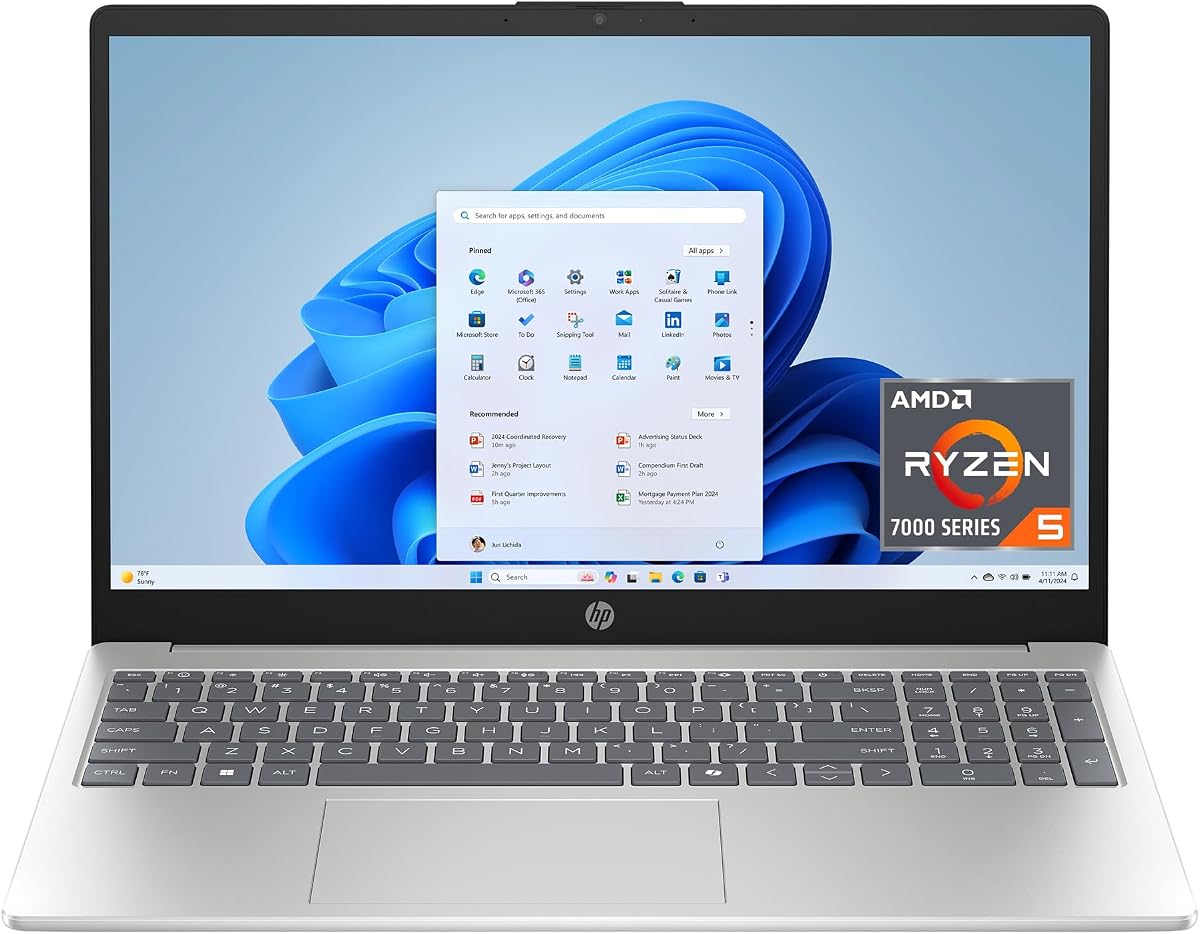
1. HP 15.6 Ryzen 3 - Best Entry Touch Habit

HP 15.6 inch Laptop (Ryzen 3)

HP 15.6 inch Laptop (Ryzen 3)

9/10★★★★★

This HP exists for a specific buyer: someone who wants to form a touch habit without paying for a convertible hinge they may never unfold. The 15.6-inch micro-edge HD touchscreen turns Windows 11 into a larger, finger-friendly surface for shopping carousels, map zooms, recipe scrolling, and quick UI taps that feel clumsy on a trackpad. You still type on a normal keyboard deck; the glass is a second input layer, not a replacement for the keys.

  • 15.6" HD micro-edge touchscreen
  • Ryzen 3 7320U, 8GB LPDDR5, 256GB SSD
  • AMD Radeon Graphics, Windows 11 Home
Check Price →
✓ Pros
  • Real capacitive touch for pinch, tap, and swipe without jumping to a premium 2-in-1
  • Ryzen 3 7320U plus LPDDR5 keeps casual gesture navigation feeling responsive
  • Familiar 15.6-inch Windows layout makes the learning curve almost zero
  • Flicker-free HD panel is comfortable for homework and long browsing sessions
  • Natural Silver design looks tidier than many bargain plastics
✕ Cons
  • 1366×768 sharpness limits dense PDF markup and multi-window tiling
  • 8GB RAM and 256GB SSD constrain heavy creative stacks and local media
  • Clamshell-only hinge—no tablet, tent, or stand postures

Detailed review

AMD’s Ryzen 3 7320U with Radeon graphics matches that mission. Browser tabs, streaming, and light Office work stay lively, and LPDDR5 memory helps the system bounce back when you swipe between a touch-heavy site and a document. It will not masquerade as a workstation, yet for households and students who mainly need responsive taps plus full Windows app compatibility, the chip feels well chosen rather than starved.

Resolution is the honest caveat. At 1366×768, text remains readable at laptop distance, but pixel density trails every FHD and 2K pick later in this guide. Spreadsheet grids look coarser, side-by-side windows feel tighter, and fine stylus-style handwriting—if you bring a passive capacitive stylus—has less detail to land on. Finger navigation for links and zoom still works; precision annotation is better on the IdeaPad or Dell panels.

The hinge story is simple: it opens like a traditional laptop and stops there. That is not a flaw if your touch tasks happen while the keyboard faces you. It is a mismatch if you hoped to fold the display flat for couch reading or kitchen tent mode. For those postures, jump to the ASUS Chromebook Flip. For desk-bound gesture convenience, this HP teaches you which motions you actually use before you spend more.

Storage at 256GB pushes cloud discipline, which pairs naturally with touch-first browsing—photos in OneDrive or Google Photos, textbooks in the browser. Offline video libraries fill quickly, so plan an external drive if you download lectures. Battery life benefits from the efficient U-series design in mixed use, though bright touch sessions and streaming shorten the day compared with ChromeOS endurance leaders.

Buy this machine as training wheels for touch on Windows. Skip it if tablet mode, FHD sharpness, or heavier multitasking already sit on your must-have list. Within its lane—kitchen counters, dorm desks, and living-room browsing—it delivers the core promise of reaching out to control the PC without pretending to be an artist’s slate.

Who gets the most from this Ryzen 3 touch HP

First-time touchscreen shoppers, budget students, and families replacing a non-touch notebook for browsing and homework. Avoid it if you need a 360-degree hinge, FHD clarity, or sustained creative software.

Finger and stylus reality check

Finger gestures are the supported path. A basic capacitive stylus can help with occasional doodles, but this listing is not marketed as an active pen tablet—expect finger-first accuracy and clean the glass often so oils do not blur targeting.

Setup tip for better touch days

Turn on the Windows touch keyboard for short replies, use browser pinch-zoom on PDFs, and keep a microfiber cloth nearby. Glossy HD glass shows fingerprints quickly, and a clean panel feels more precise than any software tweak.

Check Price on Amazon →

We may earn a commission at no additional cost to you.

2. HP 17.3" Lavender Touch - Best Shared-Desk Touch Canvas

HP 17.3" Touchscreen Laptop w/Microsoft 365

HP 17.3" Touchscreen Laptop w/Microsoft 365

8.8/10★★★★☆

A 17-inch touchscreen changes the social role of a laptop. This lavender HP behaves like a mini interactive display for recipes, family calendars, streaming guides, and homework dashboards that several people might lean toward during the day. Anti-glare coating matters more than marketing language suggests: bright kitchens and sunny windows bounce less than on glossy BrightView siblings, so finger targeting stays trustworthy when you pause a show or scroll a spreadsheet at an angle.

  • 17.3" HD+ anti-glare touch, 250 nits
  • Intel N100, 8GB RAM, 128GB SSD
  • Fingerprint, backlit keyboard, Microsoft 365
Check Price →
✓ Pros
  • Huge 17.3-inch touch surface ideal for shared family browsing and media control
  • Anti-glare HD+ coating keeps taps readable under kitchen and living-room lights
  • Fingerprint login, backlit keyboard, and number pad speed everyday chores
  • Microsoft 365 inclusion gets Word and Excel ready after activation
  • Webcam shutter plus dual mics help privacy-conscious household calls
✕ Cons
  • Intel N100 and 8GB RAM stay entry-level for heavy multitasking
  • 128GB SSD fills fast without disciplined cloud storage
  • 17-inch size is a portable desk tool, not an all-day backpack machine

Detailed review

The Intel Quad-Core N100 is built for efficiency and everyday Windows 11—email, browsing, streaming, light Office—not virtual machines or timeline editing. With 8GB of RAM, keep tab counts reasonable and avoid stacking too many heavy Electron apps. Microsoft 365 (activation required) softens the software gap for families who need Word and Excel without a separate hunt. The Copilot key is a convenience for AI prompts if you use them; it does not replace missing CPU cores.

Touch usefulness here is about surface area, not hinge gymnastics. You will not fold this chassis into tablet mode. You will tap large UI targets, scrub media timelines, and navigate education portals with less trackpad friction. For younger users especially, a big anti-glare canvas can feel less intimidating than a dense ultraportable panel packed with tiny icons.

Ports cover real household life: USB-C for data (this port is not for charging or external monitors per the listing), dual USB-A, HDMI 1.4b, and a headphone combo jack. Wi-Fi 6 and Bluetooth 5.4 keep connections current. HP Fast Charge claims help when the battery dips—useful because a 17-inch Windows machine under bright touch loads is happier near outlets for marathon evenings.

At roughly 4.6 lbs for the class, the chassis is lighter than older 17-inch bricks yet still a bag commitment. Treat it as a room-to-room computer that occasionally rides in a large tote. Fingerprint login is a quiet quality-of-life win when oily fingers already interact with glass; you spend less time typing passwords with smudged hands.

Choose the lavender 17-inch when shared desk space and Microsoft apps matter more than portability or pixel density. Choose the pale rose gold Core i7 17-inch later in this guide when you need stronger multitasking and a full terabyte of local storage. Both celebrate big-touch canvases; they diverge on horsepower.

Ideal home layout

Park it on a kitchen island or family desk where multiple people can reach the glass. Use touch for media and browsing, then fall back to the backlit keyboard and number pad for longer typing and spreadsheets.

Storage survival plan

With 128GB onboard, enable OneDrive or Google Drive on day one, keep downloads trimmed weekly, and store large media on an external drive so Windows updates never fight you for free space.

Check Price on Amazon →

We may earn a commission at no additional cost to you.

3. HP 15.6 Core i3 16GB - Best Student Touch

HP 15.6" Touchscreen Laptop Computer • Intel Core i3 • 16GB DDR4

HP 15.6" Touchscreen Laptop Computer • Intel Core i3 • 16GB DDR4

9/10★★★★★

Student workloads are tab-heavy by nature: LMS portals, research PDFs, group chats, streaming lectures, and Office docs often run together. This HP’s standout move is pairing a 15.6-inch touchscreen with 16GB of DDR4 instead of trapping a touch buyer on 8GB. Gesture navigation stays smoother when memory is not constantly reclaiming tabs you still need for the next class.

  • 15.6" HD touchscreen with micro-edge design
  • Core i3-1315U 6-core, 16GB DDR4, 256GB SSD
  • 3.52 lbs, numeric keypad, Windows 11 Home
Check Price →
✓ Pros
  • 16GB DDR4 gives students real multitasking headroom for touch-plus-browser days
  • 13th Gen Core i3-1315U handles classes, research, and streaming without drama
  • Light 3.52 lb chassis and thin profile fit backpack routines
  • Responsive HD touch helps lecture slides, maps, and LMS navigation
  • Numeric keypad speeds spreadsheet-heavy coursework
✕ Cons
  • HD resolution still trails FHD sharpness for long reading and design review
  • 256GB SSD needs cloud habits for large course archives
  • Clamshell hinge only—no convertible tablet reading mode

Detailed review

The 13th Gen Intel Core i3-1315U (6 cores, 8 threads) is a sensible campus chip—strong enough for everyday multitasking and light creative tools, efficient enough that battery life can cover a day of mixed lectures when brightness is reasonable. HP fast charging support helps between classes. Touch shines when you pinch lecture slides, scroll long readings, or tap through online quizzes that were designed with tablets in mind.

Portability is a genuine differentiator versus the 17-inch family machines. At about 3.52 lbs and 0.73 inches thin, it belongs in a backpack without becoming the heaviest item beside textbooks. The full-size keyboard with numeric keypad helps stats and accounting homework. You remain in clamshell posture; if you want to lie on a dorm bed reading in tablet mode, the ASUS Flip is the hinge answer.

Display expectations should stay honest. The HD touch panel is convenient, not cinematic. For annotation-heavy majors that live in dense PDFs, an FHD IdeaPad or Dell 16:10 screen reduces eye strain. For general studies, browsing, and streaming, the HD glass plus memory headroom is a smarter student trade than a sharper panel starved to 8GB.

Office 365 inclusion (per the listing) lowers day-one friction for Word and Excel workflows once activated. Windows 11 Home covers the apps many courses still assume. Keep an eye on the 256GB SSD: offline lecture recordings and Adobe-class installers can crowd it, so lean on school cloud storage early.

This is the touchscreen I would hand a student who needs Windows software, backpack weight control, and enough RAM that finger-driven browsing does not feel sticky by midterms. It is not the hinge hero and not the sharpest panel, but it is one of the most balanced student-oriented touch clamshells in the pack.

Campus carry checklist

Use a padded sleeve, enable Find My Device, keep a short USB-C or barrel charger in the bag, and wipe the touchscreen after lab days—shared desks transfer oils that hurt tap accuracy.

When to step up instead

Choose the Lenovo IdeaPad for FHD anti-glare clarity, a Dell 16 for taller document space and more power, or the ASUS Flip if tablet reading mode is non-negotiable.

Check Price on Amazon →

We may earn a commission at no additional cost to you.

4. Dell 16 FHD+ 32GB - Best Overall Touch Workflow

Dell 16 Touchscreen Laptop

Dell 16 Touchscreen Laptop

10/10★★★★★

If touch is part of a serious workday—not a novelty—this Dell 16 configuration is the clearest overall pick in the pack. The 16-inch FHD+ (1920×1200) 16:10 touchscreen shows more vertical content than widescreen 16:9 panels, so you pinch-zoom and scroll less while reviewing decks, research papers, and design mockups. At 300 nits with ComfortView blue-light reduction, long annotation and reading sessions stay easier on the eyes than dimmer budget glass.

  • 16" FHD+ 16:10 300-nit touch with ComfortView
  • Core 7 150U 10-core, 32GB DDR5-5200, 1TB SSD
  • Backlit keyboard, fingerprint, Wi-Fi 6E, Win11 Pro
Check Price →
✓ Pros
  • 16:10 FHD+ touch gives taller document space and accurate finger targeting
  • 32GB DDR5 makes gesture-heavy multitasking feel effortless
  • 1TB SSD stores years of client files, courses, or creative assets
  • Windows 11 Pro plus fingerprint and Copilot key suit professional routines
  • 1080p webcam with noise reduction helps remote workers present cleanly
✕ Cons
  • Not a 360-degree convertible—touch stays in clamshell postures
  • Larger than ultraportables; 4.18 lbs is carryable but not featherlight
  • Overkill if you only need casual web taps on a budget HD panel

Detailed review

Intel Core 7 150U (10 cores, up to 5.4 GHz) paired with 32GB of DDR5-5200 memory is why swipe animations and window switching stay composed when dozens of tabs and heavy apps coexist. The 1TB NVMe SSD removes the constant delete-and-upload anxiety that haunts 128GB and 256GB machines. For analysts, project managers, consultants, and small-business owners who touch the UI as often as they type, that headroom is the product.

Hinge behavior is professional clamshell: stable at laptop angles, not a fold-flat tablet. That is the right call for most desk and café work. You get fingertip control for presentations and research without the mechanical complexity of a yoga hinge. If your job involves showing a client a screen on a countertop in tent mode, the ASUS Flip still owns that niche; if your job is shipping work in Windows Pro apps, this Dell owns the day.

The full-size backlit keyboard with number pad keeps data entry fast in low light. A fingerprint reader reduces password friction when your fingers already leave oils on glass. Wi-Fi 6E helps in congested offices and apartments. The 1080p webcam with temporal noise reduction is a meaningful upgrade over vague HD cameras for client calls. At 4.18 lbs and 0.68 inches thin, it travels as a true work machine rather than a desk-only slab.

Stylus notes: finger-first use is excellent on this panel size and resolution. Active pen compatibility can vary by exact Dell configuration and is not the hero feature of this listing, so verify pen protocol if handwriting is mandatory. For most professionals, capacitive finger gestures plus keyboard shortcuts cover ninety percent of touch value—zoom, scrub, rearrange, present.

Battery life with a 4-cell pack and 65W adapter is aimed at a full workday of mixed productivity; bright always-on touch and video calls will shorten that, as with any Windows powerhouse. Still, as a balance of touch canvas quality, memory, storage, and Pro software readiness, nothing else in this roundup matches it for daily serious use.

Who should buy this Dell first

Remote professionals, graduate students with heavy research stacks, and small-business owners who live in browsers, Office, and large local folders. Skip it only if you need a flip hinge or a simpler ChromeOS school device.

Touch workflow that plays to its strengths

Use touch to navigate PDFs and slide decks, keep the keyboard for drafting, and lean on the taller 16:10 frame to reduce scrolling. ComfortView plus 300 nits makes afternoon glass sessions more sustainable.

Versus the Dell 16 2K sibling

This 32GB FHD+ Pro model wins for multitasking headroom and business OS features. The 2K DC16251 wins for pixel density and ComfortView Plus color comfort if 16GB RAM is enough for your stack.

Check Price on Amazon →

We may earn a commission at no additional cost to you.

5. Lenovo IdeaPad Business - Best Sharp Everyday Touch Panel

Lenovo IdeaPad Business Laptop

Lenovo IdeaPad Business Laptop

8.8/10★★★★☆

Among midsize Windows touchscreens, panel quality often separates the keepers from the regrets. This IdeaPad’s 15.6-inch Full HD IPS touchscreen with anti-glare coating and 300-nit brightness is built for real rooms: offices with overhead LEDs, classrooms with windows, cafés with mixed lighting. Finger taps land on sharper text than HD HPs, and wide viewing angles help when you tilt the lid to show a colleague a figure without losing contrast.

  • 15.6" FHD IPS anti-glare touch, 300 nits
  • Core i5-1335U 10-core, 16GB RAM, 1TB SSD
  • Windows 11 Pro, Office included, 3.57 lbs
Check Price →
✓ Pros
  • FHD IPS anti-glare touch is sharper and more office-friendly than HD budget panels
  • Core i5-1335U with Iris Xe handles productivity and light entertainment well
  • 16GB RAM and 1TB SSD form a practical long-term student or business baseline
  • Windows 11 Pro and included Office support work-ready day-one setups
  • Privacy shutter webcam, TPM 2.0, and light weight aid portable professionalism
✕ Cons
  • Still a clamshell—no 360-degree tablet fold
  • Not as tall a workspace as Dell’s 16:10 16-inch canvases
  • Listing mentions expandable memory/storage paths that may vary by exact unit—confirm before assuming upgrades

Detailed review

Intel’s 13th Gen Core i5-1335U (10 cores, up to 4.6 GHz) with Iris Xe graphics covers multitasking, productivity, and entertainment without needing a discrete GPU. Sixteen gigabytes of RAM is the comfort zone for touch-driven days where you hop between email, browsers, and Office. A 1TB SSD means you can keep local project archives instead of constantly pruning. Copilot AI readiness and Wi-Fi 6 round out a modern connectivity story.

Business-leaning software matters for touch buyers who still live in desktop apps. Windows 11 Pro brings advanced security and management features many workplaces expect, and Microsoft Office included reduces setup friction. A privacy shutter on the HD webcam is a small physical control that still matters on shared trains and open offices. TPM 2.0 supports modern Windows security baselines.

At about 3.57 lbs, the chassis is easy to carry compared with 17-inch desk canvases. Dolby Audio speakers make casual streaming nicer after work. The hinge remains a standard laptop hinge—excellent for typing angles, not for tablet reading on a couch. If you need fold-flat modes, the ASUS Chromebook Flip is the specialist; if you need sharp clamshell touch with Pro software, this Lenovo is the practical daily driver.

Stylus expectations should stay grounded. The FHD glass is pleasant for finger markup and light capacitive stylus notes in apps that accept them, but this is not marketed as a Yoga Pen studio machine. Prioritize it for accurate touch navigation, PDF zooming, and UI control under glare—not for pressure-sensitive illustration.

For many buyers who want “better than HD” without jumping to a 16-inch Dell budget, the IdeaPad is the sweet spot: sharp enough, strong enough, light enough, and business-ready enough that the touchscreen feels like a permanent upgrade rather than a gimmick.

Best-fit users

Office professionals, hybrid students who need Windows and Office, and anyone upgrading from an HD touch laptop who wants anti-glare clarity without a 17-inch footprint.

Glare and cleaning routine

Anti-glare helps, but oils still collect. Wipe with microfiber before presentations so smudges do not broadcast under meeting-room lights when you tilt the touchscreen toward others.

Versus Dell 16 overall pick

IdeaPad wins on familiar 15.6-inch carry and included Office for many setups. Dell wins on 16:10 vertical space, 32GB RAM, and a more premium touch canvas for heavier professional stacks.

Check Price on Amazon →

We may earn a commission at no additional cost to you.

6. Dell 16 2K Touch - Best High-Resolution Touch Display

Dell 16 Laptop DC16251-16.0-inch 16:10 2K Touchscreen Display

Dell 16 Laptop DC16251-16.0-inch 16:10 2K Touchscreen Display

9.2/10★★★★★

When touch feels imprecise, the culprit is often a soft, low-resolution panel—not your fingers. This Cloud Blue Dell 16 answers with a 16-inch 2K touchscreen in a 16:10 aspect ratio, giving you both pixel density and extra vertical workspace. Pinch-zooming photos, scrubbing timelines, and tapping compact UI controls feel more intentional because edges and text are simply clearer than on HD machines.

  • 16" 2K 16:10 touchscreen display
  • Core 7 150U, 16GB DDR5, 1TB SSD
  • ComfortView Plus, Windows 11 Home
Check Price →
✓ Pros
  • 2K 16:10 panel makes finger targeting and fine UI chrome feel precise
  • ComfortView Plus aims to cut blue light while keeping color more natural
  • Core 7 150U with 16GB DDR5 and 1TB SSD covers demanding everyday work
  • FHD-class webcam features help virtual meetings look sharper
  • Adaptive thermals adjust behavior when the laptop sits on a stable desk
✕ Cons
  • 16GB RAM trails the 32GB Dell sibling for extreme multitasking
  • Windows 11 Home rather than Pro may matter for some workplaces
  • Still not a convertible—no tablet fold for stylus sketching on your lap

Detailed review

ComfortView Plus is a meaningful comfort feature for people who live on glass for hours. Reducing harmful blue light while trying to preserve true-to-life color helps evening spreadsheet and slide work. Combined with the taller aspect ratio, the display invites document-centric touch habits: mark a paragraph with a finger, swipe to the next page, zoom a figure, return to typing—without the soft haze of 1366×768.

Under the panel, Intel Core 7 150U, 16GB DDR5, and a 1TB SSD form a strong mainstream powerhouse. You can edit large media files in lighter tools, keep big browser sessions alive, and store substantial project libraries. Adaptive thermal behavior that senses a stable surface can help the machine run more efficiently on a desk—useful when a touchscreen session turns into a long plugged-in work block.

Meeting hardware gets attention too: an up-to-FHD camera with wide dynamic range and temporal noise reduction is designed for uneven lighting, which is exactly where remote workers struggle. That complements a touch-first presentation style—navigate slides on the glass, then look up at a camera that does not look like an afterthought.

Compared with the 32GB FHD+ Dell, you trade memory ceiling and Pro OS for a sharper screen and ComfortView Plus emphasis. Choose 2K if visual clarity and color comfort drive your touch experience; choose 32GB FHD+ if virtual machines, enormous tab sets, or Pro features matter more. Neither replaces a 360-degree hinge for tablet sketching.

If your stylus plan is serious digital art, look beyond this pack for pen-certified convertibles. If your plan is precise finger control on a bright, detailed Windows canvas for business and creation-lite work, this Dell 16 2K is the display-first recommendation.

Display-first buyer profile

Design reviewers, photo sorters, analysts who stare at dense dashboards, and anyone upgrading from HD touch who wants the sharpness upgrade to be obvious every hour.

Hinge and posture notes

Expect solid clamshell angles for desk and lap typing. For tent-mode recipes or flat tablet reading, pair your workflow with the ASUS Flip instead of forcing this Dell into postures it was not built for.

Check Price on Amazon →

We may earn a commission at no additional cost to you.

7. HP 15.6 Ryzen 5 - Best Storage-Boosted HD Touch

HP 15.6 inch Laptop (Ryzen 5)

HP 15.6 inch Laptop (Ryzen 5)

8.6/10★★★★☆

Think of this Ryzen 5 HP as the storage-smarter twin of the Ryzen 3 touch model. You get the same micro-edge HD touchscreen philosophy—reach out, pinch, swipe, tap—with a stronger AMD Ryzen 5 7520U and a 512GB NVMe SSD that makes offline libraries far less stressful. If your touchscreen life includes downloaded courses, local photo folders, and a few games-lite titles, that half-terabyte matters more than another marketing sticker.

  • 15.6" HD micro-edge touchscreen
  • Ryzen 5 7520U, 8GB LPDDR5, 512GB SSD
  • AMD Radeon Graphics, Windows 11 Home
Check Price →
✓ Pros
  • Ryzen 5 7520U steps up responsiveness versus the Ryzen 3 sibling
  • 512GB SSD doubles breathing room for offline media and class files
  • Same intuitive HD touch gestures for pinch, tap, and swipe
  • LPDDR5 memory remains efficient for everyday Windows navigation
  • Familiar Natural Silver 15.6-inch chassis for straightforward upgrades
✕ Cons
  • Still HD resolution—soft compared with FHD and 2K rivals
  • 8GB RAM remains the multitasking ceiling for heavy stacks
  • No convertible hinge for tablet or tent modes

Detailed review

Performance gains show up in snappier app launches and slightly more comfortable multitasking within the 8GB LPDDR5 envelope. Radeon graphics help entertainment and casual creative tasks. Touch latency for everyday Windows UI work feels in the same friendly family as the Ryzen 3 machine; the upgrade is horsepower and disk, not a different glass experience.

Resolution limits remain. Dense annotation, color-critical editing, and tiled windows still prefer FHD IdeaPad or Dell 16 panels. Finger navigation for web and media remains the sweet spot. A passive stylus can sketch on the HD glass, but active pen workflows and pressure curves are not the point of this SKU.

Hinge usefulness is identical to other HP 15.6 clamshells here: reliable laptop angles, zero tablet folds. Buy it when you want Windows touch convenience plus more local storage without jumping to a 16-inch professional chassis. Skip it when you already know you need 16GB RAM—then the student i3 HP or IdeaPad is the wiser memory story.

Battery personality tracks other efficient Ryzen U-series notebooks: solid for mixed browsing and homework, shorter when the touchscreen stays bright for video. Windows 11 Home keeps the software model familiar. For households graduating from a non-touch laptop who also refuse constant cloud offloading, the 512GB drive is the practical reason to pick Ryzen 5 over Ryzen 3.

In short: same touch habit, fewer storage compromises, still not a 2-in-1. That honesty makes it an easy recommend in the HD tier for buyers who felt the Ryzen 3’s 256GB ceiling immediately.

Ryzen 3 vs Ryzen 5 quick call

Choose Ryzen 3 to minimize spend on a first touch laptop. Choose Ryzen 5 when the 512GB SSD and snappier chip will get daily use for media and heavier browser days.

Who should look elsewhere

Anyone who needs tablet mode, FHD sharpness, or 16GB+ RAM for serious multitasking should step to the ASUS Flip, IdeaPad, student i3 HP, or Dell 16 models instead.

Check Price on Amazon →

We may earn a commission at no additional cost to you.

8. ASUS Chromebook Flip CX1 - Best 360° Hinge Convertible

ASUS Chromebook Flip CX1 Convertible Laptop

ASUS Chromebook Flip CX1 Convertible Laptop

8.8/10★★★★☆

This is the hinge specialist of the roundup—the machine that makes “touchscreen laptop” mean more than tapping a clamshell. The 14-inch FHD NanoEdge panel flips a full 360 degrees, so you can type in laptop mode, fold into tent mode for countertop video, use stand mode for hands-free recipes or demos, and flip into tablet mode for reading or casual annotation. If posture flexibility is why you want touch, start here.

  • 14" FHD NanoEdge 360° touchscreen
  • Celeron N4500, 8GB RAM, 128GB eMMC
  • ChromeOS, MIL-STD 810H, dual USB-C PD
Check Price →
✓ Pros
  • True 360-degree hinge unlocks laptop, tent, stand, and tablet postures
  • FHD touch makes ChromeOS feel designed for fingers, not just mice
  • 8GB RAM is a healthier Chromebook baseline than many 4GB class machines
  • Up to around 11-hour battery potential supports all-day campus carry
  • Dual USB-C with display and power delivery plus USB-A and microSD cover real kits
✕ Cons
  • ChromeOS will not run traditional Windows desktop installers
  • Celeron N4500 and eMMC storage are modest for heavy offline creative work
  • 128GB fills up if you ignore cloud hygiene and microSD expansion

Detailed review

ChromeOS amplifies that hardware. Google’s interface is finger-native, updates are simple, and security is low-maintenance compared with many Windows setups. You can edit Microsoft Office files through Google’s apps or web Office, which covers a huge share of school and light business work. The listing’s Google One AI Premium trial perk (terms apply) may sweeten cloud storage and Gemini access for a limited period—nice, but not the reason to buy; the hinge and battery are.

Build and carry traits support student and travel life. ASUS cites MIL-STD 810H testing and a 3.59 lb weight, which is reassuring when backpacks get tossed into lockers. Dual USB-C ports with display and power delivery support mean you can charge and drive an external display without a scavenger hunt. USB-A, dual audio jacks, microSD, Wi-Fi 6, and Bluetooth 5.2 round out a surprisingly complete port story for a convertible.

Stylus relevance is highest here among pack options because tablet mode invites handwriting and sketch apps. Compatibility depends on USI or other ChromeOS-supported pens rather than every random capacitive stick. If notes are critical, confirm pen support for this exact CX1 configuration and your preferred note app. Finger scrolling and pinch-zoom already feel excellent on the FHD panel without accessories.

Performance is honest: Intel Celeron N4500 with 8GB RAM handles decent Chrome multitasking, not Premiere timelines. Storage is 128GB eMMC—pair with Drive and microSD. Battery life up to about eleven hours (varies by conditions) is a genuine differentiator versus many Windows touch notebooks that fade by late afternoon. For travelers who live in browsers and need tablet posture on flights or couches, that endurance-plus-flip combo is the win.

Buy the Flip when hinge modes are the point of the purchase. Buy a Dell or Lenovo Windows machine when your job requires desktop software, Pro security features, or larger local SSD projects. Used inside ChromeOS strengths, this ASUS is the 2-in-1 hero of the list.

Mode guide that actually gets used

Clamshell for essays and email, tent for shared streaming on a narrow shelf, stand for cooking or demos, tablet for reading—flip the keyboard out of the way and let touch become the primary input.

Stylus and accessory pairing

A ChromeOS-compatible stylus elevates Keep, OneNote web, or classroom annotation apps. Add a compact USB-C hub if you dock often, and choose a case that allows full 360 folds without blocking vents.

Versus Lenovo Flagship Chromebook

ASUS wins on the 360 hinge, 8GB RAM, and convertible versatility. Lenovo wins on lighter clamshell carry and a simpler FHD touch experience if you never flip past halfway.

Check Price on Amazon →

We may earn a commission at no additional cost to you.

9. HP 17.3 Core i7 - Best Power Large-Touch Desktop

HP 17.3" Touchscreen Laptop

HP 17.3" Touchscreen Laptop

10/10★★★★★

Treat this pale rose gold HP as a touch-enabled desk monitor that still folds shut. The 17.3-inch HD+ (1600×900) BrightView touchscreen invites lean-in interaction: scrubbing timelines, tapping education platforms, sorting photos, and navigating Windows with a finger when you are half-reclined at a home desk. It is the power counterpart to the N100 lavender 17-inch—same size philosophy, far more CPU and storage muscle.

  • 17.3" HD+ BrightView touch, 250 nits
  • Core i7-1355U 10-core, 16GB RAM, 1TB SSD
  • Backlit keyboard, fingerprint, Wi-Fi 6, Win11 Home
Check Price →
✓ Pros
  • Core i7-1355U brings strong Turbo bursts for demanding home-office duty
  • 16GB RAM and 1TB SSD match serious household and homework multitasking
  • Expansive 17.3-inch touch area for media, courses, and creative browsing
  • Fingerprint reader and backlit keyboard polish evening productivity
  • HDMI and USB-C/A ports cover living-room and desk peripherals
✕ Cons
  • HD+ 1600×900 trails FHD/2K sharpness on Dell and Lenovo picks
  • BrightView glass shows fingerprints and reflections more readily
  • Large chassis prefers home desks over daily commuting

Detailed review

Intel Core i7-1355U (10 cores, up to 5.0 GHz Turbo) with 16GB of RAM keeps multitasking composed. A 1TB NVMe SSD means vacation footage, course archives, and games-lite libraries can coexist. Wi-Fi 6 helps when the household saturates the router. For touch users who also edit lightly in Photos or CapCut-class apps, the i7 headroom is obvious versus N-series chips.

Ergonomics favor stationary use. The backlit keyboard and fingerprint reader make evening sessions smoother. Ports include SuperSpeed USB-C, dual USB-A, HDMI 1.4b, and a combo audio jack—mirror to a TV after planning a trip on the touchscreen, for example. Camera support covers everyday calls even if it is not framed as a studio bar.

Display caveats are fair: 1600×900 improves on 1366×768 yet is still not FHD, and BrightView’s gloss emphasizes both vibrancy and smudges. If pixel density is your north star, the Dell 16 2K wins. If maximum tap area plus i7 performance in a home office is the goal, this HP is the crowd-pleaser. Stylus use remains finger-first; the huge canvas is wonderful for touch UI, less ideal as a portable pen tablet because of size and weight.

Hinge expectations stay clamshell-only. You buy surface area, not yoga modes. Battery expectations should be modest for any 17-inch high-performance Windows laptop under touch-bright loads—plan near outlets for marathon sessions. As a plugged-in touch workstation that still puts away after dinner, it occupies a niche none of the 14–15-inch ultraportables duplicate.

Families and students who rarely leave the house with their PC get the clearest value story: a wide interactive canvas, serious multitasking specs, and enough ports to live beside a desk dock without constant dongle theater.

Home office layout tip

Elevate the chassis slightly for wrist comfort, use touch for media and navigation, and connect HDMI when hosting family slideshows or streaming to a bigger screen.

Versus the lavender 17-inch HP

Lavender N100 suits lighter duty and Microsoft 365 bundling. This i7 rose gold model suits heavier multitasking and 1TB local libraries when the touchscreen is a daily work surface.

Check Price on Amazon →

We may earn a commission at no additional cost to you.

10. Lenovo Flagship Chromebook - Best Featherweight Chrome Touch

Lenovo Flagship Chromebook

Lenovo Flagship Chromebook

8.4/10★★★★☆

Not every touchscreen buyer needs a flip hinge; some need a featherweight FHD panel that makes ChromeOS feel like a large phone with a real keyboard. This Abyss Blue Lenovo Flagship Chromebook weighs about 2.86 lbs and stays under three-quarters of an inch thick, so it disappears in a tote. The 1920×1080 IPS touchscreen offers wider viewing angles than many budget panels, helping when a teacher or sibling glances in during a shared video.

  • 14" FHD IPS touchscreen
  • MediaTek Kompanio 520 octa-core
  • 4GB RAM, 64GB eMMC, 2.86 lbs, ChromeOS
Check Price →
✓ Pros
  • Sharp 14-inch FHD IPS touch with wide viewing angles
  • Ultra-light 2.86 lb chassis for effortless daily carry
  • MediaTek Kompanio 520 tuned for efficient ChromeOS tasks
  • Wi-Fi 6 and privacy shutter webcam suit classroom readiness
  • Simple, secure ChromeOS model for web-first users
✕ Cons
  • 4GB RAM constrains heavy multitasking compared with 8GB peers
  • 64GB eMMC fills quickly without strict cloud habits
  • No 360-degree hinge—touch without convertible postures

Detailed review

MediaTek’s Kompanio 520 octa-core design targets efficient, snappy everyday Chrome performance—Classroom, YouTube, Docs, and light tabs. Touch navigation feels natural on ChromeOS, which was born for finger-friendly UI. The 720p webcam with privacy shutter and dual array mics covers remote learning basics. Wi-Fi 6 keeps campus networks usable when dozens of devices compete.

Constraints are real. Four gigabytes of RAM means discipline: fewer extensions, fewer simultaneous heavy sites. Sixty-four gigabytes of eMMC is a cloud-first contract—store schoolwork in Drive and expand via microSD when needed. This is not the ASUS Flip; you do not get tent or tablet folds. You get clamshell touch done lightly and inexpensively.

Stylus use is possible with compatible ChromeOS pens in supported apps, but the value proposition here is light FHD finger navigation, not an artist tablet. For younger students, secondary travel machines, or anyone standardized on Google’s ecosystem, that trade is acceptable. Adults who keep twenty docs and a pile of Progressive Web Apps open should prefer the ASUS Flip’s 8GB configuration or a Windows 16GB HP.

Battery life on Kompanio Chromebooks is typically a strong suit in this class, reinforcing the grab-and-go pitch. If your touchscreen dream is annotation in tablet mode, spend attention on the ASUS 360. If your dream is the lightest FHD touch Chrome clamshell in the pack, this Lenovo closes the list for a reason: it is specialized, limited, and excellent inside those limits.

Choose it as a reading-and-assignment companion that still has keys. Do not choose it as a Windows replacement, a video-editing deck, or a heavy multitasker’s primary machine.

Cloud hygiene checklist

Enable Drive offline only for active classes, review storage quarterly, and keep the microSD slot reserved for media so the 64GB system partition stays healthy.

Good fit versus poor fit

Good fit: elementary-to-middle school, travel browser, second household PC. Poor fit: coding IDEs that assume Windows, specialized offline creative suites, or large local media libraries.

Check Price on Amazon →

We may earn a commission at no additional cost to you.

Best Touchscreen Laptops 2026 for Tap, Flip, and Stylus Work

How to Choose a Touchscreen Laptop for Real Touch Work

Separate touch glass from convertible hinges

A touchscreen clamshell lets you tap while the keyboard faces you. A 2-in-1 adds a 360-degree hinge for tablet, tent, and stand postures. Most Windows machines in this pack are excellent clamshell touch devices; only the ASUS Chromebook Flip delivers true convertible modes. Buy the hinge only if you will change posture weekly—not because the product photo looks flexible.

Judge panels by resolution, coating, and aspect ratio

HD (1366×768) is fine for casual taps and soft on dense text. HD+ (1600×900) on 17-inch HPs adds space. FHD IPS anti-glare (IdeaPad, Chromebooks) and FHD+/2K 16:10 Dell panels are the accuracy sweet spots. Glossy BrightView looks vivid and shows fingerprints; anti-glare helps under office lights. 16:10 tall canvases reduce scrolling in documents—especially useful when you annotate with a finger.

Plan stylus needs before you fall for tablet marketing

Finger-first touch is guaranteed across this pack. Active stylus support is not. If handwriting notes or sketching are mandatory, verify the pen protocol (USI on many Chromebooks, MPP/AES on many Windows convertibles) for the exact configuration—or prioritize a pen-certified 2-in-1 outside pure finger workflows. A cheap capacitive stylus can help on any touchscreen but will not deliver pressure curves like a purpose-built pen.

Match RAM and storage to gesture-heavy multitasking

Touch encourages app hopping. On Windows, treat 8GB as basic, 16GB as the student and business comfort zone, and 32GB as the power configuration on the overall Dell pick. On ChromeOS, 8GB feels comfortable; 4GB needs restraint. SSDs at 256GB require cloud habits; 512GB–1TB feel freer. eMMC on Chromebooks suits web-first life, not huge local libraries.

Choose Windows or ChromeOS for the software you cannot replace

Windows wins for desktop installers, advanced peripherals, and Pro security features. ChromeOS wins for simplicity, fast updates, often stronger battery, and school ecosystems. Touch gestures exist on both; convertibles are more accessible in ChromeOS at this pack’s prices, while Windows leads the high-RAM productivity touch configs.

Weigh ports, biometrics, and carry reality

Fingerprint readers remove friction when oily fingers already touch glass. Backlit keyboards help when you dim a room to cut glare. HDMI helps family media. Dual USB-C with display and PD on the ASUS Flip is uniquely flexible among these picks. Treat 17-inch machines as desk appliances; treat sub-3.6 lb 14–15-inch devices as true carry machines.

Frequently Asked Questions

01

Do I need a 2-in-1 hinge, or is a regular touchscreen laptop enough?

A regular touchscreen laptop is enough if you mainly tap buttons, swipe galleries, and pinch-zoom while the keyboard faces you. You need a 2-in-1 when posture changes matter—tablet mode for reading, tent mode for countertop video, or stand mode for demos. In this roundup, only the ASUS Chromebook Flip offers a true 360-degree hinge; the Windows machines are clamshell touch designs that still deliver useful gestures without folding flat.

02

Can I use a stylus with these touchscreen laptops?

All of these panels accept finger input, and many will respond to a basic capacitive stylus for light markup. Active pens with pressure sensitivity and palm rejection depend on the exact model and protocol—USI on many Chromebooks, various Windows pen standards on convertibles. The ASUS Flip is the most natural tablet-mode candidate for pen notes in this pack, but you should still confirm compatibility for your preferred stylus and apps. The Dell and Lenovo Windows machines are excellent finger canvases even when they are not marketed as pen tablets.

03

Is an HD touchscreen still worth buying in 2026?

Yes—for budget Windows buyers who want tactile navigation more than pixel density. HD panels on the Ryzen HPs remain readable for web and homework, and touch still speeds casual UI work. They are less ideal for long PDF annotation, photo detail work, or tiling many windows. If your eyes fatigue on soft text, stretch to the FHD IdeaPad, FHD Chromebooks, or Dell 16 FHD+/2K options.

04

How much RAM do touchscreen laptops need?

Touch interfaces encourage jumping between apps, so RAM headroom preserves smooth gestures. For Windows, treat 8GB as basic, 16GB as the student and business sweet spot, and 32GB as the power configuration on the Dell 16 overall pick. For ChromeOS, 8GB on the ASUS Flip is comfortable; 4GB on the Lenovo Flagship works for light schoolwork if you avoid tab piles.

05

Are Chromebook touchscreens good for students?

They are excellent when schools standardize on Google Classroom and web apps. FHD touch makes navigating assignments intuitive, and convertibles like the ASUS Flip add tablet reading modes that feel natural for e-books and worksheets. Limitations appear with specialized Windows software, offline creative suites, and small eMMC storage. Confirm exam tool requirements before choosing ChromeOS over a Windows HP or Lenovo.

06

What screen size is best for touch navigation?

Fourteen-inch convertibles balance reach and portability for tablet mode. Fifteen- to sixteen-inch clamshells offer more precision space for documents without becoming unwieldy. Seventeen-inch touchscreens feel like interactive desk monitors—great at home, awkward on airplanes. Match size to where your hands will be, not just to marketing language about immersive displays.

07

Do touchscreens hurt battery life?

Slightly, especially at high brightness on larger or higher-resolution panels, because digitizers and brighter backlights draw power. Efficient chips—Ryzen U-series, Intel U-series, MediaTek Kompanio—and ChromeOS tuning mitigate the hit. Convertible Chromebooks often still lead endurance charts. Windows 17-inch i7 machines should be planned around outlets for marathon touch-and-stream sessions.

08

Why choose 16:10 touch displays like the Dell 16 models?

16:10 panels show more vertical content—extra rows in documents, browsers, and code—so you pinch-zoom and scroll less. Combined with FHD+ or 2K resolution, they make touch annotation and research denser and more comfortable. They are especially helpful for professionals who live in documents rather than widescreen movies.

09

How do I keep a touchscreen accurate and clean?

Power off or dim the display, wipe with a microfiber cloth, and use a sparingly dampened cleaner safe for coated glass—never paper towels or abrasive wipes. Avoid pressing hard; modern capacitive panels need light contact. Wash hands before marathon annotation sessions. Anti-glare coatings still show oils, just with fewer reflections than glossy BrightView glass.

10

Which touchscreen laptop should most people buy from this list?

Most productivity-focused buyers should start with the Dell 16 FHD+ model with 32GB RAM for fluid touch multitasking, or the Lenovo IdeaPad if they want sharp FHD anti-glare touch with Office and Pro features in a lighter 15.6-inch chassis. Prefer the ASUS Chromebook Flip if convertibility, tablet reading, and battery life top the list. Home-bound media multitaskers can jump to the HP 17.3-inch Core i7. Budget shoppers can begin with the Ryzen 3 or Ryzen 5 HP HD touch models and upgrade later if gestures become central to their work.

Conclusion

Touchscreen laptops earn their keep when the glass matches a real habit: fingertip navigation on a sharp clamshell, a taller 16:10 canvas for document work, a giant 17-inch home surface for shared media, or a 360-degree hinge that turns reading and demos into different postures. In this pack, those jobs split cleanly across Windows productivity machines and ChromeOS flip or featherweight options—so the decision is less about collecting cores and more about hinge usefulness, panel clarity, and whether a stylus will ever leave your bag.

If you want one recommendation for serious mixed keyboard-and-touch work, take the Dell 16 FHD+ configuration with 32GB of memory. If you want the purest convertible experience here, take the ASUS Chromebook Flip CX1. If you want sharp everyday office touch without a 16-inch footprint, take the Lenovo IdeaPad. Everyone else can map RAM, resolution, storage, and OS needs onto the remaining HPs, the Dell 2K sibling, and the lightweight Lenovo Chromebook without guesswork.

Buy for the gestures and postures you will repeat weekly, verify pen support only when handwriting is mandatory, keep the glass clean, and let the hinge—or the absence of one—decide your form factor. That is how a touchscreen stops being a checkbox and starts being a faster way to move through the work you already do.