Driver size is room size
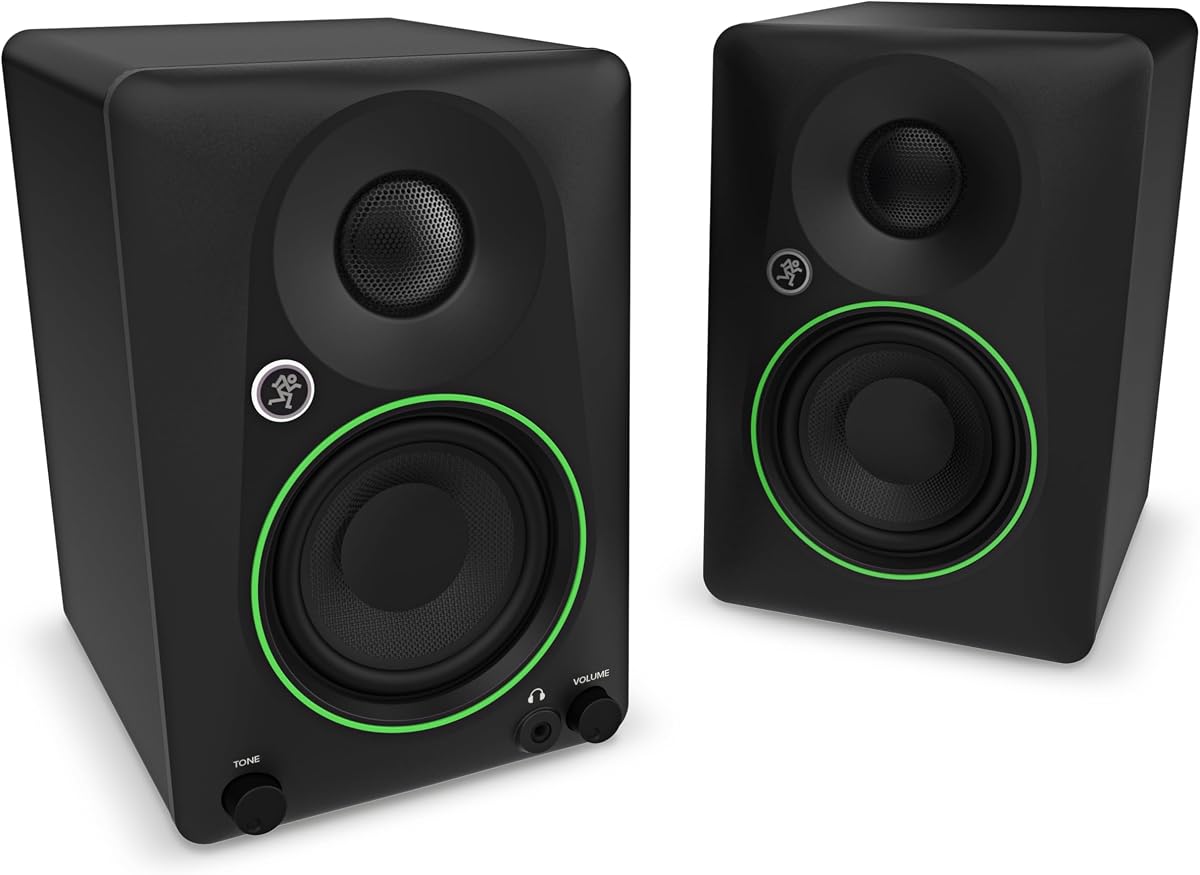
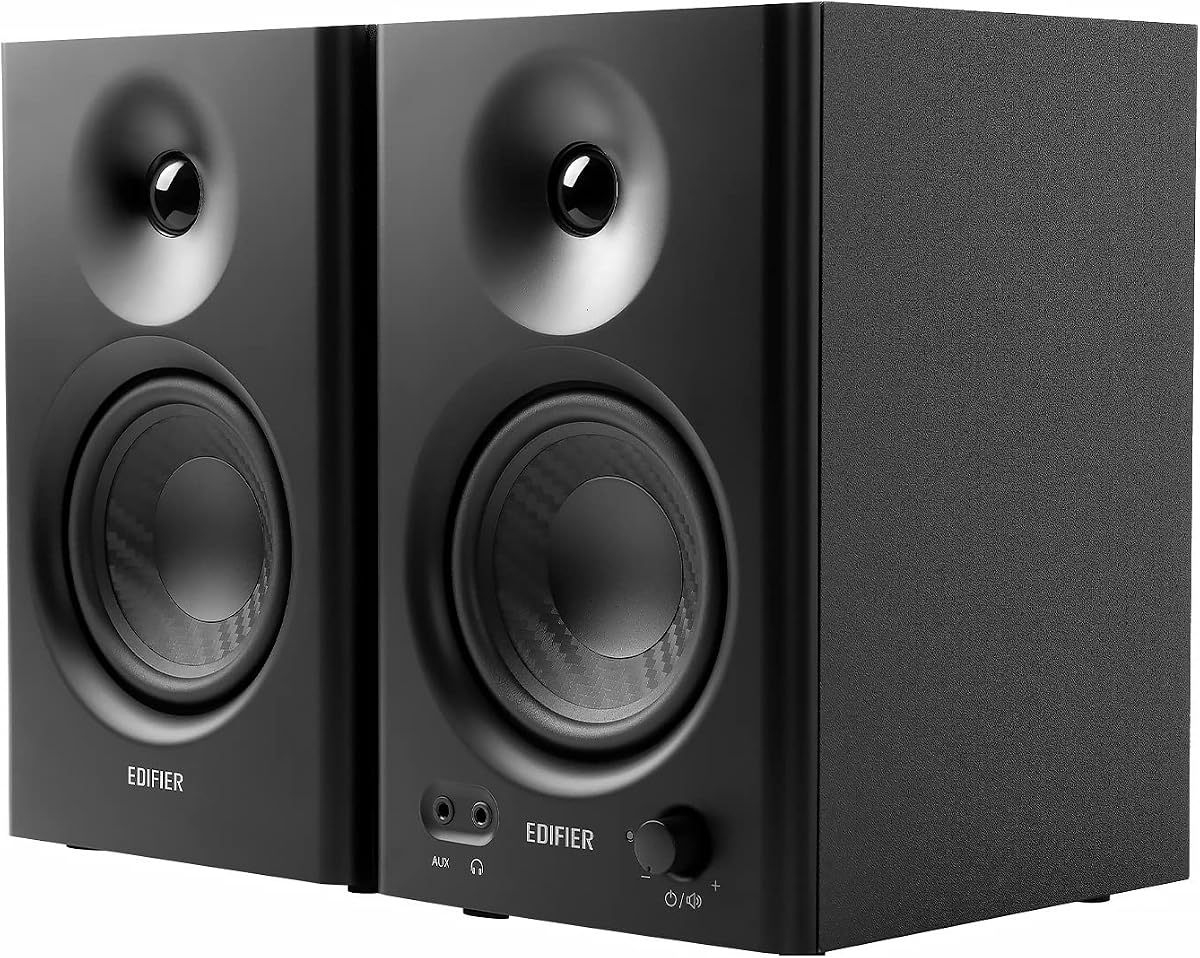
Three-and-a-half-inch monitors like the PreSonus Eris 3.5, Yamaha HS3, Edifier MR3, Mackie CR3.5, and M-Audio BX3 excel in bedrooms and dorm desks where listening distance stays under three feet. Four-inch pairs such as the Edifier MR4 and four-and-a-half-inch Yamaha HS4 add low-mid weight for small studios that mix bass-heavy genres. Five-inch JBL 305P MkII cabinets belong where you have depth, stand height, and willingness to manage bass buildup.
Buying oversized monitors for a tiny desk creates more problems than it solves: boundary boost, early reflection chaos, and the temptation to listen too loud. Measure depth, height, and side clearance before choosing. A well-placed HS3 beats a cramped 305P MkII every time.
Active monitors and signal path
Every product in this pack is powered—amplification is inside the cabinet. That simplifies wiring versus passive speakers plus a separate amp. Your job is to feed clean line-level signal from an audio interface, mixer, or quality DAC. Balanced TRS or XLR outputs reduce noise on longer cable runs; RCA and mini jacks work for short desktop paths.
Avoid stacking Bluetooth on top of wireless mouse dongles and Wi-Fi routers when latency matters. Wired monitoring during recording is still the professional default even when pairs like the Edifier MR3 offer excellent Bluetooth for playback.
Room correction without mythology
Onboard switches—Yamaha room control and high trim, JBL Boundary EQ and HF Trim, PreSonus acoustic tuning, rear EQ on M-Audio and Edifier—fix first-order placement problems. They do not replace acoustic treatment or calibration software, but they reduce harshness faster than endless plugin EQ.
Start flat, listen to reference tracks you know, then adjust one control at a time. If problems persist after switching placement from wall to stand, consider absorption at first reflection points before buying a second pair of monitors.
Studio versus multimedia cross-shopping
Products like the OHAYO 60W pair prove how blurry retail categories have become. Multimedia speakers emphasize Bluetooth, volume, and aesthetic enjoyment. Studio monitors emphasize translation, balanced inputs, and honest midrange even when bass feels lighter.
If production is the main job, prioritize Eris, HS, MR, Mackie CR, M-Audio, or JBL entries in this pack. If gaming and music dominate with occasional edits, hybrid pairs—MR3, CR3.5—balance both worlds. Pure entertainment desks may be happier with OHAYO, but should not expect mix reliability.
Subwoofers and headphones complete the picture
No monitor in this pack replaces a dedicated sub for sub-bass verification. Headphones remain essential for low-end detail in untreated rooms. Some owners add a sub later—Mackie even documents CR8SBT compatibility— but crossover settings and level matching take learning.
A practical workflow: mix mids and highs on monitors, check subs and spatial effects on headphones, test final bounces on car speakers or earbuds. Monitors are one lens, not the entire vision.