Zone RGB vs Per-Key Addressable Lighting
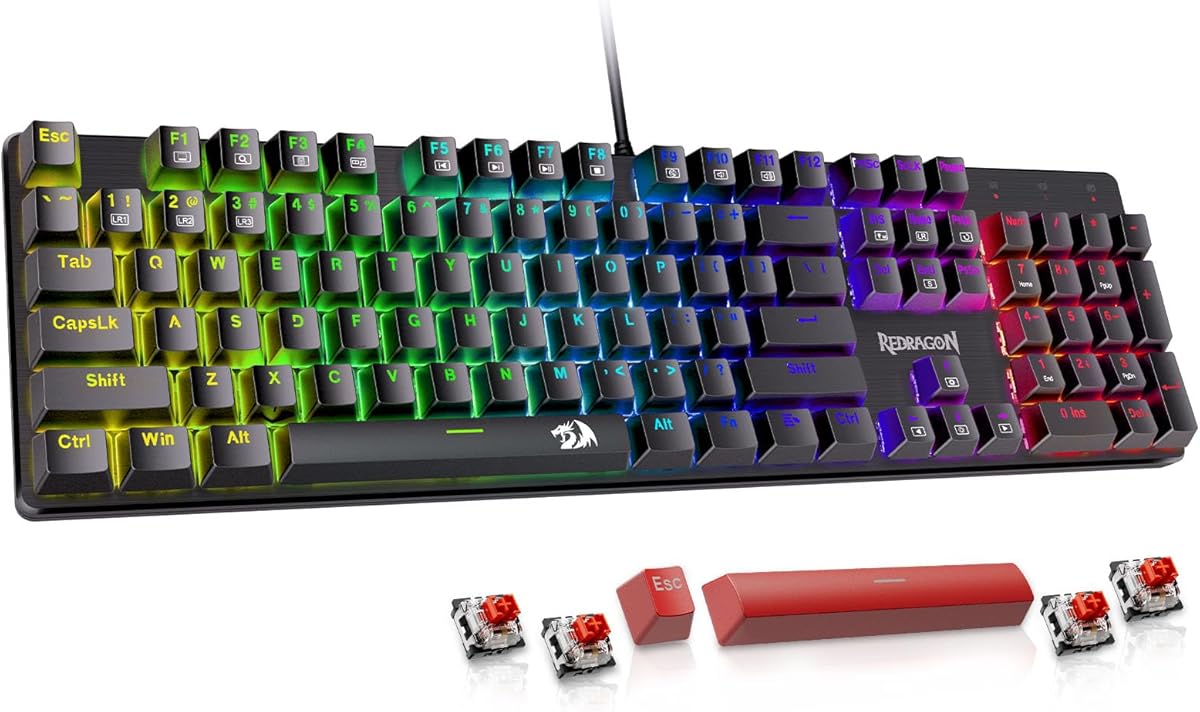
Zone RGB divides the keyboard into regions—often six to fifteen areas—each displaying colors and effects independently. Setup stays simple, gradients look smooth, and firmware remains lightweight. Per-key RGB assigns each switch its own LED, enabling game-specific highlights (WASD one color, ability keys another) and complex custom patterns through software. Enthusiast boards like the AULA F75 Pro and CORSAIR K70 CORE support per-key control; budget membranes like the SteelSeries Apex 3 and TECKNET use zones intentionally.
Choose zone lighting if you want desk ambiance without configuring 104 keys. Choose per-key if you integrate lighting with game events, stream overlays, or meticulous desk color coordination. Neither is objectively superior—zone boards often produce cleaner overall glow, while per-key boards win customization depth.
Membrane, Mechanical, and Creamy Membrane Hybrids
Traditional membrane RGB keyboards—SteelSeries Apex 3, TECKNET, Redragon combos—use rubber dome switches beneath printed circuits. They tend toward quieter operation, lower profile, and lower cost. Mechanical RGB boards—Redragon K556, K671, CORSAIR K70 CORE, AULA F75 Pro—use individual switches with longer travel and clearer actuation feedback. Hot-swap mechanicals add upgrade paths without soldering.
AULA's S99 represents a third path: membrane construction tuned for creamy, thocky acoustics that mimic modded mechanical sound on camera and stream. Decide based on noise tolerance, typing feel preference, and whether you plan to swap switches later.
Wired Reliability vs Tri-Mode Wireless Freedom
Wired keyboards—K556, K671, K70 CORE, TECKNET, Apex 3—eliminate battery anxiety and latency variables entirely. Tri-mode wireless boards—F75 Pro, S99, S101M-KS—add Bluetooth multi-device pairing and 2.4GHz dongles for desktop gaming. Competitive ranked play should stay on wired or 2.4GHz; Bluetooth suits secondary devices and casual typing.
Wireless RGB drains batteries faster than backlight-off use. Manufacturer hour claims assume conservative brightness—budget charging habits accordingly and keep USB-C cables accessible for marathon sessions.
Layout Size and Desk Real Estate
Full-size 104-key boards retain numpads for data entry and MMORPG macros—K556, Apex 3, TECKNET, K70 CORE, combos. 96% layouts like the AULA S99 shrink width while keeping numpads. 75% layouts like the F75 Pro drop numpads but keep arrow keys and knobs, reclaiming mouse pad space critical for low-DPI FPS players.
Measure desk depth before ordering full-size RGB boards with wrist rests attached. Compact layouts require one to two weeks of muscle memory adjustment if you rely on numpad muscle memory.
Software Ecosystem Expectations
Budget Redragon software handles macros, DPI, and lighting presets adequately but lacks polish. CORSAIR iCUE offers deep ecosystem integration at the cost of heavier background footprint. SteelSeries Engine splits the difference for zone-lit boards. AULA F75 Pro software unlocks music-reactive modes unavailable through onboard shortcuts alone.
If you refuse installing drivers, prioritize boards with strong onboard FN controls—K556 preset cycling, S99 knob management, Apex 3 zone toggles. Macro and per-key color addicts should embrace software upfront.
Keyboard-Mouse Combos vs Standalone Boards
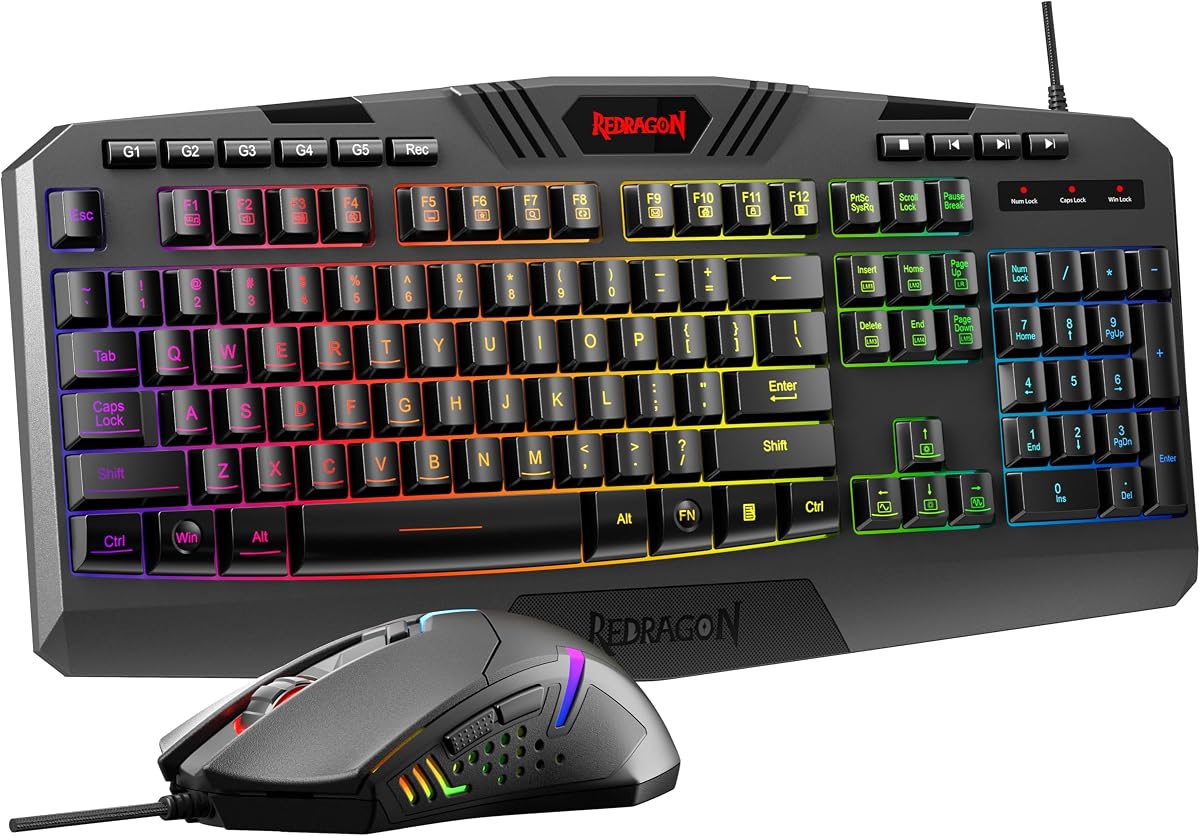
Redragon S101-3 PRO, S101M-KS, and S107 combos deliver synchronized RGB and matched DPI tuning for buyers starting from zero peripherals. Standalone mechanical boards—K556, K671, F75 Pro—offer superior typing feel but require separate mouse purchases.
Combos make sense for students, gift buyers, and first PC builds. Enthusiasts who already own a favorite mouse should invest keyboard budget into hot-swap mechanical RGB instead.



![Redragon Updated S107 Gaming Keyboard and Mouse, RGB Gaming Keyboard and 10000 DPI Mouse Combo with 25-Key Anti-Ghosting, 1K Hz Programmable Mice with Software, Plug & Play to PC, Laptop [Upgrade]](https://m.media-amazon.com/images/I/71aECRRv3vL._AC_SL1200_.jpg)