Detailed review
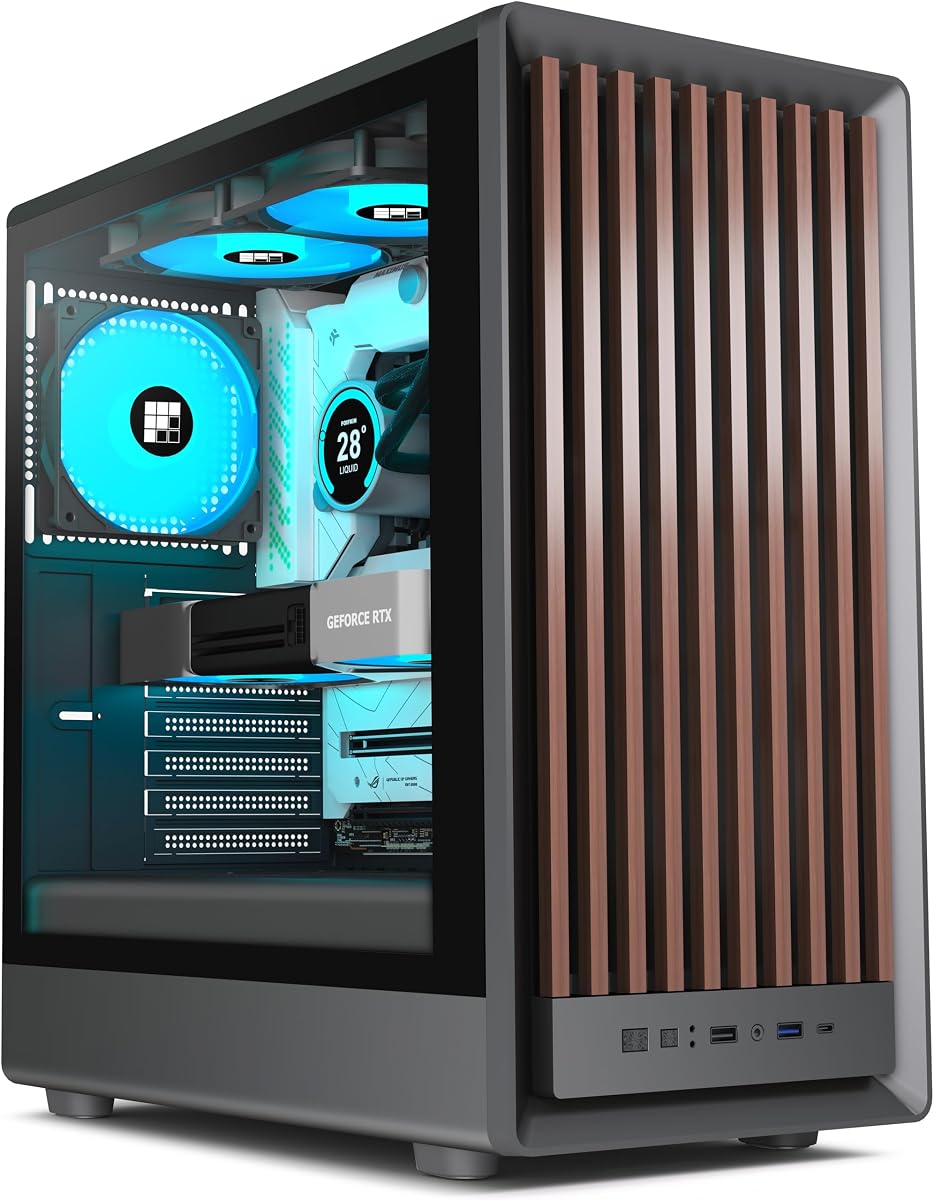
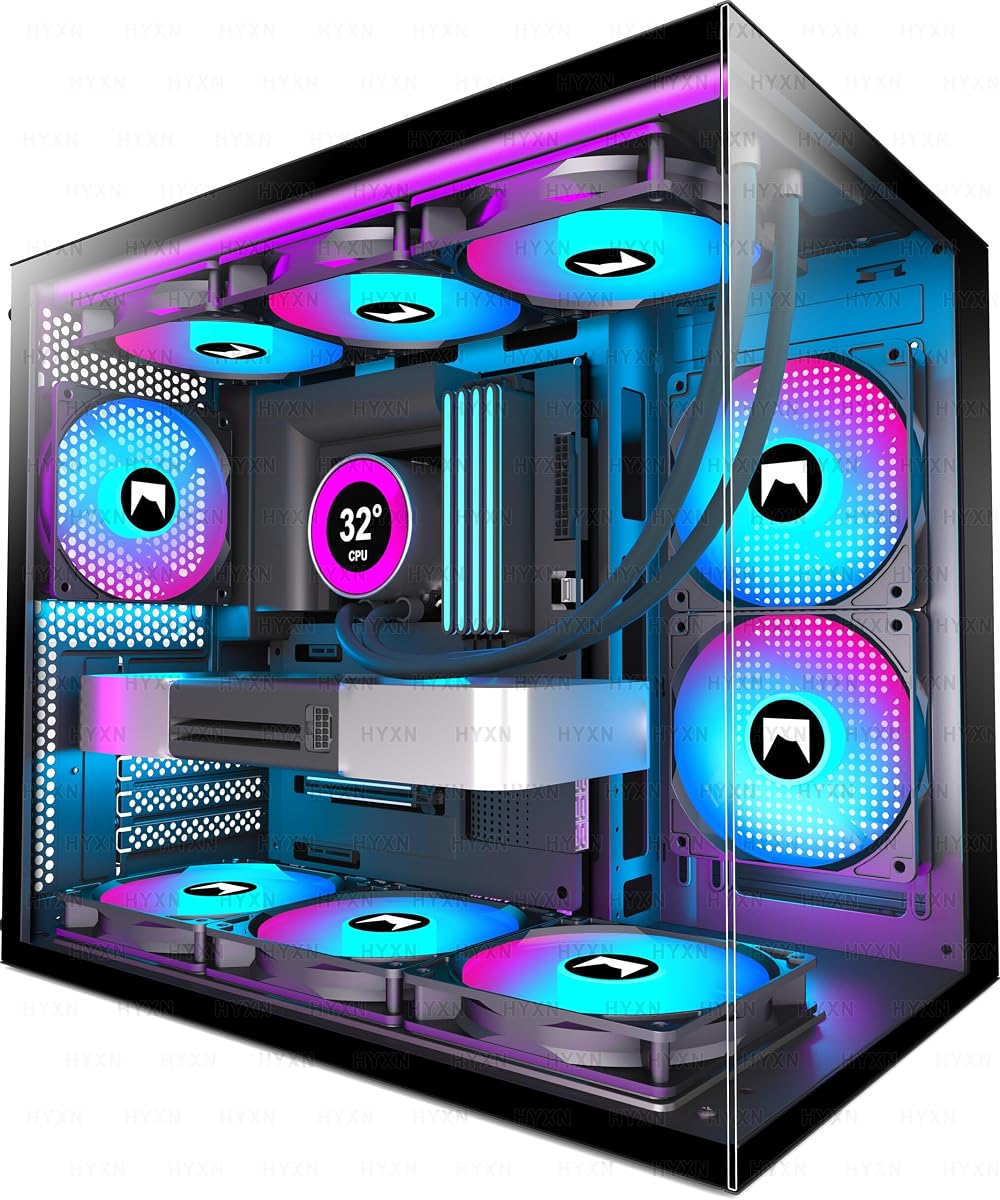
Four 120mm RGB fans ship mounted, which removes one common beginner trap—the case that includes only a lonely rear exhaust. Those fans use fixed RGB rather than addressable ARGB, so they glow on their own schedule instead of dancing to per-LED motherboard effects. For dorm rooms and casual gaming, that can be a feature; for synchronized battlestation photos, it is a limitation.
Diamond mesh on the front panel is the thermal story. Stereo contour mesh passes more intake air than solid plastic while still catching some LED spill from the fans behind it. Removable tempered glass on the side keeps the build approachable when you are still learning which screws must be removed before the motherboard tray accepts standoffs.
Clearance is the hard stop. GPUs to 300mm, CPU coolers to 155mm, and PSUs to 160mm fit many mainstream parts from prior generations but struggle with long triple-fan cards and chunky air towers common today. Read your parts tabs twice before assuming this ATX shell accepts everything labeled ATX-compatible.
Front I/O sticks to one USB 3.0 port, two USB 2.0 ports, and audio jacks—fine for keyboards, mice, and older thumb drives, yet outdated for phone-first desks. If you buy the 621 for mesh and fans, pair it with a motherboard whose rear USB-C you will actually use or add a hub.
Pick the 621 when budget, mesh airflow, and included fans outweigh front Type-C. Skip it when your GPU or cooler measurements brush against the limits or when reversible front I/O is non-negotiable without adapters.
Who it fits
Students building around shorter dual-fan GPUs and compact air coolers who will use rear-board USB-C for fast devices.
Clearance checklist
Verify GPU length under 300mm, cooler height under 155mm, and PSU length under 160mm with ten millimeters of margin for cables and fan brackets.