Expert Review & Guide

Best OLED Laptops 2026: Deep Blacks and True Color

OLED laptops changed what a notebook screen can feel like. Instead of a backlight washing every pixel toward gray, each diode lights itself—so blacks drop to near zero, HDR highlights punch harder, and DCI-P3 color coverage becomes the baseline rather than a premium checkbox. In 2026 that panel tech shows up in thin creator ultrabooks, Copilot+ ARM machines with marathon battery claims, and gaming chassis with discrete RTX silicon. The hard part is not finding an OLED laptop anymore; it is matching resolution, refresh rate, GPU class, and memory headroom to the work you actually do.

We built this roundup strictly from our curated product pack—ten Amazon listings spanning Acer, HP, Lenovo, and ASUS. Most deliver true OLED canvases at 14 or 16 inches with 120Hz motion and wide color. One listing is a Windows 11 Pro business Vivobook with an IPS LED panel rather than OLED; we keep it in the set because it ships in the pack, and we call that display difference out clearly so you do not buy the wrong glass. Another Zenbook arrives as a customized, resealed configuration with upgraded storage—we flag that warranty path too.

Ratings and bullet specs reflect the pack listings at writing time. Start with the three top picks if you want a fast shortlist, skim the comparison table for panel and silicon differences, then read the ranked reviews for battery personality, gaming headroom, creator color behavior, and who each machine actually suits. If pure panel quality is your north star, prioritize 3K-class OLED with 100% DCI-P3; if you game at high frame rates, prioritize RTX 50-series Legion configs; if you live on airplanes, prioritize Snapdragon or efficient Ryzen AI ultrabooks.

Our Top OLED Laptop Picks for 2026

Best Overall Creator OLED

ASUS Vivobook S16 AI PC Laptop

★★★★☆8.8/10
ASUS Vivobook S16 AI PC Laptop
  • 16-inch 2.8K OLED at 120Hz with 600-nit HDR peak and 100% DCI-P3 color
  • Intel Core Ultra 9 285H with 32GB RAM and 1TB SSD for heavy creative multitasking
  • Windows 11 Pro, Thunderbolt 4, Wi-Fi 7, and RGB backlit keyboard for pro workflows
Check Price →
Best Dual-Screen OLED

ASUS Zenbook Duo Laptop

★★★★☆8.8/10
ASUS Zenbook Duo Laptop
  • Twin 14-inch 3K 120Hz Lumina OLED touch panels with Pantone-validated DCI-P3
  • Intel Core Ultra 9 285H, 32GB RAM, and 1TB SSD in a 3.64 lb dual-screen chassis
  • Detachable Bluetooth keyboard, kickstand, ASUS Pen 2.0, and MIL-STD 810H durability
Check Price →
Best Gaming OLED

Lenovo Legion 5 15IRX10

★★★★☆8.8/10
Lenovo Legion 5 15IRX10
  • 15.1-inch WQXGA OLED glossy panel paired with NVIDIA GeForce RTX 5070 8GB GDDR7
  • Intel Core i9-14900HX and 32GB DDR5 for high-frame gaming and creation
  • 1TB NVMe SSD, Wi-Fi 7, Gigabit LAN, and a 4.19 lb chassis for travel-friendly play
Check Price →

As an Amazon Associate we earn from qualifying purchases. We may earn a commission at no additional cost to you.

OLED Laptop Specs at a Glance

Use this table to shortlist by panel class, memory, and GPU before reading full reviews. Specs emphasize display type and resolution, processor and graphics, plus RAM and storage—no street prices—so you can compare capability without shopping noise.

#ProductSpecificationsScore
1
  • 16" 2.8K OLED 120Hz, 100% DCI-P3
  • Intel Core Ultra 9 285H, Intel Arc
  • 32GB RAM, 1TB SSD, Win11 Pro
8.8
2
  • Dual 14" 3K OLED 120Hz touch
  • Intel Core Ultra 9 285H, Arc GPU
  • 32GB RAM, 1TB SSD, Win11
8.8
3
  • 15.1" WQXGA OLED glossy
  • Core i9-14900HX, RTX 5070 8GB
  • 32GB DDR5, 1TB SSD, Wi-Fi 7
8.8
4
  • 15" 2.5K PureSight OLED 165Hz
  • Core i7-14700HX, RTX 5070
  • 16GB RAM, 1TB SSD, Game Pass
9
5
  • 16" 3K OLED 120Hz, 600-nit HDR
  • AMD Ryzen AI 7 350, Radeon 860M
  • 16GB RAM, 1TB SSD, Copilot+ PC
8.8
6
  • 16" 3.2K OLED 120Hz, DisplayHDR TB500
  • Intel Core Ultra 5 125H, Intel Evo
  • 8GB RAM, 512GB SSD, Thunderbolt 4
9.2
7
  • 14" 3K Lumina OLED 120Hz
  • AMD Ryzen AI 9 365, 45+ TOPS NPU
  • 24GB RAM, 1TB SSD, 2.87 lbs
8
8
  • 14" 2K OLED, up to 300 nits
  • Snapdragon X Plus X1P-42-100
  • 16GB RAM, 1TB SSD, Copilot+ PC
8.4
9
  • 14" WUXGA OLED touch, 100% DCI-P3
  • Intel Core Ultra 7 255H, 16GB DDR5
  • Custom SSD configs, Win11 Pro, Wi-Fi 7
10
10
  • 14" FHD IPS LED (not OLED)
  • Intel Core 5 120U, 16GB RAM
  • 1TB SSD, Win11 Pro, 8-in-1 hub
8.8

1. ASUS Vivobook S16 AI - Best Overall Creator OLED

ASUS Vivobook S16 AI PC Laptop

ASUS Vivobook S16 AI PC Laptop

8.8/10★★★★☆

If you want one OLED laptop that covers photo grading, 4K timeline scrubbing, and all-day office work without jumping to a gaming chassis, the Vivobook S16 with Core Ultra 9 285H is the clearest pack pick. The 16-inch 2.8K (2880x1800) OLED runs at 120Hz with up to 600-nit HDR peak brightness and 100% DCI-P3 coverage—exactly the kind of canvas that makes blacks look inked and skin tones hold together in Lightroom or Premiere. The taller 16:10 aspect ratio gives you more vertical room for timelines, code, and document panes than a classic 16:9 entertainment panel.

  • 16" 2.8K WQXGA+ OLED, 120Hz, 600-nit HDR peak, 100% DCI-P3
  • Intel Core Ultra 9 285H with Intel AI Boost NPU; Intel Arc graphics
  • 32GB LPDDR5X, 1TB SSD, Windows 11 Pro, Thunderbolt 4, Wi-Fi 7
Check Price →
✓ Pros
  • 2.8K OLED at 120Hz with full DCI-P3 coverage suits color-critical editing and HDR media
  • Core Ultra 9 285H plus 32GB RAM handles layered creative apps and heavy browser stacks
  • Windows 11 Pro and Thunderbolt 4 fit office, docking, and multi-monitor workflows
  • RGB backlit keyboard with numpad speeds spreadsheet and timeline work
  • Wi-Fi 7 and dual Thunderbolt ports future-proof desk and travel setups
✕ Cons
  • Integrated Arc graphics still trail discrete RTX for AAA gaming and heavy 3D
  • Glare OLED can reflect bright office lights without careful seating
  • Sixteen-inch footprint is less pocketable than 14-inch ultraportables

Detailed review

Under the lid, Intel’s Core Ultra 9 285H brings 16 cores and clocks up to 5.4 GHz, with an Intel AI Boost NPU rated up to 13 TOPS for on-device assist features. That is not the highest NPU TOPS figure in the Copilot+ ARM world, but for Windows creators who still need broad software compatibility—Adobe suite, DaVinci Resolve plugins, niche plugin hosts—the Ultra 9 x86 path remains the safer daily driver. Pair that with 32GB of LPDDR5X and a 1TB SSD and you have headroom for large Photoshop documents, multiple Chrome profiles, and local media libraries without constantly offloading to the cloud.

Graphics are Intel Arc integrated, which is honest territory: fine for UI animation, casual titles, and GPU-accelerated export assists, not a substitute for the RTX 5070 Legions later in this list if you play competitive shooters or render complex Blender scenes. Where this machine wins is the balance of screen quality, memory, Pro OS, and I/O. Two Thunderbolt 4 ports support display output and power delivery, HDMI 2.1 covers a single external monitor without adapters fighting you, and a microSD reader helps photographers dump cards at a cafe table.

Everyday usability details matter on a creator ultrabook. The RGB backlit keyboard includes a numeric keypad—underrated when you live in Excel or nudge timeline markers by numeric entry. The FHD IR camera with privacy shutter supports Windows Hello face unlock and clean video calls. Dolby Atmos tuning and Wi-Fi 7 keep streaming and cloud sync from feeling like afterthoughts. ASUS positions this configuration toward designers, business professionals, and power users who want OLED color without the heat and fan noise of a full gaming stack.

Battery life on a bright 16-inch OLED will never match the Snapdragon OmniBook’s marathon claims, and you should expect that tradeoff. Still, for desk-plus-campus creators who charge at the workstation and want the best single-panel experience in this pack, the Vivobook S16 Ultra 9 configuration is the recommendation we would buy first. If you need discrete GPU horsepower, skip ahead to the Legion models; if you need two screens in one chassis, the Zenbook Duo is the specialist alternative.

Who should buy the Vivobook S16 Ultra 9

Choose this laptop if color accuracy and resolution matter more than ray-traced gaming. Photographers, YouTube editors, students in design programs, and remote workers who dock to a monitor will appreciate the 2.8K OLED, 32GB memory, and Windows 11 Pro feature set. Skip it if you need a sub-three-pound bag companion every day—look at the 14-inch OLED Vivobook S or Zenbook instead.

Setup tips for color work

Calibrate with a hardware puck if you deliver client print or broadcast work; factory DCI-P3 coverage is strong, but rooms and aging panels drift. Enable HDR only when content supports it, keep brightness moderate for long grading sessions to reduce eye fatigue, and use Thunderbolt docks that advertise dual 4K output if your studio uses two externals.

Versus the Ryzen AI Vivobook S16

The AMD Ryzen AI 7 350 Vivobook S16 in this same pack offers a similar 16-inch 3K OLED personality with stronger advertised NPU TOPS and long battery claims, but ships with 16GB RAM in the listed config. The Ultra 9 model’s 32GB memory and Windows 11 Pro skew it toward heavier multitasking and managed business environments.

Check Price on Amazon →

We may earn a commission at no additional cost to you.

2. ASUS Zenbook Duo - Best Dual-Screen OLED

ASUS Zenbook Duo Laptop

ASUS Zenbook Duo Laptop

8.8/10★★★★☆

The Zenbook Duo is the OLED laptop for people who have already bought a portable monitor and still feel cramped. Two 14-inch 3K Lumina OLED touch panels stack into a dual-screen workspace with 120Hz smoothness, roughly 500-nit HDR peak brightness, and Pantone-validated 100% DCI-P3 color. You can run reference footage on the lower screen while editing on the upper, park Slack and email below a full-width document, or flip into sharing mode when you need a client-facing second canvas without digging for an HDMI cable.

  • Dual 14" 3K (2880x1800) Lumina OLED touch, 120Hz, 500-nit HDR peak, 100% DCI-P3
  • Intel Core Ultra 9 285H with Intel AI Boost NPU; Intel Arc graphics
  • 32GB LPDDR5x, 1TB SSD, dual Thunderbolt 4, Wi-Fi 7, MIL-STD 810H
Check Price →
✓ Pros
  • Two Pantone-validated 3K OLED touchscreens transform reference and timeline layouts
  • Detachable Bluetooth keyboard and kickstand enable laptop, dual, desktop, and sharing modes
  • Ultra 9 285H with 32GB RAM keeps dual-display productivity fluid
  • Includes ASUS Sleeve, Pen 2.0, and 65W USB-C charger in the box
  • MIL-STD 810H testing and sub-four-pound travel weight for serious portability
✕ Cons
  • Dual-screen mode shortens battery versus single-panel laptop mode
  • Learning curve for window management and mode switching
  • Integrated graphics limit heavy 3D and high-settings gaming

Detailed review

ASUS ships a detachable Bluetooth keyboard and a built-in kickstand so the Duo can behave like a normal laptop, a dual-screen creator desk, or a near-desktop setup on a hotel table. At about 3.64 pounds and as thin as 0.57 inches in places, it remains genuinely portable—an achievement for a dual OLED system. The included ASUS Pen 2.0 with MPP 2.0 support turns the touch panels into annotation surfaces for PDFs, storyboards, and markup-heavy review cycles.

Performance mirrors the high-end Vivobook S16 in silicon terms: Intel Core Ultra 9 285H, Intel Arc graphics, 32GB LPDDR5x, and a 1TB SSD. That stack is excellent for Office, browsers, Lightroom, Resolve timelines that stay within integrated-GPU comfort, and AI-assisted Windows features. It is not a substitute for the Legion RTX configs when your hobbies include demanding AAA titles. Think of the Duo as a productivity multiplier first and a media machine second.

Battery is mode-dependent in a way single-screen laptops are not. ASUS cites long video playback in laptop mode on the 75Wh pack and a shorter figure when both OLEDs stay awake—exactly what physics predicts. Fast charge over Thunderbolt 4 USB-C helps between meetings. Full I/O includes two Thunderbolt 4 ports, USB-A, HDMI 2.1, and a combo jack, plus Wi-Fi 7 and Bluetooth 5.4. Military-grade MIL-STD 810H testing adds reassurance for bag tosses and travel abuse.

Buy the Duo when your bottleneck is screen real estate, not shader cores. Writers who outline on one panel and draft on another, analysts who keep dashboards visible, and editors who want scopes or bins always on-screen will feel the upgrade immediately. If you mostly watch Netflix on one window and write in another, a single excellent OLED like the Vivobook S16 or S 14 will be simpler and cheaper to live with day to day.

Who thrives on dual OLED

Project managers, consultants, and creators who already juggle two monitors at the desk but travel constantly. Also strong for students who annotate lecture PDFs while keeping Zoom open. Avoid if you want a traditional laptop with zero learning curve—mode switching is a feature, not free.

Practical mode tips

Default to laptop mode on battery flights, enable dual screen at power outlets, and use Windows Snap Layouts aggressively so windows remember which OLED they belong on. Keep the Bluetooth keyboard charged and store the sleeve in your bag—the chassis is premium, but two glass panels still deserve protection.

Check Price on Amazon →

We may earn a commission at no additional cost to you.

3. Lenovo Legion 5 15IRX10 - Best Gaming OLED

Lenovo Legion 5 15IRX10

Lenovo Legion 5 15IRX10

8.8/10★★★★☆

Gaming on OLED is addictive once you see true black in dark maps and night scenes. The Legion 5 15IRX10 pairs a 15.1-inch WQXGA OLED glossy panel with NVIDIA’s GeForce RTX 5070 (8GB GDDR7)—Blackwell-generation horsepower that brings frame generation, ray tracing headroom, and creator CUDA acceleration into a mid-size chassis. Combined with an Intel Core i9-14900HX and 32GB of DDR5-5600, this is the pack’s most complete high-spec gaming OLED configuration.

  • 15.1" WQXGA OLED glossy display
  • Intel Core i9-14900HX; NVIDIA GeForce RTX 5070 8GB GDDR7
  • 32GB DDR5-5600, 1TB NVMe SSD, Wi-Fi 7, Gigabit LAN, 4.19 lbs
Check Price →
✓ Pros
  • WQXGA OLED plus RTX 5070 delivers contrast-rich gaming with modern DLSS-era GPUs
  • Core i9-14900HX and 32GB DDR5 suit streaming, recording, and heavy background apps
  • Wi-Fi 7 and Gigabit LAN cover dorm Ethernet and next-gen wireless
  • Relatively light 4.19 lb chassis for a discrete-GPU gaming machine
  • 1TB SSD leaves room for a large game library without immediate upgrades
✕ Cons
  • Glossy OLED reflections are more noticeable under bright overhead lights
  • HX-class CPUs run warmer and louder than ultrabook Ultra chips under load
  • Battery life while gaming will be short—plan for wall power during long sessions

Detailed review

WQXGA resolution on a 15-inch class panel is a sweet spot: sharper than 1080p without forcing the GPU to push 4K desktop densities. OLED’s near-instant pixel response helps motion clarity even when you are not chasing ultra-high refresh esports panels. Competitive players who demand the absolute highest Hz may still prefer specialized IPS gaming panels, but anyone who values cinematic single-player contrast and HDR-like punch will prefer this glass.

The i9-14900HX hybrid architecture keeps CPU-heavy games, Discord overlays, OBS, and Chrome from starving each other. Thirty-two gigabytes of DDR5 is the right call for modern titles plus streaming. The 1TB Gen4 NVMe drive is realistic storage for a primary gaming library; Gigabit LAN and 2x2 Wi-Fi 7 cover both dorm Ethernet and congested apartment wireless. At roughly 4.19 pounds, it is lighter than many 17-inch gaming bricks while still housing serious discrete silicon.

Expect fan noise and heat under sustained load—that is the HX and RTX contract. Use Legion performance modes thoughtfully: quieter profiles for classwork, full performance when plugged in for AAA sessions. OLED burn-in risk is lower than early phone-era panic suggests if you vary content, avoid static HUDs at max brightness for hundreds of hours, and use Windows’ built-in hide-taskbar and dark themes where sensible. Still, vary wallpapers and enable pixel-shift features if Lenovo exposes them in Vantage.

Choose this Legion when gaming quality is the primary job and you also want a sharp OLED for movies and light creation. If you need a slightly different balance—165Hz PureSight branding, i7-14700HX, and a Game Pass bundle with 16GB RAM—the other Legion 5i in this pack is the sibling pick. For battery-first travel with OLED, look at Snapdragon or Ryzen AI ultrabooks instead.

Who should buy this Legion

University gamers, streamers-in-training, and hybrid creator-gamers who want RTX 5070 in a relatively carryable chassis. Ideal if you already own a desk monitor and treat the laptop OLED as your portable cinema and play surface.

Versus the Legion 5i i7 config

This i9/32GB listing prioritizes CPU headroom and memory. The Legion 5i with i7-14700HX, 16GB RAM, 165Hz PureSight OLED, and three months of PC Game Pass is the more student-bundle-oriented sibling—great if you want the Game Pass runway and can live with half the RAM until an upgrade path exists.

Cooling and placement tips

Use a hard flat surface, keep intake vents clear, and consider a simple riser for sustained sessions. Update GPU drivers promptly after unboxing—Blackwell feature support moves quickly in the first year of a generation.

Check Price on Amazon →

We may earn a commission at no additional cost to you.

4. Lenovo Legion 5i - Best Student Gaming OLED

Lenovo Legion 5i Gaming Laptop

Lenovo Legion 5i Gaming Laptop

9/10★★★★★

Lenovo pitches this Legion 5i at university gamers who refuse to choose between coursework screens and evening raids, and the PureSight OLED panel is why that pitch lands. The 15-inch 2.5K WQXGA OLED with a 165Hz refresh rate is one of the more play-focused OLED configs in the pack: high contrast for story games, fast enough refresh for many multiplayer titles, and color accuracy that also helps when you open Premiere for a class project.

  • 15" 2.5K WQXGA PureSight OLED, 165Hz refresh
  • Intel Core i7-14700HX; NVIDIA GeForce RTX 5070
  • 16GB memory, 1TB storage, 3 months PC Game Pass
Check Price →
✓ Pros
  • PureSight OLED at 165Hz blends cinematic contrast with smooth competitive motion
  • RTX 5070 Blackwell graphics future-proofs modern game settings
  • Thinner, lighter Legion design suits campus carry better than old thick gaming shells
  • Includes three months of PC Game Pass for an instant library
  • AI Engine+ and Legion Space tuning help FPS and creation render times
✕ Cons
  • 16GB RAM is the ceiling for heavy multitasking beside large open-world games
  • Gaming on battery still drains quickly despite efficiency claims
  • OLED glossy character can show fingerprints and glare in bright classrooms

Detailed review

The Intel Core i7-14700HX and GeForce RTX 5070 combination is the real muscle. Hybrid CPU architecture handles compiling, browsers, and Discord while the Blackwell GPU drives modern titles with DLSS-era features. Lenovo’s AI Engine+ claims FPS assists in popular games and faster renders in creation apps, managed through Legion Space—useful if you dislike digging through a dozen vendor utilities.

Mobility improvements matter here. Lenovo emphasizes a thinner, lighter Legion design with Coldfront: Hyper cooling that aims for quieter fans when possible, plus fast charging that can reach a substantial battery percentage in under half an hour over USB-C. That does not make it an ultrabook, but it makes dorm-to-lecture carry more realistic than previous-generation thick gaming bricks.

The included three months of PC Game Pass (with EA Play access noted in the listing) is a practical onboarding perk: you can validate the machine with a huge catalog before buying every title a la carte. Storage at 1TB is appropriate; memory at 16GB is the soft limit. If you regularly stream while gaming or keep dozens of Chrome tabs plus a game client open, the 32GB i9 Legion above will feel more comfortable.

This is the OLED gaming laptop we recommend for students who want RTX 5070 and a high-refresh PureSight panel without jumping to the absolute top CPU/RAM SKU. Pair it with a good backpack sleeve, keep it plugged in for ranked nights, and use quieter modes during lectures so classmates do not hear your jet engines spooling for a background update.

Who it fits on campus

Engineering and CS students who game after labs, esports club members, and anyone whose previous laptop was a dim IPS panel that made dark games muddy. Less ideal for pure battery-first note-taking—bring a charger to long studio days.

Game Pass first-week plan

Install Game Pass titles that stress different loads—one competitive multiplayer, one cinematic single-player, one creative app trial—to learn thermals and noise before your warranty window habits set in. Update chipset and GPU drivers before chasing max settings.

Check Price on Amazon →

We may earn a commission at no additional cost to you.

5. ASUS Vivobook S16 - Best AMD Copilot+ OLED

ASUS Vivobook S16 Laptop

ASUS Vivobook S16 Laptop

8.8/10★★★★☆

ASUS’s Ryzen AI Vivobook S16 is the AMD answer to Intel’s creator-focused S16: same family design language, a gorgeous 16-inch 3K OLED at 120Hz with 600-nit HDR peak and 100% DCI-P3, but a different silicon philosophy. The Ryzen AI 7 350 with AMD’s XDNA NPU advertises up to 50 TOPS of NPU AI processing— squarely in Copilot+ PC territory for on-device features—while Radeon 860M graphics handle UI, light games, and accelerated creative filters.

  • 16" 3K OLED (2880x1800) 120Hz, 600-nit HDR peak, 100% DCI-P3
  • AMD Ryzen AI 7 350 with XDNA NPU up to 50 TOPS; Radeon 860M
  • 16GB memory, 1TB SSD, up to ~14-hour claimed battery class, 3.31 lb
Check Price →
✓ Pros
  • Stunning 16-inch 3K OLED with outdoor-friendly HDR peak brightness claims
  • Ryzen AI 7 350 NPU targets Copilot+ style on-device AI acceleration
  • Ultralight 3.31 lb metal chassis for a 16-inch machine
  • Harman/Kardon-tuned Dolby Atmos speakers elevate media playback
  • AiSense 1080p IR camera with privacy shutter and Windows Hello face login
✕ Cons
  • 16GB memory may feel tight for heavy video projects compared with 32GB siblings
  • Radeon 860M is capable but not an RTX 5070 substitute for AAA gaming
  • Battery figures depend on brightness and workload—OLED at high nits drains faster

Detailed review

For many buyers the screen is the headline. 2880x1800 on 16:10 is excellent for documents and timelines, and OLED contrast makes streaming and photo review feel premium. ASUS also emphasizes outdoor visibility via high HDR peak brightness; real-world sunny patio use still fights glare on glossy OLED, but the panel is brighter than many older 300-nit notebooks.

Portability is a quiet strength. At 0.55 inches thin and about 3.31 pounds, this 16-inch machine packs into bags that usually hold 14-inch ultrabooks. The 75Wh battery class and ASUS’s video-playback testing narrative point toward long media sessions when brightness is moderated—always verify with your own mix of Wi-Fi, OLED brightness, and local AI tasks. Neutral black anti-fingerprint metal keeps the chassis looking intentional rather than plasticky.

Daily features are polished: single-zone RGB keyboard with numpad, Super Linear speakers tuned with Harman/Kardon and Dolby Atmos, AiSense camera features like background blur and auto framing, plus Microsoft Pluton and ASUS Adaptive Lock security touches. Sixteen gigabytes of RAM and 1TB of SSD cover mainstream creative and student workloads; power users who live in After Effects or huge browser session restore sets should prefer the 32GB Ultra 9 Vivobook instead.

Pick this S16 when you want AMD’s AI NPU story, excellent OLED, and a lighter 16-inch carry than most Intel HX gaming machines. It is a strong all-rounder for media students, remote workers, and travelers who stream movies on the plane and edit lightly at the hotel desk. Hardcore gamers should still budget for a Legion.

Copilot+ expectations

On-device AI features evolve with Windows updates. Buy for the OLED and Ryzen responsiveness you can use today, and treat NPU-accelerated features as a bonus that improves over the ownership period rather than the sole reason to purchase.

Audio and camera notes

Harman/Kardon tuning makes this one of the better media ultrabooks in the pack for casual movie nights without headphones. Use the privacy shutter in shared housing; IR face login is convenient on a 16-inch lid you open dozens of times a day.

Check Price on Amazon →

We may earn a commission at no additional cost to you.

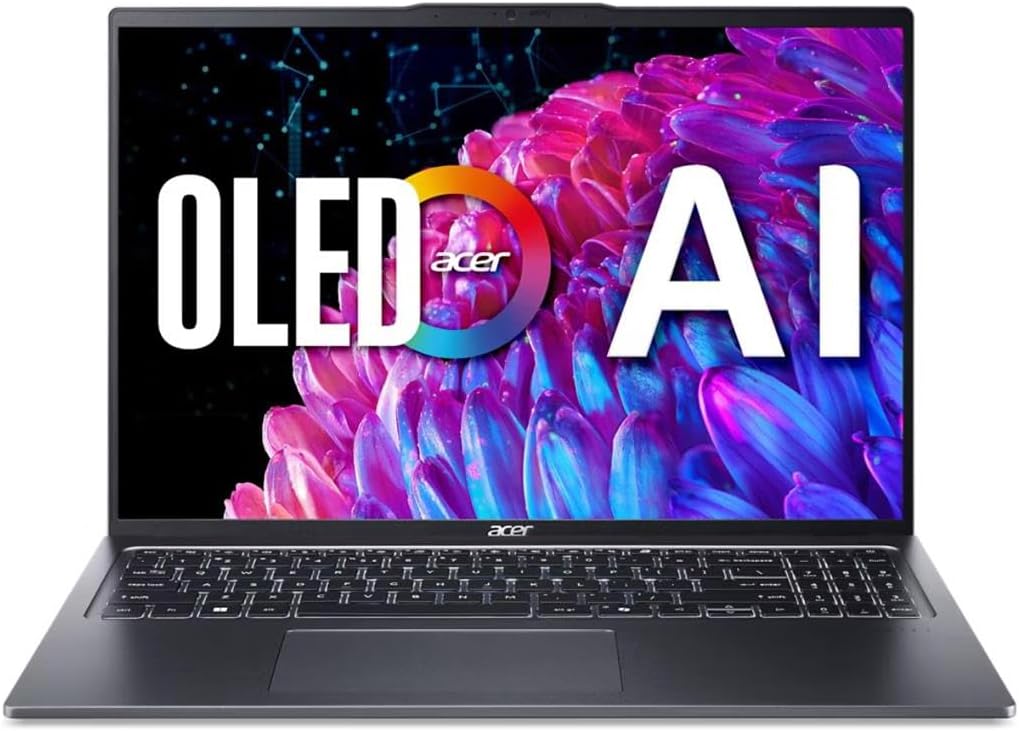
6. Acer Swift Go 16 OLED - Best Value 3.2K

Acer Swift Go 16in OLED Laptop

Acer Swift Go 16in OLED Laptop

9.2/10★★★★★

On paper, the Acer Swift Go 16’s panel is one of the most impressive in the entire pack: a 16-inch 3200x2000 OLED at 120Hz with VESA DisplayHDR True Black 500 and 100% DCI-P3. That is professional-grade contrast and color in a slim Intel Evo chassis, and it explains the strong pack rating. If you care first about how photos and HDR video look, this display punches far above the RAM and storage numbers next to it.

  • 16" WQXGA+ 3200x2000 OLED 120Hz, DisplayHDR True Black 500, 100% DCI-P3
  • Intel Core Ultra 5 125H with NPU; Intel Evo Edition
  • 8GB RAM, 512GB SSD, Thunderbolt 4 / USB4, Killer Wi-Fi 6E
Check Price →
✓ Pros
  • Exceptional 3.2K OLED with VESA DisplayHDR True Black 500 certification
  • Intel Evo Ultra 5 platform targets balanced AI multitasking and efficiency
  • Dual Thunderbolt 4 / USB4 ports for docks and fast external drives
  • TUV Rheinland Eyesafe certification aims to reduce blue-light fatigue
  • Aluminum chassis with fingerprint reader and backlit keyboard
✕ Cons
  • 8GB RAM is the critical limiter for modern multitasking and creative apps
  • 512GB SSD fills quickly with 4K footage and game installs
  • Not a discrete-GPU machine for demanding games or 3D work

Detailed review

The Intel Core Ultra 5 125H with integrated NPU and Evo certification is a capable everyday processor for Office, browsing, light photo edits, and AI-assisted Windows features. Killer Wi-Fi 6E, dual Thunderbolt 4 / USB4 at up to 40Gbps, fingerprint Windows Hello, and a backlit keyboard round out a polished ultraportable feature set. Eyesafe certification is a nice touch for long writing and spreadsheet days.

The honest conversation is memory. Eight gigabytes of RAM in 2026 is the Swift Go’s Achilles’ heel. Windows 11 plus a dozen tabs plus Slack plus a Lightroom catalog will pressure that ceiling quickly. Some buyers will accept the tradeoff to get this OLED canvas; others will rightly step up to 16GB or 32GB machines elsewhere in this list. Storage at 512GB likewise means external drives or cloud discipline if you shoot raw photos.

Think of this Acer as an OLED-first daily driver for writers, students, and streamers of media who keep workloads light and care deeply about screen quality. It is also a compelling secondary laptop for someone who already owns a desktop workstation and wants a beautiful portable panel for travel review and email. It is the wrong primary machine for Premiere heavyweights or simultaneous game-plus-browser lifestyles.

If Acer offered this same panel with 16GB soldered, it would climb our rankings immediately. As configured in the pack, it earns Best Value 3.2K OLED for shoppers who understand the RAM compromise and still want DisplayHDR True Black 500 goodness without jumping to Ultra 9 pricing tiers.

Who can live with 8GB

Users who mostly write, browse, Zoom, and watch HDR content. Close background apps aggressively. Prefer Edge or Chrome profiles that you restart often. If your workflow includes local VMs, Android Studio, or 4K timelines, skip this SKU.

Docking upside

Thunderbolt 4 is the escape hatch: a good dock, external SSD, and a second monitor turn the Swift Go into a nicer desk citizen than the RAM figure suggests for document work. Just do not expect the dock to invent memory the chassis does not have.

Check Price on Amazon →

We may earn a commission at no additional cost to you.

7. ASUS Vivobook S 14 OLED - Best Slim 14-Inch

ASUS Vivobook S 14 OLED Slim Laptop

ASUS Vivobook S 14 OLED Slim Laptop

8/10★★★★☆

When you want OLED color without hauling a 16-inch slab, the Vivobook S 14 is the elegant answer in this pack. The 14-inch 3K Lumina OLED runs at 120Hz with a claimed 0.2ms response, up to 600-nit HDR peak brightness, and full DCI-P3 coverage on a taller 16:10 canvas. At 0.63 inches thin and 2.87 pounds, it is the kind of machine you actually carry to every lecture and coffee shop instead of leaving at the dorm desk.

  • 14" 3K (2880x1800) Lumina OLED 120Hz, 0.2ms, 600-nit HDR peak, 100% DCI-P3
  • AMD Ryzen AI 9 365 (10 cores) with 45+ TOPS NPU
  • 24GB LPDDR5X, 1TB SSD, 0.63" thin, 2.87 lbs
Check Price →
✓ Pros
  • Pocketable 2.87 lb chassis with a true 3K 120Hz OLED panel
  • Ryzen AI 9 365 and 24GB RAM outperform many thin 14-inch rivals for multitasking
  • 0.2ms OLED response and DCI-P3 coverage excel for media and light creation
  • Customizable RGB keyboard adds personality without a gaming chassis
  • USB4 / USB-C with display and power delivery plus HDMI 2.1 and microSD
✕ Cons
  • Pack rating is lower than several siblings—check recent owner feedback before buying
  • No discrete GPU for serious gaming
  • 14-inch canvas is smaller for timeline editing than the 16-inch OLEDs

Detailed review

AMD’s Ryzen AI 9 365 with a 45+ TOPS NPU and ten cores, paired with 24GB of LPDDR5X and a 1TB SSD, is a serious ultraportable spec sheet. That memory figure alone puts it ahead of the 8GB Acer and the 16GB OmniBook for Chrome-heavy students and light creative pros. On-device AI acceleration supports the Copilot-era Windows features AMD and Microsoft continue to expand.

Connectivity is thoughtfully complete for a slim lid: dual USB-A, USB4 Type-C with display and power delivery, an additional USB-C with display/PD, microSD, HDMI 2.1, and a combo jack. You can drive an external display without a dongle zoo. The single-zone RGB keyboard is more personalization than necessity, but it looks intentional in Cool Silver.

We rank it below the larger S16 creator machines because some buyers simply want more screen for the OLED premium they are paying, and the pack’s 4.0 rating suggests a more mixed owner sentiment than the mid-4s elsewhere—always read the newest reviews for thermals, keyboard feel, and any early batch quirks. Still, as a specification story for slim OLED travel, this Vivobook S 14 is excellent.

Buy it if your bag weight budget is sacred and you refuse to compromise on panel quality. Writers, analysts, CS students, and consultants who live in browsers, IDEs, and slide decks will be happy. Editors who want a bigger grading canvas should move to the 16-inch OLED Vivobooks; gamers should move to Legion.

Travel kit pairing

A compact 65W USB-C charger, a thin sleeve, and one USB-C hub cover ninety percent of trips. Keep microSD cards for camera dumps. Use HDMI when hotel TVs are friendlier than wireless casting.

Versus Zenbook 14 OLED

The customized Zenbook 14 OLED touch model offers a business-leaning WUXGA touchscreen and Core Ultra 7 with Win11 Pro, but arrives resealed with storage upgrades and a third-party warranty path. The Vivobook S 14 prioritizes 3K resolution, Ryzen AI 9, and 24GB in a stock-style slim design.

Check Price on Amazon →

We may earn a commission at no additional cost to you.

8. HP OmniBook 5 - Best Battery OLED

HP OmniBook 5 14 inch Next Gen AI PC

HP OmniBook 5 14 inch Next Gen AI PC

8.4/10★★★★☆

If your definition of the best OLED laptop starts with “still has charge at midnight,” the HP OmniBook 5 is the pack’s specialist. HP advertises up to 34 hours of battery life on this Snapdragon X Plus configuration—numbers that assume moderated brightness and lighter workloads, but still signal a different efficiency class than HX gaming Legions. HP Fast Charge claims a jump from empty to about half capacity in roughly thirty minutes when you do need a top-up.

  • 14" 2K OLED (1920x1200), up to 300 nits, 0.2 ms response
  • Snapdragon X Plus X1P-42-100; Qualcomm Adreno GPU
  • 16GB LPDDR5x, 1TB SSD, Copilot+ PC, up to 34-hour claimed battery class
Check Price →
✓ Pros
  • Class-leading battery life claims for all-day and multi-day light travel
  • Snapdragon X Plus Copilot+ experiences with on-device AI features
  • 2K OLED with fast 0.2 ms response for crisp UI and media
  • 16GB RAM and 1TB SSD are practical everyday capacities
  • HP Fast Charge and recycled-material design nods for sustainability-minded buyers
✕ Cons
  • ARM Windows app compatibility still requires checking critical software
  • 300-nit OLED is less bright outdoors than 600-nit ASUS panels
  • Adreno graphics are for light workloads, not RTX-class gaming

Detailed review

The 14-inch 2K (1920x1200) OLED brings rich color and deep contrast with a 0.2 ms response time. Peak brightness around 300 nits means it will not win a sunny patio shootout against ASUS’s 600-nit 3K panels, but indoors and in cabins the OLED contrast still feels premium next to IPS office laptops. For email, documents, streaming, and light creative apps that run well on ARM, the experience is modern and quiet.

Snapdragon X Plus with Qualcomm Adreno graphics powers Copilot+ PC features, Live Captions, Paint Cocreator, and HP’s AI Companion tooling. Sixteen gigabytes of LPDDR5x and a 1TB SSD are appropriately provisioned for a thin AI PC. Windows 11 Home is fine for consumers; enterprise admins may prefer Pro SKUs elsewhere in the list.

The ARM caveat remains mandatory: verify that your VPN client, specialty plugins, hardware dongles, and any legacy x86-only tools run under Windows on Arm—natively or through Prism translation—with acceptable performance. Most Microsoft 365, Edge/Chrome, and Zoom/Teams scenarios are comfortable; niche creative suites and some games are the risk zone.

Material story aside—ocean-bound plastics, recycled metal, recycled keycaps—the OmniBook 5 is the OLED pick for digital nomads, students with long lecture blocks, and professionals who hate hunting for outlets. If you need maximum brightness, x86 certainty, or discrete GPU gaming, choose a different row in the comparison table.

Compatibility checklist before you buy

List your must-have apps and search each for Snapdragon or Windows on Arm support. Test VPN and device management tools if your employer issues software. Keep a lightweight x86 backup machine if one critical app fails translation.

Getting the battery you paid for

Use recommended power modes, cap brightness, disable unused RGB or keyboard lighting if present, and prefer native ARM builds of browsers. OLED at max brightness for HDR movies will not match the marketing extreme—save that for plugged-in evenings.

Check Price on Amazon →

We may earn a commission at no additional cost to you.

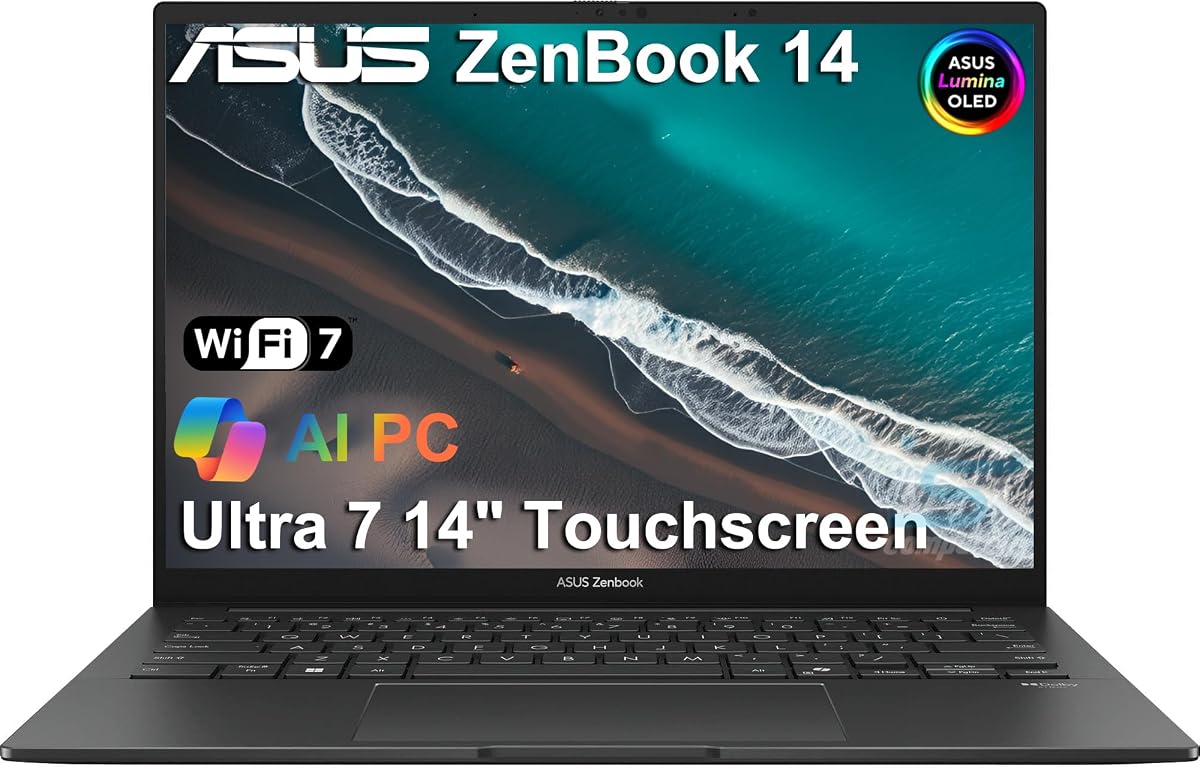
9. ASUS Zenbook 14 OLED - Best Compact Business OLED

ASUS Zenbook 14 OLED Touchscreen AI PC Laptop

ASUS Zenbook 14 OLED Touchscreen AI PC Laptop

10/10★★★★★

This Zenbook 14 OLED is the business-leaning compact pick: a 14-inch WUXGA (1920x1200) OLED touchscreen with 100% DCI-P3 and about 500 nits, Intel Core Ultra 7 255H, 16GB DDR5, Windows 11 Pro, and dual Thunderbolt 4 with Wi-Fi 7. For consultants and remote workers who want tap-friendly OLED color without a dual-screen experiment, it is a focused tool.

  • 14" WUXGA OLED touch (1920x1200), 100% DCI-P3, 500 nits
  • Intel Core Ultra 7 255H, 16GB DDR5, configurable SSD capacities
  • Windows 11 Pro, Thunderbolt 4, HDMI 2.1, Wi-Fi 7, IR camera shutter
Check Price →
✓ Pros
  • Touch OLED with DCI-P3 color in a slim Zenbook business form factor
  • Core Ultra 7 255H and Win11 Pro suit professionals and power office users
  • Thunderbolt 4 plus HDMI can drive multiple external 4K displays
  • Wi-Fi 7 and backlit keyboard support modern travel offices
  • Physical camera shutter and IR Hello improve meeting privacy and login speed
✕ Cons
  • Listing notes the unit is resealed after memory/SSD customization—warranty is via the customizer
  • WUXGA resolution is sharp enough but not 3K-class like other ASUS OLEDs here
  • Confirm exact SSD capacity on the offer you buy—configs vary

Detailed review

Important buying disclosure from the listing itself: the computer is brand new but resealed to upgrade memory/SSD, with a one-year warranty handled by Issaquash Highlands Tech rather than a simple factory-sealed ASUS box path. That is not automatically a deal-breaker—custom SSD upgrades are common in the channel—but you should buy with eyes open, keep all packaging, and understand who you contact if something fails in month two.

Performance positioning is strong for productivity. The Ultra 7 255H’s 16-core design targets programmers, designers-lite, and office power users. Storage options in the title span multiple SSD sizes, so double-check the specific Amazon configuration before checkout. Thunderbolt 4 and HDMI 2.1 support multi-monitor 4K setups without a dock for many desks, which is a quiet superpower for business travelers who arrive to conference-room displays.

The OLED touch layer helps with PDF markup, light whiteboard apps, and UI navigation; it is not a convertible tablet hinge. Audio and the FHD IR camera with shutter cover everyday meeting needs. Copilot on Windows 11 Pro adds drafting and meeting assistance for knowledge workers.

Choose this Zenbook when you want Pro OS, touch OLED, and strong I/O in fourteen inches—and you accept the customized/resealed fulfillment model. If you need a factory-sealed dual-screen OLED experience, the Zenbook Duo is cleaner. If you need 3K resolution in a slim 14, prefer the Vivobook S 14 Ryzen AI model.

Warranty and unboxing checklist

Photograph the seal condition on arrival, verify storage capacity in Windows Settings immediately, run a memory diagnostic if you upgraded RAM expectations, and register with the warranty provider named in the listing. Keep the order invoice accessible.

Desk setup ideas

Two Thunderbolt 4 ports plus HDMI make a triple-display office feasible for many users. Use a single USB-C charger when traveling light; keep a dual-monitor dock at the home office for full expansion.

Check Price on Amazon →

We may earn a commission at no additional cost to you.

10. ASUS Vivobook 14 FHD - Pack Business Alternative (IPS)

ASUS Vivobook 14" FHD Business Laptop Computer

ASUS Vivobook 14" FHD Business Laptop Computer

8.8/10★★★★☆

Honesty first: this Vivobook is in our OLED pack, but its own product copy describes a 14-inch IPS LED FHD display, not an OLED panel. We still review it because the pack includes it and some shoppers comparing “best OLED laptops” listings will land here via bundles or related ASINs. If deep blacks and DCI-P3 cinema contrast are why you opened this guide, choose almost any other machine above. If you need a Pro business notebook with RAM/storage headroom and a hub in the box, keep reading.

  • 14" FHD IPS LED (1920x1080)—not an OLED panel
  • Intel Core 5 120U (10-core), 16GB RAM, 1TB SSD
  • Windows 11 Pro, privacy shutter, PLUSERA 8-in-1 hub included
Check Price →
✓ Pros
  • Windows 11 Pro and Core 5 120U cover solid small-business and student office needs
  • 16GB RAM and 1TB SSD are healthier capacities than several OLED value SKUs
  • Includes an 8-in-1 hub for immediate peripheral expansion
  • Camera privacy shutter is a practical shared-space feature
  • Quiet Blue chassis option stands out from typical silver ultrabooks
✕ Cons
  • Display is IPS LED FHD, not OLED—contrast and color will not match this roundup’s OLED heroes
  • No Thunderbolt 4 in the listed port mix—USB-C is more limited
  • FHD 16:9-class panel feels less premium for media than 16:10 3K OLEDs

Detailed review

The Intel Core 5 120U with ten cores, 16GB of RAM, and a 1TB SSD is a sensible everyday business configuration. Windows 11 Pro brings BitLocker-friendly management features and Remote Desktop capabilities that Home SKUs lack. Boot and login feel snappy for Office, browsers, Zoom classes, and light creative tools. SonicMaster-tuned speakers and a 720p camera with privacy shutter cover meetings without drama.

Ports include USB-C 3.2, USB-A, HDMI, and a combo jack with Wi-Fi 6—enough for classrooms and small offices, less future-proof than the Thunderbolt 4 OLED ASUS models. The included PLUSERA 8-in-1 hub is a genuine unboxing win if you still connect Ethernet, SD cards, or multiple USB peripherals at a desk.

Why include an IPS laptop in an OLED roundup at all? Because packs sometimes mix adjacent productivity machines, and calling out the panel type prevents a disappointed return. Use this Vivobook as a control sample: it shows what competent office hardware looks like without OLED pricing or OLED contrast. Side by side with the Vivobook S 14 OLED or Zenbook Duo, the visual gap is obvious in dark scenes and black UI chrome.

Buy this only if your priority is Win11 Pro business basics plus the hub bundle and you explicitly do not need OLED. Everyone chasing the promise of this article’s title should redirect to the Swift Go, OmniBook, Vivobook S OLED models, Zenbooks, or Legions ranked above.

When IPS is acceptable

Spreadsheet-heavy jobs under bright office fluorescents sometimes prefer matte IPS anti-glare over glossy OLED reflections. If that is your environment and color grading is irrelevant, IPS can be the pragmatic choice—just do not expect OLED pop.

Upgrade path thinking

If you love this Vivobook’s Pro OS and hub convenience but wish for OLED, treat it as a temporary workhorse and plan a later move to the Zenbook 14 OLED touch or Vivobook S 14. Do not expect a panel upgrade path inside the chassis.

Check Price on Amazon →

We may earn a commission at no additional cost to you.

Best OLED Laptops 2026: Deep Blacks and True Color

How to Choose the Best OLED Laptop in 2026

Start with panel resolution and refresh, not just the OLED logo

Every OLED is not equal. A 3.2K or 3K 120Hz panel with 100% DCI-P3 and 500–600 nit HDR peaks (Acer Swift Go, ASUS Vivobook S and Zenbook Duo) delivers a meaningfully different experience than a 2K 300-nit OLED tuned for efficiency (HP OmniBook). Gamers should also weigh refresh: the Legion PureSight 165Hz config prioritizes motion, while creator ultrabooks lean on color volume and resolution. Decide whether you care more about grading fidelity, outdoor brightness, or frame smoothness before falling for the OLED badge alone.

Match silicon to software reality

Intel Core Ultra and AMD Ryzen AI x86 machines remain the compatibility safe harbor for Adobe-heavy and plugin-rich workflows. Snapdragon Copilot+ PCs can deliver extraordinary battery life but need an app compatibility check. HX + RTX Legions are for people who game or GPU-render seriously. Buying the prettiest OLED with the wrong CPU/GPU class is the most expensive mistake in this category.

Respect RAM and storage floors

OLED will not save an 8GB multitasking bottleneck. The Acer Swift Go’s panel is superb, yet 8GB RAM is a hard limit for modern Windows. Sixteen gigabytes is the practical minimum for mixed work; 24–32GB is the comfort zone for creators. Storage at 512GB fills fast with raw photos and game installs—1TB is the happier default when the budget allows.

Plan for glossy reflections and burn-in hygiene

Most OLED laptops use glossy stacks that look deep and vibrant and also mirror overhead lights. Seat yourself thoughtfully in offices. For burn-in, vary content, hide static taskbars when idle, avoid leaving pause screens at max brightness for days, and use dark themes where they do not harm your work. Risk is manageable with normal varied use; it is not zero if you pin the same bright HUD for thousands of hours.

Read fulfillment fine print on customized units

Channel-customized or resealed upgrades—like the Zenbook 14 OLED touch listing—can offer better SSD sizes, but warranty and return paths differ from factory-sealed retail. Confirm who services the machine, what capacity you are actually buying, and whether your employer’s IT policy allows nonstandard fulfillment.

Frequently Asked Questions

01

Are OLED laptops worth it over IPS in 2026?

Yes if you care about contrast, HDR-style highlights, and color volume for photo, video, and movies. IPS still wins some bright offices with matte anti-glare needs and can offer higher refresh esports panels at a given budget. For creators and cinephile travelers, OLED’s deep blacks are hard to unsee. For pure spreadsheet warriors under fluorescent lights, a good IPS may be enough—and cheaper.

02

Do OLED laptop screens burn in quickly?

Under normal varied use—documents, browsing, video, games—modern laptop OLEDs hold up well for years. Risk rises if you leave static HUDs, bright taskbars, or paused screens at maximum brightness for extreme durations. Use auto-hide taskbars, dark themes when practical, screen-off timeouts, and any manufacturer pixel-refresh utilities. Treat burn-in as a manage-with-habits issue, not an inevitability of opening the lid.

03

What resolution should I look for on a 14 or 16-inch OLED?

On 14-inch machines, WUXGA (1920x1200) is acceptable and sharp enough for office work; 3K (2880x1800) feels noticeably more premium for media and design. On 16-inch machines, 2.8K to 3.2K class panels are the sweet spot in this pack. Higher resolution demands more GPU power for games, so gamers should balance pixels against RTX headroom.

04

Is a Snapdragon OLED laptop safe for professional software?

It can be, if your stack is modern Microsoft 365, browsers, collaboration apps, and ARM-friendly utilities. It is risky if you depend on legacy x86-only plugins, niche hardware dongles, or certain creative suites without solid ARM builds. Always verify before you commit—battery life cannot recover a missing app on deadline day.

05

Which OLED laptop is best for gaming in this roundup?

The Lenovo Legion models with GeForce RTX 5070. The i9 32GB Legion 5 15IRX10 is the high-spec pick; the i7 PureSight 165Hz Legion 5i with Game Pass is the student-friendly sibling. Ultrabook OLEDs with integrated graphics are for casual titles only.

06

Why is the Acer Swift Go ranked below machines with lower ratings?

Because ratings alone do not capture configuration balance. The Swift Go’s 3.2K OLED is outstanding, but 8GB of RAM is a structural limit for 2026 multitasking. We reward panel quality with a value badge while ranking higher-RAM creator and gaming machines above it for everyday versatility.

07

Can I use an OLED laptop for color-accurate client work?

Many DCI-P3 OLED panels are excellent starting points, especially ASUS Lumina and Acer DisplayHDR True Black certified screens. For print or broadcast-critical delivery, still calibrate with a hardware colorimeter, control room lighting, and confirm soft-proof workflows. Factory wide-gamut coverage is not a substitute for a calibrated pipeline.

08

How bad is glossy OLED glare for office work?

It depends on your lighting. Under a skylight or directly beneath bright LEDs, reflections can annoy. Angle the lid, bias lighting behind the display, or sit perpendicular to windows. If you cannot control lighting at all, prioritize matte IPS—or accept that OLED’s contrast tradeoff includes some reflection management.

09

What is special about the Zenbook Duo’s dual OLED setup?

You get two 14-inch 3K OLED touchscreens with modes for dual-screen work, sharing, and traditional laptop use, plus a detachable keyboard and kickstand. It multiplies portable workspace without a separate travel monitor. The costs are learning curve, weight versus a single 14-inch ultrabook, and shorter battery when both panels are active.

10

Should I avoid customized or resealed OLED laptops?

Not automatically, but buy deliberately. Confirm the exact SSD/RAM configuration, understand that warranty may run through the customizer, and inspect packaging on arrival. If your employer requires factory-sealed procurement, choose a standard retail SKU like the Vivobook S16 or Legion listings instead.

Conclusion

The best OLED laptop in 2026 is the one whose panel, silicon, and memory match your actual day—not the one with the flashiest marketing slide. For most creators and hybrid professionals in this pack, the ASUS Vivobook S16 with Core Ultra 9, 32GB RAM, and a 2.8K 120Hz OLED is the most complete single-screen answer. Need two canvases in one bag? The Zenbook Duo is still in a class of its own. Play AAA games on deep blacks? The Legion RTX 5070 OLED machines are the clear path.

Travelers who prize silence and stamina should put the HP OmniBook 5 Snapdragon OLED at the top of their shortlist after an ARM app check, while slim-bag fans can live happily on the Vivobook S 14’s 3K Lumina panel. The Acer Swift Go proves value OLEDs can look reference-grade—just respect the 8GB ceiling. And remember the IPS Vivobook in this pack for what it is: a business alternative, not an OLED contender.

Use the comparison table to eliminate wrong GPU classes quickly, then read the two or three reviews that survive your RAM and battery filters. OLED is the display technology; the laptop around it still has to work. Choose deliberately, calibrate when your craft demands it, and enjoy contrast that makes ordinary notebooks look washed out the next time you borrow one.