Detailed review
Hardware fundamentals still look familiar to DIY readers: AM5 for Ryzen 9000/8000/7000, DDR5, PCIe 4.0 x16, three PCIe 4.0 M.2 slots, Wi-Fi 6E, 2.5Gb Ethernet, DisplayPort, HDMI, USB Type-C front and rear support, VRM/M.2/PCH heatsinks, and Fan Xpert 2+. It will run local models beside a discrete GPU just fine for many business copilots, transcription PCs, and internal chatbots.
Where CSM helps is operations. IT teams can standardize an mATX AM5 image, lean on BIOS FlashBack for field recovery, and use ASUS DriverHub plus Armoury Crate ecosystems in managed ways. GlideX and MyHotkey are productivity sideshows that sometimes matter on shared desks. Aura Sync remains available but is optional in beige-adjacent offices.
Enthusiast caveats apply. The 3.9 rating is middling, PCIe 4.0 is not the bleeding edge, and the VRM brief is entry AM5 rather than AI TOP territory. Do not buy CSM because you want the fastest gaming LAN party board—buy it because you want fewer platform surprises across a small fleet of AI-enabled desktops.
DIY friendliness is ironically high: pre-mounted I/O shield, Q-Dashboard, Q-LED Core, and Q-Antenna reduce helpdesk friction when non-experts assist with builds. That matters in schools and studios where the “AI PC” is assembled by whoever is free on Friday afternoon.
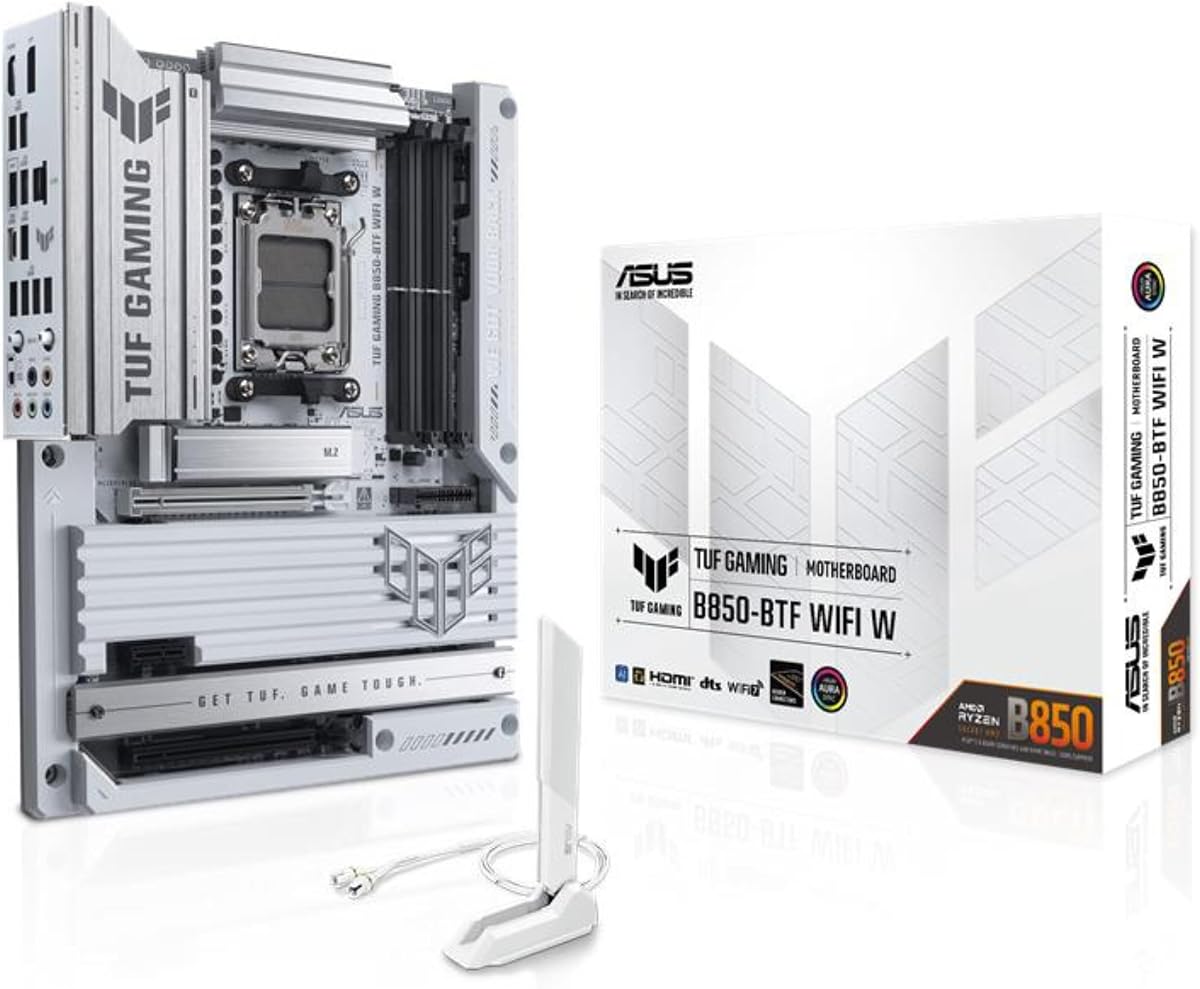
Choose the B840M-A WiFi-CSM for commercial-stable AM5 AI desktops in mATX chassis. Choose Strix, TUF, or AORUS B850 boards for personal high-performance labs. Same socket family, different ownership philosophy.
Fleet deployment notes
Document BIOS versions, keep a USB FlashBack stick in the parts bin, and standardize on one DDR5 kit validated with EXPO. Image the OS with your inference stack after hardware burn-in, not before.
When CSM is the wrong tool
If you are a single power user chasing WiFi 7, 10GbE, or Gen5 storage bragging rights, CSM constraints help you less than a B850 AI TOP or Strix. Leave CSM to multi-machine stability needs.
Office AI use cases
Private document Q&A boxes, meeting transcription towers, and on-prem image tools that must not send data to public clouds are the sweet spot for this board class.