Detailed review
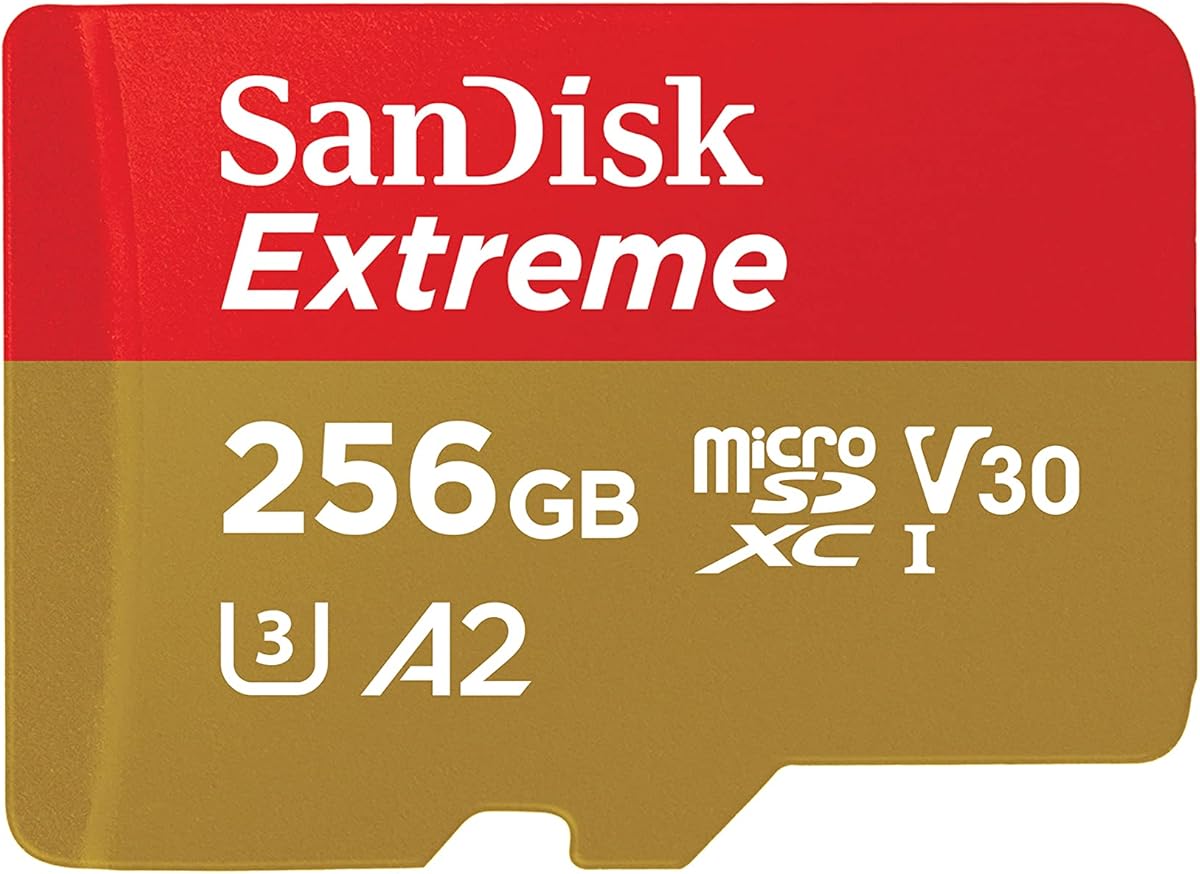
Capacity at 256GB is the practical sweet spot for most HERO-class users. It is large enough for a full ski day, a multi-location travel montage, or a long mountain bike stage without constant swaps, yet small enough that a single lost or corrupted card does not erase an entire expedition. If you shoot primarily in 4K at moderate bitrates, one carefully managed 256GB Extreme often covers a shoot day with room for stills and short looping clips. If you live in 5.3K, high frame rates, or dual-camera setups, treat this as your primary card and carry a second Extreme or Extreme PRO as rotation media.
Durability is where Extreme branding earns its keep on a helmet, chest, or surf mount. SanDisk’s environmental claims for this line cover temperature, humidity, water, shock, drop, magnet, X-ray, and wear-out resistance—exactly the abuse profile of action sports and travel. That does not mean you should skip a waterproof housing or ignore saltwater rinses, but it does mean the media itself is engineered for the same environments your camera sees. Pair the card with in-camera formatting before critical shoots and periodic health checks if the camera reports write errors.
Offload speed is a quiet productivity win. High read ratings shorten the awkward window when the camera is out of service because the card is in a reader. For editors and creators who shoot, cut, and publish the same day, those minutes add up. Use a quality UHS-I USB reader rather than relying solely on Wi-Fi transfers from the GoPro app when you have large libraries; wireless is convenient for selects, but wired offloads remain faster and more reliable for full dumps. SanDisk’s Memory Zone apps can help organize and back up once files hit a phone or desktop.
Who should buy this card: anyone running a recent GoPro who wants a no-drama primary media choice with strong speed class credentials and a capacity that matches real weekend and travel workloads. Who should look elsewhere: casual Full HD shooters who can save money with Ultra, or expedition filmmakers who need 512GB or 1TB to minimize swaps. Also compare the SDSQXAV Extreme 256GB in this same pack if you find a better live offer on that slightly older Extreme SKU with still-excellent 190/130 class numbers.
Our verdict is straightforward. Among pack products, this Extreme 256GB balances speed, durability messaging, and capacity better than value V30 cards and better than tiny 128GB kits for primary duty. Keep an Extreme PRO bundle in the bag if you want a reader included, but for the card alone as your workhorse, SDSQXH9 256GB is the pick we would load first.
Who should buy the Extreme 256GB SDSQXH9
Buy this if your GoPro is a primary creative tool and you regularly shoot 4K or 5.3K with HyperSmooth enabled. It is also the right call when you want one trusted card for both the camera and occasional drone duty. Skip it only if you need a bundled reader on day one or you are strictly a Full HD casual shooter.
For multi-cam kits, standardize on this Extreme 256GB across bodies so every spare is interchangeable. Label cards and retire any unit that shows repeated write warnings even after a fresh in-camera format.
Setup tips for reliable GoPro recording
Insert the card, power on, and format in the GoPro menus before critical shoots. Update camera firmware so capacity and bitrate support match current recommendations. Prefer a powered USB reader for offloads after long days rather than relying only on wireless transfers.
Carry a second V30 card even if 256GB usually lasts your day. Weather, bonus takes, and higher frame rates erase margins quickly.
Extreme SDSQXH9 vs Extreme SDSQXAV
Both are 256GB Extremes with U3/V30 credibility. Choose SDSQXH9 when you want the higher listed 245/170 class speeds. Choose SDSQXAV when it is the card in stock or on a stronger live offer—real-world GoPro recording will be excellent on either for most users.